STONE YARD DEVOTIONAL by Charlotte Wood

by James Wallace Harris, 4/12/25

Stone Yard Devotional is about how reality puts the peddle to the metal when life gets all too real. Stone Yard Devotional reads like a memoir, a diary, but it’s classified as a novel. The book was nominated for several awards.

The entire time I was listening to this book I wondered if Charlotte Wood was the unnamed narrator, however after reading “‘The shock was so deep’: Novelist Charlotte Wood on the experience that changed everything” in the Syndney Herald, I realized the novel was only inspired by her own life. Wood and her two sisters were being treated for breast cancer, while she was contemplating mortality and drafting this book.

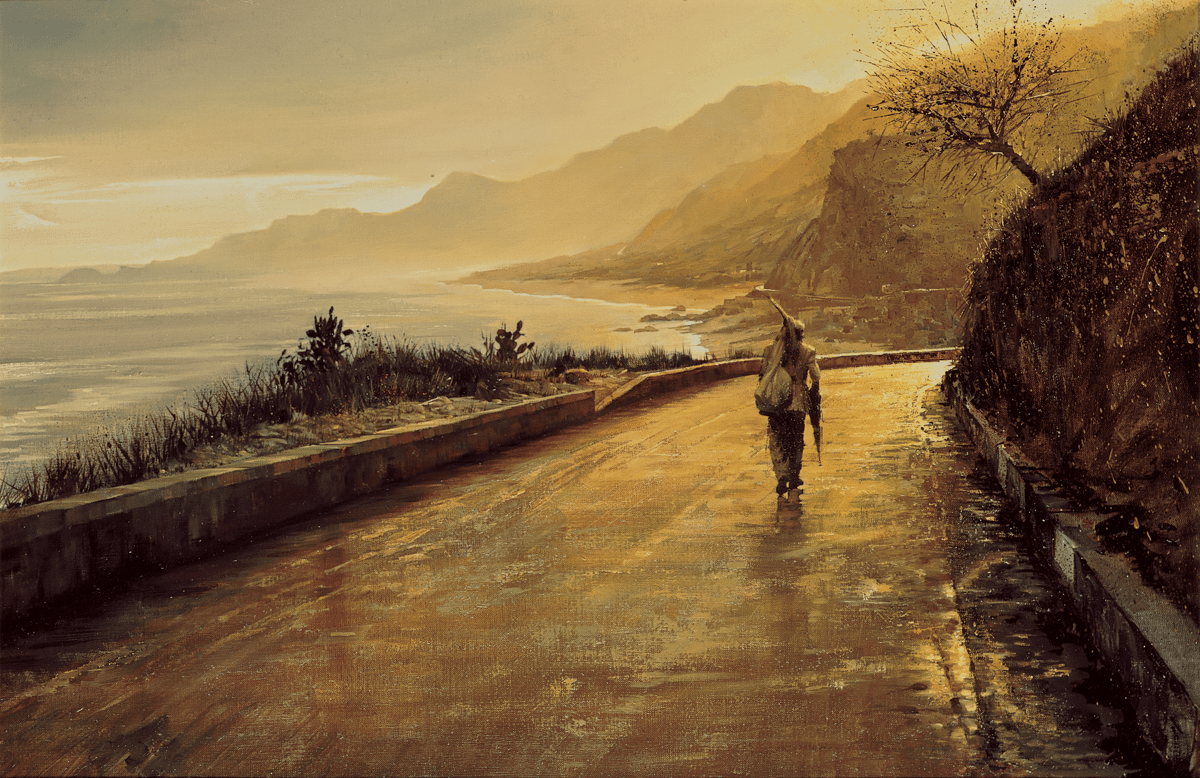
I have no memory of how I discovered Stone Yard Devotional by Charlotte Wood. The cover and title intrigued me for sure. Maybe it was because it was shortlisted for the 2024 Booker Prize. The audiobook was part of my Spotify subscription, so I gave it a try, and I’m glad I did. It’s not the kind of book I normally read, but it’s wonderful to read if you’re getting old.

The story begins with the Covid pandemic. The narrator separates from her husband, ghosts her friends, and hides out in a guest house of a religious order, even though she is nonreligious. She wants to be alone. But after her initial stay, she returns to the order to live with the nuns. I was never sure if she joined the order or not. I have often thought the monastic life has certain appeals.

The story is about the narrator’s observations while living a contemplative life. These include the death of her mother, the remembrance of childhood, studying the nuns, working in the garden and kitchen, and the guilt of living with a woman she and her classmates horribly bullied as a child. The narrative is simple, like meditation.

The setting is Australia, which is exotic to me. As a kid I wanted to live in Australia. Over the course of the novel, there is a plague of mice that invade the convent. The mice are so numerous that they cover the roads in gray fur. At first, I thought Wood added this element to give her tale some excitement, but I researched and found that her part of Australia they did have a mice plague of Biblical proportions in 2021.

That made life in the convent extremely inconvenient. The mice ate electrical insulation, throwing daily living in the convent back to the 19th century. The illustration for the book’s review at The New York Times might have been another reason I read this book.

Much of what the unnamed narrator contemplates throughout the novel is what everyone thinks about as they get older. The fear of declining health and death, the regrets, the desires for wanting to have done things different, the desires to connect with others while also wanting to pull away, the changes we see in ourselves and others, the appeal of nature and living simple. Wood’s story explores all of that and more, triggering the reader to think about their lives.

Charlotte Wood was born in 1965, so she’s fourteen years younger than me. However, her battle with cancer has likely aged her perception on life. At 73, I’ve been thinking about the things in this novel for years. But I don’t know if everyone who collects social security meditates on these issues. Stone Yard Devotional is a great title for this novel. Even though the narrator said she was an atheist at the beginning of this story, getting old and dealing with people who die, pushes you to be spiritual even without a belief in God.

JWH

NO COUNTRY FOR A WOMAN by Jane Dismore

by James Wallace Harris, 3/30/25

In 1992, I read a one-paragraph description of a science fiction novel published in 1926 by a woman named Lady Dorothy Mills. The book was called Phoenix. The blurb said the book was about an elderly woman undergoing a rejuvenation treatment that made her look twenty again. Because very few SF books were being published in hardback in the 1920s, especially by women, I decided I wanted to find a copy to read. However, it took ten years of dedicated searching before a copy came up for sale. Along the way, I became intrigued by finding out more about Lady Dorothy Mills. It hasn’t been easy.

Many writers dream of achieving immortality through publishing a book. Sadly, that seldom happens. Most books are first and only editions. Writers are remembered only as long as readers read their books. Dead writers tend to fade into forgotten writers as their books disappear from bookstores. Lady Dorothy Mills is almost forgotten today.

No Country for a Woman, a biography of Lady Dorothy Mills by Jane Dismore, might change that. (Amazon USA: Kindle, Hardback). I knew Dismore was on the trail of Lady Dorothy Mills when she published a two-page newspaper article about Lady Dorothy in 2014, where I learned more about Mills than I had in twenty-two years of research. I contacted Dismore. She replied that she was working on a full biography. I’ve been waiting years to read No Country for a Woman. I hoped it would do two things. First, it would answer the many questions I still had about Lady Dorothy Mills, and it has, and much more. Second, I wanted it to resurrect Lady Dorothy Mills. By that, I mean to get new readers for Mills. That remains to be seen.

Unfortunately, Lady Dorothy Mills’ books are out of print, and used copies are rare, so even if No Country for a Woman becomes a best seller for Jane Dismore, Mills won’t get new readers unless her books are reprinted. Dismore’s excellent biography chronicles Lady Dorothy Mills’ rise to fame in the 1920s and 1930s, but will it inspire publishers to reprint Mills’ books today? Evidently, Dismore is more realistic than I am. Her biography makes Lady Dorothy Mills into an exciting woman to read about, but nowhere in the biography does Dismore promote reprinting Mills or recommend reading her books.

Lady Mills was a fascinating woman. To be honest, I don’t know how well her books would be received today. I used to ask my friends: Which would you rather be, a famous novelist or an exciting person that inspired a famous novel or biography? Lady Mills achieved a level of fame in the 1920s and 1930s as a novelist and travel writer. However, No Country for a Woman, focuses on the woman, and not her books. The immortality that Lady Dorothy Mills ultimately finds might not be based on what she wrote, but how she lived. Jane Dismore pictures a woman worthy of a bio movie.

Lady Dorothy Mills’ real life upbringing rivals the fictional Lady Mary Crawley in Downton Abbey. Unlike Lady Mary’s sister, Lady Sybil, Lady Dorothy was cut off from her family when she married a commoner. To make ends meet, Lady Dorothy and her husband, Arthur Mills, wrote novels and travel books to make a living. They each spent three months a year traveling alone in exotic locations hunting material for their next book. Lady Mills first gained fame in the English-speaking world with her 1924 travel book The Road to Timbuktu. The press claimed she was the first white woman to visit Timbuktu alone; after that, it became a tourist destination for adventurous rich travelers.

Over the next ten years, Lady Mills visited several hard-to-reach and dangerous destinations in North and East Africa, the Middle East, and South America, publishing five travel books and one memoir. Newspapers in America, Canada, England, and Australia often ran sensational articles by and about Lady Mills. Mills even got minor respect as a legitimate explorer and was one of the early women accepted into the Royal Geographical Society.

Lady Dorothy also wrote nine novels, but they mostly appealed to shop girls who wanted to read about romances set in exotic locales. A couple of them were science fiction and fantasy. However, her heroines were progressive, promoting feminism and advocating diversity. Lady Dorothy Mills’ early novels dealt with upper-class England during the fading aristocracy. And Lady Mills hung out with many famous English people, including many in the Bright Young Things crowd. Unfortunately, even though her novels often got good reviews for being fun reads, they were never considered part of the English literary movement between the wars.

I hope Jane Dismore’s biography of Lady Dorothy Mills will resurrect Lady Dorothy so she won’t be forgotten. Unfortunately, the website I maintain, ladydorothymills.com, gets damn few hits. It averages about forty hits a week, with zero hits on many days. The only way Lady Dorothy Mills will ever be as famous as she was in the 1920s is if someone makes a movie out of No Country for a Woman. I doubt that will happen but there’s abundant content in the biography for several possible films.

I’ve considered taking down the website I maintain for Lady Mills. The key information has been put on Wikipedia, and No Country for a Woman is now the best source of information for Lady Dorothy Mills. I’ve also thought of putting Lady Dorothy Mills’ public domain books online. I just don’t know if there would be enough interest to merit all the hard.

I do have one regret about the Dismore biography. During the 1930s, Lady Dorothy Mills disappeared from the spotlight of the popular press. She quit writing. Evidently, after inheriting a small amount of money from her mother’s estate after her father died, Lady Mills no longer needed to write for a living. Lady Dorothy eventually became a recluse, living in a seaside hotel. I wanted to know what she thought during all those lonely years.

It’s not Dismore’s fault for not knowing what Lady Mills was like during her fading years because I don’t think anyone knew. But if I had a time machine, I would visit her.

Further Reading:

My Collection of Books by and about Lady Dorothy Mills:

JWH

Spring Cleaning Fever

by James Wallace Harris, 3/24/25

I woke up at 3:02am thinking about all the things I wanted to throw away. I’m only a moderately tidy person. For most of my life I let cleaning slide until I’m expecting company forcing me to clean up. But as I’ve gotten older I’m slowly becoming more anxious over disorder. For years I’ve tried to put everything in its place, but only after a certain amount of things have gotten out of place. Aging has caused that trigger number to grow smaller.

Something is possessing me. Since last September I’ve become obsessed over how untidy the yard has gotten. I spend an hour a day collecting leaves, limbs, logs, brush, rocks, and yard junk, puttig it out by the street. The pile grows and grows for weeks until the city comes by with a huge truck and giant claw carry it away. This photo is one fourth of my last pile.

My current pile is still small. I’ve got most of the big stuff cut down. I’m down to a thousand square feet of weeds I need to pull or dig up. But I’ve also unearthed an old brick floor of a greenhouse that’s been torn down and an old patio made from paving stones that I will need to dig up. Also, I’ve left the yard full of stumps that I need to dig up or have ground down.

Since I started all this yardwork I’ve begun dreaming of the day when I’ll have everything in the yard cleaned off and I can start designing the new yard. It’s caused me to develop a compulsion about clutter that’s now infecting how I feel when I’m in the house. I fantasize about getting a white fence to enclose the backyard. I crave a simple uncluttered landscape. That fantasy is now affecting how I feel about the house too. I want to declutter inside and make our decor a soothing simplicity. Of course, I have no landscaping or decorating skills, and neither does Susan. It’s just an urge that gnaws at me.

I feel like I’m becoming unhinged – like a character in a Philip K. Dick novel. In Do Androids Dream of Electric Sheep? one character describes Kipple to another:

Mother nature makes Kipple in the yard, Susan and I make Kipple in the house. If you ignore it, it reproduces, and we’ve ignored it for far too long. It’s time to battle the Kipple.

Last night during my period of insomnia I thought about all the Kipple I wanted to attack. I thought of all the ancient underwear in my chest of drawers that need to be thrown away, all the original boxes I’ve been saving in closets in case I need to ship something back that need to go into the recycle bin, all the old medicines that clog up the cabinet, all the machines I no longer use, the books I’ll never read, the bottles of cleaners that haven’t been used to clean anything this century, the clothes that have been on the same hanger for decades, and I realize I’ve got a case of spring cleaning fever.

But then I think about my computer and all my hard drives and the tens of thousands of files that clutter up my life. And all those photos on my iPhone that I never want to see again, and my bulging file drawers with paperwork that goes back forty-seven years of marriage.

Once you start thinking about clutter you see it everywhere. I think about that old joke about a guy who bought a new car whenever the ashtray got full. I fantasize about moving to a 55+ community and leaving all my Kipple behind.

Is this anxious state of mind caused by aging? I didn’t worry about an overgrown yard or a cluttered house when I was younger. Did I cause this when I decided to work in the yard? Does wanting to create order in one location cause you to want to create order everywhere? Susan is quite comfortable with clutter, so why am I so uptight about it lately?

Maybe my problem is psychological. Because the country is going down the drain and I can’t do anything about it, I’m compensating by trying to control a smaller territory, one within my power? That means aging wouldn’t be a factor. But then is that happening with everyone else? Do big crazy chaotic times inspire people to organize their little lives?

I don’t know what’s happening other than I get up every morning with an urge to throw things away. But there’s always so much more to throw away.

JWH

I’ve Been Craving the Kind of Great Science Fiction I Discovered When I Was Twelve and Thirteen

by James Wallace Harris, 3/17/25

When I get sick, or I’m bummed out over politics or economics, I get the urge to read a type of science fiction I discovered when I was twelve and thirteen (1964-1965). This isn’t nostalgia, but a proven method of stress reduction. We all have our own forms of escapism, mine is a kind of science fiction originally published in the 1950s. Old science fiction is my comfort reading.

When I was twelve, my main sources of science fiction were the twelve Heinlein juveniles and the Winston Science Fiction series of SF for juveniles. The term juvenile was the old way of saying Young Adult novel. At thirteen I discovered a treasure trove of old science fiction at the Homestead AFB Library. Those books were mainly published by Gnome, Fantasy Press, and Doubleday.

I loved stories about teens colonizing other worlds, which is what Heinlein did best. One of the first science fiction books I read was Red Planet by Robert A. Heinlein, about two boys living in rural Mars going off to college. When I was young I was convinced I wanted to go to Mars too, but after I got older, I realized Mars is no place for humans.

Reading science fiction at twelve made me feel important. I thought science fiction was preparing humanity for the future. At thirteen, I thought colonizing Mars was a way to back up our species. It was humanity’s manifest destiny to colonize the galaxy. When Elon Musk said he would colonize Mars I was all for it. But when the world’s richest man takes away the food and medicine from millions of the poorest, it only reminded me that Homo sapiens are a cancer that shouldn’t be allowed to spread across the universe.

Science fiction has always been about our hopes and fears of the future, but in the sixty years since 1965, I feel science fiction has lost touch with any possible realistic future that we would desire.

The urge to reread old science fiction from the 1950s comes from a deeper need to reconnect with my old hopes for the future. What’s strange, is when I do reread old science fiction, I often find pessimism where I once found hope.

For example, The Stars Are Ours by Andre Norton. When I was young, I focused on the teen hero traveling on a spaceship to colonize a planet in another solar system. I didn’t focus on the reason why they left Earth. On rereading, I see they fled because the U.S. had been taken over by a totalitarian society that was repressing science.

On rereading my beloved Heinlein juveniles, I see Heinlein often portrayed Earth as being overpopulated, over-regulated, or having some kind of society that inspired the characters to leave.

When I was twelve and thirteen, I went to three different seventh grade schools, and two different eighth grade schools. Those were the years when I realized my parents were alcoholics. Those were the years they began to fight. And those were the years when my dad had his first heart attack. Is it any wonder that I identified with characters who left a bad world hoping to find a better one?

I loved stories like Ray Bradbury’s “The Million-Year Picnic.” I always remember the ending, where the father shows the three boys the Martians, and I always forget that the father had taken his family to Mars because Earth had destroyed itself in a nuclear war. But rereading Bradbury’s classic short story reveals that its power is a love of family and an appreciation basic human goodness.

Was science fiction back then really about escaping 1950s reality? And today, do I crave reading 1950s to escape from 2025? Is science fiction just another fantasy portal to leave here and now?

Science fiction grew up in the 1960s and 1970s. Stand on Zanzibar by John Brunner and Camp Concentration by Thomas Disch, both from 1968, were explicitly about how reality sucked. Reading them made me feel grown up. By then, even though I was still in high school, I was nostalgic for 1950s science fiction. But it wasn’t the 1950s themselves that I craved. It was the escapist fantasies of that decade.

I need to think deeper about that.

Could I be in a time loop?

JWH

My War With Mother Nature

by James Wallace Harris, 3/13/25

Before I began the battle of my backyard, it looked like the photo on the left. After weeks of hard work, the photo on the right shows how it looks now. And that’s only one section.

Nature is better looking, isn’t it? I let things go for fifteen years. I told myself I was creating a nature preserve. Last fall, when it was time to pay to have the leaves raked, I raked them myself. I thought it would be good exercise. At first, it hurt my back, and I almost gave up. But then I decided that at 73, I wasn’t ready to give in. So I stuck with it. Eventually, I discovered that raking leaves made my back stronger. In fact, if I went a few days without working in the yard, my back would hurt.

That’s when I decided I needed to work in the yard all year round. My goal is to clear out all the overgrowth and get grass growing. Then put in a privacy fence. And after that, decide how to landscape. That should give me years of work.

I have spinal stenosis, so I can only work about an hour before my legs go numb. When it’s not raining or snowing, I go out and work in the morning for 30-60 minutes. It feels good and makes me healthier, but also wears me out for the rest of the day.

I tore out all the dead azaleas in the front flower beds. I’m trying to figure out the best way to remove large patches of old ivy. I’ve been pulling that stuff up by the roots, but it seems endless and difficult. I’m thinking of buying a tiller to churn up the ground, and see if I can just rake out that ivy.

What’s weird is I don’t even like working in the yard. I accept that it’s good exercise and it needs to be done. It’s a good hobby but I’m not a true believer.

Philosophically, I believe nature should just take over. However, I don’t think my neighbors share my philosophy. There seems to be a social contract that if you live in a suburb, your yard should conform with all the others.

I feel like Sisyphus. Working in the yard is the rock that I roll up the hill daily. I take a certain satisfaction that it hasn’t killed me. Hopefully, it will make me stronger.

JWH