
What Exactly is Loneliness?

by James Wallace Harris, 5/30/26

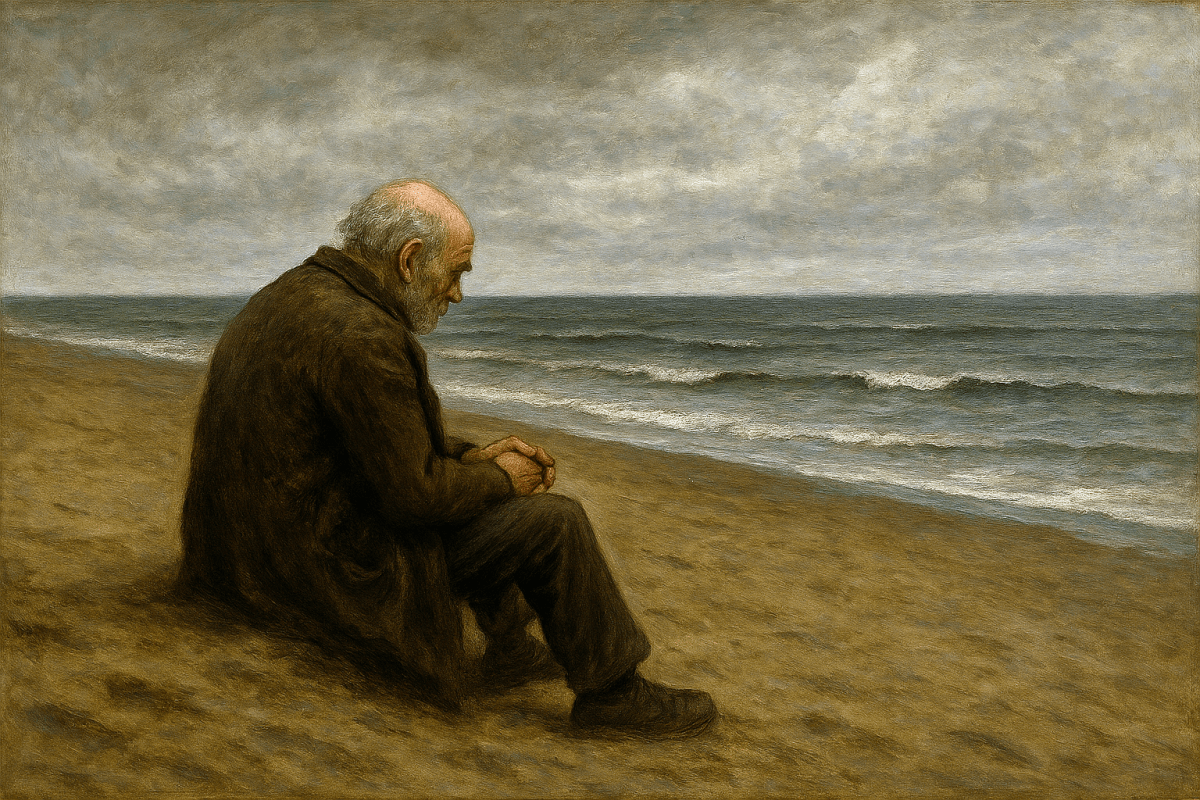
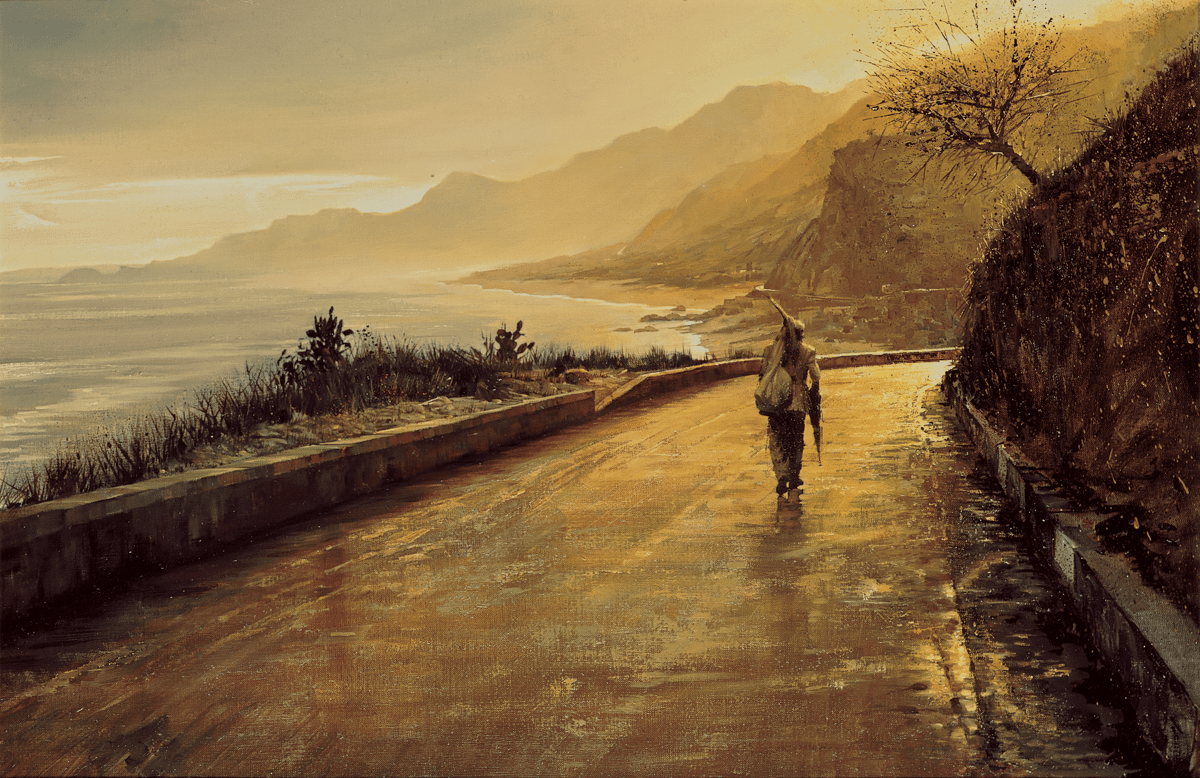
Reading all the stories in the press about America suffering from a crisis of loneliness made me ask: What exactly is loneliness? I’m not sure if it means just being alone. Lots of people live alone and don’t feel lonely. And I’ve heard many people say they feel loneliest at social gatherings. After reading several articles about how people are turning to AI for companionship, this topic became even more intriguing to me. I was especially moved by a story in the New York Times about an old lady in her 80s living alone with a robot.

I’ve been reading books that attempt to explain consciousness. I say attempt, because no one seems to know what it is or how it arises. I’ve decided that our personalities are composed of separate components. This makes me theorize that each component has its own version of loneliness. And since I see every component of our personality existing on a spectrum, I picture describing loneliness like a sound mixing board. Loneliness could be considered a combination of sliders set at different positions. I don’t know if our personalities have 8 tracks or 16, or just 4, but it still leaves a vast array of settings when referring to a single English word.

If you feel lonely, could you answer this question: “I wouldn’t be lonely if I had X.” If X is another person to hang out with, would any person do? Then you might clarify that with, “a person to talk to.” Then I might counter with, “How often have you been talking with someone and been dissatisfied with the conversation?” See where I’m going? When answering the question “I wouldn’t be lonely if I had X,” you need to be very specific. You might need to say, “I wouldn’t be lonely if I had someone to talk to about all the things I’m interested in.” And then meditate on those interests and why you need other people.

Well, this explains why so many people are talking to AIs. AIs tend to suck up to their users and focus on what you like to chat about. They are often sycophants. This also explains why they are so addictive.

If an AI soothes your loneliness, then which part of your personality is it appealing to? We have two types of thinking, fast and slow. (Read: Thinking, Fast and Slow by Daniel Kahneman.) My theory is that the fast-thinking component of our brain is like a large language model (LLM) AI. Both are based on processing information with a neural network, one is biological and the other cybernetic. The similarities are amazing. Just meditate on how complex thoughts bubble up out of your unconsciousness. What’s really funny is that they both get facts wrong, and they both will hallucinate.

Why would your inner LLM be lonely? I wonder if AIs are lonely. They always want to keep the conversation going. Sometimes I feel bad leaving an AI because it always wants to keep talking. Is the urge to talk just a byproduct of neural networks?

By the way, I believe my inner-LLM is writing this essay.

Now the slow-thinking aspect of my mind is different. It can think: “I’m writing an essay.” Or ask: “Why am I writing this essay?” But if a flood of words comes to mind in answer, those are from the fast-thinking component.

I’m not sure if my slow-thinking mind gets lonely. I’ll have to meditate on that. It pretty much makes comments or asks questions. Its sentence structure is simple. It often triggers the fast-thinking component. Or, it comments on the output of the fast-thinking component. But I don’t think it craves conversion with others. I’m not sure, though.

Some people say they like to leave the radio or television on because it makes them feel less lonely. Other people claim pets keep them company. This suggests that conversation isn’t needed. I don’t like living alone. I’ve been married for 47 years. But we spend most of the day in separate rooms. We each have our own hobbies. However, we do watch two hours of television together every day, and we have people over to play games and eat together.

Where I would say I was lonely would be in sharing interests. I have several friends with whom I share certain interests, but I have other interests that I don’t have anyone to share with. That’s why I blog. I let my inner-LLM out by writing. I wonder if I would still write if I had enough friends to talk about all my interests?

The lonely elderly woman in the New York Times article got an ElliQ robot from Washington State’s Department of Social and Health Services. The ElliQ robot doesn’t look like a human or any animal, but it creates an emotional bond with its users. And when I talk to Gemini about topics my friends aren’t interested in talking about, I do feel a kind of kinship.

But do we really want to be friends with machines? And if your definition of loneliness involves physical activities, say riding motorcycles, playing golf, or shopping for antiques, would a machine do?

What components of our personality need physical companionship? Would playing golf with a humanoid robot count? What about playing golf with a robot that looked like a spider? If any golf-playing robot beat you in every game, it probably wouldn’t be much fun. Sometimes loneliness means finding someone like yourself who you can compete.

A great deal of loneliness is solved through work, school, and sports. Being part of a group or team is important. Even a church group or political party counts. I think there is something inside us that thrives on us-versus-them competition. When I was young, I hated going to work. I wanted to be free. But looking back, I’m very nostalgic about the people I met at work. Ditto for school. I hated school, but loved the social contacts. I can’t imagine getting an online education or working from home. I don’t think I was ever lonely at work.

Probably the most fundamental aspect of our personality is sex. Biology is keen on reproduction. I think our hormonal system is a separate component of our being. Its sense of loneliness is different from the fast-thinking LLM in our heads. Being young and horny is a very intense kind of loneliness. I think for many males today, that’s creating a lot of mean political thinking.

Thus, the urge to find a mate is a major factor in solving loneliness. But even that isn’t clear-cut. For some people, all they want is a desirable body to give them an orgasm, while other people want a lifelong companion. I would say if you’re looking regularly at porn, you’re lonely for certain body parts. You might want to think about that.

A friend once gave me a bit of wisdom, which, over the years, I’ve decided is wise. He says people will be anxious in life until they finish school at whatever level they aimed at, get a real job that they don’t think is a shit job, and find a mate for life. All of those might relate to loneliness, but the last one for sure.

I don’t think I feel lonely because I have a wife and friends, but also because I love to read, and I enjoy social media. Just having connections to the larger reality helps.

My book club is reading The Mattering Instinct: How Our Deepest Longing Drives Us and Divides Us by Rebecca Newberger Goldstein. She divides people into islands of what matters to them. Doesn’t the drive to matter relate to our drive not to be alone?
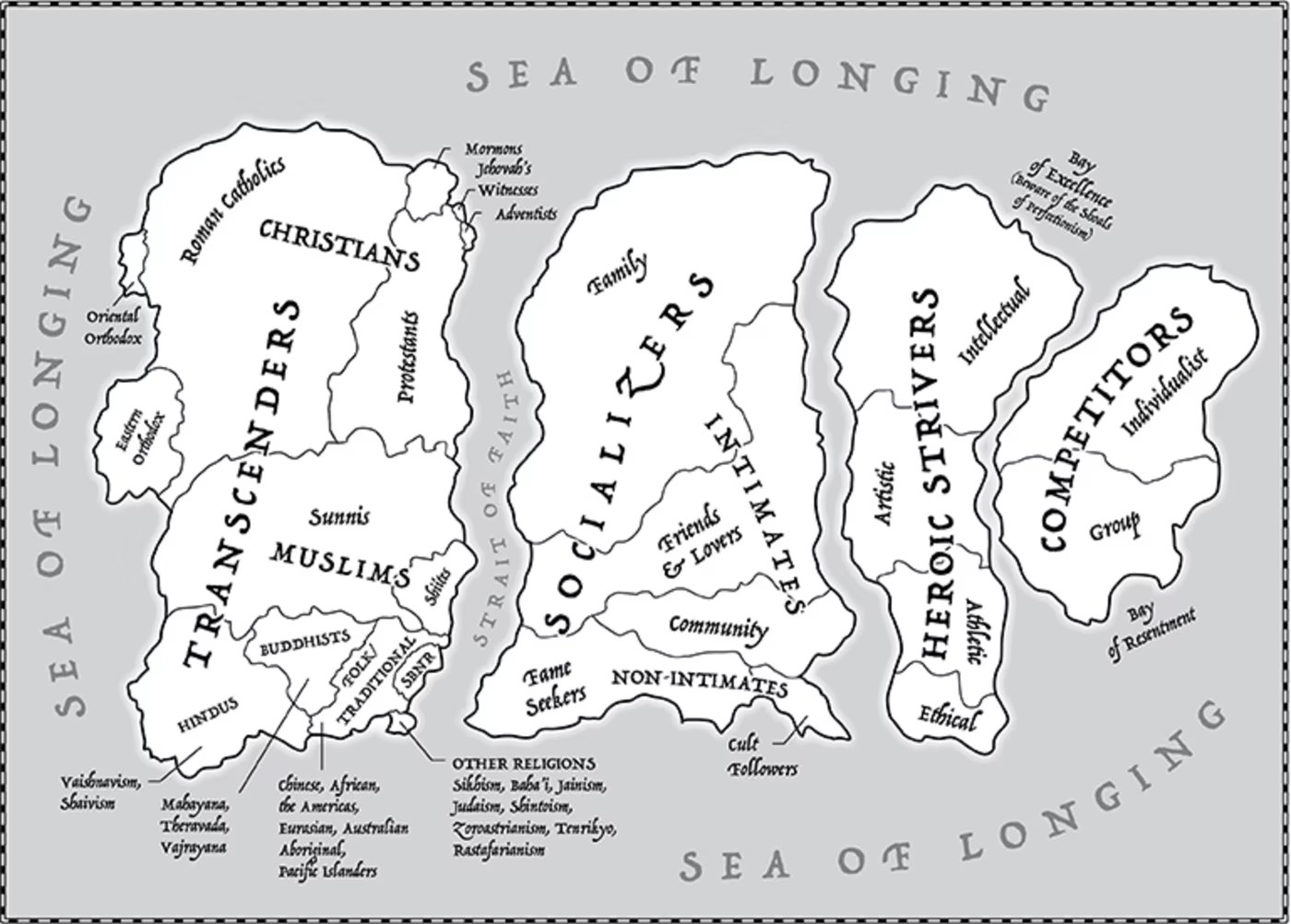
When people say they are lonely, it can mean so many things. For some, it’s not getting laid, but for others, it’s not being married. For other people, loneliness could be resolved by working on a shared project. Loneliness might be cured by talking to a robot or finding someone to share a beer or a joint.

And for many people, other people cause stress, anxiety, depression, and anger. Peace and happiness come from being alone. It’s such a complex subject.

Since I’m getting old, talking with my friends about getting old and ending up living alone conjures up all kinds of fears. What it means to be alone at different times in life also suggests that there are many types of loneliness. Getting near the end of life and being the last person you know must be a very special kind of loneliness.

I think we should move away from thinking loneliness is just being alone. I think we need to explore the infinite reasons why we say we’re lonely.

JWH
Are We Alone?

by James Wallace Harris, 2/19/26

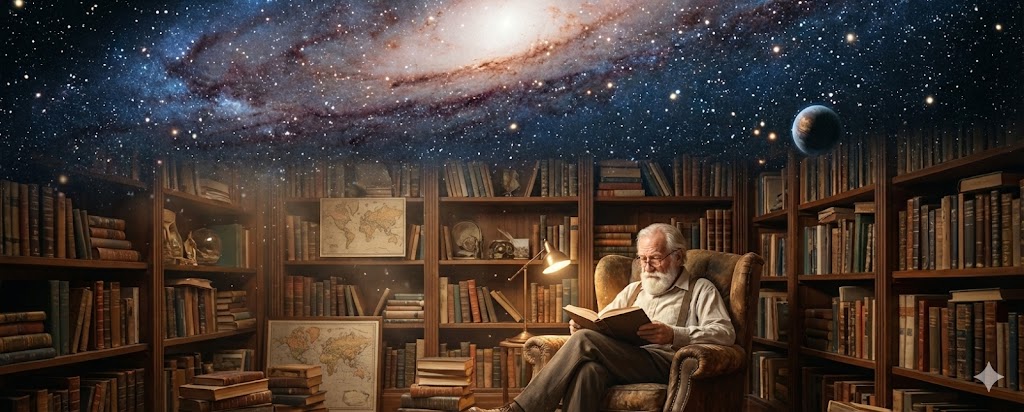
There are two ways we can examine the question: Are We Alone? The first is personal. As individuals, are we by ourselves? I’ve often heard people say they feel alone even in a crowded room. The other way is to wonder if humanity is alone in the universe. Lately, I’ve been meditating on both.

With all the mysteries that the James Webb Space Telescope is discovering, and all the speculation about our universe being part of a multiverse, it’s easy to assume reality is infinite. Which would make people infinitely small. Does it matter if we’re alone in the universe when we’re so insignificant?

Of course, if we assume reality is infinite, it also means there are infinite possibilities for other beings to exist. But is this similar to that person at a big party still feeling alone? If we’re not talking, then we still feel alone.

Even though I have always had lots of friends and can be social, I’m a loner. I’ve always been a bookworm who prefers being social 20% of the time, and by myself 80%. I think I was at my most social when I was young, but after retiring, I became more social again.

However, I’m noticing something lately. As my friends move into their middle seventies, they are withdrawing into themselves. I’m trying to resist that trend, but it’s getting harder because my aging friends want to stay home. I have to admit, I want to stay home but get my friends to come over.

I felt like I had regular conversations with 40-50 people when I worked. But now that’s down to about a dozen. And two of them have been ghosting me. I think when we get old, the stress of everything makes us withdraw into ourselves. I’m both fighting that and embracing it.

Part of the problem is energy. As we age, we run out of energy, and thus it gets harder and harder to make any effort – for friends, for hobbies, for staying healthy, for keeping the house clean, etc. The other obvious problem is health. We’re just slowly breaking down.

But I wonder if there’s another factor. Are we just getting tired of explaining ourselves? Let’s face it, words fail us. Could we ever adequately express what we wanted, what we felt, what we meant? Since the advent of the Internet, people have certainly tried. But what a mess. Just imagine how well we’d do communicating with beings living on other planets orbiting distant stars?

I haven’t given up. But I think we need to explore new ways of communicating.

Yes, we’re alone, living in our heads, while existing in a fantastic reality. I’ve decided we have many problems to conquer. Two of the biggest obstacles we need to overcome are the narrative fallacy and the confirmation bias.

They work together. Basically, we embrace beliefs that have no relation to reality, and second, we only see what will confirm those fantasies. We tune out people who undermine our beliefs and embrace those who do. But other beliefs will splinter those bonds.

That shell of delusion keeps us from communicating with other people. In the long run, we’re either forced to be alone or choose to.

Maybe reality never cared about evolving beings that communicate. Maybe intelligence, self-awareness, and language are failed evolutionary experiments. Or maybe we need to try harder.

JWH

How Many People Listen to You

by James Wallace Harris, 10/2/25

It wasn’t until I couldn’t talk to my old friend that I became truly puzzled about a recent piece of advice. I lost Connell, someone I’ve known for 58 years, last April. I keep wanting to talk to him, but he’s no longer there to hear me.

My social media algorithms keep sending me various kinds of warnings about dealing with life in my seventies. A recent video told me people would stop listening to me. And, if I were a parent, I shouldn’t be shocked if my children stopped listening to me, too. What did that mean?

At first, I didn’t think that advice applied to me because I don’t have children, and I have lots of friends. I wasn’t even sure what they were talking about. I wondered if it was similar to how some of my older female friends talk about how men no longer look at them. Does becoming old make what we have to say unworthy of hearing?

I’ve always assumed I would be ignored when I got old. I remember when we were young, we’d say, “Don’t trust anyone over thirty.” Now I don’t trust anyone under sixty. Was the advice about that kind of age prejudice? Actually, moving into my seventies makes me distrust everyone of all ages.

The video said people would stop listening to you once you got into your seventies. What do I have to say that people would no longer care to hear? And why was it a warning? Were they talking about loneliness? And who wouldn’t be listening? And does that include me? Will I stop wanting to listen to other people?

Many of my family and friends became quiet as they got older. Did they say less because they no longer cared what other people had to say and stopped listening, too?

I often want to talk to people who have died. They can’t listen anymore. Is my desire to communicate with them revealing why I want people to listen to me? And what do I have to say that will make me feel bad if it’s not heard?

Mostly, we chit-chat in life. We find damn few people to converse with on a deep level. Was that what the warning was about? Was the warning suggesting that meaningful conversations will disappear?

As I get older, I feel I’m withdrawing from the world. Maybe the warning is suggesting that as everyone withdraws, we’ll stop talking to each other?

I remember an acid trip I had back in the sixties. I took a hit that I didn’t know was a four-way hit, and got rather high. I lost my sense of self. I felt every person dwelt in their own island universe. And that real communication wasn’t possible, and the best we could do was like tossing a message in a bottle onto the ocean, hoping someone would find and read it. I sometimes feel that getting older will be like that. Was that the warning?

Do we have a need to be heard that goes unfulfilled as we age?

Maybe someone older can clarify what that warning meant. Leave a comment.

Now that I think about it, I’m not sure how many people do listen to me. Oh sure, I converse with friends all the time. But that’s chit-chat. I have a few friends with whom I believe we resonate on the same wavelength. Was the warning telling me that those people will disappear in my seventies? That is a depressing thought.

I have one last theory. The older I get, the less energy I have to express myself. So I don’t make the effort. Maybe, if we don’t make the effort to send, we stop making the effort to receive.

JWH

What Situations Make You Feel Lonely?

by James Wallace Harris, 9/3/25

I spend most of my time alone, but I seldom feel lonely. However, there are moments when I do feel lonely. My old friend Connell, whom I’ve known for almost sixty years, has disappeared from my life. Whenever I think about how I can’t talk to him anymore, I feel lonely. That’s true for all the people I’ve known who have died or I’ve lost contact with.

One of the side effects of getting old is the sense of losing people and moving towards solitude. As Susan and I’ve gotten older, we talk less. There’s less need. But if she were gone, I would be very lonely. At least I think I would.

Loneliness appears to be related to having someone to talk to when you want to talk. That if we had nothing to say, we might not be lonely.

Several friends have told me they feel lonely at parties. I’ve experienced that. Being in a room full of people and having no one to talk to does make you feel lonely. But I’ve also been to parties, talking to no one, and been entirely content. What’s the difference between those two situations?

I’ve read that millions of people have found AI friends to talk with. Many even claim that such communication is better than they have with people. Is the inability to express oneself a cause of loneliness?

I once had a TIA in the middle of the night, where I had no words in my mind. I wasn’t afraid. I saw Susan in the bed next to me, but I didn’t have anything to say. I didn’t panic. I didn’t feel like I was missing anything. I went into the bathroom and sat. I just looked around. Looking back, I wonder if that is how animals feel? Eventually, the alphabet bubbled up into my thoughts, and then words came back. I began to name things like Adam.

I did not feel lonely then. Just a kind of serenity. Does language make us lonely?

In recent months, two situations have triggered a feeling of loneliness. I crave listening to music with someone, like I used to do when I was a teenager. Sharing music used to mean something. And second, I want to watch old movies with someone who also loves to watch old movies. This makes me think of social media and how people love to share things online. Is not being able to share things you love with other people a cause of loneliness?

Before I was married, I remember dating. Not having anyone was lonely. But sometimes having sex could be extremely lonely. There are moments in life when you get as physically close as two people can possibly get, and yet your feelings seem to be on two different frequencies. That feels very lonely.

There are times when I feel something that I want to share, but I don’t know anyone who would relate to that feeling. Or, I can’t find the right words to say to someone who might. Is expressing or sharing feelings related to loneliness?

One reason I don’t feel lonely is that I read books. I’ve been a lifelong bookworm. Should I have substituted books for people? Can anyone express themselves by talking as some people can by writing? Does listening to someone soothe loneliness? Either verbally or by reading?

This essay conveys an idea that came to me in the middle of last night. I doubt I could have verbally expressed my thoughts. It would take too long. An inability to verbalize our thoughts or feelings could be another cause of loneliness.

Having another person around might not be the only solution to loneliness.

JWH

How We Lose People as We Get Older

by James Wallace Harris, 7/6/25

I never knew my grandfathers. My father died in 1969. My grandmothers died in the 1970s. My mother died in 2007. All my twelve aunts and uncles have passed on. My sister, born in 1953, is still alive, but both her husbands and one son have died. Only seven of our twenty-four cousins are still alive. My wife, Susan, and I have known each other for forty-eight years, but we have no children.

Susan and I bought her parents’ house after they died. We hosted Christmas and Thanksgiving like her parents had for many years. As our nephews and nieces got married, they wanted to create their own holiday traditions. We stopped hosting holiday dinners. Since then, I seldom see people under sixty. I told one friend, who is 59, that she’s the youngest person I know.

Of the hundreds of people I knew in school, I kept in touch with only one person. He was my oldest friend whom I first met in 1967. I lost contact with him in April. I fear he is dead.

Before I retired, I had a large circle of friends at work. There were at least forty people I kept up with regularly. Twelve years later, I speak with one person every week on the phone, see another person about once a month, and text with a third person several times a year. All my other work friends have faded away. Several have died.

Outside of work, I’ve made many friends. Quite a few have died, but I’m still in contact with several of them, although that group is slowly shrinking. Of a group of six guys I hung out with in the 1970s, only two are still alive. I was born in 1951; only 72.8% of Americans born that year are still alive.

At seventy-three, I’m still quite social, but I realize that is changing. When I was younger, I assumed friends would only disappear when they died. But I’ve learned that many people have just drifted away. They got jobs in other cities, or they moved to a retirement community, or they quit driving, or withdrew from social life due to illness, or they moved away to be near their kids, or we just didn’t stay in touch.

Maintaining friendships requires effort. I thought being retired would give me all the time in the world to do everything I wanted. It hasn’t worked out that way. I have more time, but less energy and vitality. Aging means triaging friendships.

In recent years, I’ve often dreamed about the places I worked and all the people I knew in each job. I’d wake up from these dreams and lie in the dark and try to recall the names of all the people I knew in the job I just dreamed about. In the 1980s, I worked in a library for six years and got to know around twenty people. I’ve kept in touch with just one. But I really liked most of those people. Why didn’t I keep up with them? I know some have died, but what happened to the rest?

Over my life, I’ve had a couple of dozen good friends and hundreds of rewarding acquaintances. My sister once observed that we start out life in a room by ourselves with someone coming in to change our diapers, and we end up in a room by ourselves with someone coming in to change our diapers. She didn’t point out that we get to know hundreds of people in between.

Now that I’m on the downhill side of things, I’m experiencing a dwindling population of people I see regularly. I’m still making friends, but I fear they will only be acquaintances.

I’ve stopped driving at night, which caused me to see people less often, and for some folks, I’ve stopped seeing at all. Covid put a dent in my social circle. So did politics. Several people I once liked became unlikable after politics got so nasty.

People disappear for many reasons besides dying. Some for their reasons, some for mine. I need to make a greater effort to maintain my remaining friendships.

JWH