by James Wallace Harris, 8/11/26
We humans have several cognitive tools for understanding reality. The early ones were myth, folklore, and religion. The only ones that can consistently describe reality are math and science. But a popular one today is fiction. I don’t just mean short stories and novels. But also television shows, movies, comics, video games, manga, poetry, lyrics, etc. I think reading and analyzing literary stories are a unique kind of microscope for studying reality.
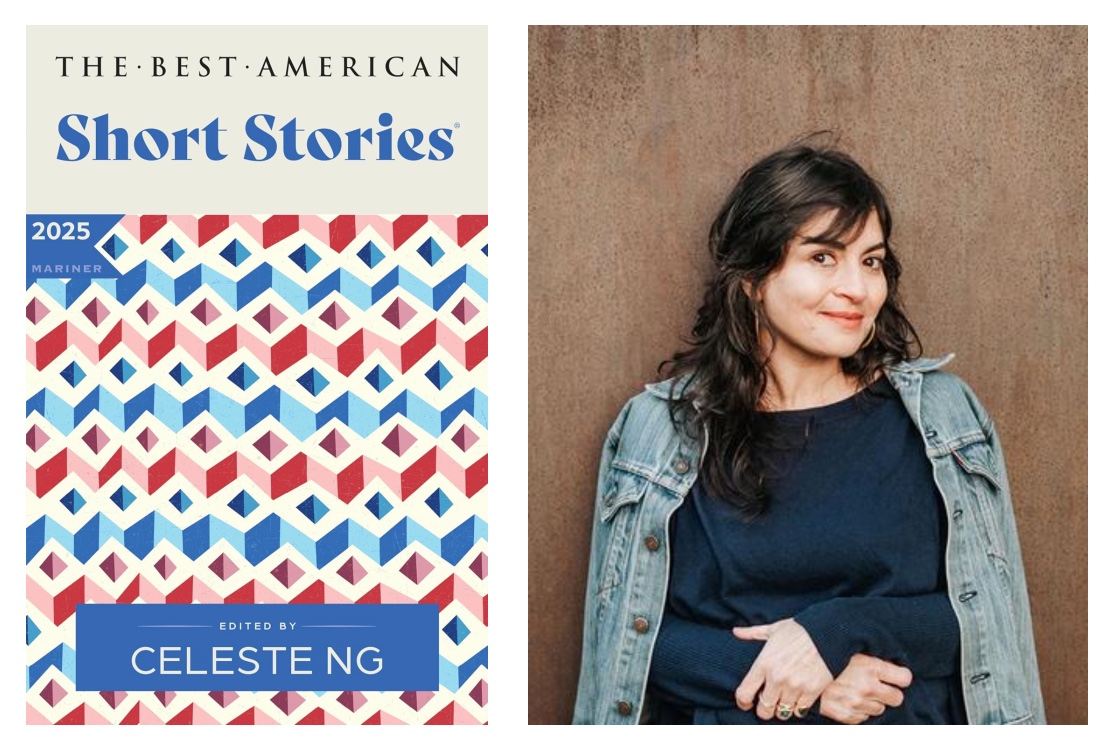
The thing about fiction is everyone interprets it differently. I like that. It helps to consume other interpretations. Luckily, I have Karen Carlson at A Just Recompense and Jake Weber at Workshop Heretic to follow behind in reading The Best American Short Stories volumes.
For most of my life, I’ve read science fiction. I review it on Classics of Science Fiction. Science fiction is mostly genre fiction. Genre fiction is like modern art; it doesn’t try to portray reality, but create an artificial reality. Genre fiction is admired for creating something beautiful that doesn’t exist in reality. Literary fiction is beautiful for describing reality.
When I was growing up, science fiction fans would call literary fiction mundane fiction. “Abject Naturalism” by Sarah Braunstein describes a very mundane situation. Now that I’m older, stories about interstellar travel bore me, and I’m more fascinated by the mundane.
You can read or listen to “Abject Naturalism” at The New Yorker if you have a subscription. If you have a Spotify account, you can listen to the story read by the author. And, of course, you can read it in The Best American Short Stories 2025.
Toni is the mother of 10-year-0ld Amalie. My guess is Toni is around 44 because she gives two backstories ten years apart. The first jump is twenty years earlier, when Toni first met Amalie’s father in graduate school. The second jump is ten years back, when she briefly reunited with Amalie’s father and got pregnant with Amalie.
Jake Weber at Workshop Heretic did an extensive analysis of the title: “Abject Naturalism.” I recommend reading it because I don’t want to repeat his work. Weber says:
This emphasis on the “physiological” nature meant naturalism was more likely than realism to focus on humanity’s grosser functions, its various excretions and weird growths. It’s borderline scatalogical, but not like a gross-out comedy; more like a gross-out horror. In this sense, naturalism matches the meaning of the term “the abject” from theorist Julia Kristeva. I’ve delved more deeply into the meaning of “the abject” in this analysis of its use in female horror stories, but here, I’ll define the abject briefly as whatever reminds us of our status as animals, as blood-and-meat carrying bodies that die and decay. Women are particularly depicted as abject because, among other things, their monthly bloody cycles and their fertile bodies remind us of our “naturalism.” If we think of naturalism in this way, and this meaning of abject, the title becomes something like “Abject Abject.” A double dose of abjection. Weber gives plenty of evidence to support this with quotes from the story.
Weber cites plenty of points in the story to support this view. Especially connecting it with Toni’s desire to write literary horror stories when she was in writing school. By the end of “Abject Naturalism,” Toni feels positive about writing again, and we have to wonder if “Abject Naturalism” is something she would have written?
But that is not how I focused on “Abject Naturalism.” For me, it was about two things: freedom from fear and writing. Karen Carlson at A Just Recompense was closer to my view when reviewing “Abject Naturalism.” I completely agree with this.
I once took a class with a professor who insisted that every poem Robert Frost wrote, no matter what it was about, was really about writing poetry. Two roads in the wood? Poetry. Woods on a snowy evening? Poetry. Walls, birches, death, gold, choosing a star? All about writing poems. I got the sense, after I’d read this story a couple of times and looked up the title, that this story is all about writing a story.
I believe all literary fiction is about writing, but it seems more obvious when the protagonist is a writer, or in Toni’s case, a failed writer. It’s even more revealing when we get a title like “Abject Naturalism.” To me, literary fiction is always a kind of metafiction. While consuming a literary story, I always ask myself, “Why did the writer write this story, how did they write it, is any of it autobiographical, and what is the writer really telling us?”
I couldn’t find much about Sarah Braunstein, but this paragraph from her contributor’s page is very revealing.
Some years ago, my elementary-aged child went for a jog in the neighborhood, promising to stay alert and to avoid strangers. He returned with a telescope a stranger had been throwing away. The man, he said, had told him he could buy a new part for it on the web. My son and I ordered some plastic mirror thing for $3 on eBay, but we could never get it to fit, and the telescope now sits in the basement wrapped in cobwebs. From the day he came home with it, the telescope radiated with meaning. It felt like the set-up of a short story on my front stoop, the kid and the object. The telescope lets the child see the cosmos, a world beyond the household, beyond what the mother knows. I imagined a mother who would feel threatened by this, who would wonder about the man . . . who might even go to his door to complain. She would be lonely, half-aware of her motivations. When she knocked on his door and I saw the entryway to Marco’s living room, his reading glasses, I realized this might be a story about real estate, or friendship, or love . . . the narrative opened up to me, a Venn diagram of these elements. I began to imagine a daughter who is prickly and tart, always one step ahead of her mother. She has a band on her wrist that counts steps, another device Toni did not give her, and downloads apps without permission on Toni’s phone. Poor Toni! It began to make me laugh, the Sisyphean task of controlling a young adolescent with a burning mind. Well, what about her own burning mind? Toni as a former creative person came into focus then. I wanted to write about so many things, to say something about grief, creativity, doubt, fear . . . finding my way to the end of this story was a challenge. At one point Toni says she stopped writing because she never could figure out how to end things. “Abject Naturalism” sat in a file for a long time until I could understand what its ending needed to do.
So she had a kid about Amalie’s age, but how old is she? In 2010, the National Book Foundation recognized her as “5 Under 35.” I guessed that Toni was around 44, so Braunstein could be of a similar age. From what little I did find about her, I could imagine Braunstein following Toni’s path, as well as the path Toni didn’t take, the one Amalie’s father took. Braunstein attended the Iowa Writers’ Workshop, the Mecca for MFA students. And “Abject Naturalism” was published in both The New Yorker and The Best American Short Stories 2025. Braunstein has two novels and a collection available at Amazon, and she teaches creative writing at Colby College in Maine. Doesn’t that sound like Amalie’s father?
Literary fiction gives writers a chance to work things out. I’m currently rereading J. D. Salinger, and I consider his stories metaphorical roman à clef. I want to believe literary writers are telling us something about their lives, even when the plot and characters don’t match their own.
“Abject Naturalism” really begins when Amalie, at ten, claims she’s old enough to go jogging by herself. This terrifies Toni. Amalie wants her freedom. Toni realizes she must give her freedom, but knows that she, herself, is not free. Toni resents that Amalie’s father chose to become a successful writer rather than being a parent, but was that freedom?
Now, I identify with Toni in two ways. First, I’m also an MFA dropout who eventually gave up the dream of becoming a writer. Even though we never had children, the thought of letting a kid go out of the house on their own terrifies me.
Which is odd, because in 1957, when I was just 5, I walked to my first day of 1st grade by myself. My parents asked me if I knew where the school was. I said yes, but I didn’t really. I just went outside and followed all the other kids in the neighborhood, heading somewhere. By the time I was 6 and 7, I was roaming the neighborhood for blocks. When we moved to New Jersey in 1959, and I was 8, I roamed across farms and woods. One day, I led my 6-year-old sister into the woods to see how far we could go and ended up in town. By chance, my father was driving home from work and saw us.
My father was surprised to see us. He asked us how we got into town. But when we explained, he didn’t yell at us. He just drove us home. I’ve always wondered what I would have done if he hadn’t spotted us. Probably returned the same way we came. I was good at not getting lost.
The first half of “Abject Naturalism” dramatises Toni’s fears of letting Amalie roam free. If I had had kids, I don’t know if I could let them out of my sight. In today’s New York Times, I read “Should Letting Children Play Alone Outside Be a Crime?” By today’s standards, my parents would have seen jail time.
To make matters worse, Amalie comes back from her jog lugging a broken telescope. She tells Toni a man gave it to her. Toni freaks out at the thought of Amalie talking to strangers.
The next day, when Amalie is in school, Toni goes down the street and confronts the man, Marcos. He’s described as an old guy in his mid-to-late sixties. Toni calmly tells him that he shouldn’t talk to children because it conditions them to feel safe talking to strangers. Marcos explains he hadn’t really struck up a conversation. He said Amalie was looking at the telescope he put out on the street in the trash. He merely told Amalie she could have it, and that it was missing a part that could be bought cheaply on eBay.
This calms Toni some, but she still worries.
Then the story takes a different turn. Toni keeps returning to visit Marcos. In a way, she slowly gives herself freedom too. The hard part of the story for me was believing a woman in her forties would be romantically attracted to a guy in his sixties. Toni does worry about losing her low-rent apartment in a gentrified neighborhood. Does she want Marcos for his house? She imagines her and Amalie moving into it. But she also believes Marcos loves her, but she’s too embarrassed to say that to her friends.
Toni is constantly running a script in her head about her fears. When Amalie demands some very limited freedom, Toni starts allowing herself a small bit of freedom.
The ending of the story is happy, and even kind of sappy. Toni even fantasizes about writing again. She pictures herself setting up a writing location in Marcos’ house.
There is actually too much to analyze in “Abject Naturalism.” In the beginning of the story, we’re given Toni’s backstory with Amalie’s father. This is one kind of love story. But we see another kind of love story at the end, with Marcos. Unfortunately, we are only told what Amalie’s father and Marcos might be thinking.
It would have been a whole other level of naturalism/realism if we had their points of view. Some writers do attempt such multiplex perspectives.
There was something else I wanted to analyze. Like many MFA-type literary stories, there are lots of flashbacks. This means we’re often told information rather than experiencing it dramatically.
I just reread “A Perfect Day for Banafish” by J. D. Salinger. It was an exquisite example of showing rather than telling. It was so concise. So immediate. Reality glittered. I’m sad that we don’t see this style of writing much anymore. Most of my bookworm friends that I try to get to read The Best American Short Stories tell me they don’t like that kind of writing. I will admit that “Abject Naturalism” conforms to a modern MFA-style of writing that feels like a genre of its own.
Like I said, everyone reads a short story differently; just read the comments here. Some of them said they normally get tired of this kind of story, but this one is a good one of that type.
If you read this story, let me know what you thought about it.
JWH
 Auxiliary Memory