
by James Wallace Harris, 6/2/26
When I first took computer classes in 1971, the school’s main computer was an IBM 360. That represented The Age of the Mainframe. At the time, The Age of the Minicomputer was coming into being. But what I fondly remember is The Age of the Personal Computer developing at the end of the 1970s. Back then, they were called Microcomputers, but that’s a weird term to use now, considering how small computers have gotten with smartphones and smartwatches.
I remember the Internet coming to my university in the 1980s and the World Wide Web in the 1990s. Each new technology ushered in a new age for society. Sometimes it’s not new technology, but how it’s used, such as social media and cloud computing. The web has been transformed several times by new coding languages and techniques.
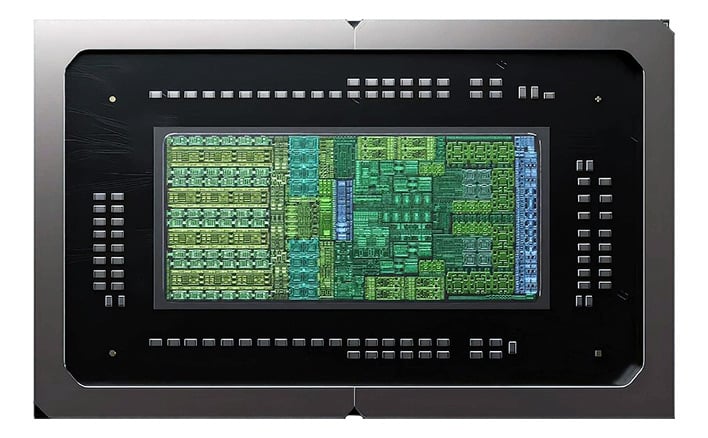
We’re now a few years into The Age of Artificial Intelligence, but I’d say it’s only at the stage of 8-bit computers back in the late 1970s. Yesterday, Nvidia announced a new line of laptops using the RTX Spark chips. They will run Windows. In some ways, this is just Microsoft catching up to Apple when it dropped Intel and switched to the M1 chips.
Windows and all its apps will have to be rewritten and recompiled for the new Nvidia chips. Apple and its app developers had to do the same thing. But how many people will buy these machines? Apple transformed itself and the industry by moving to RISC chips. Is this what Microsoft plans to do, too?
How many people will buy these new Nvidia machines? The current DGX Spark machines run $3,600 – $5,000. That kind of money is reasonable if you’re trying to set up local AI compared to custom-building a PC with high-end graphics cards. And configuring a Mac with 128 GB of memory runs as much.
Are we looking at a new age of personal computers with 128 GB to 1 TB of memory? How many people will spend $5,000 to $10,000 or more on such machines? Especially now that Apple has created a growing market for $599 computers?
Is computer technology evolving past personal computing? I’m typing this on a Mac Mini M4, which I paid $549 at Amazon. It does everything I want. It’s completely quiet and so fast that I no longer worry about speed.
How many individuals are willing to spend $5,000 to have a private AI? Currently, most people use the online frontier model AIs for free or $20 a month. At $20 a month, you can use the latest frontier model AI for 250 months for $5,000. Open source AI models that can run on 128 GB are getting pretty damn good, but still not as good as the frontier models.
I can understand businesses wanting to keep their data private and using local AI. But what do individuals have that they need to keep secret? Generating porn? Running internet scams? Does that great American novel you’re writing need to be hidden from AIs?
When Apple came out with the MacBook Neo, I wondered if they were killing their own market for MacBook Airs? I’d say 90% of their users would be happy enough with the $600 machine instead of springing for the $1200 machine. Hell, there are a lot of people buying the more expensive MacBooks that don’t need anything more powerful than the Neo.
I have an M1 MacBook Air and feel no need to upgrade.
Computers became fast enough years ago for the average user. Most families gave up desktops, and unless you’re a student or need a computer for work, you don’t even need a laptop. Many of my friends do all their computing on a phone or tablet. And most of my friends who do use AI use it from their phones.
Many economic pundits talk about an AI bubble. Already, corporations are pulling back from building all those billion-dollar data centers they had planned last year. There are countless scientific, medical, and business tasks for those new RTX Spark chip computers. But do we need that power for personal computing? Especially when the average Joe is better off spending $20 a month for Gemini.
No one needs an Nvidia computer to run Microsoft Office. And only a small percentage of users subscribing to Adobe’s Creative Suite will need one. There are high-end applications for such computers, but how many are used in people’s homes?
How many Apple users really need the Pro, Max, and Ultra versions of the M chips? How many M4 users really need to upgrade to the M5?
There might be two new ages of computing dawning. The Age of Its Fast Enough Computing, and The Age of Its Never Fast Enough Computing.
And with every year, the percentage of Its Fast Enough users will grow ever closer to 100%.
If data centers weren’t jacking up the price of memory and storage, we’d be seeing fantastic $300 computers for sale everywhere. Ones that were more than good enough for most people.
JWH

