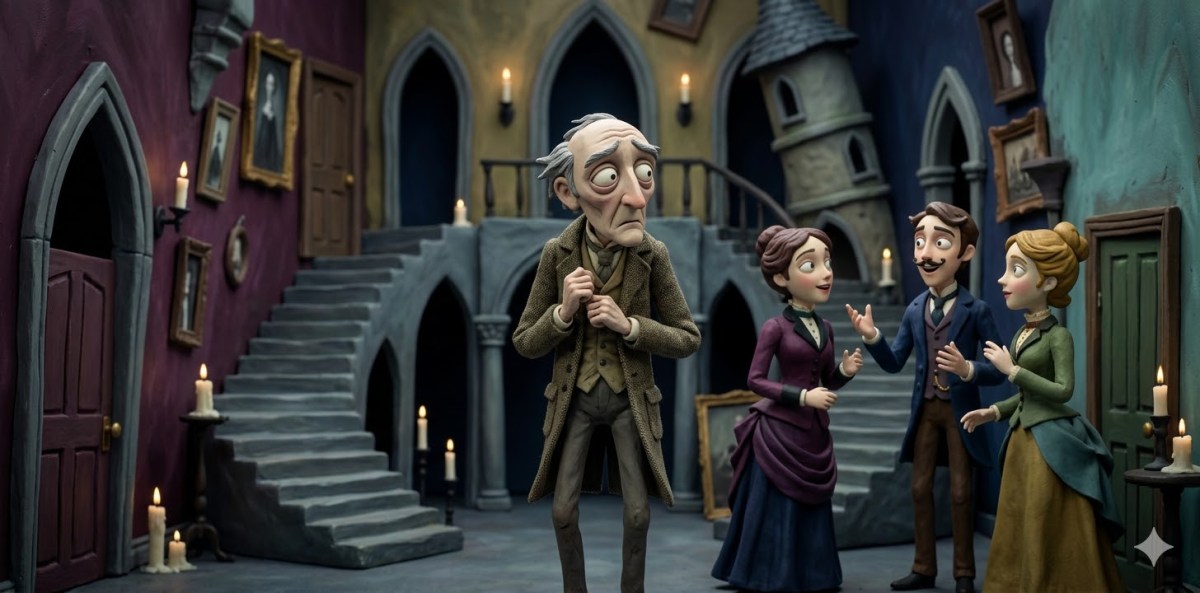

Are My Thoughts Like Your Thoughts?

by James Wallace Harris, 6/15/26

In Chapter 3, “Thought” from A World Appears, Michael Pollan works with psychologist Russell T. Hurlburt, who has been collecting thought diaries from his subjects for over fifty years. The technique Hurlburt uses is called Descriptive Experience Sampling (DES). Subjects wear a device that randomly beeps in their ears. When they hear the beep, they write down what was going on in their head just before the beep. Hurlburt says:

I have sampled with some people whose inner experience is characterized almost exclusively by inner speech; with others whose inner experience is characterized almost exclusively by images, or by sensory awareness, or by unsymbolized thinking, or by feelings; with others whose inner experience is characterized by a combination of all those; with some whose inner experience is characterized by many simultaneous events; with others whose inner experience is characterized almost exclusively by one event at a time; and so on. So, yes, I think people are importantly different when it comes to inner experience.

So when you ask a person, “What are you thinking?” the answer might not be anything like how you think. For the most part, people assume everyone thinks like they do, but Hurlburt’s research shows that isn’t true.

I’ve kept a running chatter in my head my whole life, except for when I’m unconscious. However, as soon as I wake up, the voice returns. It’s weird to think that some people don’t have this inner voice. That makes me think of the science fiction novel Blindsight by Peter Watts. Watts imagines an intelligent alien race that lacks conscious self-awareness.

My inner voice is almost always analytical, always commenting on what I’m experiencing. If I have a pain in my abdomen, the voice is proposing theories as to what is causing the pain. But it’s not always like this.

When I was younger, I had constant fantasies about everything. I was a little Walter Mitty. I’ve always had imaginary conversations in my head, usually about what I was going to talk about with people in the future. Of course, I had lots of sexual fantasies, but I had many more kinds of fantasies. If I saw a movie and didn’t like the plot, I’d reimagine it with a new plot. If I didn’t like the actors, I’d recast the film in my head. I’ve mentally written hundreds of science fiction stories. For every blog post I write, I’ve already written it several times in my thoughts.

I found it fascinating that Hurlburt said some people don’t do this either.

But then, when I discovered I had aphantasia, my mind boggled trying to imagine how other people see inside their minds. I do sometimes have flashes of visual imagery. My dreams are very vivid. And sometimes if I’m tired in just the right way, I have waking dreams. When I was young and smoked dope, the visual floodgates would open.

I do “visualize” things in my head, but without pictures. I have good spatial awareness and can intuit how machines work. I have another sense for how things look. It’s very hard to describe. I wonder if it’s like how blind people develop spatial awareness?

Hurlburt’s research also showed that people see and think less in their heads as they age. That makes me wonder if I had better mental imagery when I was younger. I do feel my inner chatter is slowing.

One reason I believe that is because when I first tried to meditate in the 1970s, I had a hell of a time quieting that inner voice. Now I can relax, and it will shut up for about as long as I can hold my breath. And it feels like that. The longer I shut up mentally, the pressure builds, sort of like needing to take a breath when you’re holding it. Thoughts eventually explode out.

I’ve often wondered why most people aren’t addicted to music like I am. When I play music, it stimulates my brain in many ways. My “thinking” goes into overdrive, and my mind is flooded with ideas. Also, music creates all kinds of emotions or enhances existing emotions. Music makes me mentally high, but it’s unlike the old marijuana high that made my body high, too. I need to hear one to two hours of music a day, so it does feel like an addiction.

I’m not sure what Hurlburt means by “symbolized” and “unsymbolized thinking.” I might do that, or I might not. Nor do I know what he means by only being able to think of one event at a time. I know I’m experiencing many sensory events at once, but I think I only focus on one at a time. Are some people multichanneled? Is that like having multiple picture-in-picture on your inner TV screen?

I have to assume I’m a bookworm because of the way I think. Reading fiction is like having your own artificial reality goggles. However, I don’t visualize scenes like other readers do.

I assume I write blogs because it feels like I’m organizing my thoughts. I assume that I would think like a writer, say, like Michael Pollan. But the more I read about Hurlburt, the more I wonder.

The fact that there is so much variation from person to person in our modes of thinking is itself an important finding of Descriptive Experience Sampling. Most of us assume that our inner lives must be substantially similar—not necessarily in content but in the form our thoughts take. Hurlburt has suggested that we fail to recognize the diversity of thinking styles because we lump them all together under that single word—thinking—and assume we mean the same thing by it, though in actuality we don’t.

“When a visualizer says they are thinking about something,” Hurlburt said, “they mean they are seeing a visual image of something, and if they are predominantly inner speakers, they mean ‘I was talking to myself.’ And the reason for this, I speculate, is that when you were two and learned that when your mother, or whoever it was, says, ‘I was thinking,’ that meant something that was happening inside Mom that you couldn’t see. So when I want to tell you whatever is going on inside me, that’s ‘I’m thinking.’ But ‘thinking’ means something different from person to person.” If Hurlburt is right, the word thinking has allowed us to overlook these differences and make the unwarranted assumption that other people are having inner experiences more or less like our own.

Pollan, Michael. A World Appears: A Journey into Consciousness (pp. 146-147). Penguin Publishing Group. Kindle Edition.

Pollan was surprised when Hurlburt expressed what his DES diaries suggested:

Hurlburt proceeded to tell me that he didn’t think I had much inner experience at all. I was on the far end of a spectrum that ran from a rich inner life of words, images, and sensations to one…well, one lacking all that. Apparently, the fact that I had so much trouble distinguishing context from the moments under analysis (and kept bringing up things he considered irrelevant) suggested to him that I was, in effect, backfilling moments empty of actual inner experience.

I was flabbergasted, and reacted a little defensively.

Hurlburt said that he had arrived at his conclusion by a process of elimination: Most of my beeps lacked words, lacked images, lacked sensory awareness. Okay, but what about unsymbolized thinking? My non- or preverbal thought processes seemed to fall neatly into this mode. Hurlburt acknowledged that we had turned up a few instances of this, but “unsymbolized thoughts are complete thoughts,” he explained, not the misty “gists” of thought I had described. Subtract those and he was left with one uncomfortable possibility: that I didn’t have nearly as much of an inner life as I’d always assumed.

My interiority, he seemed to be suggesting, was sparsely furnished.

Has it always been this way? I wondered. Hurlburt pointed out that the ability to generate inner experiences depends on cognitive resources that decline with age. For example, he’s found that as people get older, their inner seeing tends to deteriorate, fading from full-color imagery to black and white. He cited James, who writes that “the older men are and the more effective as thinkers, the more, as a rule, they have lost their visualizing power…. The present writer observes it in his own person most distinctly.” Hurlburt thinks that all forms of inner experience may be subject to the same fading over time.

Pollan, Michael. A World Appears: A Journey into Consciousness (pp. 148-149). Penguin Publishing Group. Kindle Edition.

Can we know ourselves? Many philosophers and scientists say we can’t understand consciousness because we’re studying it from the inside out. Wouldn’t it be wonderful to step outside of ourselves and study who we are?

It’s quite commonly known that people see colors differently. For example, when I play Rummikub with friends, they claim the green tiles are blue. This is really no different than how different monitors show the same .jpg file with different-looking colors.

This morning, my inner voice was chatting about how we see the world, and asked if machines perceive reality differently. Does a camera see a vista as objective reality? Or are the chemicals in film, and the sensors in digital cameras, also limited by physical constraints?

It is rather weird that we have no idea what reality looks like. And it seems we have no idea what we really look like on the inside.

JWH

I Need To Shut Up About Getting Old

by James Wallace Harris, 3/16/26

I find getting old fascinating. And I enjoy writing about aging. I know I’m not saying anything original, but each new observation feels new to me. But I’m starting to see that other people don’t see getting old as a rewarding philosophical experience. Even though I’m amused by my mental and physical failings, talking and writing about them is bumming out some family and friends.

My newest observation, which I should have made much sooner, is that folks don’t see me by my view of aging, but theirs. They see the aged as depressing, frail, weak, useless, and something to either avoid or not think about.

Decades ago, I noticed that famous people in their late seventies and eighties were disappearing. Then, when their obits showed up, people would say, “I thought they were dead years ago.” Is that the proper etiquette – to hide away when old?

I think some people want to grow old like Mick Jagger and Keith Richards – to publicly rock out through their eighties, (and maybe nineties?). But most people, when they get wrinkly, prefer to hide from view. I don’t want to hide, but is that what young people expect? I’ve overheard young people criticizing people in their fifties, claiming they should not be seen.

Everyone loves to see centenarians who are still working full-time at amazing jobs. Or oldsters that still define cool.

I now assume the unwritten law is that we don’t want to see people who act old. If you’re old and act young, you’re good, but not if you act your age. But I’ve often seen young people making fun of old people acting young.

That means I need to act young, but only to my friends my age. I’ve started paying attention to other old people. Most are either quiet about aging or good at acting young (younger?).

And I’ve discovered a second good reason to shut up about life on the right side of the bell curve of aging. My recent social media feeds have been getting strange. The algorithm has noticed what I’ve been saying. At first, it sent me inspirational suggestions about being positive in my seventies. Then it sent me warnings about not offending young people. After that, it sent me info on which surgeries to get and which to avoid. Then last week, things started getting even stranger. Videos about assisted living and nursing home care started showing up.

Finally, and eeriest yet, are the videos about hospice care.

Yes, I need to shut up about aging. I want my feed to go back to home repair how-tos, wild animals being friends with other wild animals, and questionable young women asking me to visit their sites. (At least the digital con artists were under the illusion I’m still young enough to want young women, or willing to pretend that I think I am.)

Since I don’t want my friends and family to feel sorry for me, I need to write about topics that don’t age me. Also, I need to be careful what I say so my feeds don’t scare me.

I wonder how the feeds will react to this post?

JWH

Finding Purpose in Retirement

by James Wallace Harris, 3/11/26

Now that I’ve been retired for over a dozen years, I can begin to generalize about this phase of life. I had a good job, one that gave me satisfaction. I was never a big success, nor ambitious, but I thought my work was useful. I felt I helped people. I spent thirty-five years working at a university, and most of that time in the College of Education.

Because we prepared teachers and counselors, I thought I was indirectly helping the world by supporting faculty, staff, and students with their computers and computer labs. I also programmed the database to track students seeking licensure, and collected statistics for the college, university, state, federal government, and several accreditation agencies. I even helped a campus Kindergarten and Elementary School with their computers. All of that gave me a sense of purpose.

I didn’t think I’d miss work when I retired, and I didn’t for many years. But after a while, I realized that I wasn’t doing anything useful. During my work years, I never worried about having a purpose. Looking back, I realized I did have one, and it was fulfilling. 

At this point, I need to confess. By the time I retired at 62, I was worn out. I just had a stent put in my heart. I had very low vitality. Even more than physically worn out, I was mentally exhausted. I came to the CoE in the 1980s, when the colleges could hire their own computer guys, but just before retirement, the university decided that all computer techs of any kind had to be part of IT. The IT department wanted all programs written in their designated language using their designated framework. Plus, they wanted me to give up my file and database servers.

Mentally, I couldn’t learn a new language. For years, I had been trying to upgrade my Classic .asp programs to ASP.NET. In my late fifties, I couldn’t make the jump from procedural programming to object-oriented programming. Programming and system administration became only a part-time job for me. Programming required long hours of focused programming. However, frequent interruptions from faculty, staff, and students for computer support kept me from programming. The college hired two guys to help me, but they could never keep up. It was actually a good thing that the IT department was taking over.

That frustration of not being able to devote myself to programming and not being able to grasp new programming concepts was a psychological revelation. I knew mentally I couldn’t adapt. When I trained the young woman from IT to take over the programming part of my job, she understood what I was teaching her as fast as I could talk. It was amazing. I realized then I was old. Her young mind worked many times faster than my old brain.

In other words, there was a reason to retire. However, waiting around to die isn’t particularly fulfilling. I thought retirement would give me all the time in the world to pursue several big dream projects. I thought about getting an M.S. in computer science. I wanted to prove I could catch up. I also wanted to write that science fiction novel I always fantasized about writing.

As the years passed, those ambitions faded away. I want to blame aging, but I don’t know if that’s true. I turned my aim to smaller goals. I thought maybe I could learn Python, an easy language, and write short stories. Those things didn’t happen either. I missed having a purpose.

Recently, I’ve discovered something else important about life. In old age, people with children are very different than people without children. Having children also gives people a purpose. Susan and I never had children. Our parents and all our aunts and uncles are long dead. Over half of my cousins are dead. And we seldom see our nieces and nephews. 

Susan and I now depend completely on friends. That’s very rewarding. However, I see friends with children and grandchildren slowly moving away. And that’s understandable. 

Among our retired friends, there’s a distinct difference between those with children and grandchildren and those without. Old folks with descendants have an inherent purpose.

I could volunteer, but I never found that satisfying, the few times I’ve tried. And now, in my mid-seventies, I don’t have the energy.

Ultimately, I found purpose in small pursuits. Doing housework and keeping up the yard keeps me busy, and it’s somewhat fulfilling. Writing blogs gives a sense of purpose. I try to help friends when I can. I’m still a computer guy.

It’s funny, though, but since I turned seventy, whenever I offer to help women friends with things they can’t physically handle, they tell me no. They worry I’m too old and might hurt my back. That reminds me of an old George Carlin routine where he talks about turning 70. He joked that he only had to reach toward something heavy and people would rush over and pick it up for him. I still feel like I can do physical things, but other people see me as being weak. I don’t like that. Several times I’ve been to Ikea or Home Depot and was loading my pickup when young people rushed over to help me. Twice, young women even got out of their cars to offer their help.

It’s tough when everyone expects you to be weak, which might explain why my lady friends stop wanting my help. Maybe getting old makes everyone more fussy about doing things for themselves.

For the first decade of my retirement, my hobbies helped give me purpose. But something is changing. I’m slowly letting my hobbies go. I think it’s because of dwindling energy, but aging might be eroding interest, too.

It’s funny how little things become more important. Susan loves to watch old TV shows while doing needlepoint. I bought a NAS, and I’m ripping DVDs of her favorite shows. It’s given me something to do for a few months, and that has been rewarding. Around me, the world is falling to pieces, but ripping DVDs provides a little bit of purpose. That’s insignificant to the bigger world, but weirdly valid in my diminishing world.

Nowadays, I go from one little project to the next. Currently, that project is setting up a post for Susan’s bird feeder with a video camera. No matter how small the project, they always end up setting me with challenges to overcome. For example, the 4×4 post I bought to fit into an existing 4×4 concrete hole in the backyard is just so slightly too big. The previous post had been planed down some. I don’t have a wood planing machine. I considered buying a hand plane, but my AI recommended a wood rasp, which I’ve ordered. After I’ve planed down the lower 18 inches, I’ve got to put on wood sealer and then paint it. This little project will keep me busy for days.

That’s where I find purpose now, with little projects. And as I get older, I expect those projects to get ever smaller. I’m reminded of a short story by R. A. Lafferty, called “Nine Hundred Grandmothers.” A human explorer visiting an alien planet discovers an intelligent species that never dies. They just get older and smaller. He tracks down the most ancient ones in a cave, where they line a shelf on the wall, always getting smaller. That’s how I picture myself getting older, pursuing smaller and smaller projects.

JWH

Are We Alone?

by James Wallace Harris, 2/19/26

There are two ways we can examine the question: Are We Alone? The first is personal. As individuals, are we by ourselves? I’ve often heard people say they feel alone even in a crowded room. The other way is to wonder if humanity is alone in the universe. Lately, I’ve been meditating on both.

With all the mysteries that the James Webb Space Telescope is discovering, and all the speculation about our universe being part of a multiverse, it’s easy to assume reality is infinite. Which would make people infinitely small. Does it matter if we’re alone in the universe when we’re so insignificant?

Of course, if we assume reality is infinite, it also means there are infinite possibilities for other beings to exist. But is this similar to that person at a big party still feeling alone? If we’re not talking, then we still feel alone.

Even though I have always had lots of friends and can be social, I’m a loner. I’ve always been a bookworm who prefers being social 20% of the time, and by myself 80%. I think I was at my most social when I was young, but after retiring, I became more social again.

However, I’m noticing something lately. As my friends move into their middle seventies, they are withdrawing into themselves. I’m trying to resist that trend, but it’s getting harder because my aging friends want to stay home. I have to admit, I want to stay home but get my friends to come over.

I felt like I had regular conversations with 40-50 people when I worked. But now that’s down to about a dozen. And two of them have been ghosting me. I think when we get old, the stress of everything makes us withdraw into ourselves. I’m both fighting that and embracing it.

Part of the problem is energy. As we age, we run out of energy, and thus it gets harder and harder to make any effort – for friends, for hobbies, for staying healthy, for keeping the house clean, etc. The other obvious problem is health. We’re just slowly breaking down.

But I wonder if there’s another factor. Are we just getting tired of explaining ourselves? Let’s face it, words fail us. Could we ever adequately express what we wanted, what we felt, what we meant? Since the advent of the Internet, people have certainly tried. But what a mess. Just imagine how well we’d do communicating with beings living on other planets orbiting distant stars?

I haven’t given up. But I think we need to explore new ways of communicating.

Yes, we’re alone, living in our heads, while existing in a fantastic reality. I’ve decided we have many problems to conquer. Two of the biggest obstacles we need to overcome are the narrative fallacy and the confirmation bias.

They work together. Basically, we embrace beliefs that have no relation to reality, and second, we only see what will confirm those fantasies. We tune out people who undermine our beliefs and embrace those who do. But other beliefs will splinter those bonds.

That shell of delusion keeps us from communicating with other people. In the long run, we’re either forced to be alone or choose to.

Maybe reality never cared about evolving beings that communicate. Maybe intelligence, self-awareness, and language are failed evolutionary experiments. Or maybe we need to try harder.

JWH

Why Was Last Night’s Dream So Damn Intense?

by James Wallace Harris, 10/14/25

Last night’s dream was epic. It was one of those dreams that was so intense that when I woke up, I was immensely thankful to be back in reality. The dream started out pleasant. Susan and I were with our friends Mike and Betsy. Maybe we were on vacation together. We kept seeing marvelous sights. I wish I could remember them. All I can remember is that the four of us went from scene to scene together. And then at some point, I realized I was in a “Can’t Find My Way Home Dream,” which I’ve written about before.

In recent years, my dreams have tended to be dark and murky, sometimes even black and white. But last night’s dream was in vivid technicolor. At times, the four of us found ourselves in dark places, outdoors, but mostly we strolled through touristy areas in broad daylight. However, some scenes were even more vivid. They were psychedelic, bright, and looked like something from Cirque du Soleil. We were having a good time. Then something changed.

I remembered we were in a dream and I tried to tell Susan, Mike, and Betsy, but they wouldn’t believe me. I knew it was a can’t find my way home dream. I’ve always been by myself in those dreams. They are very frustrating because I get lost and can no longer find my way home.

I tell Susan, Mike, and Betsy to stick close. I try to get us to all hold hands. I figure as long as we’re all together, I’d be okay. At one point, we’re in a store and Betsy wants to shop. I try to stop her, but she steps away. We lose sight of her. Then we think we see her, but we realize it’s not her, but someone who only looks like Betsy.

Then we lose Susan. I plead with Mike that we must stay together. He isn’t worried. My anxiety grows. I feel like I’m Kevin McCarthy in The Invasion of the Body Snatchers. I know Mike will disappear, too. And he does.

Now the dream shifts to the standard routine of the can’t find my way home dream. I run down streets hoping to find one I know. Things shift, and I’m in a mall again. I can’t find the exit. I enter a store and go to the back wall, hoping to find a door that leads outside. I find a door, but it’s into a back room. I look for another door. I find one, but it takes me to a smaller room. I discover there are no doors or windows. There are workmen in the room.

I tell them I need to tear a hole in the wall. They try to stop me. I start ripping away sheetrock and then wooden panels. Finally, I find the outside. I run out and see a vast, strange world. It’s bright and colorful, but nothing like this one.

That’s when I wake up. That’s when I always wake up.

My friend Mike has been having health issues, and that worries me. I lost my oldest friend Connell this year. I’ve known Mike and Betsy for forty-five years. I’ve known Susan for forty-eight years. So many people I’ve known have died. And nearly all my peers have been in and out of hospitals.

I assume the dream was generated from my anxiety over losing people. But it was so damn intense, so damn vivid, so damn emotionally overwhelming. It’s like my brain has a copy of Sora 2 built into it. Why did it put me in all those scenes? Who wrote the prompt?

I can’t remember the details now. They are just a blur in my memory. But in the dream, I felt like I was somewhere else. I’m an atheist. I don’t believe in an afterlife, but that dream made me wonder.

However, if that dream was anything like an afterlife, it would be overwhelming. Buddhists believe that when we die, our personality disappears, and our soul returns to an ocean of souls. I don’t think a human mind could handle that dreamworld for long.

The dream felt like I was in a giant pool of possibilities. That our brains are like ChatGPT and Sora 2 and can generate anything. That’s only words to you.

Whenever I wake up from these dreams, reality feels solid and real. I like that. It’s comforting. Aging is making me worry. Reality is starting to feel less solid. Like an acid trip, all we can do is ride it out.

JWH