
by James Wallace Harris, 6/1/26
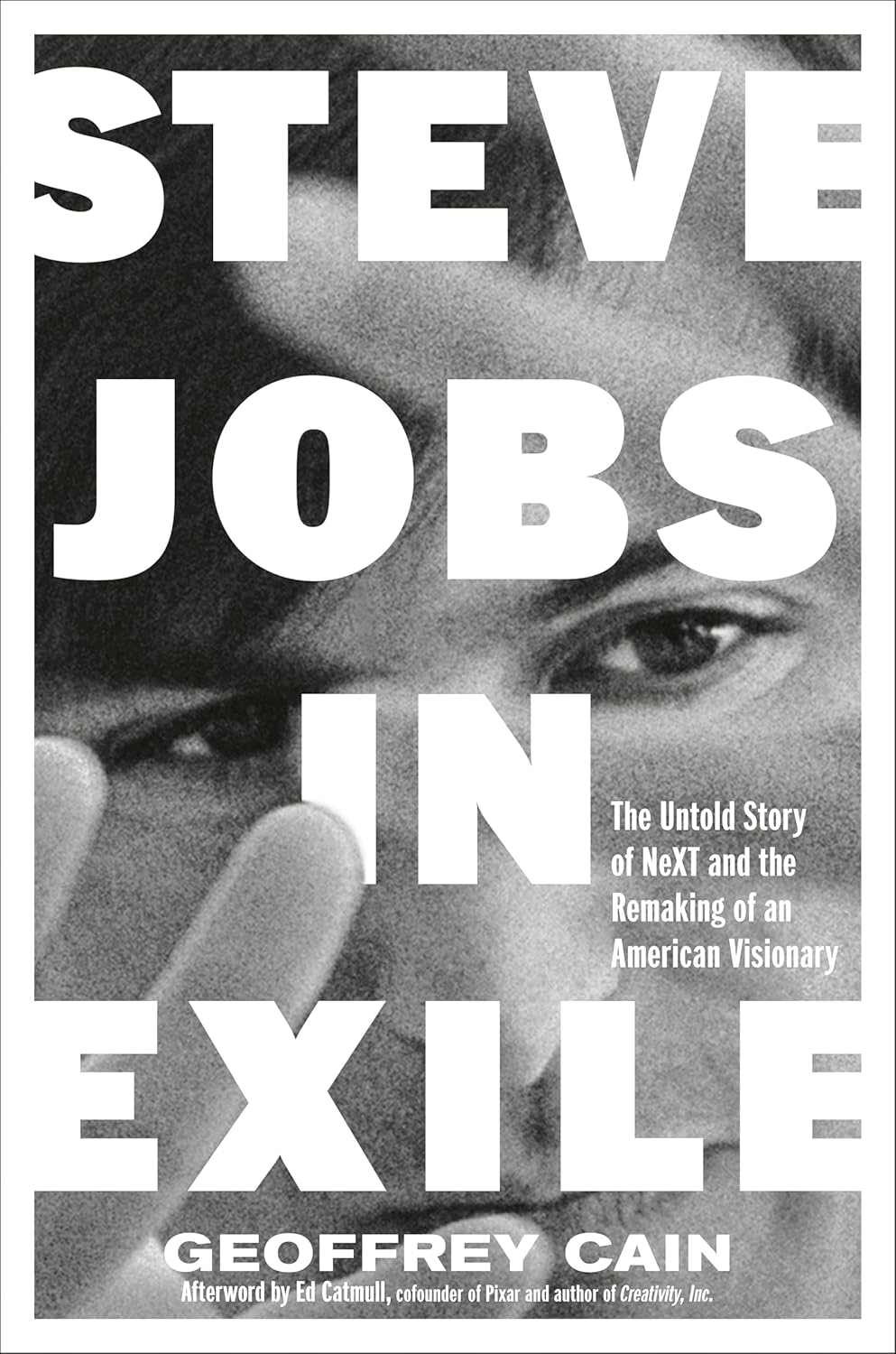
When I first saw Steve Jobs in Exile: The Untold Story of NeXT and the Remaking of an American Visionary by Geoffrey Cain, advertised on Facebook, I thought, “Geez, is there anything left unsaid about Steve Jobs?” After all the biographies and biopics, is there anything new to be revealed about the man? I decided to take a chance because the book focuses on the twelve years of the NeXT Computer. Besides, I had not read The Second Coming of Steve Jobs by Alan Deutschman in 2000, which covered the same period.
If I were to pitch this book to the average reader, I’d say: “Steve Jobs in Exile is about a world-class asshole who finds humility.” And for folks who dream of becoming entrepreneurs, I’d say, “Steve Jobs in Exile is a detailed checklist of what not to do.” This book really is about the man, and not the technology.
Interestingly, Walter Isaacson has written extensive biographies of both Steve Jobs and Elon Musk. Do people read them because they are fascinated with invention or with billionaires? Both men are known for their egotism, arrogance, and cruelty toward the workers they managed. Steve Jobs in Exile is about a young man who achieved two historic successes in his twenties but then fell from grace, only to achieve a third success. Will we ever read about Elon Musk falling from grace and finding humility?
By the way, why does Jobs get so much credit when he wasn’t a programmer or electrical engineer? I give Steve Wozniak credit for the Apple computer. And credit for the Macintosh to the pirate team Jobs assembled. Was NeXT’s eventual redemption due to Jobs? Or despite him? I hoped Steve Jobs in Exile would have been more about the real inventors of NeXT computers and NeXTSTEP.
I had hoped Steve Jobs in Exile would be another Soul of a New Machine by Tracy Kidder – it wasn’t, but I still found it an engrossing read. The first part of the book made me despise Steve Jobs, but eventually Cain convinced me to admire the man a great deal. This nonfiction book was like a novel with a protagonist who grows and ultimately overcomes their faults. The book reignited my addiction to reading about the history of personal computers. I’ll probably go read David Pogue’s new book, Apple: The First 50 Years, soon, even though I’ve read plenty of histories on Apple Computers, too.
I was always a PC guy, and not a Mac guy, until last year. Although I used Macs at work. From 1978 until 2013, my job involved ordering computers, setting them up, and training their users. I worked at a college of education with about 150 faculty and staff, and just under 3,000 students. I’ve probably used every model computer Apple made during those years. I also set up PCs, starting with the first IBM PC with diskette drives. I guess I’ve unboxed and set up over a thousand computers.
Also, back in 1978, I became addicted to computer magazines. I’d go all over town, checking computer stores, newsstands, and bookstores two or three times a week for the latest issues of magazines devoted to computers. That’s when I first learned about Steve Wozniak and Steve Jobs. I wanted an Apple II, but could only afford an Atari 400.
Back in the 1990s, sales reps from NeXT came to our PC user group and demoed the NeXT Cube. Damn, I wanted one of them, but at $10,000, it could only be a fantasy. I guess that’s why I read Steve Jobs in Exile. I remembered that desire for a NeXT computer.
Several years ago, I got the hankering to buy a classic computer like an Apple II or Commodore 64, or even a NeXT Cube. NeXT machines do show up on eBay, such as this one for $5,817.54.
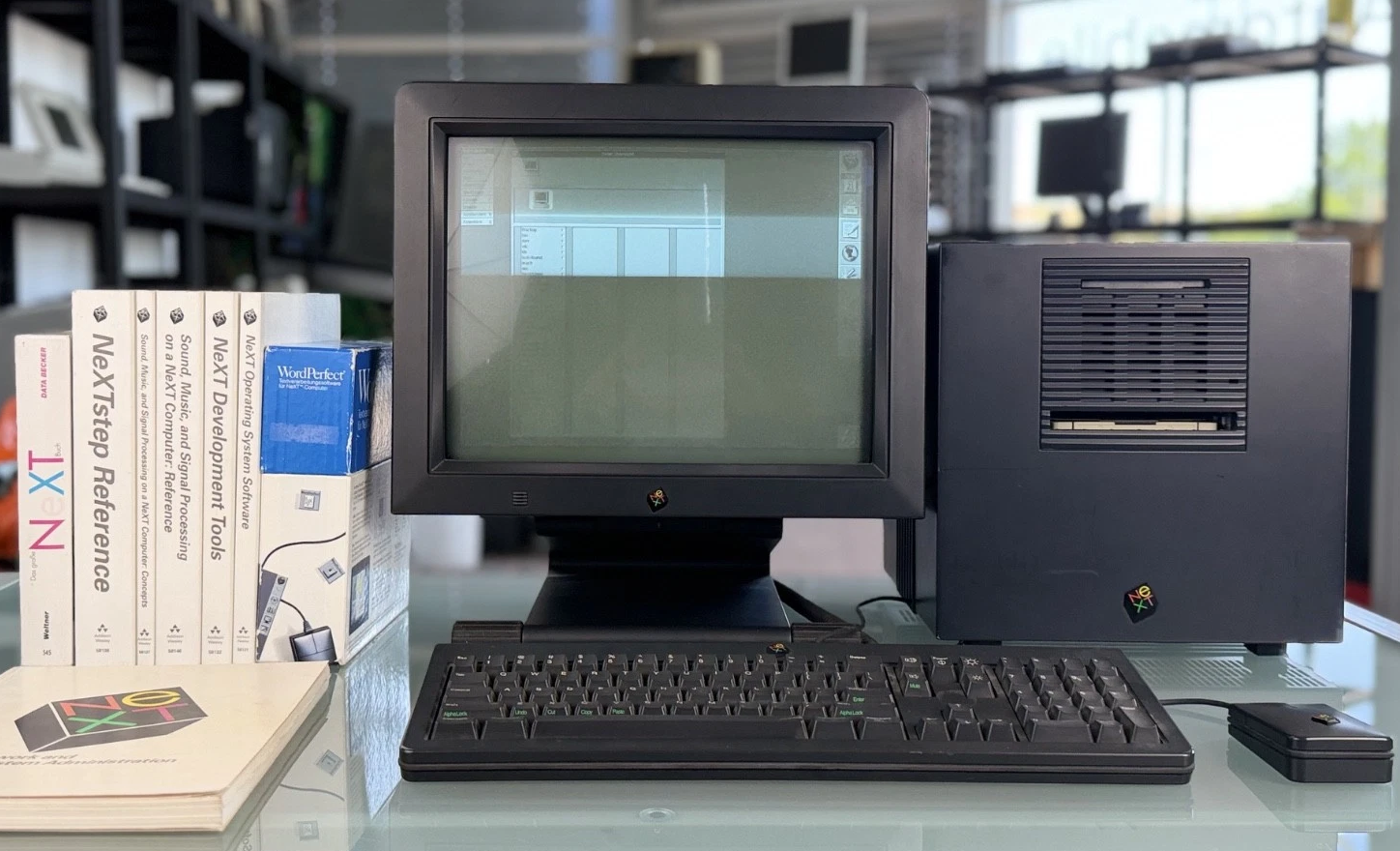
However, after playing with operating system emulators online, I realized that the futuristic NeXT Computer from the 1990s is now horribly primative. Just watch how painful it is to watch NeXTSTEP 1.0 boot up. From time to time, I still hanker for a classic computer. But then I visualize using one, recalling its limitations and why I was always upgrading to a newer computer.
I take consolation in that I’m using Tahoe 26.5 on my Mac Mini M4 right now, which is a descendant of NeXTSTEP. That didn’t stop me from going to Archive.org and reading old issues of NeXTWORLD magazine.
Reading about Steve Jobs again reminded me of how a few men back in the 20th century changed all of our lives. If we filmed It’s A Wonderful Life today, and imagined removing Steve Jobs and Bill Gates, just how different would our society be? Sure, similar devices and operating systems would develop, but would society unfold again like it did? Was the GUI and smartphone inevitable? Aren’t most tech billionaires rich because they got to an idea first, and if they hadn’t, many others would have?
Why are there so many books written about the men who sold us computers, and not about the computers and technology? Did Steve Jobs change society, or did the iPhone?
I’d love to read a detailed history of the graphical user interface (GUI). Was NeXTSTEP really superior to Sun OS, Windows NT, or OS/2? Who really invented the various elements of these operating systems?
JWH


James, regarding your comment near the end of your blog post, “Why are there so many books written about the men who sold us computers, and not about the computers and technology?”, it seems to me that maybe that’s the book you should write! I’d read it.