
by James Wallace Harris, 7/7/26
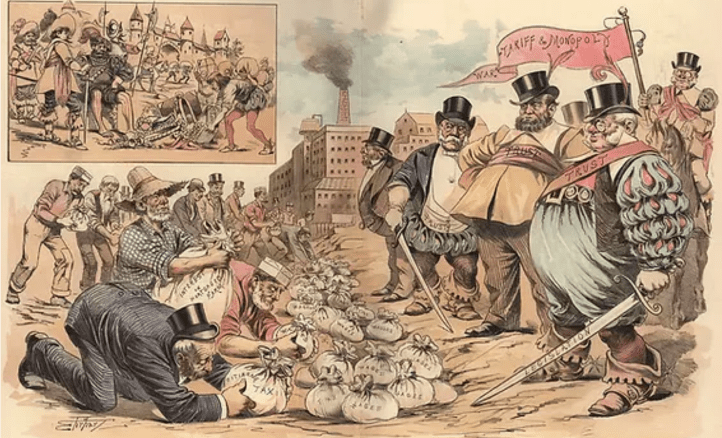
Lately, I’ve been thinking that greed is the ultimate driver of modern politics in the United States. Is greed a byproduct of evolution? If it is, then how could we control greed politically? I thought these could be good questions to ask my AI, Gemini. I find chatting with an AI to be educational. Many of my liberal friends have big hopes for the 2026 and 2026 elections, but I wondered if their hopes were practical.
This is my second conversation. I had the first conversation with the AI built into Google, but I wasn’t able to save it. I switched to my paid AI, Gemini, and it was helpful to get the conversation formatted in HTML so I could copy it here.
Each gave similar answers but explained in different ways.
I recommend learning to chat with an AI. It makes you think. They also bring up details you haven’t considered. I’m posting this as an example.
I don’t want AIs to think for me. Nor do I want AIs to create content for me. But I do find talking with them educational. It’s like having a dialogue with Socrates.
Jim: Is greed darwinian?
To kick this off, let’s look at this through the lens of evolutionary biology, where “greed” translates to resource hoarding.
From a strict evolutionary standpoint, the short answer is yes, but only up to a point.
In a world of pure scarcity, an organism that secures more food, better territory, or more resources than its peers is simply maximizing its chances of survival and reproduction. If a harsh winter or a drought hits, the individual with the hoard survives, passes on their genes, and the “hoarder” trait continues. In that narrow sense, capturing resources is entirely Darwinian.
However, evolutionary biology throws us a massive curveball when it comes to social species like humans. Pure, unchecked individual greed actually runs counter to another powerful Darwinian mechanism: reciprocal altruism and group selection.
Here is why pure greed fails the long-term Darwinian test for humans:
- The Cost of No Friends: Humans are physically weak compared to apex predators. Our primary survival strategy has always been the tribe. If an individual in a hunter-gatherer group hoards meat while others starve, the group will ostracize, banish, or kill them. In a social structure, losing the protection of the group is an evolutionary death sentence.
- Tit-for-Tat (Reciprocity): Evolutionary biologist Robert Trivers demonstrated that cooperation operates on a “you scratch my back, I’ll scratch yours” loop. True greed breaks this loop. If you never share, no one shares with you when your luck runs out.
- The “Selfish Gene” Nuance: Even Richard Dawkins’ famous “selfish gene” theory explains that genes replicate by making organisms act unselfishly toward their kin. Sharing resources with family ensures the survival of shared genes.
So, while the drive to secure resources is deeply rooted in our evolutionary past, unchecked greed is actually a maladaptive strategy for a social primate. We evolved a fine-tuned radar for fairness and cheating because, for most of human history, hyper-greedy behavior threatened the survival of the whole tribe.
Jim: Let’s rephrase it then. In a capitalistic society, does greed drive competition and determine which laws are made?
In a capitalist framework, greed—often rebranded by economists as rational self-interest—shifts from a basic survival mechanism to the primary engine of the entire system.
When applied to competition and the legal landscape, it operates on two distinct levels.
1. Does Greed Drive Competition?
Yes, it is the primary catalyst, but with a massive catch.
In classic capitalist theory (think Adam Smith’s “invisible hand”), individual self-interest drives people to compete. A business owner wants to maximize profit (greed), so they try to build a better, cheaper product than their rival. This competition benefits society by driving innovation, lowering prices, and increasing efficiency.
However, pure greed also carries the seed of its own destruction regarding competition. If an actor is truly greedy, their ultimate goal isn’t to compete forever—it is to win permanently.
- The Monopolistic Drive: The most profitable thing a business can do is eliminate competition entirely by creating a monopoly or a cartel.
- Systemic Stagnation: Once competition is eliminated, innovation stalls, prices rise, and the market stops benefiting the consumer.
So, while greed starts competition, its natural conclusion is to kill competition.
2. Does Greed Determine Which Laws Are Made?
Yes, through a process economists call “regulatory capture.”
In a capitalist society, the immense wealth generated by successful self-interest doesn’t stay insulated in the market; it inevitably flows into the political and legal spheres.
- Writing the Rules of the Game: Powerful economic actors use their resources (via lobbying, campaign contributions, and public relations) to influence the legal system. They don’t just compete under the rules; they try to rewrite the rules to protect their wealth.
- Barriers to Entry: Ironically, large corporations often lobby for more regulation, not less, if those regulations are expensive to comply with. This creates a barrier to entry that prevents smaller, innovative startups from competing with them.
- Externalizing Costs: Greed drives entities to lobby for laws that allow them to maximize profits by shifting their costs onto the public (e.g., pollution, underpaid workers’ healthcare).
Ultimately, laws in a capitalist society often reflect a tug-of-war between the public interest and concentrated economic interest. When the legal system fails to act as a neutral referee, greed effectively dictates the law, shaping it to protect incumbents rather than foster open competition.
Jim: Isn’t private equity investing mainly greed? Isn’t car manufacturers selling only the most expensive models because they make the most profits really just greed?
These two examples highlight exactly how the pressure for short-term profit can make a system look deeply exploitative to the average person. When we strip away the corporate buzzwords, both situations demonstrate what happens when market incentives align entirely with maximizing financial extraction.
Here is how each of these plays out under the hood:
1. Is Private Equity Investing Mainly Greed?
If we define greed as maximizing wealth extraction with little to no regard for human or systemic fallout, then yes.
The core business model of private equity (PE) is to buy companies, “optimize” them, and sell them for a massive profit within a few years. Because PE firms rely heavily on debt to buy these companies—placing the burden of that debt onto the purchased company itself—they are forced to squeeze out cash quickly.
- The Squeeze: To pay down the debt and hit double-digit returns for investors, PE firms frequently cut labor costs, reduce service quality, strip real estate assets, or raise consumer prices. We see this acutely in sectors like healthcare, nursing homes, and local journalism.
- The Shield: The PE structure largely protects the investors from the downside. If the acquired company goes bankrupt due to the heavy debt load (as Toys “R” Us did), the PE firm often still walks away with millions in management fees, while workers lose their jobs.
In economic theory, PE is supposed to find inefficiencies and make businesses leaner. In practice, it often functions as an engine that converts functioning community institutions into short-term financial capital for wealthy investors.
2. Are Car Manufacturers Killing Cheap Cars Out of Greed?
Yes, it is a deliberate “profit pivot” that completely abandons the needs of the working class.
For the past several years, major automakers (especially the big American brands) have systematically killed off smaller, affordable sedans and compact cars. They have shifted their factories almost entirely to massive, expensive trucks, SUVs, and high-trim crossovers.
- The Margins vs. Volume Math: Automakers discovered that the profit margin on a $60,000 fully loaded truck can be $15,000 or more, whereas a $22,000 economy sedan might only net them $1,500. From a pure spreadsheet perspective, selling fewer cars at a much higher price is far more lucrative than selling lots of cheap cars to regular people.
- “Trimflation”: Even when they do offer base models, they purposefully limit production on them, forcing buyers to choose higher, tech-loaded trim packages that push the average transaction price toward $50,000.
By prioritizing Wall Street’s demand for higher profit margins over the public’s need for basic, affordable transportation, automakers have effectively priced millions of average households out of the new car market entirely, trapping them in high-interest, long-term loans.
Jim: Is it possible to create laws that would be more equitable to the majority and not to just those who have money?
Yes, it is entirely possible to create laws that are equitable to the majority rather than just the wealthy. In fact, a major part of political history is a continuous tug-of-war between concentrated wealth trying to shape the rules and public movements pushing the legal framework back toward fairness.
When a society successfully shifts the legal balance back to the majority, it usually happens through three specific legislative pillars:
1. Insulating the Political System from Money
The most direct way to stop the wealthy from dictating laws is to cut the link between cash and political power. When money is required to win elections, laws naturally bend toward those who have it.
- Campaign Finance Reform: Forcing strict transparency and placing hard caps on political donations—including banning “dark money” Super PACs—stops wealthy donors or corporations from buying access.
- Publicly Funded Elections: Some democracies give candidates a fixed pool of public money to campaign with once they qualify, meaning they don’t have to spend their time begging billionaires or corporate interests for funding.
- Closing the “Revolving Door”: Passing strict laws that ban politicians and regulators from immediately taking high-paying lobbying jobs at the very corporations they used to regulate.
2. Rewriting Market Rules (Antitrust & Corporate Law)
The laws governing how businesses operate are not laws of nature; they are choices. Governments can rewrite corporate guardrails to force capital back toward the public good.
- Aggressive Antitrust Enforcement: Breaking up monopolies and heavily scrutinizing private equity “roll-ups” (where a firm buys up dozens of small, competing businesses in an area to kill competition and raise prices). By enforcing competition, laws protect small businesses and consumers.
- Ending Short-Termism: Changing tax and corporate laws so that companies are penalized for prioritizing short-term stock buybacks over long-term investments in worker wages and product safety.
- Stricter Corporate Liability: Holding corporate executives personally and criminally responsible for systemic fraud, environmental damage, or labor violations, rather than just hitting the corporation with a fine that they treat as a mere “cost of doing business.”
3. Strengthening Collective Power
When individuals stand alone against massive capital, they lose. Laws can be designed to give the majority collective leverage.
- Labor Protections: Making it legally easier for workers to unionize and collectively bargain. Historically, a strong labor movement is the single most effective counterweight to corporate greed.
- Consumer Protection Frameworks: Building robust regulatory agencies (like the CFPB or FTC) with the teeth to ban predatory lending, hidden fees, and deceptive pricing outright, rather than relying on consumers to read 50 pages of fine-print legatory terms.
The challenge is never a lack of ideas or legal mechanics; it is a lack of political will. Wealthy interests will always use their resources to resist these changes. Passively waiting for the system to fix itself rarely works—historically, equitable laws are only passed when a highly organized, sustained public movement forces politicians to choose between the voters and their donors.
Jim: What chance would of these changes being made in the current political culture of the United States?
To be blunt: in the current political culture of the United States, the chances of passing sweeping, systemic changes to curb the power of money are very low near-term, but highly volatile long-term.
If we look at Washington today, the system isn’t just stalled by accident; it is operating exactly as it was designed to by the interests that fund it.
To understand why the odds are so long right now, we have to look at three structural barriers dominating our current political landscape:
1. The Supreme Court’s “Free Speech” Iron Wall
Even if Congress miraculously found the political will to pass massive campaign finance reform, it would run headfirst into a judicial brick wall. The U.S. Supreme Court has spent decades cementing the legal doctrine that money equals speech. Following the landmark Citizens United ruling, the Court has consistently struck down attempts to limit political spending. Under the current judicial philosophy, spending unlimited amounts of money to influence an election is protected by the First Amendment. Short of a constitutional amendment or a generational shift in the makeup of the Supreme Court, the legal avenues for major campaign finance reform are effectively blocked.
2. Systematic Congressional Gridlock
The incentive structure in modern Congress actively rewards non-governance. Because of extreme gerrymandering and intense polarization, most politicians are not afraid of losing a general election to the opposite party; they are terrified of being primaried by the most extreme wing of their own party. Furthermore, congressional paralysis has hardened into a routine strategy. Passing major, structural reform requires building broad coalitions. Today, lawmakers face immediate backlash from their donors and media ecosystems for compromising, while obstruction carries almost no political cost.
3. The Power of “Cultural Disruption” as a Smokescreen
When a society is deeply divided on cultural and identity issues, it is very easy for concentrated economic power to maintain status quo economic policies. If a politician wants to protect a private equity firm or a major automaker from regulation, they rarely stand up and say, “I want to protect corporate greed.” Instead, they shift the public conversation to highly emotional culture-war topics. Because voters are hyper-focused on these identity issues, economic consolidation happens quietly in the background with very little unified public resistance.
Where the Chinks in the Armor Are
While federal legislation faces bleak odds, change is creeping in through different, less visible avenues:
- State and Local Laws: Individual states are increasingly passing their own right-to-repair laws, data privacy protections, and state-level labor rules that push back against corporate consolidation.
- Executive Agency Action: Federal agencies like the Federal Trade Commission (FTC) and the Department of Justice (DOJ) are using existing, century-old laws to launch aggressive antitrust lawsuits against tech giants and corporate monopolies.
- The Boiling Point: Public frustration with the cost of living, housing, and healthcare is reaching a historic peak. History shows that when the middle class is squeezed tightly enough, it eventually creates an unpredictable political wildfire that can shatter institutional gridlock entirely.
Jim: How likely are any of these changes being made in the 2026 and 2028 elections?
To be direct: the probability of passing any of these structural changes during the 2026 midterms or the 2028 presidential cycle is virtually zero at the federal level. In fact, the legal system is currently moving rapidly in the opposite direction.
Just at the end of June 2026, the U.S. Supreme Court delivered another major blow to campaign finance limits in NRSC v. FEC. In a 6-3 decision, the Court struck down decades-old limits on how much money political parties can spend in direct coordination with their candidates. This means billionaires can now hand massive checks to political parties, and the parties can act as an alternative checking account for a candidate’s media campaigns.
Because the legal landscape is shifting toward more money in politics rather than less, the 2026 and 2028 cycles will likely be defined by a massive arms race of political spending, making structural reforms highly unlikely.
Here is how the realistic probabilities break down for 2026 and 2028:
1. The 2026 Midterm Landscape: High Friction, No Room for Reform
Midterm elections are rarely moments for deep, structural economic reform; they are usually reactive backlashes against whoever holds the White House. Republicans currently hold a razor-thin majority in the House and a 53-45 majority in the Senate. Even if control of Congress splits or flips by a tiny margin, neither party will have the 60-vote supermajority in the Senate required to bypass a filibuster. Neither party will have the legislative strength to pass sweeping antitrust or campaign finance overhauls.
2. The 2028 Presidential Cycle: Rhetoric vs. Structural Reality
By 2028, public frustration with everyday costs—like the private equity squeeze on housing or automakers eliminating affordable economy cars—will likely become central campaign issues. You will hear an immense amount of anti-corporate rhetoric from both sides in 2028 because that is what voters want to hear. However, even if an administration wins on a platform of economic populism, it will still have to contend with the Supreme Court. Because the Court has dug in on the “money equals speech” doctrine, any new federal law trying to curb campaign finance or corporate influence would likely be struck down within a year of passing.
Where Real Change Will Actually Move the Needle (2026–2028)
While sweeping federal legislation is off the table, the next two years will see major battles fought through alternative channels that don’t require passing new laws through Congress:
- Executive Trust-Busting: The FTC and DOJ will continue using existing, century-old laws to sue monopolies. The outcome of the 2026 and 2028 elections will decide whether these aggressive antitrust lawsuits against Big Tech, corporate landlords, and healthcare conglomerates are allowed to proceed or are shut down by a new administration.
- State-Level Rebellion: Because Washington is locked down, states will be the primary battleground. Over the next two years, we will likely see more states bypass federal gridlock by passing localized consumer protection laws, right-to-repair bills, and state-level labor protections.
Ultimately, 2026 and 2028 will not be the years in which these major changes are made. Instead, they will be the years when public frustration builds up even more pressure against a rigid, money-driven system—setting the stage for a much larger political breaking point further down the road.
Jim: Looking at the long term, is there any reason to believe some kind of social/poltical revolution occuring that changes the status quo? Will current politicies cause a tipping point?
Historians, sociologists, and macroeconomists generally agree that long-term status quo changes are inevitable, but they rarely happen through neat, organized policy changes. Instead, history shows that major social and political revolutions occur when a system reaches a structural “tipping point” where it can no longer resolve its own internal crises.
Rather than a single, cinematic explosion, modern researchers view societal tipping points as a slow, systemic erosion of institutional capacity that suddenly accelerates due to an unexpected trigger.
The primary catalysts driving the current status quo toward a long-term tipping point span three major areas.
1. The Biophysical Tipping Point (Climate & Resources)
The most concrete threat to the current global status quo isn’t ideological; it is physical. [6]
- The “Limits to Growth” Model: Decades of data tracking the famous MIT Limits to Growth study demonstrate that humanity remains locked onto a “Business As Usual” trajectory. This economic model predicts that unchecked exponential growth will result in a structural peak and subsequent decline in industrial output, food production, and welfare.
- Ecological Cascades: Scientific consensus from the Global Tipping Points Report 2025 warns that human activity has pushed critical Earth systems—such as warm-water coral reefs and major ocean currents like the AMOC—to the brink of collapse.
- The Political Tipping Point: When environmental degradation causes localized agricultural failure or water scarcity, it triggers mass migration. Historically, sudden demographic shifts and resource competition have severely stressed existing legal frameworks, forcing governments to rapidly adapt or face collapse.
2. Structural Demography (The “Elite Overproduction” Crisis)
Sociologist Peter Turchin utilizes data-driven historical models (Cliodynamics) to predict political instability. His research highlights a repeating historical cycle that triggers revolutions: Elite Overproduction.
- The Dynamic: In a highly unequal capitalistic society, the education system and economy produce vastly more ambitious, highly educated, and wealthy individuals than there are positions of actual political and economic power (e.g., thousands of law graduates competing for a handful of congressional seats or judicial appointments).
- The Tipping Point: This creates a massive class of “frustrated elites” who are shut out of the status quo. To gain power, these individuals stop playing by the traditional rules. They weaponize the grievances of the working class, funding grassroots populist movements to intentionally dismantle or rewrite the governing system from within.
3. Technological Disruption (AI and Cognitive Automation)
Historically, revolutions happen when the economic base shifts faster than the political superstructure can manage. The rapid advancement of artificial intelligence represents an unprecedented shift.
- The Wealth Gap Explosion: If AI automates white-collar and cognitive labor, it will vastly increase corporate profit margins while displacing millions of workers. This creates a hyper-concentration of wealth that the current tax and welfare infrastructure cannot handle.
- The Friction Point: When a majority of a population realizes that hard work no longer guarantees housing, healthcare, or upward mobility, the psychological contract holding society together dissolves. Distrust in the system peaks, rendering traditional laws unenforceable due to widespread civil non-compliance.
What Does a Modern “Revolution” Look Like?
A 21st-century revolution is unlikely to mirror the French or Russian revolutions with storming palaces. Instead, macro-historians suggest it will take one of three paths:
  ┌─────────────────────────────────────────────────────────────────────────┐
  │                           FUTURE SCENARIOS                              │
  └─────────────────────────────────────────────────────────────────────────┘
                                       │
         ┌─────────────────────────────┼─────────────────────────────┐
         ▼                             ▼                             ▼
  [ Democratic Renewal ]       [ Neo-Feudal Autocracy ]     [ Networked Regionalism ]
  Mass civic organizing        Corporate elites use         Central government fails;
  forces a "New Deal" style    AI & surveillance to         local communities build
  restructuring of the system. lock down the status quo.    parallel legal/food systems.
- Democratic Renewal / The Concession Path: Faced with immense civil unrest or the threat of systemic collapse, elites often make massive concessions to save themselves. This is how the U.S. avoided a communist revolution during the Great Depression—by passing the New Deal to redistribute wealth and stabilize the majority.
- Neo-Feudal Autocracy: If the status quo changes via a right-wing or corporate consolidation, technology could allow elite classes to effectively “lock in” their power. Using algorithmic surveillance, automated policing, and legal control, they can suppress majority dissent far more effectively than historical empires ever could.
- Networked Regionalism (The “Slow Crumble”): If the federal government becomes completely paralyzed by polarization, power naturally diffuses. States, cities, and regional coalitions will begin ignoring federal mandates, creating their own localized healthcare, environmental, and economic laws, effectively rendering the old national status quo obsolete.
The Verdict
Current policies—specifically the refusal to regulate campaign finance, the failure to address structural climate change, and the lack of a safety net for technological displacement—are absolutely creating the objective conditions for a tipping point.
JWH


 Auxiliary Memory