Why I Prefer to Use the Word “Reality” to Mean Everything Instead of Using the Word “Universe.”

by James Wallace Harris, 2/4/26

When I was growing up, we used the word “universe” to mean everything in all of existence. However, over the course of my lifetime, scientists have started theorizing that there might be other universes, and we’re part of a multiverse. And who knows, what if there are multiple multiverses? Or even larger structures?

I now prefer to use the word “reality” to mean everything. And when I say reality, I mean all of existence that science has detected, and all of existence beyond that, too.

Since science has never found the largest and smallest aspect of reality, I assume reality is infinite in all directions.

It’s hard to imagine the size of the universe. If the known universe were shrunk to the size of a human body, a galaxy would be the size of a cell. And a human would be smaller than anything science has measured.

We are insignificant to the universe, and even more so to the multiverse, and we have no idea how to convey how small we’d be to reality. We are not the crown of creation.

Yet, of everything we’ve observed in reality, we’re the only aspect of reality that is aware of reality. I’m sure in the vastness of reality, we’re not unique, but in our domain, we are.

I started to write, “We are a miracle of existence,” but the word “miracle” is bogus. Miracles exist in our imagination, but not in reality. We are a byproduct of reality’s constant evolution. On one hand, it feels like our individual existence is akin to a tornado tearing through a forest, leaving a perfect Frank Lloyd Wright house in its wake. As a human, it feels miraculous to exist, but in reality, we’re just part of the evolutionary churn.

Theologians and Philosophers have come up with endless speculations about how we got here, why, and what we should be doing. Science has explained how we got here, but offers no theories about why or what we should be doing.

Reality creates and destroys. We did not choose to exist, and we can’t avoid death. We get a glimpse of eternity and then fall into darkness.

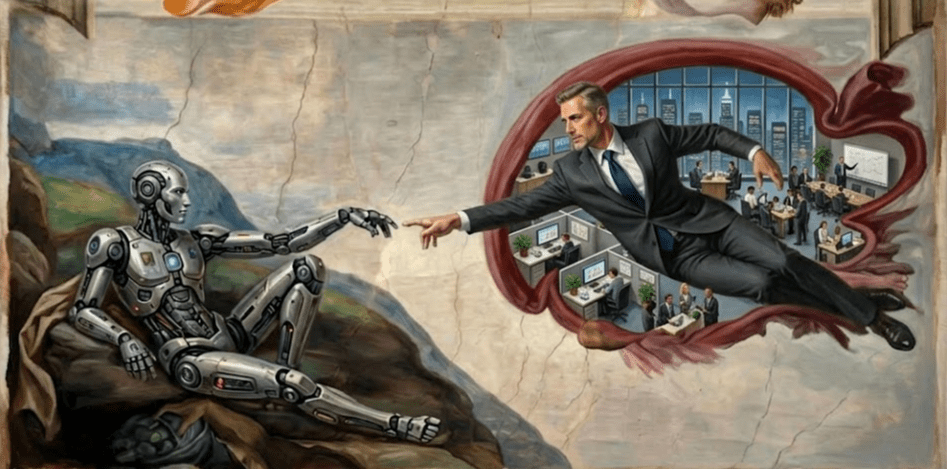
The trouble is that our view of reality is obscured by delusions. First of all, we don’t observe reality directly. Inputs from our senses model reality in the brain, and our sense of self observes that model. We distort that model with our beliefs.

Can we improve our model of reality? By improving, develop a model that more realistically describes reality in our minds?

For most humans, achieving success meant making their desires come true. But if those desires are based on delusions, are they wasting their time in reality?

We’re into The Matrix, choosing between red and blue pills, aren’t we? We’re also somewhere beyond Zen Buddhism and Existentialism.

What if we created a reality-based society? What would its Constitution and laws be like? If reality inspires a religion, it should inspire only one. If it inspired two religions, it would be because they were imperfect models of reality.

People have always wanted to make their religion a theocracy, but all theocracies fail because they can’t create a universal model of reality.

I believe liberal philosophy was slowly moving towards a better model of reality. However, about half of the population doesn’t want that. They want everyone to accept their model of reality, which is based on their preferred delusion.

How do we live in reality when most people want to live in their fantasies?

JWH

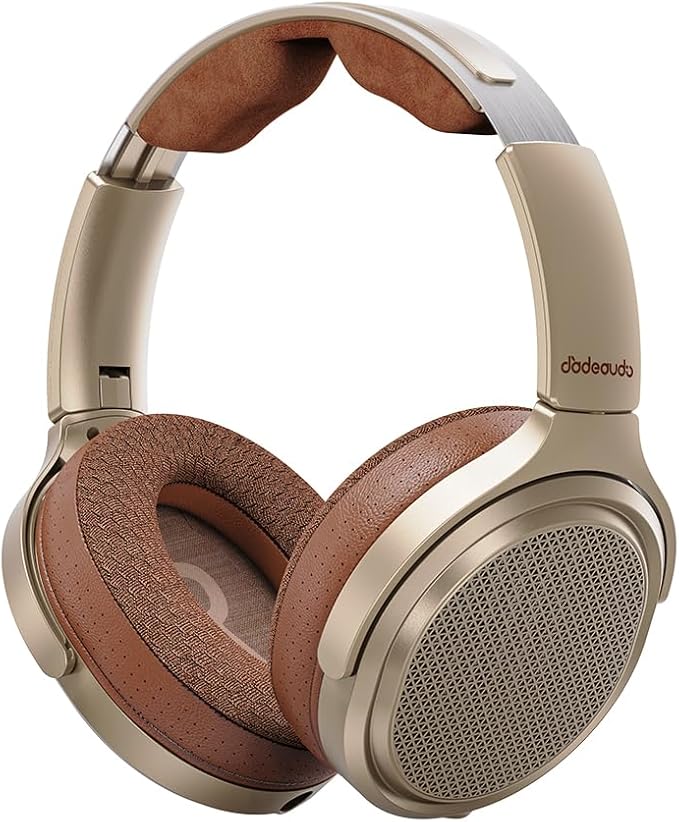
Why Did Kristin Diable’s “My River” Sound So Great On My Cheap Headphones at 5:55am This Morning?

by James Wallace Harris 1/29/26

I’ve come up with 5 reasons why I’m hearing more details in my music listening. And none of them is because I’ve bought better equipment. Some of those reasons might sound a bit woo-woo, but who knows.

I woke up early yesterday morning with the urge to hear music. I wasn’t ready to get up. The only headphones on my bedstand were a cheap pair of Bluetooth headphones I use for audiobooks. I put them on and loaded my standard Spotify playlist.

“My River” by Kristin Diable came on. It sounded amazing. For weeks, my den and bedroom stereos have sounded much better than ever. What’s going on? I’m talking a dramatic night-and-day difference on these headphones. Were my ears improving?

1 -Physiological?

Weeks ago, I stopped taking a drug I’d had been taking for years. When I asked my doctor about my chronic stuffy nose, she mentioned that sinus congestion was a side effect of that drug. Slowly, over recent weeks, I feel myself breathing more through my nose. Could this also have affected my hearing?

The only problem with this theory is that I don’t remember hearing music like this before I took the drug. Nor do I remember a decline in hearing after I started taking the drug.

2 – Time of Day?

As I lay there in the dark listening to music, all the instruments were clear and distinct. I heard little guitar riffs and drum fills I’d never noticed before. Could I have been dreaming? Diable’s voice was so multi-textured.

I do love listening to music on headphones while I sleep because sometimes I achieve a state of consciousness between sleep and awake, and I feel like I’m floating inside the music. But I was awake this morning.

I think I always hear music better late at night or early in the morning when I’m using headphones. Yesterday morning was special. It felt like a peak event. This morning, I played music again at the same time, and the music was equally vivid.

However, this doesn’t explain why music sounds better at other times during the day. Not quite as impressive as the headphones this morning, but I’ve been noticing a definite improvement in staging and fidelity.

3 – Focus?

The other day, I read an excerpt from Michael Pollan’s new book titled “How to Have a Don’t-Know Mind.” It was from the last chapter of A World Appears: A Journey Into Consciousness, due out next month. That chapter was about staying at a Zen Buddhist retreat, where he learned that shutting off his mind led to greater powers of awareness. He spent days in a “cave” with few distractions, forcing him to slow his racing thoughts.

Was listening to music in the dark before it was time to get up, a time when my mind was inactive, letting me hear more?

Audiophiles claim to hear greater details in music than average listeners. Is that just the ability to focus? I remember back in the 1960s, and how smoking pot made music sound great. I quit getting high over fifty years ago, but I remember that I decided then that pot didn’t enhance music, but altered time and concentration. I’ve always tried to pay close attention while listening. I don’t like using music as background noise.

4 – Sense of Time

I remember getting a friend high, one who was an avid music listener, and he exclaimed that he heard things in his favorite songs he never heard before. We theorized that it might be because pot distorted our sense of time. When time slows down, we hear more.

That altered sense of time could explain why music sounds better when I’m sleeping or just waking up. But it doesn’t explain why my daytime listening also improved. Not as much, but noticeable. Maybe during the day, I’m relaxing more, focusing on the music more, slowing time down.

Maybe I should train my mind to meditate on music and shut out everything else.

5 – Technology

I was awake when Kristin Diable’s voice sounded so rich and alluring. I wasn’t in a dream state, where music sounds unbelievable. Audiophiles talk about headphones and speakers needing a burn-in period. I’ve listened to hundreds of hours of audiobooks with the Earfun headphones, but only a few hours of music. Could they have reached a burn-in stage for music?

And I haven’t listened to these headphones since Spotify switched to CD-quality streaming. That could be another factor.

But then why were the Klipsch and Polk speakers also sounding much better, too?

Conclusion

Later in the day, the music still sounded good on those headphones, but not as impressive as when I was in bed before sunrise. I tried those headphones again this morning at the same time, and wow, oh, wow.

The first song I heard was “Merry Christmas Mr. Lawrence” by Ryuichi Sakamoto. It’s a piano piece, and I thought I could discern the separate notes in chords. Every instrument sounded so distinct. I could place each spatially, and I was aware of the duration of notes. It had to be an altered sense of time.

Then I listened to “Me & Magdalena” by The Monkees. Before now, I thought only Mike sang it, but this time I could hear both Mike and Micky.

And I’m sure some people have always been able to hear such details. Even though I’ve been crazy about music since 1962, and have spent many tens of thousands of hours listening to it, I’m probably still learn how to listen. Still learning to distinguish the components that make up a gestalt.

Before I publish this, I’ve thought of one more reason. I’m getting old and retreating from the world. Music has become a refuge. I get more pleasure from listening to music than doing anything else. I wonder if the Williamson effect is taking hold of me. I had a friend named Williamson who, before he died, lost interest in his many passions, one by one. The last time I talked to him, he said listening to Duane Allman and Benny Goodman were the only things he cared about. I’ve wondered if he got down to just one before he died. Or even none.

My list of favorite things is dwindling. It’s still in the dozens, though, so I have a ways to go.

JWH

DVDs vs. Streaming vs. Plex/Jellyfin

by James Wallace Harris, 1/24/26

I don’t know if you are old enough to remember videotapes, but they were a marvel for the time. Before that, the only way to see a particular movie or TV show was to wait for it to be broadcast. Sometimes, you’d wait years to catch one specific film or rerun of a TV show. After VHS tapes, you could go to the video store and buy or rent whatever you wanted to see.

Eventually, DVDs and Blu-ray discs replaced VHS tapes. Progress was always toward building personal libraries of favorite films and TV shows with higher quality playback resolution.

Then came Netflix DVD rentals. That allowed access to any film or TV show within a day or two. That was so damn convenient that owning DVDs became less popular. After that came Netflix streaming, which made access to favorite shows instant. Who needed to own anything?

Nothing stays the same. If Netflix had never gotten any competitors, I think I would have been content forever. It was like Spotify, one monthly payment for everything.

Now our favorite movies and TV shows are spread over many streaming services, but some shows are nowhere to be streamed. In some cases, I can rent what I want to see individually from Amazon, but with other shows, I have to buy them on DVD or Blu-ray. And for a few shows, they aren’t available for sale or rent.

Over the past thirty years, Susan and I have amassed quite a library of movies and television shows on DVD/BD. But for years, they have been sitting on an out-of-the-way bookshelf. Several years ago, I gave several bags of DVDs to the Friends of the Library when Marie Kondo became popular. However, I kept a couple of hundred that still sparked joy when I held them.

Last fall, I got disgusted with streaming services. We were subscribed to several. They kept raising their prices. And what I wanted to see kept jumping from one service to another. And HBO jettisoned many of its classic shows.

I bought a NAS, set up Jellyfin, and started ripping our library to MP4 and MKV. I’ve been working for weeks, and I’m only halfway through our discs.

It’s a lot of work ripping discs. And it’s frustrating because sometimes neither MakeMKV nor WinX DVD Ripper can read an old disc. I own the complete series of The Twilight Zone on Blu-ray, but MakeMKV couldn’t read one disc, and one episode from another. Nor could either program rip my copy of the theatrical release of Blade Runner from a DVD set that had four different versions of the movie. I also failed to copy one episode of MASH out of 251. That’s annoying.

Setting up Jellyfin on a NAS was not easy. A NAS with RAID drives and two external drives for backups was expensive. It’s quite a commitment to set up your own streaming service on Plex or Jellyfin.

I’m not sure it is worth it. Once the content is ripped, watching movies and TV shows on Jellyfin is much more convenient than watching them on disc. And Susan and I have started using our video library again. That does feel good.

Once ripping is done, Jellyfin is very nice. But to be perfectly honest, watching the same shows on Netflix, HBO, Apple, Hulu, Paramount+, etc. is a bit more convenient, and the picture quality is a touch better. Jellyfin is still plenty good enough.

Personally, I’d be happy to cancel all our streaming services and just watch what we own, but Susan wants to keep all her favorite streaming services. Susan loves watching all her favorite TV shows over and over again while she cross-stitches. There are about a dozen of them spread over five streaming services. I’ve bought the complete series of several of them on DVD and ripped them to my Jellyfin server.

I will subscribe to a streaming service to see a new TV series. For example, I’m subscribing to Paramount+, so my friends and I can watch Landman season 2. Before that, I subscribed to MGM+ so Annie and I could watch Earth Abides. And I resubscribed to Apple+ so Susan and I could watch Pluibus. And before that, I subscribed to Britbox to watch The House of Eliot.

Right now, Susan and I are watching The Fugitive and Mr. Novak at night on Jellyfin. Neither is available to stream. In other words, to watch shows unavailable on regular streaming, we have to buy the discs and use Jellyfin.

I roughly estimate that Jellyfin costs me $25 a month, assuming my NAS setup lasts at least five years, and includes the cost of buying DVDs occasionally. We currently spend $50-60 a month on streaming services.

Unless we cancel half of our subscriptions, Jellyfin isn’t saving us any money. It does make our 30-year investment in DVDs pay dividends again. However, many of the movies and TV shows in our library are available on streaming services. It’s hard to make a case for Jellyfin. Life would be simpler without ripping discs, maintaining a NAS server, backing up, etc. Also, our house would be less cluttered without all these discs.

Going the Plex/Jellyfin route only makes sense if you only watch what you own. And that tends to be old favorites. If you love seeing the latest films and shows, Jellyfin isn’t practical.

Knowing what I know now, I would have given all my old discs to the Friends of the Library and my DVD and Blu-ray players to Goodwill. The Fugitive and Mr. Novak have their nostalgic appeal for 1963, but there are many other worthy new shows to watch in 2026.

JWH

Could I Have Said “No” to Television in 1957?

by James Wallace Harris, 1/20/26

When you think about it, staring at a screen for hours on end seems weird. We exist in an immense three-dimensional reality, yet we prefer to focus on a small two-dimensional artificial reality. Why?

There are possible explanations. We don’t view reality directly, but rather perceive what we think is reality through a recreation within our minds. And our minds love making up stories to explain everything, and usually, they have little to do with reality. At night, our unconscious minds generate dreams that feel like another reality.

Is it any wonder we’re so addicted to fiction on a screen? Make-believe is so much easier than the complexity of reality.

Before screens, there were books, plays, storytellers, tall tales, and gossip. Humans interact with reality with words and language, but those tools are so imprecise that they encourage us to make stuff up that’s not there.

So, back in 1957, when I was five, could I have rejected television? Could my little mind have said, “This is fake, I’m going out to ride my bike?”

I wish I had, but I didn’t. Guessing that I watch four hours of television a day on average, that means since January 1, 1957, I’ve spent 100,884 hours in front of the boob tube. They claim it takes 10,000 hours of practice to become great at doing anything. I could have become an expert at ten endeavors if I had said “No” to television.

A more important question is: Can I say “No” to television in 2026?

Why spend the last years of my existence glued to a television or computer screen?

Reality feels the most real when I’m outside working in the yard. I can feel the heat of a nearby star, the changing atmospheric conditions, and watch the plants, trees, birds, bugs, and animals coexist in an ecology. At night, I can see the moon, planets, stars, and even galaxies. Nature should be the most stimulating part of my existence. But it’s not.

My mind prefers to dwell on music, books, magazines, TV shows, movies, the internet, and YouTube. Why is watching old episodes of Mr. Novak from 1963 more rewarding than raking leaves or watching birds at their feeder?

I think it’s because I didn’t say “No” to television in 1957. Like people embracing religion for a lifetime at an early age, I worshipped at the television set. I wasn’t smart enough to make a choice.

Years before 1957, I remember my mother putting my sister and me in front of the TV to watch Kukla, Fran and Ollie or Romper Room as she got dressed in the morning. And after them, it was Captain Kangaroo. But I’m not blaming my mother. TV was irresistible. When my parents weren’t around, I’d turn it on. I have distinct memories of doing that by myself at age five. I remember watching Gunsmoke by myself in 1957.

I suppose if my parents had coached me in learning little activities, I might have become used to actively doing things rather than sitting in front of the TV. To be fair, in 1957, I have memories of playing with toy trucks in the scrubery, riding my bike, playing with friends, walking to school, and spending weeks pretending to be a pirate while sailing in an old wooden crate.

However, all those activities lacked much conscious effort. Becoming good at anything requires a conscious effort. I’m not sure kids do that on their own. I never had a mentor to get me started.

Watching television or doomscrolling is deliciously an unconscious effort.

I could never have said “No” to television in 1957 on my own. That would have only happened if I had the guidance of a wiser person. And they would have had to show me a better alternative.

I’ve contemplated giving up television for all my adult life. Intellectually, I know there are better ways to spend my time in reality. But I got conditioned to television at a young age, and I’ve never been able to reprogram myself.

I really should try. I only have a few more years in this reality.

If you don’t want your kids addicted to screens their entire lives, I recommend mentoring them in other activities.

JWH

THE ANTIDOTE by Karen Russell

by James Wallace Harris, 12/27/25

There are some conservative Republicans who wish to censor history by forgetting events in America’s past. They worry that such history could make their children feel bad about themselves. They want to remember a past that makes America look great again. Please read Donald Trump’s executive order regarding this issue.

Karen Russell’s latest novel, The Antidote, philosophises why we need to remember everything, even things our ancestors did that make America look bad. Russell uses fantasy to educate us about reality. When my friend Annie first recommended that we read this novel together, the fantasy elements turned me off. As a life-long science fiction reader, I was in the mood to read realistic fiction for a change. The older I get, the more I want nonfiction, but I can’t give up fiction completely.

Throughout the first half of The Antidote, I was annoyed with all its fantastic elements. However, I eventually realized that Russell was using them as a plot device to get her readers to contemplate real history. Eventually, I felt Russell had read a great deal of American history that disturbed her, and she was using her novel to come to grips with why we shouldn’t forget that which many want to erase from American history books.

Memory is the main theme of this novel. Both personal memories and historical memory.

The Antidote makes a case against five crimes our ancestors committed. These tragic deeds explore the dimensions of greed. Each of these historical atrocities has been well-documented in nonfiction books I’ve read over the years. Reading the novel made me ask: Which has more impact, fiction or nonfiction? Listening to The Antidote made me feel closer to the suffering.

How many books have you read that deal with these historical events? Did you learn more from reading fiction or nonfiction?

  • How did we take land from the Native Americans?
  • How did we force Native Americans onto reservations and attempt to reeducate them with our culture and values?
  • How did poor farming practices cause the environmental catastrophe of the Dust Bowl?
  • How did we institutionalize unwed mothers and steal their babies?
  • How do we allow the murders of women to go uninvestigated and underreported?

The Antidote is primarily set in the fictional town of Uz, Nebraska, in 1935, between two significant real events, the Black Sunday dust storm (April 14, 1935) and the Republican River flood (May 31-June 1, 1935). The story is told sequentially, but with flashbacks. We hear the story told from many voices. Four primary characters: The Antidote (Antonina Rossi, AKA, the Prairie Witch), Asphodel Oletsky (Del), Harp Oletsky (Del’s uncle), and Cleo Allfrey (photographer), along with two significant secondary characters, a cat and a scarecrow.

Antonina, a middle-aged woman, had been institutionalized at age 15 for being an unwed mother. Her son had been forcefully taken away from her. She makes her living as a vault, or prairie witch. Antonina can enter a trance while another person relates a memory they wish to forget. That process will erase the memory from the teller’s mind and store it in hers. Antonina gives them a written receipt that will trigger that memory, and she can reinstate it at a future time. Antonina does not remember what she vaults. She is paid for this service, but her clients consider her no better than a prostitute.

Asphodel “Del” Oletsky, a fifteen-year-old girl, just five feet tall, is the captain of Uz’s high school girls’ basketball team. Her mother was murdered when she was young, and she lives with her uncle Harp Oletsky. Cleo is a young black woman who travels the country documenting the depression for FDR’s government. The plot of the novel eventually brings them all together.

The novel begins with a roundup of jack rabbits and clubbing them to death. My father was born in Nebraska and was Del’s age in 1935. He told me stories about how the farmers would exterminate the jack rabbits. My mother also went to high school around this time and played basketball. My grandmother was on a basketball team in Indiana at the turn of the century.

My memories immediately made me connect with the story. We remember the good ones, but forget the bad ones.

The story then goes into catching a serial killer of young women. The sheriff even connects the killer to Del’s mother’s cold case. This murder mystery is the apparent backbone of the plot, but it’s not the real story.

The Antidote immediately triggered a memory of an article I recently read, “The Nurse Who Names the Dead” by Christa Hillstrom. The article was about Dawn Wilcox, who created a database to track the number of men killing women. She discovered that femicide goes vastly underreported. One of the truths of Russell’s novel is that she’s writing about evils that have always existed. Can we ever break the cycle?

Dust and evil color this novel with darkness. I listened to the audiobook edition, and it felt like I was watching an old black-and-white movie. I’d call it noir magical realism.

I admit, I had to push myself to keep listening for the first half of this book. I was just put off by the fantasy elements. But the characters grew on me. And by the middle of the story, I was hooked. The last half of the book often made me teary-eyed. For most of the novel, I felt Russell was too writerly, but when Harp gives his big speech near the end, I must say I was quite impressed with the writing and the description of the riot and storm.

Throughout this story, I kept thinking about the Oz books by L. Frank Baum. Uz almost sounds like Oz. Plus, the story has a tornado and a talking scarecrow.

I wanted to connect the elements of this story with all the nonfiction books I’ve read that back up its fictional history. Especially, The Worst Hard Time: The Untold Story of Those Who Survived the Great American Dust Bowl by Timothy Egan, plus the Ken Burns’ documentary, The Dust Bowl. However, I can’t remember where I read about the other issues in this book. My mind is getting old and tired.

My friend Linda and I often talk about how humans repeat the same crimes throughout history. In recent months, we’ve focused on how greed is the primary driver of evil. As you read The Antidote (if you do), think about how greed motivates people to do what they do. We’re all greedy to a degree, and that might be a survival mechanism, but there seems to be a point when more greed makes us evil. I see that everywhere.

I’m also watching The American Revolution by Ken Burns. It brings up many things that some Republicans would like the world to forget. Like I said, we don’t change. But we should ask, what are we doing now that people in the future will wish to forget that we did?

The Antidote by Karen Russell was on 11 best-books-of-the-year lists for 2025.

JWH