Am I Too Old To Start A Second Brain?

by James Wallace Harris, 12/8/25

For years now, I’ve been reading about people who create a second brain to record what they want to remember. Most of these second brain systems use software, but not all. Many base their ideas on the Zettelkasten system, which was originally stored on note cards.

Over the years, I’ve tried different methods and software applications. I’m currently learning Obsidian. I’ve used note cards, notebooks, Google Docs, Evernote, OneNote, InstaPaper, Recall, and others. I love reading – taking information in – but I don’t like taking notes.

The trouble is, information goes through my brain like a sieve. When I want to tell someone about what I’ve learned, or think I’ve learned, I can’t cite my source, or, for that matter, clearly state what I think I know. And I seldom think about how I’ve come to believe what I believe.

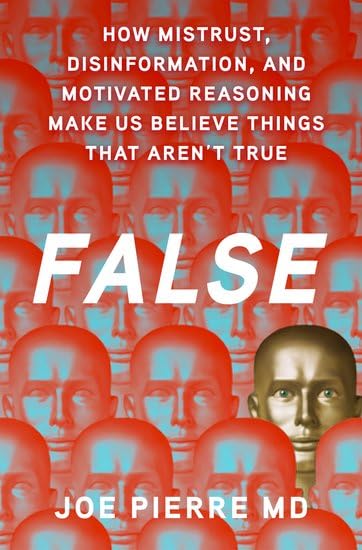
I’m currently reading False by Joe Pierre, MD, about how we all live with delusions. This book makes me want to rededicate myself to creating a second brain for two reasons. First, I want to take precise notes on this book because it offers dozens of insights about how we deceive ourselves, and about how other people are deceived and are deceiving. Second, the book inspires me to start tracking what I think I learn every day and study where that knowledge comes from.

One of the main ways we fool ourselves is with confirmation bias. Pierre says:

In real estate, it’s said that the most important guide to follow when buying a house and trying to understand home values is “location, location, location.” If I were asked about the most important guide to understand the psychology of believing strongly in things that aren’t true, I would similarly answer, “confirmation bias, confirmation bias, confirmation bias.”

Pierre explains how the Internet, Google, AIs, Social Media, and various algorithms reinforce our natural tendency toward confirmation bias.

Pierre claims there are almost 200 defined cognitive biases. Wikipedia has a nice listing of them. Wikipedia also has an equally nice, long list of fallacies. Look at those two lists; they are what Pierre is describing in his book.

Between these two lists, there are hundreds of ways we fool ourselves. They are part of our psychology. They explain how we interact with people and reality. However, everything is magnified by polarized politics, the Internet, Social Media, and now AI.

I’d like to create a second brain that would help me become aware of my own biases and fallacies. It would have been more useful if I had started this project when I was young. And I may be too old to overcome a lifetime of delusional thinking.

I do change the way I think sometimes. For example, most of my life, I’ve believed that it was important for humanity to go to Mars. Like Elon Musk, I thought it vital that we create a backup home for our species. I no longer believe either.

Why would I even think about Mars in the first place? I got those beliefs from reading dozens of nonfiction and fictional books about Mars. Why have I changed my mind? Because I have read dozens of articles that debunk those beliefs. In other words, my ideas came from other people.

I would like to create a second brain that tracks how my beliefs develop and change. Could maintaining a second brain help reveal my biases and thinking fallacies? I don’t know, but it might.

Doing the same thing and expecting different results is a common fallacy. Most of my friends are depressed and cynical about current events. Humanity seems to be in an immense Groundhog Day loop of history. Doesn’t it seem like liberals have always wanted to escape this loop, and conservatives wanted to embrace it?

If we have innate mental systems that are consistently faulty, how do we reprogram ourselves? I know my life has been one of repeatable behaviors. Like Phil Conners, I’m looking for a way out of the loop.

Stoicism seems to be the answer in old age. Is it delusional to think enlightenment might be possible?

JWH

Reading With a Purpose

by James Wallace Harris, 11/12/25

I used to keep up with the world by watching NBC Nightly News with Lester Holt, reading The New York Times on my iPhone, and bingeing YouTube videos. I felt well-informed. That was an illusion.

I then switched to reading The Atlantic, New York Magazine, The New Yorker, and Harper’s Magazine. I focused on the longer articles and developed the habit of reading one significant essay a day. That has taught me how superficial my previous methods were at informing me about what’s going on around the world. Television, the internet, and newspapers were giving me soundbites, while articles provide an education.

However, I still tend to forget this deeper knowledge just as quickly. I don’t like that. I feel like I learn something significant every day. What I’m learning feels heavy and philosophical. However, it drives me nuts that I forget everything so quickly. And I’m not talking about dementia. I think we all forget quickly. Just remember how hard it was to prepare for tests back in school.

I’ve watched dozens of YouTube videos about study methods, and they all show that if you don’t put information to use, it goes away. Use it or lose it. I’ve decided to start reading with a purpose.

At first, I thought I would just save the best articles and refer to them when I wanted to remember. That didn’t work. I quickly forget where I read something. Besides, that approach doesn’t apply any reinforcing methods.

I then thought about writing a blog post for each article. It turns out it takes about a day to do that. And I still forget. I needed something simpler.

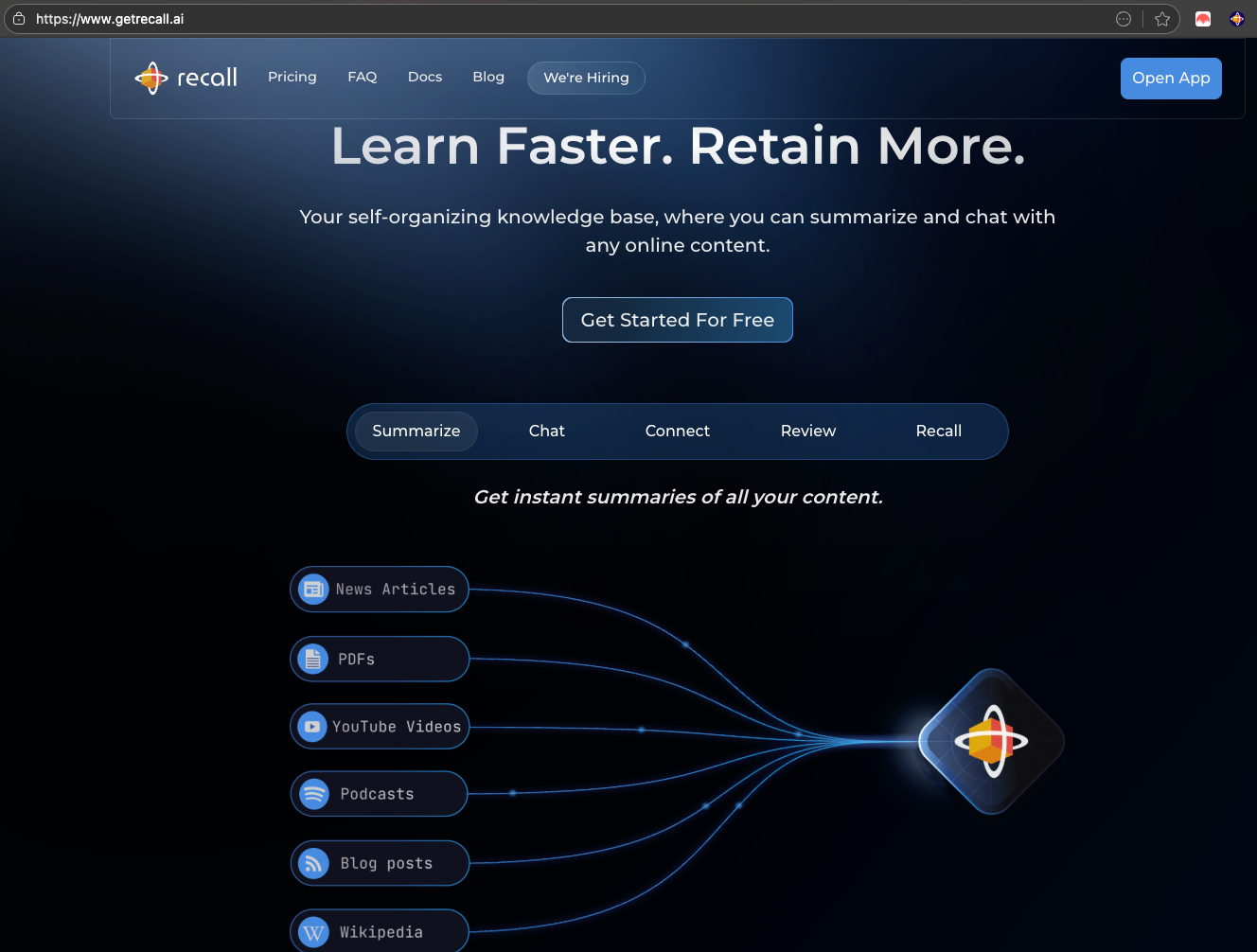
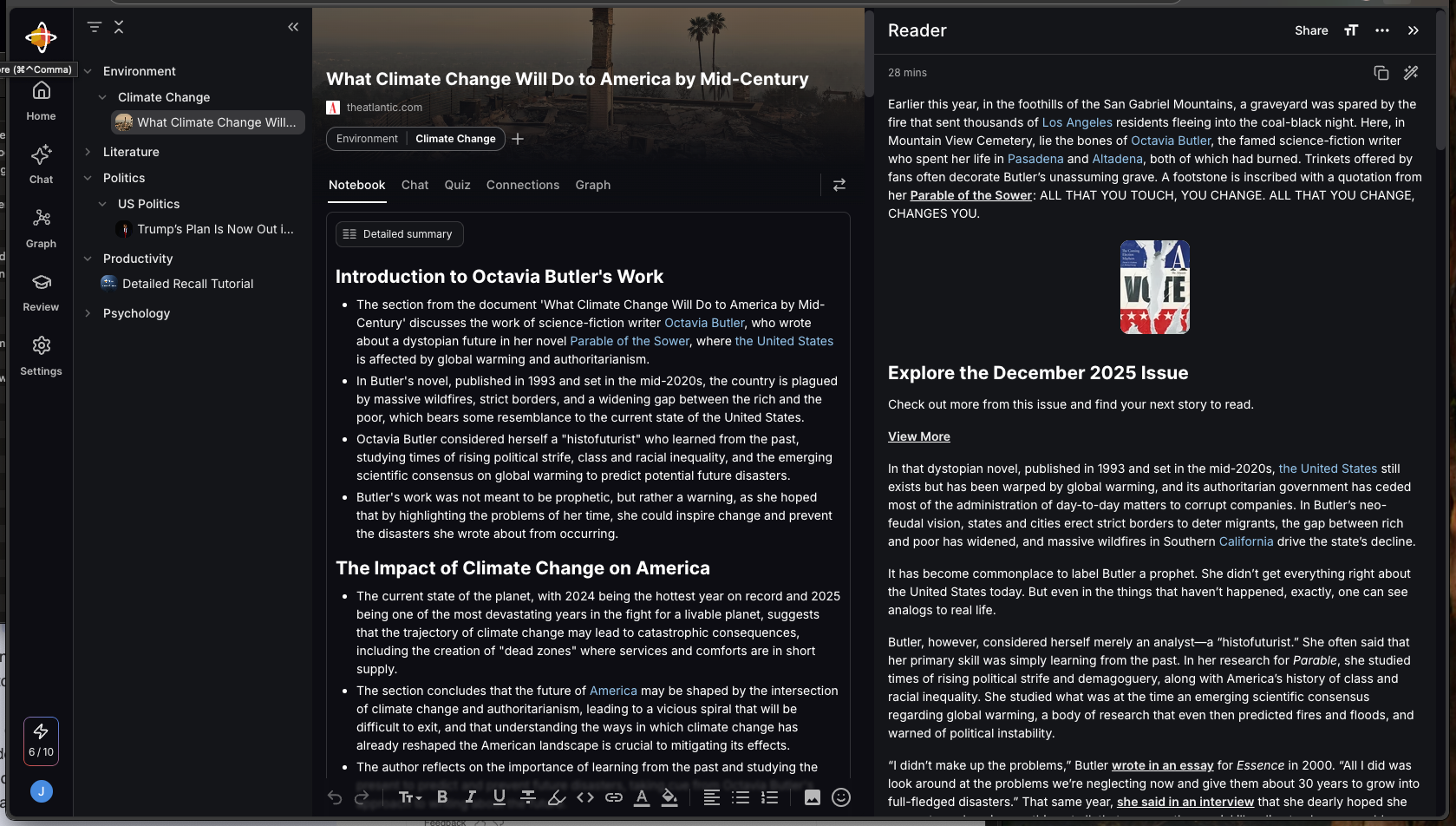
I then found Recall AI.

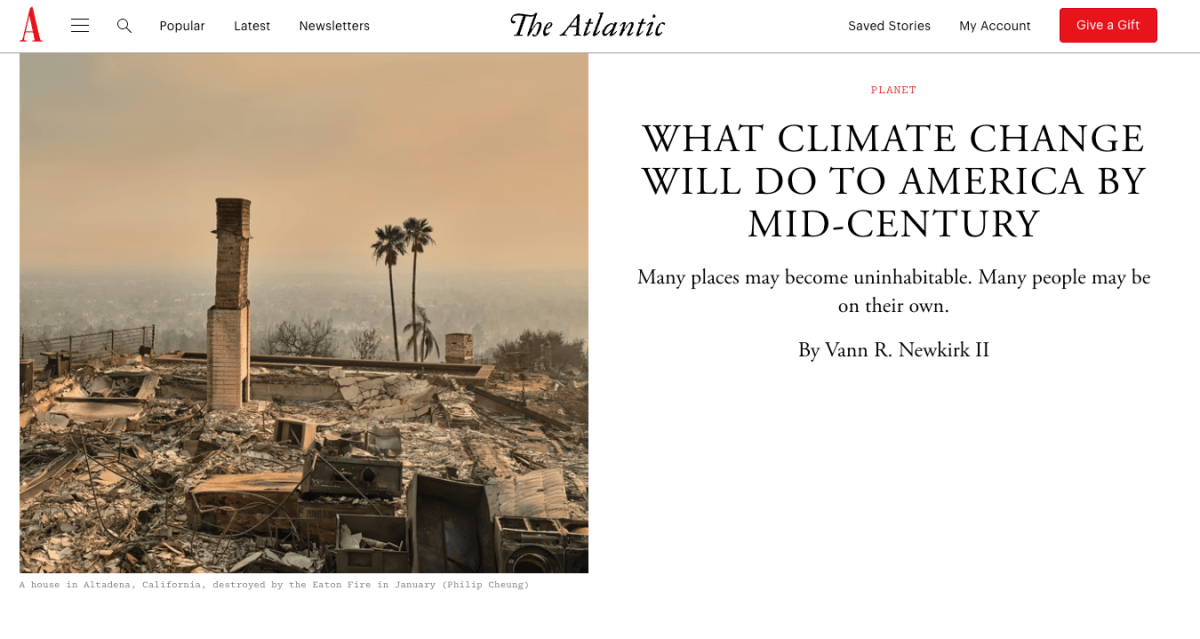
It reads and analyzes whatever webpage you’re on. Providing something like this for today’s article by Vann R. Newkirk II, “What Climate Change Will Do to America by Mid-Century:”

Recall allows me to save this into a structure. But again, this is a lot of work and takes a lot of time. If I were writing an essay or book, this would be a great tool for gathering research.

Recall is also great for understanding what I read. Helpful with quick rereading.

This morning, I got a new idea to try. What if I’m trying to remember too much? What if I narrowed down what I wanted to remember to something specific?

Within today’s article, the author used the term “climate gentrification” referring to neighborhoods being bought up because they were safer from climate change, and thus displacing poor people. The article mentions Liberty City, a poor neighborhood in Miami, with a slightly higher elevation, bought up by developers moving away from low-lying beachfront development.

I think I can remember that concept, climate gentrification. What if I only worked on remembering specific concepts? This got me thinking. I could collect concepts. As my collection grew, I could develop a classification system. A taxonomy of problems that humanity faces. Maybe a Dewey Decimal system of things to know.

I use a note-taking system called Obsidian. It uses hyperlinks to connect your notes, creating relationships between ideas. I could create a vault for collecting concepts. Each time I come across a new concept, I’d enter it into Obsidian, along with a citation where I found it. That might not be too much work.

I picked several phrases I want to remember and study:

  • Climate gentrification
  • Heat islands
  • Climate dead zones
  • Insurance market collapse
  • Climate change acceleration
  • Economic no-go zones
  • Corporate takeover of public services
  • Climate change inequality
  • Histofuturism
  • Sacrifice zones
  • Corporate feudalism

Contemplating this list made me realize that remembering where I read about each concept will take too much work. I have a browser extension, Readwell Reader, that lets me save the content of a web page. I could save every article I want to remember into a folder and then use a program to search for the concept words I remember to find them.

I just did a web search on “climate gentrification” and found it’s already in wide use. I then searched for “corporate feudalism,” and found quite a bit on it too. This suggests I’m onto something. That instead of trying to remember specifically what I read and where, I focus on specific emerging concepts.

Searching on “histofuturism” brought up another article at The Atlantic that references Octavia Butler: “How Octavia Butler Told the Future.” Today’s article by  Vann R. Newkirk II is also built around Octavia Butler. This complicates my plan. It makes me want to research the evolution of the concept, which could be very time-consuming.

The point of focusing on key concepts from my reading is to give my reading purpose that will help me remember. But there might be more to it. Concepts are being identified all the time. And they spread. They really don’t become useful until they enter the vernacular. Until a majority of people use a phrase like “climate gentrification,” the reality it points to isn’t visible.

That realization reinforces my hunch to focus on concepts rather than details in my reading. Maybe reading isn’t about specific facts, but about spreading concepts?

JWH

What Should I Major in at Old Age University?

by James Wallace Harris, 8/16/25

I’ve decided to earn an equivalent of a graduate degree before I turn 77. I need a project that will keep me occupied in retirement. I’ve always been one to know a tiny bit about hundreds of subjects rather than a lot about a few. I want to pick one subject and stick with it.

I could get a master’s degree from the University of Memphis, where I used to work, since I can take courses for free. I’m not sure they have a major that fulfills my interests. I will check it out. I’ll also check out available online universities. Mainly, I’m borrowing the structure of a graduate degree for my plan.

I decided a book-length thesis will be my measure of success. Since a master’s degree usually takes two or three years, I’m giving myself until I turn 77, which is November 25, 2028.

Over the next few months, I will decide what I want to study. There are many things to consider and think about. Most graduate programs have lots of prerequisites. Before I retired, I considered taking an M.S. in Computer Science. That program required 24 hours of math courses and 12 hours of computer courses to be accepted into the program. The degree itself was 36 hours.

It’s doubtful I could finish a computer science degree before turning 77. And in all honesty, I no longer have the cognitive ability to retake all that math.

My undergraduate degree is in English. I did 24 hours towards an M.A. in Creative Writing before I dropped out. I was also interested in American, British, and European literature. I’d have to start over from scratch because those 24 hours would have timed out. But I no longer want to study English or creative writing.

I’ve also thought of pursuing an Art History degree. I’ve been collecting art books and art history books for a couple of decades, and I have friends with degrees in Art History. One gave me a list of 200 artworks that I’d be required to discuss to pass the oral exam for the master’s degree. I started reading about those works.

I realized I would have to commit several years of dedicated study to pass the oral. I don’t want to do that. I don’t love art that much. I’m not sure what single subject would be worth that much dedication.

I’ll study college catalogs for inspiration, but it’s doubtful that I will want to complete an actual degree from a university. Instead, I will need to make up my own degree.

Let’s say a master’s degree involves twelve courses, and each course requires studying five books. Then my custom-designed degree will require distilling sixty books into a single thesis volume. That thesis should present an original idea.

The single subject I do know a lot about is science fiction. And I’ve thought it would be fun to write a book that parallels the development of science with the evolution of science fiction. I probably already own the books I’d need to research the subject. And it would be the easiest goal for me to achieve because it’s a subject I love and would have no trouble sticking with.

However, I’ve become obsessed with a couple of ideas that I want to study. I believe they are especially fascinating for the last years of my life.

The first is about how humans are delusional. I’d like to chronicle all the ways we fool ourselves. I want to study all the cognitive processes to discover if we can interact with reality without delusion. Current affairs is the perfect laboratory for such a study.

Second, I’m fascinated by how personality is formed. I’d like to answer this question: If I knew then what I know now, how would I have reshaped my personality?

There is a synergy between the two interests. How do delusions shape our personality?

Ever since I read Ed Yong’s An Immense World, I’ve been fascinated by the concept of Umwelt. Our senses limit and define how we perceive reality. Our personality and cognitive abilities determine how we choose to react to that perception of reality.

I haven’t decided yet on what I will pick, but I’m leaning towards delusion and personality development. If I choose that, I’d start this project by collecting books on the subjects and by reading popular periodicals. Eventually, I’d get to academic journals. I don’t think my made-up degree will be very rigorous, though. I’d consider a two-hundred-page book at a modest popular science reading level to merit my do-it-yourself degree.

JWH

Listing Every Subject I’m Interested In Based on the Books I Own

by James Wallace Harris, 8/14/25

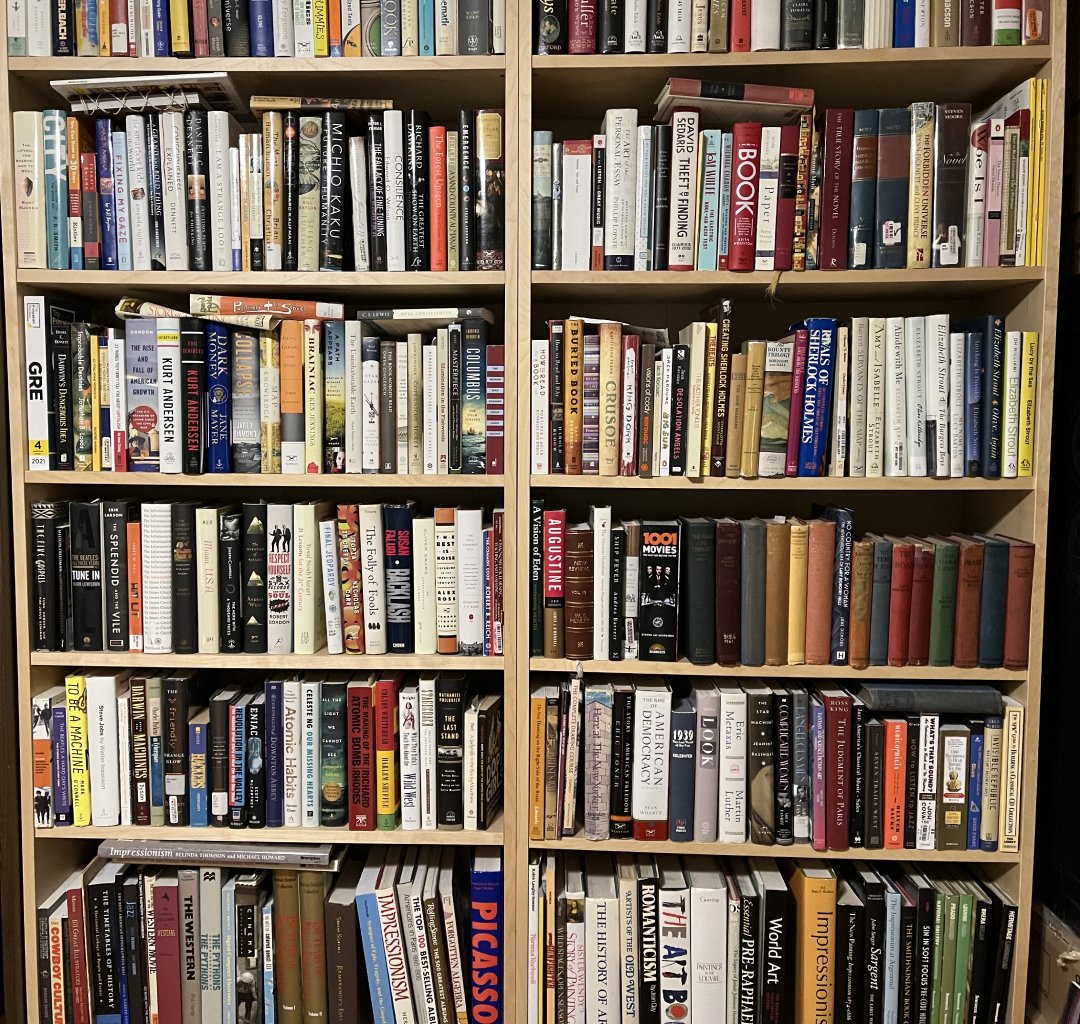
I bought more than a thousand books, preparing for retirement, thinking that after I left the nine-to-five grind, I’d have all the time in the world to read them. It’s not working out like I planned. All the time in the world has turned out to be much less than I imagined. Old age does a number on your temporal sense, which I didn’t anticipate. Being retired turns off the “gotta do this soon” mechanism in the brain, so it’s much easier to tell myself I’ll get around to that someday.

I’ve always wanted a catchy saying about buying more books than I can read, that parallels that old idiom about eating, “My eyes were bigger than my stomach.” My ability to acquire books far exceeds my ability to read them.

This problem is mainly due to my inability to commit. Learning is about specializing. To go deep into any subject requires ignoring all other subjects. I’m as indecisive as Hamlet when it comes to picking a project and sticking with it. However, I feel like I’m zeroing in on something. I don’t know what. I’d like to write a book. I have several ideas. I just can’t commit to one.

Looking through my books, I see that I’m torn between understanding the past, working in the present, and anticipating the future. The momentum of aging makes me retrospective, but I need to fight that. The present is real, and the past and future aren’t. However, to survive well in the present requires some knowledge of the past. And since we always act in the moment, we still feel we’re preparing for the future.

The Lesson of Destination Moon

Destination Moon was a 1950 science fiction film about the first manned rocket to the Moon. It was loosely based on Robert A. Heinlein’s Rocket Ship Galileo, and Heinlein contributed to the screenplay. In the story, the astronauts use too much fuel when landing on the Moon. To have enough fuel to take off and return to Earth, the astronauts must reduce the weight of the rocket and its contents. They throw everything they can out of their rocket ship, including the radio, equipment, seats, and their space suits. With the reduced weight, they take off for Earth.

In old age, I have too many goals, desires, and possessions holding me down. Their weight keeps me from accomplishing any larger goal. I need to jettison everything I can. I’m starting by evaluating my book collection and tallying all the subjects I want to study and read about.

This will be a multi-stage process. In this essay, I’m looking at all my books and listing the subjects I thought I wanted to study. Here is the current list, and even though it’s long, it’s still partial:

  • 1939 World Fair
  • 1960s
  • 1960s Counter Culture
  • Aging
  • Alexander von Humboldt
  • Alfred Hitchcock
  • American History
  • American Literature
  • Amor Towles – Writer
  • Anthony Powell – Writer
  • Anthropology
  • Archaeology
  • Art history
  • Artificial Intelligence
  • Astronomy
  • Bible Archaeology
  • Bible History
  • Biographies
  • Bob Dylan
  • Books – History
  • Boston – 19th Century History
  • British Literature
  • British Literature Between the Wars
  • Charles Darwin
  • Charles Nordhoff and James Norman Hall – Writers
  • Chess
  • Classical Music
  • Classical Studies
  • Climate Change
  • Computer History
  • Computers
  • Country Music
  • Creative Fiction
  • Creative Nonfiction
  • Databases
  • Democracy
  • Drawing
  • Early Christianity
  • Economics
  • Electronics – Learning
  • Elizabeth Strout – Writer
  • Environmentalism
  • Ernest Hemingway – Writer
  • Feminism
  • Feminist History
  • Fiction
  • Future
  • Gerontology
  • Go Programming
  • H. G. Wells
  • Hollywood vs. History
  • Impressionism
  • Information and Information Theory
  • Information Hierarchy
  • Jack Kerouac – Writer
  • Jazz
  • Lady Dorothy Mills – Writer
  • Learning – Study Methods
  • Linux / Unix
  • Literary History
  • Literature
  • MacOS
  • Magazines – History
  • Mark Twain
  • Mathematics – History
  • Mathematics – Pure
  • Memory
  • Miami – History
  • Mitford Sisters
  • Movies – History
  • Music – History
  • Nassim Nicholas Taleb – Writer
  • Network Attached Storage (NAS)
  • Nostalgia
  • Note Taking Systems
  • Obsidian – Software
  • Old West
  • Particle Physics
  • Philip K. Dick – Writer
  • Philosophy
  • Photography – History
  • Photography – How To
  • Politics
  • Power Grid
  • Pulp Magazines
  • Python Programming
  • Quantum Mechanics
  • Reading
  • Renewable Energy
  • Rhetoric
  • Robert A. Heinlein – Writer
  • Rock Music
  • Scanning – Books and Magazines
  • Science
  • Science – History
  • Science Fiction
  • Science Fiction – Criticism
  • Science Fiction – History
  • Science Fiction – Magazines
  • Short Stories
  • Sustainability
  • Taxonomy
  • Technology
  • Television – History
  • The Beats
  • The Lost Generation
  • Westerns – Books
  • Westerns – Movies
  • Westerns – Television Shows
  • Windows – OS
  • Writing
  • Yuval Noah Harari – Writer

One of the first decisions I made was to give up on westerns. I have collected many westerns on DVDs. Along the way, I started collecting books on movie and TV westerns. I decided that in the remaining years of my life, I didn’t need to know that much about Westerns. I also gave away my books on TV history.

I’m approaching each subject like I did with Westerns.

Another example, while flipping through my math books, I decided to abandon any hope of relearning math. I gave away my books on pure math. However, I kept books on the history of math. I still want to see the big picture of history. In the long run, I might have to abandon any interest in math. I just don’t know at the moment. This is a process.

Do I Keep Books I’ve Already Read?

I’ve always kept books I’ve read as a form of external memory. The painful truth is, I seldom consult those books. I’ve long known it’s cheaper to buy books at full price when I need them rather than to stockpile them when I find them as bargain used books or Kindle deals. I think the same thing might apply to keeping books. The time and energy that goes into maintaining them in my library is more expensive than just rebuying a book if I want to reread it.

For example, I gave all my Elizabeth Strout books to my friend Ann. If I ever want to reread them, I’ll try the library.

Whatever Happened to Libraries?

It used to be that libraries were depositories of knowledge. I don’t feel that anymore. I’ve gone to the public library too many times to research a subject only to find a battered collection of old books. That’s why I’ve bought my own. However, I don’t think it’s practical to be my own public library.

We can find massive collections of information on the Internet or with AIs. Unfortunately, I don’t trust those sources.

I wish I had a trusted source of online knowledge.

Kindle and Audible Books

I’m not worrying about my digital books because they are out of sight, and thus out of mind.

I decided to get rid of any physical fiction books that I had on Kindle, but not if I owned them on Audible. I like seeing the words. For now, I’ll keep the physical copies of nonfiction books if I also own them as an ebook. I prefer flipping through the pages of a book when studying.

The Limits of Memory

There are many books I’ve kept because I hoped to study a subject. For instance, I’ve long fantasized about relearning mathematics. I got through Calculus I in college, but then I waited too long to take Calculus II. This is why I gave away my pure math books. I can no longer remember things well enough to study a complex subject.

Whatever books I choose to read in this last part of my life, they need to be books that expand my overall impression of reality, but don’t require me to remember the details.

I guess I’m going for wisdom over data.

Limits of Time

I’m hesitant to keep my art history books. I enjoy looking at the pictures, but I just don’t have time to study many more subjects in this lifetime. My interests include several subjects that could become a black hole of study. I really should flee from them.

I’m trying to decide my “Major” for old age. All my life, I’ve been a knowledge grazer. I nibble at one subject and then move on to another. I’ve always wanted to go deep into one area, to specialize. However, I never could settle down. I’m probably too old to change my ways now. I’m going to try, though. The process of selecting my major will be the topic of the next essay.

Shrinking My Library to Focus My Mind

I gave the library a lot of books today. I love buying books. I love owning books. But I own too many for this time of my life. I also have too many things I’m interested in. Too many for the time and energy I have at age 73. I’m like the rocket in Destination Moon. I’m too heavy for the fuel in my tanks.

It would help if I had a committed destination. I’d know what to keep and what to jettison.

JWH

The Young Adult Novels That Shaped My Childhood

by James Wallace Harris, 7/22/25

I’ve been amazed by how fanatical young people have become over their favorite pop cultural icons. My wife and I watch Jeopardy every day, and the clues are often based on successful pop culture franchises. Comics and young adult novels dominate, especially at the movie theater. Billions of dollars are spent by their fans, and children and young people often identify with certain characters.

At first, I thought all of this was new. The Beatles had worldwide fame, but I can’t think of any fictional characters that were as popular in the 1960s as those that have emerged in the 21st century. Star Trek and Star Wars fandoms began to evolve in the 1970s, but it wasn’t until the advent of the World Wide Web that they achieved pop culture universality.

Many consider science fiction fandom the first. It began in the late 1920s and by 1939 had its first World Convention. However, we’re only talking hundreds. I considered myself a science fiction fan in junior high, but it wasn’t until the 10th grade that I met another fan in person. That was 1967.

Looking back, I realize it was YA novels that made me a fan, too. At seventy-three, I wonder if I would have had a different life if I had discovered the works of another author first.

I realize now that reading books was my way of coping with the stress of growing up. Just after JFK’s assassination in November 1963, my family began to fall apart. In 1963-1964, I attended three different 7th-grade schools, and two 8th-grade schools, in two states, and lived in four different houses. My parents became obvious alcoholics, their marriage began to unravel, and my dad had his first heart attack. Somehow, I remained a happy kid.

Just before I turned thirteen, when I began the 8th grade in September 1964, I discovered the young adult novels of Robert A. Heinlein. They didn’t use the term young adult back then, but called them books for juveniles. Juvenile delinquency was also a common phrase back then. Before that, they were called books for boys. There were also books for girls. Gender roles were specific back then. This was when newspapers divided job listings into “Men Wanted” and “Women Wanted.”

Discovering Robert A. Heinlein and science fiction gave me a positive outlook on life and my future. I especially identify with the Heinlein juveniles. I remember at the time believing Heinlein would have a literary reputation similar to Mark Twain by the time the 21st century rolled around. That hasn’t happened. Heinlein is often shunned by modern readers of science fiction. I accept much of the criticism regarding his adult novels published after 1960, but I still embrace his young adult novels and other work published before 1960.

Charles Scribner’s Sons, famous for publishing Hemingway, F. Scott Fitzgerald, and Thomas Wolfe, first published the twelve Heinlein juveniles between 1947 and 1958. The Heinlein juveniles were highly regarded by librarians and schools. I discovered them because my 8th-grade teacher put them on her approved reading list. She required our class to read three novels, three magazine articles, and three newspaper articles every six weeks. If we didn’t, she lowered our grade one letter. If we read five of each, she raised our letter grade by one letter. I always read the five of each because I’m terrible at diagramming sentences and understanding grammar. That upped my C to a B each report card.

For over sixty years now, I have been grateful to this teacher. Sadly, I can’t remember her name.

I keep hoping YouTube book reviewers will read Heinlein’s juveniles and reevaluate their judgment on Heinlein. Over the decades, I’ve read memoirs by scientists, writers, and astronauts about how they loved the Heinlein juveniles when they were young, and the impressions the books made on them.

I’ve been meaning to reread all the Heinlein juveniles again and judge them without the influence of nostalgia. Has sentiment clouded my perspective? I fear my love of these books is similar to how people embrace religion when young. Ideas often brainwash us in youth, and it’s almost impossible to deprogram ourselves. Our species suffers from delusions. No one is free of being fooled by beliefs. For every individual, it’s a matter of how delusional.

At seventy-three, I’m taking a hard look at what science fiction did to my mind and personality. I’m starting with the Heinlein juveniles because I believe they were at the Big Bang of my becoming self-aware.

Before I got into science fiction, I consumed the Oz books by L. Frank Baum. I read an article in my thirties about how some libraries pulled the Oz books off their shelves because the librarians worried they gave children unrealistic expectations about life. At the time, I thought that was silly. However, I realized I had grown up with many unrealistic beliefs about life. At the time, I believed the Heinlein juveniles had made me more realistic. Four decades later, I know that was wrong too.

When I took computer programming classes, they taught us the term GIGO – garbage in, garbage out. Have all the pop cultural fantasies we’ve consumed caused our delusional adult beliefs? Humans have always been susceptible to religious fantasies. Haven’t we just replaced those with pop cultural fantasies?

I love the Heinlein juveniles. Why? If I understood why, would I still love them?

JWH