I used to keep up with the world by watching NBC Nightly News with Lester Holt, reading The New York Times on my iPhone, and bingeing YouTube videos. I felt well-informed. That was an illusion.
I then switched to reading The Atlantic, New York Magazine, The New Yorker, and Harper’s Magazine. I focused on the longer articles and developed the habit of reading one significant essay a day. That has taught me how superficial my previous methods were at informing me about what’s going on around the world. Television, the internet, and newspapers were giving me soundbites, while articles provide an education.
However, I still tend to forget this deeper knowledge just as quickly. I don’t like that. I feel like I learn something significant every day. What I’m learning feels heavy and philosophical. However, it drives me nuts that I forget everything so quickly. And I’m not talking about dementia. I think we all forget quickly. Just remember how hard it was to prepare for tests back in school.
I’ve watched dozens of YouTube videos about study methods, and they all show that if you don’t put information to use, it goes away. Use it or lose it. I’ve decided to start reading with a purpose.
At first, I thought I would just save the best articles and refer to them when I wanted to remember. That didn’t work. I quickly forget where I read something. Besides, that approach doesn’t apply any reinforcing methods.
I then thought about writing a blog post for each article. It turns out it takes about a day to do that. And I still forget. I needed something simpler.
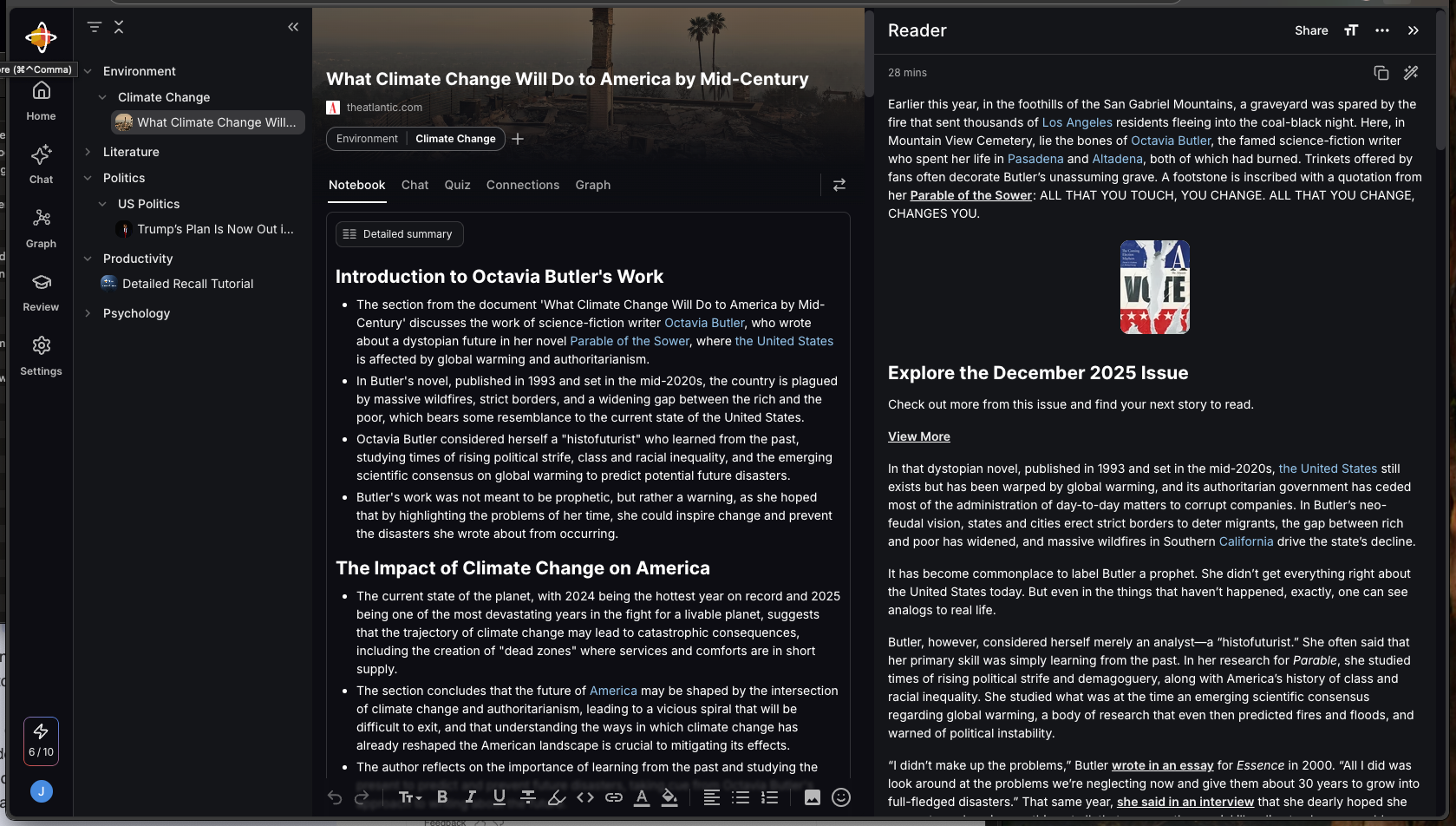
Recall allows me to save this into a structure. But again, this is a lot of work and takes a lot of time. If I were writing an essay or book, this would be a great tool for gathering research.
Recall is also great for understanding what I read. Helpful with quick rereading.
This morning, I got a new idea to try. What if I’m trying to remember too much? What if I narrowed down what I wanted to remember to something specific?
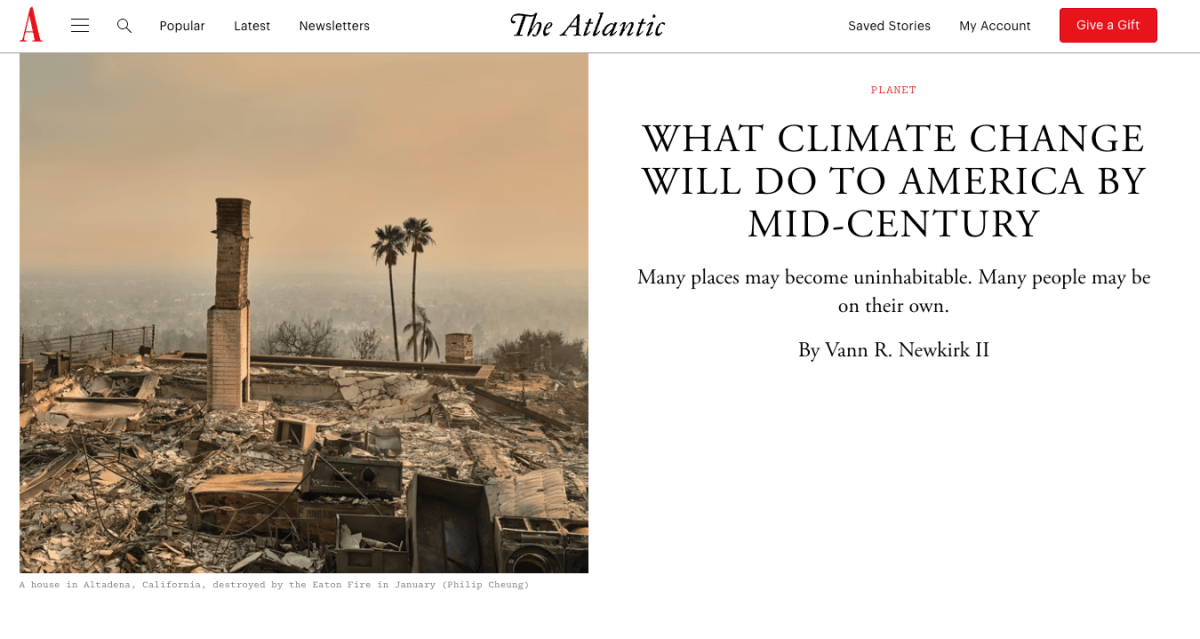
Within today’s article, the author used the term “climate gentrification” referring to neighborhoods being bought up because they were safer from climate change, and thus displacing poor people. The article mentions Liberty City, a poor neighborhood in Miami, with a slightly higher elevation, bought up by developers moving away from low-lying beachfront development.
I think I can remember that concept, climate gentrification. What if I only worked on remembering specific concepts? This got me thinking. I could collect concepts. As my collection grew, I could develop a classification system. A taxonomy of problems that humanity faces. Maybe a Dewey Decimal system of things to know.
I use a note-taking system called Obsidian. It uses hyperlinks to connect your notes, creating relationships between ideas. I could create a vault for collecting concepts. Each time I come across a new concept, I’d enter it into Obsidian, along with a citation where I found it. That might not be too much work.
I picked several phrases I want to remember and study:
Climate gentrification
Heat islands
Climate dead zones
Insurance market collapse
Climate change acceleration
Economic no-go zones
Corporate takeover of public services
Climate change inequality
Histofuturism
Sacrifice zones
Corporate feudalism
Contemplating this list made me realize that remembering where I read about each concept will take too much work. I have a browser extension, Readwell Reader, that lets me save the content of a web page. I could save every article I want to remember into a folder and then use a program to search for the concept words I remember to find them.
I just did a web search on “climate gentrification” and found it’s already in wide use. I then searched for “corporate feudalism,” and found quite a bit on it too. This suggests I’m onto something. That instead of trying to remember specifically what I read and where, I focus on specific emerging concepts.
Searching on “histofuturism” brought up another article at The Atlantic that references Octavia Butler: “How Octavia Butler Told the Future.” Today’s article by Vann R. Newkirk II is also built around Octavia Butler. This complicates my plan. It makes me want to research the evolution of the concept, which could be very time-consuming.
The point of focusing on key concepts from my reading is to give my reading purpose that will help me remember. But there might be more to it. Concepts are being identified all the time. And they spread. They really don’t become useful until they enter the vernacular. Until a majority of people use a phrase like “climate gentrification,” the reality it points to isn’t visible.
That realization reinforces my hunch to focus on concepts rather than details in my reading. Maybe reading isn’t about specific facts, but about spreading concepts?
I suppose because humans have always reproduced like bunnies, we’ve always ignored an essential aspect of sexual reproduction and gender. Statistically, we need every female to have more than two children. Because some women can’t have children, and because some girls die before reaching reproductive age, to keep the population steady during current conditions requires 2,100 babies to be born to every 1,000 women. That number varies depending on the state of medicine and the number of catastrophes.
In 2024, 1,626 babies were born to every 1,000 women in the United States. That’s not enough. If we continued at that rate, we’d eventually become extinct. In many other countries, that number is much smaller than 1,626.
Why aren’t these statistics common knowledge? Why didn’t we learn them when our parents (or peers) taught us about sex? It’s a heavy responsibility to know that we should all have children. My wife and I didn’t have children. Most of my friends didn’t have children. Why did we all start doing our own thing and forget this essential aspect of life?
It’s unfair that the burden of maintaining the species falls on women. To maintain the current population, every woman needs to have two children, and one in ten needs to have three. That’s assuming all women can have children. The practical need is for all women to have three children. Few women want that today.
Males don’t escape responsibility either. The species could get by with fewer males for making babies, but we need males to support the raising of children. I suppose a feminist utopia could get by with an exceedingly small number of males, or even none if women perfected cloning, but the statistics of maintaining the species are the same even if males weren’t needed.
However, we have evolved into a society/culture that doesn’t want enough children. What does that mean? Should we make people have more babies?
I wrote about this yesterday. However, the impact of these numbers didn’t hit me until 3:11 am last night.
For humanity to survive, we must deal with climate change, environmental sustainability, capitalism, inequality in all forms, artificial intelligence, and reproductive stability.
Theoretically, we could solve all these problems, but I doubt we will. The obvious solution is that civilization will collapse, and we’ll fall back into previous kinds of social organizations. It’s a fascinating challenge to imagine a society that can solve all these problems. However, can you imagine any future where all fertile women must have three children, and all men must become dedicated fathers? I can’t.
The human race needs to act radically differently. Is that possible?
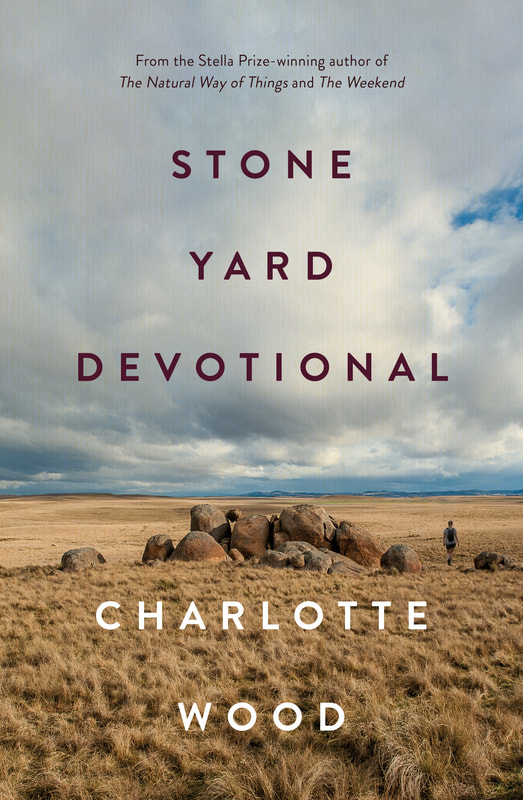
Stone Yard Devotional is about how reality puts the peddle to the metal when life gets all too real. Stone Yard Devotional reads like a memoir, a diary, but it’s classified as a novel. The book was nominated for several awards.
The entire time I was listening to this book I wondered if Charlotte Wood was the unnamed narrator, however after reading “‘The shock was so deep’: Novelist Charlotte Wood on the experience that changed everything” in the Syndney Herald, I realized the novel was only inspired by her own life. Wood and her two sisters were being treated for breast cancer, while she was contemplating mortality and drafting this book.
I have no memory of how I discovered Stone Yard Devotional by Charlotte Wood. The cover and title intrigued me for sure. Maybe it was because it was shortlisted for the 2024 Booker Prize. The audiobook was part of my Spotify subscription, so I gave it a try, and I’m glad I did. It’s not the kind of book I normally read, but it’s wonderful to read if you’re getting old.
The story begins with the Covid pandemic. The narrator separates from her husband, ghosts her friends, and hides out in a guest house of a religious order, even though she is nonreligious. She wants to be alone. But after her initial stay, she returns to the order to live with the nuns. I was never sure if she joined the order or not. I have often thought the monastic life has certain appeals.
The story is about the narrator’s observations while living a contemplative life. These include the death of her mother, the remembrance of childhood, studying the nuns, working in the garden and kitchen, and the guilt of living with a woman she and her classmates horribly bullied as a child. The narrative is simple, like meditation.
The setting is Australia, which is exotic to me. As a kid I wanted to live in Australia. Over the course of the novel, there is a plague of mice that invade the convent. The mice are so numerous that they cover the roads in gray fur. At first, I thought Wood added this element to give her tale some excitement, but I researched and found that her part of Australia they did have a mice plague of Biblical proportions in 2021.
That made life in the convent extremely inconvenient. The mice ate electrical insulation, throwing daily living in the convent back to the 19th century. The illustration for the book’s review at The New York Times might have been another reason I read this book.
Much of what the unnamed narrator contemplates throughout the novel is what everyone thinks about as they get older. The fear of declining health and death, the regrets, the desires for wanting to have done things different, the desires to connect with others while also wanting to pull away, the changes we see in ourselves and others, the appeal of nature and living simple. Wood’s story explores all of that and more, triggering the reader to think about their lives.
Charlotte Wood was born in 1965, so she’s fourteen years younger than me. However, her battle with cancer has likely aged her perception on life. At 73, I’ve been thinking about the things in this novel for years. But I don’t know if everyone who collects social security meditates on these issues. Stone Yard Devotional is a great title for this novel. Even though the narrator said she was an atheist at the beginning of this story, getting old and dealing with people who die, pushes you to be spiritual even without a belief in God.
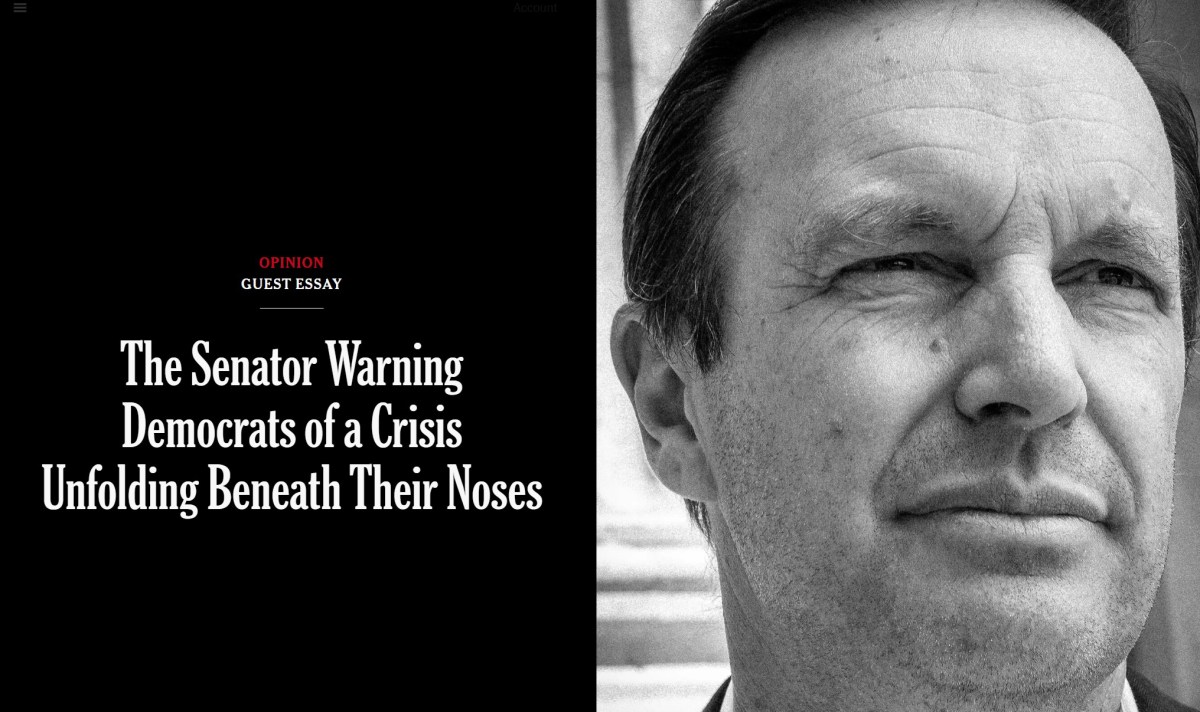
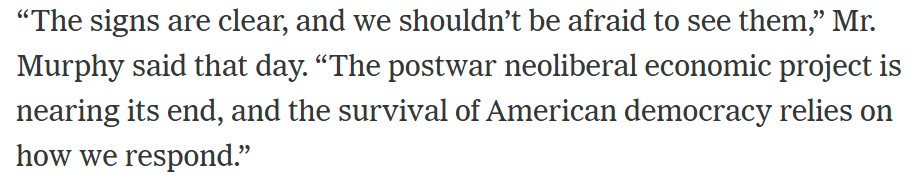
On Monday, August 19th, the New York Times ran a guest editorial by James Pogue about Senator Chris Murphy of Connecticut, entitled “The Senator Warning Democrats of a Crisis Unfolding Beneath Their Noses” which I found intriguing but hard to understand. It appears to suggest that Republicans are going to put limits on neoliberalism. That’s impossible for me to believe.
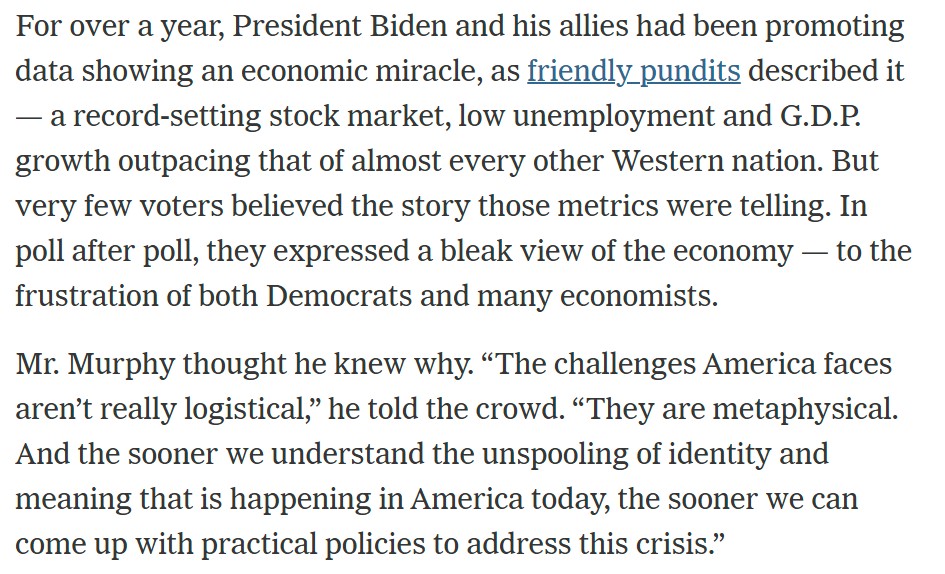
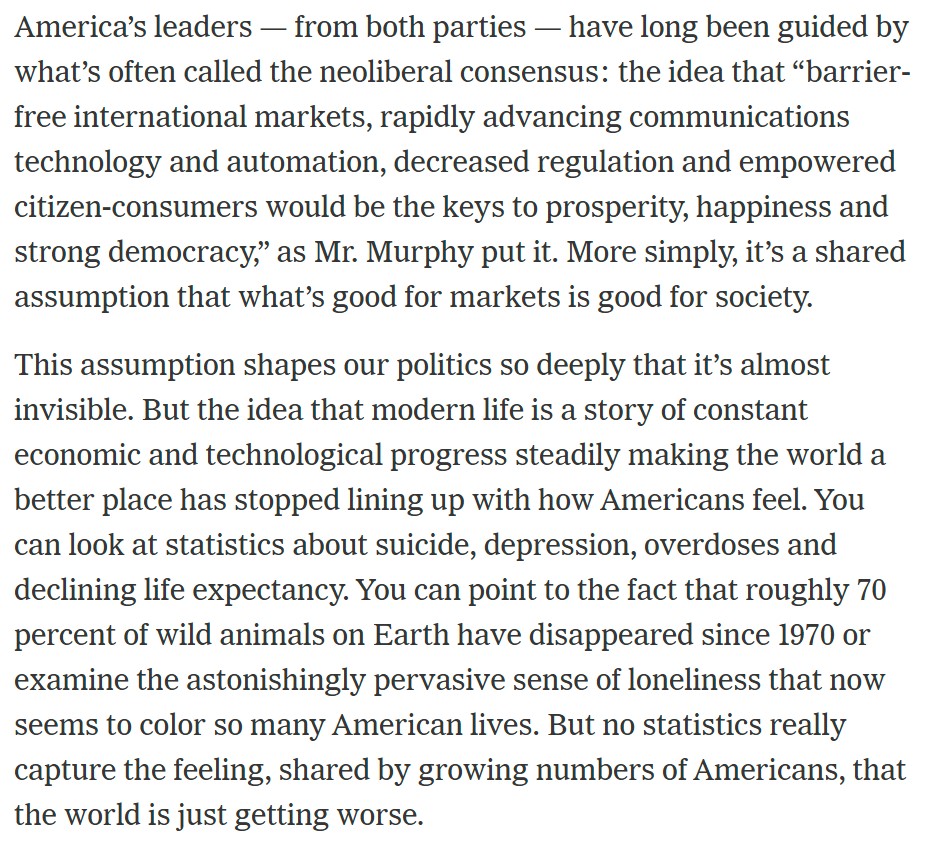
That’s a rather interesting statement, that the problems we face today aren’t logistical but metaphysical. Pogue then goes to say the subject of Murphy’s speech was “the fall of American neoliberalism.” I’ve read several articles over the last few years that mentioned the same thing. Neoliberalism is a virulent form of capitalism pushed by Ronald Reagan and Margaret Thatcher. It’s an economic philosophy embraced by Republicans, but Bill Clinton went along with it when he got his chance. So did Obama. It was Trump who appeared to put on the breaks Neoliberalism when he was elected, and Biden even followed Trump in some ways. So, some pundits are now suggesting the tide has turned.
But has it? Isn’t prosperity through economic success what Republicans and Democrats both want? Pogue goes on to summarize:
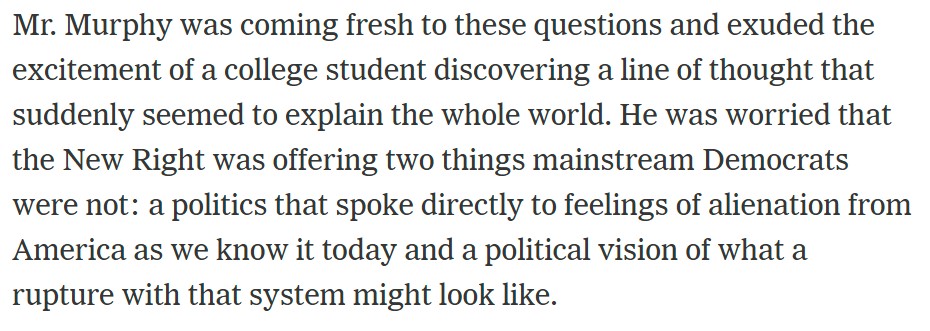
Okay, I understand this. Civilization is collapsing and ultimately capitalism is a Ponzi scheme that will fall apart as the one percent squeezed all the wealth out of the ninety-nine percent. But I assumed we need to fix neoliberal capitalism, not reject it. It’s the only system that creates jobs and freedom. We just needed to make it more equitable and friendly to the environment. I assumed that’s what the Democrats want, but evidently according to this essay it’s not the solution the Republicans want.
Pogue says Murphy defines it as a metaphysical problem that masks a spiritual crisis, one that Donald Trump has tapped into. Trump recognizes this unhappiness and appeals to it. Murphy says Democrats have trouble even admitting that it exists. But where does neoliberalism come in? Trump heads the Republican party, and isn’t that party the guardian angel of neoliberalism?
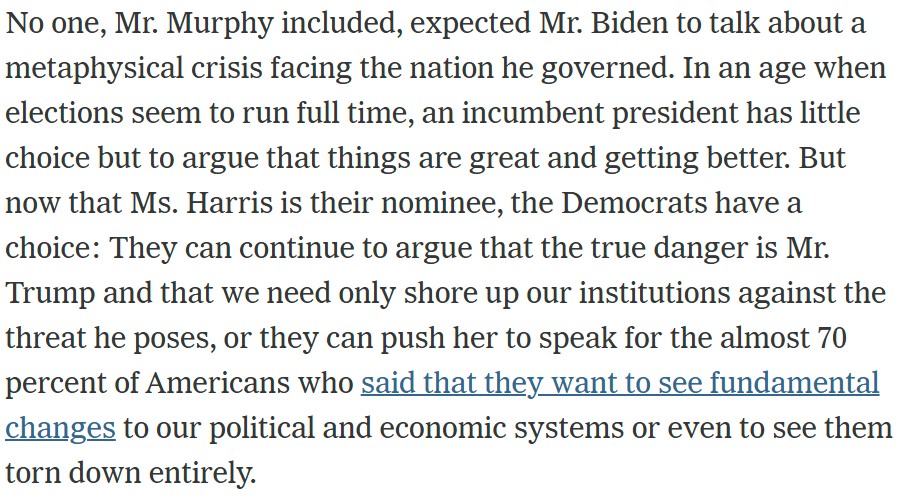
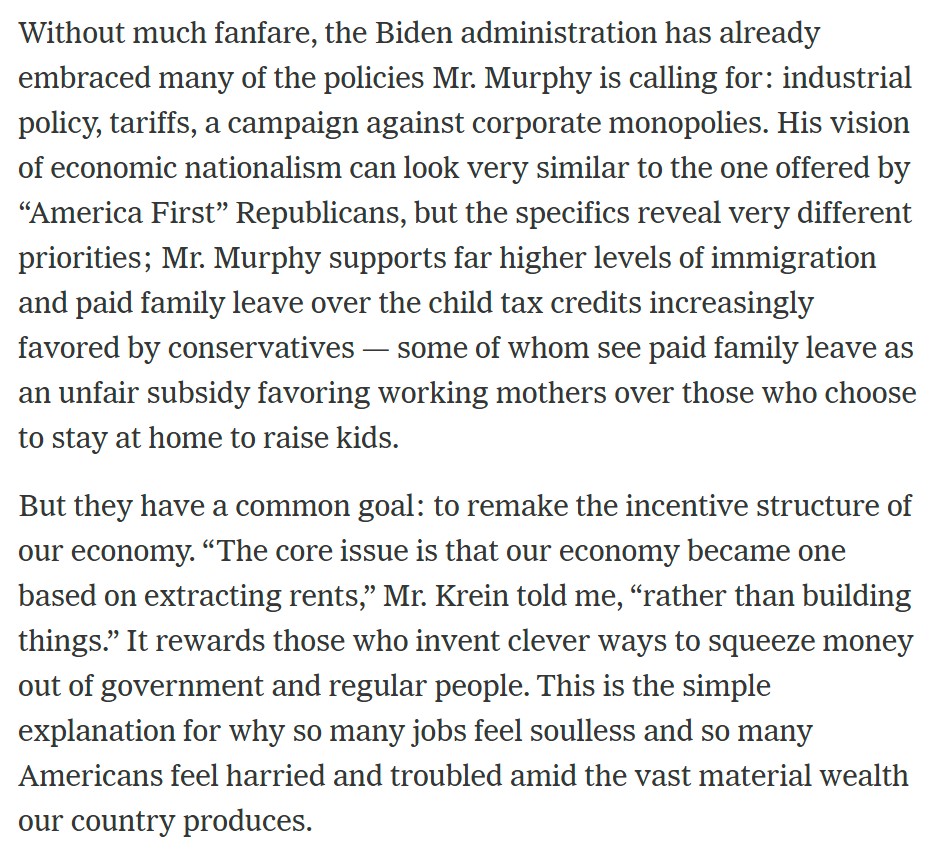
How can a political party overcome a spiritual crisis and still race full steam ahead with capitalism? Pogue summarizes Murphy’s recognition of the problem that the Democrats need to address:
This makes things even more puzzling. I can understand where Democrats might want to regulate capitalism, making it more socialistic and ecological, but how can Republicans alter their religion to help the dissatisfied?
Murphy brings up Project 2025 but is that really a solution to the spiritual crisis he’s pointing at? Ever since FDR and the New Deal, Republicans have been wanting to undo it, and LBJ’s Great Society too. But wasn’t Neoliberalism a response to the Great Depression? But does Project 2025 offer a solution to Murphy’s problem? Isn’t it just consolidating power. It doesn’t claim to undo neoliberalism. Although, it hopes to rewind our sociological makeup back to the 1920s.
To me, the Republicans want to avoid taxes and regulations so they can make as much money as possible. They want private property protected and they want national security. Neoliberalism gives them all of that, so why would they want to undo it? I don’t think they do.
Lately, I’ve been reading books on the French Revolution and Napoleon. The French Revolution tried to create a democratic society based on Enlightenment ideals. The revolutionaries wanted to get rid of the aristocracy and the church. Napoleon believed democracy would just allow a class of wealthy to replace the aristocracy, and that either would need to keep the church because the church kept the poor from destroying either the aristocracy or the wealthy. Napoleon didn’t care for democracy and felt a hereditary aristocracy was a better system for maintaining order. He reinstated the church.
Aren’t the Republicans wanting to be the new aristocrats, and aren’t they embracing the faithful to protect them? Trump and the Republicans want to consolidate power. Is their promise of law and order going to solve the spiritual crisis that Murphy describes?
If the Republicans win in 2024, roll out their Project 2025 plan, and succeed at killing off the Democratic Party, they aren’t going to solve those spiritual problems Murphy points to. They will deregulate capitalism more, cut taxes for themselves, and go back to distilling American wealth from the ninety-nine percent to the one percent. They might make some Americans happier by legislating behavior, but I’m pretty sure they won’t put the breaks on neoliberalism.
Republicans will face a real revolution, like the one in 18th-century France. And we’ll discover the same problems as the French discovered. Between the fall of the Bastille and the coronation of Napoleon, they tried many kinds of governing theories based on the desires of the different factions of the population. None of them worked.
I believe the spiritual crisis Murphy points to has always been with us. There’s no form of government that makes most of the population satisfied. That the pendulum always swings between hope and the apocalypse but never reaches either. Murphy is saying that Trump and the Republicans are swinging the pendulum towards hope. That might even be true for some, but it doesn’t mean the pendulum will reach a point and make their followers happy.
I don’t think Trump is really offering an alternative to neoliberalism economics, but just appealing to isolationism, xenophobia, racism, and is anti-LGBTQ+.
Would it be cruel of me to point out that Christians have been waiting for the Rapture for over two thousand years. Republicans have been in the desert for forty years waiting to get into the promise land. They feel they are remarkably close. Religion and politicians have been promising to deliver people into the land of milk and honey for two hundred thousand years. We’ve never gotten there yet so why believe it now?
The essay goes on for a great length, but it finally gets down to talking about what the Democrats can do in response. I worry that the Democrats might promise pie-in-the-sky. I think we need to get away from believing political parties will save us.
Democrats and Republicans vilify each other, often to extreme. Each have legitimate complaints and desires.
The whole country needs to rethink what it wants, and not trust either party. I think Trump supporters should expect to be let down. I don’t think either party can solve the spiritual crisis that Murphy describes. We have a polarized political system that is stuck with always leaving half the voters unhappy.
I don’t know if we can fix our system, or even start over with a new one that works. But my gut tells me the present two-party system won’t ever succeed. I doubt a one-party system would either. I’d like to see more democracy, not less. We need to decide everything with referendums but change what a winning majority is from 50% to 66%. We need to move closer to a consensus rather than polarization. I think that might be possible with referendums, but not with political parties. Just study opinion polls. Political parties have succeeded in making minority rule work.
I want the Democrats to win in November, but I don’t expect them to solve the spiritual crisis Murphy describes. I just expect they will provide less turmoil over the next four years. Civilization will continue to head towards collapse. Theoretically, we might avoid that, but not with our present political system.
I also think whether the Democrats or Republicans win, they are just going to slightly modify neoliberal economics. The pandemic taught us that we shouldn’t depend on globalism for vital products, but corporations aren’t going to give up on global markets or moving jobs around the world to where labor is cheap. We’ll deploy some tariffs, but then we’ve always had. But the basic tenet of neoliberalism, that capitalism generates prosperity through unhindered commerce won’t end. Capitalism is destructive to the environment, and unkind to economic losers. By its very nature, capitalism generates inequality. The Americans who are suffering the spiritual crisis Murphy describes won’t be saved.
If we evolved a system based on referendums and larger winning majorities, the political parties would slowly fade away. Philosophers have always worried about democracy leading to mob rule. I’m not sure that would be true if we increased the size of the winning majority. It would force us to cooperate. It’s too easy to create minority rule with a fifty percent winning majority.
Our present situation is due to the wealthy getting what they want. Like Napoleon said, they are the new aristocrats, and they aren’t going to give up their power, privilege, and position. Any political or economic solution to help those suffering from the spiritual crisis that Murphy worries about will have to include the power of the wealthy in their equations.
Before neoliberalism was a period where the rich were taxed more heavily, and we had a larger middle class. I doubt Trump wants to use that solution. Neoliberalism wants to stop anything that gets in the way of the rich making money. I can’t believe anyone believes that any political movement will hinder that.
Murphy is right in that the Democrats don’t deal with the issue. But I don’t believe the Republicans are offering a solution either. I think they’re just lying to get elected. Trump’s isolationist policies will create some jobs, but other policies will do away with more jobs. And if he really deports millions of illegal immigrants it will make a huge dent in the economy. Even then, those policies aren’t altering neoliberialism.
I think Murphy and others have put their finger on the problem, but I don’t see anyone offering a solution that will work. Neoliberalism has made greed almost unstoppable. I say almost, because revolutions and apocalypses do happen.
To solve Murphy’s spiritual crisis, we need a lot more jobs and a lot less inequality. Unfortunately, this era also coincides with artificial intelligence, robots, and increased automation. The dream of capitalism has always been to do away with labor, and technology is getting closer and closer to doing that.
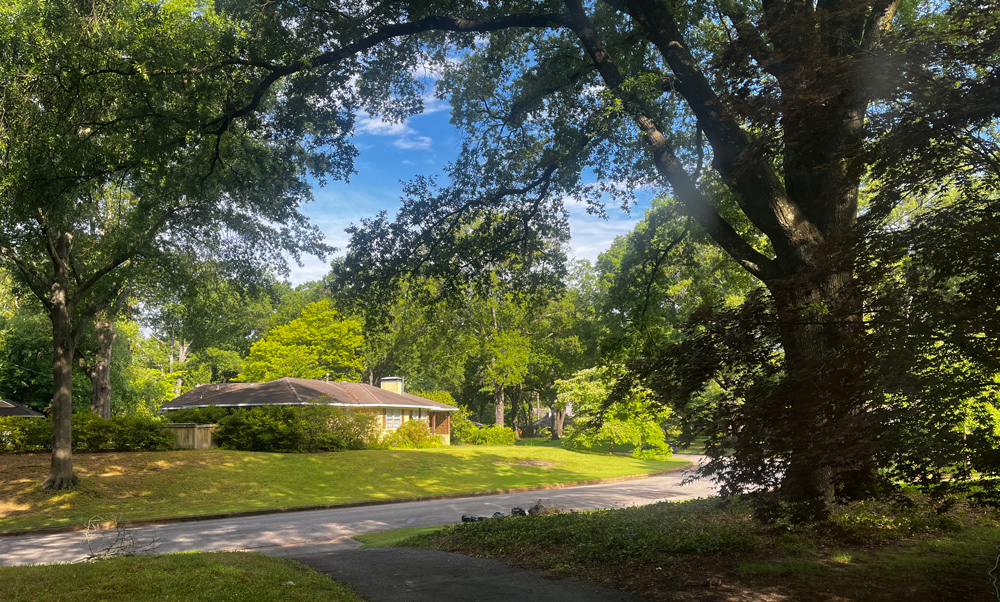
The picture above was taken from my dining room window. Not much is happening. It’s quiet and peaceful. In my den, looking through the sixty-five inch window of my television screen, I see so much turmoil and suffering. The fall of civilization is what’s happening.
One of my favorite novels is called The Door into Summer because the cat in the story hates New England winters and asks to see what’s out every door hoping to find one that leads to summer. I can open my front door and walk out into summer. It’s 77 degrees outside right now – not bad at all for July in a year that might become the hottest year on record. So, why do I spend my days watching television when all it does is to depress me?
The need to know what’s happening is a burden. The belief that I can control anything through knowing more is an illusion and deception. However, there are wars going on all around me and I don’t know if I can sit them out. My friend Anne lives in a nice neighborhood too, but last week there was a shooting at the house one over from hers. Yesterday was the 4th of July, and we heard plenty of fireworks. But we also heard plenty of guys shooting off their guns.
Crime and climate change are getting nearer all the time. What if I looked out my window and saw this:
Thousands of people are seeing this everyday around the world because of hurricanes, tornadoes, floods, and fires. In a decade it could be millions seeing such sites every day. Can we learn anything to avoid that future?
There is a cultural war happening all over the world and the battles are being fought in polling booths. Popularism wants to rewind the clock on progressive progress. To understand this, watch this talk by David Brooks. It’s one of the most uplifting things I’ve seen on my television screen in a very long time.
If you listen to Brooks, you’ll understand what the conservatives want to do with their Project 2025 plan and why. They believe it is their door into summer. If they succeed, I believe 1/20/2025 will be remembered like 4/12/1861 or 6/28/1914. It would be so much easier for my mental health to quit watching TV, but is that really an option? I can understand why Christians are fighting so hard for their way of life. I would have no problem surviving in their utopia if they got everything they wanted. But millions of people wouldn’t, and it will lead to civil war and self-destruction.
The world is going nuts while the environment is going down the drain. On one hand, I can’t stop watching this slow-motion apocalypse. One the other hand, I just want to look out my window or read a science fiction novel.




 Auxiliary Memory