Visiting the ER Makes Me Philosophical

by James Wallace Harris, 8/25/25

Friday night, I went to the ER. I arrived at 7:15 pm and left at 2:45 am. At 73, I’ve been to the ER more than a few times. It’s always a fascinating experience despite the pain that brought me there and the agony of waiting to be seen.

Rejuvenation

Last fall, I started working in the yard and began to feel stronger. It made me more active. By spring, I had lost twenty pounds. When it got warm, I switched to walking for exercising, something I hadn’t been able to do since Obama was President. In other words, I felt better than I had in years.

That was quite a dramatic transformation. I had been having various health problems since my forties and had undergone surgeries three years running, starting in 2020. I had accepted I was on a downward path and couldn’t imagine having my health on an upward trajectory again.

Mentally, this rejuvenation changed me. I was having more people over and going out more. I felt like I was turning back the clock. I felt younger. I started doing things I haven’t done in years and began hoping to do even more in the future. One of the fun things I had started doing was playing Mahjong. Susan and I had begun to visit games around town. It made me want to get out again, which probably surprised Susan. Mahjong is hard. I need to think faster to play it, and that felt challenging.

I even went to my doctor to have tests done on my heart to see how much I could push things. I wanted to do more physical things.

I wasn’t completely healthy. I still had aches and pains. But I was keeping them under control with physical therapy exercises. But the miracle was walking for exercise. I started out by walking around one small block once. Over weeks, I built up stamina. Eventually, I was walking three or four laps every morning. It felt great.

I was worried about my heart and the strange twinges of pain in my right side. I asked my doctor. We talked about some possibilities. We knew I had gallstones. We were going to run tests after doing the tests on my heart. Because I’ve had heart problems before, she was more concerned about that.

The ER

Two days before the ER, I felt more rejuvenated than I had in years, so it was a shock to need to go to the ER again. I didn’t feel bad mentally. I felt healthy and clear-headed, except that I had intense shooting pains in my side and back. At 6:30 pm Friday, I decided Susan should drive me to the ER to see if they meant something serious.

We got to the ER at 7:15 pm. They checked my vitals, set up an IV, and then told me to wait in chairs. The place was crowded. I knew it would take hours, so I told Susan to go home. She’s been having her own health problems, and she had left dinner half-prepared. I didn’t want to waste that food.

Being alone made me think about what it would be like if I didn’t have Susan. I imagined living on my own, doing everything by myself. I love working alone at home, but I hate being alone in life. Getting old makes you philosophical, and so does waiting in an ER for hours.

Looking around, I saw some people were by themselves, some were with spouses, and some were with their whole families. From listening in on conversations, I learned that many in the waiting room had been there for hours. Some of those people were waiting for a hospital room to free up. Many of those had wrapped themselves in white blankets and were trying to sleep. The ER had two racks of warm blankets. I love it when they put those warm blankets on you in surgery.

Most of the people in the waiting room were waiting in silence. Some were moaning, one guy was softly crying while his wife hugged him. One poor girl was loudly groaning in pain periodically. I wondered if she was in labor. I was glad that only one person was coughing.

I tried to be still because moving sent shooting pains through me. I wanted to be as stoic as possible. But sometimes pains just shot through me, and I had to jerk about a bit. I knew a few people were looking at me like I was looking at them and wondering what was wrong. I wished I knew.

Before midnight, they called me back. They put me in a small room divided by a cloth curtain. In the other half, they were examining a teenage boy while his mother watched. I heard all the details. They weren’t nice.

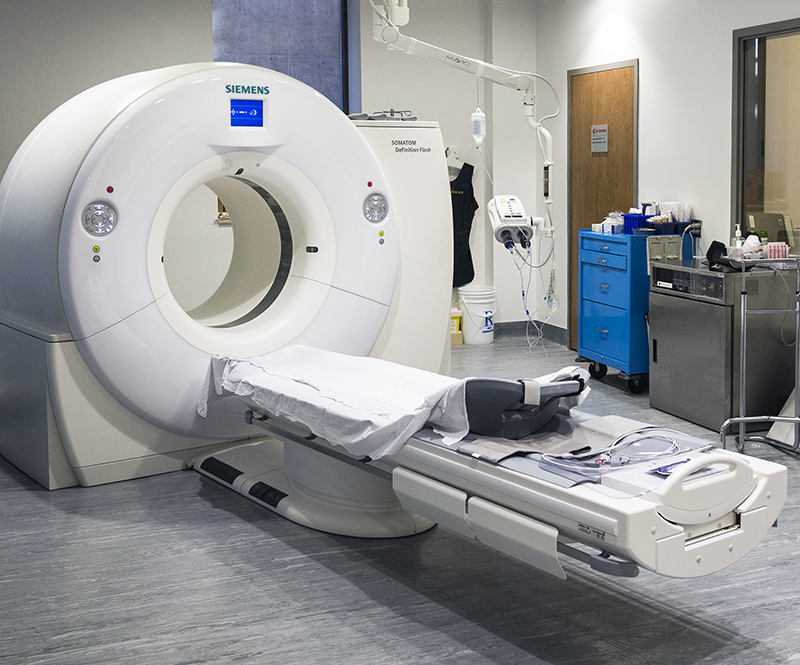
They took more vitals from me, and eventually, a tech took me to get a CT scan. I love the sound CT scanners make. It was quite painful to get into position and then back on my feet again. Everywhere I went, they asked if I wanted a wheelchair. I knew I looked bad, but I didn’t want to be bad enough to need a wheelchair. I’ve often seen old people refuse help; now I know why.

They took me back to the room. A sign on the wall said it took three hours to get a CT result. But the PA told the kid who also got a CT scan it would take about an hour.

Around 1:30 am Saturday morning the CT scan results came back. It was nothing I had imagined. I had two more hernias. I’ve already had three repaired surgically. And one hernia was interfering with the tube that goes from my kidney to my bladder. That might explain the weird pains in my side. And then the PA said, “And you have a stone in one of your kidneys.” She explained it wasn’t causing the pain now.

At least it wasn’t cancer, a ruptured gallbladder, or a blocked intestine, or any of the other scary conditions I fantasized about.

The kidney stone did scare me. It wasn’t descending so it shouldn’t be causing pain but they warned me it could try to pass. It might not happen, or happen years from now, or next week.

Evidently, the pain that made moving or standing so unpleasant was my old ordinary sciatica and muscle spasms caused by spinal stenosis. That was diagnosed almost twenty years ago. Sitting at the computer or standing or walking for any length of time aggravates it.

Because I was walking more, and writing more at the computer, I thought maybe my spinal stenosis was better because I had lost twenty pounds. I can’t explain why I was given a temporary reprieve.

The PA gave me 15mg of Toradol in my IV. It was magic. Thirty minutes later I would stand up. I still hurt, but I didn’t look like I needed a wheelchair.

The Future

I have to admit this episode put me in a tailspin. I was all geared up to feel younger and healthier again. I got a taste of being more active, and I liked it. I want that feeling back.

However, aging doesn’t work that way. It’s always a slow decline. Now I knew there could be some upswings in my health, too. I feel like I’m flying a plane I know is going to crash. For a few months, I forgot that. Going to the ER reminded me that it’s still going to crash. However, the past months taught me I could sometimes regain altitude.

Experiencing feeling younger for several months makes me wonder if I could get that feeling back again. I’m back where I can’t walk for exercise. And sitting at the computer makes my back hurt worse. I’m scheduled to see a urologist this coming Friday. I figure another surgery is in my future, and then there’s a time ticking bomb in my kidney. It took me months to recover from my last hernia surgery.

But what can I do to get that healthy feeling back? It might take months, or even years. I’m not giving up. Could losing another twenty pounds help? What diet or exercise to I need to pursue?

I’ve already returned to my adapted methods of coping. I’m back to using a laptop while reclined in a La-Z-Boy. I can walk long enough to do the dishes or go grocery shopping. But I really want to walk again for exercise. I wonder if that’s possible?

I only know one person my age that hasn’t had any health problems. It’s normal to break down in your seventies. I have to keep philosophical about that. But I also want to beat the system.

I’m reminded of a Vaugh Bode underground comic strip from the 1970s. In it two lizard like creatures are tied up. They’ve been blinded, and their legs have been cut off. One of them says to the other, “When it gets dark, I’z is gonna escape” That’s me at this moment.

When I left the ER, I took a Lyft home at 2:45 am. Several friends offered to come take me home. I appreciate that. But I like the feeling of still being able to take care of myself. I know that won’t always be true.

Riding through the dark, deserted streets was surreal. It was quite pleasant. I knew I would need another surgery, but I’ve been through them before. Passing a kidney stone sounded extremely unpleasant. I know just how unpleasant. I once watched a man in the urologist’s office passing a stone. But like the Stoics say, this too will pass. I’m lucky that it wasn’t something that couldn’t be fixed. Too many people I’ve known have already died, and almost everyone I know my age is suffering from something.

Many of my friends are worse off than I am. It’s funny, but I think everyone suffers what they know and wouldn’t trade it for someone else’s kind of suffering.

I remember how being healthier made me feel positive about the future. It was just for a few months. I want that feeling back.

The most unsettling aspect of all this is not knowing the answers. Doctors are more likely to know than I do, but I’m not sure they always know. I certainly can only speculate, and that’s often dangerous.

I just wish I could find some answers to simple questions. Does pain cause more pain? Do pain pills stop the cycle of pain? They stop pain, but what else do they do over the long run? I know they cause constipation. I had a kind of hangover from the Toradol. I know my mother got hooked on pain pills. She lived with chronic pain for over a decade.

Maybe I should have talked with the people in the ER waiting room. Some of them might know things I don’t. Susan and I have been binge-watching ER. We’re in the 14th season.

Real ERs aren’t like the TV program. The sets look similar, and the machines, but I wasn’t suffering anything dramatic, so I didn’t have a flock of doctors surrounding me. I wasn’t an interesting story. Most of the action was behind closed doors, so I couldn’t see it. I saw nurses, PAs, techs, and janitors going to and fro. I’m not sure I even saw a doctor in the hallways. Doctors were busy somewhere fixing people they could fix. I couldn’t be fixed, so I was sent home. The kid behind the curtain was waiting for surgery.

I have endless questions about my aging body. My regular doctor is very patient with me. She will answer many questions. But I don’t think I’ll ever know what I want to know. It’s not like in TV shows where things are explained so precisely.

JWH
What Should I Major in at Old Age University?

by James Wallace Harris, 8/16/25

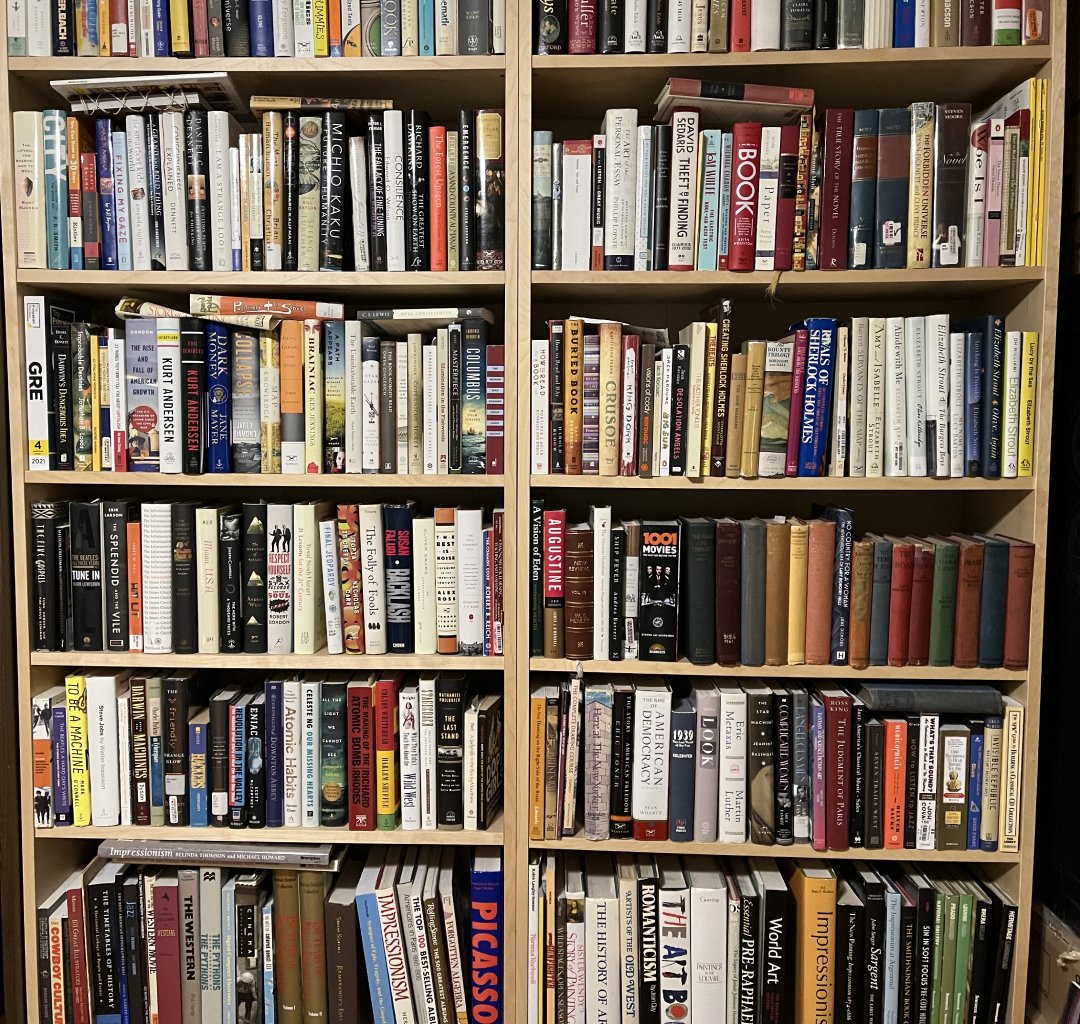
I’ve decided to earn an equivalent of a graduate degree before I turn 77. I need a project that will keep me occupied in retirement. I’ve always been one to know a tiny bit about hundreds of subjects rather than a lot about a few. I want to pick one subject and stick with it.

I could get a master’s degree from the University of Memphis, where I used to work, since I can take courses for free. I’m not sure they have a major that fulfills my interests. I will check it out. I’ll also check out available online universities. Mainly, I’m borrowing the structure of a graduate degree for my plan.

I decided a book-length thesis will be my measure of success. Since a master’s degree usually takes two or three years, I’m giving myself until I turn 77, which is November 25, 2028.

Over the next few months, I will decide what I want to study. There are many things to consider and think about. Most graduate programs have lots of prerequisites. Before I retired, I considered taking an M.S. in Computer Science. That program required 24 hours of math courses and 12 hours of computer courses to be accepted into the program. The degree itself was 36 hours.

It’s doubtful I could finish a computer science degree before turning 77. And in all honesty, I no longer have the cognitive ability to retake all that math.

My undergraduate degree is in English. I did 24 hours towards an M.A. in Creative Writing before I dropped out. I was also interested in American, British, and European literature. I’d have to start over from scratch because those 24 hours would have timed out. But I no longer want to study English or creative writing.

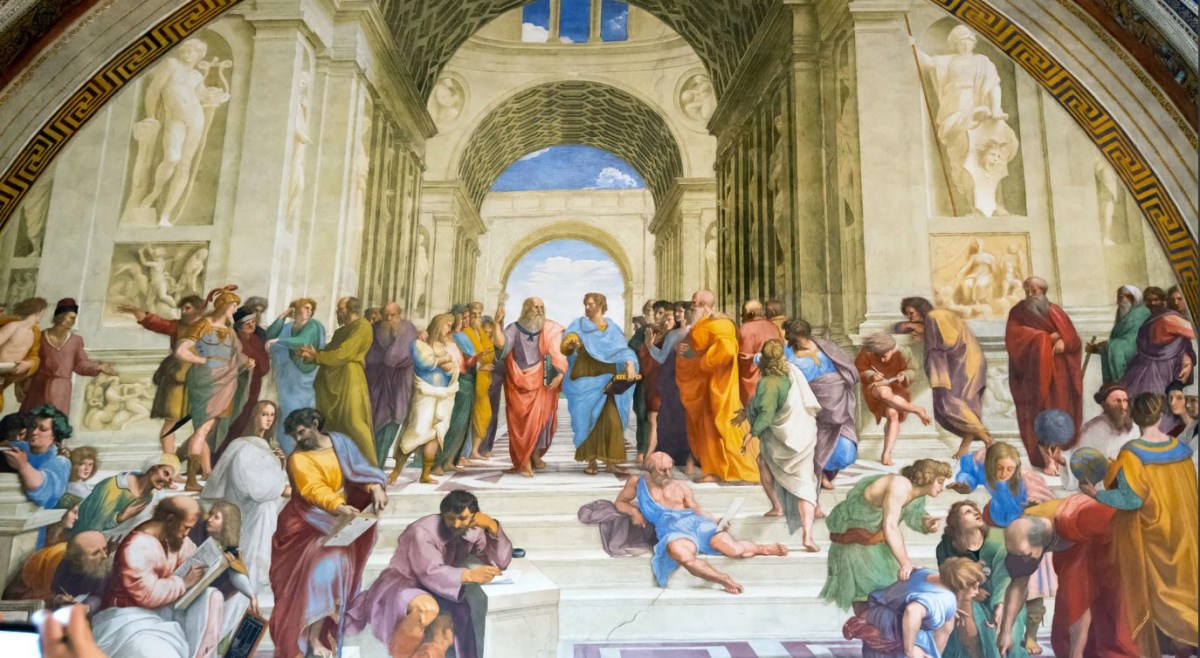
I’ve also thought of pursuing an Art History degree. I’ve been collecting art books and art history books for a couple of decades, and I have friends with degrees in Art History. One gave me a list of 200 artworks that I’d be required to discuss to pass the oral exam for the master’s degree. I started reading about those works.

I realized I would have to commit several years of dedicated study to pass the oral. I don’t want to do that. I don’t love art that much. I’m not sure what single subject would be worth that much dedication.

I’ll study college catalogs for inspiration, but it’s doubtful that I will want to complete an actual degree from a university. Instead, I will need to make up my own degree.

Let’s say a master’s degree involves twelve courses, and each course requires studying five books. Then my custom-designed degree will require distilling sixty books into a single thesis volume. That thesis should present an original idea.

The single subject I do know a lot about is science fiction. And I’ve thought it would be fun to write a book that parallels the development of science with the evolution of science fiction. I probably already own the books I’d need to research the subject. And it would be the easiest goal for me to achieve because it’s a subject I love and would have no trouble sticking with.

However, I’ve become obsessed with a couple of ideas that I want to study. I believe they are especially fascinating for the last years of my life.

The first is about how humans are delusional. I’d like to chronicle all the ways we fool ourselves. I want to study all the cognitive processes to discover if we can interact with reality without delusion. Current affairs is the perfect laboratory for such a study.

Second, I’m fascinated by how personality is formed. I’d like to answer this question: If I knew then what I know now, how would I have reshaped my personality?

There is a synergy between the two interests. How do delusions shape our personality?

Ever since I read Ed Yong’s An Immense World, I’ve been fascinated by the concept of Umwelt. Our senses limit and define how we perceive reality. Our personality and cognitive abilities determine how we choose to react to that perception of reality.

I haven’t decided yet on what I will pick, but I’m leaning towards delusion and personality development. If I choose that, I’d start this project by collecting books on the subjects and by reading popular periodicals. Eventually, I’d get to academic journals. I don’t think my made-up degree will be very rigorous, though. I’d consider a two-hundred-page book at a modest popular science reading level to merit my do-it-yourself degree.

JWH

Listing Every Subject I’m Interested In Based on the Books I Own

by James Wallace Harris, 8/14/25

I bought more than a thousand books, preparing for retirement, thinking that after I left the nine-to-five grind, I’d have all the time in the world to read them. It’s not working out like I planned. All the time in the world has turned out to be much less than I imagined. Old age does a number on your temporal sense, which I didn’t anticipate. Being retired turns off the “gotta do this soon” mechanism in the brain, so it’s much easier to tell myself I’ll get around to that someday.

I’ve always wanted a catchy saying about buying more books than I can read, that parallels that old idiom about eating, “My eyes were bigger than my stomach.” My ability to acquire books far exceeds my ability to read them.

This problem is mainly due to my inability to commit. Learning is about specializing. To go deep into any subject requires ignoring all other subjects. I’m as indecisive as Hamlet when it comes to picking a project and sticking with it. However, I feel like I’m zeroing in on something. I don’t know what. I’d like to write a book. I have several ideas. I just can’t commit to one.

Looking through my books, I see that I’m torn between understanding the past, working in the present, and anticipating the future. The momentum of aging makes me retrospective, but I need to fight that. The present is real, and the past and future aren’t. However, to survive well in the present requires some knowledge of the past. And since we always act in the moment, we still feel we’re preparing for the future.

The Lesson of Destination Moon

Destination Moon was a 1950 science fiction film about the first manned rocket to the Moon. It was loosely based on Robert A. Heinlein’s Rocket Ship Galileo, and Heinlein contributed to the screenplay. In the story, the astronauts use too much fuel when landing on the Moon. To have enough fuel to take off and return to Earth, the astronauts must reduce the weight of the rocket and its contents. They throw everything they can out of their rocket ship, including the radio, equipment, seats, and their space suits. With the reduced weight, they take off for Earth.

In old age, I have too many goals, desires, and possessions holding me down. Their weight keeps me from accomplishing any larger goal. I need to jettison everything I can. I’m starting by evaluating my book collection and tallying all the subjects I want to study and read about.

This will be a multi-stage process. In this essay, I’m looking at all my books and listing the subjects I thought I wanted to study. Here is the current list, and even though it’s long, it’s still partial:

  • 1939 World Fair
  • 1960s
  • 1960s Counter Culture
  • Aging
  • Alexander von Humboldt
  • Alfred Hitchcock
  • American History
  • American Literature
  • Amor Towles – Writer
  • Anthony Powell – Writer
  • Anthropology
  • Archaeology
  • Art history
  • Artificial Intelligence
  • Astronomy
  • Bible Archaeology
  • Bible History
  • Biographies
  • Bob Dylan
  • Books – History
  • Boston – 19th Century History
  • British Literature
  • British Literature Between the Wars
  • Charles Darwin
  • Charles Nordhoff and James Norman Hall – Writers
  • Chess
  • Classical Music
  • Classical Studies
  • Climate Change
  • Computer History
  • Computers
  • Country Music
  • Creative Fiction
  • Creative Nonfiction
  • Databases
  • Democracy
  • Drawing
  • Early Christianity
  • Economics
  • Electronics – Learning
  • Elizabeth Strout – Writer
  • Environmentalism
  • Ernest Hemingway – Writer
  • Feminism
  • Feminist History
  • Fiction
  • Future
  • Gerontology
  • Go Programming
  • H. G. Wells
  • Hollywood vs. History
  • Impressionism
  • Information and Information Theory
  • Information Hierarchy
  • Jack Kerouac – Writer
  • Jazz
  • Lady Dorothy Mills – Writer
  • Learning – Study Methods
  • Linux / Unix
  • Literary History
  • Literature
  • MacOS
  • Magazines – History
  • Mark Twain
  • Mathematics – History
  • Mathematics – Pure
  • Memory
  • Miami – History
  • Mitford Sisters
  • Movies – History
  • Music – History
  • Nassim Nicholas Taleb – Writer
  • Network Attached Storage (NAS)
  • Nostalgia
  • Note Taking Systems
  • Obsidian – Software
  • Old West
  • Particle Physics
  • Philip K. Dick – Writer
  • Philosophy
  • Photography – History
  • Photography – How To
  • Politics
  • Power Grid
  • Pulp Magazines
  • Python Programming
  • Quantum Mechanics
  • Reading
  • Renewable Energy
  • Rhetoric
  • Robert A. Heinlein – Writer
  • Rock Music
  • Scanning – Books and Magazines
  • Science
  • Science – History
  • Science Fiction
  • Science Fiction – Criticism
  • Science Fiction – History
  • Science Fiction – Magazines
  • Short Stories
  • Sustainability
  • Taxonomy
  • Technology
  • Television – History
  • The Beats
  • The Lost Generation
  • Westerns – Books
  • Westerns – Movies
  • Westerns – Television Shows
  • Windows – OS
  • Writing
  • Yuval Noah Harari – Writer

One of the first decisions I made was to give up on westerns. I have collected many westerns on DVDs. Along the way, I started collecting books on movie and TV westerns. I decided that in the remaining years of my life, I didn’t need to know that much about Westerns. I also gave away my books on TV history.

I’m approaching each subject like I did with Westerns.

Another example, while flipping through my math books, I decided to abandon any hope of relearning math. I gave away my books on pure math. However, I kept books on the history of math. I still want to see the big picture of history. In the long run, I might have to abandon any interest in math. I just don’t know at the moment. This is a process.

Do I Keep Books I’ve Already Read?

I’ve always kept books I’ve read as a form of external memory. The painful truth is, I seldom consult those books. I’ve long known it’s cheaper to buy books at full price when I need them rather than to stockpile them when I find them as bargain used books or Kindle deals. I think the same thing might apply to keeping books. The time and energy that goes into maintaining them in my library is more expensive than just rebuying a book if I want to reread it.

For example, I gave all my Elizabeth Strout books to my friend Ann. If I ever want to reread them, I’ll try the library.

Whatever Happened to Libraries?

It used to be that libraries were depositories of knowledge. I don’t feel that anymore. I’ve gone to the public library too many times to research a subject only to find a battered collection of old books. That’s why I’ve bought my own. However, I don’t think it’s practical to be my own public library.

We can find massive collections of information on the Internet or with AIs. Unfortunately, I don’t trust those sources.

I wish I had a trusted source of online knowledge.

Kindle and Audible Books

I’m not worrying about my digital books because they are out of sight, and thus out of mind.

I decided to get rid of any physical fiction books that I had on Kindle, but not if I owned them on Audible. I like seeing the words. For now, I’ll keep the physical copies of nonfiction books if I also own them as an ebook. I prefer flipping through the pages of a book when studying.

The Limits of Memory

There are many books I’ve kept because I hoped to study a subject. For instance, I’ve long fantasized about relearning mathematics. I got through Calculus I in college, but then I waited too long to take Calculus II. This is why I gave away my pure math books. I can no longer remember things well enough to study a complex subject.

Whatever books I choose to read in this last part of my life, they need to be books that expand my overall impression of reality, but don’t require me to remember the details.

I guess I’m going for wisdom over data.

Limits of Time

I’m hesitant to keep my art history books. I enjoy looking at the pictures, but I just don’t have time to study many more subjects in this lifetime. My interests include several subjects that could become a black hole of study. I really should flee from them.

I’m trying to decide my “Major” for old age. All my life, I’ve been a knowledge grazer. I nibble at one subject and then move on to another. I’ve always wanted to go deep into one area, to specialize. However, I never could settle down. I’m probably too old to change my ways now. I’m going to try, though. The process of selecting my major will be the topic of the next essay.

Shrinking My Library to Focus My Mind

I gave the library a lot of books today. I love buying books. I love owning books. But I own too many for this time of my life. I also have too many things I’m interested in. Too many for the time and energy I have at age 73. I’m like the rocket in Destination Moon. I’m too heavy for the fuel in my tanks.

It would help if I had a committed destination. I’d know what to keep and what to jettison.

JWH

12 Reasons Why I’ve Stopped Watching the NBC Nightly News

by James Wallace Harris, 7/29/25

I developed the habit of watching the CBS Evening News with Walter Cronkite when JFK was assassinated in 1963. I had just turned thirteen. Cronkite had been the first to switch to a half-hour evening news format that September. I only had a vague sense of what the news was before that. I stuck with CBS until the 1980s, into the Dan Rather years. For some reason, my wife and I then switched to ABC for a couple of decades before finally switching to NBC. When Lester Holt retired, I decided to stop getting my news from television.

Since then, I’ve been thinking about what it means to follow the news. Does it require a daily habit of studying current affairs? Should we consider the news to be any reporting of significant events that have recently happened? How much information can be crammed into twenty-two minutes of television? Who decides what is worth knowing? Recently, NBC chose to make the deaths of two celebrities the lead story two nights running. Were the careers of Ozzy Osbourne and Hulk Hogan the most important information I needed to know on those two days? Think about it. Of all these events happening around the world on those two days, were their deaths the most essential for me to learn about?

Reason 1

I’m not picking on NBC. All the broadcast networks and the cable news networks decided what their audiences want to watch based on ratings. It’s not that Ozzy and Hulk’s deaths are more newsworthy than famine in Gaza, but NBC knows its audience is tired of hearing about starving Palestinians, and more people would watch their show if it opened with Osbourne and Hogan.

Decision 1: I need to decide what’s newsworthy.

Reason 2

Is twenty-two minutes enough time to learn about the critical world events that happened in the last twenty-four hours? Just how much time should I devote to being well-informed? If it is as little as twenty-two minutes, then television is the wrong medium. Reading just the headings of all the news stories from a quality newspaper app on my phone serves me far better.

Television news spends most of its time on visual news. Often, NBC repeats exciting film clips several times. That’s not an efficient use of time. Airplane crashes and flooding rivers grab our attention, but is it really news we need?

Decision 2: I need to decide how much time I want to spend on the news. Additionally, I need to decide on the best medium that maximizes that time.

Reason 3

Too much of television news is taken up by reporters and anchors. Often, reporters take more time asking a question than the time given to the eyewitness’s reply. I’m not interested in reporters or anchors.

Decision 3: I need to look for news sources where the journalist is in the background. That excludes television and most podcasts. Generally, good print reporting only includes the reporter’s byline.

Reason 4

Television news offers low-quality information. A major article in The Atlantic might have taken months to research and write. Such articles are information-dense. TV news is written and edited quickly. There’s not much time for fact gathering or checking. It’s often based on eye-witnesses who mainly add emotional impact rather than inform. Television news relies on soundbites, which are mostly opinions. Experts interviewed on TV news are often selected by convenience rather than their authority.

There have been over 22,500 days since I started watching nightly news programs on TV. There is an incredible sameness to the kind of content TV news presents. I should have abandoned it long ago, but it gave the illusion I was being informed, and it was convenient.

Decision 4: Pick another medium for consuming news.

Reason 5

Television news is narrow in scope. It focuses on catastrophes, tragedies, and political conflict. Over a lifetime of seeing thousands of news reports on wildfires, they all look and feel the same. That’s also true for wars, airplane crashes, riots, elections, famines, hurricanes, floods, and tornadoes. Television news mainly focuses on the types of stories we’ve seen repeated throughout our lives.

Television makes it seem like there is nothing new under the sun. I’ve learned from reading quality magazine articles and newspaper journalism that that old bit of wisdom is completely untrue. Magazine and newspaper articles constantly amaze me with news that surprises me because it’s about people, places, concepts, ideas, and events I’ve never heard of before.

Decision 5: Find more news sources that teach me about reality, inspire my curiosity, and better inform.

Reason 6

TV news is seldom memorable. If John F. Kennedy’s assassination was only reported once on the CBS Evening News on November 22, 1963, I doubt I would even remember the event. I remember it because of constant coverage over several days, including all the documentaries, movies, and books that have been produced since that day. I remember Project Mercury, Gemini, and Apollo missions because of the around-the-clock television coverage, as well as the documentaries, movies, and books that have been produced since those events. That’s why I don’t remember all the space missions since. They didn’t get such coverage.

A thirty-second spot on the nightly news, or even a big event stretched to four minutes of reporting, just isn’t remembered. I don’t need to waste time on ephemeral news stories. I’ve discovered it’s far better to spend thirty minutes on one topic than two minutes on fifteen topics.

Decision 6: Focus on one news topic for most of my daily time spent on the news. Then quickly go over the headlines.

Reason 7

Television news isn’t educational because it focuses on the same topics. Shouldn’t news enlighten us about reality? Shouldn’t we always expand our awareness of what’s going on in the world?

How can short videos and soundbites be truly informative? I want news that adds to my personal growth. News that adds wisdom, not ephemeral data.

Decision 7: Make lists of what I want to learn about and then find news reports that bring me up to date on those topics.

Reason 8

Television news is biased. Knowing the truth is impossible. Content produced for money-making ratings or to promote a political agenda will always be questionable. I even suspect the kind of long-form journalism that goes out of its way to appear unbiased. I expect all writing to have some bias. It’s my job to spot it.

Decision 8: Start analyzing prose for bias. Think about word choices in each sentence. Always wonder if information is left out.

Reason 9

Real knowledge is statistical. Science is our only cognitive tool that consistently explains reality. News is too close to word-of-mouth. We need news to be closer to peer-reviewed science journals. That’s probably impossible, but we need to think about it. Ground News attempts to apply statistics to the news by comparing political bias and the amount of coverage a story receives. Can’t we find other statistical methods to measure the news?

Decision: Don’t trust any news unless it comes from multiple sources.

Reason 10

Replying on a single network for news is dangerous.

Decision 10: Seek out different gatekeepers. Every group or organization has an agenda. Learn what that agenda is before interpreting what they are saying.

I’ve discovered that reading/listening to one well-reported article a day is much more informative and educational than a package of video clips and soundbites. I’ve been achieving this with Apple News+, which offers content from over 400 magazines and newspapers. Each morning, I listen to a single long-form article from magazines such as The Atlantic, New York Magazine, The New Yorker, and New Scientist, while I do my physical therapy and morning walk.

Reason 11

Television news can be misleading. It’s not as dangerous as AI-generated fake news on YouTube, but television news is easily corrupted by money, marketing, and politics.

Decision 11: Always consider the source of the news. I need to decide which news sources I will trust.

Reason 12

Most television news gives the United States’ perspective of world events.

Decision 12: Find news sources from around the world.

Conclusion

This is just the beginning of changing a lifelong habit of watching the nightly news on television. I should have made these changes long ago. We all get into ruts that are hard to escape. I believe getting old is making me regret not trying other approaches to understanding reality. However, all the political turmoil since 2016 is making me question everything I know. Human-created and computer-created fake news is disturbing. In recent years, I’ve decided that all of us suffer from multiple delusions.

You shouldn’t ask yourself if you’re delusional, but how delusional. Anyone who feels they know the truth is crazy. We can only guess what might be true by using statistics. Television has always depended on the false assumption that seeing is believing. I have doubts about believing anything.

Television, politics, artificial intelligence, and the Internet have corrupted our perception of reality. I want to rethink everything. I’m starting with my old habit of watching the nightly news.

JWH

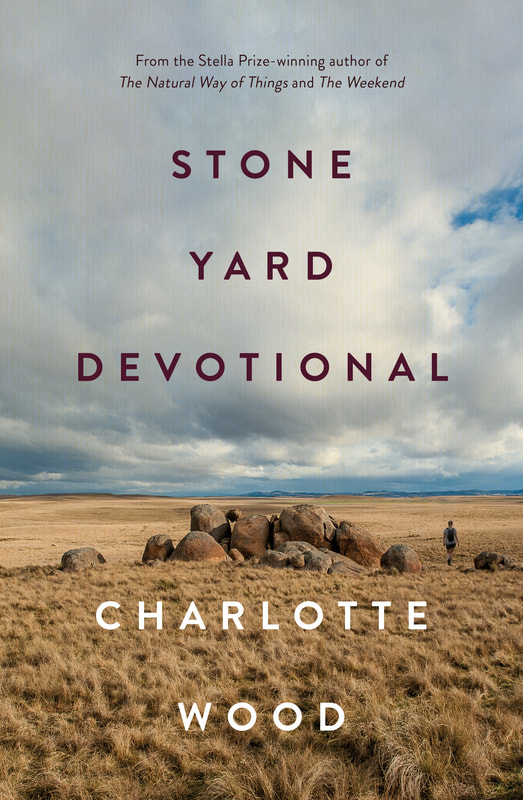
STONE YARD DEVOTIONAL by Charlotte Wood

by James Wallace Harris, 4/12/25

Stone Yard Devotional is about how reality puts the peddle to the metal when life gets all too real. Stone Yard Devotional reads like a memoir, a diary, but it’s classified as a novel. The book was nominated for several awards.

The entire time I was listening to this book I wondered if Charlotte Wood was the unnamed narrator, however after reading “‘The shock was so deep’: Novelist Charlotte Wood on the experience that changed everything” in the Syndney Herald, I realized the novel was only inspired by her own life. Wood and her two sisters were being treated for breast cancer, while she was contemplating mortality and drafting this book.

I have no memory of how I discovered Stone Yard Devotional by Charlotte Wood. The cover and title intrigued me for sure. Maybe it was because it was shortlisted for the 2024 Booker Prize. The audiobook was part of my Spotify subscription, so I gave it a try, and I’m glad I did. It’s not the kind of book I normally read, but it’s wonderful to read if you’re getting old.

The story begins with the Covid pandemic. The narrator separates from her husband, ghosts her friends, and hides out in a guest house of a religious order, even though she is nonreligious. She wants to be alone. But after her initial stay, she returns to the order to live with the nuns. I was never sure if she joined the order or not. I have often thought the monastic life has certain appeals.

The story is about the narrator’s observations while living a contemplative life. These include the death of her mother, the remembrance of childhood, studying the nuns, working in the garden and kitchen, and the guilt of living with a woman she and her classmates horribly bullied as a child. The narrative is simple, like meditation.

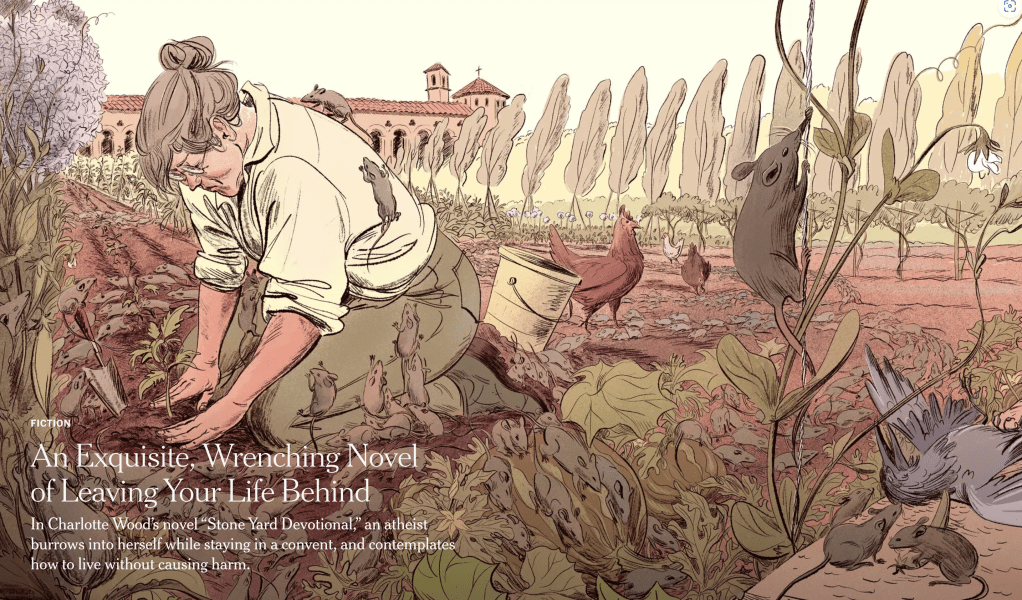
The setting is Australia, which is exotic to me. As a kid I wanted to live in Australia. Over the course of the novel, there is a plague of mice that invade the convent. The mice are so numerous that they cover the roads in gray fur. At first, I thought Wood added this element to give her tale some excitement, but I researched and found that her part of Australia they did have a mice plague of Biblical proportions in 2021.

That made life in the convent extremely inconvenient. The mice ate electrical insulation, throwing daily living in the convent back to the 19th century. The illustration for the book’s review at The New York Times might have been another reason I read this book.

Much of what the unnamed narrator contemplates throughout the novel is what everyone thinks about as they get older. The fear of declining health and death, the regrets, the desires for wanting to have done things different, the desires to connect with others while also wanting to pull away, the changes we see in ourselves and others, the appeal of nature and living simple. Wood’s story explores all of that and more, triggering the reader to think about their lives.

Charlotte Wood was born in 1965, so she’s fourteen years younger than me. However, her battle with cancer has likely aged her perception on life. At 73, I’ve been thinking about the things in this novel for years. But I don’t know if everyone who collects social security meditates on these issues. Stone Yard Devotional is a great title for this novel. Even though the narrator said she was an atheist at the beginning of this story, getting old and dealing with people who die, pushes you to be spiritual even without a belief in God.

JWH