MY BRILLIANT FRIEND by Elena Ferrante

by James Wallace Harris, 10/19/24

Technically, My Brilliant Friend by Elena Ferrante is the first novel in a four-volume sequence that is collectively referred to as the Neapolitan Novels. Now that I’ve read all four books, I dislike that tagline for the whole story. The four books are really one whole novel, and even though Naples, Italy is very important to the story, it doesn’t properly describe the complete novel. Each volume picks up exactly where the last one stops. If they were published in one volume with no subdivisions, you wouldn’t notice any transitions.

For this review, I’m going to refer to the whole as My Brilliant Friend, and when needed, I’ll point to the individual titles as part of the story. The structure below uses the dates for the English translation. The books were originally published in Italian one year earlier.

  1. My Brilliant Friend (2012)
    • Prologue: Eliminating All the Traces
    • Childhood: The Story of Don Achille
    • Adolescence: The Story of the Shoes
  2. The Story of a New Name (2013)
  3. Those Who Leave and Those Who Stay (2014)
    • Middle Time
  4. The Story of the Lost Child (2015)
    • Maturity
    • Old Age: The Story of Bad Blood
    • Epilogue: Restitution

Circular Plot and Recursion

The complete story begins where it ends. And throughout this long story, it constantly refers to itself. It’s so recursive that it feels like two mirrors aimed at each other. It’s also cyclical because it’s about daughters and their mothers, who eventually become mothers of daughters. In so many ways, this story mirrors its parts.

The novel is about two women, Elena Greco and Raffaella Cerullo, who call each other Lenù and Lila. The story feels like an autobiography, and we have to remember that the author’s name is Elena too. Elena Ferrante hides behind a pseudonym, but this novel feels very autobiographical. Lenù and Lila react and respond to each other so intensely that it’s hard to tell who originates what traits. I even imagined that Elena Greco is writing about two versions of her own identity, the one who writes books, and her ordinary self. And it’s interesting that Ferrante hides behind her pseudonym, claiming she wants to remain anonymous while Lila also wants to remain anonymous throughout the story. So many reflections.

Literary Novels

I’ve always thought the greatest of literary novels feel biographical or autobiographical. They don’t need to be about real people, but they do need to feel like they are, and this novel offers two realistic portraits. Another trait of great literary novel is setting. We often think of London when we think of Dickens, or Russia when we think of Tolstoy, or Ireland when we think of Joyce. Ferrante has made her book about Naples and Italy.

If you’ve only read the first volume, My Brilliant Friend, you should tell yourself that you never finished the novel. The Neapolitan Novels boxed set runs 1,965 pages. On audio the four books run 78 hours and 52 minutes. To give perspective, War and Peace by Leo Tolstoy averages about 60 hours in the various audio editions. Different translations of The Bible run 82-102 hours. The seven volumes of Proust’s Remembrance of Things Past runs 154 hours and 14 minutes. In other words, the whole My Brilliant Friend is a literary heavyweight.

Most novels that come out in a series are never artistically heavier than a single volume. That’s why when I finished reading the single volume entitled My Brilliant Friend, I couldn’t understand why the writers polled by The New York Times considered it the top book of the 21st century so far. It was good, but not that good. That’s because it’s only one-fourth of a whole. Now that I’ve read all four volumes, I can easily see why it was voted the top novel of this century.

Will it Become a Classic?

Whenever I read a highly respective modern novel I’ve wondered if it will someday be considered a classic. I’ve never felt sure about any modern novel to predict one before. However, for the whole of My Brilliant Friend I felt like it was at least an equal to Anna Karenina by Leo Tolstoy. That novel only runs 36-40 hours in audio, so it’s about half the size of the full version of My Brillian Friend. The Ferrante novel is far more ambitious, at least in being a biography of two women, so maybe it needs twice the space that Tolstoy used to tell us about Anna Karenina. However, Anna is never developed in such detail like Lenù and Lila.

We follow Lenù and Lila from being little girls to old women, and that makes a huge difference in storytelling ambition. This novel is primarily about friendship, even though it says almost as much about kinship. Men do not come across well in this story. This novel is feminist at a visceral level. I’d also say this book is an anti-chemistry book in the sexual sense. Time and time again, hormones overwhelm Lenù and Lila into making bad life-changing decisions. The great loves of their lives are the same evil Mr. Right. Nino Sarratore is no Mr. Darcy. Ferrante makes Nino one of the detestable bad guys of literary history. I can’t believe that Lenù and Lila didn’t immediately recognize that he was a clone of his father, Donato, the slimy seducer they knew from childhood.

The Prose

It’s hard to judge the writing of a translated novel. I do know that Ann Goldstein’s translation of Ferrante’s Italian prose is clear and precise, and the writing comes across as vivid and impactful, but the style is plain and unadorned. It lacks the colorful authorial voice of two recent novels where the prose enchanted me, A Gentleman in Moscow by Amor Towles and Lessons in Chemistry by Bonnie Garmus. Nor does it have any the wonderful authorial commentary like old literary writers Dickens or Tolstoy since Ferrante’s story is told in the first person.

A lot of modern bestsellers have the highly refined writing style taught by MFA programs. Readability and clarity are valued over wordy digressions and colorations. This is one reason why I have a hard time predicting if a novel will become a classic a century from now. The classics we’ve crowned from the 19th century all have distinctive writer’s voices. Ferrante’s voice comes across through the characterizations of Lenù and Lila, and it’s confusing to distinguish Elena the author’s voice from Elena the character.

Final Judgment

I liked this story tremendously. It may have ruined me for reading lesser novels, especially for reading science fiction, which seldom achieves any kind of deep character development. The whole story of My Brilliant Friend reminds me of two other multi-novel sequences about characters as they age.

The first is A Dance to the Music of Time, a twelve-volume series by Anthony Powell which he wrote from 1951 to 1975 using his own life and friends for inspiration. I reviewed them here, here, and here.

And the other are books by Elizabeth Strout. Collectively, they follow the growth of two women too, Lucy Barton and Olive Kitteridge. I’ve reviewed them here.

This first reading of the entire My Brilliant Friend story will not be enough to truly appreciate this novel. Even though it’s told in a straightforward manner, it is quite complex in what it has to say. I listened to the books this time. Next time I’ll read them with my eyes. Luckily, I have a one-volume Kindle edition that includes all four books.

Ferrante made me think about my life as a whole. She also makes me think about aging. And she has quite a lot to say about the relationship between men and women. Her novel might be the perfect illustration as to why we don’t have free will. Whether or not it becomes a classic in future centuries, it is worth reading and contemplating now. It gives us lot to meditate on.

JWH

The Mathematics of Book Buying

Can you resist a great bargain?  Especially when buying something you particularly love?  Every day Amazon emails me the Kindle Daily Deals, of which they have five ebooks on sale, usually for $1.99.  Sometimes it’s $2.99, and sometimes it’s even .99 cents, but usually it’s $1.99.  And I’ve gotten some amazing books for $2 – fantastic bargains!  At Audible.com, also owned by Amazon, they often have audiobooks on sale for $4.95.  Plus, I love going to my Friends of the Library Bookstore, where it’s not uncommon to find great hardback books for just $3.

mathematics-of-book-buying

If I read one book for every ten I buy though, the real price of that Kindle ebook is $20, or $50 for the audiobook, and $30 for the used hardback.  That isn’t a bargain, is it?  If I think of myself building a library, then getting as many books as cheap as possible is a book shopping thrill.  But if I think of myself as buying books to read, then buying books I don’t read is wasting money.

Since I’ve recently retired, how much I spend each month is very important.  Every dollar I spend now is one less dollar I’ll have in the future.  My real goal should be to spend little, and read more.  Now I have time to read all those unread books in my library, but not the money to keep building the library.

Another way to rationalize the numbers is to think of myself as enjoying book buying.  That shopping for books is the pleasure I’m actually budgeting, and ignore whether or not I read the books.  By that measure if I spend a $100 a month and get 25 books, rather than 3-7 at new prices, then yes, I’ve been having a great time bargain hunting for books.

To be honest, owning books is not my goal, so I have to face the fact that I am wasting money.  That’s sad.  Maybe what I shouldn’t completely give up something I love, but just lower the budget.  I wonder how many great books I can get for $25 a month?  Save money, start a challenge!

JWH – 1/16/14

What Does it Cost to Read a Book? How Ebooks will Change Book Buying Habits.

With hardback and paperback sales sliding down the charts while ebook sales rising, it appears the new paperback book is the ebook.  Unlike the past, where readers had to wait months or years for the paperback edition to come out, the ebook and hardback are now published simultaneously.  This is great news for readers until you realize what has happened is the price of a paperback has been increased.  You get to read it sooner, but it costs more – but the whole point of mass market paperbacks was to read books for less.

It used to be a book would come out in hardback, say for $25.99, and then months later, a $14.99 trade edition would come out, and finally after sales for the trade edition tanked, the $7.99 mass market edition would appear.  The cost of reading a book depended on how soon you wanted to read it after first publication.  Now we’re seeing $9.99-$12.99 or more for the ebook, but we get to buy it right away.  On one hand this seems like a very fair price, because it’s such a savings off the hardback cost, but on the other hand, you get nothing but electrons for your money. 

When you buy a hardback you have something physical that will last, that’s collectable, or nice to look at on a shelf, and makes a great gift, or is wonderful to lend to your friends, or even sell.  Even if you didn’t read the book, you had something when you bought a book.

Most people only read a book once, and if you’re buying ebooks, all you’re really getting is to read it.  An ebook will last, but if you only read a book once, it’s more like renting the book.

By the way, from now on when I mention pricing, I’m going to use Amazon’s for sale pricing and not list.

You’d think pricing would be based on what you get for your money.  The ebook would be the cheapest, then mass market paperback, then trade paperback and then hardback, because of the production costs and materials that go into creating the book.  And sometimes this happens.  For example The Mote in God’s Eye by Larry Niven and Jerry Pournelle is $6.35 ebook, and $7.99 mass market paperback.  But Isaac Newton by James Gleick is $11.99 ebook and $10.20 trade paperback – WTF?  Does that mean a mass market paperback only costs $1.64 to produce and the ebook costs $1.79 more than a trade paperback to create?  I don’t think so.

James Gleick’s newest book, The Information is $17.21 for the hardback and $12.99 for the ebook.   What Amazon is asking the reader, are you willing to pay $4.22 more to have a hardback copy, or would you just prefer to read it on your Kindle for $12.99. 

The list price of The Information is $29.95, which is probably what you’d pay at a brick and mortar store.  So the publisher probably thinks $12.99 is a great bargain for the reader, with $16.96 savings.  The author is probably thinking, at what price and royalty rate do I earn the most money.  The pricing of a book is a really hard math problem, isn’t it?

Me, I’m thinking something different.  I’m thinking:  What does it cost to read a book?   Once we enter into the world of ebooks, I’m essentially paying to read the book.  I don’t own anything.  I can’t sell my copy when I’m done with it.  I can’t lend it to a friend (even though they are working on that, but it’s not like owning a real book which I could lend over and over again).  I can’t put it on the shelf for others to admire my large library of great books.  I read the book, and more than likely, I’ll move it to archive on the Kindle, or even delete it so I have less cluttered interface to deal with.

You’d also think ebooks would be priced by the word, to take into account the cost of writing and editing the book, so that a 100,000 word book would cost twice as much as a 50,000 word book.  That doesn’t happen either.  Basically publishers are charging whatever they can get, and each has their own system for pricing.  With ebooks I think they are guessing what the demand will be, and if they think it’s high, they will raise the price accordingly – so a new ebook off the press might be priced $12.99.  But if they think they can sell more copies at the $9.99 price they sell it for that.  When demand goes way down, they will think about lowering the price.  That’s all understandable.

But ebooks is changing the habits of bookworms.  I’ve always bought lots of hardbacks, and never read many of them because I sit them on my shelf thinking one day I’ll find time to read them when I retire.  I’m just not going to do that with ebooks.  I’m going to buy just before I start reading.  I’m not even sure I could save an ebook for twenty years before I got around to reading it, but there’s just no pleasure in owning a bunch of books I can’t see.

And since I don’t feel “buying” an ebook is like “owning” a book, when I see the price at Amazon for the Kindle edition, I’m going to check the library first to see if there is a copy I can “borrow” because reading a book on the Kindle feels a whole lot like borrowing a library book – I’ll only see it as I read it.

Recently Amazon announced that they were selling more ebooks than hardback and paperback books combined.  I’m not sure the world is really ready for the implications of this.  Essentially bookstores, both news and used, are the side effect of bookworms, and not book collectors.  Real, hardcore book collectors are rare compared to the ordinary everyday bookworm that consumes books.  If we bookworms can get our reading electronically, what happens to the bookstore?  And once bookworms realize they are only paying to read a book, and get past the illusion of owning books, how they judge what a fair price is for a book will change.  I’m not sure if publishers are ready for this.

Finally, the move to ebooks is changing me in other ways.  When I shop for books now I realize I was fooling myself.  I’m not going to read all those books I bought.  I don’t really need my shelves of books because I’ve learned I’m a consumer of words, and not a collector of books.  Several times lately I went to buy a book and stopped myself, because I knew if I didn’t read the book right away there is little chance I’d read it at all.  I can’t plan for future reading because I read by what I’m hungry for at the moment.  This is also why I don’t buy ebooks when I see one I want to read.  That impulse is different from the impulse for picking a book to read right now.  With a Kindle, you can finish a book and download another and start reading immediately, and since finding books electronically is so easy, why not wait until it’s time to read the next book.

The future price of a book won’t be based on what the publisher thinks the book is worth, but on the price readers are willing to pay to read it next.

JWH – 5/24/11

Xmind Mapping LibraryThing Tags

I’ve finished entering in all my books into LibraryThing and I’m now working on organizing my collection by tags.  Tags are like a simplified Dewey Decimal system, but you can also think of them as virtual bookshelves.  Tagging lets me see how my library reflects lifelong interests.  But tagging, like all book classification systems, is a tricky business.  I currently have 705 books, all with tags, but unfortunately, I’m not sure I like my present tagging system, and that means going through all 705 books and altering the tags once again.  Luckily, I had light bulb switch on in my brain this morning while showering.  Why not mind map the problem with Xmind?  Here’s the way things are now:

Tags1

By creating tags Nonfiction and Fiction I can get quick counts of each, currently 584 to 121 in favor of Nonfiction.  The above mind map uses the largest of my actual Tags:

Tags-photo

I’ve already decided I have too many tags.  Since I’m planning on re-shelving my books in tag groupings to make them easier to find, I would put the one book about telescopes with all the astronomy books.  I’d probably also shelve the six books on robots with the eleven books on AI, and eliminate humor and poetry as tags because I just don’t have enough books on those topics to justify a tag.  I could convert Humor to Memoir and start beefing up that category.  See, there’s lots to think about when playing home librarian.  If all I had was science fiction, I’d just alphabetize my shelves by author.

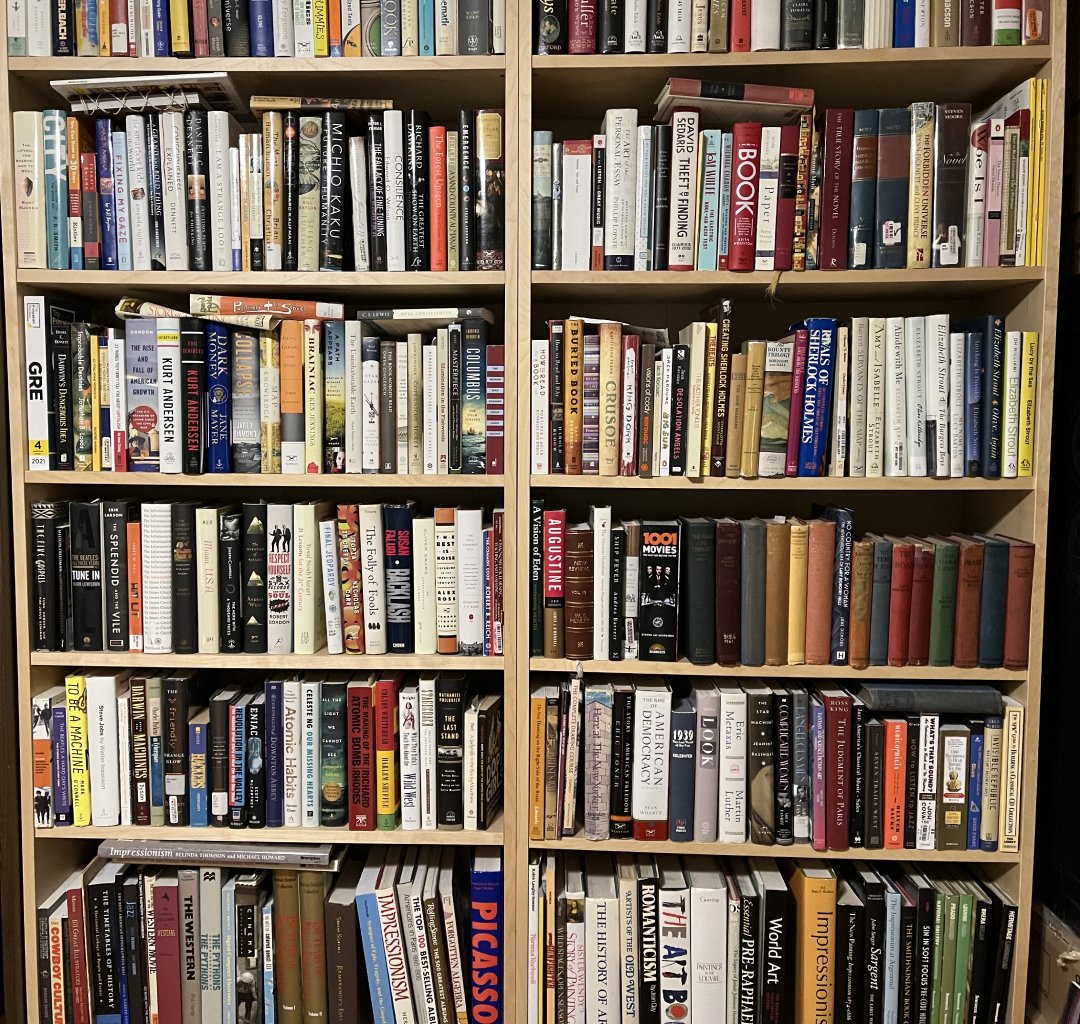
The fun thing about this work is realizing the reality behind it.  I have 705 physical books on four bookshelves at home and one at work.  Then I have all those books vaguely shelved in my mind.  To be honest, I can only remember a small fraction of my books at any one time.  And when I do remember a book I want, it’s very hard to find the physical copy.  I’m using LibraryThing to aid my brain in understanding my library of 705 books – to help remember all my titles, and hopefully create a system to quickly find the physical volume.

In other words, I have books, a brain and a database.  The LibraryThing is only a list making tool.  By adding Xmind, I’m adding a visual modeling tool into the mix.  Science shows us that our brains can only handle so many objects in our conscious minds at once.  Seven things is where we max out, and even holding seven things in the mind is hard.  Xmind allows me to go beyond the seven limit and visually map out more items on my computer screen, but even mind mapping has limits.  I can’t mind map a 1,000 objects.  I haven’t learned it’s limit, but I’d guess it’s less than 100 items, and maybe less than 50.

Think of it this way:  How many aspects of reality do you specialize in studying?  I have 35 books on space exploration.  I’m no expert, far from it.  But it’s a topic I like.  I have 47 books on programming, most of which are on languages I’m forgetting because I’m switching to new ones.  I am a ASP programmer.  I’m becoming a PHP programmer.  The better I get at PHP the more I will forget ASP.

We can only keep up with a limited number of topics in life, and the books I’ve bought reflect those topics.  I plan to use LibraryThing and Xmind to refine my focus and help me zero in on the topics I want to study the most.  I already spotted topics in my collection that I’m considering abandoning, like Kerouac and Wyatt Earp, and new topics I want to pursue, like cosmology and mapping the universe.

Under the new system I’ll tag topics I want to pursue.  (And it’s logical that I’d shelve books on each of those topics together.)  I created a new mind map based just on topics, and not levels of organization like nonfiction, science, astronomy, cosmology.  I still have too many topics to pursue, but things become clearer.

Tags2

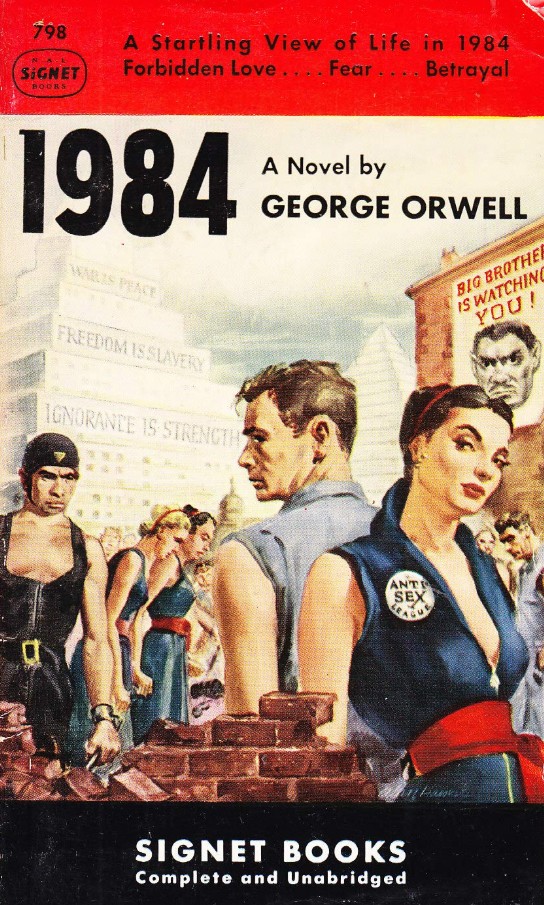
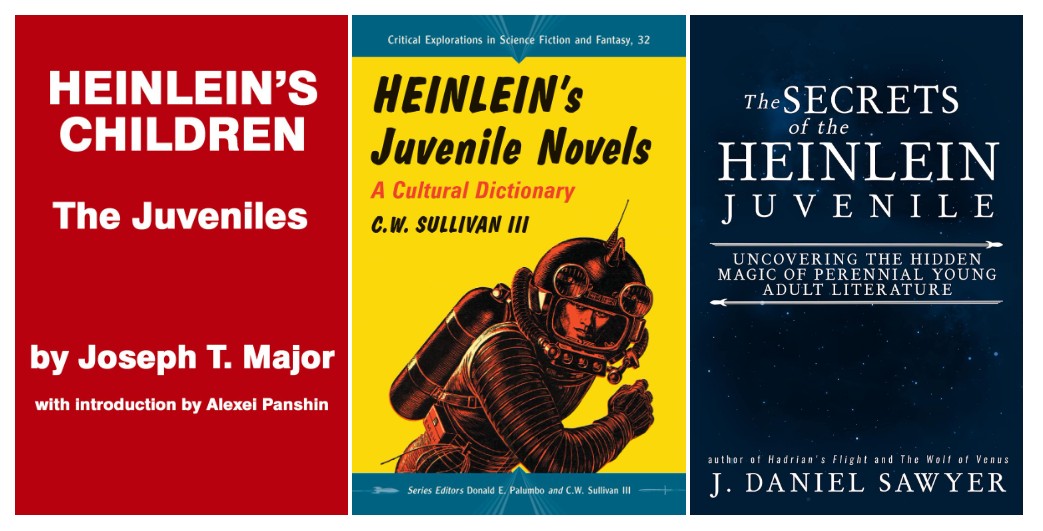
Under my old system I tagged any book, fiction or nonfiction related to science fiction with a tag for SciFi, and since I have a whole lot of books by and about Robert A. Heinlein, I had a tag for Heinlein too.  So one of his novels could get tagged:  Fiction, Novel, SciFi, Heinlein.  With such tagging I could create lists of all my fictional books, all my novels, all fiction and nonfiction books related to science fiction and any book with a Heinlein connection.

Under the simplified system this won’t work anymore.  A tag of Heinlein would mean any book about Heinlein.  If I wanted a list of books by Heinlein I could search by author.   A SciFi tag means books about science fiction.  I’d have no way of listing all my science fiction novels and short story collections separate from general fiction – that is just by using the Tag concept in LibraryThing.  However, LibraryThing also has the Collection object.

I could create Fiction and Nonfiction collections, and then my tags would only apply to those books.  Under the Fiction collection, I could have novels about cosmology and AI.  This offers a lot of flexibility and new insights on how to organize my books both physically and mentally.  But how do I model this in Xmind?  And are the distinctions Fiction and Nonfiction really important?

Take Jack Kerouac.  He wrote novels.  He was a character in many novels.  And whole libraries have been written about his books, his life, and his characterizations, and the people around him and their characterizations.  I could change my topic label from Kerouac to The Beats and be more accurate about my interests.

What about science fiction?  Is it science or fiction?  Actually my interest in science fiction can reflected in more specific tags:  AI & Robots, Space Colonization, Homo Sapiens 2.0, Mars, The Moon and Intelligent Life.  But how do I categorize the Mars of Edgar Rice Burroughs versus Kim Stanley Robinson versus NASA?  Do I make categories:  Real Mars and Fantasy Mars?  They are two separate topics about reality, what we know about the real planet Mars, and what we know about all the fantasies about the imaginary planet Mars.

This opens up a whole new way of thinking, a whole new way to attack the problem, and more important than that, a whole new way of living.  What are my core topics?  Can I mind map them?  Could you make a list of all the subjects you care about the most?  Ones you could feel like a semi-expert in a discussion.

This project will take me awhile, so I can’t produce my final list for this post.  But I think I’m on to something.  Instead of flitting from one topic to the next and accidently collecting books, I need to decide what topics I want to specialize in studying, and build my library to support those interests.

JWH – 2/21/10

Developing My Book Identity with LibraryThing

I’ve got my books cataloged into LibraryThing and I’m now having big fun playing with my collection.  The collection, 706 books, is starting to take on an identity as I tag the books into subject categories.  And I do mean, an identity, like a personal identity, because my library is public, and I’m getting hung up about its appearance.  For itself, and for how it represents me.

It’s book vanity I know.  I had a few books I was too embarrassed to put in, and I found I didn’t want to list my wife’s books because they weren’t part of my self-image.  And I’m thinking about culling some books because they just aren’t me.  But as I tag books into categories I realize those topics are the ones I’ve been fixated on my whole life.  Just how many people like to collect biographies of Jack Kerouac, Wyatt Earp, Bob Dylan and Philip K. Dick? 

Back in the 60s, they had a saying, “You are what you eat.”  Well, I say, “You are what you read.”

The LibraryThing collection represents my physical collection of books, but its also a snapshot of my lifelong personal interests.  Since I own books on subjects I’m no longer interested in, I’m thinking I should cull them from my collection.  There’s two conflicting desires here, (or sins).  The first could be called book gluttony, and the second, book pride.  Do I want to own a lot of books, or do I want to own the books that best paints a clear picture of who I am? 

LibraryThing is a very flexible database, and I could use it’s Collections feature to define more than books I own, like books I hope to read, books I want to buy, or books I’ve read but no longer own.  I could even create a collection “Books That Define Me” and list books I own and don’t own.  I could also create a collection called “It Ain’t Me Books” for my guilty pleasures.

The more I play with LibraryThing the more I realize how many ways I can slice and dice my book collection.  I sit in front of the LibraryThing page, press buttons and links, and make different piles of books to contemplate.  I love using it in cover image mode.  LibraryThing lets you select different size graphics for the covers, and I like the three row size.  It annoys me to see books with bad cover scans, or bummer of bummers, no covers at all. Again, I think this is a vanity thing.  I’ve gotten all hung up on having the same cover as the book I own, but some books I own don’t have dust jackets.  Should I show them with jackets when I don’t own them?  Some books have multiple dust jackets to choose from, would it be unethical to use a cover that I like better than the one I own?  One I’d like to see in cover view better, and one I’d like other people to see. 

Hell, you can judge a book by its cover!!!  And I want you to judge my books by their covers.

Some of my oldest books may never had had dust jackets.  I’ve never even seen photos of their dust jackets.  I’ve thought about creating covers for them with Photoshop.  Isn’t that weird?  I hate seeing the naked books in cover view mode.  LibraryThing offers a variety of generic book covers to use, but I don’t like using them.  I care more about how my books look than how I look.

So far I’ve been pretty honest and listed all but a couple books I own.  I won’t name the lame books I’m too embarrassed to list, but I probably should, just to truly reflect my honest book personality.  And I guess I should just scan my books without dust jackets to show what they really look like.  And I might allow myself to scan the book covers I have when my copies are better than the cover art within LibraryThing.  If LibraryThing was for book collectors, we’d have to catalog exact editions and photograph the specific books I own, but LibraryThing isn’t that exact.

I do wonder if the next time I’m at a bookstore if I’ll buy a book because it’ll make my book personality appear smarter, or because its cover will make it look more beautiful.  Vanity, all is book vanity.

JWH 2/16/10