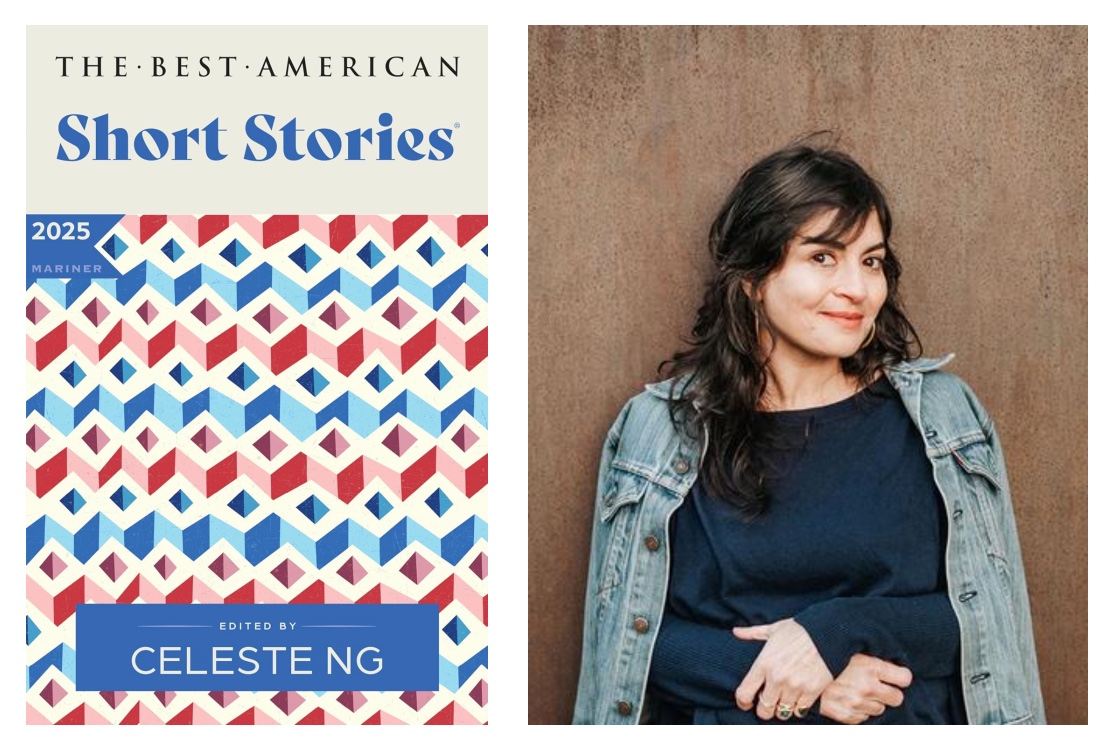
THE ANTIDOTE by Karen Russell

by James Wallace Harris, 12/27/25

There are some conservative Republicans who wish to censor history by forgetting events in America’s past. They worry that such history could make their children feel bad about themselves. They want to remember a past that makes America look great again. Please read Donald Trump’s executive order regarding this issue.

Karen Russell’s latest novel, The Antidote, philosophises why we need to remember everything, even things our ancestors did that make America look bad. Russell uses fantasy to educate us about reality. When my friend Annie first recommended that we read this novel together, the fantasy elements turned me off. As a life-long science fiction reader, I was in the mood to read realistic fiction for a change. The older I get, the more I want nonfiction, but I can’t give up fiction completely.

Throughout the first half of The Antidote, I was annoyed with all its fantastic elements. However, I eventually realized that Russell was using them as a plot device to get her readers to contemplate real history. Eventually, I felt Russell had read a great deal of American history that disturbed her, and she was using her novel to come to grips with why we shouldn’t forget that which many want to erase from American history books.

Memory is the main theme of this novel. Both personal memories and historical memory.

The Antidote makes a case against five crimes our ancestors committed. These tragic deeds explore the dimensions of greed. Each of these historical atrocities has been well-documented in nonfiction books I’ve read over the years. Reading the novel made me ask: Which has more impact, fiction or nonfiction? Listening to The Antidote made me feel closer to the suffering.

How many books have you read that deal with these historical events? Did you learn more from reading fiction or nonfiction?

  • How did we take land from the Native Americans?
  • How did we force Native Americans onto reservations and attempt to reeducate them with our culture and values?
  • How did poor farming practices cause the environmental catastrophe of the Dust Bowl?
  • How did we institutionalize unwed mothers and steal their babies?
  • How do we allow the murders of women to go uninvestigated and underreported?

The Antidote is primarily set in the fictional town of Uz, Nebraska, in 1935, between two significant real events, the Black Sunday dust storm (April 14, 1935) and the Republican River flood (May 31-June 1, 1935). The story is told sequentially, but with flashbacks. We hear the story told from many voices. Four primary characters: The Antidote (Antonina Rossi, AKA, the Prairie Witch), Asphodel Oletsky (Del), Harp Oletsky (Del’s uncle), and Cleo Allfrey (photographer), along with two significant secondary characters, a cat and a scarecrow.

Antonina, a middle-aged woman, had been institutionalized at age 15 for being an unwed mother. Her son had been forcefully taken away from her. She makes her living as a vault, or prairie witch. Antonina can enter a trance while another person relates a memory they wish to forget. That process will erase the memory from the teller’s mind and store it in hers. Antonina gives them a written receipt that will trigger that memory, and she can reinstate it at a future time. Antonina does not remember what she vaults. She is paid for this service, but her clients consider her no better than a prostitute.

Asphodel “Del” Oletsky, a fifteen-year-old girl, just five feet tall, is the captain of Uz’s high school girls’ basketball team. Her mother was murdered when she was young, and she lives with her uncle Harp Oletsky. Cleo is a young black woman who travels the country documenting the depression for FDR’s government. The plot of the novel eventually brings them all together.

The novel begins with a roundup of jack rabbits and clubbing them to death. My father was born in Nebraska and was Del’s age in 1935. He told me stories about how the farmers would exterminate the jack rabbits. My mother also went to high school around this time and played basketball. My grandmother was on a basketball team in Indiana at the turn of the century.

My memories immediately made me connect with the story. We remember the good ones, but forget the bad ones.

The story then goes into catching a serial killer of young women. The sheriff even connects the killer to Del’s mother’s cold case. This murder mystery is the apparent backbone of the plot, but it’s not the real story.

The Antidote immediately triggered a memory of an article I recently read, “The Nurse Who Names the Dead” by Christa Hillstrom. The article was about Dawn Wilcox, who created a database to track the number of men killing women. She discovered that femicide goes vastly underreported. One of the truths of Russell’s novel is that she’s writing about evils that have always existed. Can we ever break the cycle?

Dust and evil color this novel with darkness. I listened to the audiobook edition, and it felt like I was watching an old black-and-white movie. I’d call it noir magical realism.

I admit, I had to push myself to keep listening for the first half of this book. I was just put off by the fantasy elements. But the characters grew on me. And by the middle of the story, I was hooked. The last half of the book often made me teary-eyed. For most of the novel, I felt Russell was too writerly, but when Harp gives his big speech near the end, I must say I was quite impressed with the writing and the description of the riot and storm.

Throughout this story, I kept thinking about the Oz books by L. Frank Baum. Uz almost sounds like Oz. Plus, the story has a tornado and a talking scarecrow.

I wanted to connect the elements of this story with all the nonfiction books I’ve read that back up its fictional history. Especially, The Worst Hard Time: The Untold Story of Those Who Survived the Great American Dust Bowl by Timothy Egan, plus the Ken Burns’ documentary, The Dust Bowl. However, I can’t remember where I read about the other issues in this book. My mind is getting old and tired.

My friend Linda and I often talk about how humans repeat the same crimes throughout history. In recent months, we’ve focused on how greed is the primary driver of evil. As you read The Antidote (if you do), think about how greed motivates people to do what they do. We’re all greedy to a degree, and that might be a survival mechanism, but there seems to be a point when more greed makes us evil. I see that everywhere.

I’m also watching The American Revolution by Ken Burns. It brings up many things that some Republicans would like the world to forget. Like I said, we don’t change. But we should ask, what are we doing now that people in the future will wish to forget that we did?

The Antidote by Karen Russell was on 11 best-books-of-the-year lists for 2025.

JWH

Can Rereading THE WONDERFUL WIZARD OF OZ Help Me Remember What It Was Like to Be Ten Years Old?

by James Wallace Harris, 12/5/25

While watching Wicked, I struggled to recall the excitement I felt when I first read the Oz books at age 10 back in the summer of 1962. I wanted to know whether the fantasy world Wicked created matched the one L. Frank Baum created in his fourteen Oz novels.

The barrier to making this comparison is memory. Memories are highly unreliable. Plus, we overwrite our memories every time we recall them, so am I really remembering 1962, or just the last time I thought about reading the Oz books as a kid?

Like most of my brain excavations, I have to rely on logic and deduction instead. I also look for corroborating evidence. I spent many days on this problem, and here are my results.

The Oz books were the first novels I discovered on my own. For various reasons, I concluded this was the summer between the 5th and 6th grades. My family lived on base at Homestead Air Force Base, and I found the Oz books in the children’s wing of the base library. They were old and worn.

The first novel I remember is Treasure Island by Robert Louis Stevenson, which my mother read to me in the third grade. I started using libraries in the fourth grade, but read nonfiction books about airplanes, space travel, cars, and animals.

I remember roaming up and down the fiction section at the base library and discovering the Oz books. I had no idea who L. Frank Baum was, nor did I have any idea when they were written. I didn’t know about copyright pages or genres. I saw “Oz” on the spines and connected those books to the 1939 film, The Wizard of Oz, which I had seen on television every year since the 1950s.

I did not know the word fantasy. I doubt I understood the concept of fiction. In other words, these books were an exciting discovery. To compound that excitement, they were all set in the same fictional universe. They were my Harry Potter books. L. Frank Baum had tremendous world-building skills.

Analytically, I know that at ten, I didn’t know much about the world. My vocabulary was limited. And I was unaware of most concepts and abstractions. My previous beliefs in fantasy – Santa Claus, the Easter Bunny, and the Tooth Fairy had caused me great embarrassment in first grade when a girl called me a baby for mentioning them. I was five, she was six.

In other words, I knew Oz did not exist, even though Baum created so many wonderful details to make it believable. I remember wanting Oz to exist, but I knew it didn’t. I don’t think I grasped the idea of fantasy at that time. All I knew was that the books created an artificial reality in my mind that was mesmerizing.

Watching Wicked and then rereading The Wonderful Wizard of Oz this week let me compare the two versions of Oz, but I couldn’t compare my initial reactions. Wicked is quite colorful, creative, and contains many elements of the original stories, but it no longer worked on me as the Oz books had in 1962. And that’s to be expected, since I’m 74, long past the age for fairytales.

My quest changed. I now wanted to know how my ten-year-old self saw the world. Rereading The Wonderful Wizard of Oz gave me very few clues.

My contemplations led me to some ideas, though. I have damn few memories of life before age five. I have zillions of memories dating from age five to twelve. I started thinking about them, and a revelation came to me.

Before age five, I theorize our minds are like LLMs (large language models). Those AIs can take in information and react to it, but they are unaware of the world. After five, but before puberty, we develop some self-awareness, but it’s very limiting. It isn’t until around twelve or thirteen that we start thinking for ourselves.

Here’s my main bit of evidence. As a child, my mother told me about God and took my sister and me to Sunday School and church. I just accepted what I was told. But when I was twelve, I started thinking about what they were telling me about religion. I didn’t buy it. I considered myself an atheist by 1964, when I was thirteen, maybe fourteen.

In my thirties, when I was working in a library, I came across an article that said that some librarians in the 1950s felt the Oz books gave children unrealistic expectations about life, and pulled the books from their shelves.

When I read that, I knew it had been true for me. The Oz books led me to science fiction, a genre that also inspired unrealistic expectations regarding the future that have proven to be unrealistic.

Here’s the thing: I was being told two fantasies at age ten. The first was from The Bible, and the second from the Oz books. Looking back, I see that my young self began to reject religion at age ten because I preferred the stories from L. Frank Baum. I wasn’t aware that I was comparing two fantasies; I just preferred one over the other.

Then I discovered science fiction. Concurrently, I was also discovering science. That gave me the illusion that science fiction was reality-based. When I consciously rejected religion, I thought I was choosing science. However, in recent decades, I’ve realized I had substituted science-fictional fantasies for religious fantasies.

I realize now that the Oz books had the power of Bible stories on me at age ten. The reason why so many people are true believers as adults is that they were programmed as children. Wicked doesn’t have that kind of power over me today. I can’t remember what that power felt like, but I do remember that for a few weeks in 1962, the ideas in the Oz books set my mind on fire. Rereading The Wonderful Wizard of Oz did not reignite that fire because I’m no longer a believer in anything.

I’ve often wondered if I hadn’t been lied to about Santa Claus, the Easter Bunny, and the Tooth Fairy, and thus had not experienced humiliation at discovering they were lies, and if I also hadn’t discovered Oz books, would I have accepted the Bible stories as truth as a kid and believed them now?

JWH

Reading With a Purpose

by James Wallace Harris, 11/12/25

I used to keep up with the world by watching NBC Nightly News with Lester Holt, reading The New York Times on my iPhone, and bingeing YouTube videos. I felt well-informed. That was an illusion.

I then switched to reading The Atlantic, New York Magazine, The New Yorker, and Harper’s Magazine. I focused on the longer articles and developed the habit of reading one significant essay a day. That has taught me how superficial my previous methods were at informing me about what’s going on around the world. Television, the internet, and newspapers were giving me soundbites, while articles provide an education.

However, I still tend to forget this deeper knowledge just as quickly. I don’t like that. I feel like I learn something significant every day. What I’m learning feels heavy and philosophical. However, it drives me nuts that I forget everything so quickly. And I’m not talking about dementia. I think we all forget quickly. Just remember how hard it was to prepare for tests back in school.

I’ve watched dozens of YouTube videos about study methods, and they all show that if you don’t put information to use, it goes away. Use it or lose it. I’ve decided to start reading with a purpose.

At first, I thought I would just save the best articles and refer to them when I wanted to remember. That didn’t work. I quickly forget where I read something. Besides, that approach doesn’t apply any reinforcing methods.

I then thought about writing a blog post for each article. It turns out it takes about a day to do that. And I still forget. I needed something simpler.

I then found Recall AI.

It reads and analyzes whatever webpage you’re on. Providing something like this for today’s article by Vann R. Newkirk II, “What Climate Change Will Do to America by Mid-Century:”

Recall allows me to save this into a structure. But again, this is a lot of work and takes a lot of time. If I were writing an essay or book, this would be a great tool for gathering research.

Recall is also great for understanding what I read. Helpful with quick rereading.

This morning, I got a new idea to try. What if I’m trying to remember too much? What if I narrowed down what I wanted to remember to something specific?

Within today’s article, the author used the term “climate gentrification” referring to neighborhoods being bought up because they were safer from climate change, and thus displacing poor people. The article mentions Liberty City, a poor neighborhood in Miami, with a slightly higher elevation, bought up by developers moving away from low-lying beachfront development.

I think I can remember that concept, climate gentrification. What if I only worked on remembering specific concepts? This got me thinking. I could collect concepts. As my collection grew, I could develop a classification system. A taxonomy of problems that humanity faces. Maybe a Dewey Decimal system of things to know.

I use a note-taking system called Obsidian. It uses hyperlinks to connect your notes, creating relationships between ideas. I could create a vault for collecting concepts. Each time I come across a new concept, I’d enter it into Obsidian, along with a citation where I found it. That might not be too much work.

I picked several phrases I want to remember and study:

  • Climate gentrification
  • Heat islands
  • Climate dead zones
  • Insurance market collapse
  • Climate change acceleration
  • Economic no-go zones
  • Corporate takeover of public services
  • Climate change inequality
  • Histofuturism
  • Sacrifice zones
  • Corporate feudalism

Contemplating this list made me realize that remembering where I read about each concept will take too much work. I have a browser extension, Readwell Reader, that lets me save the content of a web page. I could save every article I want to remember into a folder and then use a program to search for the concept words I remember to find them.

I just did a web search on “climate gentrification” and found it’s already in wide use. I then searched for “corporate feudalism,” and found quite a bit on it too. This suggests I’m onto something. That instead of trying to remember specifically what I read and where, I focus on specific emerging concepts.

Searching on “histofuturism” brought up another article at The Atlantic that references Octavia Butler: “How Octavia Butler Told the Future.” Today’s article by  Vann R. Newkirk II is also built around Octavia Butler. This complicates my plan. It makes me want to research the evolution of the concept, which could be very time-consuming.

The point of focusing on key concepts from my reading is to give my reading purpose that will help me remember. But there might be more to it. Concepts are being identified all the time. And they spread. They really don’t become useful until they enter the vernacular. Until a majority of people use a phrase like “climate gentrification,” the reality it points to isn’t visible.

That realization reinforces my hunch to focus on concepts rather than details in my reading. Maybe reading isn’t about specific facts, but about spreading concepts?

JWH

I Find This Very Disturbing

by James Wallace Harris, 11/7/25

I watched two YouTube videos yesterday that disturbed me. Both were about the impact of AI. The first was “How What I Do Is Threatened by AI” by Leo Notenboom. Leo has a website where he answers technical questions. He also makes videos about each problem. His traffic is down because many people are turning to AI to answer their technical questions. Leo eloquently discusses what this means to his business in this video. Asking AIs for help will impact many online companies, including Google. I already prefer to ask CoPilot to look something up for me rather than Googling it.

The next video was even more depressing. Julia McCoy reports “AI Just Killed Video Production: The 60-Second Revolution Nobody Saw Coming.” New tools allow anyone to produce videos featuring computer-generated people or cartoon characters who talk with computer-generated lip-synced voices. I’m already seeing tons of these, and I hate them. McCoy points out that old methods of video production required the skills of many different people, taking days, weeks, or months to produce. Those jobs are lost.

I love seeing little short videos on the web. I’ve always admired how ordinary people can be so creative. I saw YouTube and other sites giving millions of people opportunities to create a money-making business.

I’m often dazzled by computer-generated content. It is creative. But I don’t care about giving computers jobs. I admire people for their creative efforts.

Technology allowed millions of people to produce creative content. That was already overwhelming. I’m not sure if the world needs hundreds of millions of people with minimal ability producing zillions of creative works.

For example, I admire a handful of guys who review audiophile equipment. That handful does high-quality work. Then dozens of audiophiles produce so-so videos. I sometimes watch them, but usually not. Now, YouTube is flooded with videos reviewing audiophile equipment by computer-generated hosts with computer-generated voices, scraping information off the web, and using stock video for visuals. It sucks. It’s a perfect example of enshitafication and AI slop.

I’m not completely against AI. I ask AIs for help. I’m glad when AI does significant work. For example, just watch this video for 15 mind-blowing examples of AI successes:

However, we need to set limits. I love funny cat videos. But I don’t want to see funny cat videos generated by AI. I want to see real cats. If I watch a video of a pretty woman or a beautiful nature scene, I want to believe I’m seeing something that exists in reality. If I’m watching a funny cartoon, I want to know a human thought up the words and drew the pictures. Prompt engineering is creative, maybe even an emerging art form, but computers can generate infinities. Real art is often defined by limitations.

I admire people. I admire nature. Sure, I also admire stuff computers create, but when I do, I want to know that it was a work of a computer. Don’t fool with my sense of reality.

Sometimes, I do love doomscrolling. And I love watching YouTube videos for hours at a time. And I love wasting time on Facebook before going to bed. But all the AI sloop is spoiling it for me. What I really loved about all that content was admiring human creativity and natural beauty. I want to see the best, even if it’s produced by a computer. What spoils it is all the AI slop, poorly produced human-created content, and too much computer-produced content.

That’s why I’m returning to magazines. A magazine is limited in scope. Editors must curate what is put into the limited number of pages. Facebook, YouTube, etc., would be much better if they had editors.

I enjoyed TV the most in my life when there were only three channels. The best time in my life for music was when there were only two Top 40 AM channels. I liked reading science fiction far better when I just subscribed to The Magazine of Fantasy & Science Fiction, Galaxy, and Analog.

I’m not against AI. I’m just against too much of it.

JWH

Reading at 13 vs. 73

By James Wallace Harris, 10/19/25

At thirteen, I read books entirely differently than I do now at seventy-three. I think everyone does, but it’s not apparent why. Our memory gives us the illusion that we’ve always been the same person. But if we think about it, there is plenty of evidence that we couldn’t have been.

I’ve been thinking about the difference between my younger reading self and my older reading self while writing a review of The Foundation Trilogy by Isaac Asimov for my other blog. Every so often, I reread a book I read as a teenager. For some books, it’s a nostalgic return to a familiar, comfortable place. For most books, it’s just vague recollections.

My first realization from trying to reconstruct my reading mind at age 13 was to remember that I read very fast. I consumed books like potato chips. Reading was like casually watching TV. Words just flowed past my eyes, and I didn’t always pay attention to every word. I just read to find out what happened.

I have a fond memory of reading The Foundation Trilogy, but a limited one. I liked the idea of a galactic empire in decline. However, the only chapter I can remember is the first one, “The Psychohistorians.” It wasn’t until decades later that I learned that the trilogy was a fix-up novel based on nine stories running from short stories to novellas.

Thinking about it now, I realize that most of the ideas in the book didn’t mean much to me at 13. I had not studied or read about the Roman Empire, Asimov’s inspiration. Actually, I probably didn’t know what an empire was either. Nor did I understand all the references to nobility, aristocracy, and politics.

As a teenager, I mostly read science fiction books. I did read some popular science books too. My awareness of the world and my vocabulary were limited. However, I didn’t know that. And I wasn’t the kind of person who looked up words I didn’t know. What’s weird is that I was a kind of know-it-all.

One way to judge my teenage brilliance was that my favorite TV show at the time was Gilligan’s Island. When I catch that show today, I can only assume I was brain-dead back then.

I’ve tried to reread The Foundation Trilogy twice now. The first time was in 2015, and now in 2025. In both cases, I could only finish the first book of the trilogy. I loved the first story, but with each additional story, I detested them more.

At first, I thought that Asimov’s most famous books were just bad. But I’ve known people smarter than me, and just as old, who say they still loved the Foundation series. One woman in our reading group said the Foundation stories were a great comfort to reread. And I recently heard that twenty million copies of the series have been sold.

Not only was my current reading self different from my younger reading self, but I’m out of step with millions of readers. This got me thinking about the different modes of reading.

I think the most basic mode is just to let fiction flow over you. You read whatever pleases you. And you don’t think about why.

Then, as we age, we become more judgmental. We learn more about life and reading. We develop a process of natural selection by rejecting what we don’t like. We don’t think much about why we don’t like what we don’t like. We just evolve into a reading machine that knows what it likes.

Two other reading modes are: English teachers or literary critics. These are very critical modes, and often they take the fun out of reading. I think as I’ve gotten older, my reading habits have taken on a bit of these two modes. While in them, it’s all too easy to shoot Asimov down.

However, I’ve discovered another mode recently when I read “Foundation” for the fourth time. “Foundation” was the first story published in the series in 1942. While reading this story yet again, I kept admiring Asimov for where he succeeded and not where he failed.

In my rereadings, I’ve always come to the series wanting to love it. And I’ve always been disappointed by how much I didn’t. But with this reading, I worked to think like Asimov. What was he trying to do, and how did he go about doing it?

I’m in the process of documenting this for my other blog, Classics of Science Fiction. I’m writing this now because the other post is going to take a long while to complete.

I never would have put this much effort into reading a story when I was a teen. Or any time before I was 73.

One reason I dislike this story in recent years is my skepticism. I don’t believe humans will ever travel to the stars, much less form a galactic empire. Another reading mode I’m trying to develop is to read with the mind of a person from when the story was first published.

Trying to read like Asimov thought and how science fiction fans felt in 1942 is difficult. I’m reminded of Samuel R. Delany’s concepts of simplex, complex, and multiplex that he described in his story Empire Star. I started out as a simplex reader and eventually evolved into a complex one. Now I’m moving into a multiplex reader.

Multiplex thinking often involves holding contradictory viewpoints. I really dislike the Foundation stories. But if I work at it and look at them in just the right way, I can like them too. It’s hard. It’s a Sisyphean struggle learning to admire something that triggers so many annoyances, but I’m working on it.

JWH