The Challenge of Cross Platform Computing Life

by James Wallace Harris, 11/11/23

For the first twenty years of my life, I didn’t use computers. I started off using computers in 1971 at school, and bought my first one, an Atari 400 in 1980. Before the decade was over, I had standardized on MS-DOS computers at home, but used PCs and Macs at work. During the 1990s, Windows became the standard at work and home, although I also used a MacIntosh at work sometimes. I was a computer programmer and had to support both. I liked the Mac, but never owned one until recently when I bought a M1 Mac Air.

I bought the Mac laptop because I have back problems and can’t always sit at my desktop computer and the Air had the longest battery life. I can use the Mac Air in my La-Z-Boy when I can’t sit at my desk.

Because I use the iPhone the most daily of all my computers, and because I like to read on iPads, I should have standardized on MacOS and bought an iMac for my desktop computer. Apple is doing everything it can to make its hardware and software to synergistically work across all its devices. However, I haven’t done that. I’ve been a Windows guy for decades.

Life would be much easier if I owned a Windows computer, with a Windows tablet, a Windows smartphone, and a Windows laptop, and they all shared files from OneDrive. Windows offers the widest functionality because it supports most hardware and software. And Microsoft has done an excellent job of constantly improving Windows. However, since the early 1990s I’ve hankered after another operating system, UNIX. Back then, real computer guys used UNIX. Now real computer guys use Linux.

In the early 1990s, my friend Mike bought a copy of MINIX. It was a cheap imitation of UNIX for $89. I didn’t want to spend $89, so when I read about a free UNIX-like operating system called Linux I downloaded Slackware from USENET News messages onto several floppy disks and installed it on an extra machine. I thought it was neat, but I couldn’t run any program I was used to running. That was disappointing.

After that, I would check into Linux about once a year, always hoping it could do everything I did on my Windows machine. In recent years it’s gotten close. This week I bought a Minis Forum UM680 small form factor computer and installed LMDE (Linux Mint Debian Edition) on it. This was a complete extravagance since I don’t need any more computing power. Unfortunately, when I started seeing videos about the UM680 I just lusted after it. The thing is tiny, but super cool. It has 32GB of memory, 1TB of SSD hard disk space, 3 USB-A ports, 2 USB-C ports, and a microSD card reader. I paid $433 for it. To configure a Mac Mini or iMac like this would cost three times as much.

I decided I would finally use Linux as much as possible. I’m writing this blog on my Linux machine (see photo). I don’t hate Windows, in fact, I think it’s the best OS to use. I bought the M1 Mac Air because as a piece of hardware it was impressive and had a long battery life. However, I’m not too keen on Mac OS, and I dislike using a laptop. I love big computer screens. My Windows machine has a 34″ widescreen monitor, and the Linux box has a 27″ 4K monitor. Using the 13.3″ screen on the Air is painful to me. But I practice using it every day. During those times when my back goes out, I hate being away from my computer and figure I need a lifeboat computer, and the Mac Air will be that lifeboat.

After using the M1 Mac Air I wished I had bought a Windows laptop even though I would have had to buy a machine that had much less battery life. The Mac Air is great, and I’ve always wanted a Mac, but life would have been so much easier with one less OS to support. I should have ignored my long desires to use both Macs and Linux machines. That didn’t happen, so I’m living with three operating systems. I’ll standardize on one in the future as I get older, but for now I need to be a cross platform user.

Dealing with five operating systems (Windows, MacOS, iOS, Linux, Android) is a pain in the butt. Doing word processing is a snap on all the operating systems. So is using a spreadsheet, web browser, and email. It really doesn’t matter what OS I use for common computer activities. A cheap Chromebook would have been all I needed. However, I pursue two activities which I’m having trouble doing on the Mac and Linux.

Most of my computer use involves blogging. If I had to, I could create a blog with text, photos, and videos just from my iPhone. But it’s tedious and I can’t manipulate images the way I can in Windows. I create my photo layouts using HTML first, and then using the Windows Snipping Tool to grab the layout I want and save it to .jpg. I know that’s a silly way to avoid learning a program like Photoshop or GIMP. I’ve been using Photoshop Elements for photo manipulation for years but have never learned to use it well. Since Photoshop Elements isn’t available for Linux, I need to learn to use GIMP, the standard free photo editor that works on Windows, Mac, and Linux. Blogging on the Mac and Linux will take a little time to learn, but it shouldn’t be too hard.

Because I write about science fiction and its history, I have a large library of digital scans of science fiction magazines. In fact, I have copies of most of the science fiction magazines that were published in the 20th century. They are in the .cbr format. I can read them on devices from all five operating systems. However, I currently can only create a scan with my Windows machine. It takes several programs to create a magazine scan, and a scanner. The scanner works best under Windows. Getting it to work under MacOS or Linux is a pain. And some of the software I need to process the scan pages is only available for Windows.

For me to be truly cross platform ready, I need to get magazine scanning going on the Mac and Linux machines. That will take much longer. I will need to find drivers for my scanner, and new software on each OS that does the work of the Windows software I use now.

Like I said, I should have just stuck with Windows. Life would have been easier, cheaper, and less cluttered. But when I look into the future, I wonder if I shouldn’t become a Mac person, even though I don’t like MacOS. I love my iPhone, and doubt I’ll ever switch from it. I love the iPad far better than my Android tablet. The logical thing would be to migrate to iPhone, iPad, iMac, and Mac Air as my only computer platform.

I guess years of being a PC guy makes me shy away from becoming a Mac guy. I’ve always wanted to be a complete computer nerd and use Linux. There are Linux phones and tablets, but they are so damn clunky. Theoretically, I could go total Linux. However, I would be out of step with everyone I know.

Logic says I should pick one platform and stick to it. But I’ve never been very logical, at least with computers and technology. I’ve aways been impulsive, wanting all the different kinds of gadgets. Now that I’m getting older, that impulse is coming home to roost, and I don’t think it’s viable for the last years of life when I should be minimizing possessions.

JWH
CD/DVD/BD Discs vs. Streaming

by James Wallace Harris, 6/29/23

I recently wrote “The Emerging Mindset of Not Owning Movies” about converting my DVD/BD collection to digital files so I could stream through Plex. But I soon realized that converting hundreds of discs was too much trouble, so I gave up. I figured it would be worth the money to just subscribe to a bunch of streaming services instead.

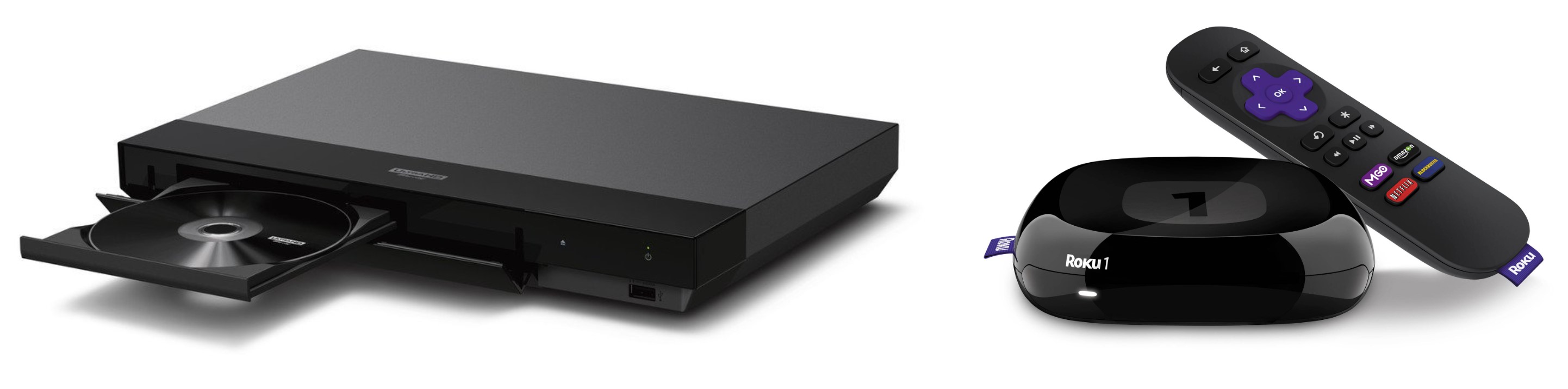
However, in the weeks since I discovered some TV shows and movies aren’t available on streaming. The trouble is I just don’t like using disc players anymore. For example, I exercise by watching Miranda Esmonde-White’s Classical Stretch program. I have a couple seasons on DVD. When I was testing out Plex I converted them to files that I could stream through the Roku interface. It was so much nicer than loading the disc every morning.

Another reason why I gave up on Plex was I thought I needed to buy a Synology NAS and buy 2-3 very large capacity hard drives. Something that would take several hundred dollars.

Well, I had a breakthrough this week. I realized that I neither had to convert all my discs to make Plex worthwhile nor did I need a robust RAID system to store my video files. All I needed was just the files I would watch, and if I was only converting discs that aren’t on subscription streaming services then that wouldn’t be very many at all.

I bought a 512GB SSD for my Intel NUC 11. The NUC had a place for a second short SSD card. It was $59. Installing Plex again was three minutes. I put Classical Stretch, Survivors (1975 BBC show), and the last three seasons of Perry Mason on the drive. I could subscribe to Paramount Plus to watch Perry, but I didn’t want to add another subscription right now.

Plex streams videos off the SSD extremely fast. Almost, instantly. Way faster than the 8GB mechanical hard drive I was testing Plex with before. It’s extremely convenient.

When I finish Perry I’m just going to delete its files off the SSD. Not having to build a secure backed-up library makes things so much easier. Now, if I want to watch something I own on disc I’ll just rip it and put it on the SDD, and when I’m finished, I’ll delete it.

For some reason, coming up with this solution has made me very happy. I don’t need to mess with a second computer, or a NAS, or spend endless hours ripping and maintaining a library of video files. I’ve even simplified the ripping process. The proper method for ripping was to rip with Make MKV and then shrink those files with HandBrake. Then copy the files to the server and make a backup somewhere else. It was very time-consuming.

Now I just use MKV and save its .mkv files directly to the SSD. I don’t worry about shrinking the .mkv file to conserve space or backing it up. If I know I want to watch something that night that’s not on a subscription streaming service but I own the disc, I just rip it while working at my computer, and it’s ready for watching on Plex later when I want to watch TV.

I’ve very happy with this solution. I love to figure out solutions that are cheap, streamlined, minimal, and make things easier. This means I need only one computer, and I don’t need DVD players and their remotes. I recently got rid of one TV, leaving just two (one for me, one for Susan). That was satisfying too. I also put away one CD player and turntable. I only stream music now, but I left one CD player out in case I do want to play CDs. However, it’s just so much nicer not messing with those machines. I regret buying my Audiolab 6000 amplifier and CD transport. I wish I had gotten another Bluenote Powernode.

Over the past couple of weeks, I’ve simplified my life by getting rid of several machines. I also gave up having a second computer, a Linux machine. I have less to worry about. I realize that I’m zeroing in on something. That I’m focusing my efforts and resources.

JWH

Developing a Healthy News Diet

by James Wallace Harris, 5/21/23

Michael Pollan created a small book about eating healthy called Food Rules. As an analogy, I’d like to create a set of sensible rules about consuming the news. Pollan distilled his list of rules down to three simple sentences, “Eat food. Not too much. Mostly plants,” but it really takes reading his book to understand that mantra.

What I would like to do is develop a similar simple mantra about my daily news consumption but I’ll have to work out the details first. Pollan emphasized eating whole foods rather than processed foods. Is there such a thing as whole unprocessed news? “Not too much” is an obvious target since we obviously consume too much news. Finding an analogy for “mostly plants” will be interesting.

What would be the equivalent of nutritious news? Experience has taught me that some news is unhealthy, and I often get news indigestion. I also admit I’m bloated and overweight from too much news consumption.

Like whole food and junk food, we prefer junk news over whole news. I spend several hours a day nibbling on news from many sources. Most of which is forgotten immediately. I wonder if my first rule should be:

#1 – Ignore easily forgettable news

We’re used to clicking on anything that catches our fancy while idling away moments on our smartphones. Essentially, this kind of news is gossip and titillation. Basically, we’re bored or restless. We should use that time in better ways, especially if it exercises our minds. Read real news instead. Or, do something active. Playing games, listening to music, or audiobooks, is more nutritious than never-ending bites of clickbait.

Everyone bitches about information overload but who does anything about it? I’ve learned from intermittent fasting that my body appreciates having a good rest each day from eating. I believe I need to apply the same idea to news consumption.

#2 – Limit your hours consuming the news

I find 16:8 fasting works well for eating. I’m thinking of a 22:2 fast for news is what I’m going to aim for at the moment. Two hours of news consumption a day might sound like a lot, but if you add up all the forms of news I consume including television, magazines, online newspapers, YouTube, and news feeds, RSS feeds, I can easily go beyond two hours.

We should also separate news from learning and entertainment. Learning something new could be considered a form of news. I’m not going to count educational pursuits in my news time. And if you enjoy reading nonfiction books or watching documentaries on TV, that shouldn’t count as news either. However, shows like 60 Minutes, CBS Sunday Morning, and The Today Show can be considered informative entertainment news. Some people just prefer news shows for fun rather than watching fictional shows. I’m not sure if they should count or not.

What we really want is to stay informed about the world so that we interact with reality wisely. Humans have an extremely difficult time processing information. We think we’re far smarter than we are. We constantly delude ourselves. And we think our opinions matter when 99.999% of the time they don’t. Most people think they are experts on countless topics after having consumed just a few hours of news. They think they know better than real experts who have put tens of thousands of hours into studying their specialty.

#3 – Stop assuming you know anything

I believe the real key to understanding the news is being able to tell the difference between opinion and significant data. The real goal of news consumption should be finding the best data, and that means getting into statistics.

Unfortunately, the news industry is overwhelmed with talking heads. Everyone wants to be an expert, and all too often most news consumers tend to latch onto self-appointed experts they like. News has become more like a virus than information processing.

I read and watch a lot of columnists and programs about computers, stereo equipment, and other gadgets. Most are based on personal impressions of equipment individuals have bought or been loaned from manufacturers. These tech gurus are a good analogy for what I’m talking about. Most of the news we take in daily is from individuals processing limited amounts of information and giving us their opinion. What we really want is Consumer Reports, Rtings, or the Wirecutter, where large amounts of data are gathered from a variety of sources, and statistically analyzed.

This is just a start on designing my news diet. I want to keep current on a long list of topics, but that’s like learning about all the vitamins and nutrients my body needs. News nutrition will be a vastly more complicated topic. What are the essential vitamins I need every day? Is it politics, national and international affairs, economics, crime, immigration, ecology, etc?

Do I need to know about everything? Is that what an informed citizen needs to do? Take immigration. Is anything I think about immigration affects the situation at the border? Does voting liberal or conservative even affect anything at the border? I can barely maintain order in my house, why should I believe I can organize all of reality on Earth? Maybe my last two rules should be:

#4 – Know my limitations

#5 – Pursue the news I can actually use

Like nutrition, news is a complicated subject that’s hard to understand and can easily confuse.

JWH

It’s Hard To Tell What’s A Bargain Is Anymore

by James Wallace Harris, 7/2/22

One value of writing an essay is thinking through an idea. I’ve rewritten this essay several times as I rethink my assumptions and feelings. When is a bargain a great deal or just something cheap I really don’t need? When does something feel expensive when it’s not? When is something cheap but overpriced or a wonderful value? How does inflation warp our sense of value as we age?

In 1962 when I was in the 6th grade I could ride my bike down to the base theater on Homestead Air Force Base and see a movie for 15 cents. That was a kid’s price back then. I could get a candy bar for 5 cents, and a coke in a cup for another nickel. It was a small cup, but also the only size cup. Total expenditure was a quarter. The last time I bought a movie ticket, before the pandemic, it was $12. Candy was around $5 and a drink was around $5, but the comparison isn’t perfect. In 1962 I probably got a 200-calorie sugar high, and today it would probably be a 2,000-calorie sugar overdose.

Magazines in 1962 were 15-25 cents. Today it’s $7.99 – $11.99. Back then I’d read in a magazine all week. Today, I’m lucky if one will divert me for 30-minutes because I have so many others to read. Back then I was happy with Popular Science, Popular Mechanics, and Mad Magazine. Today I try to keep up with a couple dozen mags. But is having a quantity a bargain?

A paperback was 35-60 cents. I’m not sure they have mass-market paperbacks anymore. It’s $11.99 for a Kindle book. A science fiction magazine like F&SF was 40 cents in 1962, but $9.99 an issue in 2022. What’s hilarious is I often pay $10-15 for old issues of F&SF today. Last year I paid $35 for Fall 1949 issue (v.1 n.1) of F&SF. It originally cost 35 cents. I believe that tells me its real worth. How many things do I enjoy today that I would I pay 100x their original costs sixty years from now?

In 1962 all TV was free. There were three channels. I can still get ABC, CBS, and NBC for free if I wanted to use an antenna, but I watch them through a $65 package from YouTube TV today and get several dozen channels thrown in. It ruffles my feathers to pay that $65 but my wife Susan considers it a cheap essential and her favorite form of entertainment.

Susan worked out of town from 2008-2018. She loves TV way more than I do, so I encouraged her to have cable TV at her Mon-Fri apartment. I got to cut the cord at our house, which delighted me. I bought a TiVo to record off-the-air shows like Jeopardy and the nightly news but I mostly watched Netflix for fun shows. About $25 a month total. I was thrilled except that I missed Turner Classic Movies (TCM). Cord-cutting felt like a real bargain!

When Susan stopped working out of town I convinced her to try streaming TV. We tried AT&T TV before settling on YouTube TV. YouTube started out at $45 a month and is now $65. Not a bad deal, but with all of our other subscription TV services, we’re now spending $128 a month. That seems like a lot, as painful as having a cable bill. But times have changed. There are so many options for watching TV.

Cord-cutting was never about saving money. I just hated paying the cable bill because out of the hundreds of channels we got, Susan liked about a dozen and I watched two. That just bugged the crap out of me. However, I now subscribe to Apple News+ for $9.99 a month and it gets me over 300 digital magazines to read. I probably look at less than a dozen of them, yet I don’t agonize over the fact I’m paying for almost 300 I’m not reading. I’m not being consistent, am I?

Before Apple News+ it wasn’t uncommon for me to buy a handful of magazines at the bookstore and spend $75. So, I’m thinking: What should a handful of TV channels cost?

I also spend $9.99 a month with Scribd.com for ebooks and audiobooks. I read or listen to one or two a month and consider it a bargain without worrying about the ones I’m not reading. Again, $9.99 versus $40-50 for two books. I only use YouTube TV for TCM, so $65 for one channel seems extreme. Although, if pressed, TCM is worth $65.

Netflix used to be about $9.99 a month, and I considered it a great bargain too. However, now that there are so many subscription services, it’s hard to tell what a bargain is anymore. When we only had Netflix and watched it all the time it was a bargain. Netflix seems much less of a bargain when we have Netflix, AppleTV+, HBO Max, Hulu, Amazon Prime, PBS Passport, Peacock, Paramount Plus, Wondrium, etc.

We should go through a new kind of cord-cutting, sub-cutting. With so many premium streaming TV services, we often ignore one or two for months while we binge-watch shows on the others.

I don’t mind paying for something we use. We spend very little money on going out, vacations, clothes, etc. I drive a 22-year-old truck. We’re retired, and spend most of our time home, so we can afford a few TV subscriptions. However, I don’t want to waste money either. And I like a bargain — and I’m a cheap ass. But is Netflix a bargain when I ignore its large buffet of movies and TV shows for several months of the year?

We recently canceled Netflix because neither one of us watched it for months. We even discovered we were paying for two subscriptions because Susan had never canceled her out-of-town sub. We mainly canceled Netflix to protest the newest price hike. Psychologically, a TV subscription should be $4.99 – $9.99. Anything more, and I worry about getting my value.

HBO Max is $14.99. That seems like a Mercedes price when I’m used to driving a Toyota. HBO Max has a cheaper subscription but it’s with commercials. I’m adamantly against paying to watch anything with commercials. If I had to watch commercials I’d go back to over-the-air TV and cancel all my subscriptions.

When we had cable I always wanted to have a la carte channel buying. I thought the perfect payment method would be to subscribe to just the channels we wanted. And I’d be willing to pay extra to not have commercials.

For some reason, Netflix seemed like a wonderful bargain at $9.99 a month, but a terrible deal at $17.99 a month. Oddly, HBO Max at $14.99 a month seems like a better deal than Netflix or Hulu. But now that I’ve canceled Netflix, Hulu, and HBO Max hardly seems worth $30+ a month either.

My friend Linda is very disciplined. She subscribes to only one TV service a month. Currently, it’s HBO Max, but she plans to cancel it and go to AppleTV+ again when some of her favorite shows return with new seasons. So she spends from $5 to $15 a month on TV. Now that’s a bargain.

When YouTube TV was $45 a month it was a real bargain. Now that it’s $65 it doesn’t seem like one. And if they raise their price again, it will seem like a rip-off.

But am I being penny wise and pound foolish? Going to a movie is $12. Buying a DVD runs $8-25 and I used to buy a lot of them. Renting a movie on Amazon Prime runs $2-20 and I still do that. Watching just one or two movies I used to go out to see, or once bought on disc turns any premium TV subscription into a bargain.

The other day I bought 8 seasons of The Andy Griffiths Show for $15 each on Amazon Prime for Susan’s birthday. She watches that series over and over while she sews. But I thought it was painful to see her watch Andy on commercial TV that cuts several extra minutes out of each episode that originally ran 28 minutes. Most premium streaming TV channels offer dozens, if not hundreds of complete TV series. Andy isn’t on any of them at the moment.

I really can’t complain about their monthly prices. They are a bargain. But only if we watch something during the month. I’d say one movie or one season of a TV show is breaking even, and anything more makes them a bargain.

Susan doesn’t mind commercials. She sews while watching television, and just ignores those never-ending painful minutes of ads. I sometimes wonder if she could handle over-the-air broadcast TV. I bet she’d be just as happy watching MeTV all day long as she is watching all the old TV shows on TBS every day. But she loves many other channels. She considers YouTube TV a cable TV service. When a tennis tournament is on she has to have ESPN. So YouTube TV is a bargain to her, but a waste of money to me.

Bargains are relative. And it’s harder to budget when two people are involved. Susan said if YouTube TV raised its prices again, we’d cancel something else.

Even though I don’t watch them much, I consider AppleTV+ and PBS Passports to be real bargains because they are only $5 a month. If all the services charged just $5 a month I’d be willing to subscribe to all and not worry if I used them each month. But at $10-15, I figure we have to decide which is worthwhile, and which is a bargain.

Maybe we should cancel any streaming TV service that’s more than $10 a month. But I pay $13 a month for YouTube Premium so I don’t have to watch commercials. All the content is free, I’m just paying to get rid of stuff I don’t want to see. Now, is that a bargain?

Life was simpler when everyone watched the same three broadcast channels. We had a lot more shared culture. But those days are over. Now we have endless choices in endless varieties. Is that a bargain? Again it’s relative. But in 1966 I could go to school and nearly everyone I knew had watched some of the same shows I had watched the night before. That was priceless.

JWH

Should I Forget Dorothy?

by James Wallace Harris, Monday, February 17, 2020

Being part of history is the gold standard for being long remembered. Pop culture fame can also get you remembered, but not as long. Geneology is probably the common way we ordinary folks will be remembered, especially if we’re neither historical or famous. Writers and artists often like to believe they will achieve immortality through their works, and that was certainly true for Homer, Shakespeare, Austen, and Dickens. Sadly, being published today usually proves a poor bet at avoiding literary obscurity.

Through some weird accident of circumstances, I have become the repository for the memory for Dorothy Rachel Melissa Walpole who wrote under the name Lady Dorothy Mills. I maintain the website ladydorothymills.com. Last year it got a total of 175 visitors, but most of them leave almost immediately. It’s a very static site because I seldom find new information about her. I used to get a query about her every year or two, but it’s been years now since I’ve heard from anyone asking about Lady Mills.

Lady Dorothy Mills wrote fifteen books from 1916-1931, nine novels, and six nonfiction books, all long out of print. I own all of them except her first novel Card Houses and the last Jungle!. She is most famous for writing five travel books capitalizing on the idea of an aristocratic European woman traveling alone in Africa, South America, and the Middle East in the 1920s. She achieved a minor amount of fame. As far as I can tell only 26 used copies of her books are for sale right now, and most of those are the nonfiction titles. Of the 5 copies of her novels, two are the German versions of The Dark Gods. Most of these volumes have been on the market for years. There is little interest in her work.

I’m trying to decide if it’s worth my effort to convert her books into digital texts so I can submit them to Project Gutenberg. It would be a terrific amount of work and its doubtful anyone would read them. But I’d hate to see Lady Mills become completely forgotten. I’ve been trying to come up with reasons to convince people to try her books. Right now it’s almost impossible to get ahold of any kind of edition to read. I’ve wondered if there were free ebook editions available would a few readers give her a chance?

I’m currently reading The Laughter of Fools from 1920. It’s about a young woman living with her aunt and uncle after her father dies. I’m not sure of the time period yet, but you have to imagine a Downton Abbey type of setting. Lady Mills was the daughter of an Earl and grew up in a manor house on a country estate. I assume her life was somewhat like Crawley girls, as Lady Mills was about their age. She would have been 23 in 1912, the year the story began. Lady Mills’ mother was also a rich American woman. However, Lady Mills married a poor American man, and from what I can infer, her father wasn’t as forgiving as Lord Grantham. Lady Mills went out into the world to make it own her own.

The girl in The Laughter of Fools is named Louise, and Lady Mills’ mother was named Louise. I have to wonder how much of herself she put in this character. Louise finds life with her aunt and uncle boring and eventually gets permission to go on a vacation for her health. Her guardians believe she is being supervised by a proper English lady, but Louise gets to run around with an arty bohemian crowd. This opens up a whole new world for her. I imagine the same thing happened to Lady Mills.

I wish I had a copy of Lady Mills’ first novel, Card Houses published in 1916. That was the year she married Capt. Arthur Mills. It might reveal more about her early life and personality. I get the feeling her first few novels were about the life she knew and that social set, and her later novels were fantasy or science fiction. Her travel books were about becoming an independent woman.

I can’t say that The Laughter of Fools is good literature. I only find it interesting for four reasons. First and primary, I’m looking for clues about Lady Mills. Second, I enjoy the Downton Abbey resonating vibes. Third, it tells about life in England during a very literary period — the book adds a few details that I don’t find in Woolf, Huxley, Forster, and others of that era. Finally, it’s about a woman breaking free in a time when few did. But mostly the novel’s appeal is trying to figure out what Lady Dorothy Mills was like and why she became a writer.

I still don’t know what kind of person she was. Would I have liked her? Or was she a weirdo, or even a Lady Asshole? Does she deserve to be remembered or is there a reason why everyone is forgetting her? I feel like I’ve fed a stray cat and now I’m responsible for its care.

Small items about her come up for sale every once in a while but they can be expensive. And if I really wanted to pursue this project properly I’d need to travel to England and do some real research. That is almost not going to happen. Still, I might try converting one book, The Laughter of Fools and see if anyone reads it. It would be nice to see if anyone else gets anything out of her. Sooner or later, I’d like to find a younger person to inherit the caretaking of this strange cat.

JWH