How To Calculate the Value of Your Monthly Subscriptions

by James Wallace Harris, 7/4/23

I feel like Susan and I have too many monthly subscriptions for watching television, listening to music and books, and reading the news. Everything is going digital, and everything requires a subscription. That increasing number of monthly subscriptions is bothering me, but is it really too many, or a problem?

I decided to create a way to measure their value. I looked at the monthly cost versus the total hours Susan and I use each service and then calculated the hourly cost of using each subscription. The results were surprising.

FYI, the hours were calculated by how much each of us used the service. For example, We both watch Acorn TV together for one hour a night, so the total usage was 60 hours for the month. For YouTube TV, Hulu, Peacock, and Netflix, the hours look very large, but it’s because I add both mine and Susan’s together and because Susan has the TV on in the background while she sews.

684 hours a month seems like a lot of digital content. But remember, most of Susan’s TV watching is while she’s working on her sewing. She’s being more productive than me. I only watch TV when the TV is on. There are 730 hours in a month, times two, which equals 1,460 hours. That means Susan and I spend over a third of our time using digital content.

$260.37 isn’t a huge monthly expense at all then when you think about how much we get out of it.

Even though that’s not that much for two people, I don’t want to waste money and I want to reduce our monthly bills. I consider anything under $1 an hour to be a good value. We are getting the most bang for the buck with TV. It’s news that’s more expensive.

It’s obvious I need to cancel my subscription to Apple News+. Having access to over 300 magazines seems like a fantastic bargain for $9.99 a month, but I never get around to reading many magazines — even though there are over a dozen I want to read. If I read magazines 30 minutes a day, that would be 15 hours for the month, or 66 cents an hour – in the value range. I need to either read more or cancel.

Apple News+ offers several newspapers. I could drop The New York Times and The Washington Post. I’d probably spend at least 30 minutes a day reading the news, which would bring the value under a dollar an hour. However, I want to support both the Times and Post as institutions. I need to think about this. Apple News+ is a bargain for news reading, but it’s terrible for supporting individual magazines and newspapers.

Calculating how much news I read each day should tell me just how many newspapers and magazines I should buy each month. If I was completely honest with myself, that would be one magazine and one newspaper. I’d probably settled on The Atlantic and The New York Times. But even then, most of their content would go unread. My eyes have always been bigger than my stomach when it comes to periodicals. I’m currently buying WAY MORE newspapers and magazines than anybody could ever read in a month, much less what I actually read.

I’m currently getting The New York Times for $6 a month because I quit to get an introductory rate, but when it goes back to $25 a month I don’t think it’s going to be a reasonable value.

We could probably slash that $260 bill for subscriptions. But seeing these expenses laid out like this is quite revealing. Susan and I hardly ever eat out anymore, and we stopped going to the movies, so this pretty much is our entire entertainment/education budget. It’s not that big, especially when you think it’s just $130 apiece.

JWH

CD/DVD/BD Discs vs. Streaming

by James Wallace Harris, 6/29/23

I recently wrote “The Emerging Mindset of Not Owning Movies” about converting my DVD/BD collection to digital files so I could stream through Plex. But I soon realized that converting hundreds of discs was too much trouble, so I gave up. I figured it would be worth the money to just subscribe to a bunch of streaming services instead.

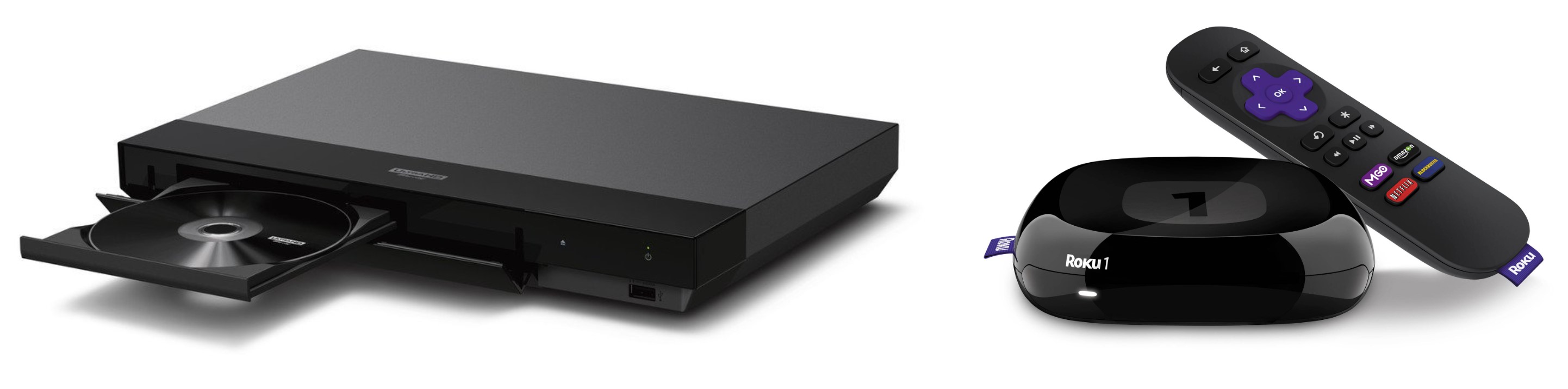
However, in the weeks since I discovered some TV shows and movies aren’t available on streaming. The trouble is I just don’t like using disc players anymore. For example, I exercise by watching Miranda Esmonde-White’s Classical Stretch program. I have a couple seasons on DVD. When I was testing out Plex I converted them to files that I could stream through the Roku interface. It was so much nicer than loading the disc every morning.

Another reason why I gave up on Plex was I thought I needed to buy a Synology NAS and buy 2-3 very large capacity hard drives. Something that would take several hundred dollars.

Well, I had a breakthrough this week. I realized that I neither had to convert all my discs to make Plex worthwhile nor did I need a robust RAID system to store my video files. All I needed was just the files I would watch, and if I was only converting discs that aren’t on subscription streaming services then that wouldn’t be very many at all.

I bought a 512GB SSD for my Intel NUC 11. The NUC had a place for a second short SSD card. It was $59. Installing Plex again was three minutes. I put Classical Stretch, Survivors (1975 BBC show), and the last three seasons of Perry Mason on the drive. I could subscribe to Paramount Plus to watch Perry, but I didn’t want to add another subscription right now.

Plex streams videos off the SSD extremely fast. Almost, instantly. Way faster than the 8GB mechanical hard drive I was testing Plex with before. It’s extremely convenient.

When I finish Perry I’m just going to delete its files off the SSD. Not having to build a secure backed-up library makes things so much easier. Now, if I want to watch something I own on disc I’ll just rip it and put it on the SDD, and when I’m finished, I’ll delete it.

For some reason, coming up with this solution has made me very happy. I don’t need to mess with a second computer, or a NAS, or spend endless hours ripping and maintaining a library of video files. I’ve even simplified the ripping process. The proper method for ripping was to rip with Make MKV and then shrink those files with HandBrake. Then copy the files to the server and make a backup somewhere else. It was very time-consuming.

Now I just use MKV and save its .mkv files directly to the SSD. I don’t worry about shrinking the .mkv file to conserve space or backing it up. If I know I want to watch something that night that’s not on a subscription streaming service but I own the disc, I just rip it while working at my computer, and it’s ready for watching on Plex later when I want to watch TV.

I’ve very happy with this solution. I love to figure out solutions that are cheap, streamlined, minimal, and make things easier. This means I need only one computer, and I don’t need DVD players and their remotes. I recently got rid of one TV, leaving just two (one for me, one for Susan). That was satisfying too. I also put away one CD player and turntable. I only stream music now, but I left one CD player out in case I do want to play CDs. However, it’s just so much nicer not messing with those machines. I regret buying my Audiolab 6000 amplifier and CD transport. I wish I had gotten another Bluenote Powernode.

Over the past couple of weeks, I’ve simplified my life by getting rid of several machines. I also gave up having a second computer, a Linux machine. I have less to worry about. I realize that I’m zeroing in on something. That I’m focusing my efforts and resources.

JWH

What Susan and I Are Watching

by James Wallace Harris, 6/16/23

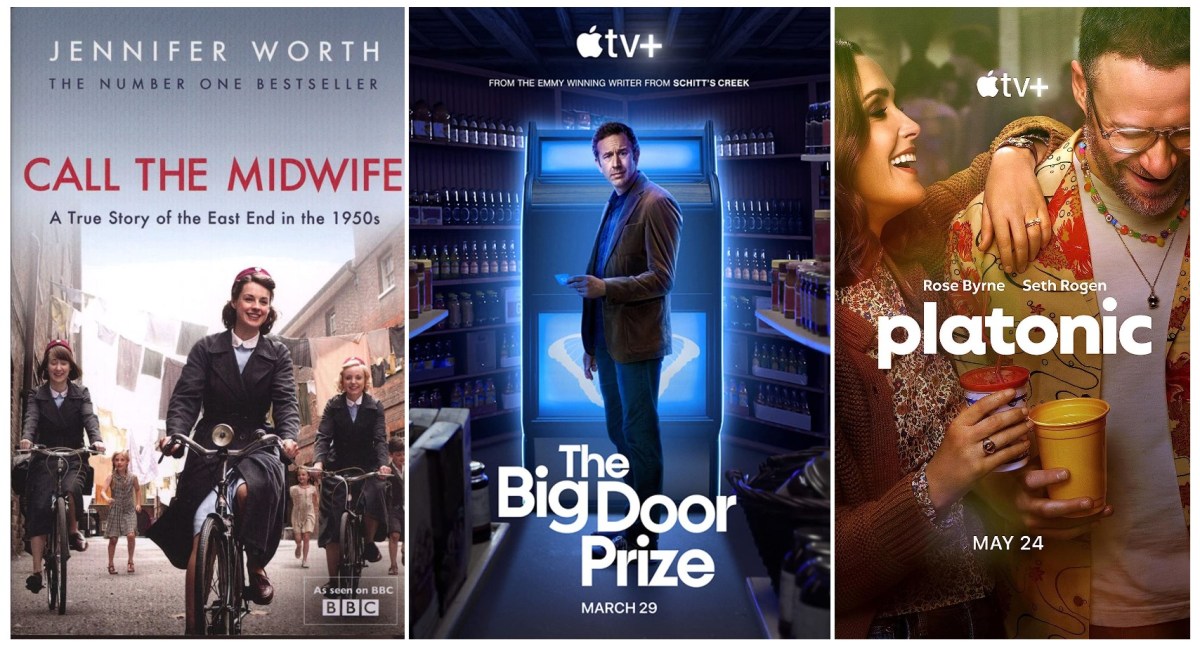
Unless I have someone to watch TV with, I end up watching YouTube videos, and maybe an old movie once a month. So I’m grateful when Susan is willing to watch TV with me. As we’ve gotten older our taste in television has diverged significantly, so it’s hard to find shows we’ll both watch. Currently, we’re watching Call the Midwife (Netflix), The Big Door Prize (AppleTV), and Platonic (AppleTV). And, about once a month, we have three friends over to binge-watch four episodes of Ted Lasso (AppleTV).

Susan and I seem to share a love for British TV, or at least a certain type of British TV. Last year we started our 9 pm TV watching with Downton Abbey, then went to Upstairs, Downstairs (old and new), All Creatures Great and Small (old and new), and The Marvelous Mrs. Maisel. We’re continuing with Call the Midwife. Most of the British PBS shows have a certain feel to them. Especially since Call the Midwife and All Creatures Great and Small are TV shows based on memoirs about English life in the mid-20th century. And Downton Abbey and Upstairs, Downstairs have a definite historical feel. The Marvelous Mrs. Maisel was about mid-20th century American life. So we might like shows with a sense of history.

While my sister was here for a week, she got us hooked on Platonic, and that caused us to try The Big Door Prize.

It’s interesting to contrast the two British TV shows, Call the Midwife and All Creatures Great and Small, set in the past, with the two American shows, Platonic and The Big Door Prize, set in the present. The British shows are heartwarming and focus on people who help other people, while the American shows are focused on people who are focused on themselves. The Marvelous Mrs. Maisel is set in the mid-20th century but is very different from those other shows. I’m not using it in the comparisons below.

The British shows are about people who work long hours at very hard jobs and do a lot of sacrificing for others, while the American shows are about frivolous life after work where the characters spend a lot of time in self-doubt, worrying about their relationships, while trying to find something meaningful in their lives.

The British shows, focus on the grittier aspects of life, while the American shows lean towards the fantastic and fanciful. In The Big Door Prize, a small-town community wakes up to discover a magical machine in their local grocery that tells them their potential. While Platonic is about a man and woman rekindling their friendship after many years. In both shows, the setup leads to quirky characters dealing with quirky new situations. Is it me, or does that suggest Americans are bored?

By the way, Susan and I both enjoy Platonic and The Big Door Prize, but we’re not wild about either. While I fill idle hours with YouTube videos, Susan fills her time sewing and watching old favorite sitcoms (M.A.S.H., Andy Griffith, Friends) and feel-good dramas (The Gilmore Girls, Grey’s Anatomy). The shows we loved most while watching together have been the British shows that originally appeared on PBS and The Marvelous Mrs. Maisel.

We’re only in the 4th season of Call the Midwife, and it currently has twelve in total, so we’ll have plenty of TV for several weeks. But after that, we’ll be searching for something new to watch. We’re open to suggestions — but consider our track record. I’m not sure how many TV shows exist about hard-working self-sacrificing people based on memoirs.

I think Susan and I are burned out on television so it’s very hard to find something new to watch. Neither one of us care about mysteries, thrillers, or police procedurals. And I’m tired of my old favorite themes of Westerns and science fiction. We both loved Downton Abbey and The Marvelous Mrs. Maisel but shows like those are rare.

JWH

Developing a Healthy News Diet

by James Wallace Harris, 5/21/23

Michael Pollan created a small book about eating healthy called Food Rules. As an analogy, I’d like to create a set of sensible rules about consuming the news. Pollan distilled his list of rules down to three simple sentences, “Eat food. Not too much. Mostly plants,” but it really takes reading his book to understand that mantra.

What I would like to do is develop a similar simple mantra about my daily news consumption but I’ll have to work out the details first. Pollan emphasized eating whole foods rather than processed foods. Is there such a thing as whole unprocessed news? “Not too much” is an obvious target since we obviously consume too much news. Finding an analogy for “mostly plants” will be interesting.

What would be the equivalent of nutritious news? Experience has taught me that some news is unhealthy, and I often get news indigestion. I also admit I’m bloated and overweight from too much news consumption.

Like whole food and junk food, we prefer junk news over whole news. I spend several hours a day nibbling on news from many sources. Most of which is forgotten immediately. I wonder if my first rule should be:

#1 – Ignore easily forgettable news

We’re used to clicking on anything that catches our fancy while idling away moments on our smartphones. Essentially, this kind of news is gossip and titillation. Basically, we’re bored or restless. We should use that time in better ways, especially if it exercises our minds. Read real news instead. Or, do something active. Playing games, listening to music, or audiobooks, is more nutritious than never-ending bites of clickbait.

Everyone bitches about information overload but who does anything about it? I’ve learned from intermittent fasting that my body appreciates having a good rest each day from eating. I believe I need to apply the same idea to news consumption.

#2 – Limit your hours consuming the news

I find 16:8 fasting works well for eating. I’m thinking of a 22:2 fast for news is what I’m going to aim for at the moment. Two hours of news consumption a day might sound like a lot, but if you add up all the forms of news I consume including television, magazines, online newspapers, YouTube, and news feeds, RSS feeds, I can easily go beyond two hours.

We should also separate news from learning and entertainment. Learning something new could be considered a form of news. I’m not going to count educational pursuits in my news time. And if you enjoy reading nonfiction books or watching documentaries on TV, that shouldn’t count as news either. However, shows like 60 Minutes, CBS Sunday Morning, and The Today Show can be considered informative entertainment news. Some people just prefer news shows for fun rather than watching fictional shows. I’m not sure if they should count or not.

What we really want is to stay informed about the world so that we interact with reality wisely. Humans have an extremely difficult time processing information. We think we’re far smarter than we are. We constantly delude ourselves. And we think our opinions matter when 99.999% of the time they don’t. Most people think they are experts on countless topics after having consumed just a few hours of news. They think they know better than real experts who have put tens of thousands of hours into studying their specialty.

#3 – Stop assuming you know anything

I believe the real key to understanding the news is being able to tell the difference between opinion and significant data. The real goal of news consumption should be finding the best data, and that means getting into statistics.

Unfortunately, the news industry is overwhelmed with talking heads. Everyone wants to be an expert, and all too often most news consumers tend to latch onto self-appointed experts they like. News has become more like a virus than information processing.

I read and watch a lot of columnists and programs about computers, stereo equipment, and other gadgets. Most are based on personal impressions of equipment individuals have bought or been loaned from manufacturers. These tech gurus are a good analogy for what I’m talking about. Most of the news we take in daily is from individuals processing limited amounts of information and giving us their opinion. What we really want is Consumer Reports, Rtings, or the Wirecutter, where large amounts of data are gathered from a variety of sources, and statistically analyzed.

This is just a start on designing my news diet. I want to keep current on a long list of topics, but that’s like learning about all the vitamins and nutrients my body needs. News nutrition will be a vastly more complicated topic. What are the essential vitamins I need every day? Is it politics, national and international affairs, economics, crime, immigration, ecology, etc?

Do I need to know about everything? Is that what an informed citizen needs to do? Take immigration. Is anything I think about immigration affects the situation at the border? Does voting liberal or conservative even affect anything at the border? I can barely maintain order in my house, why should I believe I can organize all of reality on Earth? Maybe my last two rules should be:

#4 – Know my limitations

#5 – Pursue the news I can actually use

Like nutrition, news is a complicated subject that’s hard to understand and can easily confuse.

JWH

The Emerging Mindset of Not Owning Movies

by James Wallace Harris, May 5, 2023

Ideas for this essay began when my Blu-ray player died. I got on Amazon to buy a new one, and then I asked myself: When was the last time I viewed a movie or TV show from a disc? When was the last time I bought one? I went and looked through our bookcase which has five shelves of DVDs and Blu-rays. Most have not been played in years, and some have never been played or even opened. I bought them because wanted to own them.

I realized that owning movies has a mindset. I’m trying to decide if I need to change that mindset.

This essay isn’t aimed at film fans who actually collect movies with a purpose. Nor is it about minimalism and getting rid of stuff. What I’m talking about is how buying movies changed us. We had one pop culture mindset before VHS tapes and DVDs, another afterward, and an even newer mindset is emerging with streaming. And those mindsets say something about our individual psychology.

Before the advent of the VCR, the main way to see a movie was when it was at the theater or rerun on television. If you wanted to see a specific film you might have to wait years. I used to go to science fiction conventions and one of their highlights was the film room where they’d run classic science fiction movies all weekend. There were also film clubs and festivals, but those were for serious film buffs. And a few people, usually rich ones, collected movies on film.

For the most part, people didn’t own movies and they had a mindset about how they watched movies. Starting in the 1980s, the VCR became popular. This created two industries – selling movies on tape, and tape rental stores. That’s when people really got into owning their favorite films and a new mindset emerged.

It changed society. Not everyone collected movies, but it was pretty common. Then came the DVD and it caused even more people to want to own movies. Most people just rented films and Blockbuster became part of popular culture too. Still, a fair percentage of people wanted to own movies.

Now we have streaming. Streaming has killed the movie rental store. A few still exist, but that way of life is now dead. And I think a lot of people have stopped buying movies on DVDs, Blu-ray, and 4k. Diehard fans still collect, but ordinary people have stopped.

Susan and I bought a lot of films on DVD and Blu-ray over the years. A few years ago we gave bags of them away to friends and the library. But we kept one bookcase of our favorites. Now I’m wondering if we even need to keep those.

Whenever I want to see a specific movie I can usually find it streaming on one of the subscriptions I already own, or on one of the free streaming services that use ads. Or I’ll rent it on Amazon. And if JustWatch can’t locate what I want, I’ll check YouTube, and pretty often, those forgotten films are usually there. It’s extremely rare that I can’t find a movie on the net.

For decades I believed if I really wanted to see a movie that wasn’t easily available I had to buy it. And it annoyed me when there was something I wanted to see and it wasn’t streaming or for sale. There’s a psychological component to that, maybe not a good one.

For the past few years, the only time I bought a movie or TV show on DVD/BD was because I couldn’t get it anywhere else. And most of those shows were oddities that I could have easily gone without seeing. Still, it’s weird of me to go to such lengths to acquire something I wanted on a whim.

But I’m also thinking about something else. Why do I feel I should see a specific film or television show when I want to? It’s because, in the 1980s and 1990s, we took on the mindset we could own movies and television shows. Previously, the mindset was movies and television shows were ephemeral. That fate would present us with what we needed to see. Owning is a mindset that says we can control reality.

Streaming presents a new mindset. What is the new mindset it creates? Is it one of a library in the cloud? A universal library? Well, actually, it’s a bunch of libraries in the cloud with different fees and requirements to use them. For music, I depend on Spotify, it is an almost universal library of songs and albums. Subscribing to a combination of three to six subscription services like Netflix, HBO Max, Apple TV, Hulu, etc. will get you a library of thousands of movies and television shows. Apple News+ gets me access to hundreds of magazines. Scribd and Kindle Unlimited get me access to countless books and audiobooks.

The trouble with this new mindset is you have to maintain lots of subscriptions. Subscribing to a bunch of services gives the illusion of owning a giant library. And I think that’s why I subscribe to so many services. It gives me the illusion I own all these movies, television shows, albums, books, audiobooks, etc. But do I even need to feel like I own a library?

I do have some friends who have tremendous discipline and only subscribe to one movie/TV streaming service at a time. Their mindset is different. My mindset is to pretend I own the Library of Congress. Their mindset is to enjoy everything at a branch library before switching to another branch library.

But I’ve been thinking about the mindset I had back in the 1960s when I watched movies and TV shows based mostly on serendipity. Back then, when I wanted to see a movie, we looked at the movie section in the paper and picked out something to see. Or we turned on the TV when we wanted to watch TV and flipped through the channels till we settled on something. I didn’t try to find something very specific or seek the very best of the best of all time. I had a small selection and picked whatever struck my mood at the moment. I didn’t read reviews, check ratings, or study books. I accepted what reality offered.

In 2023 I usually have a target in mind and go looking for it. I’d read about what others are watching and recommending, and decide that’s what I want to see. My friend Linda recommended The Diplomat, and I rejoined Netflix to watch it. It’s not like I didn’t already have thousands of shows and films to see on Prime, Hulu, BritBox, AppleTV, and Peacock.

Susan hates when we have company and we all decide to watch a movie together. The act of deciding what to watch drives her up the walls. And often our guests get frustrated too because there are so many choices and we’ve all developed highly individual tastes. Back in the old days, people were more willing to watch whatever was on with each other. Owning movies I think changed us all.

We all became aficionados of exactly what we loved. We all conditioned ourselves to seek out movies that pushed our own unique emotional buttons. We moved away from going with the flow. Owning movies changed us. It conditioned us to specialize and be picky. It made us want to watch exactly what we wanted to watch.

Oh, I’m sure millions of people subscribe to Netflix and when they want to watch something click it on and then scroll around until they find something to watch. They never got conditioned to seek something specific. I did. I didn’t collect to complete a collection. I bought movies because I wanted to be able to watch what I wanted when I wanted. Streaming does a better job of getting me what I want, when I want, without owning it.

However, I’m now asking myself is that good? What if the mindset we had back in the 1960s was actually better for us psychologically? Both owning and streaming fulfill our desire to control reality. What if going with the flow isn’t a better way? That would be more like Eastern philosophy.

I am not a hoarder, not as people see them on TV. But when it comes to books and movies, I guess I was. Owning a library of anything is a kind of specialized hoarding. There’s a psychology behind that. I’m wondering if late in life, at 71, I shouldn’t alter that psychology.

JWH