Brand-New Complete Series of TV Shows Sold On DVDs Are Sometimes Bootlegs

by James Wallace Harris, 9/24/26

I recently bought Barney Miller on DVD. I got it on eBay. It was advertised as brand-new, in the shrink wrap. It was $8 cheaper than the set on Amazon, so I ordered it. The box looked mint. It was in the cellophane, with stickers. But when I went to rip it to my NAS, I had all kinds of problems.

Ripping DVDs is seldom straightforward. I use both Windows and a Mac. I have three different DVD/BD drives. I have three different ripping programs. Usually, switching combinations of these three factors will eventually rip a problematic disc. But some of the Barney Miller discs resisted all efforts.

I asked my AI. It informed me that bootlegs are common. It said to check the disc with MakeMKV. If the DVD was a single-layer disc, it was probably a bootleg. They were. Evidently, bootleggers try to save a few cents per disc by buying the cheaper single-layer discs rather than dual-layer discs. Look for Data capacity under Disc Information using MakeMKV. Under 5GB is single-layer; above is dual-layer.

This means they compress the files, reducing the playback bitrate. That means inferior picture quality. Even when playing the Barney Miller discs on my Blu-ray player, the picture quality was somewhat fuzzy. I thought it was because the TV show was old.

While ripping the discs with MakeMKV, it warned me that the discs were probably bootlegs made with DVD Fab Mac Ripper. That gave me an idea. I downloaded the free trial of DVD Fab Mac Ripper. It ripped the bad discs. I then paid $55 to buy the full version. I’d been wanting an alternative to MakeMKV for ripping Blu-ray discs on the Mac anyway. And the rips made with DVD Fab Mac Ripper didn’t look that bad. They were watchable.

I reported my findings to the seller. He said he’d give me a refund. I let him off the hook. I figured that after working so hard to rip the discs, I would keep them. I could have sent Barney Miller back and kept my files, but I didn’t want to be a ripoff artist too.

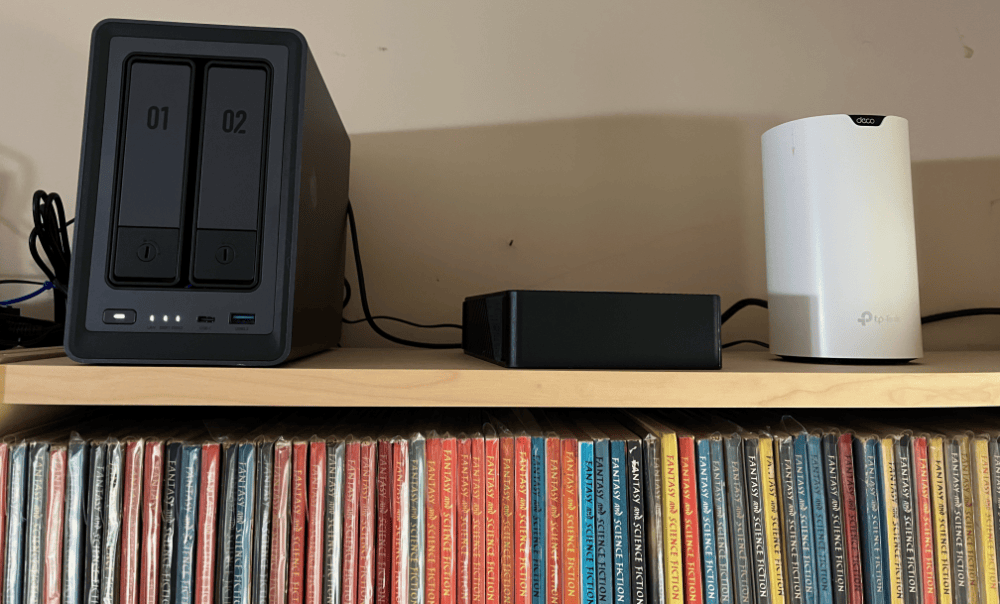
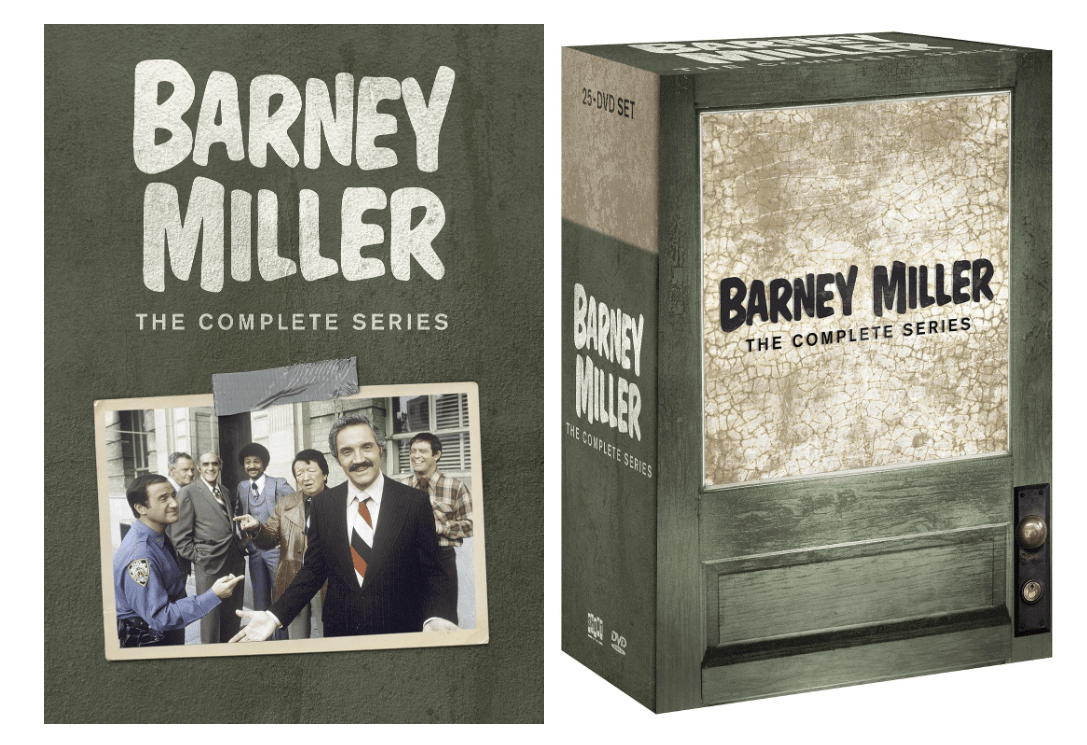
The lesson here is to be leery of great deals on eBay when buying complete TV series on DVDs sold as new. I noticed the DVD set I got was the 2011 edition – the one pictured on the right above, with the door. Amazon still sells that edition, but it ships from a 3rd party. Amazon also sells and ships a 2019 edition, the one pictured on the right. Both are $40. Even buying from Amazon might get you a bootleg if it’s from a 3rd party.l

I’m curious: if I had spent the extra $8 and bought the newer set, the one sold by Amazon. Is it legit and recorded on dual-layer DVDs? If anyone bought that set from Amazon and uses MakeMKV, let me know.

I really enjoy great picture quality. I hate to think Barney Miller could be sharper.

Checking some recent buys:

  • Barney Miller – Single-layer (eBay)
  • Downton Abbey – Dual-layer (Amazon)
  • Quantum Leap – Dual-layer (eBay)
  • Hazel – Single-layer (eBay)
  • The Loner – Dual-layer (Amazon)
  • Frasier – Dual-layer (Amazon)
  • MASH – Dual-layer (Amazon)

I guess I need to stick with Amazon. Two out of three sets from eBay were probably bootlegs. However, they were from sellers who had multiple copies to sell, all labeled new. Individuals selling “used” copies might be safe.

I’ve also seen people online say they are willing to buy bootlegs if no one else is selling the series. That might be true for me too. I’d love to find the second season of Mr. Kovak.

I still wish the publishers of old TV shows would sell them as digital files. See my essay about this. Messing with discs is a pain.

JWH

Could UGreen Create a NAS/Media Server That People With No Tech Skills Could Use?

by James Wallace Harris, 9/12/26

The other day, my wife told me her friends wanted a Jellyfin server like ours. I was surprised by this. I asked why. Susan said she told them how she watched TV, and they wanted to do the same thing. I had to explain that my UGREEN NAS DXP2800 cost $300, and two Seagate IronWolf 12TB drives cost $800. Plus, it was very difficult to set up.

That ended the discussion.

I should have told her that any computer could be a Jellyfin server as long as it had the space to store files and had a DVD/BD player to rip discs with the free MakeMKV. That’s zero cost. But I doubt they even had the technical know-how to go with that low-ball route.

And even if they could set up a Jellyfin server, it’s not practical unless you have a bunch of old DVDs lying around. We have an IKEA bookcase, shelved two-deep with DVDs and Blu-ray discs.

Jellyfin is best for people who like to own their own content. Jellyfin is a pain to set up on a NAS, but somewhat easy on a local computer. For day-to-day use, it’s far more convenient than using a DVD/BD player.

I initially bought my Jellyfin setup to save money. Susan likes to watch the same old TV shows over and over while sewing. We were subscribing to Netflix, Hulu, Paramount, HBO, Amazon, and Apple just so Susan could watch about a dozen old TV series.

We already owned several of them on DVD, but she hates messing with the DVD player. I told Susan I could buy the others, set up the server so watching was as convenient as using Netflix, and we could cancel all those subscriptions. Which we did.

Susan was skeptical at first. And she thought using the streaming services was nicer than using Jellyfin, but she’s since adapted and is happy. I’ve already paid for the NAS and drives.

The UGREEN DXP2800 turned out to be even more useful for me. I cancelled Dropbox. Now all my computers use the NAS for file services. But I also set up YACReader Server. That gives me a library to manage my digital books and magazines. My digital library is available from my computers, tablets, and iPhone. That’s a lot of utility. Unfortunately, it’s not practical for the average user.

Yesterday, I started ripping my CDs to FLAC and turned on DLNA on the NAS. I can now play my CDs from my WiiM stereo systems, iPhone, or computers.

We can play movies, TV shows, audiobooks, ebooks, and music from any device. All of this made having the NAS big fun.

But this got me thinking. What would it take for Susan’s friends to have the same functionality without any technical hassle? Ripping DVDs, BDs, and CDs is a lot of work. Often it’s annoying because of frequent problems.

Could UGREEN create an all-in-one box that rips discs and also functions as a media player? Ripping discs is finicky. I have three different drives for two computers, using five different programs. If one drive and program refuse to rip a disc, I try another program or drive. UGREEN would need bulletproof software to sell such a user-friendly consumer product.

Would it be legal to ship it preconfigured with Jellyfin and YACReader? UGREEN has its own software that serves various kinds of media, but it isn’t very good. They also need a program like dBpoweramp. Plus, ripping discs is a legal gray area.

Over the years, I’ve bought some complete TV series on Amazon – the kind that Amazon maintains for me to stream when I want. I only bought from them when they were a good buy. Most of the time, buying a digital copy of a complete TV series on Amazon is more expensive than buying the complete series on DVD or Blu-ray. That’s really ridiculous.

For example, Barney Miller is $40 for the DVD set, but each season is $15 for the digital edition. That show has eight seasons, so $120 for the complete series. Plus, Amazon doesn’t sell all eight seasons.

But using Amazon would save people the expense of buying and maintaining a media server. If Amazon sold all eight digital seasons of Barney Miller for $40 for perpetual use, it would be a better deal. No ripping, no server, and no backup.

However, many people believe buying digital copies is renting because someday the company managing that content will go under or decide to quit supplying the service. Amazon is not likely to go bankrupt. If Amazon, or another company, can be trusted, this would be the solution for Susan’s friends. It would actually be my choice too.

Maintaining a server, worrying about backups, and ripping discs is a pain.

I don’t like the current streaming model for TV and movies. Too many subscriptions to cover all the shows we want available. And more and more, many TV shows aren’t available to stream.

A New Paradigm

What if Amazon, or other companies, sold us digital content – movies, TV shows, music, ebooks – but instead of solely relying on them to always provide that content, they would also allow us to download the content to our own servers?

This would feel like owning – not renting. Amazon would be the backup for when we need to reinstall the content. Sure, some people want something physical to hold, but once I rip my content, the boxes of discs are stuffed into a bookcase I never look at.

If you don’t want to run a server, just let Amazon stream it.

There’s a growing backlash to subscriptions. I know corporations love subscriptions, but people don’t. I hate when I’m subscribed to Netflix and realize I haven’t used it in months. Netflix has a pause policy, but the pauses are limited. I’m about to cancel Netflix because I can’t pause as long as I want.

I hate messing with discs. And I don’t want to steal stuff off the internet. Companies should be able to sell digital content cheaper than manufacturing discs, boxes, and shipping. I’d feel like I owned what I bought. UGREEN and other companies could make servers for those people who aren’t skilled enough technically to set them up and maintain them, but I doubt they will

Most people should just stick with stream subscription services. But for those people who don’t like renting their content, we’d love a new paradigm that feels like owning. I do feel like I own my Kindle and Audible books even if it’s an illusion. I have thousands in my libraries.

Amazon offers a limited form of this for movies and TV shows, but their current pricing is too much. And I like buying complete series. For example, I’d like to own The Big Bang Theory. Currently, it’s $73 for 37 discs. That’s more than I’m willing to pay. The same box, listed as new, is $42 on eBay. The company that sells The Big Bang Theory should be able to sell a digital version for $35 and make the same profit.

However, even the $73 price isn’t bad compared to HBO, where it currently streams. We typically watch 1 episode a night when we’re going through a complete series. 279 episodes is almost 10 months of HBO. That’s $185.00 at the current subscription price. Since we seldom watch movies, we’d need to watch several TV series while subscribing to HBO to make it cost-effective. That just doesn’t happen.

Susan and I watch a single drama and two sitcoms each night. We hardly ever find all three on one streaming service. Considering the math above, you see why it’s cheaper for us to buy complete series on DVD. We also tend to rewatch old favorites, so the overall cost is further reduced.

We’re currently watching Lark Rise to Candleford on BritBox. It’s 40 episodes. That’s costing me $26 for two months of subscribing. I should have bought it for $21 on eBay. Especially if Susan wants to see it again. I was just being lazy that night.

As viewers balk at the subscription model, I hope corporations offer other sales models. The subscription model is great if you don’t worry about money and love convenience. But times are getting weird when it requires a spreadsheet to keep up with all the subscriptions we sign up for.

I don’t want to go back to an all-analog world again. But a digital-owned model might work.

JWH

The above photo is my UGREEN NAS sitting on top of a bookcase. Beside it is a portable drive used for a backup.
DVDs vs. Streaming vs. Plex/Jellyfin

by James Wallace Harris, 1/24/26

I don’t know if you are old enough to remember videotapes, but they were a marvel for the time. Before that, the only way to see a particular movie or TV show was to wait for it to be broadcast. Sometimes, you’d wait years to catch one specific film or rerun of a TV show. After VHS tapes, you could go to the video store and buy or rent whatever you wanted to see.

Eventually, DVDs and Blu-ray discs replaced VHS tapes. Progress was always toward building personal libraries of favorite films and TV shows with higher quality playback resolution.

Then came Netflix DVD rentals. That allowed access to any film or TV show within a day or two. That was so damn convenient that owning DVDs became less popular. After that came Netflix streaming, which made access to favorite shows instant. Who needed to own anything?

Nothing stays the same. If Netflix had never gotten any competitors, I think I would have been content forever. It was like Spotify, one monthly payment for everything.

Now our favorite movies and TV shows are spread over many streaming services, but some shows are nowhere to be streamed. In some cases, I can rent what I want to see individually from Amazon, but with other shows, I have to buy them on DVD or Blu-ray. And for a few shows, they aren’t available for sale or rent.

Over the past thirty years, Susan and I have amassed quite a library of movies and television shows on DVD/BD. But for years, they have been sitting on an out-of-the-way bookshelf. Several years ago, I gave several bags of DVDs to the Friends of the Library when Marie Kondo became popular. However, I kept a couple of hundred that still sparked joy when I held them.

Last fall, I got disgusted with streaming services. We were subscribed to several. They kept raising their prices. And what I wanted to see kept jumping from one service to another. And HBO jettisoned many of its classic shows.

I bought a NAS, set up Jellyfin, and started ripping our library to MP4 and MKV. I’ve been working for weeks, and I’m only halfway through our discs.

It’s a lot of work ripping discs. And it’s frustrating because sometimes neither MakeMKV nor WinX DVD Ripper can read an old disc. I own the complete series of The Twilight Zone on Blu-ray, but MakeMKV couldn’t read one disc, and one episode from another. Nor could either program rip my copy of the theatrical release of Blade Runner from a DVD set that had four different versions of the movie. I also failed to copy one episode of MASH out of 251. That’s annoying.

Setting up Jellyfin on a NAS was not easy. A NAS with RAID drives and two external drives for backups was expensive. It’s quite a commitment to set up your own streaming service on Plex or Jellyfin.

I’m not sure it is worth it. Once the content is ripped, watching movies and TV shows on Jellyfin is much more convenient than watching them on disc. And Susan and I have started using our video library again. That does feel good.

Once ripping is done, Jellyfin is very nice. But to be perfectly honest, watching the same shows on Netflix, HBO, Apple, Hulu, Paramount+, etc. is a bit more convenient, and the picture quality is a touch better. Jellyfin is still plenty good enough.

Personally, I’d be happy to cancel all our streaming services and just watch what we own, but Susan wants to keep all her favorite streaming services. Susan loves watching all her favorite TV shows over and over again while she cross-stitches. There are about a dozen of them spread over five streaming services. I’ve bought the complete series of several of them on DVD and ripped them to my Jellyfin server.

I will subscribe to a streaming service to see a new TV series. For example, I’m subscribing to Paramount+, so my friends and I can watch Landman season 2. Before that, I subscribed to MGM+ so Annie and I could watch Earth Abides. And I resubscribed to Apple+ so Susan and I could watch Pluibus. And before that, I subscribed to Britbox to watch The House of Eliot.

Right now, Susan and I are watching The Fugitive and Mr. Novak at night on Jellyfin. Neither is available to stream. In other words, to watch shows unavailable on regular streaming, we have to buy the discs and use Jellyfin.

I roughly estimate that Jellyfin costs me $25 a month, assuming my NAS setup lasts at least five years, and includes the cost of buying DVDs occasionally. We currently spend $50-60 a month on streaming services.

Unless we cancel half of our subscriptions, Jellyfin isn’t saving us any money. It does make our 30-year investment in DVDs pay dividends again. However, many of the movies and TV shows in our library are available on streaming services. It’s hard to make a case for Jellyfin. Life would be simpler without ripping discs, maintaining a NAS server, backing up, etc. Also, our house would be less cluttered without all these discs.

Going the Plex/Jellyfin route only makes sense if you only watch what you own. And that tends to be old favorites. If you love seeing the latest films and shows, Jellyfin isn’t practical.

Knowing what I know now, I would have given all my old discs to the Friends of the Library and my DVD and Blu-ray players to Goodwill. The Fugitive and Mr. Novak have their nostalgic appeal for 1963, but there are many other worthy new shows to watch in 2026.

JWH

The Emerging Mindset of Not Owning Movies

by James Wallace Harris, May 5, 2023

Ideas for this essay began when my Blu-ray player died. I got on Amazon to buy a new one, and then I asked myself: When was the last time I viewed a movie or TV show from a disc? When was the last time I bought one? I went and looked through our bookcase which has five shelves of DVDs and Blu-rays. Most have not been played in years, and some have never been played or even opened. I bought them because wanted to own them.

I realized that owning movies has a mindset. I’m trying to decide if I need to change that mindset.

This essay isn’t aimed at film fans who actually collect movies with a purpose. Nor is it about minimalism and getting rid of stuff. What I’m talking about is how buying movies changed us. We had one pop culture mindset before VHS tapes and DVDs, another afterward, and an even newer mindset is emerging with streaming. And those mindsets say something about our individual psychology.

Before the advent of the VCR, the main way to see a movie was when it was at the theater or rerun on television. If you wanted to see a specific film you might have to wait years. I used to go to science fiction conventions and one of their highlights was the film room where they’d run classic science fiction movies all weekend. There were also film clubs and festivals, but those were for serious film buffs. And a few people, usually rich ones, collected movies on film.

For the most part, people didn’t own movies and they had a mindset about how they watched movies. Starting in the 1980s, the VCR became popular. This created two industries – selling movies on tape, and tape rental stores. That’s when people really got into owning their favorite films and a new mindset emerged.

It changed society. Not everyone collected movies, but it was pretty common. Then came the DVD and it caused even more people to want to own movies. Most people just rented films and Blockbuster became part of popular culture too. Still, a fair percentage of people wanted to own movies.

Now we have streaming. Streaming has killed the movie rental store. A few still exist, but that way of life is now dead. And I think a lot of people have stopped buying movies on DVDs, Blu-ray, and 4k. Diehard fans still collect, but ordinary people have stopped.

Susan and I bought a lot of films on DVD and Blu-ray over the years. A few years ago we gave bags of them away to friends and the library. But we kept one bookcase of our favorites. Now I’m wondering if we even need to keep those.

Whenever I want to see a specific movie I can usually find it streaming on one of the subscriptions I already own, or on one of the free streaming services that use ads. Or I’ll rent it on Amazon. And if JustWatch can’t locate what I want, I’ll check YouTube, and pretty often, those forgotten films are usually there. It’s extremely rare that I can’t find a movie on the net.

For decades I believed if I really wanted to see a movie that wasn’t easily available I had to buy it. And it annoyed me when there was something I wanted to see and it wasn’t streaming or for sale. There’s a psychological component to that, maybe not a good one.

For the past few years, the only time I bought a movie or TV show on DVD/BD was because I couldn’t get it anywhere else. And most of those shows were oddities that I could have easily gone without seeing. Still, it’s weird of me to go to such lengths to acquire something I wanted on a whim.

But I’m also thinking about something else. Why do I feel I should see a specific film or television show when I want to? It’s because, in the 1980s and 1990s, we took on the mindset we could own movies and television shows. Previously, the mindset was movies and television shows were ephemeral. That fate would present us with what we needed to see. Owning is a mindset that says we can control reality.

Streaming presents a new mindset. What is the new mindset it creates? Is it one of a library in the cloud? A universal library? Well, actually, it’s a bunch of libraries in the cloud with different fees and requirements to use them. For music, I depend on Spotify, it is an almost universal library of songs and albums. Subscribing to a combination of three to six subscription services like Netflix, HBO Max, Apple TV, Hulu, etc. will get you a library of thousands of movies and television shows. Apple News+ gets me access to hundreds of magazines. Scribd and Kindle Unlimited get me access to countless books and audiobooks.

The trouble with this new mindset is you have to maintain lots of subscriptions. Subscribing to a bunch of services gives the illusion of owning a giant library. And I think that’s why I subscribe to so many services. It gives me the illusion I own all these movies, television shows, albums, books, audiobooks, etc. But do I even need to feel like I own a library?

I do have some friends who have tremendous discipline and only subscribe to one movie/TV streaming service at a time. Their mindset is different. My mindset is to pretend I own the Library of Congress. Their mindset is to enjoy everything at a branch library before switching to another branch library.

But I’ve been thinking about the mindset I had back in the 1960s when I watched movies and TV shows based mostly on serendipity. Back then, when I wanted to see a movie, we looked at the movie section in the paper and picked out something to see. Or we turned on the TV when we wanted to watch TV and flipped through the channels till we settled on something. I didn’t try to find something very specific or seek the very best of the best of all time. I had a small selection and picked whatever struck my mood at the moment. I didn’t read reviews, check ratings, or study books. I accepted what reality offered.

In 2023 I usually have a target in mind and go looking for it. I’d read about what others are watching and recommending, and decide that’s what I want to see. My friend Linda recommended The Diplomat, and I rejoined Netflix to watch it. It’s not like I didn’t already have thousands of shows and films to see on Prime, Hulu, BritBox, AppleTV, and Peacock.

Susan hates when we have company and we all decide to watch a movie together. The act of deciding what to watch drives her up the walls. And often our guests get frustrated too because there are so many choices and we’ve all developed highly individual tastes. Back in the old days, people were more willing to watch whatever was on with each other. Owning movies I think changed us all.

We all became aficionados of exactly what we loved. We all conditioned ourselves to seek out movies that pushed our own unique emotional buttons. We moved away from going with the flow. Owning movies changed us. It conditioned us to specialize and be picky. It made us want to watch exactly what we wanted to watch.

Oh, I’m sure millions of people subscribe to Netflix and when they want to watch something click it on and then scroll around until they find something to watch. They never got conditioned to seek something specific. I did. I didn’t collect to complete a collection. I bought movies because I wanted to be able to watch what I wanted when I wanted. Streaming does a better job of getting me what I want, when I want, without owning it.

However, I’m now asking myself is that good? What if the mindset we had back in the 1960s was actually better for us psychologically? Both owning and streaming fulfill our desire to control reality. What if going with the flow isn’t a better way? That would be more like Eastern philosophy.

I am not a hoarder, not as people see them on TV. But when it comes to books and movies, I guess I was. Owning a library of anything is a kind of specialized hoarding. There’s a psychology behind that. I’m wondering if late in life, at 71, I shouldn’t alter that psychology.

JWH