What Will Be the Pivotal Issues in 2026 and 2028?

by James Wallace Harris, 7/2/25

Peter Leyden claims that America undergoes 80-year cycles, which he calls epochs, with peaks of upheaval that last 25 years. The past peak was after World War II, from 1945 to 1970. Leyden claims we’re entering a new peak in 2025 that should last until 2050. He zeroes in on artificial intelligence, clean energy, and bioengineering as the driving forces. I’m not big on predicting the future or seeing patterns in history, but there are ideas in his theory that are worth contemplating. I do believe we’re living through a historic period of change.

David Brooks claims America is moving away from thinking of itself as an idea that inspires the world to a homeland that we should defend. Brooks has moved away from being a traditional conservative to becoming a spiritual guru who teaches morality. I find all his recent speeches to be both uplifting and inspirational. Brooks feels the changes we are experiencing are undermining our individual characters and altering our collective national character.

CBS News asks if we’re moving into a new Gilded Age. But this time, the oligarchs are far richer and much more powerful. There is a synergy between this documentary and the videos of David Brooks and Peter Leyden. Everyone feels a massive paradigm shift coming. In 2025, I believe we’re living through the largest social and political upheaval since 1968.

If history does go through cycles, can we alter their course? The average person does not have much power. But in 2026, we do get to vote, and again in 2028. I believe the Democrats lost in 2024 because they had no clear vision. Being against Trump is not a political plan. In 2024, the Americans voted for Darwinian rule. Let the strong thrive and the weak die. The current administration is enacting laws to make the rich richer and the poor poorer. Essentially, civilization on the cheap. They appeal to greed. They appeal to resentment. They believe everyone should be responsible only for themselves.

It’s a very Darwinian philosophy. There’s no way we could call America a Christian Nation anymore. This is what America wanted through a fair and square election. But now that they are seeing what it means, do they want to keep it?

I don’t think we should wait until 2026 or 2028 to decide what we want. The Republicans won by clearly defining their goals in 2024. Democrats need to produce their own version of Project 2025. Project 2028 needs to be specific, and all Democrats need to support it. It can’t be too radical. It will need to be liberal yet practical. It needs to appeal to independents and old-style conservatives.

I have no idea what that plan should be, but I wish it would be something David Brooks would back. It needs a moral foundation because, as much as I accept the scientific theories of Darwin, I don’t think survival-of-the-fittest makes for an appealing political philosophy.

JWH
Paradise Lost – What if Our World is Heaven?

by James Wallace Harris, 6/15/25

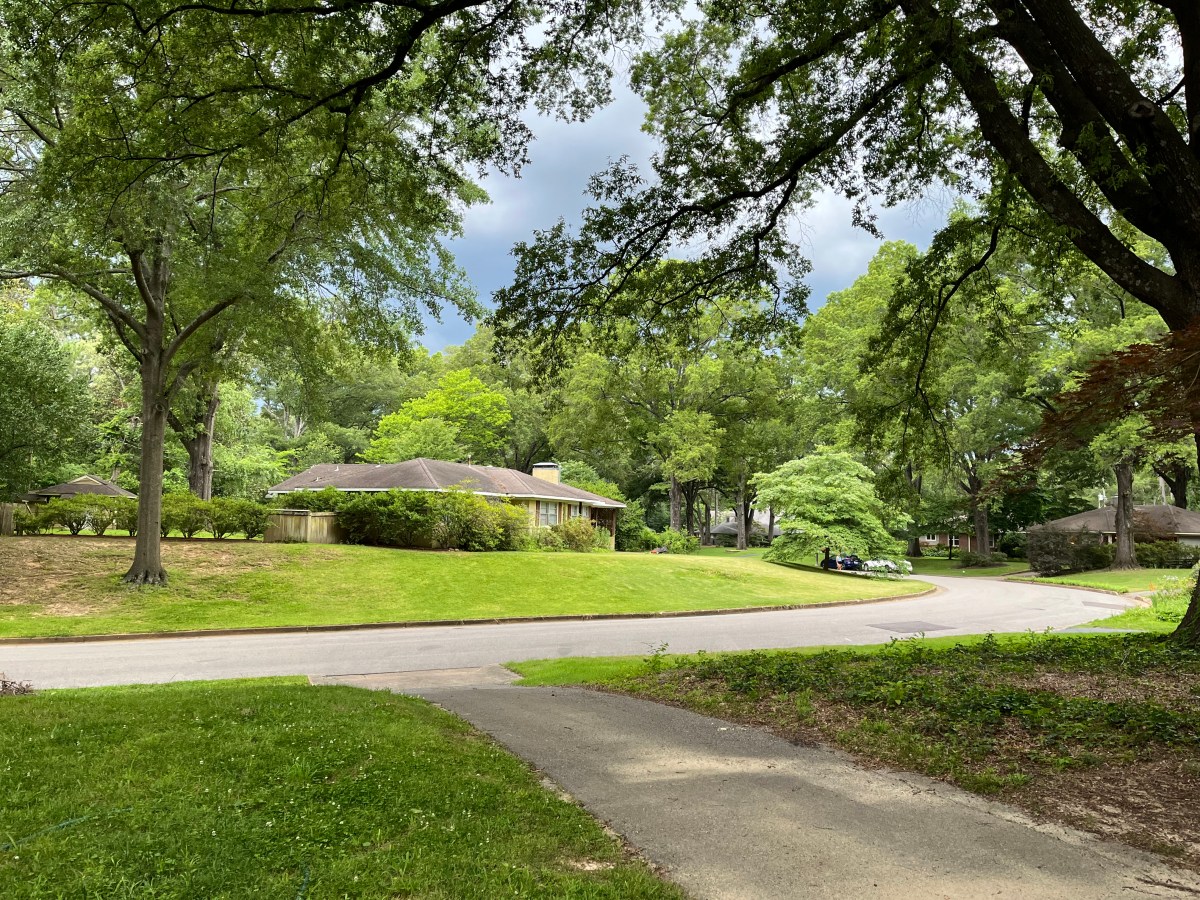
If I ignore the depressing news on my screens, I can step out of my front door and view a beautiful world. Looking at the photo above, do you see heaven or hell? We seldom consider Earth a paradise, but we all experience moments of beauty and serenity, as well as moments of pain and suffering. We spend our lives avoiding the one and seeking the other.

For most of my life, I felt like I was climbing a hill towards my dreams, but now, in my seventies, it feels like I’m sliding down that hill. I wonder if I’ve been chasing fantasies while ignoring reality. There is a book of conversations with Philip K. Dick called What If Our World Is Their Heaven? I’ve often wondered if we were living in heaven and didn’t know it, or worse, what if we were living in heaven and were turning it into hell.

Over the last several years, theories have been proposed that our universe is an artificial reality. I’ve always objected to that idea, but it asks a fascinating philosophical question: If we’re living in a synthetic reality, did we choose to be in it? Why would we want to experience so much pain and suffering?

I’ve always believed our existence is a Darwinian reality where everything happens due to randomness. If I believed in God, I would have to ask: Why do you make us suffer?

Hinduism and the concept of reincarnation also suggest something interesting. That belief system claims we are souls coming to this reality to evolve, and suffering is a teaching tool.

Whether we are here by accident or choice, it still leaves the question: Why do we suffer? If our pains are due to the luck of the draw, how do we make the best of a bad situation? If we’re in some kind of cosmic classroom, what are we supposed to learn? And if we’re a participant in a monstrous computer game, how do we win?

Is it delusion to think our place in the universe is anything other than an accident?

Because an algorithm observed me read one story on coping with life in my seventies, they have sent me many more. I’ve seen list after list of the personality traits of those who survive well and those who don’t. I can’t help but wonder if there is a correlation between belief and how we survive.

Do people who believe life has no purpose succumb quicker than those who think we do? And even if we accept that we’re living a Darwinian existence, aren’t there two approaches to that, too? Isn’t existentialism a positive choice over naturalism or fatalism?

Even people of rock-solid faith die horrible deaths. Few people escape this world without suffering. If suffering is so integral to existence, what is its purpose?

JWH

I Can’t Believe the Most Essential Aspect of Sexual Reproduction and Gender Has Gone Unnoticed Until Now

by James Wallace Harris, 4/29/25

I suppose because humans have always reproduced like bunnies, we’ve always ignored an essential aspect of sexual reproduction and gender. Statistically, we need every female to have more than two children. Because some women can’t have children, and because some girls die before reaching reproductive age, to keep the population steady during current conditions requires 2,100 babies to be born to every 1,000 women. That number varies depending on the state of medicine and the number of catastrophes.

In 2024, 1,626 babies were born to every 1,000 women in the United States. That’s not enough. If we continued at that rate, we’d eventually become extinct. In many other countries, that number is much smaller than 1,626.

Why aren’t these statistics common knowledge? Why didn’t we learn them when our parents (or peers) taught us about sex? It’s a heavy responsibility to know that we should all have children. My wife and I didn’t have children. Most of my friends didn’t have children. Why did we all start doing our own thing and forget this essential aspect of life?

It’s unfair that the burden of maintaining the species falls on women. To maintain the current population, every woman needs to have two children, and one in ten needs to have three. That’s assuming all women can have children. The practical need is for all women to have three children. Few women want that today.

Males don’t escape responsibility either. The species could get by with fewer males for making babies, but we need males to support the raising of children. I suppose a feminist utopia could get by with an exceedingly small number of males, or even none if women perfected cloning, but the statistics of maintaining the species are the same even if males weren’t needed.

However, we have evolved into a society/culture that doesn’t want enough children. What does that mean? Should we make people have more babies?

I wrote about this yesterday. However, the impact of these numbers didn’t hit me until 3:11 am last night.

For humanity to survive, we must deal with climate change, environmental sustainability, capitalism, inequality in all forms, artificial intelligence, and reproductive stability.

Theoretically, we could solve all these problems, but I doubt we will. The obvious solution is that civilization will collapse, and we’ll fall back into previous kinds of social organizations. It’s a fascinating challenge to imagine a society that can solve all these problems. However, can you imagine any future where all fertile women must have three children, and all men must become dedicated fathers? I can’t.

The human race needs to act radically differently. Is that possible?

JWH

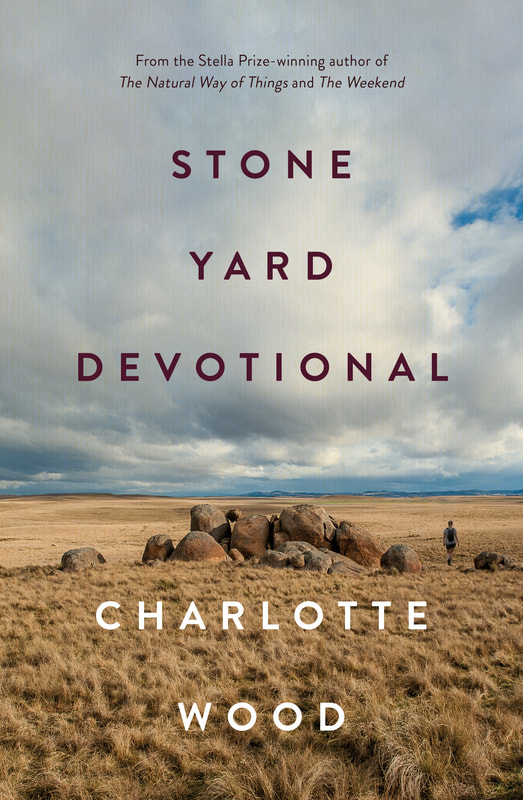
STONE YARD DEVOTIONAL by Charlotte Wood

by James Wallace Harris, 4/12/25

Stone Yard Devotional is about how reality puts the peddle to the metal when life gets all too real. Stone Yard Devotional reads like a memoir, a diary, but it’s classified as a novel. The book was nominated for several awards.

The entire time I was listening to this book I wondered if Charlotte Wood was the unnamed narrator, however after reading “‘The shock was so deep’: Novelist Charlotte Wood on the experience that changed everything” in the Syndney Herald, I realized the novel was only inspired by her own life. Wood and her two sisters were being treated for breast cancer, while she was contemplating mortality and drafting this book.

I have no memory of how I discovered Stone Yard Devotional by Charlotte Wood. The cover and title intrigued me for sure. Maybe it was because it was shortlisted for the 2024 Booker Prize. The audiobook was part of my Spotify subscription, so I gave it a try, and I’m glad I did. It’s not the kind of book I normally read, but it’s wonderful to read if you’re getting old.

The story begins with the Covid pandemic. The narrator separates from her husband, ghosts her friends, and hides out in a guest house of a religious order, even though she is nonreligious. She wants to be alone. But after her initial stay, she returns to the order to live with the nuns. I was never sure if she joined the order or not. I have often thought the monastic life has certain appeals.

The story is about the narrator’s observations while living a contemplative life. These include the death of her mother, the remembrance of childhood, studying the nuns, working in the garden and kitchen, and the guilt of living with a woman she and her classmates horribly bullied as a child. The narrative is simple, like meditation.

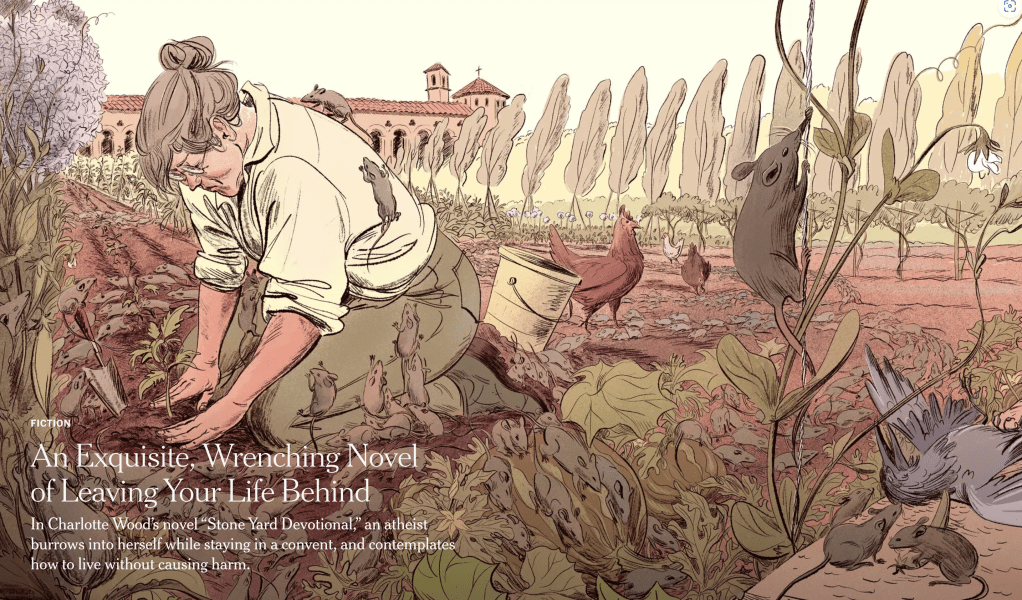
The setting is Australia, which is exotic to me. As a kid I wanted to live in Australia. Over the course of the novel, there is a plague of mice that invade the convent. The mice are so numerous that they cover the roads in gray fur. At first, I thought Wood added this element to give her tale some excitement, but I researched and found that her part of Australia they did have a mice plague of Biblical proportions in 2021.

That made life in the convent extremely inconvenient. The mice ate electrical insulation, throwing daily living in the convent back to the 19th century. The illustration for the book’s review at The New York Times might have been another reason I read this book.

Much of what the unnamed narrator contemplates throughout the novel is what everyone thinks about as they get older. The fear of declining health and death, the regrets, the desires for wanting to have done things different, the desires to connect with others while also wanting to pull away, the changes we see in ourselves and others, the appeal of nature and living simple. Wood’s story explores all of that and more, triggering the reader to think about their lives.

Charlotte Wood was born in 1965, so she’s fourteen years younger than me. However, her battle with cancer has likely aged her perception on life. At 73, I’ve been thinking about the things in this novel for years. But I don’t know if everyone who collects social security meditates on these issues. Stone Yard Devotional is a great title for this novel. Even though the narrator said she was an atheist at the beginning of this story, getting old and dealing with people who die, pushes you to be spiritual even without a belief in God.

JWH

The Limits of Memory

by James Wallace Harris, 3/3/25

It annoys me more and more that I can’t recall names and nouns. I don’t worry yet that it’s dementia because most of my friends have the same problem. But I’ve been thinking about my ability to remember and realized that I’ve never been good at remembering things.

I know I have aphantasia, which means I can’t visualize mental images in my head. I wonder if there’s a connection between not visualizing images and poor memory? People with astounding memory often use mental images as mnemonics.

The ability to remember is on a spectrum. On one end of this range, are rare individuals with photographic memories, while at the other end, are a tiny group with no short-term memories.

My new theory. One possible reason I have poor memory is my education. More precisely, how my personality approached learning as a kid. I considered K-12 a thirteen-year prison sentence. I paid just enough attention to pass tests. I mostly got Cs and Bs, with a rare A and D. I remembered things just long enough to pass a test.

I was never motivated to remember for the long haul.

I do like to learn. I’ve read thousands of books. Of course, most of them have been science fiction, but I also love nonfiction. However, information leaves me as fast as I consume it.

I’m starting to wonder if I would have a better memory if I had developed a different approach to school and learning. Primary and secondary education aim to give kids a well-rounded education. And in college, over half the courses are required.

The idea is we should learn as much as possible about the world. Is that a valid approach? After school and college, we specialize in whatever our work requires, and become selective about what we study for fun. Those subjects are what we remember best.

Reality is too big to know everything. What we need to learn is how to coexist with reality. We need the knowledge to fit in and survive. Would knowing more about fewer subjects help? Or would memorizing the deep dynamics of how things work better yet?

I do believe the more we know, the wiser we are. But there are limits to what we can understand and memorize.

I’m currently reading Nexus by Yuval Noah Harari. In chapter 2, Harari shows how fiction drives our societies, not truth. We live by stories we want to believe. It’s much easier to vaguely understand fiction than to learn the details of reality. For example, more people accept The Bible than biology. That suggests a natural tendency to minimize how much we know.

That would be okay if the Earth were sparsely populated. But we live in dense, complex societies racing at the speed of computer networks and artificial intelligence. Living by fiction is fine if the year is 500 BCE, but we live in 2025. CE.

Let me give one example of what I mean by learning less to know more. I’ve been reading American history books to understand how our society got to now. That gives me a certain level of wisdom about our problems. However, I’m also reading about French history, especially the French Revolution and 19th century history. Seeing the parallels ups my level of understanding. But do I need to read the history of every country now and then? What I see is common dynamics. Reading more histories will give me more examples of the same dynamics.

The same is true of religion. I like studying the history of the Bible. I’ve also studied Buddhism and Hinduism. As I do, I see common dynamics at work. Harari’s new book Nexus points out the common dynamics of society and history.

The educational philosophy I experienced growing up pushed me to memorize a million details. What I needed to understand and remember is the fewer dynamics of reality.

People like to live by fiction because it’s easier. Politics is currently overwhelmed by fiction. Read Nexus to understand why I say that. The question we have to answer is if we can reject fiction.

Real information is seeing patterns in reality. Wisdom is seeing patterns in the patterns. The only real cognitive tool we’ve ever developed to understand reality is science. However, it’s statistical, and hard to learn and understand. We live in a time of simplex thinking. People see or are told about one pattern and they accept that as a complete explanation of reality. All too often, that pattern is based on a cherished story.

We can’t live by memes alone. Nor can we live by infinite piles of memorized details. The only way to understand is to observe consistent patterns. But it has to be more than two or three. That can lead to delusions. Even anecdotal evidence of ten occurrences could still deceive. How can this lead to learning more from less? It’s a paradox.

Last year, I read a three-volume world history. It provided hundreds of examples of strong man rule over thousands. of years. But how many kids, or citizens can we get to read a three-volume world history? Would a listing of these leaders, including the wars they started, and the numbers of people who died because of their leadership be just as effective? Would all the common traits they shared help too? Such as wanting to acquire more territory, or appeals to nationalism?

Could we create a better educational system with infographics and statistics? I don’t know. I do know I tried to process too much information. I also know that I only vaguely remember things. Memory has limits. As does wisdom.

JWH