Reading With a Purpose

by James Wallace Harris, 11/12/25

I used to keep up with the world by watching NBC Nightly News with Lester Holt, reading The New York Times on my iPhone, and bingeing YouTube videos. I felt well-informed. That was an illusion.

I then switched to reading The Atlantic, New York Magazine, The New Yorker, and Harper’s Magazine. I focused on the longer articles and developed the habit of reading one significant essay a day. That has taught me how superficial my previous methods were at informing me about what’s going on around the world. Television, the internet, and newspapers were giving me soundbites, while articles provide an education.

However, I still tend to forget this deeper knowledge just as quickly. I don’t like that. I feel like I learn something significant every day. What I’m learning feels heavy and philosophical. However, it drives me nuts that I forget everything so quickly. And I’m not talking about dementia. I think we all forget quickly. Just remember how hard it was to prepare for tests back in school.

I’ve watched dozens of YouTube videos about study methods, and they all show that if you don’t put information to use, it goes away. Use it or lose it. I’ve decided to start reading with a purpose.

At first, I thought I would just save the best articles and refer to them when I wanted to remember. That didn’t work. I quickly forget where I read something. Besides, that approach doesn’t apply any reinforcing methods.

I then thought about writing a blog post for each article. It turns out it takes about a day to do that. And I still forget. I needed something simpler.

I then found Recall AI.
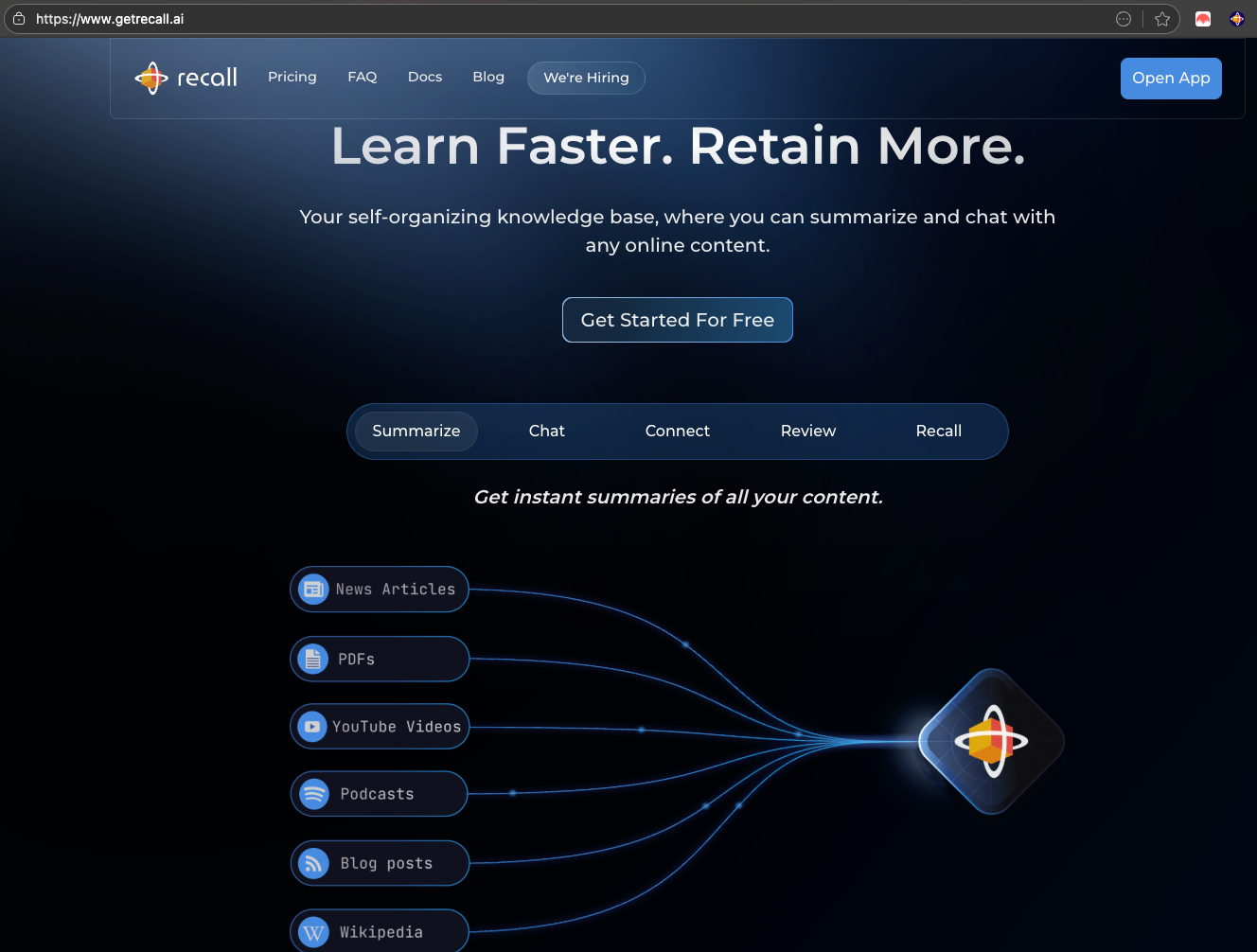
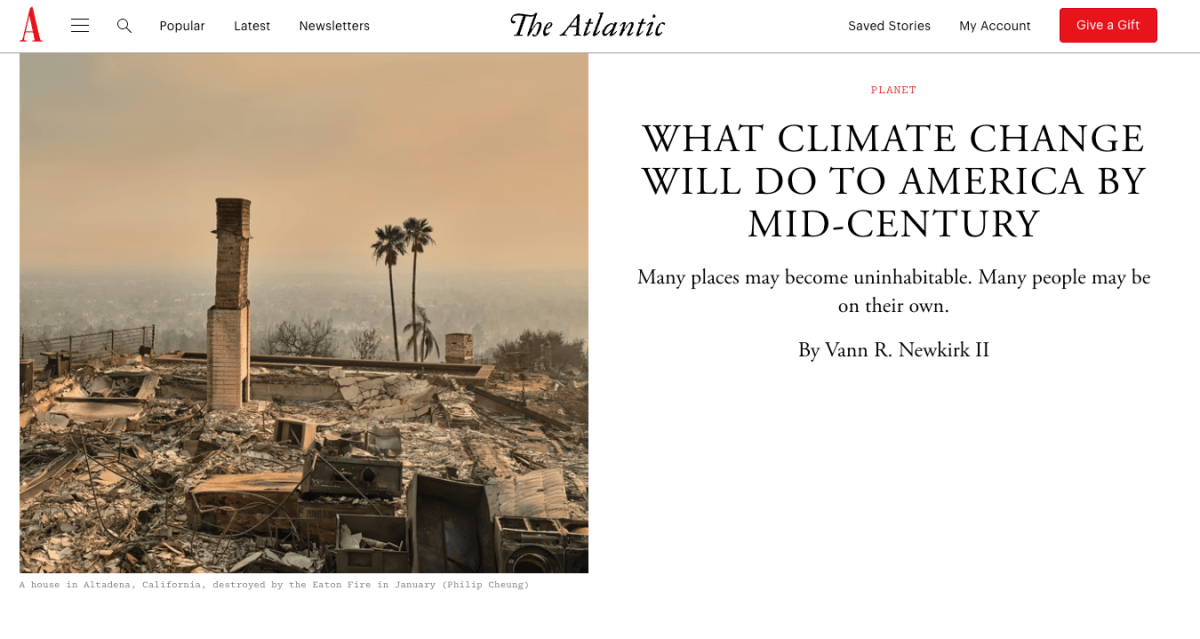
It reads and analyzes whatever webpage you’re on. Providing something like this for today’s article by Vann R. Newkirk II, “What Climate Change Will Do to America by Mid-Century:”
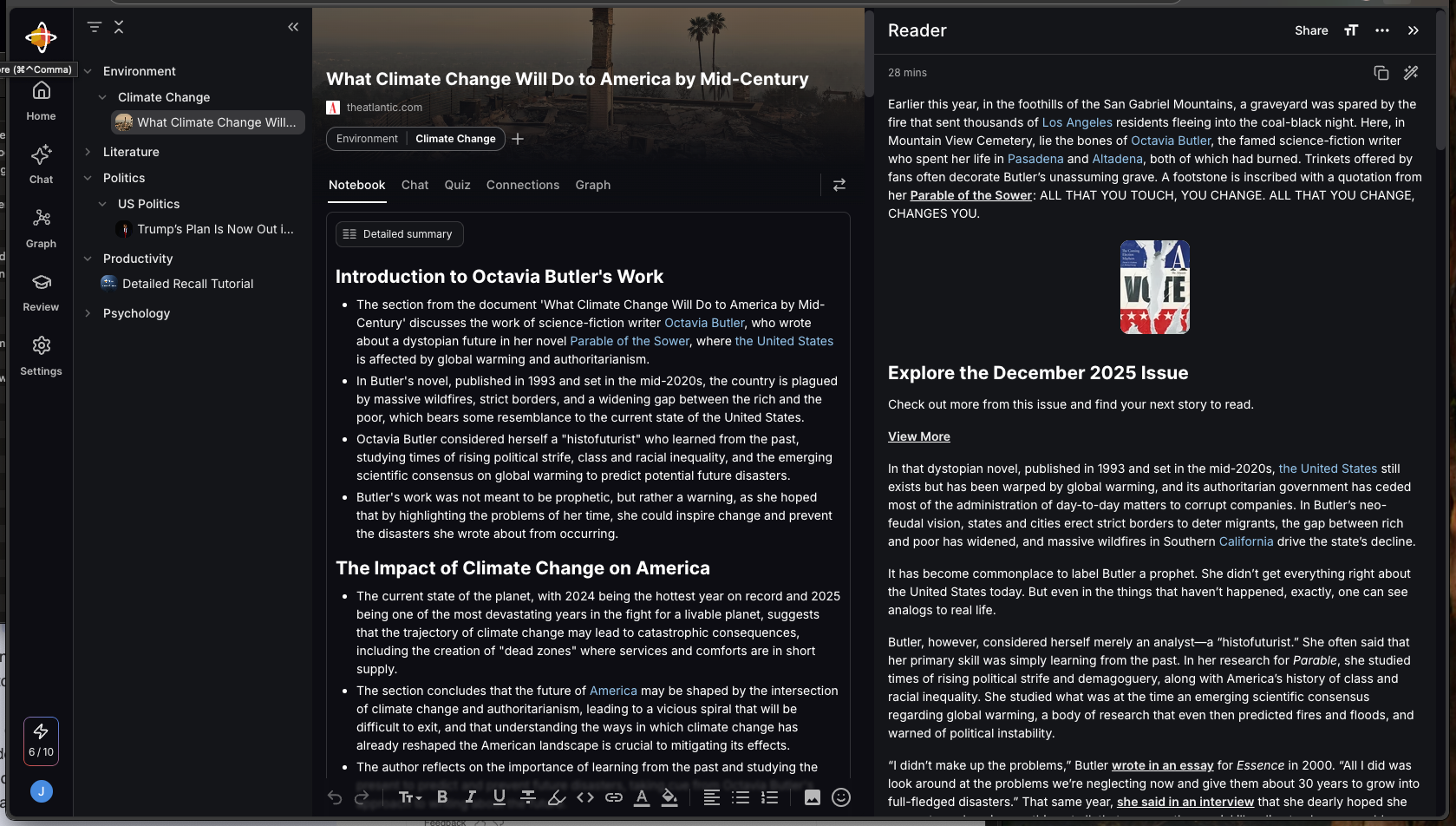
Recall allows me to save this into a structure. But again, this is a lot of work and takes a lot of time. If I were writing an essay or book, this would be a great tool for gathering research.

Recall is also great for understanding what I read. Helpful with quick rereading.

This morning, I got a new idea to try. What if I’m trying to remember too much? What if I narrowed down what I wanted to remember to something specific?

Within today’s article, the author used the term “climate gentrification” referring to neighborhoods being bought up because they were safer from climate change, and thus displacing poor people. The article mentions Liberty City, a poor neighborhood in Miami, with a slightly higher elevation, bought up by developers moving away from low-lying beachfront development.

I think I can remember that concept, climate gentrification. What if I only worked on remembering specific concepts? This got me thinking. I could collect concepts. As my collection grew, I could develop a classification system. A taxonomy of problems that humanity faces. Maybe a Dewey Decimal system of things to know.

I use a note-taking system called Obsidian. It uses hyperlinks to connect your notes, creating relationships between ideas. I could create a vault for collecting concepts. Each time I come across a new concept, I’d enter it into Obsidian, along with a citation where I found it. That might not be too much work.

I picked several phrases I want to remember and study:

  • Climate gentrification
  • Heat islands
  • Climate dead zones
  • Insurance market collapse
  • Climate change acceleration
  • Economic no-go zones
  • Corporate takeover of public services
  • Climate change inequality
  • Histofuturism
  • Sacrifice zones
  • Corporate feudalism

Contemplating this list made me realize that remembering where I read about each concept will take too much work. I have a browser extension, Readwell Reader, that lets me save the content of a web page. I could save every article I want to remember into a folder and then use a program to search for the concept words I remember to find them.

I just did a web search on “climate gentrification” and found it’s already in wide use. I then searched for “corporate feudalism,” and found quite a bit on it too. This suggests I’m onto something. That instead of trying to remember specifically what I read and where, I focus on specific emerging concepts.

Searching on “histofuturism” brought up another article at The Atlantic that references Octavia Butler: “How Octavia Butler Told the Future.” Today’s article by  Vann R. Newkirk II is also built around Octavia Butler. This complicates my plan. It makes me want to research the evolution of the concept, which could be very time-consuming.

The point of focusing on key concepts from my reading is to give my reading purpose that will help me remember. But there might be more to it. Concepts are being identified all the time. And they spread. They really don’t become useful until they enter the vernacular. Until a majority of people use a phrase like “climate gentrification,” the reality it points to isn’t visible.

That realization reinforces my hunch to focus on concepts rather than details in my reading. Maybe reading isn’t about specific facts, but about spreading concepts?

JWH
What Will Be the Pivotal Issues in 2026 and 2028?

by James Wallace Harris, 7/2/25

Peter Leyden claims that America undergoes 80-year cycles, which he calls epochs, with peaks of upheaval that last 25 years. The past peak was after World War II, from 1945 to 1970. Leyden claims we’re entering a new peak in 2025 that should last until 2050. He zeroes in on artificial intelligence, clean energy, and bioengineering as the driving forces. I’m not big on predicting the future or seeing patterns in history, but there are ideas in his theory that are worth contemplating. I do believe we’re living through a historic period of change.

David Brooks claims America is moving away from thinking of itself as an idea that inspires the world to a homeland that we should defend. Brooks has moved away from being a traditional conservative to becoming a spiritual guru who teaches morality. I find all his recent speeches to be both uplifting and inspirational. Brooks feels the changes we are experiencing are undermining our individual characters and altering our collective national character.

CBS News asks if we’re moving into a new Gilded Age. But this time, the oligarchs are far richer and much more powerful. There is a synergy between this documentary and the videos of David Brooks and Peter Leyden. Everyone feels a massive paradigm shift coming. In 2025, I believe we’re living through the largest social and political upheaval since 1968.

If history does go through cycles, can we alter their course? The average person does not have much power. But in 2026, we do get to vote, and again in 2028. I believe the Democrats lost in 2024 because they had no clear vision. Being against Trump is not a political plan. In 2024, the Americans voted for Darwinian rule. Let the strong thrive and the weak die. The current administration is enacting laws to make the rich richer and the poor poorer. Essentially, civilization on the cheap. They appeal to greed. They appeal to resentment. They believe everyone should be responsible only for themselves.

It’s a very Darwinian philosophy. There’s no way we could call America a Christian Nation anymore. This is what America wanted through a fair and square election. But now that they are seeing what it means, do they want to keep it?

I don’t think we should wait until 2026 or 2028 to decide what we want. The Republicans won by clearly defining their goals in 2024. Democrats need to produce their own version of Project 2025. Project 2028 needs to be specific, and all Democrats need to support it. It can’t be too radical. It will need to be liberal yet practical. It needs to appeal to independents and old-style conservatives.

I have no idea what that plan should be, but I wish it would be something David Brooks would back. It needs a moral foundation because, as much as I accept the scientific theories of Darwin, I don’t think survival-of-the-fittest makes for an appealing political philosophy.

JWH

What I See Outside My Window vs. What I See on My TV Screen

by James Wallace Harris, 7/5/24

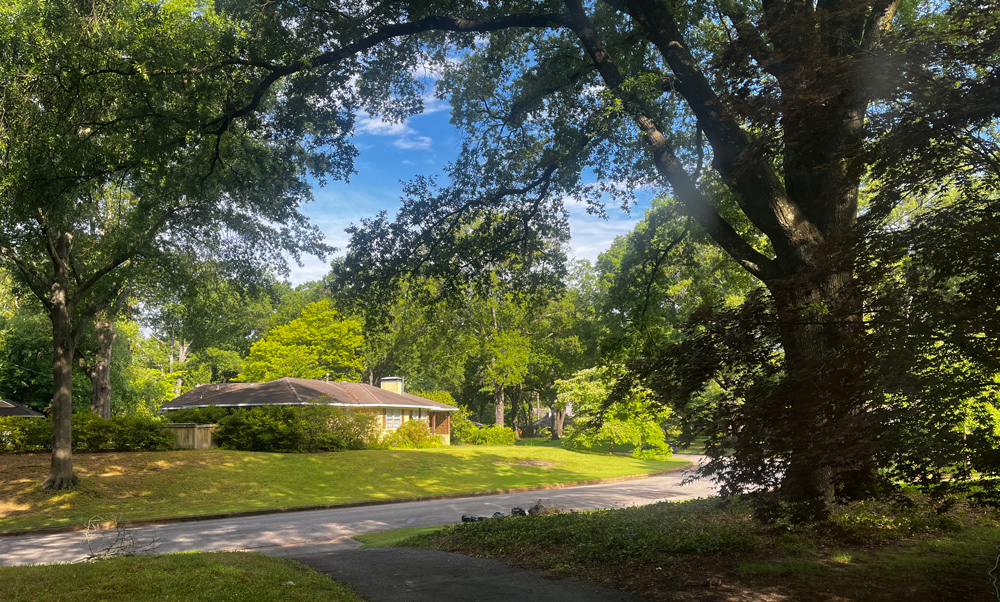
The picture above was taken from my dining room window. Not much is happening. It’s quiet and peaceful. In my den, looking through the sixty-five inch window of my television screen, I see so much turmoil and suffering. The fall of civilization is what’s happening.

One of my favorite novels is called The Door into Summer because the cat in the story hates New England winters and asks to see what’s out every door hoping to find one that leads to summer. I can open my front door and walk out into summer. It’s 77 degrees outside right now – not bad at all for July in a year that might become the hottest year on record. So, why do I spend my days watching television when all it does is to depress me?

The need to know what’s happening is a burden. The belief that I can control anything through knowing more is an illusion and deception. However, there are wars going on all around me and I don’t know if I can sit them out. My friend Anne lives in a nice neighborhood too, but last week there was a shooting at the house one over from hers. Yesterday was the 4th of July, and we heard plenty of fireworks. But we also heard plenty of guys shooting off their guns.

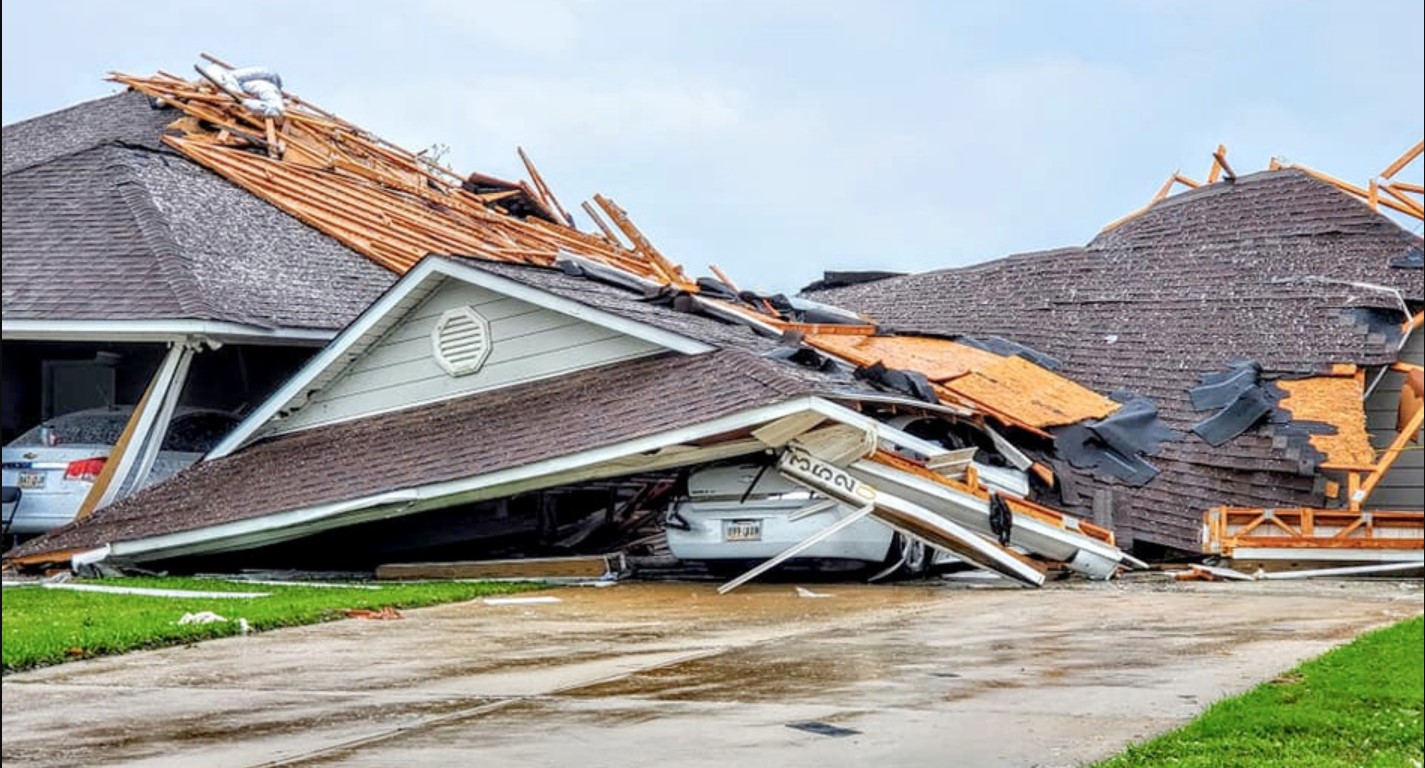
Crime and climate change are getting nearer all the time. What if I looked out my window and saw this:

Thousands of people are seeing this everyday around the world because of hurricanes, tornadoes, floods, and fires. In a decade it could be millions seeing such sites every day. Can we learn anything to avoid that future?

There is a cultural war happening all over the world and the battles are being fought in polling booths. Popularism wants to rewind the clock on progressive progress. To understand this, watch this talk by David Brooks. It’s one of the most uplifting things I’ve seen on my television screen in a very long time.

If you listen to Brooks, you’ll understand what the conservatives want to do with their Project 2025 plan and why. They believe it is their door into summer. If they succeed, I believe 1/20/2025 will be remembered like 4/12/1861 or 6/28/1914. It would be so much easier for my mental health to quit watching TV, but is that really an option? I can understand why Christians are fighting so hard for their way of life. I would have no problem surviving in their utopia if they got everything they wanted. But millions of people wouldn’t, and it will lead to civil war and self-destruction.

The world is going nuts while the environment is going down the drain. On one hand, I can’t stop watching this slow-motion apocalypse. One the other hand, I just want to look out my window or read a science fiction novel.

JWH

If Ignorance is Bliss, is Knowing Suffering?

by James Wallace Harris, 6/27/24

This essay is about how keeping up with current events is hard on our mental health. Is there a point in becoming informed that turns self-destructive? Happiness seems to be a balance between knowing and not knowing, between learning and ignoring.

I’ve always been amazed by the amount of fiction we consume in our lives — the books, movies, television shows, plays, video games, role playing, comics, fantasizing, bullshitting, and so on. Is fiction our way of regulating our awareness of reality?

I’m trying to decide in this essay just how much news I should consume. I believe I have three basic choices:

  1. Ignorance really is bliss.
  2. Learn enough to maximize my own survival.
  3. Learn everything I can to answer why and maybe know what can be changed.

I also consider the first three lines of the Serenity Prayer practical advice:

God grant me the Serenity to accept the things I cannot change,
Courage to change the things I can, and
Wisdom to know the difference.

Mental health depends on knowing what can be changed and what cannot. I believe the old saying, “ignorance is bliss” is merely advising people not to try to change things. Eastern religion and philosophy are all about acceptance, and that might be one path to happiness, or at least contentment. Western religion and philosophy have always been about control, which often leads to frustration and unhappiness. However, Western religion and politics have always been delusional because they don’t know enough to wisely make changes. Too many people think they know, but don’t. And too many people pursuing ignorance follow the people who don’t know. In other words, even if you learn everything you probably won’t be able to do anything.

For most of my life I hoped humanity would evolve into a global humanistic society that was ecologically sustainable, maximizing freedom, and minimizing inequality. That’s obviously not going to happen. Instead, we’re returning to nationalism, xenophobia, and fascism. The growing consensus advocates: get all you can, protect what you have, and let the losers lose. Even Christians have become Darwinians.

The main message in the movies and television shows we consume is the good life is eating, screwing, buying, and travel. But hasn’t that made us the most invasive and destructive species on the planet?

I believe the fiction we consume, and the fantasies we chase, is our way of self-medicating a deep depression caused by seeing too much of reality. If I read or watch too many news programs, documentaries, or nonfiction books about what’s happening around the world I get bummed out and need to retreat. Is that the best thing to do? Or the only thing to do?

How much of learning about reality is educational, soul strengthening, and enlightening? Billions of people are suffering. How important is it to know that the majority of people on this planet spend a good deal of their lives in misery?

If you only watch NBC Nightly News, Fox News, MSNBC, or CNN, you’ll only end up worrying about problems in the United States. And that’s enough to depress most people. But if you take in news from around the world, it can deeply threaten your mental health.

I watch a lot of news from all over, and I’m convinced that our civilization is in decline. The number of failed nations grows every year. The number of weather catastrophes increases every year. Wars and famines are increasing. Life expectancies are declining. Economies are breaking down, and people are dying, becoming homeless or refugees, and suffering in ever-growing numbers. We’re lucky in the United States that we don’t suffer as much, but that’s why millions want to come here.

Decades ago, I stopped watching local news so I wouldn’t be depressed about crime. Even though I live in a high crime city, I seldom hear about it, and thus seldom worry. I could do the same thing with national and international news. That would be good for my mental wellbeing, but shouldn’t I do something?

Liberals believe society should alleviate suffering through laws. Conservatives want to solve the same problems by convincing everyone to pull themselves up by their bootstraps. The reality is liberals want to solve society’s problems by spending the conservative’s money, and the conservatives just want to ignore the problems and keep their money. And it seems the only problem politicians really want to solve is how to get reelected and feed their egos.

Civilization is coming undone. That’s all too obvious if you watch a lot of news and study local, state, federal, international, and world events. However, knowing, and even understanding the problems we face doesn’t empower us to solve them. We either solve them together, or not at all, and if you’re an ardent news watcher, you’ll know we’re living in an age where we don’t work together.

Here’s where I’d love to list and catalog all our problems and assess their chances of being solved. But that would take a book length bit of writing. I’m sure you see enough of the news to know about all the problems we face — or do you? Would knowing more help or hurt you?

I could construct a detailed taxonomy of all the problems we face. I could stop reading novels and watching television and study the heck out of current events. But other than finding enlightenment about why civilization is collapsing, are there any mental, spiritual, or psychological benefits to learning how and why we’re self-destructing?

The real question is: Can we do anything to stop our self-destruction if we all agreed to work together and knew the right solutions? Even if we banned all airplane travel, reduced car travel to a minimum, rebuilt the energy grid that maximized renewable energy, and we all became vegetarians, we’ve already put enough CO2 in the atmosphere to radically change the climate. We may have already destabilized the climate so it can’t be reversed.

And we don’t have to wait until the seas rise above New York and London before climate change will do us in. We’re about to see the collapse of the home insurance industry which will completely destabilize the economy around home ownership. Just that might bring about economic chaos.

I could go on. Aren’t we like cattle in a stockyard? Would knowing about the captive bolt pistol offer any personal benefit in our lives? Or is there a kind enlightenment to be achieved by figuring out how the system works?

JWH

Will People Change vs. Can People Change?

by James Wallace Harris, 2/28/24

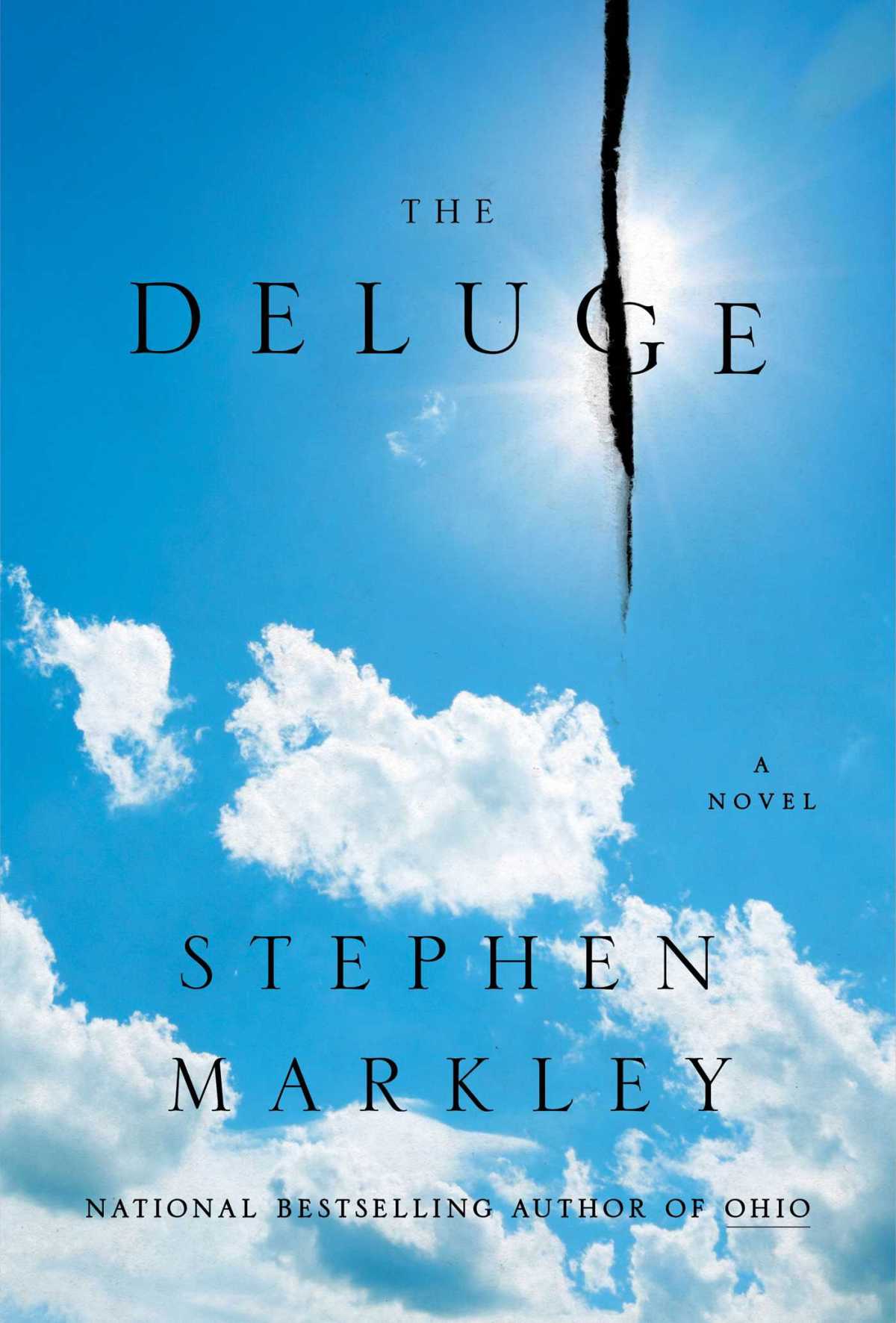
I just finished listening to The Deluge by Stephen Markley, a book that speculates on what the next sixteen years could be like. The book is almost nine hundred pages in print, and over forty hours on audio. Reading this book feels like it’s compressed the last twenty years of polarized political conflict into a forty-hour long disaster film. It’s intense.

Markley uses a large cast of characters to dramatize how people on the left and right will battle for control over the next five U.S. presidential election cycles. Most of the story involves two groups of characters, those working within the political system, and those who decidedly don’t. Markley portrays an ultrasecret ecoterrorist group that works to force change by violent acts versus a dedicated group of political wonks that labor in Washington to influence both parties. Dynamic women characters lead both groups. (By the way, I disliked both women. The only character I cared about was a drug addict in Ohio, who Markley uses as a kind of everyman.)

To further spice up the story, Markley explores the growing power of computer surveillance, artificial intelligence, privacy, and how everyone can be tracked.

I’m not going to review the details of The Deluge because I want to use my reading experience to talk about a specific response to reading the book. I’ll link major book reviews at the end in case you’re considering reading the book. I can say liberals will be terrified by the conservatives in this story, and conservatives will by horrified by these fictional liberals.

The Deluge is about climate change. We could have solved that problem by now if we had acted promptly twenty years ago. The government could have added a tax on all fossil fuels and then raised it slowly month by month. For example, by adding ten cents to the federal tax on gasoline each month. If we had started this in the year 2000, gasoline would be approaching $30 a gallon today. That would have forced people and corporations to make the changes needed.

That tax revenue could have been used to overhaul the power grid and for developing renewable energy technologies. If we had taxed carbon properly, we wouldn’t be fighting over climate change today. That didn’t happen. It didn’t happen because the people who owned trillions of dollars in fossil fuel reserves made sure it didn’t happen. They built a political and religious coalition to fight with them to protect that wealth.

All that’s beside the point now. What Markley envisions is the breakdown of the United States over the next sixteen years so it’s obvious to all we need to do something. The Deluge includes dramatic scenes of a massive fire that destroys Los Angeles, a massive flood that overwhelms the Midwest, and a massive hurricane that devastates east coast states. These events caused the insurance industry to collapse, leading to economic chaos. Markley doesn’t overplay all this. His fictional disasters are realistic, only somewhat larger than what we’ve already experienced, killing just hundreds or a few thousand people in each event, but having an enormous impact on politics and the economy.

Reading The Deluge makes readers ask themselves: Will American change soon? But I ask: Can people change at all?

Before reading this novel, I had seen two insightful videos about climate change that ask the same questions. The first video makes a careful case saying people don’t change and if there is a solution for avoiding climate change it must work with the psychology of how people act. The second video summarizes the first video with impressive summations of it and this tweet. (I wish I could summarize what I watch and read this well.)

Over the two hundred thousand years that our species have existed on this planet, we haven’t changed. Our societies and technologies change, but not us. Over those two hundred thousand years we have developed four major cognitive tools to understand reality: religion, philosophy, mathematics, and science. Only science using mathematics has consistently proven it can consistently describe reality. If you don’t believe that I wouldn’t fly in an airplane.

Science is not black and white. It’s statistical and hard to understand. But science has overwhelmingly shown that adding more CO2 to the atmosphere is turning up the temperature. The parts per million of CO2 in the air acts like a thermostat. Add more CO2 turns up the temperature. The only way to return to the weather we liked in the past is to return to the CO2 levels of the 1960s, but we keep adding more. The only way to stop adding CO2 is to completely stop using fossil fuels. And if we want to turn down the thermostat, we need to remove CO2, which isn’t easy. That’s why taxing carbon is the only way to force us to change, but we won’t do that, because it’s not in our psychology.

However, The Deluge suggests when things get bad enough, we’ll change. It ends hopefully. People even have hope for their children and grandchildren.

Personally, I don’t think we will change. If you want to know what the next sixteen years could be like, read The Deluge. If you believe people can change, and we’ll do the right thing eventually, read The Deluge. If you don’t believe we’ll change, I wouldn’t bother with the book unless you like looking at train wrecks. And if you suffer from depression, I suggest avoiding reading this novel at all costs. I seldom get even the slightest depressed, but this book bummed me out.

Reviews:

JWH