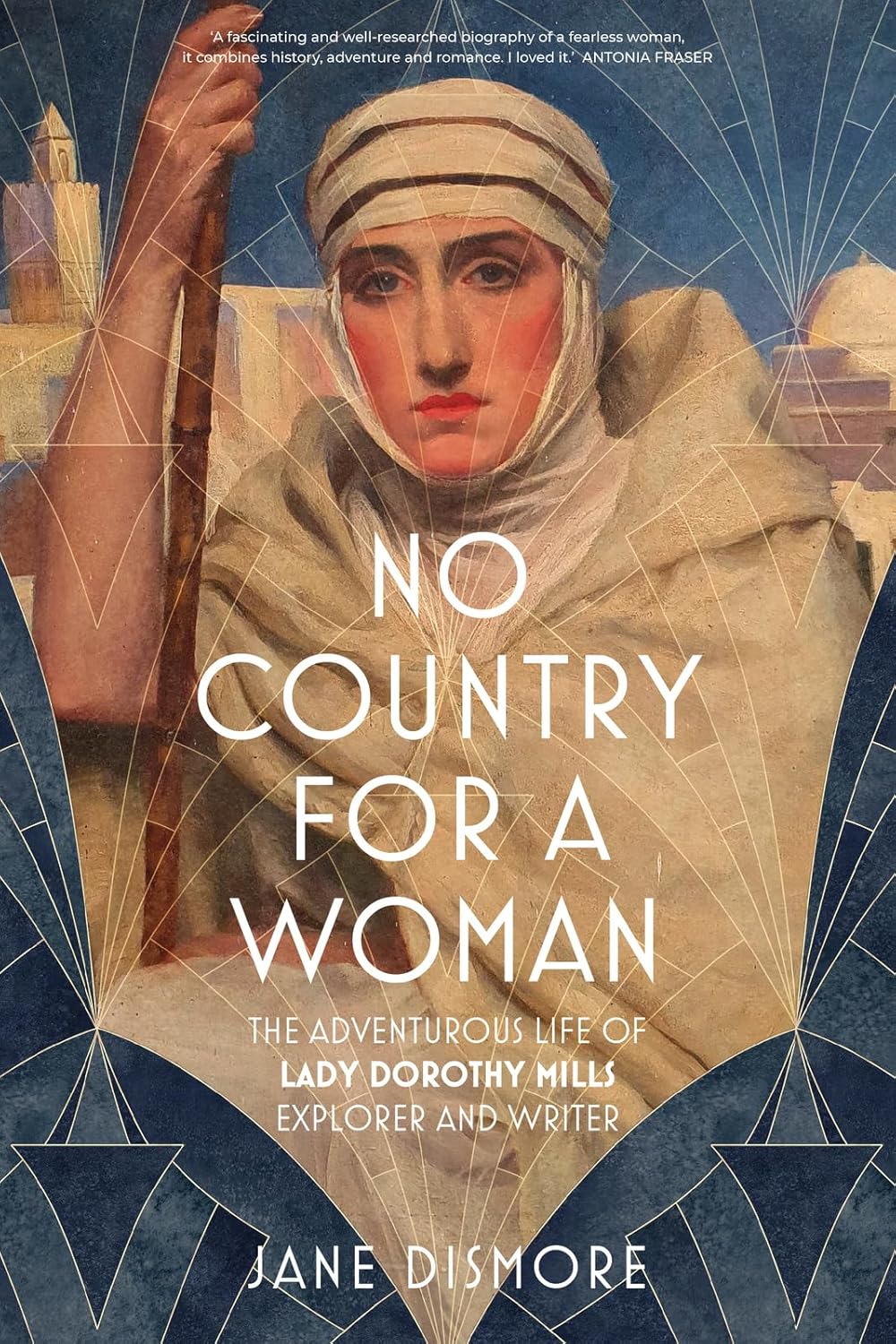
NO COUNTRY FOR A WOMAN by Jane Dismore

by James Wallace Harris, 3/30/25

In 1992, I read a one-paragraph description of a science fiction novel published in 1926 by a woman named Lady Dorothy Mills. The book was called Phoenix. The blurb said the book was about an elderly woman undergoing a rejuvenation treatment that made her look twenty again. Because very few SF books were being published in hardback in the 1920s, especially by women, I decided I wanted to find a copy to read. However, it took ten years of dedicated searching before a copy came up for sale. Along the way, I became intrigued by finding out more about Lady Dorothy Mills. It hasn’t been easy.

Many writers dream of achieving immortality through publishing a book. Sadly, that seldom happens. Most books are first and only editions. Writers are remembered only as long as readers read their books. Dead writers tend to fade into forgotten writers as their books disappear from bookstores. Lady Dorothy Mills is almost forgotten today.

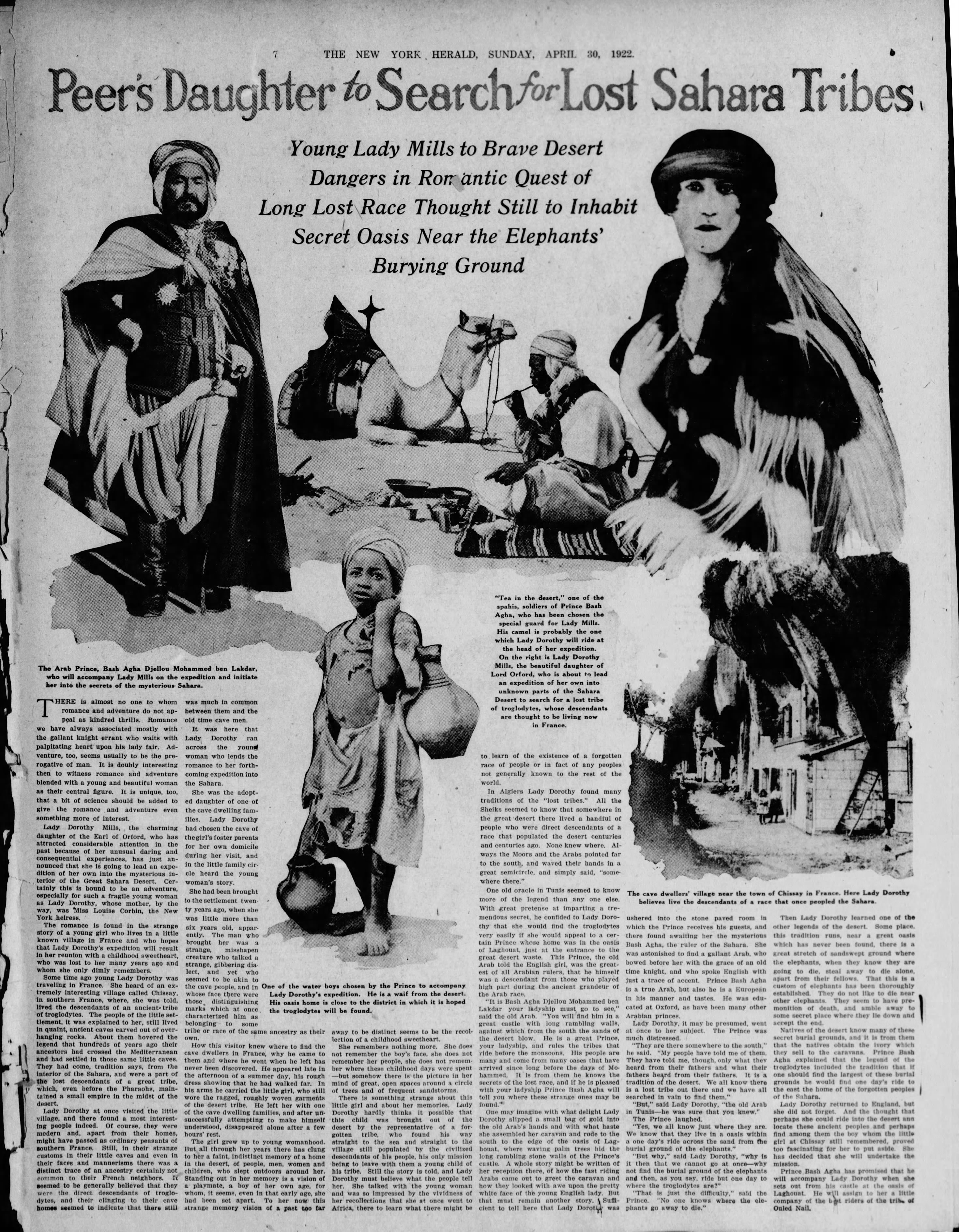
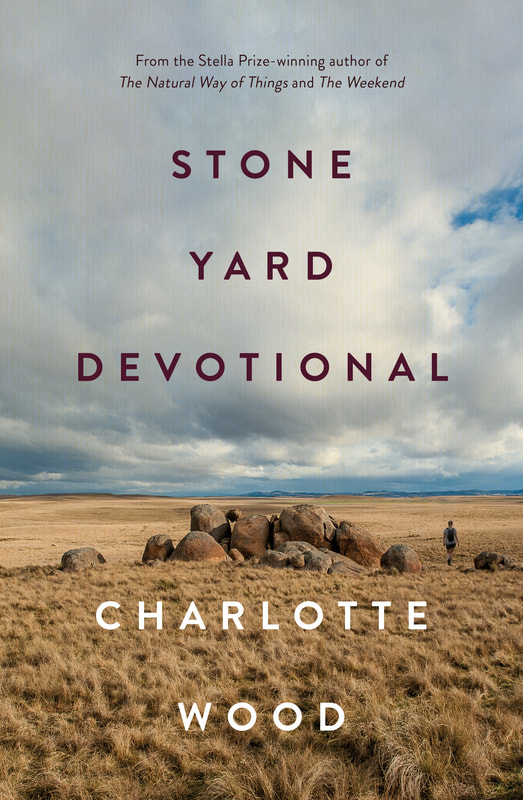
No Country for a Woman, a biography of Lady Dorothy Mills by Jane Dismore, might change that. (Amazon USA: Kindle, Hardback). I knew Dismore was on the trail of Lady Dorothy Mills when she published a two-page newspaper article about Lady Dorothy in 2014, where I learned more about Mills than I had in twenty-two years of research. I contacted Dismore. She replied that she was working on a full biography. I’ve been waiting years to read No Country for a Woman. I hoped it would do two things. First, it would answer the many questions I still had about Lady Dorothy Mills, and it has, and much more. Second, I wanted it to resurrect Lady Dorothy Mills. By that, I mean to get new readers for Mills. That remains to be seen.

Unfortunately, Lady Dorothy Mills’ books are out of print, and used copies are rare, so even if No Country for a Woman becomes a best seller for Jane Dismore, Mills won’t get new readers unless her books are reprinted. Dismore’s excellent biography chronicles Lady Dorothy Mills’ rise to fame in the 1920s and 1930s, but will it inspire publishers to reprint Mills’ books today? Evidently, Dismore is more realistic than I am. Her biography makes Lady Dorothy Mills into an exciting woman to read about, but nowhere in the biography does Dismore promote reprinting Mills or recommend reading her books.

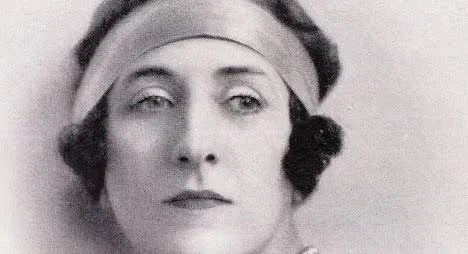
Lady Mills was a fascinating woman. To be honest, I don’t know how well her books would be received today. I used to ask my friends: Which would you rather be, a famous novelist or an exciting person that inspired a famous novel or biography? Lady Mills achieved a level of fame in the 1920s and 1930s as a novelist and travel writer. However, No Country for a Woman, focuses on the woman, and not her books. The immortality that Lady Dorothy Mills ultimately finds might not be based on what she wrote, but how she lived. Jane Dismore pictures a woman worthy of a bio movie.

Lady Dorothy Mills’ real life upbringing rivals the fictional Lady Mary Crawley in Downton Abbey. Unlike Lady Mary’s sister, Lady Sybil, Lady Dorothy was cut off from her family when she married a commoner. To make ends meet, Lady Dorothy and her husband, Arthur Mills, wrote novels and travel books to make a living. They each spent three months a year traveling alone in exotic locations hunting material for their next book. Lady Mills first gained fame in the English-speaking world with her 1924 travel book The Road to Timbuktu. The press claimed she was the first white woman to visit Timbuktu alone; after that, it became a tourist destination for adventurous rich travelers.

Over the next ten years, Lady Mills visited several hard-to-reach and dangerous destinations in North and East Africa, the Middle East, and South America, publishing five travel books and one memoir. Newspapers in America, Canada, England, and Australia often ran sensational articles by and about Lady Mills. Mills even got minor respect as a legitimate explorer and was one of the early women accepted into the Royal Geographical Society.

Lady Dorothy also wrote nine novels, but they mostly appealed to shop girls who wanted to read about romances set in exotic locales. A couple of them were science fiction and fantasy. However, her heroines were progressive, promoting feminism and advocating diversity. Lady Dorothy Mills’ early novels dealt with upper-class England during the fading aristocracy. And Lady Mills hung out with many famous English people, including many in the Bright Young Things crowd. Unfortunately, even though her novels often got good reviews for being fun reads, they were never considered part of the English literary movement between the wars.

I hope Jane Dismore’s biography of Lady Dorothy Mills will resurrect Lady Dorothy so she won’t be forgotten. Unfortunately, the website I maintain, ladydorothymills.com, gets damn few hits. It averages about forty hits a week, with zero hits on many days. The only way Lady Dorothy Mills will ever be as famous as she was in the 1920s is if someone makes a movie out of No Country for a Woman. I doubt that will happen but there’s abundant content in the biography for several possible films.

I’ve considered taking down the website I maintain for Lady Mills. The key information has been put on Wikipedia, and No Country for a Woman is now the best source of information for Lady Dorothy Mills. I’ve also thought of putting Lady Dorothy Mills’ public domain books online. I just don’t know if there would be enough interest to merit all the hard.

I do have one regret about the Dismore biography. During the 1930s, Lady Dorothy Mills disappeared from the spotlight of the popular press. She quit writing. Evidently, after inheriting a small amount of money from her mother’s estate after her father died, Lady Mills no longer needed to write for a living. Lady Dorothy eventually became a recluse, living in a seaside hotel. I wanted to know what she thought during all those lonely years.

It’s not Dismore’s fault for not knowing what Lady Mills was like during her fading years because I don’t think anyone knew. But if I had a time machine, I would visit her.

Further Reading:

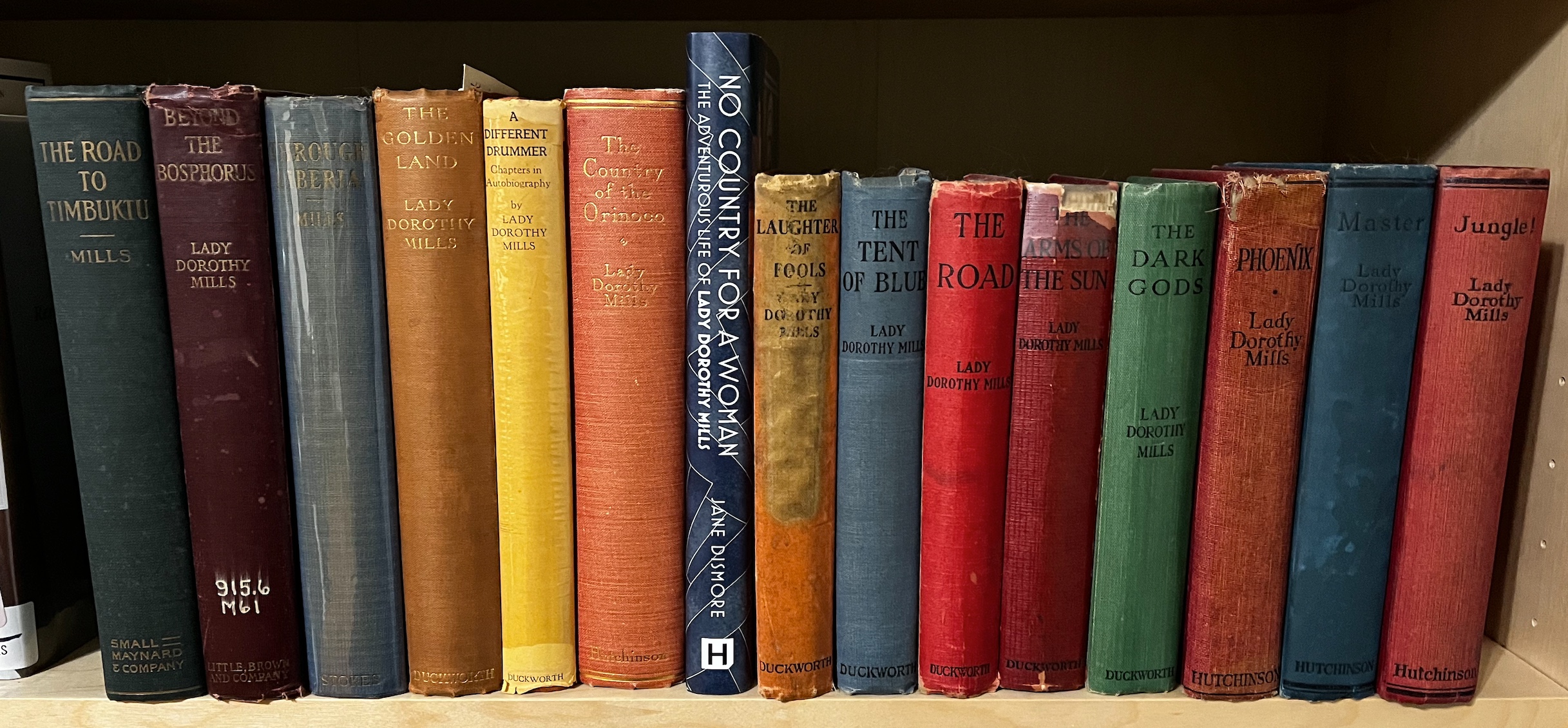
My Collection of Books by and about Lady Dorothy Mills:

JWH

The Limits of Memory

by James Wallace Harris, 3/3/25

It annoys me more and more that I can’t recall names and nouns. I don’t worry yet that it’s dementia because most of my friends have the same problem. But I’ve been thinking about my ability to remember and realized that I’ve never been good at remembering things.

I know I have aphantasia, which means I can’t visualize mental images in my head. I wonder if there’s a connection between not visualizing images and poor memory? People with astounding memory often use mental images as mnemonics.

The ability to remember is on a spectrum. On one end of this range, are rare individuals with photographic memories, while at the other end, are a tiny group with no short-term memories.

My new theory. One possible reason I have poor memory is my education. More precisely, how my personality approached learning as a kid. I considered K-12 a thirteen-year prison sentence. I paid just enough attention to pass tests. I mostly got Cs and Bs, with a rare A and D. I remembered things just long enough to pass a test.

I was never motivated to remember for the long haul.

I do like to learn. I’ve read thousands of books. Of course, most of them have been science fiction, but I also love nonfiction. However, information leaves me as fast as I consume it.

I’m starting to wonder if I would have a better memory if I had developed a different approach to school and learning. Primary and secondary education aim to give kids a well-rounded education. And in college, over half the courses are required.

The idea is we should learn as much as possible about the world. Is that a valid approach? After school and college, we specialize in whatever our work requires, and become selective about what we study for fun. Those subjects are what we remember best.

Reality is too big to know everything. What we need to learn is how to coexist with reality. We need the knowledge to fit in and survive. Would knowing more about fewer subjects help? Or would memorizing the deep dynamics of how things work better yet?

I do believe the more we know, the wiser we are. But there are limits to what we can understand and memorize.

I’m currently reading Nexus by Yuval Noah Harari. In chapter 2, Harari shows how fiction drives our societies, not truth. We live by stories we want to believe. It’s much easier to vaguely understand fiction than to learn the details of reality. For example, more people accept The Bible than biology. That suggests a natural tendency to minimize how much we know.

That would be okay if the Earth were sparsely populated. But we live in dense, complex societies racing at the speed of computer networks and artificial intelligence. Living by fiction is fine if the year is 500 BCE, but we live in 2025. CE.

Let me give one example of what I mean by learning less to know more. I’ve been reading American history books to understand how our society got to now. That gives me a certain level of wisdom about our problems. However, I’m also reading about French history, especially the French Revolution and 19th century history. Seeing the parallels ups my level of understanding. But do I need to read the history of every country now and then? What I see is common dynamics. Reading more histories will give me more examples of the same dynamics.

The same is true of religion. I like studying the history of the Bible. I’ve also studied Buddhism and Hinduism. As I do, I see common dynamics at work. Harari’s new book Nexus points out the common dynamics of society and history.

The educational philosophy I experienced growing up pushed me to memorize a million details. What I needed to understand and remember is the fewer dynamics of reality.

People like to live by fiction because it’s easier. Politics is currently overwhelmed by fiction. Read Nexus to understand why I say that. The question we have to answer is if we can reject fiction.

Real information is seeing patterns in reality. Wisdom is seeing patterns in the patterns. The only real cognitive tool we’ve ever developed to understand reality is science. However, it’s statistical, and hard to learn and understand. We live in a time of simplex thinking. People see or are told about one pattern and they accept that as a complete explanation of reality. All too often, that pattern is based on a cherished story.

We can’t live by memes alone. Nor can we live by infinite piles of memorized details. The only way to understand is to observe consistent patterns. But it has to be more than two or three. That can lead to delusions. Even anecdotal evidence of ten occurrences could still deceive. How can this lead to learning more from less? It’s a paradox.

Last year, I read a three-volume world history. It provided hundreds of examples of strong man rule over thousands. of years. But how many kids, or citizens can we get to read a three-volume world history? Would a listing of these leaders, including the wars they started, and the numbers of people who died because of their leadership be just as effective? Would all the common traits they shared help too? Such as wanting to acquire more territory, or appeals to nationalism?

Could we create a better educational system with infographics and statistics? I don’t know. I do know I tried to process too much information. I also know that I only vaguely remember things. Memory has limits. As does wisdom.

JWH

Could You Give a One Hour Lecture On One of Your Favorite Subjects?

by James Wallace Harris, 2/19/25

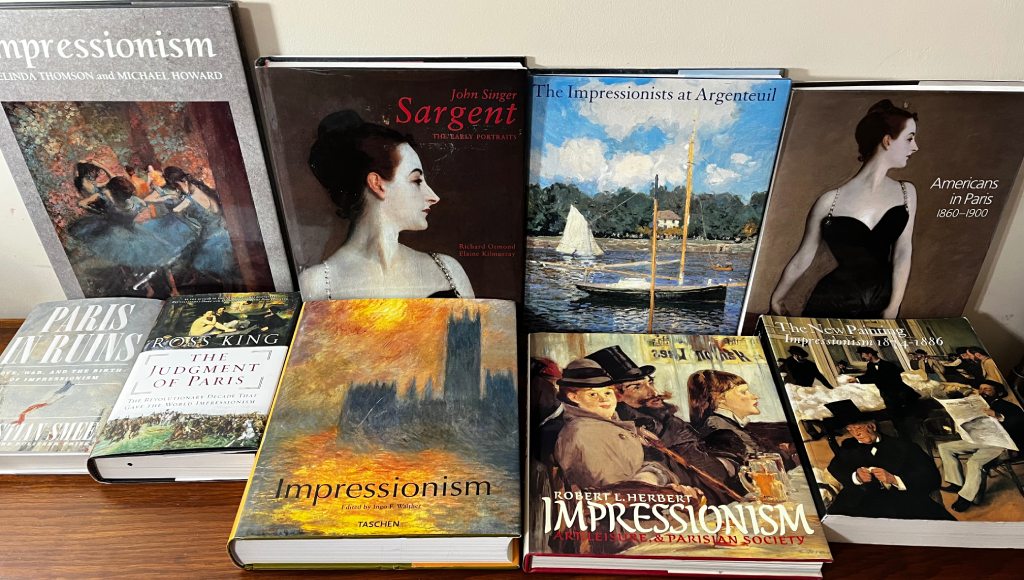
I’ve read several books on Impressionism. I’ve completed a 24-lecture series on The Great Courses on the topic. I’ve seen several exhibits of paintings by Impressionists. Yet, if someone asked me about Impressionism at a party, all I could say was “Oh, I love their paintings.” I vaguely remember their struggles to be accepted into the annual Salon in Paris in the 1860s and 1870s. I can’t tell Manet from Monat, or Gauguin from Van Gogh. If I saw pictures of water lilies I’d guess Monat, and if I saw ballet dancers I’d guess Degas. I have a stack of books on Impressionism that I want to read, but I doubt if I’ll retain much from reading them.

I’m a lifelong bookworm who loves reading nonfiction, but the information in those books seldom sticks. That’s always been disappointing to me.

I could give a pretty good lecture on the history of science fiction. I could give a decent talk on Robert A. Heinlein, the man and his work. I could get up and give a half-ass talk on Philip K. Dick. But that’s about all.

But there are so many other subjects that fascinate me. Ones I regularly read about. I worked with computers for decades and had a serious computer book/magazine addiction, but I couldn’t teach anyone anything reliable about programming anymore.

Most of us believe we know far more than we do, but isn’t that a delusion? News and information are usually how we divert ourselves. We don’t learn, we consume.

I’ve been thinking about how I could remember more. One method would be to research a subject, condense the facts, and then write and memorize a lecture. Certain people can talk at length at parties on their favorite subjects. My guess is they’ve memorized their routines like memorizing jokes. I’m not sure you could extensively grill them on the depths of their subject. I might be wrong though.

Other people are trivia buffs. They’ve memorized a lot of details. I’ve wondered if I could store enough facts about the Impressionists to have a good conversation with another fan of that art movement?

Have you ever thought about all the information they stuffed into you while attending K-12 and college? And then consider how much you’ve forgotten? A good education has always been based on exposure to a wide range of knowledge. And then we specialized in learning what’s needed to make a living.

I’ve been thinking about another kind of education. Call it the know-it-all approach to learning. Most know-it-alls are usually full of bullshit. Often they are mansplainers who annoy women. However, there is nothing wrong with loving to know a lot about little. We need an accreditation body for every subject and a way to test and rank people who want to be know-it-alls in their favorite subjects. Something like chess rankings.

I’ve wondered if I would retain more knowledge of Impressionism if I took regular tests and quizzes on the subject. Let’s imagine that scholars at universities teaching about Impressionism designed a database system that covered everything they’ve ever learned about the topic. They could create an international body that ranked knowledge of Impressionism by giving standardized tests.

I picture them putting the exams online allowing anyone to take them as often as they liked for practice. But to get an official ranking score, you’d have to take a paid supervised test. People who wanted to be ranked in this subject would attend lectures, join study groups, read books, subscribe to online study programs, etc. Learning would be any way you like to learn. That’s the problem with schools, it’s one size fits all.

I believe that the act of competing for a ranking would inspire people to remember their subject. Right now, I have no incentive to remember what I read. Of course, this is just a theory. I do know when I realized I’d forgotten all my math knowledge, studying at the Khan Academy encouraged me to keep going. Even though I had Calculus in college, I had to start over with second-grade math. I worked my way back to the 5th grade. That felt good. I’ve been meaning to keep going.

JWH

Pop Culture vs. Social Media

by James Wallace Harris, 1/1/25

I began pondering the differences between generations that grew up with pop culture versus generations that grew up with social media when playing Trivia Pursuit. I then noticed the same differences while watching Jeopardy. Pop culture is about what most people know, while social media is about knowing the details of subcultures.

I’m often surprised by how much young contestants on Jeopardy know about the 1960s and older pop culture, but old and young players are very selective in their knowledge of 21st-century trivia. For years, I thought people my age just couldn’t keep up with popular music after 1990 because of changing mental conditions. But now I wonder if it’s because popular music shattered into countless genres appealing to various subcultures. In other words, there became too many art forms to remember their trivia.

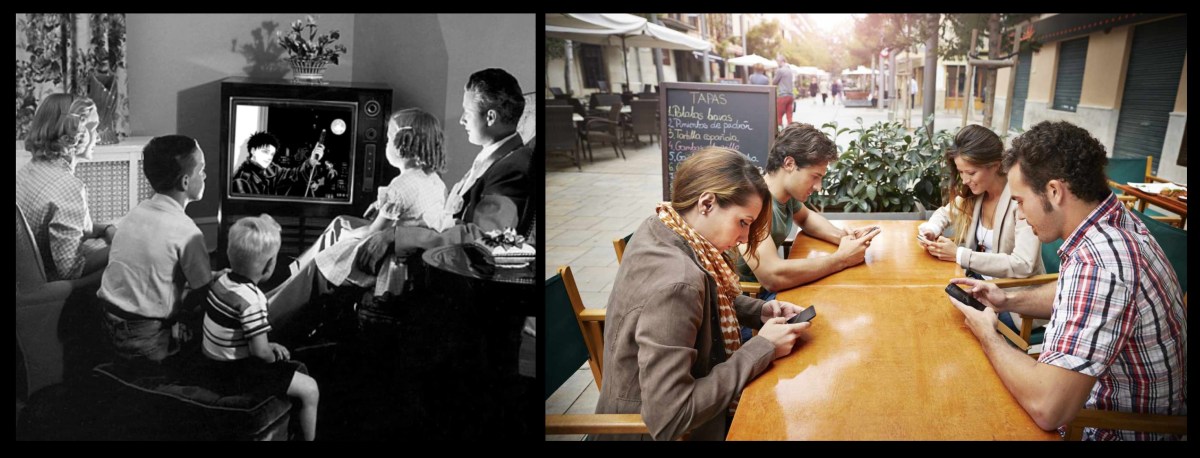
I was born in 1951 and my personality was shaped by the pop culture of the 1950s and 1960s. Pop culture was primarily television, AM radio, movies, books, newspapers, magazines, and comics. People watched the same three television networks, CBS, NBC, and ABC. They often saw the same hit films and listened to the same Top 40 songs. They usually read a single daily paper. Some people read books, usually, paperbacks bought off twirling racks which sold in the hundreds of thousands, if not millions. The most common magazines seen in people’s homes were National Geographic, Reader’s Digest, Saturday Evening Post, Life, and Time.

The by-product of that limited array of pop culture was people within a generation shared a common awareness of what each other liked. You might not watch Leave It to Beaver or Perry Mason, but you knew what those shows were about.

People growing up since the Internet, especially since the explosion of social media, didn’t have popular culture, they had social media that focused on subcultures. Social media might be all about sharing, but people’s shared interests have broken down into thousands of special interests. People on the internet crave contact with others who share their interests, but no one group, not even Swifties, makes up a popular culture.

There are songs on Spotify with billions of plays that are completely unknown to the average American. The Academy Awards now nominate ten pictures for the Best Picture category, but most Americans have seldom seen them before they were announced. Hundreds of scripted TV shows are produced yearly yet it’s quite easy for all your friends and family to have a different favorite. My wife and I struggle to find shows we’re willing to watch together.

Mass media has broken down into specialized media devoted to subcultures.

Pop culture was a product of mass media. It inspired group identity through common knowledge. I’m not sure it exists anymore.

Social media is a byproduct of individuals trying to find others sharing similar interests. It isolates people into smaller groups. It promotes individual interests that limit people’s ability to overlap with other people’s interests. It makes people specialize. You become obsessed with one subculture.

I wonder if the MAGA movement is unconsciously countering that trend. They think they want to return to the past, but what they want is to be part of a large group. Their delusion is believing that if everyone looked alike and thought alike, it would create a happier society. I’m not sure that’s the case. The 1950s were not Happy Days, and the 1960s wasn’t The Age of Aquarius.

I’m not sure that happiness comes from the size of the group you join. Some happiness does come from interacting with others and sharing a common interest. I also think people might be happier knowing less about subcultures, and more about pop culture. But that’s just a theory.

Could people withdraw some from the internet to become more physically social? I don’t think we can give up on the internet, but do we need to use it as much as we do?

I liked it when my friends watched the same TV shows or movies. I also loved that my friends knew about the same albums, and would play them together, or go to the same concerts. Pop culture was popular culture. Will we ever see that again? And is that a delusion on my part. Am I only remembering a more social time from youth that naturally disappears after we marry?

JWH

How Well Can You Read, Comprehend, Analyze, and Summarize an Essay?

by James Wallace Harris, 12/11/24

I recently read An Unfinished Love Story by Doris Kearns Goodwin. It’s about how Doris and her husband Richard went through dozens of boxes containing papers that Richard saved from his time as a speechwriter for John F. Kennedy, Lyndon Baines Johnson, Eugene McCarthy, and Robert Kennedy. Richard was in his eighties and wanted to write a memoir about those times. Doris agreed to help him.

The book is subtitled “A Personal History of the 1960s.” An Unfinished Love Story resonates with me because I lived through that decade too. I’m now rereading their book closely. I want to comprehend what happened in the 1960s and reconcile it with my memories. I do that by looking up original sources mentioned and studying them.

However, I’ve hit a cognitive barrier. I’ve never been a great student, much less a scholar. I have trouble focusing. I can’t stick to any subject long enough to comprehend it. These failings are getting worse as I age.

I’ve discovered a tool that helps me understand my limitations. Maybe it will help me overcome them. That tool is Google NotebookLM. It’s an AI tool that digests information. You link to web pages or upload your documents, and it will analyze that content and then create several kinds of summaries.

I tested Google NotebookLM with a speech that Richard Goodwin helped write for John F. Kennedy when he was campaigning for president in 1960. It was given at the National Press Club on January 14, 1960. You can read it here. I also gave it this article about that speech. NotebookLM then generated several files that summarized the content of those two documents. The most startling was an AI-generated podcast. You can listen to it here. (You’ll need a free Google account, but anyone using Google email should already be logged in.)

That podcast sounds like an NPR segment. It’s spooky how real the two people sound. But the technology to produce this artificial conversation isn’t what I want to showcase. It’s how NotebookLM understood the speech. It’s a level of reading comprehension that I envy. If I spent a week studying that speech I don’t think I could reach that level of understanding.

Damn, damn, damn!

First of all, Kennedy’s speech was a distillation of extensive knowledge of American political history by Kennedy, Richard Goodwin, and Ted Sorensen. Kennedy expected his audience to decode that knowledge, and to understand his plan for the coming decade. I doubt few did, especially at the level that NotebookLM did.

From reading An Unfinished Love Story, I believe Richard Goodwin could process knowledge like NotebookLM, which is why he was such a brilliant speechwriter. I can’t do anything like that. From this experience, I want to study the results produced by NotebookLM to see if I can learn from it.

Even when I think I understand what I read, I doubt I comprehend even ten percent. I’m quite sure a scholar could write a five-hundred-page book just about that one speech.

NotebookLM created several results. I want to study what it does and see if I can learn to use its techniques.

Here is the summary version.

Briefing Doc: John F. Kennedy's Vision of the Presidency
Sources:

"All notes 12/11/2024" (Study Guide and FAQ on Kennedy's Speech)
"Pasted Text" (Full Text of Kennedy's Speech at the National Press Club, January 14, 1960)
Excerpts from "The Presidency in 1960 (Remarks at the National Press Club) | Teaching American History"
Main Themes:

Active and Engaged Presidency: Kennedy argues for a strong, proactive president who actively shapes policy and drives the national agenda. He rejects a "detached, limited concept of the Presidency" in favor of a leader willing to "place himself in the very thick of the fight."
Legislative Leadership: The president must be an active participant in the legislative process, not simply a "casual bystander." This includes initiating legislation, collaborating with Congress, and using his influence to ensure passage of vital bills.
Party Leadership: Kennedy believes the president must be an active leader of his political party, utilizing its resources and working closely with party leadership to advance his agenda and strengthen the democratic process.
Moral Leadership: The president must not only represent prevailing sentiment but also inspire the nation, set a high ethical standard, and mobilize the public to address challenges and seize opportunities.
Key Ideas and Facts:

Critique of Eisenhower: Kennedy contrasts his vision with Eisenhower's perceived passivity, arguing that the nation needs a more engaged leader for the challenges of the 1960s. He criticizes Eisenhower's preference to remain above politics, stating, "no President, it seems to me, can escape politics."
Historical Examples: Kennedy invokes presidents like Lincoln, Theodore Roosevelt, and Wilson as exemplars of his ideal. He highlights their willingness to use presidential power, exert legislative leadership, and champion moral causes.
Constitutional Vision: While acknowledging the importance of Congress and cautioning against executive overreach, Kennedy views the presidency as the driving force in the American system. He stresses the president's unique role in foreign policy and domestic policy initiation.
Four Key Roles: Kennedy outlines four essential roles for the modern president: Chief Executive, Legislative Leader, Party Leader, and Moral Leader. Each role requires active engagement and a willingness to utilize the full resources of the office.
The Lincoln Anecdote: Kennedy uses the story of Lincoln signing the Emancipation Proclamation to illustrate the kind of decisive and resolute leadership he believes is essential for the presidency. "Lincoln's hand did not tremble. He did not hesitate. He did not equivocate. For he was the President of the United States."
Important Quotes:

On the need for an active president: "The American Presidency will demand more than ringing manifestoes issued from the rear of the battle. It will demand that the President place himself in the very thick of the fight."
On the president's role as Chief Executive: "He must be prepared to exercise the fullest powers of his office – all that are specified and some that are not."
On the importance of legislative leadership: "The President must initiate policies and devise laws to meet the needs of the nation. And he must be prepared to use all the resources of his office to ensure the enactment of that legislation – even when conflict is the result."
On the president's responsibility as party leader: "If he neglects the party machinery and avoids his party's leadership – then he has not only weakened the political party as an instrument of the democratic process – he has dealt a blow to the democratic process itself."
On the importance of moral leadership: "We will need in the sixties a President who is willing and able to summon his national constituency to its finest hour."
Discussion Points:

To what extent does Kennedy's vision of the presidency align with the principles of a constitutional republic?
Does Kennedy sufficiently address the potential risks of an overly powerful executive branch?
How does Kennedy's vision compare to the presidencies that followed him?
This briefing document summarizes the main themes and key ideas of John F. Kennedy's vision for the presidency. It is important to note that this is just one interpretation of his speech, and further analysis and discussion are encouraged.

Here is a FAQ it generated:

FAQ: John F. Kennedy's Vision of the Presidency
1. What is the central theme of John F. Kennedy's speech at the National Press Club?
This speech, delivered in January 1960 during his presidential campaign, focuses on Kennedy's vision for the modern presidency. He argues that the American people deserve to understand a candidate's philosophy regarding the presidency because it shapes their approach to all other issues.

2. How does Kennedy differentiate his view of the presidency from President Eisenhower's?
Kennedy critiques the "detached, limited concept of the Presidency" he observed during the Eisenhower administration. He advocates for a more active and engaged president who proactively addresses pressing issues and drives the national agenda. He contrasts this with Eisenhower's perceived passivity and delegation of responsibilities.

3. What historical examples does Kennedy use to illustrate his preferred presidential model?
Kennedy invokes figures like Abraham Lincoln, Theodore Roosevelt, and Woodrow Wilson as exemplars of strong, effective presidents. He highlights their willingness to utilize the full extent of presidential power, exert legislative leadership, and champion moral causes, even at the risk of political unpopularity.

4. According to Kennedy, what are the essential roles of a modern president?
Kennedy outlines several key roles:

Chief Executive: A hands-on leader who actively manages government departments, resolves conflicts, and makes crucial decisions, particularly in foreign policy.
Legislative Leader: A president who proactively shapes legislation, collaborates with Congress, and uses their influence to ensure the passage of vital bills.
Party Leader: A president who actively engages with their political party, utilizing its machinery and leadership to advance their agenda and strengthen the democratic process.
Moral Leader: A president who inspires the nation, sets a high ethical standard, and mobilizes the public to address critical challenges and seize opportunities.
5. How does Kennedy view the relationship between the president and Congress?
While acknowledging the importance of Congress's legislative role and cautioning against executive overreach, Kennedy believes the president should actively lead and collaborate with Congress. He emphasizes that the president must be prepared to use all available resources to secure the enactment of crucial legislation.

6. What is Kennedy's stance on the president's role as a party leader?
Kennedy rejects the notion that a president should remain aloof from politics. He believes the president must embrace their role as party leader, engaging with the party machinery and working closely with party leadership to advance their agenda and strengthen the democratic process.

7. What is the significance of the Abraham Lincoln anecdote in Kennedy's speech?
Kennedy concludes by recounting Lincoln's unwavering commitment to the Emancipation Proclamation, even when facing internal opposition. He uses this story to illustrate the decisive and resolute leadership he aspires to embody as president.

8. What message does Kennedy aim to convey to the American people through this speech?
Kennedy seeks to persuade the public that the nation needs a strong, proactive president who will actively engage in solving national and international problems. He aims to differentiate himself from Eisenhower's approach and assure voters that he is the leader the times demand.

Here is a quiz it created:

The Presidency in 1960: A Study Guide
Quiz

Instructions: Answer the following questions in 2-3 sentences each.

According to John F. Kennedy, what is the central issue that should be addressed in the 1960 presidential campaign?
Why does Kennedy argue that good intentions are not enough to make a successful president?
What is the "restricted concept of the Presidency" that Kennedy critiques?
What does Kennedy mean when he says that the next president must be the "Chief Executive in every sense of the word"?
Why does Kennedy believe that the president must be an active legislative leader?
How does Kennedy contrast the legislative leadership styles of Theodore Roosevelt and Calvin Coolidge?
What criticism does Kennedy offer of President Eisenhower's approach to party leadership?
Why does Kennedy believe that Abraham Lincoln is a good example of party leadership?
How does Kennedy define the president's role as a moral leader?
What specific historical example does Kennedy use to illustrate the kind of decisive leadership he advocates for?
Answer Key

Kennedy argues that the central issue of the 1960 campaign is the Presidency itself. He believes the public needs to understand how a candidate views the role, powers, and limitations of the office.
Kennedy uses the examples of Woodrow Wilson and Warren G. Harding, both considered good men, to illustrate that good intentions alone are insufficient for presidential success. Different conceptions of the Presidency can lead to vastly different outcomes.
The "restricted concept of the Presidency" refers to a passive approach where the President primarily reacts to events rather than actively shaping them. Kennedy argues this approach is inadequate to address the challenges of the 1960s.
Kennedy believes that being "Chief Executive in every sense of the word" means actively engaging with complex problems, initiating action, and taking responsibility for the outcomes of his administration.
Kennedy argues that the President must be an active legislative leader to ensure the enactment of policies that meet the nation's needs. He contends that Congress should not dominate the executive branch nor should the President shy away from conflict with Congress.
Kennedy contrasts Theodore Roosevelt, who actively fought for his legislative agenda even at the cost of Congressional popularity, with Calvin Coolidge, who took a more passive approach and ultimately failed to advance key initiatives.
Kennedy criticizes Eisenhower's preference to remain above politics, arguing that a president cannot avoid politics and must actively engage with his party to advance his agenda and the democratic process itself.
Kennedy cites Lincoln's passionate engagement in politics, even closely following the results of state elections, as a model for how a president should actively lead his party.
Kennedy defines the president's role as a moral leader as one who goes beyond representing current sentiment and instead inspires the nation to meet challenges and achieve great ideals.
Kennedy uses the example of Lincoln signing the Emancipation Proclamation, despite potential backlash, to highlight the kind of resolute and decisive leadership he believes is essential for the presidency.
Essay Questions

Analyze Kennedy's vision of the modern presidency. What are its key characteristics? How does it differ from the "restricted concept of the Presidency" he criticizes?
Evaluate Kennedy's assessment of the presidencies of Theodore Roosevelt and Calvin Coolidge. How do their approaches to legislative leadership exemplify his broader arguments about the office?
To what extent does Kennedy's call for a "moral leader" in the White House align with the principles of a constitutional republic? Discuss the potential benefits and risks of such leadership.
Kennedy claims that "legislative leadership is not possible without party leadership." Analyze this statement, considering the relationship between the president, Congress, and political parties.
Compare and contrast Kennedy's conception of the presidency with another president or political thinker of your choice. How do their views converge and diverge? What might account for these differences?
Glossary of Key Terms

Chief Executive: The role of the President as head of the executive branch of government, responsible for enforcing laws and overseeing the administration of government agencies.
Legislative Leadership: The President's role in influencing the legislative process, proposing legislation, working with members of Congress, and advocating for the passage of bills.
Party Leadership: The President's role as leader of his political party, setting the agenda, mobilizing support, and working to elect party members to office.
Moral Leadership: The President's role as a national figurehead who sets a moral tone for the country, inspires citizens, and advocates for ethical principles.
Restricted Concept of the Presidency: A passive approach to the presidency where the president primarily reacts to events and defers to Congress or other actors.
Bully Pulpit: A term coined by Theodore Roosevelt to describe the presidency as a platform from which to advocate for policies and ideas.
Grand Alliance: A reference to the alliance of nations that fought against the Axis powers in World War II, emphasizing the president's role as a global leader.
Divided Government: A situation in which the presidency and Congress are controlled by different political parties.
Emancipation Proclamation: A presidential proclamation issued by Abraham Lincoln in 1863 that declared the freedom of slaves in Confederate-held territory.

Here is an outline of sources:

John F. Kennedy's Vision of the Presidency: A Table of Contents
Source 1: Excerpts from "All notes 12/11/2024"

The Presidency in 1960: A Study Guide
Quiz: A series of 10 short-answer questions designed to test comprehension of John F. Kennedy's vision of the presidency as articulated in his 1960 National Press Club speech.
Answer Key: Provides concise answers to the quiz questions, summarizing Kennedy's arguments regarding the importance of presidential leadership, the limitations of a passive approach, and the need for active engagement in legislative, party, and moral matters.
Essay Questions: Poses 5 in-depth essay prompts that encourage critical analysis of Kennedy's vision of the presidency, his assessment of historical presidencies, the role of moral leadership, and the relationship between the president, Congress, and political parties.
Glossary of Key Terms: Defines 10 essential terms related to presidential powers and roles, including "Chief Executive," "Legislative Leadership," "Party Leadership," "Moral Leadership," and "Restricted Concept of the Presidency," providing a conceptual framework for understanding Kennedy's arguments.
FAQ: John F. Kennedy's Vision of the Presidency
8 Frequently Asked Questions and Answers: Addresses key aspects of Kennedy's National Press Club speech, including his central theme, critiques of Eisenhower's approach, historical examples used, essential roles of a modern president, and the relationship between the president and Congress. This section provides a concise overview of Kennedy's arguments.
Source 2: Excerpts from "January 14, 1960 - Senator John F. Kennedy speaks at National Press Club, Washington, DC."

Fragment 1: This excerpt captures Kennedy's criticism of the Eisenhower administration's "restricted concept of the Presidency," highlighting the need for a more active and engaged approach to address the challenges of the 1960s.
Fragment 2: This segment emphasizes the need for a president who actively engages in the legislative process, contrasting this with a "casual bystander" approach that Kennedy deems insufficient.
Source 3: Excerpts from "Pasted Text"

Introduction: Sets the stage for Kennedy's argument by highlighting the importance of understanding a candidate's vision of the presidency and framing it as the central issue of the 1960 campaign.
Critique of the Eisenhower Administration: Kennedy critiques the "detached, limited concept of the Presidency" he observed during the Eisenhower years, arguing for a more active and engaged presidential role.
The Demands of the Times: Kennedy outlines the challenges facing the nation, both domestic and foreign, and argues that they require a strong, proactive president.
The President as Chief Executive: This section emphasizes the president's role as a hands-on leader who actively manages government, resolves conflicts, and makes crucial decisions, particularly in foreign policy.
The President as Legislative Leader: Kennedy argues for a president who actively shapes legislation, collaborates with Congress, and uses their influence to ensure the passage of vital bills.
The President as Party Leader: Kennedy rejects the notion of a president staying above politics and stresses the importance of engaging with the party machinery to advance an agenda and strengthen the democratic process.
The President as a Moral Leader: This section highlights the president's role as a national figurehead who sets a moral tone for the country, inspires citizens, and mobilizes the public to address critical challenges.
The Example of Abraham Lincoln: Kennedy concludes with a powerful anecdote about Lincoln's unwavering commitment to the Emancipation Proclamation, emphasizing the decisive and resolute leadership he aspires to embody as president.
Source 4: Excerpts from "The Presidency in 1960 (Remarks at the National Press Club) | Teaching American History"

Context and Introduction: Provides historical background and sets the context for Kennedy's speech, emphasizing the significance of his remarks within the broader history of the American presidency.
Kennedy's Speech Excerpts: Features key excerpts from Kennedy's National Press Club address, focusing on his critique of Eisenhower's approach, his vision for the modern presidency, and the importance of active leadership in various roles.
Discussion Questions: Poses thought-provoking questions that encourage readers to analyze Kennedy's conception of the presidency, his use of historical examples, and the relationship between the president and Congress.
Footnotes: Provides explanatory notes on historical figures and events mentioned in Kennedy's speech, enhancing understanding and facilitating further research.
This table of contents provides a detailed overview of John F. Kennedy's vision of the presidency as articulated in his 1960 National Press Club speech and related sources, offering insights into his beliefs about presidential leadership, the role of the president within the constitutional order, and the challenges facing the nation at the dawn of the 1960s.

But the truly dazzling product was the podcast.

Many people will use NotebookLM to help them write, or even let NotebookLM create their content. I watched one YouTuber use NotebookLM to produce a blog and podcast. I don’t want AI doing my work. I want to learn how to work at an AI level.

JWH