Too Many Ways to Become Homeless

by James Wallace Harris, 1/25/24

I never could understand why my mother was so obsessed with dying at home until I got older myself. As the years pass, the more attached I’ve become to this house, and the more I fear becoming homeless, even temporarily. I’ve never been an anxious person, but this fear is starting to gnaw at me. Is that an old person thing? I never can tell what’s real about getting old.

Consequently, I’ve started paying attention to all the ways people become homeless — especially the ways that could make Susan and I homeless. I was going to write an essay listing the numerous ways people could lose their homes, but I found “15 Ways to Become Homeless” online and felt I shouldn’t duplicate it. Instead, I shall focus more on my specific feelings.

Whenever I see news about tornadoes, hurricanes, floods, fires, ice storms, earthquakes, and other natural disasters, I think about all the homelessness they cause. This horrifies me. It depresses me to see people lose their homes, which makes me anxious about climate change and weather. I wonder how refugees from natural disasters find new homes and how long it takes. I also wonder about the odds of it happening to anyone. If I knew how many homes and apartments there were in American, and how many are destroyed by nature every year, I could calculate the odds. (ChatGPT at Bing says the odds are 1 in 200 for the general population, and 1 in 25 for people under the poverty line.)

It also upsets me to see news about Ukraine and Gaza, or any other country at war. I see all those homes and apartments blown up and worry about the millions of war refugees. War is so cruel to civilians. I never worried about becoming a war refugee until recent years and people started talking about a second U.S. civil war. How can they even think of such insanity?

I don’t know how rational this fear is, but I’ve become afraid of trees. I frequently see videos on the internet of trees falling on houses and cars. I’ve even thought of having all the trees near my house cut down. But that would be hugely expensive.

Increasingly I’m seeing stories about people being made homeless because of investors using housing as a commodity. I was particularly depressed by this story I saw on YouTube (see below). Old people, mostly old ladies who looked in their eighties and nineties who had been living in a retirement community for decades, were pushed out when their monthly fees went from around $1500 to over $6000, all because some millionaire/billionaire figured they needed to make even more money. It disturbed me that all those long-term friendships were broken up, and all those carefully crafted comfortable homes left behind. I have thought about how Susan, and I might be safer, and life would be easier, if we could live in such a community, but now I wonder about their long-term viability.

A lot of people are becoming homeless because corporate and private investors see housing as a money-making opportunity. This is increasingly pushing people out of owning homes, or even renting them. But the rich also push people out by gentrifying a neighborhood. Lots of retired Americans can no longer afford to live in the United States, so they move abroad to take advantage of lower housing costs. But that only raises prices for the locals, pushing them out of housing. Thus, using housing as an investment makes Americans and people living in other countries homeless. It has a snowball effect. Would there be less homelessness if Airbnb was never invented?

Global warming, war, economic collapse, failed states, and growing class violence are generating millions of refugees. That’s why Republicans are so freaked out about illegal border crossings. Since we already have a housing shortage, immigration causes more homelessness, and an even greater need for cheap housing, compounding the political problem. On the other hand, we have a declining population which means a shrinking economy, and immigration is the only capitalistic solution for depopulation. Building more housing grows the economy.

We need to figure out how to increase low-cost housing. Most builders are in it to make money, so they build what people with money can afford. Capitalism is one of the main contributors to homelessness, so someone needs to figure out how to make capitalism become one of the solutions. Conservatives don’t want socialism, but do they really want Darwinian capitalism?

I wonder about all the abandoned homes in decaying cities and small towns. Could they be repurposed? Could small towns attract retirees and revitalize their communities? Any person with a retirement income is like having a job added to your community. Getting a thousand retirees would be like getting a factory that hires a thousand people. Wouldn’t it?

Most people become homeless when they lose their jobs and have no family or friend support. Many people become homeless when they become drug users or alcoholics. Then there a huge population of mentally ill people who are homeless. All those factors are what people consider traditional causes of homelessness. I worry about those people, but I don’t think I’ll become one. What I worry about are all the non-traditional ways people are becoming homeless.

What a lot of people don’t know is about half of single homeless people are over 50 years old. In general, 1 in 5 homeless people are 55 or older, and that percentage and age demarcation is growing larger. It’s almost impossible to be single and live just off social security. Collapsing pension plans are also causing homelessness. No matter how careful we create our financial nest egg, there’s always ways for it to be raided.

I know nothing about the real problem of homelessness. It’s quite a complex issue. All I know is what I see on television and read on the internet. It appears that anyone could become homeless, and that scares me. And the problem is getting larger every day. It’s like climate change, a problem we mostly ignore completely, or confront by slapping on political Band-Aids.

I feel like Chicken Little yelling the sky is falling. To paraphrase Joseph Heller’s “Just because you’re paranoid doesn’t mean they aren’t after you,” and say, just because the sky doesn’t look like it’s falling doesn’t mean it’s not.

JWH

I’m Too Dumb to Use Artificial Intelligence

by James Wallace Harris, 1/19/24

I haven’t done any programming since I retired. Before I retired, I assumed I’d do programming for fun, but I never found a reason to write a program over the last ten years. Then, this week, I saw a YouTube video about PrivateGPT that would allow me to train an AI to read my own documents (.pdf, docx, txt, epub). At the time I was researching Philip K. Dick, and I was overwhelmed by the amount of content I was finding about the writer. So, this light bulb went off in my head. Why not use AI to help me read and research Philip K. Dick. I really wanted to feed the six volumes of collected letters of PKD to the AI so I could query it.

PrivateGPT is free. All I had to do was install it. I’ve spent days trying to install the dang program. The common wisdom is Python is the easiest programming language to learn right now. That might be true. But installing a Python program with all its libraries and dependencies is a nightmare. What I quickly learned is distributing and installing a Python program is an endless dumpster fire. I have Anaconda, Python 3.11, Visual Studio Code, Git, Docker, Pip, installed on three computers, Windows, Mac, and Linux, and I’ve yet to get anything to work consistently. I haven’t even gotten to part where I’d need the Poetry tool. I can run Python code under plain Python and Anaconda and set up virtual environments on each. But I can’t get VS Code to recognize those virtual environments no matter what I do.

Now I don’t need VS Code at all, but it’s so nice and universal that I felt I must get it going. VS Code is so cool looking, and it feels like it could control a jumbo jet. I’ve spent hours trying to get it working with the custom environments Conda created. There’s just some conceptual configuration I’m missing. I’ve tried it on Windows, Mac, and Linux just in case it’s a messed-up configuration on a particular machine. But they all fail in the same way.

I decided I needed to give up on using VS Code with Conda commands. If I continue, I’ll just use the Anaconda prompt terminal on Windows, or the terminal on Mac or Linux.

However, after days of banging my head against a wall so I could use AI might have taught me something. Whenever I think of creating a program, I think of something that will help me organize my thoughts and research what I read. I might end up spending a year just to get PrivateGPT trained on reading and understanding articles and dissertations on Philip K. Dick. Maybe it would be easier if I just read and processed the documents myself. I thought an AI would save me time, but it requires learning a whole new specialization. And if I did that, I might just end up becoming a programmer again, rather than an essayist.

This got me thinking about a minimalistic programming paradigm. This was partly inspired by seeing the video “The Unreasonable Effectiveness of Plain Text.”

Basically, this video advocates doing everything in plain text, and using the Markdown format. That’s the default format of Obsidian, a note taking program.

It might save me lot of time if I just read the six volumes of PKD’s letters and take notes over trying to teach a computer how to read those volumes and understand my queries. I’m not even sure I could train PrivateGPT to become a literary researcher.

Visual Studio Code is loved because it does so much for the programmer. It’s full of artificial intelligence. And more AI is being added every day. Plus, it’s supposed to work with other brilliant programming tools. But using those tools and getting them to cooperate with each other is befuddling my brain.

This frustrating week has shown me I’m not smart enough to use smart tools. This reminds me of a classic science fiction short story by Poul Anderson, “The Man Who Came Early.” It’s about a 20th century man who thrown back in time to the Vikings, around the year 1000 AD. He thinks he will be useful to the people of that time because he can invent all kinds of marvels. What he learns is he doesn’t even know how to make the tools, in which to make the tools, that made the tools he was used to in the 20th century.

I can use a basic text editor and compiler, but my aging brain just can’t handle more advance modern programming tools, especially if they’re full of AI.

I need to solve my data processing needs with basic tools. But I also realized something else. My real goal was to process information about Philip K. Dick and write a summarizing essay. Even if I took a year and wrote an AI essay writing program, it would only teach me a whole lot about programming, and not about Philip K. Dick or writing essays.

What I really want is for me to be more intelligent, not my computer.

JWH

Is Remembering Just Not Forgetting?

by James Wallace Harris, 1/17/24

I am fascinated by how works of pop culture become popular and then how they are forgotten.

I read this article, “The Percentage of Music on Streaming Services That Was Never Played in 2023 is Staggering” that got me thinking. Most music streaming services now claim to have catalogs of over one hundred million songs. This report is based on 158.6 million songs, with the following breakdown of plays:

79.5 million had 0 to 10 plays

42.7 million had 11 to 100 plays
30.0 million had 101 to 1,000 plays
6.4 million had more than 1,000 plays

The report said 45.6 million of that first group got no plays at all, but ten songs in 2023 got one billion plays. This says a lot about pop culture. 86.2% of all those songs got less than one thousand plays. I guess that’s the background radiation of pop culture interest, showing how quickly society forgets.

I wonder if I played any of those songs with less than a one thousand plays during 2023. I wonder if I play a song that no one else played at all in 2023. I wonder how many people also play the same songs I play all the time from my favorite playlist.

When I was young, I wanted to hear the current hit songs and albums, read the latest books, go to the movies that just came out, and talk with my friends about the TV shows which broadcasted last night. Now, in old age, I’m years behind, and make no effort to keep up with current pop culture. I desperately cling to the past, hoping not to forget. I feel like I’m one of the characters at the end of Fahrenheit 451 trying to preserve a book.

My focus in old age is to find the best music, movies, books, and TV shows from all time. The trouble is digging through the mountain of old pop culture artifacts and finding the archeological gems. I work to remember what I love, but also find new loves before they are completely forgotten. I find those new loves by finding people who still remember them.

Of the roughly sixteen million albums that’s been recorded, how many are worth remembering and playing? Even if I played an album a day, and I lived another thirty years, I doubt I could listen to more than ten thousand of those sixteen million albums. There’s too much to remember.

It’s great that streaming services offer us access to all those songs, but they will be forgotten. That’s an immense amount of creative effort that’s disappearing from our collective consciousness. It’s also true for books, movies, and television shows.

How much can a culture remember of its best creative efforts? I once speculated that less than one hundred novels from the 19th century are remembered by the average bookworm. Literary scholars could name more, but I doubt even many English professors could list two hundred novels from the 19th century off the top of their heads.

Lately, I’ve been watching old movies from the 1950s. IMDB says there were 4906 movies made between 1950-1959 in their database, of which 165 were released in theaters. Here’s their list of the 165 in order of popularity. I would guess I’ve seen about 140 of them. But then, I was born in 1951. How many of these movies have been seen by people born after the year 2000? I have a tough time getting friends of my own age to watch old movies from the 1950s with me. However, I’m often surprised by young people on YouTube that have channels devoted to old movies. But what percentage of their age group are they? 0.001?

There’s always a percentage of the population that loves to explore old pop culture. I maintain a database system that identifies the most remembered old science fiction books. I follow people online who specialize in remembering old movies, old music, and old books. Only one of my friends is like me and searches out old books and movies. Is there a word for people like us, who cherish remembering old pop culture? It’s different from plain old nostalgia.

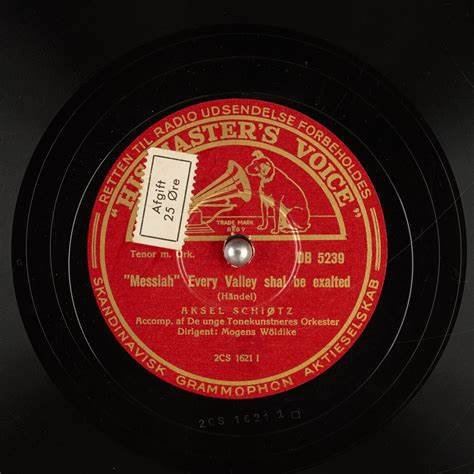
I’m currently reading The Game-Players of Titan by Philip K. Dick that was written in 1963 and published in early 1964. In it, characters from the 22nd century collect old records from the 20th century. I wonder if that will come true. Or will the music from the 20th century just sit on some computer, rarely played even by scholars? In the novel, Dick has his characters agree that a song, “Every Valley” by Aksel Schitz (book spelling) is their favorite vocal recording. I could find this (slightly different spelling):

Is this what Philip K. Dick couldn’t forget.

JWH

Reading Comprehension: Books vs. Audiobooks

by James Wallace Harris, 1/3/24

At 72, I’m still learning how to read.

I recently finished the audiobook of The Simulacra by Philip K. Dick and started to write a review for my science fiction blog. That’s when I realized I needed to read the book with my eyes before I could write a proper review. The Simulacra was a complex novel involving several plot threads and dozens of named characters. (Read the plot summary at Wikipedia. Get the book at Amazon.)

From my audiobook experience I found the book compelling, fun, and I was always anxious to get back to listening to the story. I was never confused by what was going on, but when I tried to summarize the novel for my review, I discovered I couldn’t recall all the details I needed to make a coherent description of the story. There were just too many science-fictional concepts. Nor could I describe all the plot threads without researching them.

I won’t describe the book in detail, I’ll do that in my review, but for now, The Simulacra is about a post-apocalyptic world where China attacked America with atomic missiles in 1980, and the U.S. government and Germany combined to form a totalitarian regime called The United States of Europe and America (USEA). It appears to be run by a captivating 23-year-old first lady named Nicole Thibodeaux. However, she has been married to five presidents and always remains young. Since this book was written in the summer of 1963, I assume Dick was inspired by Jackie Kennedy because Nicole spends most of her time charming people, decorating the White House and gardens, and putting on nightly cultural events. But Nicole is also ruthless enough to have people summarily executed, evidently wielding unlimited power. She has access to time travel no less, and one subplot involves her negotiating with Nazis to change the course of WWII. Other subplots involve an insane psychic pianist Nicole wants to play at the White House, the outlawing of psychiatry pushed by the pharmaceutical industry, what happens to the last legal psychiatrist, a pair of ordinary guys who have a jug band that plays classical music who want to perform at the White House, a trio of sound engineers who are trying to chase down the psychic pianist to record, and a small company that hopes to get the contract to construct the next president. This long paragraph barely scratches the surface of the whole novel.

My failure of completely understanding the novel from listening to the audiobook was partly due to aging memory and partly due to the complexity of Dick’s prose. I could have hashed out several thousand words describing what I remembered, although it would have been a bundle of vague impressions. Summarizing what PKD was trying to do was evasive from just listening to the audiobook.

Audiobooks are bad for remembering exact details, which I knew, but was painfully revealed when I tried to read the novel and take notes. I called up The Simulacra on my PC in the Kindle app on the left side of the screen, and launched Obsidian, a note taking program on the left side of the screen. I started reading The Simulacra again, but with my eyes. After two days, getting to the 29% read position on the Kindle edition, I had twenty-eight names, twenty-six plot points, several lists of other details, and several quotes in my notes. I figure there are three to five main plot threads, each involving three or more characters.

More than that, I realized Philip K. Dick had riffed on hundreds of ideas. As I read them, I remembered them, but I realized that while listening, I had not put most of them within the context of the story. It wasn’t until my second reading that I saw all these hundreds of creative speculations as being part of one jigsaw puzzle picture. And I’m not talking about the characters and plots. I’m talking about worldbuilding.

Rereading with my eyes allowed me to stop and ponder. Rereading allowed me to remember the bigger picture. However, listening to the audiobook let me enjoy the story more. The narrator, Peter Berkrot, did voices for each of the characters, and acted out their personalities. Listening to the novel, it felt like I was listening to an old-time radio drama where many actors performed a story.

At one point I got too tired to read and went to bed. But before I fell asleep, I listened to the part I had just read. Berkrot expressed emotions I had not picked up while reading with my eyes, but recalling the scenes made me realize that Dick had put them there. In other words, Berkrot had found aspects of the text I missed and was pointing them out with sound.

Over the ten years since I’ve retired, I’ve been learning the value of rereading books. In fact, I now feel reading a story just once is unfair to the author. It takes two or more readings to see the author’s vision. Reading a work of fiction just once provides one layer of understanding. It’s when we see multiple layers within a work that we start to truly understand it.

Switching back and forth between reading with my eyes and reading with my ears reveals both methods have their advantages. If I read once with one sense organ and reread with another, the two combine to create reading synergy.

For most of my life, I’ve always been concerned with reading more books, but the wisdom I’m gaining from getting old is showing me that both speed reading and reading lots of books is a distraction from deep reading.

Right now, I’d recommend:

  1. Listen to an audiobook for the first reading to get the big picture.
  2. Reread with a physical book or ebook to get the details. Read slowly and stop often to ponder.
  3. Write a review to make deeper sense of a book. Putting things into words pushes us to make sense of things.
  4. Read reviews and scholarly articles to get other perspectives.
  5. Reread the book again to bring it all together.

This is what I’m working on with The Simulacra by Philip K. Dick. It’s not considered one of Dick’s better works, but I’m trying to discover if there is more to the novel than its current reputation.

JWH

Getting My Stick-to-it-ness to Be More Sticky — Has the Internet Ruined My Ability to Focus?

James Wallace Harris, 12/29/23

Over the past few years, I’ve lost the ability to watch movies and television by myself. I read 55 books last year but only 33 this year. I rarely finish reading news and magazine articles anymore. I’ve given up on my hobbies and learning projects. And I’m blogging way less.

I can’t decide if this is aging related, or have I’ve ruined my ability to focus because my growing YouTube and Facebook video watching addiction. Does constantly watching short videos ruin attention span and the ability to focus?

I think this started years ago when I got addicted to Flipboard, RSS, and other forms of news feeds on the internet. I got hooked on constantly grazing on entertaining bits of information. Then for the past year or two, I’ve switched to short videos. They’re way more addictive than even clicking on clickbait.

I used to not watch TV until evening, but now I turn it on after my morning physical therapy exercises to watch YouTube videos for about an hour. I watch more after lunch and supper, and before bed. Lately, I’ve also been watching videos on Facebook, they have particularly good cat videos, bear attack videos, and people doing amazing feats videos.

I know I shouldn’t watch these videos and do something constructive instead, but I can’t help myself. It’s so pleasant and relaxing to just kick back in my La-Z-Boy and watch. I have over a hundred YouTube channels I follow. It feels like I’m involved with countless people and learning about endless subjects.

And that’s one of the problems with this addiction. I used to finish most of the videos I watched. Now I seldom finish them. If they cover something I already know I switch to another one, or scan ahead looking for real news. I’ve watched so many stereo product reviews that I could become a Hi-Fi salesman. Ditto for computer reviews, telescope reviews, and many other tech toys. I watch so much political news on YouTube during the day that I know everything that’s on the NBC Nightly News in the evening. And this is only touching on a few of the dozens of subjects and people I follow. Who knew I’d want to keep up with a transgender guitar pedal engineer? Or an expat couple living in Ecudor. Or an opinionated old English guy who makes hour long videos about his science fiction collection.

YouTube and Facebook videos give the illusion that I’m seeing what’s going on around the world. I watch videos from countless countries. From people living 40 degrees below zero in Siberia, to following a woman nature photographer in Sweden, to a Chinese girl who can build almost anything out in the woods by herself with just a few hand tools.

And that might be one of the reasons why YouTube videos are so addictive. As I’ve gotten older, and developed more physical limitations, I seldom leave the house. Watching the videos on my 4k 65″ television feels like I’m traveling around the world. It’s more visceral than reading a book or programming on my computer.

But I need to think hard about this addiction. Writing about it now reveals why it’s more appealing than watching old movies and TV shows. It also reveals why I can watch old movies and TV shows if I’m watching with someone else. If I have company, I’m doing something with them. But by myself, clicking around the world is more stimulating, offering far more information, and in a way, far more connection to other people. Fiction, in books, movies, and television shows, gives the illusion of connecting with people, but watching someone talk directly to you on a YouTube channel gives an even greater illusion of relating to someone else.

I get lots of human contact with my wife and friends, and regular socializing, and so I’m happy. However, my virtual acquaintances on YouTube offer a greater variety of intellectual stimulation. And thinking about it, I see where that competes with reading too.

Still, I have my problem of diminishing focus. Doing something constructive requires spending hours alone, concentrating on details, and applying a kind of disciplined focus. Watching YouTube videos seems to be destroying that ability.

However, what I want — or think I want, is to work on projects that take focus and discipline. I have too many projects I dream about accomplishing, and the indecision of picking one might also be why I watch YouTube videos instead. To accomplish anything worthwhile requires focusing on that project for hours a day for many days, weeks, or months.

That means sitting at a desk working by myself. That was easy when I worked at a job. I could focus for four hours, go to lunch, and then come back and focus for another four hours. Retiring has also ruined that ability. Aging might be a part of it, but I’ve also got addicted to relaxing and always having fun.

If I want to strengthen my flabby focusing ability, I need to give up having so much fun. My focusing stamina is limited to about one or two hours, for writing short blog posts like this one. For anything else I crash and burn.

I constantly dream of working on projects that would take much longer to finish. For example, I just read The Simulacra by Philip K. Dick, one of five novels he wrote in 1963. Last year I read Dr. Bloodmoney, or How We Got Along After the Bomb, another he wrote in 1963. These are very strange books, and they all deal with mental illness and marital problems. Because I’ve read several biographies on Philip K. Dick, and know what his life was like in 1963, I would like to read all five and write about how they are similar and reflect his own mental and marital problems he was having at that time. Such a project would take about two weeks of concentrated work, reading of the reading of the novels and researching the biographical material, and reading about the novels.

I don’t know if I can do that even though I think it would be a big fun project. It’s a barrier involving focus that I’m not sure I can break through. But I have a theory. I wonder if I exercised my focus, extending my ability to stick to one task for longer and longer, could I finish such a project?

I’ve even wondered if I should start by giving up YouTube videos and practice by watching movies by myself. Right now, I watch movies by myself, by watching them five minutes at a time. I know that sounds weird, but I’ll keep returning to the movie until I finish it. Maybe three times a day, or once a day. The way my focus works is I’ll start with five-minute segments. If I get into the movie, and I really like it, those five-minute viewings stretch to ten minutes. Usually, if I can get through most of the movie, I’ll stick with the last thirty minutes in one stretch. Even this piecemeal watching technique only succeeds with maybe one in twenty movies I try.

This isn’t a New Years resolution, but I’m going to try and stick with movies until I can watch them in one sitting by myself. I wonder if that will beef up my stick-to-it-ness muscles? It’s something to try.

UPDATE: 12/31/23

After I wrote this I read “It Sure Looks Like Phones Are Making Students Dumber” at The Atlantic. Unfortunately, it’s behind a paywall. It said things like, “First, PISA finds that students who spend less than one hour of “leisure” time on digital devices a day at school scored about 50 points higher in math than students whose eyes are glued to their screenmore than give hours a day.” It also said, “For comparison, a 50-point decline in math scores is about four times larger than America’s pandemic-era learning loss in that subject.” The article went on to detail the many ways phones might be the cause of anxiety, distraction, and learning loss.

JWH