Is Remembering Just Not Forgetting?

by James Wallace Harris, 1/17/24

I am fascinated by how works of pop culture become popular and then how they are forgotten.

I read this article, “The Percentage of Music on Streaming Services That Was Never Played in 2023 is Staggering” that got me thinking. Most music streaming services now claim to have catalogs of over one hundred million songs. This report is based on 158.6 million songs, with the following breakdown of plays:

79.5 million had 0 to 10 plays

42.7 million had 11 to 100 plays
30.0 million had 101 to 1,000 plays
6.4 million had more than 1,000 plays

The report said 45.6 million of that first group got no plays at all, but ten songs in 2023 got one billion plays. This says a lot about pop culture. 86.2% of all those songs got less than one thousand plays. I guess that’s the background radiation of pop culture interest, showing how quickly society forgets.

I wonder if I played any of those songs with less than a one thousand plays during 2023. I wonder if I play a song that no one else played at all in 2023. I wonder how many people also play the same songs I play all the time from my favorite playlist.

When I was young, I wanted to hear the current hit songs and albums, read the latest books, go to the movies that just came out, and talk with my friends about the TV shows which broadcasted last night. Now, in old age, I’m years behind, and make no effort to keep up with current pop culture. I desperately cling to the past, hoping not to forget. I feel like I’m one of the characters at the end of Fahrenheit 451 trying to preserve a book.

My focus in old age is to find the best music, movies, books, and TV shows from all time. The trouble is digging through the mountain of old pop culture artifacts and finding the archeological gems. I work to remember what I love, but also find new loves before they are completely forgotten. I find those new loves by finding people who still remember them.

Of the roughly sixteen million albums that’s been recorded, how many are worth remembering and playing? Even if I played an album a day, and I lived another thirty years, I doubt I could listen to more than ten thousand of those sixteen million albums. There’s too much to remember.

It’s great that streaming services offer us access to all those songs, but they will be forgotten. That’s an immense amount of creative effort that’s disappearing from our collective consciousness. It’s also true for books, movies, and television shows.

How much can a culture remember of its best creative efforts? I once speculated that less than one hundred novels from the 19th century are remembered by the average bookworm. Literary scholars could name more, but I doubt even many English professors could list two hundred novels from the 19th century off the top of their heads.

Lately, I’ve been watching old movies from the 1950s. IMDB says there were 4906 movies made between 1950-1959 in their database, of which 165 were released in theaters. Here’s their list of the 165 in order of popularity. I would guess I’ve seen about 140 of them. But then, I was born in 1951. How many of these movies have been seen by people born after the year 2000? I have a tough time getting friends of my own age to watch old movies from the 1950s with me. However, I’m often surprised by young people on YouTube that have channels devoted to old movies. But what percentage of their age group are they? 0.001?

There’s always a percentage of the population that loves to explore old pop culture. I maintain a database system that identifies the most remembered old science fiction books. I follow people online who specialize in remembering old movies, old music, and old books. Only one of my friends is like me and searches out old books and movies. Is there a word for people like us, who cherish remembering old pop culture? It’s different from plain old nostalgia.

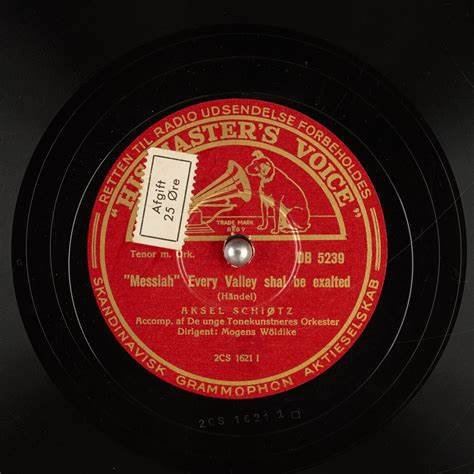
I’m currently reading The Game-Players of Titan by Philip K. Dick that was written in 1963 and published in early 1964. In it, characters from the 22nd century collect old records from the 20th century. I wonder if that will come true. Or will the music from the 20th century just sit on some computer, rarely played even by scholars? In the novel, Dick has his characters agree that a song, “Every Valley” by Aksel Schitz (book spelling) is their favorite vocal recording. I could find this (slightly different spelling):

Is this what Philip K. Dick couldn’t forget.

JWH
Developing a Healthy News Diet

by James Wallace Harris, 5/21/23

Michael Pollan created a small book about eating healthy called Food Rules. As an analogy, I’d like to create a set of sensible rules about consuming the news. Pollan distilled his list of rules down to three simple sentences, “Eat food. Not too much. Mostly plants,” but it really takes reading his book to understand that mantra.

What I would like to do is develop a similar simple mantra about my daily news consumption but I’ll have to work out the details first. Pollan emphasized eating whole foods rather than processed foods. Is there such a thing as whole unprocessed news? “Not too much” is an obvious target since we obviously consume too much news. Finding an analogy for “mostly plants” will be interesting.

What would be the equivalent of nutritious news? Experience has taught me that some news is unhealthy, and I often get news indigestion. I also admit I’m bloated and overweight from too much news consumption.

Like whole food and junk food, we prefer junk news over whole news. I spend several hours a day nibbling on news from many sources. Most of which is forgotten immediately. I wonder if my first rule should be:

#1 – Ignore easily forgettable news

We’re used to clicking on anything that catches our fancy while idling away moments on our smartphones. Essentially, this kind of news is gossip and titillation. Basically, we’re bored or restless. We should use that time in better ways, especially if it exercises our minds. Read real news instead. Or, do something active. Playing games, listening to music, or audiobooks, is more nutritious than never-ending bites of clickbait.

Everyone bitches about information overload but who does anything about it? I’ve learned from intermittent fasting that my body appreciates having a good rest each day from eating. I believe I need to apply the same idea to news consumption.

#2 – Limit your hours consuming the news

I find 16:8 fasting works well for eating. I’m thinking of a 22:2 fast for news is what I’m going to aim for at the moment. Two hours of news consumption a day might sound like a lot, but if you add up all the forms of news I consume including television, magazines, online newspapers, YouTube, and news feeds, RSS feeds, I can easily go beyond two hours.

We should also separate news from learning and entertainment. Learning something new could be considered a form of news. I’m not going to count educational pursuits in my news time. And if you enjoy reading nonfiction books or watching documentaries on TV, that shouldn’t count as news either. However, shows like 60 Minutes, CBS Sunday Morning, and The Today Show can be considered informative entertainment news. Some people just prefer news shows for fun rather than watching fictional shows. I’m not sure if they should count or not.

What we really want is to stay informed about the world so that we interact with reality wisely. Humans have an extremely difficult time processing information. We think we’re far smarter than we are. We constantly delude ourselves. And we think our opinions matter when 99.999% of the time they don’t. Most people think they are experts on countless topics after having consumed just a few hours of news. They think they know better than real experts who have put tens of thousands of hours into studying their specialty.

#3 – Stop assuming you know anything

I believe the real key to understanding the news is being able to tell the difference between opinion and significant data. The real goal of news consumption should be finding the best data, and that means getting into statistics.

Unfortunately, the news industry is overwhelmed with talking heads. Everyone wants to be an expert, and all too often most news consumers tend to latch onto self-appointed experts they like. News has become more like a virus than information processing.

I read and watch a lot of columnists and programs about computers, stereo equipment, and other gadgets. Most are based on personal impressions of equipment individuals have bought or been loaned from manufacturers. These tech gurus are a good analogy for what I’m talking about. Most of the news we take in daily is from individuals processing limited amounts of information and giving us their opinion. What we really want is Consumer Reports, Rtings, or the Wirecutter, where large amounts of data are gathered from a variety of sources, and statistically analyzed.

This is just a start on designing my news diet. I want to keep current on a long list of topics, but that’s like learning about all the vitamins and nutrients my body needs. News nutrition will be a vastly more complicated topic. What are the essential vitamins I need every day? Is it politics, national and international affairs, economics, crime, immigration, ecology, etc?

Do I need to know about everything? Is that what an informed citizen needs to do? Take immigration. Is anything I think about immigration affects the situation at the border? Does voting liberal or conservative even affect anything at the border? I can barely maintain order in my house, why should I believe I can organize all of reality on Earth? Maybe my last two rules should be:

#4 – Know my limitations

#5 – Pursue the news I can actually use

Like nutrition, news is a complicated subject that’s hard to understand and can easily confuse.

JWH

“Created by Humans” vs. “Created by AI”

by James Wallace Harris, 4/22/23

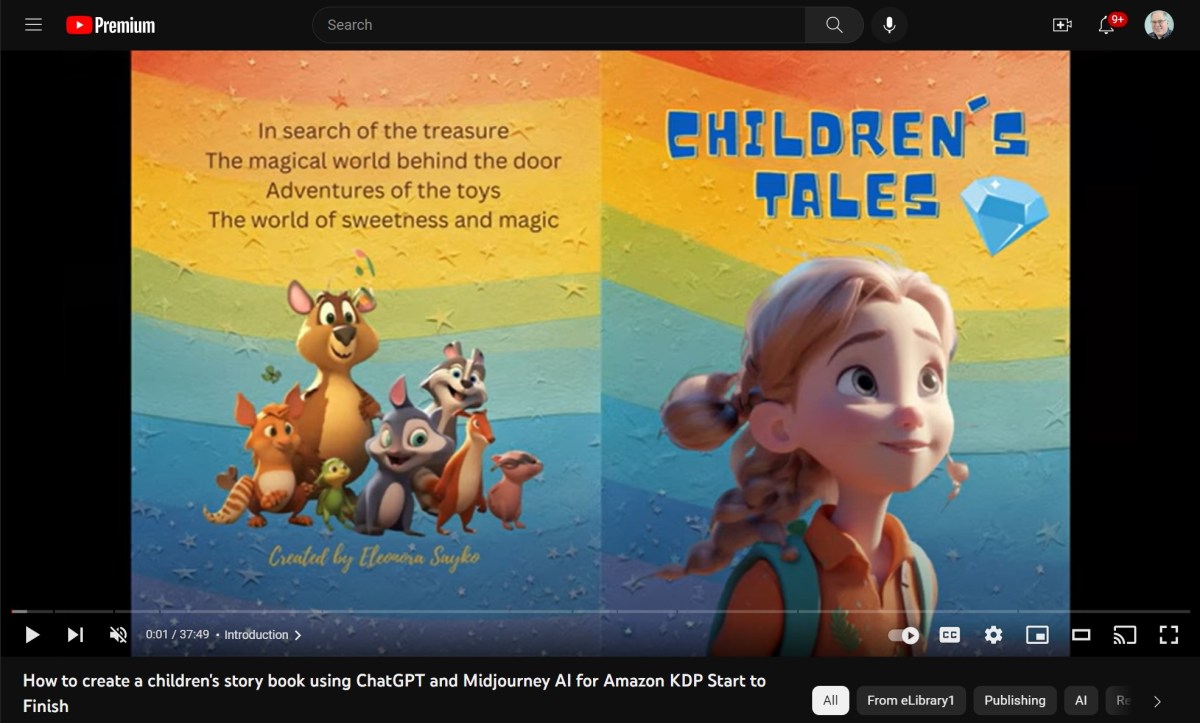
The first video I watched on YouTube this morning was “How to create a children’s storybook using ChatGPT and Midjourney AI for Amazon KDP Start to Finish.” eLibrary1 explains how she creates children’s books using AI tools.

It’s actually quite fascinating. She gets ChatGPT to suggest a series of ideas and then asks ChatGPT to write up 500-word versions of the ideas she likes. Then she tests those stories against an AI checker to show how they can be easily detected as AI-created. Then she runs the stories through another program that rewrites her stories. After that, she checks again and shows how the AI detector shows they are now human-written. Then she runs them through a plagiarizer detector to make sure they won’t be rejected for that reason. After she’s sure she’s got something good to work with she submits the stories scene by scene to Midjourney to have it create the artwork.

As I watched this video I thought about how so many people are concerned with seeing “Made in America” tags on the products they buy. I wondered if people in the future will look for “Made by Humans” or “Created by Humans” tags?

My initial reaction was I wouldn’t want to read a book that eLibrary1 created. I would feel cheated. I expect art and fiction to be produced by artists that suffered for their art. But then I thought, what if the story and pictures were better than what people produce? I’m already seeing artwork produced by AI that blows me away.

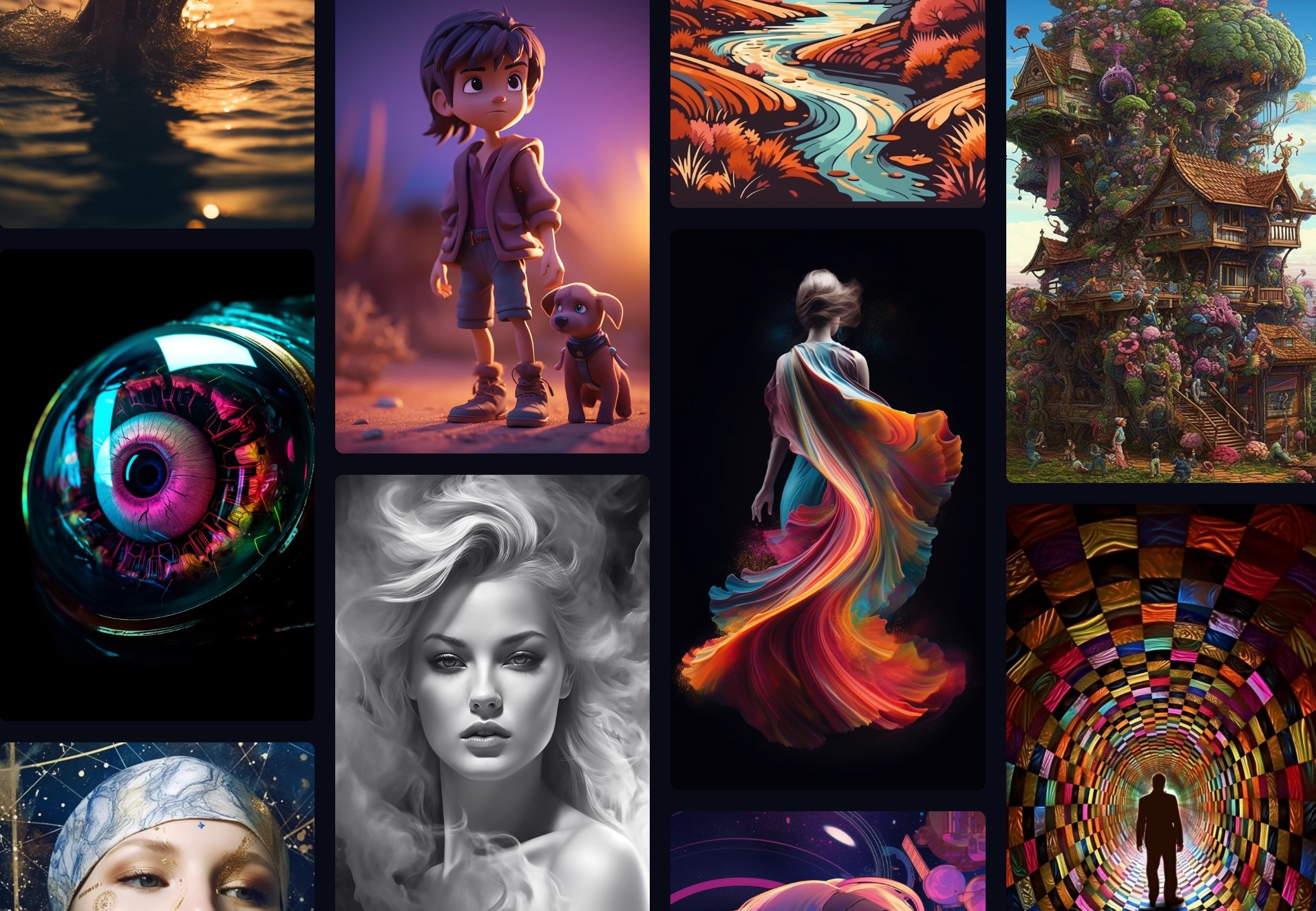
Just scroll down for a while in Midjourney’s Community Showcase.

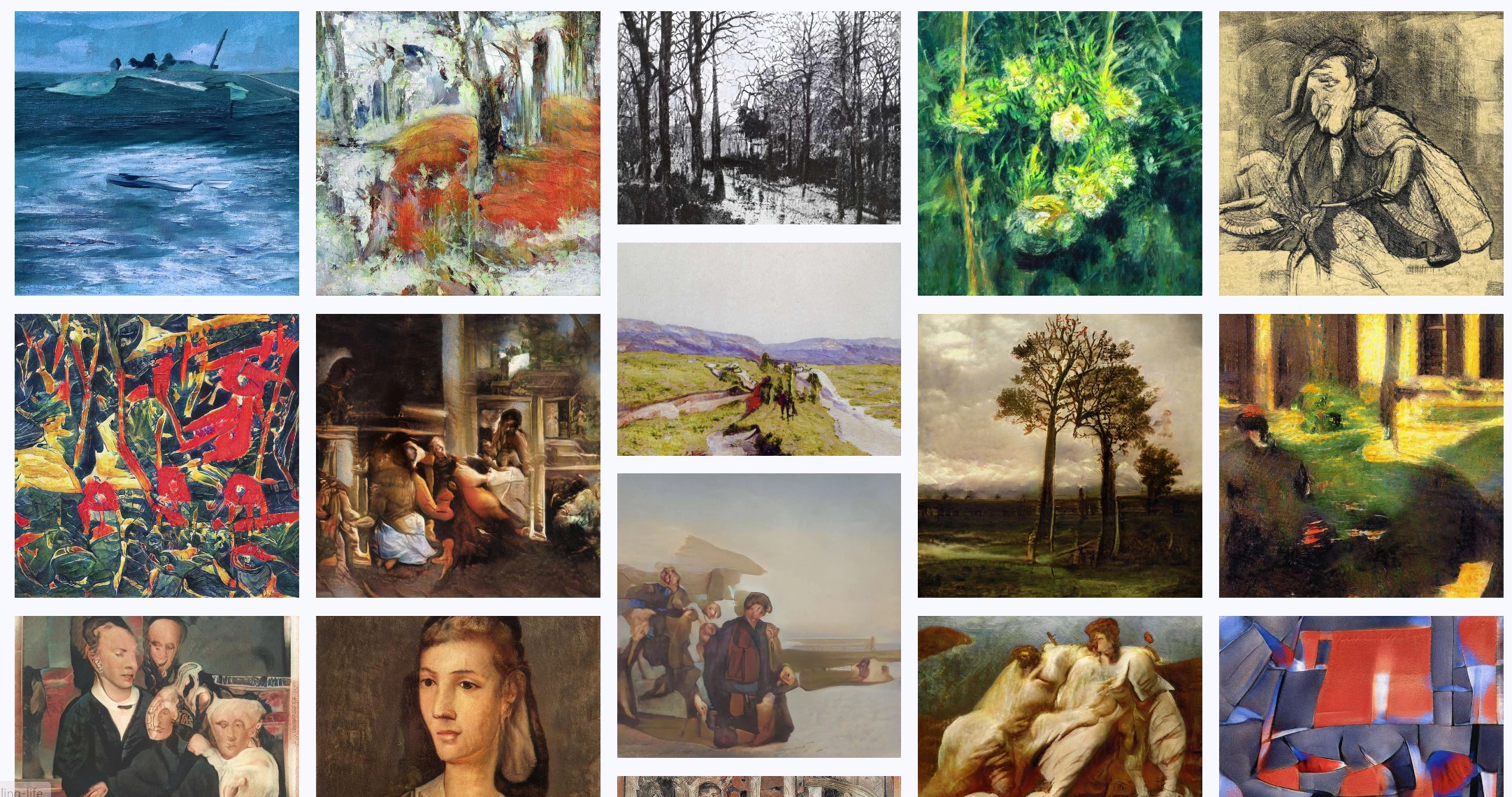
Or look at Latest Works at Art AI Gallery.

The range of what’s possible is tremendous. But then, it’s all been inspired by art created by humans. Is AI art actually creative work? Well, humans don’t create artwork out of nothing either. They have a lifetime of being inspired by other artists.

Let’s ignore this philosophical question for a moment. Let’s go back to the old idea of people “liking what they see” as a test of quality. I love visiting art galleries. I love looking at graphic art in magazines. I love looking at art books. I often buy books for their covers. And I have collected thousands of science fiction magazines, both in physical format and digital scans (but mostly digital). The reason I love them so much is because of their covers.

I’ve got to admit that AI-generated art presses the same exact buttons as art produced by humans. I have not read fiction written by AI writers, but what if I love their stories as much as I like AI art? To be honest, I believe I have a stronger psychological desire for fiction to be human-generated. What happens to that feeling if I read an AI-written novel that I like more than all my favorite human-written novels?

What I’m feeling right now is the desire to tune out the AI world. To retreat into the past, and savor the art and fiction created before the 21st century. That I want to become a modern Luddite that rejects AI machinery. But what will I be missing out on?

What if machines can take our imaginations further? Isn’t that why I’ve been a lifelong science fiction reader? Isn’t that why I took psychedelic drugs in the 1960s? Isn’t that why we admire the greatest of human thinkers?

Maybe I want to run away because I’m old and tired. One of the main enjoyments of getting old and putting up with the pains of aging is seeing how events unfold. So, why turn away now?

JWH

Why Do I Want Old Issues of Rolling Stone Magazine From the 1960s and 1970s?

by James Wallace Harris, 3/26/23

The other day I got the hankering to read old issues of Rolling Stone from the 1960s and 1970s and started trying to track them down. This morning I decided I needed to psychologically evaluate why I was doing this because I realized as I was still lying in bed that I don’t have enough time in life to read everything I want to read. So why waste reading time on these old magazines? That got me thinking about a Reading Bucket List and focusing on reading the most important books rather than just trying to read everything.

I might have ten more years, or it could be twenty or thirty, but the time to get things read is dwindling. For practical purposes, I’m going to assume I have ten years which will put me in the average lifespan range. Since I average reading one book a week, that’s 520 books. My best guestimate suggests I already own six times that many in my TBR pile. Or, put another way, I’ve already bought enough books to keep me reading for another sixty years. I need to stop chasing after more things to read like hundreds of old issues of magazines.

So why want to read a bunch of old magazines? Since I started contemplating the idea of a Reading Bucket List, I realized it’s not the number of books. This was my first useful revelation today. It’s the number of topics I want to study, including fictional explorations on those topics too.

Lately, I’ve been reading about the creation of the atomic bomb, the bombing of Hiroshima and Nagasaki in 1945, atomic bomb tests in the atmosphere, how the general public felt about nuclear war in the 1950s, and 1960s, and how all of that influenced science fiction novels and short stories. If I explored that subject completely I could use up my 520 books easily. Because I want to explore a number of topics before I die, I also need to limit how deep to get into them.

I see now that my Reading Bucket List won’t be a list of books, but a list of topics to study. So I need to change my bucket list name from Reading Bucket List to Topics to Study Bucket List. My fascination with topics usually doesn’t last long, just a few weeks or a couple of months. However, most of the topics I’m interested in are reoccurring. I’ve chased them my whole life and keep coming back to explore them some more.

(It might be valuable to make a list of these topics, but that’s for the future. Another project: see if I can create a timeline of how often these interests resurface.)

Let’s get back to the magazines. I believe writing the above paragraphs have already helped me see something important. I want to reread old issues of Rolling Stone with a specific goal. (One reason I write these blog posts is to think things through and see into myself.)

I want Rolling Stone magazines to find albums and groups I missed when I read Rolling Stone the first time they were coming out. This is part of a larger project of studying I’ve been piddling away at for decades. I started haunting record stores in 1965, but I never could afford to buy many albums each week. As I got older and had more money I’ve always tried to catch up by buying older records when I bought new ones, filling in the past. Now with Spotify, I can listen to almost any album from the past. But I need to know about the group or album to search for it and play it. I thought I’d read old record reviews and look for albums that are forgotten today but got good reviews back then.

My ultimate goal is to get a solid understanding of popular music from 1960 to 1980. Eventually, I want to add 1948-1959 and 1981-1999. And if I have time I’d like to learn about classical music. But I’ll define this topic as: What Were the Best Albums When I Grew Up? I figured Rolling Stone magazine from 11/9/67 to 12/31/80 could help me.

There are plenty of books on the best albums of all time, including from Rolling Stone, and I have many of them. But they tend to focus on the same famous albums and artists. I love when I find a song that’s been forgotten that really excites me. For example, recently I found “Harlem Shuffle” by Bob & Earl from back in 1963. I was listening to AM music at least eight hours a day back in 1963, but I don’t think I remember this song, at least not distinctly remember it. The title is familiar, and some of the lyrics, but then this song has been covered a number of times, including by The Rolling Stones.

Yesterday, I played “Harlem Shuffle” several times very loud on my big stereo with a 12″ subwoofer and it sounded fantastic. Boy did it press some great buttons in my soul. And that’s also part of my Topics to Study Bucket List. I grew up with certain buttons I liked pushed. I want to understand them. Studying music from 1960-1980 is working toward that. Studying science fiction that came out from 1939-1980 is another. But like I said before, making a list of all of them is for another day.

And wanting old issues of Rolling Stone is not a new desire. Back in 1973-74, I bought three huge boxes of old issues of Rolling Stone at a flea market. God, I wish I had them now, but I wouldn’t have wanted to drag them around for fifty years either. And earlier this century I bought Rolling Stone Cover to Cover, which featured every issue from 1967 to May 2007 on DVD. I still have it, but the discs have copy protection and the reader software stopped working after Windows 7. I’m thinking about setting up a machine, or virtual machine, and installing Windows XP on it to see if I can get it going again. But that will be a lot of work.

With some help from some folks on the internet, I’ve gotten the first 24 issues of RS on .pdf. I’m hoping to find more. If you have them and wish to share them, let me know. Or if you know of any other source. I’m also interested in learning about other magazines that reviewed music from 1960-1980. And I’ve already gotten some recommendations of less than famous bands to try. If you have a favorite forgotten album or group leave a comment. And now that I think about it, if you’re working on a similar project, tell me about your methods.

Ultimately, I want a list of all the albums I love most from 1960-1980. I might even buy them if I don’t own them already. I enjoy listening to one or two albums a day. Recent great discoveries were the first albums by Loretta Lynn and Etta James. I was surprised by how well they were produced, and how well everything sounds on my latest stereo system.

This week I discovered Amazon is selling CD sets that feature 3-8 original albums from certain groups for about the price of a single LP. Yesterday, I got in a set of Buffalo Springfield that was remastered under the supervision of Neil Young. 5 CDs for their three albums. (2 CDs are copies in mono.) I also ordered the first 6 studio albums of the Eagles, 7 albums from Fleetwood Mac’s middle period, and five albums of Weather Report. But these are famous albums. The real goal is to find forgotten albums I love as much as the classics of rock music.

JWH

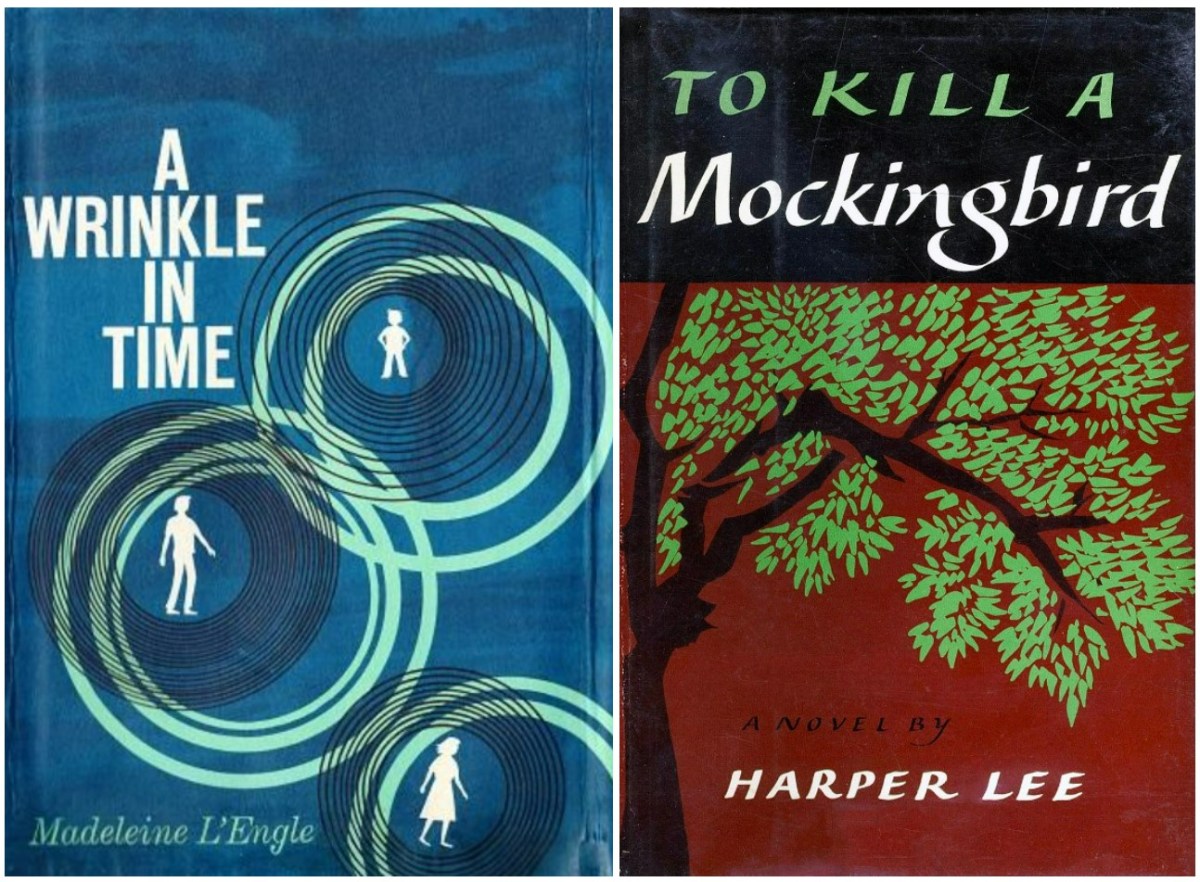
What If Mrs. Saunders Had Read Us To Kill a Mockingbird Instead of A Wrinkle in Time?

by James Wallace Harris, 10/10/22

In 1962, when I was in the 6th grade, my teacher Mrs. Saunders would read to the class after lunch. The book I remember from that year is A Wrinkle in Time by Madeleine L’Engle. I found it so exciting that I went to the school library and checked out a copy so I could read it faster than 30 minutes a day. At the time, I didn’t know the novel was science fiction, or that the story belong in a category of fiction. But looking back, I see Mrs. Saunders had put me on the road to becoming a science fiction fan.

Yesterday, I wondered if Mrs. Saunders’s influence on my life would have been different if she had read To Kill a Mockingbird by Harper Lee instead? Would I have become a different kind of bookworm? Instead of being fascinated with space and time travel, would I have become interested in social justice and equality? I did come to care about those issues later on in the 1960s as the decade progressed, but could I have been made aware of them sooner by reading the right book?

Even though I mostly read science fiction, I do read some serious literature. I was an English major in college. I know when they come out, The Best American Short Stories 2022 will have far deeper, more mature, better-written stories than The Year’s Best Science Fiction Vol. 3: The Saga Anthology of Science Fiction 2022. Yet, the odds are I’ll probably buy and read the science fiction anthology.

In eighth grade, my English teacher required us to read three books each six-week grading period and raised our earned grade by one letter if we read five. She had an approved reading list. That’s how I discovered Heinlein. She gave me the chance to read science fiction and non-fiction, and I took it. What if I had read A Tree Grows in Brooklyn or The Diary of a Young Girl by Anne Frank instead? Would I have matured sooner? Would I have been more conscious of the real world?

What if in 1965 I read The Painted Bird by Jerzy Kosiński instead of Stranger in a Strange Land? Would I have become a different person? Or, did I read what I read because I was an immature kid that could only handle the immaturity of science fiction? I tend to think it’s the latter because I know serious literature is far superior to science fiction now and I still seldom choose to read it.

I believe I read science fiction then and now to escape from the real world. I read nonfiction as a kid and as an adult to learn about the world. However, I do wonder how I would have been different if I had gotten addicted to serious literature as a kid.

If I had a time machine and could go back to talk to my younger self I would tell him to read To Kill a Mockingbird. I’d say, “Kid, stop daydreaming about going to the Moon and Mars. Other people will do it, but not you. And if you could, you wouldn’t like it. Our personality isn’t suited for space travel. Spend more time with people and less time with books, and when you read a book, make sure it helps to know more about people.”

I’m pretty sure my younger self wouldn’t listen. People don’t take advice. Not even from our future selves.

For all I know, Mrs. Saunders may have read To Kill a Mockingbird to us and I just ignored it. She read us several books that year, and A Wrinkle in Time is the only one I remember.

JWH