Thinking Outside of Our Heads

by James Wallace Harris

I believe recent developments in artificial intelligence prove that many of the creative processes we thought came from conscious actions come from unconscious mechanisms in our minds. What we are learning is computer techniques used to generate prose or images are like unconscious processes in the human brain.

The older I get, the more I believe that most of my thinking comes from my subconscious. The more I pay attention to both dreams and my waking thoughts, the more I realize that I’m very rarely making conscious decisions.

I might think “I am going to walk across the street and visit Paul,” but I have no idea how to make my body walk anywhere. But then, I’ve always assumed muscle actions were automatic. It was mental actions I believed were conscious actions. I used to believe “I am writing this essay,” but I no longer believe that. This has led me to ask:

Just what activities do we perform with our conscious minds?

Before the advent of writing, we did all our thinking inside our heads. Homer had to memorize the Iliad to recite it. Prehistory was oral. How much of thought then was conscious or unconscious? Have you ever read The Origins of Consciousness in the Breakdown of the Bicameral Mind by Julian Jaynes? I know his theories have lots of problems, but they do imagine what I’m thinking about.

How often have you worried over a problem, say a math problem, or a programming problem, and gave up, but then later, usually after a nap or sleep, the solution came to you? That’s the classic view of unconscious thinking. But even when we’re thinking we’re solving a calculus problem is it really being done at a conscious level? Are you consciously recalling all your math lessons over a lifetime to solve the problem?

How often when working on a Wordle or Crossword does the word magically come to you? But sometimes, we are aware of the steps involved.

In recent years I’ve developed a theory that when we work with pen and paper, or word processor or spreadsheet, or any tool outside our body, we’re closer to thinking consciously. Sure, our unconscious minds are helping us, but making a list is more willful than just trying to remember what we need at the store.

Writing an essay is more willful than woolgathering in the La-Z-Boy. Authoring a book is far more willful still. Engineering a submarine by a vast team of people is an even more conscious effort. Sure, it involves a collective of unconscious activity too, but a vast amount documentation must be worked out consciously.

I’ve written before about this idea. See “Thinking Outside Your Head.” That’s where I reviewed different techniques and applications we use to think outside of our heads.

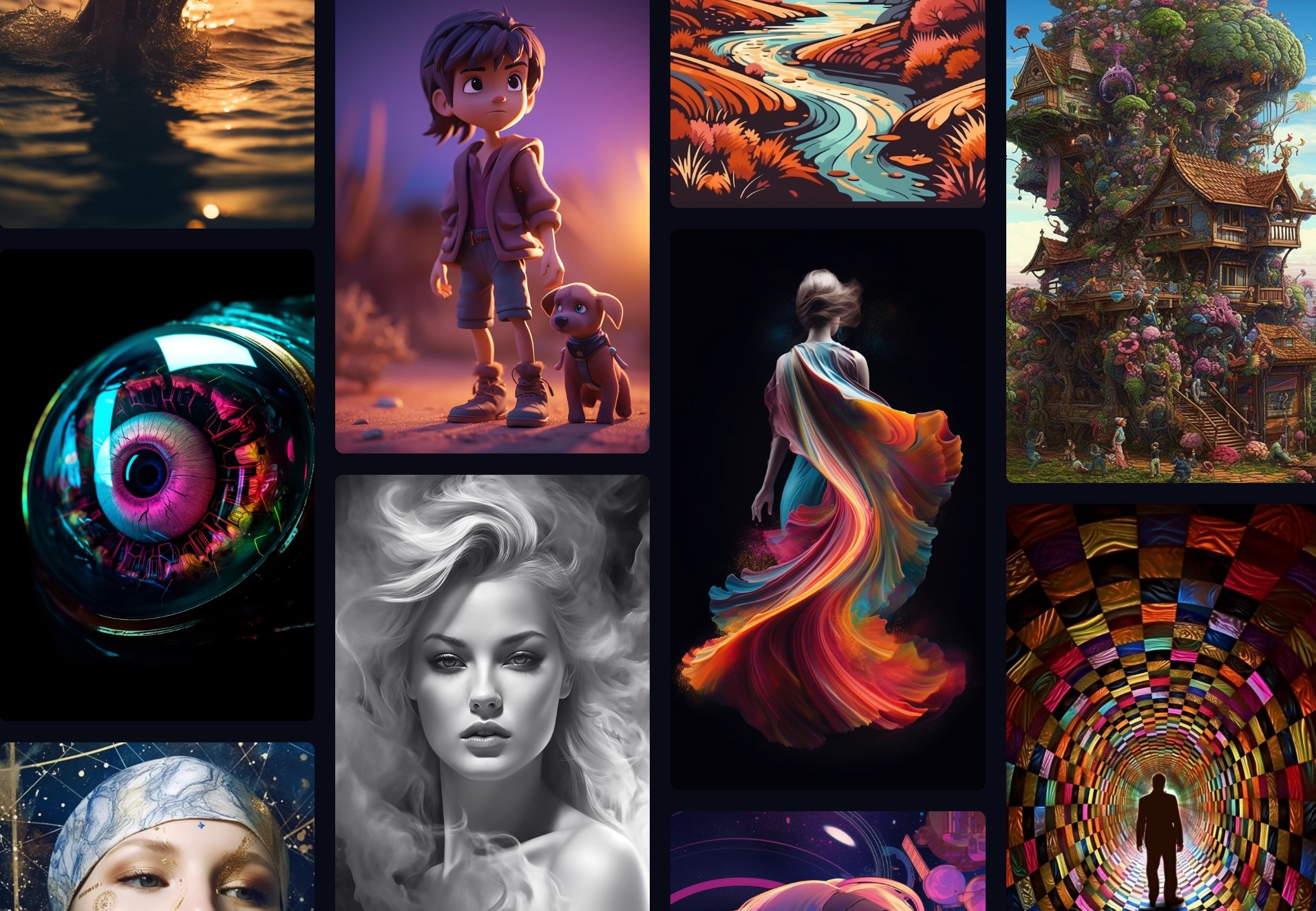
Many people want to deny the recent successes with AI because they want to believe machines can’t do what we do. That humans are special. If you scroll through the images at Midjourney Showcase, it’s almost impossible to deny that some of the images are stunningly beautiful. Some people will claim they are just stolen from human creativity. I don’t think that’s true.

I think AI developers have found ways to train computer programs to act like the human mind. That these programs have stumbled upon the same tricks that the brain evolved. Many great writers and artists often talk about their Muse. I think that’s just a recognition of their unconscious minds at work. What those creative people have learned is how to work consciously with the unconscious.

What some creative people are doing now is consciously working with two unconscious minds – their own and an AI. There is still a conscious component, the act of working with tools outside of our head. Where the action is, is that vague territory between the unconscious mind and the conscious one.

JWH
I Wish All My Family and Friends Blogged, I Wish Everyone Blogged

by James Wallace Harris, 7/16/23

What if everyone who ever lived kept an indestructible diary. Imagine reading what all our ancestors thought throughout their lifetimes. I don’t believe in an afterlife, but this could be the form of one. I’ve often wondered what my parents thought as they were growing up and got older. I’ve also wondered about my grandparents and what they thought about their lives. If they had written down their thoughts and were saved in some way, I could read them now. I wish I had a magic lamp and three wishes. This is how I’d use one of them.

I’ve always been somewhat interested in genealogy. However, just seeing names with dates of birth and death isn’t good enough. Whenever I see a genealogy chart I ask: Who were they, what did they think, what did they do?

The past is gone, so we can’t worry about that now. Although I have read accounts of people wanting to program an AI based on everything they could find out about someone they loved who died. The theory is if we programmed everything we know about a person, say Mark Twain or Ernest Hemingway into an AI, it might act like those men. That sounds creepy. On the other hand, one of my favorite science fiction stories, “Appearance of Life” by Brian W. Aldiss involved the protagonist finding memory cubes by two people who had been married and died years apart and putting them on a shelf so they talked to each other. It was both moving, tragic, and pathetic all at once.

Reading books by famous writers and biographies about them does convey a sense of who they were and how they reacted to their times. And biographies about famous people who left no writings of their own lack something. Look at the four Gospels — if only Jesus had written something himself.

Blogging offers the potential to do what I’m talking about. What if the Library of Congress archived all blogs. Would people in the 22nd century find our blogs interesting? What about the 43rd century?

If you pay attention to serious fiction and films, much of the trouble conveyed about the characters and interactions with other characters is due to a lack of communication. A good example is Celeste Ng’s first novel, Everything I Never Told You. Think about every person you ever loved, hated, or worked with, and what it would mean if you read their inner thoughts? Or at least the thoughts they wanted to share?

Also, it’s important to know that our thoughts are not coherent. Writing is the way we learn this. You’ll never know yourself only by thinking. Writing is a way to sculpt thoughts into something recognizable. Writing is the way to learn about yourself, and reading is the way to learn about other people.

Remember being back in school and all the emotional turmoil and conflicts caused by relationships, perceived relationships, and lack of relationships? Would we have been better people, kinder people, more self-aware people, if we had all blogged back then and read each others’ thoughts? Weren’t a lot of our problems as kids because we hid inside of ourselves and only speculated about our classmates? Would there be more or less school shootings if all the kids knew each other better?

Not only would growing up blogging help with self-expression, and communication, but it would have made us better learners and scholars. I’ve already written about “Blogging in the Classroom.”

I also wrote, “77 Things I Learned From Writing 1000 Blog Essays” which was mostly about how blogging is a great self-improvement tool. One of the main reasons I blog is it helps keep my mind together.

But I mostly wish everyone I knew blogged so I could learn more about them. Lately, I’ve been noticing how little we really communicate with one another. We have our public persona, and we hide the rest. I’ve noticed how many people as they grow older withdraw into themselves. We tend to just chat. Is that because we have given up on relationships? Or because we have more worries about ourselves and don’t want to worry about other people?

For some reason, we consume fiction hours a day. And it’s not the kind of fiction where we learn about people. It’s the kind that helps us forget and hide. Wouldn’t our lives be better if we learned more about real people and not imaginary people?

On the other hand, we are bombarded with personal problems and information overload every day. Maybe we watch television because we had enough of reality and real people? Even extroverts who crave constant social activity often stay at a shallow level of communication. Could the fact that we don’t all blog, or communicate deeply imply that’s what we prefer?

JWH

If You Knew Then What You Know Now

by James Wallace Harris, 6/21/23

How often have you heard an old person say they may look old on the outside but feel like a teenager on the inside? My wife’s uncle once told people on his 89th birthday that he felt 19 inside but something was terribly wrong with his body. And, how often have you wished you could go back to your younger self and give them advice hoping it would change who you were today?

Yesterday on YouTube I watched an excellent TED Talk about how we don’t know what our future self wants, even though we think we do. Journalist Shankar Vendantam gives several examples of people thinking one thing when they are young and something different when they got older. Vendantam makes a case that we’re constantly becoming new people, which is interesting when you think about how we always feel like we’re the same person.

If you could travel back in time to advise your younger self, they would have rejected it. They would have known better. We always think we know better.

I am reading The Shockwave Rider by John Brunner, a novel first published in 1975. It’s not an easy novel to read because Brunner was trying to show what it would be like to live in the early 21st century by extrapolating what he knew from the early 1970s. The novel has been praised for being an early example of fiction about computer hacking and invented the term worm for a computer virus. It’s also about eluding oppressive computer surveillance.

The Shockwave Rider is very hard to read, and I’m having to go back and reread some sections several times. That’s because Brunner was intentionally trying to give his readers future shock. Do y’all remember the 1970 nonfiction book, Future Shock by Alvin Toffler?

And this makes me wonder if we could take back examples of what it’s like to live in 2023 and give them to our younger selves, could they comprehend what their future selves might be like? I think this would be especially dramatic to people who grew up before the internet. I’m not sure people who grew up with the internet could imagine what life was like before it, or understand the concept of future shock.

Let’s imagine taking an iPad full of news videos, documentaries, magazines, and newspapers back to give to our younger self. How would they react? What would they make of 9/11 or January 6th? What would they make of Facebook, YouTube, and Twitter? Or watching movies on HBO? How would they feel from watching a week’s worth of the NBC Nightly News? Or a few episodes of PBS Frontline? What would they think of mass shootings and climate change?

I know I would have been horrified. As a teen seeing the real future would be scarier than any horror film.

I’m sure most of us wish we could go back and warn ourselves, hoping we could set our younger selves on a different path so we’d end up living in a better future. Recently, The New York Times ran an opinion piece, “Your Brain Has Tricked You Into Thinking Everything Is Worse.” It’s about the analysis of 235 surveys, covering 574,000 responses that ask people if they think our society is in moral decline. The current political climate suggests that people want to return to an early time when they believe people were nicer. The results of the research show that people always think that, no matter when they are asked, now, or in the past.

My initial reaction was that I agreed that people don’t change, and our perceptions of the past and future remain the same. But I thought the environment and civilization were getting worse, and would get much worse in the future. If you sub to the New York Times, please read the comments to the article linked above. Reactions are all over the place. They are fascinating and revealing, better than the article itself.

Personally, I feel people are more hateful now, but maybe that’s a delusion on my part. I have fond memories of the 1960s, but when I read about that decade in history books, those years were horrible. I think what hasn’t changed is my sense of happiness with life. If I ignore all the turmoil in the world, and just focus on what’s going on in my own life, I was happy then, and happy now.

They say knowledge is power, and that might be true. But a lot of depression, anxiety, and unhappiness come from knowing more about what’s going on around the world. When I first read Stand on Zanzibar in 1969, John Brunner’s 1968 novel about the 2010s, I was scared by the future he imagined. It was full of terrorism and political chaos. But in 1969, America was full of terrorism and political chaos. We forget that there were hundreds of anti-war bombings happening around the country, as well as endless riots and social unrest. And we also forget that statistically, crime was much worse back then.

I find reading The Shockwave Rider fascinating because Brunner invents several futuristic changes on each page that he expected might exist for us in the 21st century. For example, he predicted our lives would be full of gadgets that did all kinds of things for us. And we’ve had zillions of gadgets in our lives. What’s odd, is Brunner mostly predicted different kinds of gadgets that we don’t have. But the idea that lives would be cluttered with gizmos is right on. He also predicted all kinds of sexual and gender changes in society. His examples aren’t exactly the same as what we see today, but again, he was right about our time being more about sex and gender.

I think Brunner was predicting a future we’d want to avoid. That he knew that in the future we’d all wish we could go back and change our younger selves so we’d avoid the future we have. It’s weird to remember reading Brunner in 1969 and thinking about Future Shock in 1970, and then living in 2023 after living with future shock for decades.

Maybe the hate we see today is no more than the hate that existed in the past, but combined with future shock it feels like it’s so much more.

The upshot of all this is we wish things were different, but our minds stay the same. I’m 71 and feel mentally like I did at 17. I do wish my body was 17 again, however, I do feel different philosophically. I feel wiser. I would not exchange that for physical youth.

It’s 2023 but we wish it was the 1950s. But I remember in the 1950s we were so excited about living in the 21st century, and if I think about it, I remember there were a lot of things in the 1950s that were terrible and grotesque too.

Ram Das was right, all we can do is Be Here Now.

JWH

Developing a Healthy News Diet

by James Wallace Harris, 5/21/23

Michael Pollan created a small book about eating healthy called Food Rules. As an analogy, I’d like to create a set of sensible rules about consuming the news. Pollan distilled his list of rules down to three simple sentences, “Eat food. Not too much. Mostly plants,” but it really takes reading his book to understand that mantra.

What I would like to do is develop a similar simple mantra about my daily news consumption but I’ll have to work out the details first. Pollan emphasized eating whole foods rather than processed foods. Is there such a thing as whole unprocessed news? “Not too much” is an obvious target since we obviously consume too much news. Finding an analogy for “mostly plants” will be interesting.

What would be the equivalent of nutritious news? Experience has taught me that some news is unhealthy, and I often get news indigestion. I also admit I’m bloated and overweight from too much news consumption.

Like whole food and junk food, we prefer junk news over whole news. I spend several hours a day nibbling on news from many sources. Most of which is forgotten immediately. I wonder if my first rule should be:

#1 – Ignore easily forgettable news

We’re used to clicking on anything that catches our fancy while idling away moments on our smartphones. Essentially, this kind of news is gossip and titillation. Basically, we’re bored or restless. We should use that time in better ways, especially if it exercises our minds. Read real news instead. Or, do something active. Playing games, listening to music, or audiobooks, is more nutritious than never-ending bites of clickbait.

Everyone bitches about information overload but who does anything about it? I’ve learned from intermittent fasting that my body appreciates having a good rest each day from eating. I believe I need to apply the same idea to news consumption.

#2 – Limit your hours consuming the news

I find 16:8 fasting works well for eating. I’m thinking of a 22:2 fast for news is what I’m going to aim for at the moment. Two hours of news consumption a day might sound like a lot, but if you add up all the forms of news I consume including television, magazines, online newspapers, YouTube, and news feeds, RSS feeds, I can easily go beyond two hours.

We should also separate news from learning and entertainment. Learning something new could be considered a form of news. I’m not going to count educational pursuits in my news time. And if you enjoy reading nonfiction books or watching documentaries on TV, that shouldn’t count as news either. However, shows like 60 Minutes, CBS Sunday Morning, and The Today Show can be considered informative entertainment news. Some people just prefer news shows for fun rather than watching fictional shows. I’m not sure if they should count or not.

What we really want is to stay informed about the world so that we interact with reality wisely. Humans have an extremely difficult time processing information. We think we’re far smarter than we are. We constantly delude ourselves. And we think our opinions matter when 99.999% of the time they don’t. Most people think they are experts on countless topics after having consumed just a few hours of news. They think they know better than real experts who have put tens of thousands of hours into studying their specialty.

#3 – Stop assuming you know anything

I believe the real key to understanding the news is being able to tell the difference between opinion and significant data. The real goal of news consumption should be finding the best data, and that means getting into statistics.

Unfortunately, the news industry is overwhelmed with talking heads. Everyone wants to be an expert, and all too often most news consumers tend to latch onto self-appointed experts they like. News has become more like a virus than information processing.

I read and watch a lot of columnists and programs about computers, stereo equipment, and other gadgets. Most are based on personal impressions of equipment individuals have bought or been loaned from manufacturers. These tech gurus are a good analogy for what I’m talking about. Most of the news we take in daily is from individuals processing limited amounts of information and giving us their opinion. What we really want is Consumer Reports, Rtings, or the Wirecutter, where large amounts of data are gathered from a variety of sources, and statistically analyzed.

This is just a start on designing my news diet. I want to keep current on a long list of topics, but that’s like learning about all the vitamins and nutrients my body needs. News nutrition will be a vastly more complicated topic. What are the essential vitamins I need every day? Is it politics, national and international affairs, economics, crime, immigration, ecology, etc?

Do I need to know about everything? Is that what an informed citizen needs to do? Take immigration. Is anything I think about immigration affects the situation at the border? Does voting liberal or conservative even affect anything at the border? I can barely maintain order in my house, why should I believe I can organize all of reality on Earth? Maybe my last two rules should be:

#4 – Know my limitations

#5 – Pursue the news I can actually use

Like nutrition, news is a complicated subject that’s hard to understand and can easily confuse.

JWH

“Created by Humans” vs. “Created by AI”

by James Wallace Harris, 4/22/23

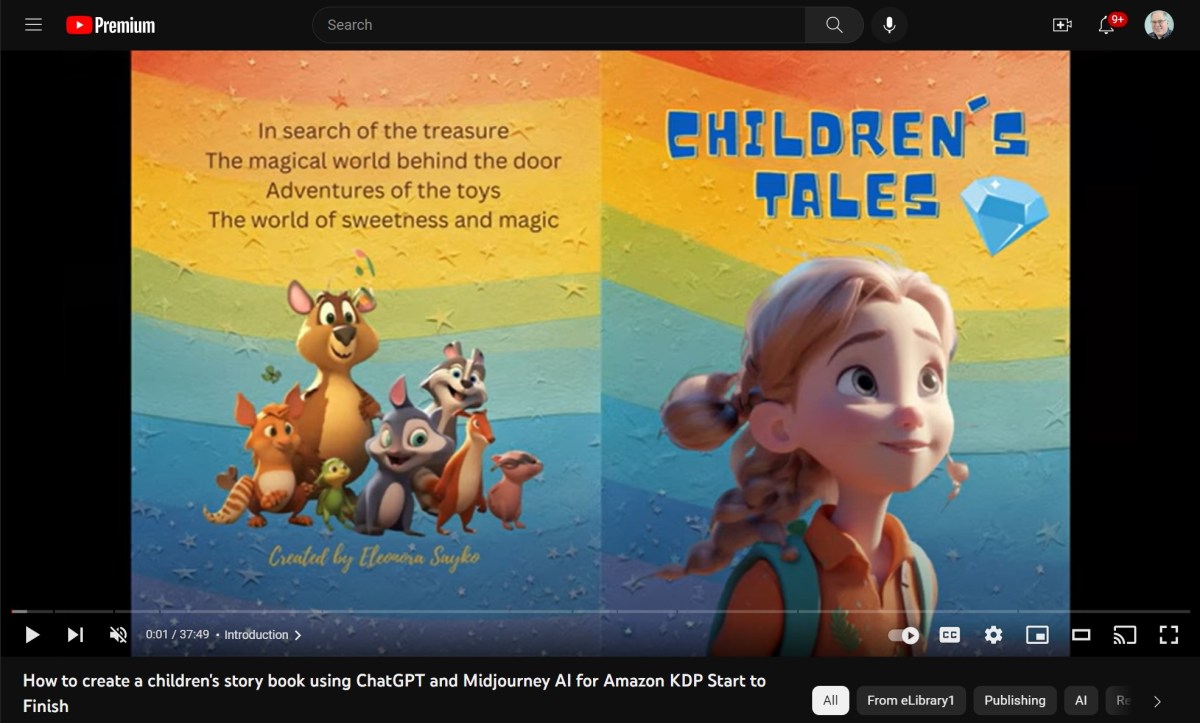
The first video I watched on YouTube this morning was “How to create a children’s storybook using ChatGPT and Midjourney AI for Amazon KDP Start to Finish.” eLibrary1 explains how she creates children’s books using AI tools.

It’s actually quite fascinating. She gets ChatGPT to suggest a series of ideas and then asks ChatGPT to write up 500-word versions of the ideas she likes. Then she tests those stories against an AI checker to show how they can be easily detected as AI-created. Then she runs the stories through another program that rewrites her stories. After that, she checks again and shows how the AI detector shows they are now human-written. Then she runs them through a plagiarizer detector to make sure they won’t be rejected for that reason. After she’s sure she’s got something good to work with she submits the stories scene by scene to Midjourney to have it create the artwork.

As I watched this video I thought about how so many people are concerned with seeing “Made in America” tags on the products they buy. I wondered if people in the future will look for “Made by Humans” or “Created by Humans” tags?

My initial reaction was I wouldn’t want to read a book that eLibrary1 created. I would feel cheated. I expect art and fiction to be produced by artists that suffered for their art. But then I thought, what if the story and pictures were better than what people produce? I’m already seeing artwork produced by AI that blows me away.

Just scroll down for a while in Midjourney’s Community Showcase.

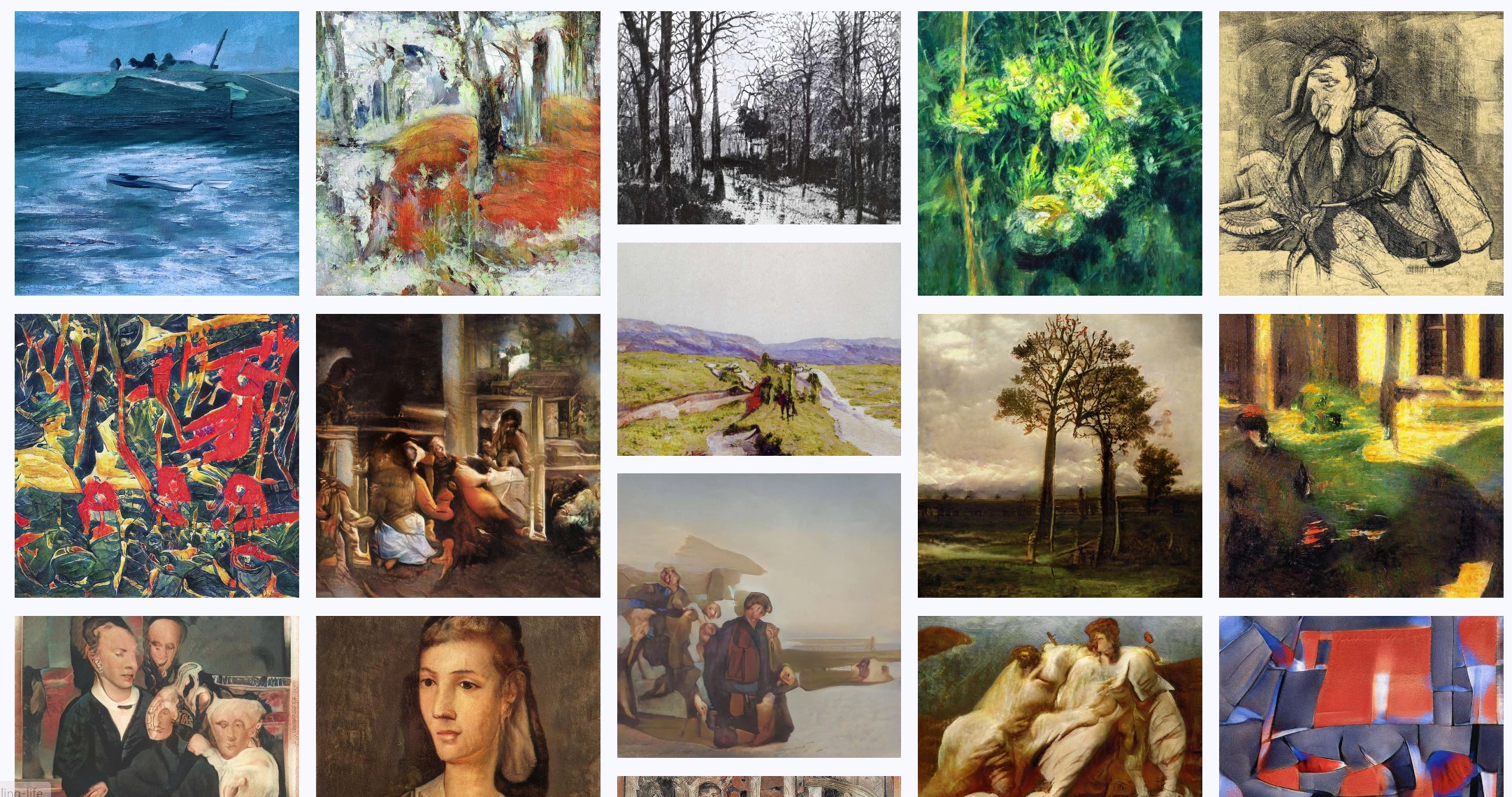
Or look at Latest Works at Art AI Gallery.

The range of what’s possible is tremendous. But then, it’s all been inspired by art created by humans. Is AI art actually creative work? Well, humans don’t create artwork out of nothing either. They have a lifetime of being inspired by other artists.

Let’s ignore this philosophical question for a moment. Let’s go back to the old idea of people “liking what they see” as a test of quality. I love visiting art galleries. I love looking at graphic art in magazines. I love looking at art books. I often buy books for their covers. And I have collected thousands of science fiction magazines, both in physical format and digital scans (but mostly digital). The reason I love them so much is because of their covers.

I’ve got to admit that AI-generated art presses the same exact buttons as art produced by humans. I have not read fiction written by AI writers, but what if I love their stories as much as I like AI art? To be honest, I believe I have a stronger psychological desire for fiction to be human-generated. What happens to that feeling if I read an AI-written novel that I like more than all my favorite human-written novels?

What I’m feeling right now is the desire to tune out the AI world. To retreat into the past, and savor the art and fiction created before the 21st century. That I want to become a modern Luddite that rejects AI machinery. But what will I be missing out on?

What if machines can take our imaginations further? Isn’t that why I’ve been a lifelong science fiction reader? Isn’t that why I took psychedelic drugs in the 1960s? Isn’t that why we admire the greatest of human thinkers?

Maybe I want to run away because I’m old and tired. One of the main enjoyments of getting old and putting up with the pains of aging is seeing how events unfold. So, why turn away now?

JWH