What I Learned After Buying a UGreen DXP2800 NAS

by James Wallace Harris, 1/7/26

Don’t bother reading this essay unless you’re considering the following:

  • Want to cancel your subscription to a cloud storage site
  • Manage terabytes of data
  • Hope to convert your old movies on discs to Jellyfin or Plex
  • Want to run Linux programs via Docker

For the past few years, I’ve been watching YouTubers promote NASes (Network Attached Storage). Last year, I just couldn’t help myself, I bought a UGreen DXP2800. I’m not sure I needed a NAS. Dropbox has been serving me well for over fifteen years.

[My DXP2800 is pictured above on top of a bookcase. It’s connected to a UPS and a mesh router. It’s a little noisy, but not bad.]

Actually, I loved Dropbox until I figured it was the reason my computers ran warm and noisy. I assume that was because it routinely checked tens of thousands of my files to keep them indexed, copied, and up-to-date on my three computers, two tablets, and an iPhone.

Lesson #1. If you desire simplicity, stay with the cloud. My old system was to use Dropbox and let it keep copies of my files locally on my Windows, Mac, and Linux machines. I figured that was three copies and an off-site backup. That was an easy-to-live-with, simple backup solution. However, I only had 2TB of files, which Dropbox charged me $137 a year to maintain.

Moving to the UGreen DXP2800 meant accessing all my files from the single NAS drive. It’s cooler and quieter on my computers. However, I had to purchase two large external drives for my Mac and Windows machines that I use to automatically back up the NAS drive daily.

Thus, my initial cost to leave Dropbox was the cost of the DXP2800 and two 16TB Seagate drives for a RAID array ($850), plus $269 (20TB external drive). I already had an old 8TB external drive for the other backup. And if I want an off-site backup, I need to physically take one of my drives to a friend’s house, or pay a backup company $100-200 a year.

And I have more to back up now. I was running Plex on my Mac using a 4TB SSD. Basically, I ripped a movie when needed. Since I got the UGreen DXP2800 and 12TB of space, I’ve been ripping all my movies and TV shows that I own on DVD and Blu-ray. I’ve ripped about half of them, and I figure I’ll use up 8-10TB of my RAID drive space.

I’ve been working for weeks ripping discs. I had no idea we had accumulated so many old movies and TV shows over the last thirty years. Susan and I had gotten tired of using a DVR/BD player, so we shelved all those discs on a neglected bookcase and subscribed to several streaming services.

When I bought the UGreen DXP2800, I thought we could cancel some of our subscriptions. We are viewing our collection via Jellyfin, but we haven’t canceled any streaming services.

I should finish the disc ripping in another couple of weeks. At least I hope. It’s a tedious process. My fantasy is having this wonderful digital library of movies and television shows we love, and we’ll rewatch them for the rest of our lives. I even fantasized about quitting all our streaming services. But I don’t think that will happen.

Looking at what TV shows Susan and I watched during 2025, none were from our library. Susan has started rewatching her old favorite movies. She especially loves to watch her favorite Christmas movies every year. And I have talked her into watching two old TV shows I bought on disc years ago, The Fugitive and Mr. Novak. Both shows premiered in 1963, and neither is on a streaming service.

Lesson #2. It would taken much less effort to just watch the shows on disc. And when I’ve converted them, I will have 10TB of data that I must protect. It’s a huge burden that hangs over my head.

Lesson #3. I tried to save money by using the free MakeMKV program. It works great, but creates large files and is somewhat slow. I eventually spent $40 for WinX DVD Ripper for Mac. It’s faster and creates smaller .mp4 files. However, it doesn’t rip BD discs. I found another Mac program that will, but it will cost another $49. I bought a $39 program for the PC to rip Blu-ray discs, but it was painfully slow. They claimed to have a 90-day money-back guarantee, yet the company ignored my request to return my money. It pisses me off that there are several appealing ripping programs I’d like to try, but they all want their money up front. Most offer a trial that will run a 2-minute test. That’s not enough. I’m happy with WinX DVD Ripper for Mac; I just wish it ripped Blu-rays.

Even then, files that are ripped from Blu-ray movies are huge and take much longer to rip. I’m not sure Blu-ray is worth it.

I tend feel movies and TV shows look better on streaming services. Most people won’t notice. My wife doesn’t see the difference between DVD and BD. For ripping, I prefer DVDs.

Lesson #4. I bought the UGreen NAS even though I wanted a Synology NAS. UGreen just had better hardware. I thought I wanted to get into Docker containers, and UGreen had the hardware for that at the price I wanted to pay. However, setting up Docker containers requires a significant amount of Linux savvy.

I kind of wish I had gotten Synology. It runs many programs natively, so you don’t have to mess with Docker. I hope UGreen will do more of that in the future. I spent days trying to get the YACReader server running. I never succeeded. That was frustrating because I really want it.

There are many services I’d like to run, but I just don’t have the Docker and Linux skills.

Final Thoughts

I’m not sure I would buy a NAS, knowing what I know now. However, if I could figure out how to run programs via Docker, I might go whole hog on NASes. In which case, I would regret getting the 2-drive DXP2800. At first, I thought I’d be good getting two 8TB drives to put into RAID. But I spent more for two 12TB drives, just in case. If I really get into having a home lab, I should have bought the 4-drive DXP4800 Plus.

There are many features I wish UGreen would offer for its software. If all the programs I wanted to run ran natively on the UGreen OS and were easy to use, I think I would love having a NAS.

Setting up file sharing was easy. I got it working on my Mac, Windows, Linux, Android, iPad, and iPhone. However, it’s hard to open files using the UGreen app on iOS and Android. I don’t know why UGreen just can’t make an all-purpose file viewer. Dropbox can open several file types on my iPhone. UGreen expects me to save the file to my iPhone and then view it with an iPhone app. However, I can’t get my iPhone apps to find where the UGreen app saved the file.

That’s why I want the YACReaderLibrary Server running on the DXP2800. I have YACReader running on every device. It can read .pdf, .cdr, .cdz, .jpg, .png, .tiff, and more. Too bad it doesn’t read Word and Excel files too. I think other Linux server apps can handle even more file types. I want my NAS to be a document server.

I’m moving forward with my NAS. If I fail, I’ll regret buying the NAS. Or, I might create a server full of useful apps that I can’t live without. That sounds fun, but it also sounds like it could become a lifelong burden.

JWH
Watching Old Movies vs. Old Television Shows in Old Age

by James Wallace Harris, 9/20/25

For years, my wife and I have been watching old TV shows at night. We just finished fifteen seasons of ER. It’s our ritual to watch a couple of hours of TV together. However, I asked Susan if we could watch movies for a few months, and she agreed. Susan prefers TV shows.

I’ve always been a big fan of Turner Classic Movies (TCM). I’ve loved old movies since I was a kid, when I would stay up watching movies all night in the summertime. Stations back then would play old movies overnight. That was in the 1960s, and they would show films from the 1930s, 1940s, and 1950s. The kind that TCM shows today.

Since I retired, I discovered I can’t watch TV by myself. My mind gets restless. But if I have someone to watch with me, my mind can relax. I can’t explain that. I’ve been craving old movies due to that affliction, so I’m thankful that Susan has agreed to watch old movies with me.

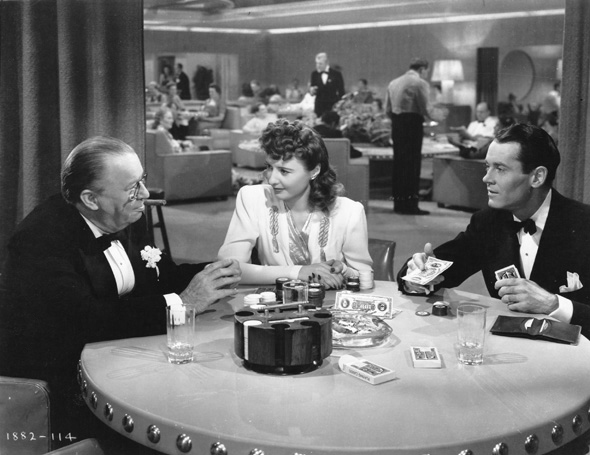
Sadly, watching TCM films hasn’t been as fun as I hoped. Has something happened to me? Last night we watched The Lady Eve (1941) with Barbara Stanwyck and Henry Fonda – classic screwball comedy. When I was young, I would have rated this film A+. Now, it was just a C. Susan gave it the same grade. Our friends Mike and Betsy had seen this flick a few days ago, and they were also disappointed. The TCM host gushed about The Lady Eve, and IMDB gives it a 7.7 out of 10 score. That doesn’t sound high, but it is. Anything over a 7 is generally something good.

Mike and Betsy felt the film jumped the shark when the Stanwyck character passes herself off as a different woman to Fonda’s character, and he believed her. That didn’t bother Susan and me.

I enjoyed all the innuendos and double entendres. The movie is a goofy take on sex and love. And I’m a sucker for good character actors, and this film had many of my favorites (Charles Coburn, Eugene Pallette, William Demarest, and Eric Blore).

I remember being completely enchanted by The Lady Eve thirty years ago, so why did I have to force myself to watch it last night? I think the answer is binge-watching television. We’ve been altered by streaming TV.

We just finished watching 331 episodes of ER. Every episode was more entertaining to me than The Lady Eve, even the ones I found somewhat disappointing. Susan and I generally watched two episodes a night, but sometimes we’d sneak another one or two episodes in during the day. We were addicted. I always craved 8:00 pm because I wanted to see another two episodes.

Old movies, or even new movies, just don’t have the addictive quality of a great television show. That’s why Susan prefers TV. And maybe I do too. I think preference began when we could binge-watch an entire TV show from pilot to finale.

I’ve always thought movies were artistically superior to television shows. And maybe they often are. But I don’t get attached to the characters like I do with Mrs. Maisel, Perry Mason, or Beaver Cleaver.

Great movies often have more to say. Great films used to have better acting and higher-quality production. That’s not always true anymore.

Ace in the Hole (1951) had impressive character development. It had a tight plot. The cinematography was excellent. The ending was very satisfying. And it had a lot of delicious moral ambiguity. It’s an A+ picture. It even makes a good episode of Perry Mason look mediocre. Why then is watching Perry, Della, and Paul more addictive? And why was the newer HBO Perry Mason even more intensely addictive? The answer, I believe, is the newer Perry Mason, which combined a TV characterization with movie-level production values.

What if the characters Barbara Stanwyck and Henry Fonda in The Lady Eve came back every week? Is that why we loved The Thin Man and Tarzan movies so much? Are movies less satisfying than television because the story ends? And is that why so many films today at the theaters are franchises?

JWH

Pop Culture vs. Social Media

by James Wallace Harris, 1/1/25

I began pondering the differences between generations that grew up with pop culture versus generations that grew up with social media when playing Trivia Pursuit. I then noticed the same differences while watching Jeopardy. Pop culture is about what most people know, while social media is about knowing the details of subcultures.

I’m often surprised by how much young contestants on Jeopardy know about the 1960s and older pop culture, but old and young players are very selective in their knowledge of 21st-century trivia. For years, I thought people my age just couldn’t keep up with popular music after 1990 because of changing mental conditions. But now I wonder if it’s because popular music shattered into countless genres appealing to various subcultures. In other words, there became too many art forms to remember their trivia.

I was born in 1951 and my personality was shaped by the pop culture of the 1950s and 1960s. Pop culture was primarily television, AM radio, movies, books, newspapers, magazines, and comics. People watched the same three television networks, CBS, NBC, and ABC. They often saw the same hit films and listened to the same Top 40 songs. They usually read a single daily paper. Some people read books, usually, paperbacks bought off twirling racks which sold in the hundreds of thousands, if not millions. The most common magazines seen in people’s homes were National Geographic, Reader’s Digest, Saturday Evening Post, Life, and Time.

The by-product of that limited array of pop culture was people within a generation shared a common awareness of what each other liked. You might not watch Leave It to Beaver or Perry Mason, but you knew what those shows were about.

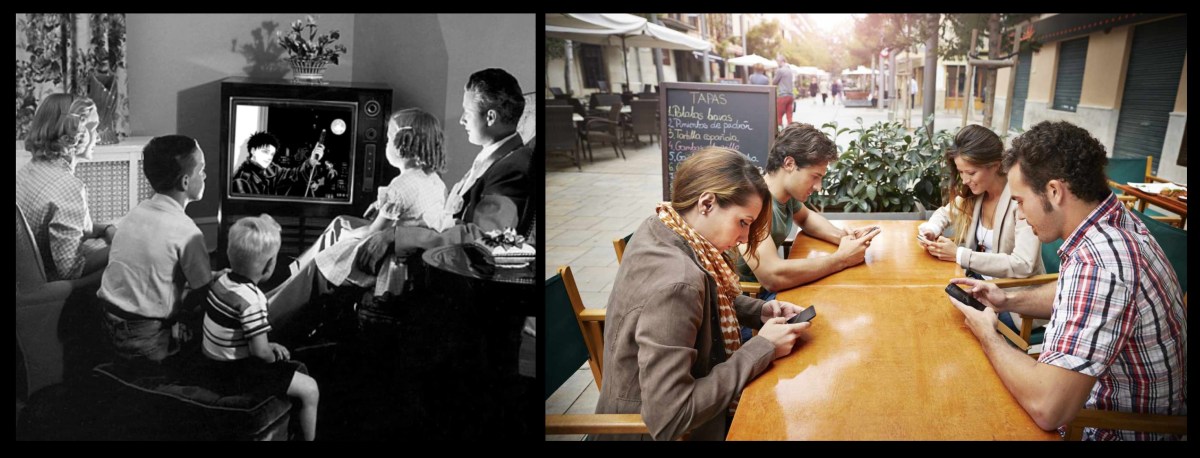
People growing up since the Internet, especially since the explosion of social media, didn’t have popular culture, they had social media that focused on subcultures. Social media might be all about sharing, but people’s shared interests have broken down into thousands of special interests. People on the internet crave contact with others who share their interests, but no one group, not even Swifties, makes up a popular culture.

There are songs on Spotify with billions of plays that are completely unknown to the average American. The Academy Awards now nominate ten pictures for the Best Picture category, but most Americans have seldom seen them before they were announced. Hundreds of scripted TV shows are produced yearly yet it’s quite easy for all your friends and family to have a different favorite. My wife and I struggle to find shows we’re willing to watch together.

Mass media has broken down into specialized media devoted to subcultures.

Pop culture was a product of mass media. It inspired group identity through common knowledge. I’m not sure it exists anymore.

Social media is a byproduct of individuals trying to find others sharing similar interests. It isolates people into smaller groups. It promotes individual interests that limit people’s ability to overlap with other people’s interests. It makes people specialize. You become obsessed with one subculture.

I wonder if the MAGA movement is unconsciously countering that trend. They think they want to return to the past, but what they want is to be part of a large group. Their delusion is believing that if everyone looked alike and thought alike, it would create a happier society. I’m not sure that’s the case. The 1950s were not Happy Days, and the 1960s wasn’t The Age of Aquarius.

I’m not sure that happiness comes from the size of the group you join. Some happiness does come from interacting with others and sharing a common interest. I also think people might be happier knowing less about subcultures, and more about pop culture. But that’s just a theory.

Could people withdraw some from the internet to become more physically social? I don’t think we can give up on the internet, but do we need to use it as much as we do?

I liked it when my friends watched the same TV shows or movies. I also loved that my friends knew about the same albums, and would play them together, or go to the same concerts. Pop culture was popular culture. Will we ever see that again? And is that a delusion on my part. Am I only remembering a more social time from youth that naturally disappears after we marry?

JWH

What Were the Best Films of 2024?

by James Wallace Harris, 12/28/24

Before the pandemic, I went to the movies at least once a week, sometimes twice. Since then, I haven’t been back to a movie theater, which has made me out of touch with the world of movies. For the last couple of years when the Oscar nominations were announced I would start streaming all the movies from the top categories. I have a 65-inch TV and haven’t missed going to the theater.

The 2025 Oscar nominations for 2024 films won’t be announced until January 17th, but I’ve got a head start on finding the best 2024 films by reading or watching Best of the Year lists, word of mouth, or streaming services promotions. So far I’ve seen:

  • Drive Away Dolls (B+)
  • Civil War (B-)
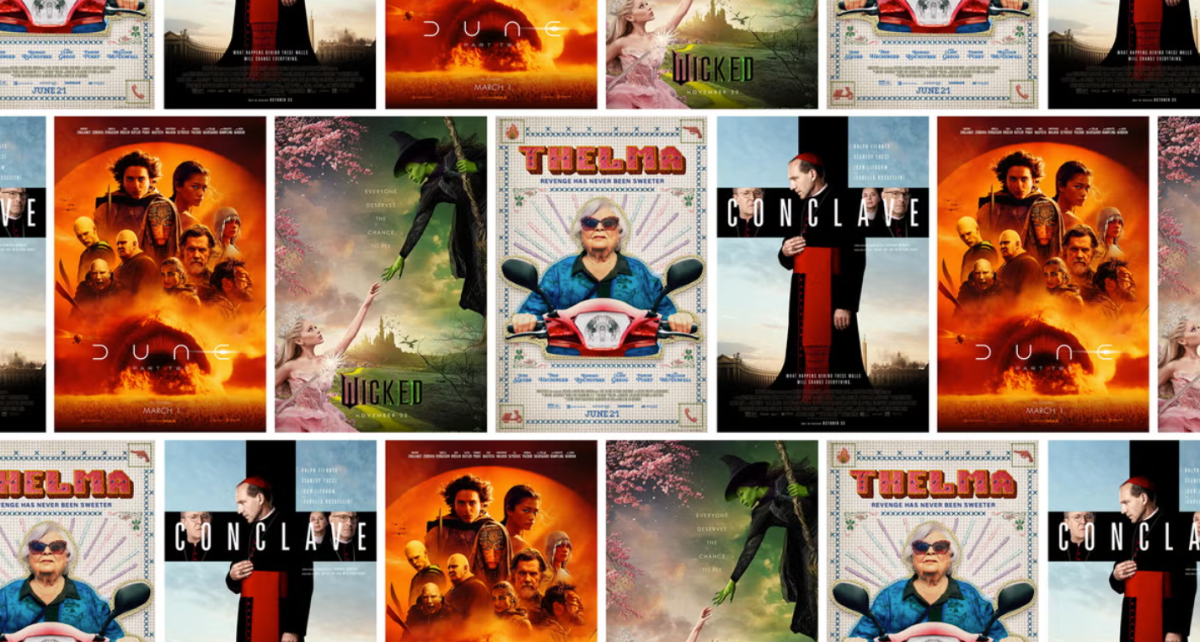
  • Thelma (A+)
  • Challengers (B)
  • Furiosa: A Mad Max Saga (B)
  • Conclave (A-)
  • Juror #2 (B+)
  • Nightbitch (B-)
  • My Old Ass (A+)

However, these films have not gone over well with my wife Susan. As I’ve gotten older, I’ve developed a problem where I have difficulty watching a movie alone. I need Susan or a friend to watch with me, otherwise, I just get restless and switch to watching YouTube videos. That means I have to pick movies that others want to watch.

Susan has been very nice trying several 2024 movies, but I can tell she hasn’t liked any of them except Thelma and My Old Ass. Last night I had an epiphany about what Susan likes to watch. She loves upbeat movies with likable characters, the kind she can watch over and over. Susan rewatches TV shows and movies that are old favorites as she sews.

That has conditioned her to prefer certain kinds of shows and made it hard for her to try new shows. We each have our mental problems with watching TV.

After reading a bunch of Best of the Year lists, I want to see the following movies, but for the most part, I don’t think Susan will like any of them, except maybe The Wild Robot or maybe, Saturday Night. If you know of any 2024 feel-good films, leave a comment. I prefer edgier, unique films. But then, I only will watch them once. I usually don’t like sequels or movie franchises.

  • The Substance
  • Anora
  • Dune Part 2
  • Blitz
  • Close Your Eyes
  • The Brutalist
  • The Order
  • Small Things Like These
  • His Three Daughters
  • Hit Man
  • The Room Next Door
  • About Dry Grasses
  • Emilia Perez
  • Sing Sing
  • A Complete Unknown
  • A Real Pain
  • Babygirl
  • The Wild Robot
  • Saturday Night
  • I’m Still Here
  • The Piano Lesson
  • The Seed of the Sacred Fig
  • All We Imagined As Light
  • September 5
  • Nickel Boys
  • Wicked

And if you’ve seen 2024 films you loved that aren’t on these two lists that I would admire, please recommend them in the comments.

What’s funny is the films I’d rate the highest are the ones I would rewatch. And except for Thelma, I wouldn’t watch any of the 2024 films we’ve seen again.

Because of my attention affliction, I’m becoming out of touch with current pop culture. It’s weird needing company to watch television shows and movies. It makes me love books and music more.

I like talking with people about the books I read, and I have several friends who read the same kind of books I do, so I’m lucky there. But I don’t know anyone who listens to music anymore.

People talk about how social media bonds young people today. Well, when I was growing up, pop culture bonded our generation. However, that has come apart. Like I said, I used to go to the movies once or twice a week. That was because I went with friends who wanted to see the films. Maybe that’s why I can’t watch movies on TV by myself, that I’ve always considered them a social thing. Ditto for TV shows. Growing up, I watched TV with family or friends, and the fun thing about TV was talking about shows with kids at school.

JWH

2024 Best Movies of the Year Lists:

Reading History Books About Events I Originally Watched on Television

by James Wallace Harris, 12/8/24

The 1960 U.S. presidential election is the first one I remember, but just barely. I was eight years old. My father was for Nixon and my mother for Kennedy. I decided I liked Kennedy because he was younger, more dynamic and had a good-looking wife. Even at eight, good looking women were often a deciding factor. I remember getting in a fight in the school playground because I was for Kennedy and the other kid was for Nixon. Neither of us got to decide the issue because a teacher pulled us apart.

During the Kennedy years I didn’t watch TV news. I would sometimes stay home from school to watch the Mercury space launches. Back then the TV news departments of each network would take over all broadcasting. In the first half of the 1960s, the space program was about the only real-world activity I paid any attention to.

I did pay some attention during the Cuban Missile Crisis in 1962, mainly because I lived on Homestead Air Force Base, and everyone talked about it constantly. I remember having duck and cover drills at Homestead Air Force Base Elementary, but I was disappointed when there were no real A-bombs dropped. (I was very immature for my age.)

I didn’t become a news watcher until Kennedy’s death. I remember that weekend, my family watched the news constantly, and the following week too. That’s when I started following Walter Cronkite. I turned twelve three days after Kennedy was shot.

The news also became exciting in February of 1964 when The Beatles came to America. It was during 1965 that older boys I knew began worrying about being drafted, and I started paying attention to news about Vietnam.

The CBS Evening News was my main source of information about life beyond my own little world during the 1960s. I sometimes got to see The Today Show on NBC because my mother watched it while making breakfast. I liked that show because I found Barbara Walters hot. (Okay, I’ve already said I was a weird kid.) Sometimes I would watch news specials or documentaries. While in the ninth grade (1965-66) I had a civics course. But for the most part I just wasn’t that aware of what was going on in the world except for Top 40 AM music.

I don’t remember reading the paper, The Miami Herald, until 1968. I did start to read magazines in 1965, but that was haphazard. People would give my parents copies of Life, Time, Newsweek, Look, Saturday Evening Post, and National Geographic from time to time, and I found them fascinating. On my own, after 1965, I would buy Popular Science, Popular Mechanics, and MAD Magazine. During twelfth grade (1968-69) my English teacher got me interested in literary fiction, and I subscribed to Saturday Review with money I made from working in a grocery store. I really didn’t understand it though. In late 1968 or early 1969, I got hooked on Rolling Stone magazine and sometimes bought Creem when it started publishing.

A whole lot of what I knew about the counterculture came from Life Magazine.

If you think about it one way, television and magazines offered a fairly diverse view on what was happening in the world, but squinted at it another way, it was a rather limited view.

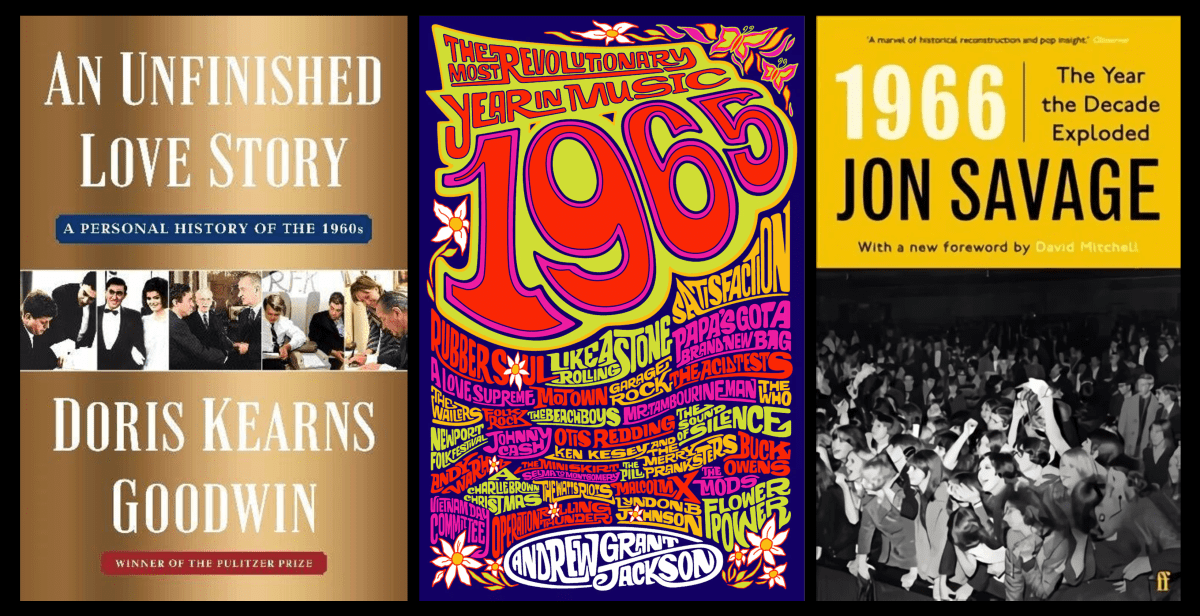
In December 2024, I’ve been reading three books about the 1960s that explore events I encountered in two minute stories on TV, or read about in a few pages in a magazine when they first happened. Some of those short snippets of current events made huge impressions on me as a kid. They shaped who I thought I was. The history books makes me realize I was mostly uninformed.

The reality of the 1960s is I was a kid going to school every day except for long summer vacations. I started 1960 in New Jersey but moved to Mississippi then to Florida then to South Carolina back to Florida, then Mississippi again, and back to Florida. I went to thirteen different schools during the 1960s. The only newsworthy event I saw live was the launch of Apollo 8. I had a chance to see Kennedy in 1962 when he came to Homestead Air Force Base. They let us out of school to see him, but me and my friends went fishing instead. My sister was at Dinner Key Auditorium when Jim Morrison flashed the crowd. I got to meet an astronaut in 1968, but I’ve forgotten which one. And this is hardly newsworthy. I got to see Cream play during their farewell tour in 1968. Oh, and I attended one SDS rally.

In other words, I experienced the legendary Sixties mostly via AM radio, television, and magazines. I did have long hair sometimes, and I sometimes messed around with drugs, but I was hardly a hippie or a radical. I did get into the counterculture more in the 1970s, but that’s another story.

The point of this long-winded essay is I’m now reading history books about years I lived through. I can contrast my memories to behind the scenes accounts of things I got from soundbites. That’s quite enlightening.

We live with the illusion that we think we understand what is real and true. We delude ourselves that we make decisions on relevant information. But we don’t. If I could have read the history books about the sixties I’m reading in old age when I was young, I could have gotten closer to seeing reality.

Timothy Leary and Aldous Huxley, two heroes of my youth, claimed that LSD opened the doors of perception, and that might be true on a nonverbal level, but a deep reading of history books is far greater at revealing reality that we can comprehend on a verbal level.

Lately, I’ve been reading that reading is going out of fashion with young people. That’s a shame. Even back when I was a teen, and only got superficial understandings about the events around me from superficial news sources, it did make me more aware.

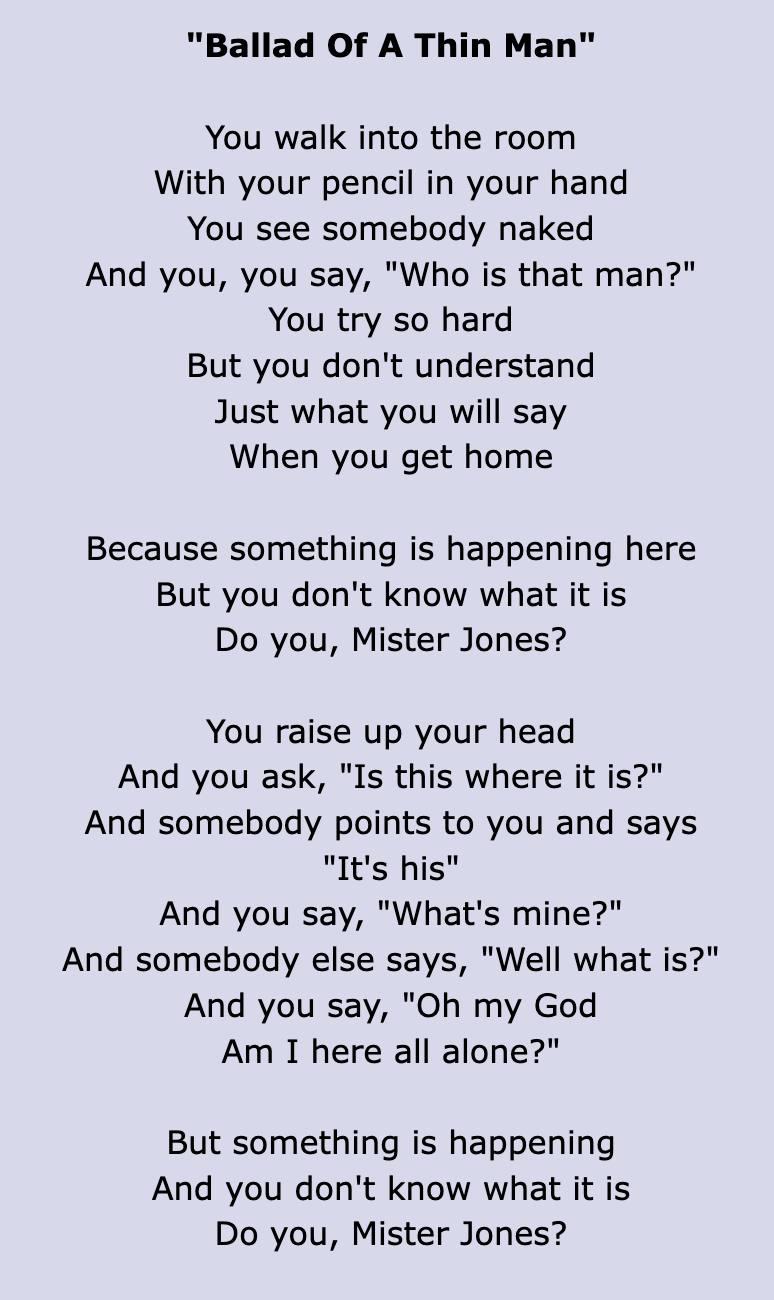
The three books above are filling in details on things happening around me as I was growing up. I’m reminded of Bob Dylan’s “Ballad of the Thin Man.”

I realize I’ve been Mr. Jones my whole life, and I’m still trying to figure out what happened.

JWH