Hitting a Cognitive Barrier

by James W. Harris, 9/24/23

I crashed into a cognitive barrier trying to write my reactions to The Trouble with Harry and To Catch a Thief, two Alfred Hitchcock movies from 1955. After two drafts I realized I wasn’t getting where I wanted to go. I know I don’t want to write movie reviews — the perfect place to find them is Rotten Tomatoes. Nor did I want to describe a film — just go to Wikipedia or IMDB. I wanted to write an essay that captured what I got out of watching those films at age 71.

Time is running out, so I need to make the most of every experience. That involves understanding myself at a deeper cognitive level. One I’m finding harder to reach as I age. On the other hand, aging is giving me more wisdom. The cognitive barrier is being able to express what I’m learning by getting older. But aging is also wearing down my brain. What one hand giveth, another takes away.

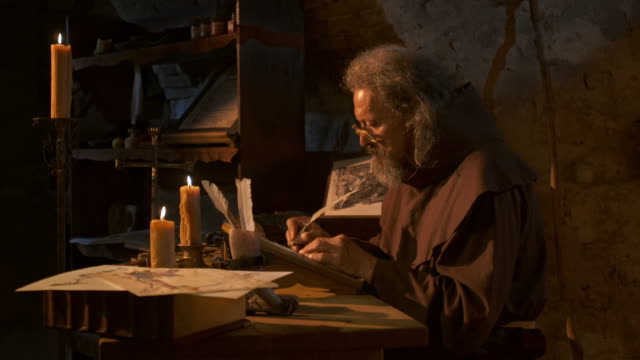
Writing is thinking outside of the head. Thoughts are generated inside the head from emotional reactions. Thoughts are fleeting. Thoughts are like cream stirred into coffee, creating little patterns that quickly dissipate. Writing is about capturing that initial pattern and making sense of it by showing how it relates to the memories of millions of past patterns.

Very few people can describe exactly how they feel, and few of those people can explain why they feel the way they do. There are rare individuals that can compose their thoughts inside their heads and eloquently convey the results in speech. Most of us need to think outside our minds via writing and editing.

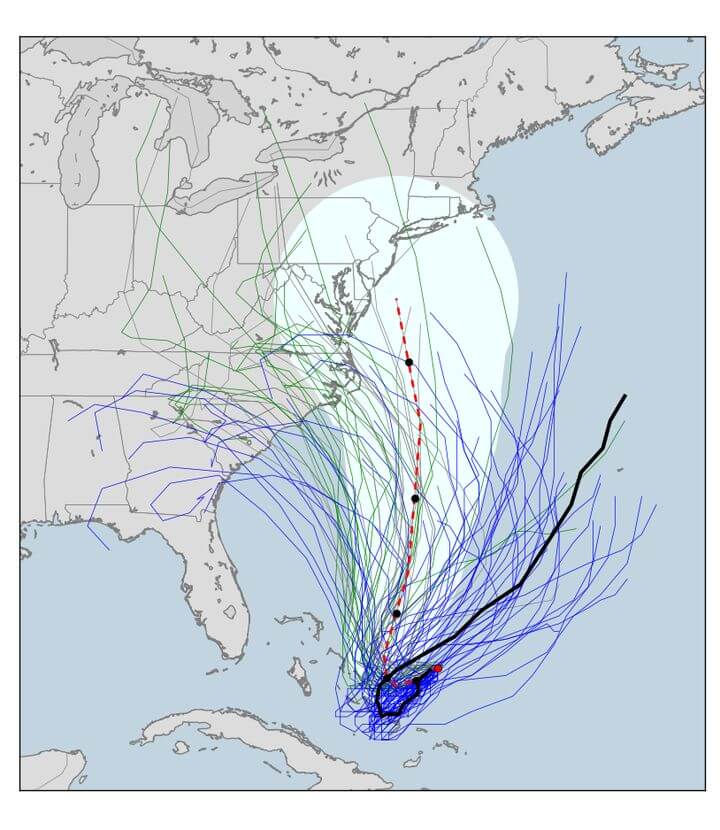
Even when we feel our written words are clear, readers seldom find clarity. Communicating with words is difficult at best and often impossible. What we think we’re expressing can often take a different path to each reader like those spaghetti strings we see in hurricane reports. I might believe I’m writing about Jacksonville, while some readers think I’m writing about Bermuda while others Miami and Charleston.

I enjoyed The Trouble with Harry better than all the other Hitchcock films we’ve watched this month, including Rebecca, Notorious, To Catch a Thief, and Strangers on a Train, films most critics admire a great deal more. However, I thought The Trouble with Harry had many flaws, but then Hitchcock is a flawed filmmaker.

How can I admire a movie that doesn’t measure well against the best movies I’ve seen over a lifetime? This gets into complexity and even multiplexity. I need to relate several reactions that contradict each other. The three films I admired and enjoyed the most this month have been The Trouble with Harry, Twelve O’Clock High, and Mr. Belvedere Rings the Bell. All three were feel-good movies to me, but they each made me feel good in a unique way. Is the word “feel-good” even useful? Many moviegoers might interpret the term “feel-good” so differently that these three movies would not fit their definition.

Should I even use the term? Shouldn’t I just describe exactly what I felt? Will that be clearer?

In my second draft I had a breakthrough. I realized to understand how I react to films I’d need to understand what I expected from them. But my expectations have changed widely over the years. And will my readers have the same expectations? It was then I realized that what I’m expecting from movies at 71 is different from my younger self. Even describing my own emotional experiences is a moving target. But explaining why that’s so hits another cognitive barrier.

I need to think about that.

Putting everything into words precisely is so difficult. Should I even try? I believe most people don’t because all they value is personal experience. Why tell anyone about our perceptions when they have their own?

Do you see why writing that essay became such a black hole?

JWH

Thinking Outside of Our Heads

by James Wallace Harris

I believe recent developments in artificial intelligence prove that many of the creative processes we thought came from conscious actions come from unconscious mechanisms in our minds. What we are learning is computer techniques used to generate prose or images are like unconscious processes in the human brain.

The older I get, the more I believe that most of my thinking comes from my subconscious. The more I pay attention to both dreams and my waking thoughts, the more I realize that I’m very rarely making conscious decisions.

I might think “I am going to walk across the street and visit Paul,” but I have no idea how to make my body walk anywhere. But then, I’ve always assumed muscle actions were automatic. It was mental actions I believed were conscious actions. I used to believe “I am writing this essay,” but I no longer believe that. This has led me to ask:

Just what activities do we perform with our conscious minds?

Before the advent of writing, we did all our thinking inside our heads. Homer had to memorize the Iliad to recite it. Prehistory was oral. How much of thought then was conscious or unconscious? Have you ever read The Origins of Consciousness in the Breakdown of the Bicameral Mind by Julian Jaynes? I know his theories have lots of problems, but they do imagine what I’m thinking about.

How often have you worried over a problem, say a math problem, or a programming problem, and gave up, but then later, usually after a nap or sleep, the solution came to you? That’s the classic view of unconscious thinking. But even when we’re thinking we’re solving a calculus problem is it really being done at a conscious level? Are you consciously recalling all your math lessons over a lifetime to solve the problem?

How often when working on a Wordle or Crossword does the word magically come to you? But sometimes, we are aware of the steps involved.

In recent years I’ve developed a theory that when we work with pen and paper, or word processor or spreadsheet, or any tool outside our body, we’re closer to thinking consciously. Sure, our unconscious minds are helping us, but making a list is more willful than just trying to remember what we need at the store.

Writing an essay is more willful than woolgathering in the La-Z-Boy. Authoring a book is far more willful still. Engineering a submarine by a vast team of people is an even more conscious effort. Sure, it involves a collective of unconscious activity too, but a vast amount documentation must be worked out consciously.

I’ve written before about this idea. See “Thinking Outside Your Head.” That’s where I reviewed different techniques and applications we use to think outside of our heads.

Many people want to deny the recent successes with AI because they want to believe machines can’t do what we do. That humans are special. If you scroll through the images at Midjourney Showcase, it’s almost impossible to deny that some of the images are stunningly beautiful. Some people will claim they are just stolen from human creativity. I don’t think that’s true.

I think AI developers have found ways to train computer programs to act like the human mind. That these programs have stumbled upon the same tricks that the brain evolved. Many great writers and artists often talk about their Muse. I think that’s just a recognition of their unconscious minds at work. What those creative people have learned is how to work consciously with the unconscious.

What some creative people are doing now is consciously working with two unconscious minds – their own and an AI. There is still a conscious component, the act of working with tools outside of our head. Where the action is, is that vague territory between the unconscious mind and the conscious one.

JWH

I Wish All My Family and Friends Blogged, I Wish Everyone Blogged

by James Wallace Harris, 7/16/23

What if everyone who ever lived kept an indestructible diary. Imagine reading what all our ancestors thought throughout their lifetimes. I don’t believe in an afterlife, but this could be the form of one. I’ve often wondered what my parents thought as they were growing up and got older. I’ve also wondered about my grandparents and what they thought about their lives. If they had written down their thoughts and were saved in some way, I could read them now. I wish I had a magic lamp and three wishes. This is how I’d use one of them.

I’ve always been somewhat interested in genealogy. However, just seeing names with dates of birth and death isn’t good enough. Whenever I see a genealogy chart I ask: Who were they, what did they think, what did they do?

The past is gone, so we can’t worry about that now. Although I have read accounts of people wanting to program an AI based on everything they could find out about someone they loved who died. The theory is if we programmed everything we know about a person, say Mark Twain or Ernest Hemingway into an AI, it might act like those men. That sounds creepy. On the other hand, one of my favorite science fiction stories, “Appearance of Life” by Brian W. Aldiss involved the protagonist finding memory cubes by two people who had been married and died years apart and putting them on a shelf so they talked to each other. It was both moving, tragic, and pathetic all at once.

Reading books by famous writers and biographies about them does convey a sense of who they were and how they reacted to their times. And biographies about famous people who left no writings of their own lack something. Look at the four Gospels — if only Jesus had written something himself.

Blogging offers the potential to do what I’m talking about. What if the Library of Congress archived all blogs. Would people in the 22nd century find our blogs interesting? What about the 43rd century?

If you pay attention to serious fiction and films, much of the trouble conveyed about the characters and interactions with other characters is due to a lack of communication. A good example is Celeste Ng’s first novel, Everything I Never Told You. Think about every person you ever loved, hated, or worked with, and what it would mean if you read their inner thoughts? Or at least the thoughts they wanted to share?

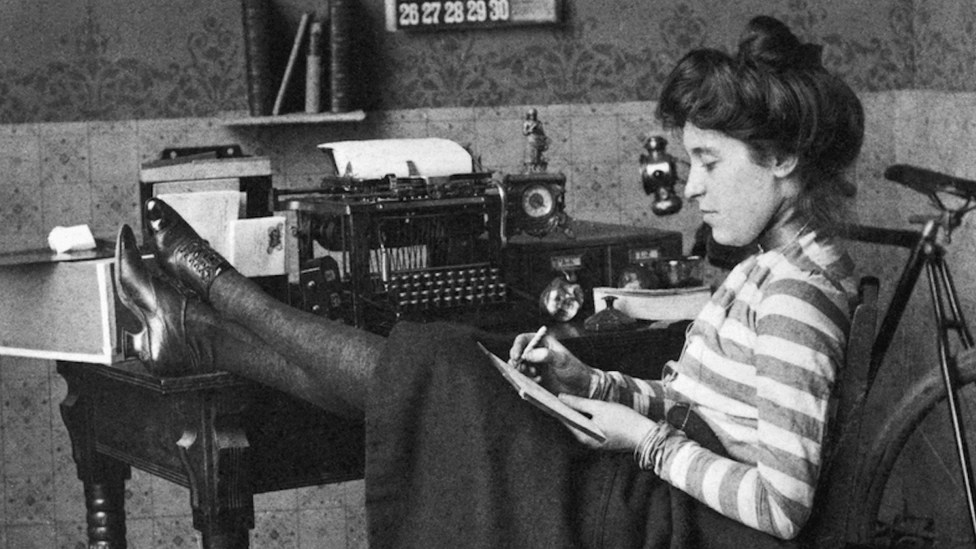
Also, it’s important to know that our thoughts are not coherent. Writing is the way we learn this. You’ll never know yourself only by thinking. Writing is a way to sculpt thoughts into something recognizable. Writing is the way to learn about yourself, and reading is the way to learn about other people.

Remember being back in school and all the emotional turmoil and conflicts caused by relationships, perceived relationships, and lack of relationships? Would we have been better people, kinder people, more self-aware people, if we had all blogged back then and read each others’ thoughts? Weren’t a lot of our problems as kids because we hid inside of ourselves and only speculated about our classmates? Would there be more or less school shootings if all the kids knew each other better?

Not only would growing up blogging help with self-expression, and communication, but it would have made us better learners and scholars. I’ve already written about “Blogging in the Classroom.”

I also wrote, “77 Things I Learned From Writing 1000 Blog Essays” which was mostly about how blogging is a great self-improvement tool. One of the main reasons I blog is it helps keep my mind together.

But I mostly wish everyone I knew blogged so I could learn more about them. Lately, I’ve been noticing how little we really communicate with one another. We have our public persona, and we hide the rest. I’ve noticed how many people as they grow older withdraw into themselves. We tend to just chat. Is that because we have given up on relationships? Or because we have more worries about ourselves and don’t want to worry about other people?

For some reason, we consume fiction hours a day. And it’s not the kind of fiction where we learn about people. It’s the kind that helps us forget and hide. Wouldn’t our lives be better if we learned more about real people and not imaginary people?

On the other hand, we are bombarded with personal problems and information overload every day. Maybe we watch television because we had enough of reality and real people? Even extroverts who crave constant social activity often stay at a shallow level of communication. Could the fact that we don’t all blog, or communicate deeply imply that’s what we prefer?

JWH

Developing a Healthy News Diet

by James Wallace Harris, 5/21/23

Michael Pollan created a small book about eating healthy called Food Rules. As an analogy, I’d like to create a set of sensible rules about consuming the news. Pollan distilled his list of rules down to three simple sentences, “Eat food. Not too much. Mostly plants,” but it really takes reading his book to understand that mantra.

What I would like to do is develop a similar simple mantra about my daily news consumption but I’ll have to work out the details first. Pollan emphasized eating whole foods rather than processed foods. Is there such a thing as whole unprocessed news? “Not too much” is an obvious target since we obviously consume too much news. Finding an analogy for “mostly plants” will be interesting.

What would be the equivalent of nutritious news? Experience has taught me that some news is unhealthy, and I often get news indigestion. I also admit I’m bloated and overweight from too much news consumption.

Like whole food and junk food, we prefer junk news over whole news. I spend several hours a day nibbling on news from many sources. Most of which is forgotten immediately. I wonder if my first rule should be:

#1 – Ignore easily forgettable news

We’re used to clicking on anything that catches our fancy while idling away moments on our smartphones. Essentially, this kind of news is gossip and titillation. Basically, we’re bored or restless. We should use that time in better ways, especially if it exercises our minds. Read real news instead. Or, do something active. Playing games, listening to music, or audiobooks, is more nutritious than never-ending bites of clickbait.

Everyone bitches about information overload but who does anything about it? I’ve learned from intermittent fasting that my body appreciates having a good rest each day from eating. I believe I need to apply the same idea to news consumption.

#2 – Limit your hours consuming the news

I find 16:8 fasting works well for eating. I’m thinking of a 22:2 fast for news is what I’m going to aim for at the moment. Two hours of news consumption a day might sound like a lot, but if you add up all the forms of news I consume including television, magazines, online newspapers, YouTube, and news feeds, RSS feeds, I can easily go beyond two hours.

We should also separate news from learning and entertainment. Learning something new could be considered a form of news. I’m not going to count educational pursuits in my news time. And if you enjoy reading nonfiction books or watching documentaries on TV, that shouldn’t count as news either. However, shows like 60 Minutes, CBS Sunday Morning, and The Today Show can be considered informative entertainment news. Some people just prefer news shows for fun rather than watching fictional shows. I’m not sure if they should count or not.

What we really want is to stay informed about the world so that we interact with reality wisely. Humans have an extremely difficult time processing information. We think we’re far smarter than we are. We constantly delude ourselves. And we think our opinions matter when 99.999% of the time they don’t. Most people think they are experts on countless topics after having consumed just a few hours of news. They think they know better than real experts who have put tens of thousands of hours into studying their specialty.

#3 – Stop assuming you know anything

I believe the real key to understanding the news is being able to tell the difference between opinion and significant data. The real goal of news consumption should be finding the best data, and that means getting into statistics.

Unfortunately, the news industry is overwhelmed with talking heads. Everyone wants to be an expert, and all too often most news consumers tend to latch onto self-appointed experts they like. News has become more like a virus than information processing.

I read and watch a lot of columnists and programs about computers, stereo equipment, and other gadgets. Most are based on personal impressions of equipment individuals have bought or been loaned from manufacturers. These tech gurus are a good analogy for what I’m talking about. Most of the news we take in daily is from individuals processing limited amounts of information and giving us their opinion. What we really want is Consumer Reports, Rtings, or the Wirecutter, where large amounts of data are gathered from a variety of sources, and statistically analyzed.

This is just a start on designing my news diet. I want to keep current on a long list of topics, but that’s like learning about all the vitamins and nutrients my body needs. News nutrition will be a vastly more complicated topic. What are the essential vitamins I need every day? Is it politics, national and international affairs, economics, crime, immigration, ecology, etc?

Do I need to know about everything? Is that what an informed citizen needs to do? Take immigration. Is anything I think about immigration affects the situation at the border? Does voting liberal or conservative even affect anything at the border? I can barely maintain order in my house, why should I believe I can organize all of reality on Earth? Maybe my last two rules should be:

#4 – Know my limitations

#5 – Pursue the news I can actually use

Like nutrition, news is a complicated subject that’s hard to understand and can easily confuse.

JWH

What I Learned Cataloging My Books, Ebooks, and Audiobooks on Goodreads

by James Wallace Harris, 3/21/23

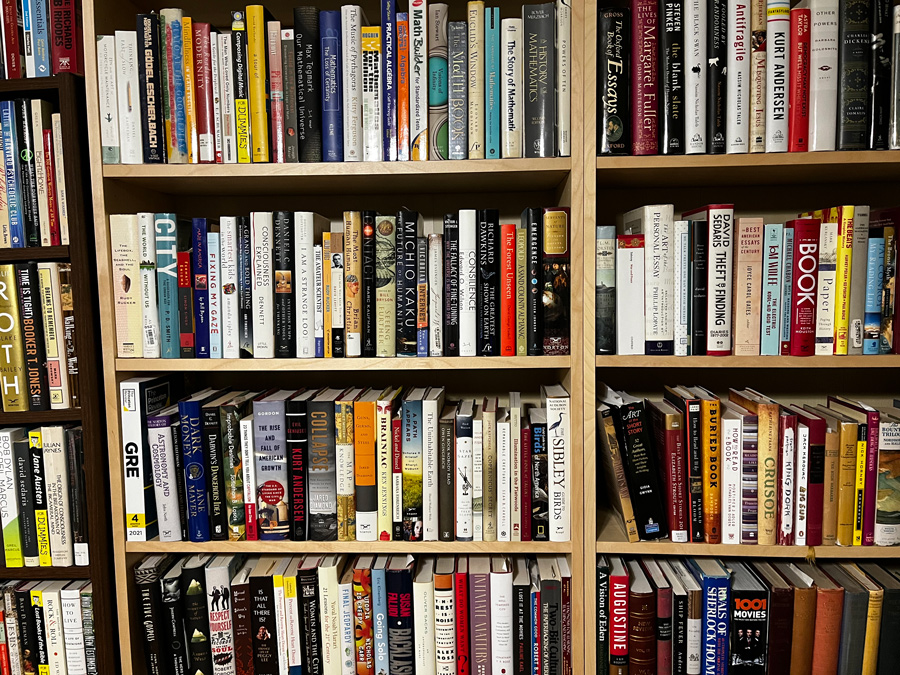
I learned several things this week while entering over fifteen hundred books into my Goodreads database. The books I added were mainly acquired since I retired in 2013. One insight that impressed me the most was I was specializing in a limited number of topics. On one hand, I was disappointed by my narrow range of interests, but on the other hand, I was annoyed at myself for being scattered in my intellectual pursuits. You can’t get good at something if you try to get good at too many things.

If I judged my reading as a leisure activity it wouldn’t matter what I read. However, if I judged my reading as an education, then I was majoring in too many subjects. But here’s the kicker to this revelation. Before I started cataloging my books I assumed I was reading for fun and randomly exploring any subject that caught my fancy. It was only as I entered all the titles into the database did I realize that I have been specializing in several areas. And my immediate impulse was to read deeper into those topics and to go out and buy more books on those subjects.

Why was I chasing so many subjects when I’ve always wanted to be a master of one? Why would I want to do that? Yet, focusing on one would mean ignoring many things I want to know more about. That thought has started me to do a lot of naval gazing this week.

My original goal was to put all my books into my Goodreads database so I’ll know what I own to keep from buying duplicates when I’m at the used bookstore. So far I’ve found a shopping bag of duplicates which I gave to my buddy Mike. I entered all my books into Goodreads many years ago but didn’t update the database when I bought books or gave them away, so my Goodreads database was badly out of date. I had been putting this task off for years because I couldn’t figure out which books to add or delete from the system to catch up again.

My solution was to create a “shelf” called “2023 inventory” and reenter all my books linking them to that shelf. Then delete all the books in the system that wasn’t in the 2023 inventory.

After entering 1,506 books, which were all the physical books in the house, I had 3,159 total books in the database. That implied I could have given away 1,653 books, but then I realized that some of those might be Kindle or Audible books I own. Now I must go down the list of 3,159 books, and if they aren’t in the 2023 inventory, see if they are in my Kindle or Audible libraries. If they aren’t, I can delete them.

Doing all this librarian work has been rewarding in several ways. The work is revealing how my reading has shifted away from physical books to ebooks and audiobooks. This process has also revealed other insights about myself. For certain titles, and subjects I tend to buy both the audiobook and the ebook edition because that’s how I like to study them. And for some titles, I have the ebook, audiobook, and physical book. If I really like the book and subject, or if it’s fiction, and I really enjoy the story, I like getting into the book through all three formats.

I can spot my favorite authors because with some writers I’ve collected their books in all three formats. That also reflects a consolidation of interests, focus, and specialization.

When I used to go to parties I noticed that people tend to talk about things they loved most. The most interesting people were the ones who could expound deeply on a subject. Like most people, I just chatted about what little I knew about a zillion subjects.

I eventually observed that some people like to specialize and that some people even feel they are experts on their favorite subjects. It’s even fun to see two fans of the same subject argue over who knows more. I see from my data entry the subjects I’ve unintentionally tried to master. What’s funny is I seldom meet people interested in the subjects I’m interested in. Which is why I seldom talked much at parties. (This blog is my way of nattering about what I like.)

Thinking about people who know a lot about a little has led me to ask why I’d want to specialize in certain topics anyway? It’s not like I’m at a university trying to pass courses and get a major. I never go to parties anymore. I think it’s like my urge to catalog my books, which is a kind of anal pursuit, I also want to organize what I know.

There is a certain satisfaction in getting the biggest picture on the tiniest of topics. There is also satisfaction in collecting everything of a certain type. For example, I like westerns, so I collected my favorite western movies on DVDs. Then I started buying books about movie westerns. But after that, I started buying books about the history of the American West. I’ve done the same thing for classic rock and jazz music. While cataloging my books I realize I was gathering novels written in England between the wars, and books about their authors. That interest is also reflected in the TV shows I’m watching. Susan and I have recently watched all of Downton Abbey, Upstairs, Downstairs, and we’re currently going through the seven seasons of the first television version of All Creatures Great and Small.

The upshot of all these cataloging revelations is I want to focus more on my best subjects. And abandon some lesser interests to put more time into my majors. After I finish this project I could write my tombstone epitaph – “Here lies Jim Harris, this is what he liked to read:” I mean, isn’t what we focus on one of the best descriptions of our personality?

I only have nine bookcases. And they are all full. I don’t want to buy more bookcases. Nine’s my limit. I feel that’s also an analogy for my brain. It can only hold so much, so if I want to get better at one subject I have to forget about another.

If I want to buy more books I have to get rid of existing books to make room for the new ones on the shelves. This tends to distill my collection even further into specialized subjects. It also means I cull crappy books for better books.

But there is something else to consider. I’m getting older. I’m running out of time. My mental abilities are declining, which limits how much information I can process. And my physical abilities are declining, which also influences my book collecting. I can imagine a future where I can only handle six bookcases, or even three, and maybe down to just one.

I put every book I own onto a Rubbermaid rolling cart one shelf at a time to take them to my computer to enter their data. That physically wore me out. I’m thinking of getting rid of the heavy coffee table books in my collection just because in the near future I won’t be able to handle their weight. And there’s another reason I need to start shrinking my collection. If I should die I don’t want to burden my wife with having to get rid of a couple of tons of books. And if I ever need to move to a retirement apartment or assisted living I wouldn’t want to deal with all of them either.

This week of cataloging my books has reminded me of which subjects I’ve studied over the last forty years, which subjects are my favorite topics, and that I want to thin out my collection.

Currently, Goodreads says I have a total of 3,150 books but I haven’t finished entering all my Kindle and Audible books. Amazon says I have 1,608 Kindle books and 1,544 Audible titles, however, many are already in Goodreads. I’ve just got to figure out which ones aren’t. Luckily, Kindle and Audible books don’t weigh much, or take up much space.

I’ve always wanted to make a list of everything I own because I assume it would tell me a lot about myself. This Goodreads list is a good start toward that.

JWH