Is Ethical Capitalism Even Possible?

by James Wallace Harris, 10/20/23

This month, several of my friends have separately expressed doubt about the future. I don’t hold much hope either. Our current world civilization seems to be falling apart. Capitalism is consuming the planet, but capitalism is the only economic system that creates enough jobs to end poverty. The only alternative to free market capitalism I can imagine is if we adapt capitalism to an ethical system. So, I’ve been keeping my eye open for signs of emerging ethical capitalism.

Here’s one: “The Workers Behind AI Rarely See Its Rewards. This Indian Startup Wants to Fix That” from Time Magazine (8/14/23). The article describes how AI startups need vast amounts of sample data from other languages for their large language models. In India, many data companies are exploiting poor people for their unique language data and keeping the profit, but one company, Karya, is giving the poor people they employ a larger share of the profits. This helps lift them out of poverty.

Capitalism has two dangerous side effects. It destroys the environment and creates inequality. For capitalism to become ethical it will need to be environmentally friendly, or at least neutral, and it will need to be more equitable. If we want to have hope for the future, we need to see more signs of that happening.

Right now, profits drive capitalism. Profits are used to expand a corporation’s ability to grow profits, and to make management and investors rich. Labor and environmental controls are seen as expenses that reduce profits. For a corporation to be ethical it will have to have a neutral or positive impact on the environment, and it will need to share more of its profits with labor.

Since the pandemic hourly wages have been going up, and so has inflation. If capitalism becomes more ethical, costs for environmentalism and labor will go up, thus ethical capitalism will be inflationary. Some people have gotten extraordinarily rich by making things cheap, but it’s also shifted labor and environmental costs away from corporations onto the government and the public. The price at the store does not reflect the actual cost of making what you buy. You pay the difference in taxes.

For ethical capitalism to come about things will need to be sold for what they cost to make. That will involve getting rid of governmental and corporate corruption. It will involve political change. And it will be inflationary until the new system stabilizes.

My guess is ethical capitalism will never come about. If I were writing a science fiction novel that envisioned life in the 2060s it would be very bleak. Life in America will be like what we see in failed states today. Back in the 1960s we often heard of the domino theory regarding communism. Failed states are falling like dominoes now. Environmental catastrophes, political unrest, dwindling natural resources, and viral inequality will homogenize our current world civilization. Either we work together to make it something good, or we’ll all just tear everything apart.

Civilization is something we should all shape by conscious design and not a byproduct of capitalistic greed.

We have all the knowledge we need to fix our problems, but we lack the self-control to apply it. I have some friends who think I’m a dope for even holding out a smidgen of hope. Maybe my belief that we could theoretically solve our problems is Pollyannish.

I have two theories that support that sliver of hope. One theory says humans have always been the same psychological for two hundred thousand years. In other words, our habits and passions don’t change. The other theory says we create cultures, languages, technologies, systems that can organize us into diverse kinds of social systems that control our behavior.

We could choose better systems to manage ourselves. However, we always vote by greed and self-interest. We need to vote for preserving all.

In other words, we don’t change on the inside, but we do change how we live on the outside. My sliver of hope is we’ll make laws and invent technology that will create a society based on ethical capitalism and we’ll adapt our personalities to it.

I know that’s a long shot, but it’s the only one I have.

I’m working to develop a new habit of reading one substantial article a day and breaking my bad habit of consuming dozens of useless tidbits of data that catch my eye as clickbait. In other words, one healthy meal of wisdom versus snacking all day on junk ideas. Wisdom doesn’t come packaged like cookies or chips.

JWH
Thinking Outside of Our Heads

by James Wallace Harris

I believe recent developments in artificial intelligence prove that many of the creative processes we thought came from conscious actions come from unconscious mechanisms in our minds. What we are learning is computer techniques used to generate prose or images are like unconscious processes in the human brain.

The older I get, the more I believe that most of my thinking comes from my subconscious. The more I pay attention to both dreams and my waking thoughts, the more I realize that I’m very rarely making conscious decisions.

I might think “I am going to walk across the street and visit Paul,” but I have no idea how to make my body walk anywhere. But then, I’ve always assumed muscle actions were automatic. It was mental actions I believed were conscious actions. I used to believe “I am writing this essay,” but I no longer believe that. This has led me to ask:

Just what activities do we perform with our conscious minds?

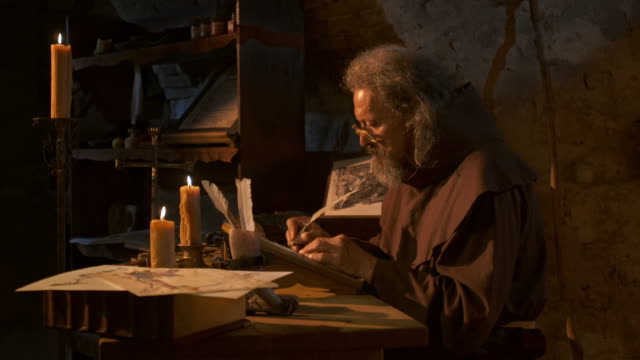
Before the advent of writing, we did all our thinking inside our heads. Homer had to memorize the Iliad to recite it. Prehistory was oral. How much of thought then was conscious or unconscious? Have you ever read The Origins of Consciousness in the Breakdown of the Bicameral Mind by Julian Jaynes? I know his theories have lots of problems, but they do imagine what I’m thinking about.

How often have you worried over a problem, say a math problem, or a programming problem, and gave up, but then later, usually after a nap or sleep, the solution came to you? That’s the classic view of unconscious thinking. But even when we’re thinking we’re solving a calculus problem is it really being done at a conscious level? Are you consciously recalling all your math lessons over a lifetime to solve the problem?

How often when working on a Wordle or Crossword does the word magically come to you? But sometimes, we are aware of the steps involved.

In recent years I’ve developed a theory that when we work with pen and paper, or word processor or spreadsheet, or any tool outside our body, we’re closer to thinking consciously. Sure, our unconscious minds are helping us, but making a list is more willful than just trying to remember what we need at the store.

Writing an essay is more willful than woolgathering in the La-Z-Boy. Authoring a book is far more willful still. Engineering a submarine by a vast team of people is an even more conscious effort. Sure, it involves a collective of unconscious activity too, but a vast amount documentation must be worked out consciously.

I’ve written before about this idea. See “Thinking Outside Your Head.” That’s where I reviewed different techniques and applications we use to think outside of our heads.

Many people want to deny the recent successes with AI because they want to believe machines can’t do what we do. That humans are special. If you scroll through the images at Midjourney Showcase, it’s almost impossible to deny that some of the images are stunningly beautiful. Some people will claim they are just stolen from human creativity. I don’t think that’s true.

I think AI developers have found ways to train computer programs to act like the human mind. That these programs have stumbled upon the same tricks that the brain evolved. Many great writers and artists often talk about their Muse. I think that’s just a recognition of their unconscious minds at work. What those creative people have learned is how to work consciously with the unconscious.

What some creative people are doing now is consciously working with two unconscious minds – their own and an AI. There is still a conscious component, the act of working with tools outside of our head. Where the action is, is that vague territory between the unconscious mind and the conscious one.

JWH

What If I Didn’t Come Back From The Dead?

by James Wallace Harris, 9/3/22

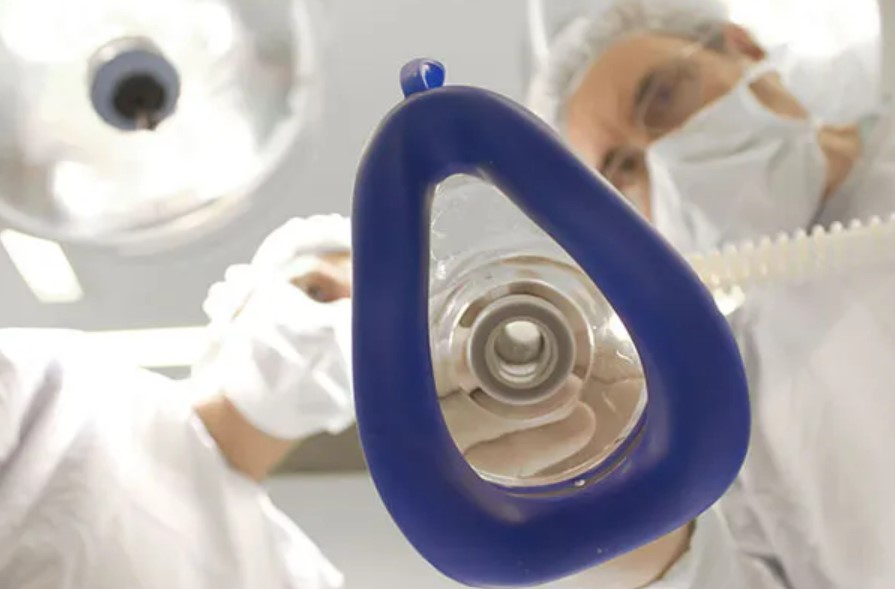
Last Monday I had hernia surgery and was under general anesthesia for over two hours. Being anesthetized is maybe the closest thing to being dead. Our conscious self is turned off so completely that it feels like we’re gone for good.

Interestingly, my book club book this month is Being You by Anil Seth and he introduces the study of consciousness with the discussion of general anesthesia. This was the fifth time I was put under so beforehand I was contemplating being gone. And I kept asking myself: “What if I don’t come back?” I thought it was philosophical fun to imagine nonexistence.

Mostly I thought about people I would miss but if I didn’t exist I wouldn’t feel anything. I think of death being like how things felt before I was born. I feel the only existence we know is this one. But my atheist beliefs could be wrong. I wondered how it would feel if I came to, but in another existence. I’ve always hoped if that happened I would be given all the answers to my questions about this existence.

My hunch is this existence is our only one. That reality is filled with many infinities but infinite existence isn’t one of them. Mostly I thought if I wasn’t coming back I should do a lot of paperwork before I might die to help Susan out. But I didn’t do that for two reasons. First, I assumed I was coming back. Second, because I’m lazy.

Still, it felt very weird and fascinating trying to imagine not existing.

Before my surgery, I had a long talk with my surgeon and he agreed to do everything I wanted. I was worried about two things. I was afraid lying on the surgical table for hours would inflame my spinal stenosis. I worried that I couldn’t hold my pee for that length of time because of my overactive bladder. I told him of these fears weeks before the surgery. He said he would try to arrange my back on the table like I needed and would give me a catheter but I would have to wear it for a few days at home. So I practiced lying flat each day before the surgery. Then on the day of the surgery, I told him to not worry about positioning me for my back but do whatever was best for his work. I also asked for the catheter to be removed before I came to and if I couldn’t pee on my own in recovery they could put it back in.

He seemed glad I practiced lying flat and agreed to my method with the catheter. This made me very happy and cleared all my worries. My surgeon then said he wanted to pray for me. I said sure. I’m not the kind of atheist that’s against religion or religious rituals. I am actually grateful for any prayers I receive.

I was impressed by the length of his prayer. He carefully went over all my problems and concerns and then covered all his goals in great detail while asking God for help. It was reassuring on several levels. First, it let me know how closely he listened to me, and second, it carefully laid out his working plans. But it fits in with my contemplations on nonexistence. And his prayer set the right mood for the occasion.

I felt that we each used a different language for understanding our shared existence. I use the word Reality for what he calls God. He believes in a personal relationship with God whereas I think I’m interacting with infinity and randomness. What he calls God’s will I call the unfolding of evolving randomness. Prayer assumes we can ask for blessings. I assume I will get what will be but I’m on one long lucky anti-entropic run of fabulous luck. The big difference is my surgeon believes there’s an existence after this one and I think death is oblivion. I’ve always been exceedingly grateful for this existence.

Well, I did come back. I’m writing this on my iPhone with one finger. The surgery went very well but it was more involved than my surgeon expected. I had no back pain after the surgery. And for 24 hours my back felt limber and young. Even after the drugs wore off it hasn’t been bad at all. And I peed right away when they rolled me back to my room after recovery. And in the days since I haven’t had much pain. I did without drugs except for a couple Tylenol and later, a couple of ibuprofen. However, I am suffering from a swollen scrotum which is typical of this operation and why I’m not sitting at the computer.

I’m quite glad to be back but I’ve learned that God’s will or reality wasn’t finished with me regarding this surgery. We never get what we picture, and my surgeon’s prayer didn’t cover post surgical complications. I thought going under inspired a lot of philosophical musings, but it turns out dealing with an expanding scrotum, generates even more existential thoughts.

One side effect of this experience is to feel sorry for women and their boobs. I imagine my affliction feels somewhat like getting a breast implant. My package is so much bigger it’s freaking me out. Having a sensitive globular appendage is not convenient. It gets in the way, making sitting and walking weird. So I imagine having two would be more than twice as inconvenient. And the size of my burden is still smaller that what most women have to deal with. I now regret every time I ever wished a woman had bigger breasts.

Yes, I came back, but to something I never imagined. But then, the future has always been what I never imagined.

If there is a God and he/she/they willed these big balls on me then I hope it’s God’s sense of humor and not punishment. So I will close with a prayer: “Dear God, please make my scrotum normal again. And if you intended a philosophical lesson help me learn it quickly. Amen.”

JWH

2022 Book #1 – The Soul of an Octopus by Sy Montgomery

by James Wallace Harris

My old buddy Connell and I often talk about the unexpected scientific discoveries made in our lifetime. Back in the 1960s, we both grew up reading science fiction and we had certain expectations about the 21st-century. Now that we’re in our seventies living in that century we realized that science fiction missed so much, and so did our imaginations.

Because we grew up thinking the black and white astronomical photos made by the Mt. Palomar 200″ telescope were the pinnacle of astronomical awareness, we never imagined what the Hubble Space Telescope would show us in color. We never dreamed that astronomers would discover exoplanets or robots would roam the solar system. We thought people had to go to all those places.

Nor did we imagine society being transformed by computers and networks. I never pictured the computer I’m typing on now, or what I could do with my iPhone or iPad.

But one of the biggest discoveries we missed was about animal consciousness. We expected that we’d have to wait for interstellar spaceships to be developed before we’d meet another form of intelligent life. We never realized it was all around us on Earth and in the oceans.

Intelligence and sentience are on a spectrum. We grew up in a time when people believed they were the crown of creation, and all life below us was unconscious and stupid. We’re finally realizing just how stupid we were. See The Cambridge Declaration on Consciousness.

There are so many books to read to illustrate what I mean. The Soul of an Octopus is just one, but a beautiful work by a woman that has learned so much about animals by spending time with them. Sy Montgomery writes in a way that we follow her around as she makes her discoveries. You will fall in love with four beautiful creatures, Athena, Octavia, Kali, and Karma. You will cry when some of them die, but you will also get to meet intelligent alien lifeforms.

I still read a lot of science fiction, I can’t help myself, it’s a lifelong addiction that I no longer try to escape from. But I’ve learned if I really want to experience the far-out I need to read science books, books like The Soul of an Octopus.

My reading goal for 2022 is to read as many intensely great books as I can find. The Soul of an Octopus starts the year with a bang.

JWH

A Bright Vision of a Positive Future

by James Wallace Harris, August 12, 2021

Last night I had an epiphany while watching the NOVA episode entitled “Great Electric Airplane Race” on my Roku PBS channel. It’s available to view online or stream with the PBS channel (but it might require a Passport membership).

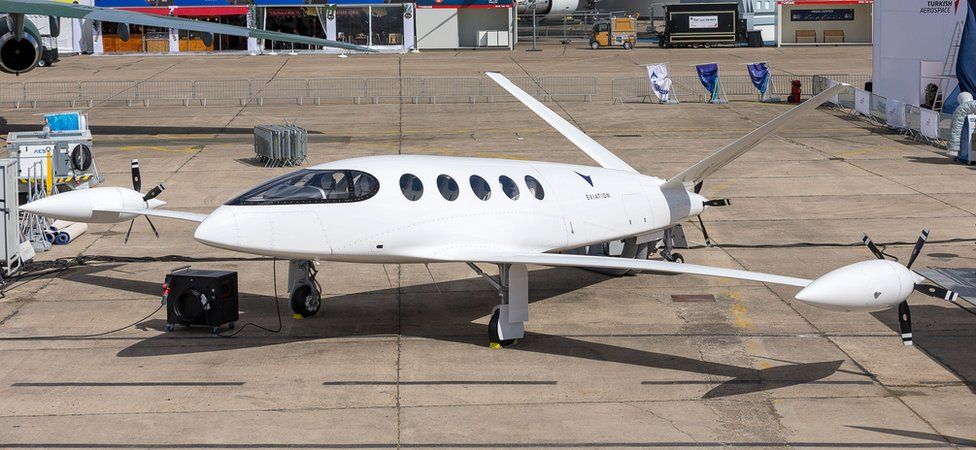
The show was overwhelmingly positive about the future, and it conveyed that hope by showing rather than telling. To avert the catastrophes of climate change will require leaving fossil fuels in the ground. That means converting to other forms of energy. Air travel is a big contributor of CO2, but designing electric airplanes has tremendous challenges. The example given was for a Boeing 737. It uses 40,000 pounds of jet fuel, but the weight of the batteries to replace that jet fuel would total 1.2 million pounds. How is it even possible to overcome such a Mt. Everest of a technical obstacle?

The answer is science. The rest of the show was about how science and engineering is actually tackling the problem. Expect a great transformation in the airline industry over the next two decades. One person in the show called it Air Travel 3.0. I had no idea that these inventions were that close to going into production.

And the new technology wasn’t even the most inspiring part of the show. Miles O’Brien interviewed and profiled many entrepreneurs, scientists, and engineers who were creating these new aircraft, business plans, and air control systems, and it uplifting to see so many women and minorities in leadership roles. This show proved social progress is happening too.

While I watched this episode I realized it was a vision of how things could be. We could solve our environmental, social, economic, and technical problems if we choose. That is, if we choose to be rational and scientific. This show was practically utopian in its scenes and implications. If you can, watch this episode of NOVA and meditate on what positives each scene suggests.

Of course, this isn’t proof we’ll solve our problems, just a vision of what it would be like if we tried. To succeed we need to overcome denialism. Denialism is holding us back. It’s why the pandemic rages on, it’s why we don’t commit to solving climate change. The denialists are going to destroy us.

The epiphany I had is we will succeed if everyone accepts science. Science is capable of solving our problems. The deniers don’t want to believe that for various philosophical reasons. I’m not sure if it’s possible to convert deniers into scientific believers, but that’s our pivot point between future success and failure.

For my own peace of mind, I’ve got to find more sources of inspiration like this episode of NOVA. Up till now I had given up on the future because I was convinced the deniers will bring us down. Now I want to focus on the doers. If you’re going to bet, especially psychological capital, bet on the winners.

JWH