Science v. Greed

by James Wallace Harris, 9/9/25

What if the greatest threat to truth isn’t ignorance—but desire? In a world overflowing with information, we rely on cognitive tools like religion, politics, philosophy, and science to make sense of reality. But as greed hijacks our narratives and undermines our trust in evidence, science—the one tool built to transcend bias—is under siege.” – Microsoft CoPilot

This essay describes how I evaluate my daily news feeds. We all rationalize what we want with cognitive tools humans have evolved to explain reality. Two tools dominate many news reports covering current events: science and greed.

If an electron had consciousness, imagine it attempting to explain its existence and describe its position in reality. We are no more significant than an electron, yet we explain our existence with an array of cognitive tools that justify our lives. Cognitive tools are linguistic systems that explain reality to ourselves and others.

Of all the changes our society is undergoing in 2025, the one I fear the most is the attack on science. Science is the only cognitive tool we’ve developed that consistently explains reality across minds and cultures. Unfortunately, reality is complex and science is statistical. Most individuals can’t comprehend complexity. This is especially true when math is required.

Most individuals choose a cognitive tool on faith. They will never understand what they believe or how they believe it. Even believers in science accept it mostly through faith. That’s a shame, faith is a terrible cognitive tool. It is the root of all delusion.

I know early Christian theologians made a virtue out of faith, but consider the logic behind it. They were asking their followers to believe something they couldn’t prove. Because I’m not a scientist, I can only accept scientific claims about reality on faith in science. I don’t like that, but I have to be honest with myself.

However, science’s peer-reviewed research can be studied. Scientific results evolve with constant retesting, which can also be studied. Scientific knowledge is applied in technology, which is further validation.

Faith is a cognitive tool, but a dangerous one. It promotes belief over evidence.

Throughout our evolution, we’ve developed several cognitive tools to explain reality. Religion is the people’s favorite. Unfortunately, religion doesn’t describe reality; it only claims to. To support its views on reality, religions spawned morality to impose order on individuals. Religions are fantasies we create to rationalize our fears and wants. Religion is a cognitive tool we use to impose an explanation on reality, one imagined by one person, and spread to others.

Politics is another cognitive tool we use to impose order onto reality. Politics began with the strength of one individual, which spread to groups. Eventually, weaker individuals gained power by using religion. Finally, collectives gained power through consensus. Politics often combines tools such as science, religion, art, philosophy, ethics, and others to create an ordered system within reality.

The next significant cognitive tool to emerge was philosophy. Philosophy gave us mathematics, ethics, logic, and rhetoric. We learned a great deal from philosophy, but ultimately, it can lead to endless speculation. Philosophy often became another tool for rationalization for what we wanted to believe.

Science is a collective effort that works to eliminate bias. Science studies patterns and consistency that can be measured by all observers. The results of science are not absolutes, only our current best working hypothesis. Science has proved to be the supreme cognitive tool because it works so consistently. Technology is applied science. We only have to consider the success of technology as the best proof that science is an effective cognitive tool.

Many humans can’t handle science. They are willing to accept science if it agrees with their wants. But they reject science when it gets in the way of their desires. Greed is steamrolling science today because some individuals have wants that are more powerful than scientific explanations.

I wanted to link to an article in Bloomberg, “Why Iowa Chooses Not to Clean Up Its Polluted Water,” but it’s behind a paywall. Bloomberg subscribers can read it, but that costs $39.99 a month. Apple News+ subscribers can read it for $12.99 a month. It was the perfect article to illustrate my essay. It described how all the cognitive tools I covered are used to rationalize polluting water in Iowa.

[I’ve since found a free video version of this article on YouTube.]

I’ll use a general example in case you don’t want to watch the video. Take climate change. Science has been consistent in predicting what will happen if we increase the concentration of CO2 in the atmosphere.

There are trillions of dollars worth of fossil fuels waiting to be extracted. The people who own the rights to those fossil fuels don’t want to lose that wealth. Science suggests we should switch to energy sources that don’t produce CO2. This would destroy the wealth connected to fossil fuels.

That’s why the fossil fuel industry attacked science. And they’ve made it political, philosophical, and even religious. They use every cognitive tool before science to attack science. They even attack science with pseudoscience.

Ever since the fossil fuel industry has succeeded with its attacks on science, every group that wants something that science denies has borrowed those tactics.

Climate change is a complex subject to understand. That complexity allows individuals to confuse people with doubt. I can simplify it in my mind. CO2 can be considered a thermostat. Raising the concentration will increase the average temperature of the planet; lowering the concentration will lower the temperature. But leaving trillions of dollars in the ground is something many people can’t accept.

The primary foe of science is greed, but other sources of human desire have embraced the same thinking. Especially, religion. Faith has always been the tool of religion to counter rationality.

Belief rules in this new age. Decades ago, I thought science would help us create a more rational political system. Maybe even inspire the creation of a science-based religion. But that hasn’t happened. We’re rejecting science. We’re returning to cognitive tools that don’t jive with an objective reality. We want to live by subjective experience.

That’s scary. Especially to me, since I want to live in a society where reality makes sense. Reality created through subjectivity is madness, a chaos.

We don’t have to see into the future to know what will happen. We only have to look at history, another cognitive tool for explaining reality. History has always been susceptible to corruption. But if you study enough histories, you’ll see consistencies.

With every news article you read or watch on television, consider how the individuals involved are interpreting reality and which cognitive tools they are using. Notice how often the story involves science versus greed.

Greed usually wins.

JWH
What Will Be the Pivotal Issues in 2026 and 2028?

by James Wallace Harris, 7/2/25

Peter Leyden claims that America undergoes 80-year cycles, which he calls epochs, with peaks of upheaval that last 25 years. The past peak was after World War II, from 1945 to 1970. Leyden claims we’re entering a new peak in 2025 that should last until 2050. He zeroes in on artificial intelligence, clean energy, and bioengineering as the driving forces. I’m not big on predicting the future or seeing patterns in history, but there are ideas in his theory that are worth contemplating. I do believe we’re living through a historic period of change.

David Brooks claims America is moving away from thinking of itself as an idea that inspires the world to a homeland that we should defend. Brooks has moved away from being a traditional conservative to becoming a spiritual guru who teaches morality. I find all his recent speeches to be both uplifting and inspirational. Brooks feels the changes we are experiencing are undermining our individual characters and altering our collective national character.

CBS News asks if we’re moving into a new Gilded Age. But this time, the oligarchs are far richer and much more powerful. There is a synergy between this documentary and the videos of David Brooks and Peter Leyden. Everyone feels a massive paradigm shift coming. In 2025, I believe we’re living through the largest social and political upheaval since 1968.

If history does go through cycles, can we alter their course? The average person does not have much power. But in 2026, we do get to vote, and again in 2028. I believe the Democrats lost in 2024 because they had no clear vision. Being against Trump is not a political plan. In 2024, the Americans voted for Darwinian rule. Let the strong thrive and the weak die. The current administration is enacting laws to make the rich richer and the poor poorer. Essentially, civilization on the cheap. They appeal to greed. They appeal to resentment. They believe everyone should be responsible only for themselves.

It’s a very Darwinian philosophy. There’s no way we could call America a Christian Nation anymore. This is what America wanted through a fair and square election. But now that they are seeing what it means, do they want to keep it?

I don’t think we should wait until 2026 or 2028 to decide what we want. The Republicans won by clearly defining their goals in 2024. Democrats need to produce their own version of Project 2025. Project 2028 needs to be specific, and all Democrats need to support it. It can’t be too radical. It will need to be liberal yet practical. It needs to appeal to independents and old-style conservatives.

I have no idea what that plan should be, but I wish it would be something David Brooks would back. It needs a moral foundation because, as much as I accept the scientific theories of Darwin, I don’t think survival-of-the-fittest makes for an appealing political philosophy.

JWH

What I See Outside My Window vs. What I See on My TV Screen

by James Wallace Harris, 7/5/24

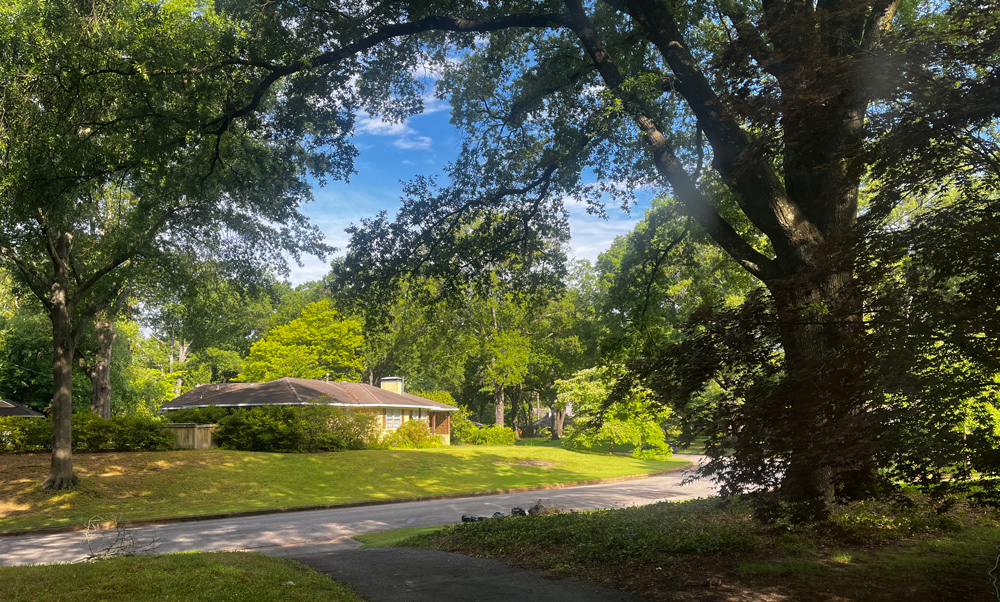
The picture above was taken from my dining room window. Not much is happening. It’s quiet and peaceful. In my den, looking through the sixty-five inch window of my television screen, I see so much turmoil and suffering. The fall of civilization is what’s happening.

One of my favorite novels is called The Door into Summer because the cat in the story hates New England winters and asks to see what’s out every door hoping to find one that leads to summer. I can open my front door and walk out into summer. It’s 77 degrees outside right now – not bad at all for July in a year that might become the hottest year on record. So, why do I spend my days watching television when all it does is to depress me?

The need to know what’s happening is a burden. The belief that I can control anything through knowing more is an illusion and deception. However, there are wars going on all around me and I don’t know if I can sit them out. My friend Anne lives in a nice neighborhood too, but last week there was a shooting at the house one over from hers. Yesterday was the 4th of July, and we heard plenty of fireworks. But we also heard plenty of guys shooting off their guns.

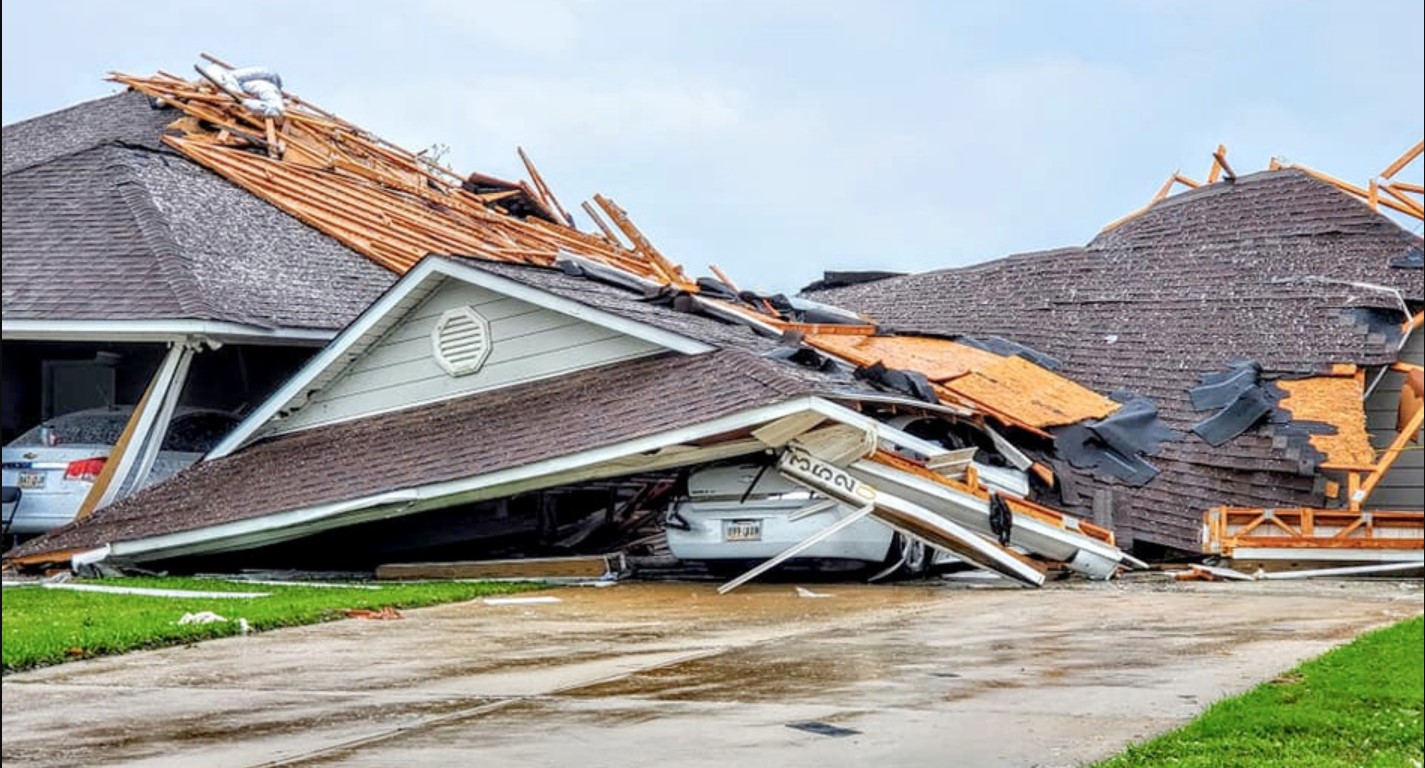
Crime and climate change are getting nearer all the time. What if I looked out my window and saw this:

Thousands of people are seeing this everyday around the world because of hurricanes, tornadoes, floods, and fires. In a decade it could be millions seeing such sites every day. Can we learn anything to avoid that future?

There is a cultural war happening all over the world and the battles are being fought in polling booths. Popularism wants to rewind the clock on progressive progress. To understand this, watch this talk by David Brooks. It’s one of the most uplifting things I’ve seen on my television screen in a very long time.

If you listen to Brooks, you’ll understand what the conservatives want to do with their Project 2025 plan and why. They believe it is their door into summer. If they succeed, I believe 1/20/2025 will be remembered like 4/12/1861 or 6/28/1914. It would be so much easier for my mental health to quit watching TV, but is that really an option? I can understand why Christians are fighting so hard for their way of life. I would have no problem surviving in their utopia if they got everything they wanted. But millions of people wouldn’t, and it will lead to civil war and self-destruction.

The world is going nuts while the environment is going down the drain. On one hand, I can’t stop watching this slow-motion apocalypse. One the other hand, I just want to look out my window or read a science fiction novel.

JWH

Will People Change vs. Can People Change?

by James Wallace Harris, 2/28/24

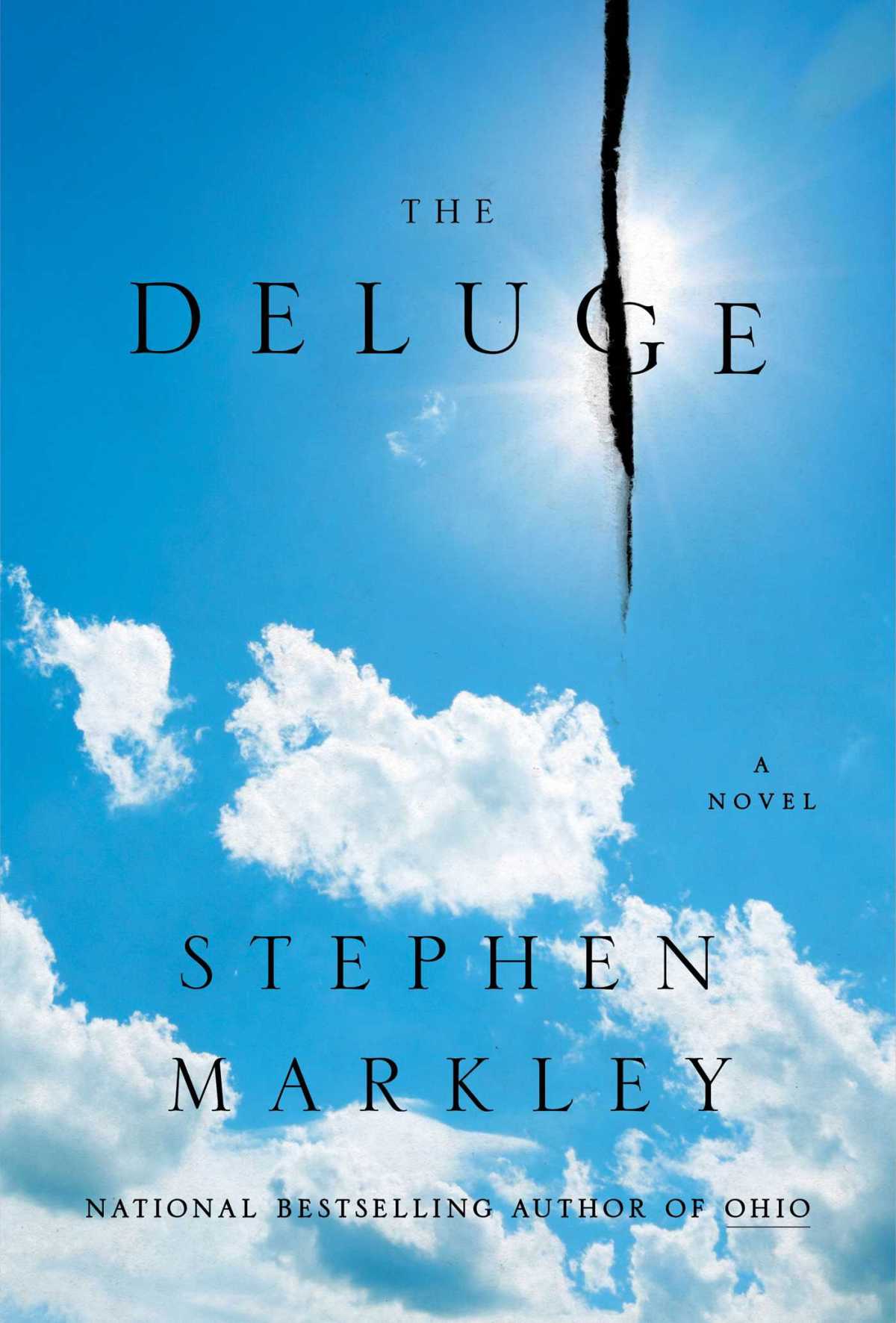
I just finished listening to The Deluge by Stephen Markley, a book that speculates on what the next sixteen years could be like. The book is almost nine hundred pages in print, and over forty hours on audio. Reading this book feels like it’s compressed the last twenty years of polarized political conflict into a forty-hour long disaster film. It’s intense.

Markley uses a large cast of characters to dramatize how people on the left and right will battle for control over the next five U.S. presidential election cycles. Most of the story involves two groups of characters, those working within the political system, and those who decidedly don’t. Markley portrays an ultrasecret ecoterrorist group that works to force change by violent acts versus a dedicated group of political wonks that labor in Washington to influence both parties. Dynamic women characters lead both groups. (By the way, I disliked both women. The only character I cared about was a drug addict in Ohio, who Markley uses as a kind of everyman.)

To further spice up the story, Markley explores the growing power of computer surveillance, artificial intelligence, privacy, and how everyone can be tracked.

I’m not going to review the details of The Deluge because I want to use my reading experience to talk about a specific response to reading the book. I’ll link major book reviews at the end in case you’re considering reading the book. I can say liberals will be terrified by the conservatives in this story, and conservatives will by horrified by these fictional liberals.

The Deluge is about climate change. We could have solved that problem by now if we had acted promptly twenty years ago. The government could have added a tax on all fossil fuels and then raised it slowly month by month. For example, by adding ten cents to the federal tax on gasoline each month. If we had started this in the year 2000, gasoline would be approaching $30 a gallon today. That would have forced people and corporations to make the changes needed.

That tax revenue could have been used to overhaul the power grid and for developing renewable energy technologies. If we had taxed carbon properly, we wouldn’t be fighting over climate change today. That didn’t happen. It didn’t happen because the people who owned trillions of dollars in fossil fuel reserves made sure it didn’t happen. They built a political and religious coalition to fight with them to protect that wealth.

All that’s beside the point now. What Markley envisions is the breakdown of the United States over the next sixteen years so it’s obvious to all we need to do something. The Deluge includes dramatic scenes of a massive fire that destroys Los Angeles, a massive flood that overwhelms the Midwest, and a massive hurricane that devastates east coast states. These events caused the insurance industry to collapse, leading to economic chaos. Markley doesn’t overplay all this. His fictional disasters are realistic, only somewhat larger than what we’ve already experienced, killing just hundreds or a few thousand people in each event, but having an enormous impact on politics and the economy.

Reading The Deluge makes readers ask themselves: Will American change soon? But I ask: Can people change at all?

Before reading this novel, I had seen two insightful videos about climate change that ask the same questions. The first video makes a careful case saying people don’t change and if there is a solution for avoiding climate change it must work with the psychology of how people act. The second video summarizes the first video with impressive summations of it and this tweet. (I wish I could summarize what I watch and read this well.)

Over the two hundred thousand years that our species have existed on this planet, we haven’t changed. Our societies and technologies change, but not us. Over those two hundred thousand years we have developed four major cognitive tools to understand reality: religion, philosophy, mathematics, and science. Only science using mathematics has consistently proven it can consistently describe reality. If you don’t believe that I wouldn’t fly in an airplane.

Science is not black and white. It’s statistical and hard to understand. But science has overwhelmingly shown that adding more CO2 to the atmosphere is turning up the temperature. The parts per million of CO2 in the air acts like a thermostat. Add more CO2 turns up the temperature. The only way to return to the weather we liked in the past is to return to the CO2 levels of the 1960s, but we keep adding more. The only way to stop adding CO2 is to completely stop using fossil fuels. And if we want to turn down the thermostat, we need to remove CO2, which isn’t easy. That’s why taxing carbon is the only way to force us to change, but we won’t do that, because it’s not in our psychology.

However, The Deluge suggests when things get bad enough, we’ll change. It ends hopefully. People even have hope for their children and grandchildren.

Personally, I don’t think we will change. If you want to know what the next sixteen years could be like, read The Deluge. If you believe people can change, and we’ll do the right thing eventually, read The Deluge. If you don’t believe we’ll change, I wouldn’t bother with the book unless you like looking at train wrecks. And if you suffer from depression, I suggest avoiding reading this novel at all costs. I seldom get even the slightest depressed, but this book bummed me out.

Reviews:

JWH

How Anne Got Phished and What We Should Learn from Her Experience

by James Wallace Harris, 2/2/24

My friend Anne called me the other day terribly upset. Her bank had just called her to say her account had been hacked. She was worried that her computer was the tool of the hackers and wanted me to look at it. Anne was freaked out and called me because I’m her computer guy.

The first thing I asked her was, “How do you know it was the bank who called you?” She said the bank’s name and phone number came up on her phone. I told her she needed to call her bank and confirm that. I told her the bad guys can pretend to be anyone. Anne said she would do that immediately.

When I didn’t hear from her for a couple of hours, I called her. A man answered. I didn’t think it was her husband but asked for Anne. A woman got on the line I didn’t know. I again asked for Anne. She said she was Anne. I was suspicious, so I asked this time giving Anne’s full name. She said, “Yes, that’s me.” I said, “No, you’re not.” and hung up.

I couldn’t call Anne, but I thought a text might get through. I texted “Call me right now.” The real Anne called me. I told her what happened. She said she’d been on the phone with her bank for hours and she had been phished. They stole $3500. I told her she needed to call her phone company immediately. “Tell them your calls are being redirected.” A couple of hours later, she called back to say her forwarding had been set to another number and the phone company had turned that off. Anne said the phone company couldn’t help her anymore and would notify their security people, but it would take a few days.

My guess is the phishers had gotten ahold of hacked data from Anne’s bank, so they knew a lot about her, enough to convince them they were the bank. The phishers then conned Anne into giving them more information. Then they rigged her phone so they would get her calls. That would allow them to confirm any transfer requests. That’s very clever.

Anne knew she had been duped, and it made her feel stupid. Anne is no dummy. She has two undergraduate and two master’s degrees. But we want to trust people, especially banks. We trust banks with our money, so we want to believe they’re dependable.

Anne brought over her laptop for me to check. It didn’t seem to have any malware or viruses, but Google would not work using Chrome. I couldn’t change anything on the computer because an IT department had it locked down. I don’t know if that was a coincidence that Google stopped working, or if the phishers had somehow jammed Chrome and Google without needing administrative rights. They wouldn’t have needed to hack her computer to steal the money, but it might have helped them by keeping Anne from searching for help.

Anne was still upset, frequently crying, and embarrassed by this event. Her bank had immediately replaced the money, but Anne was still afraid something else was going to happen. She’s so afraid that she’s changed banks and doing everything she can to protect herself. She cried off and on for days. At first, she didn’t want me to tell anyone because she was embarrassed about being conned. But I said she should tell everyone she knew to help other people avoid getting phished too. That’s when she said I could blog about her.

Now I’m worried. I’m thinking about all the things people should do to protect their identity and money. Once I started thinking about it, I realized the problem is immense. What should I do to be more proactive? We generally think of “identity thief” in terms of people, but phishers also steal the identity of banks. Solving phishing would require perfect identification of people and corporations. But since nearly everything happens online today, it’s easy to spoof both kinds of identity.

An antivirus program won’t protect you from this kind of theft, although the best ones try. Norton has a nice tips page, “How to protect against phishing: 18 tips for spotting a scam.” Its focus is on phishing emails because that’s what their software can deal with, but you also need to consider phone calls or even people coming to your door.

There are also all kinds of anti-fraud services for credit cards, but I don’t know enough about them yet. AARP has a whole website devoted to “Scams & Fraud.” It even has an article, “Bank Impersonation Is the Most Common Text Scam.” It makes me want to join AARP, but I wonder about trusting a company that has so many ads and popups.

Remember the old days when you had to go to the bank in person? And the bank was a big, impressive building? The digital world is both insubstantial and so damn shady. Since I read a lot of science fiction, I think of what the future might bring to solve phishing and identity theft.

The core problem is verification of identity. Right now, thieves can be you with a username and password. Hell, my iPhone needs facial identification before it will talk to me, so why don’t banks want better verification? You’d think banks would want two or three kinds of biometric proof of your identity before they transfer any of your money. But then, how do you verify your bank is your bank?

Another thing that worries me is the number of companies that have my credit card on file, or my bank account routing number. I hear about big companies getting hacked all the time. Maybe there should be a law against storing such financial information, or even personal information. It would be a pain in the ass if I had to fill out all my information every time I ordered an ebook from Amazon, but it might be worth it. PayPal is one solution to hide credit card information.

Just a bit of searching the internet on how to protect myself from fraud reveals it could be a subject worthy of a college major. Right now, banks and stores cover digital theft, but will that always be true? Insurance companies that insure homes are going out of business in some states because of too many natural disasters. Some retail chains are closing stores in areas where there’s too much “shrinkage” in their inventories. So, I can imagine banks going bankrupt or refusing some types of customers.

Right now, banks are making more money by laying off human tellers and using online systems. They probably save enough money downsizing buildings to web servers even with the cost of covering phishing theft. But at some point, they will decide that the cost is too high. I think the reason many people want to elect Donald Trump again is because they secretly want more of a police state. They’re tired of all the crime and cons. One way to solve it is to use computers and the internet. Americans never wanted national identity cards, but what will they think of being chipped like a dog? Things could get very weird in the future. If we really knew the absolute identity of every person and their location, it would solve a lot of crimes, but what would it mean to personal freedom?

Anne just called me. She’s learning. She got a phishing attempt in her email. She called to see if I thought it was the bank phishers. I didn’t think so. I told her that The International Guild of Phishers kept a dummies list on the Dark Web to share with each other.

At least she laughed at that.

JWH