Browsing My Bookshelves When My Favorite Used Bookstore is Closed

by James Wallace Harris, Monday, August 17, 2020

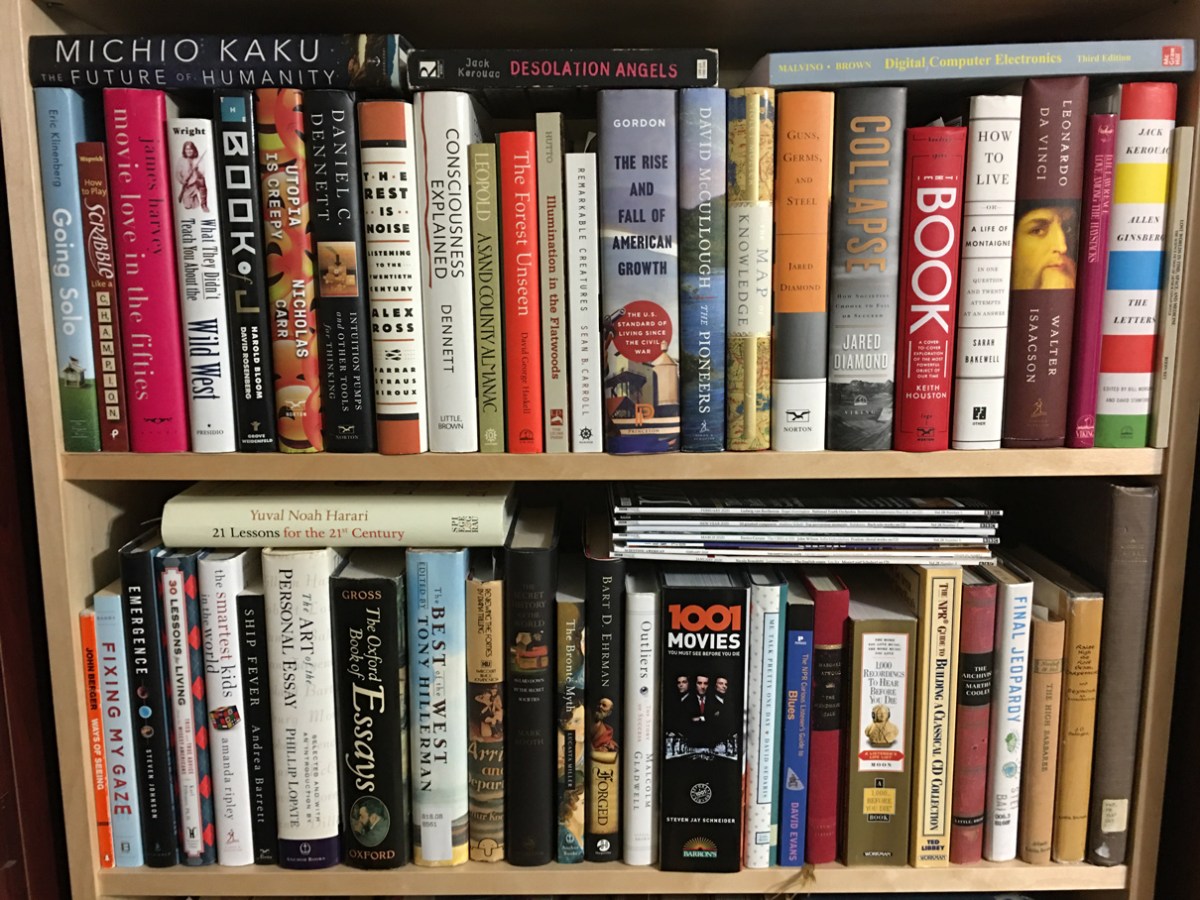
Since I can’t go book shopping, I’ve decided to browse my own bookshelves instead. I’m amazed by what interesting books I find there.

It’s been months since I’ve shopped at my favorite used bookstore, Second Editions. I use to visit it at least once a week. I certainly don’t need any more books, there are already thousands on my to be read pile. Over the years I’ve discovered that my reading habit is entirely separate from my book-buying habit. I love to read and I love to shop for books — I just don’t always read the books I buy.

The other day I browsed through my entire Audible.com library of 1426 audiobooks looking for all that contained short stories. Time and again I was amazed by what I owned that I hadn’t listened to yet (I can’t resist a good sale). Once again, I told myself I needed to stop buying new books and read or listen to what I already own. But I love going to Second Editions, the used bookstore run by our Friends of the Library.

I never know what I’ll find. Sometimes it’s an old book I’ve been hoping to find again, or it’s a book I never knew I wanted but had to buy, or it was a hardback copy of a book that just came out that I was thinking of paying full price — that’s how I got Leonardo da Vinci by Walter Isaacson for $5.

I’ve only got five six-shelf bookshelves to browse — but I’m overwhelmed by how many books I find that I want to read. Strangely, it’s 100%. Well, maybe not so strange. Because of my limited shelf space, I tend to donate books back to the Friends of the Library of those I’ve read or decided I’m not going to read. My self-imposed rule is I can’t own any more books than I have bookshelves. I’ve technically broken this rule because I’m currently allowing myself a legal loophole by shelving some books at the top of my clothes closet. Those three six-foot-wide shelves really do look like bookshelves. (But don’t tell my wife!)

Second Editions bookstore is closed for the duration of the pandemic. I know everyone is missing their favorite places to hang out, so I shouldn’t whine about missing mine. However, I do miss it. And browsing my own bookshelves looking through the books I often bought at Second Editions does help a little, but not much. It does help me empathize with young people who can’t resist gathering in public places during a pandemic.

I wonder if I pulled out a few books, and gave myself a twenty if the experience would feel more like visiting Second Editions? Maybe Susan could pretend to be the clerk at the cash register and we could chat a bit about books?

JWH

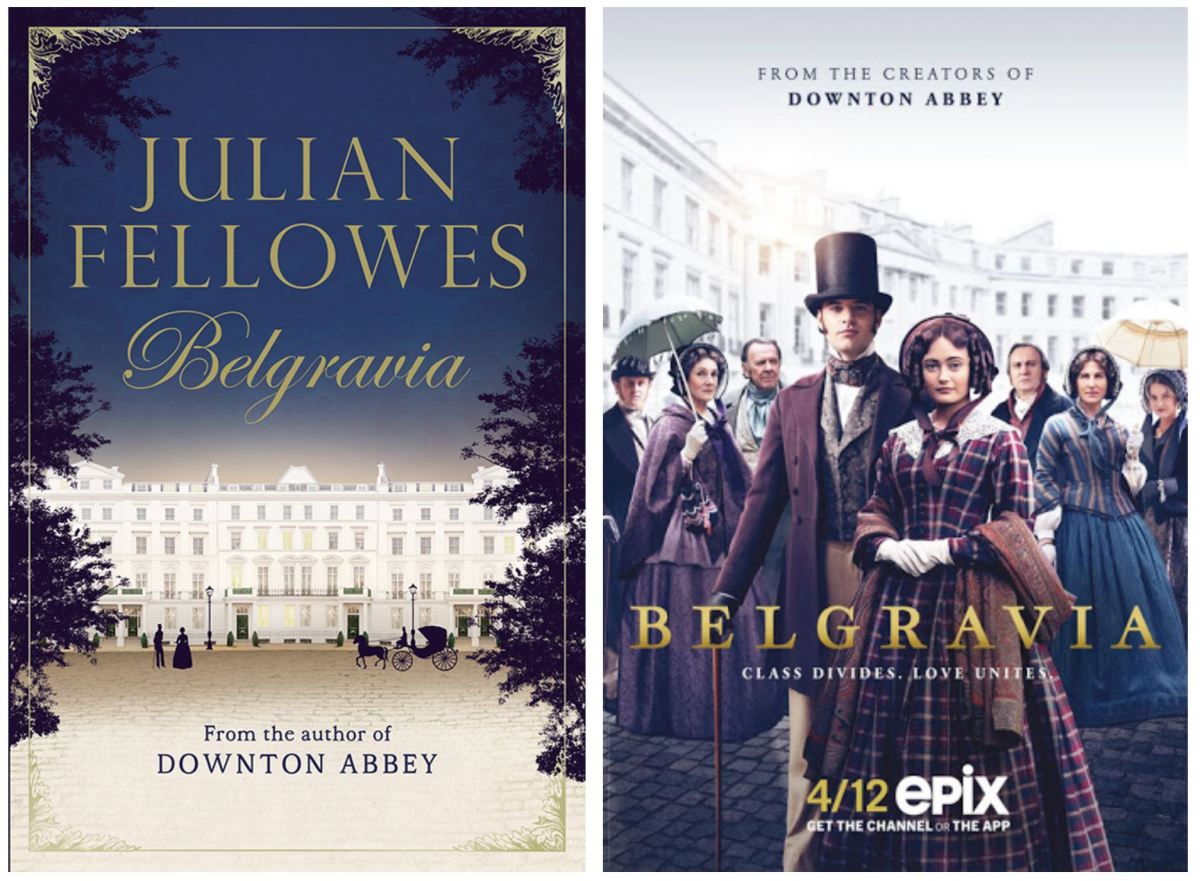
Belgravia by Julian Fellowes

by James Wallace Harris, Thursday, April 30, 2020

Anyone who loved Downton Abbey should also love the new miniseries Belgravia. Episodes are now appearing weekly on Epix. In the U.S. only three of the six episodes have been shown. However, after the second episode I was so anxious to know more I bought the audiobook of the novel Belgravia by Julian Fellowes and listened to it. I’m glad I did. The novel is beautifully written, feeling equal to reading Austen or Dickens. The first TV episodes follow the novel so closely that I imagine the rest will follow just as closely. I feel like I’ve watched the entire series with my ears, and now I will see it with my eyes.

The plot is deliciously tangled by those Victorian manners and customs I’ve previously encountered by reading 19th-century novels, but with a bit more grit, a good deal more sex, and from a darker perspective. The story follows two families sharing one tragedy, revealing class conflicts between those with aristocratic old wealth and social-climbing tradesmen with new money. Both primogeniture and men and women in service play an integral role in Belgravia. I’ve seldom encountered such a well-crafted plot — addictively complicated but not overly too much.

tamsin-greig-anne-trenchard

There’s one mystery that still intrigues me. Why does the original novel follow the miniseries so closely? It was published in 2016, years before the show. Did Julian Fellowes write the novel with a screenwriter’s skill? Did he work out the screenplay first and then wrote the novel?

I often get the feeling when reading some modern novels that their authors visualized them as movies in their heads. I don’t know if this is a good trend. I expect novels to offer content that could never be filmed. Novels are their own art form, not screenplays. And there are a few novelistic features in Belgravia the book. Even though the story moves as fast as a blockbuster movie, the third-person narrator does offer some backstory tidbits that’s not in the series. It also reveals some of the inner thoughts going on in the characters’ heads. I watched the first two episodes before reading the book, and I felt Tamsin Greig had already expressed those thoughts in her performance of Anne Trenchard, my favorite character.

I’m surprised Belgravia the miniseries didn’t appear on PBS Masterpiece, but then, it did get me to subscribe to Epix. I figure at $5.99 a month it will cost me at most $11.98 to watch the entire series — unless I get hooked on another Epix series. I already binge-watched a previous series, The War of the Worlds during a free 30-day free trial. If Epix can keep them coming I’ll keep letting them have $5.99 each month.

Epix

JWH


What Were The Harry Potter Books of Your Childhood?

by James Wallace Harris, Tuesday, March 3, 2020

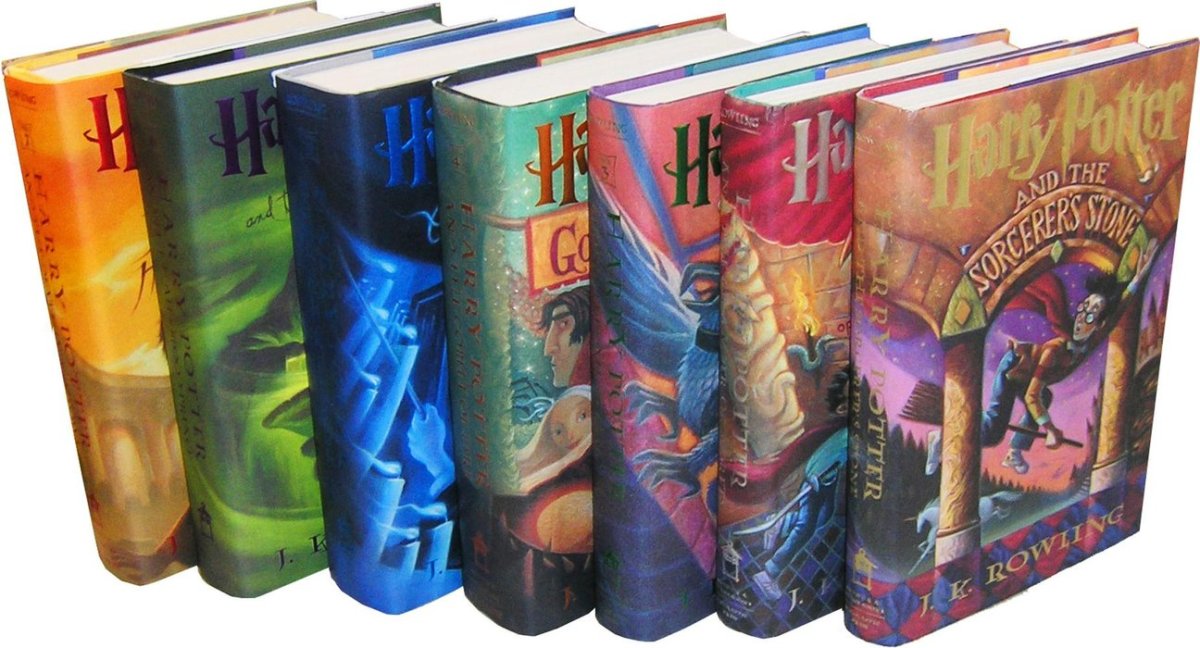
The phenomenon of the Harry Potter books in recent years was quite astounding. It’s hard to comprehend one book series resonating with so many people. I’m sure every would-be author’s dream to be as successful as J. K. Rowling. And it must be significant to grow up in a cohort generation that has such a common touchstone. In the years to come, will remembering Harry Potter books bond that generation like my generation psychically shares Classic Rock? Looking back it’s amazing how much The Beatles brought us together.

In a way, I feel deprived that Baby Boomers don’t have a childhood book series that tie us together in the same way we remember television from the 1960s. Were there any wildly popular book series for kids in the 1950s and 1960s? I remember The Hardy Boys and Nancy Drew books, but just how popular were they? And both of those series started in the 1930s. The first book series I discovered were the Oz books, but that was an oddity. The Oz books were a children’s fad in the first decades of the 20th-century.

The series that made the biggest impact on me were the twelve Heinlein juveniles. Over the years I’ve found plenty of other bookworms who discovered them too, but overall, we’re not a huge group. I also loved the Winston Science Fiction series, but it was never popular either, even though I sometimes meet fans of that series on Facebook. At most, in terms of reading, I’d say Baby Boomers shared a love of science fiction and fantasy.

Wikipedia has a list of children’s book series, but I just don’t see any that came out in the 1950s and 1960s that was even one percent as popular as the Harry Potter books. I guess the success of the Harry Potter books was a freak of pop culture in the same was The Beatles were. Such universal appeal evidently, is extremely rare.

However, is there a children’s book series that has stuck with you you’re whole life?

JWH


Should I Forget Dorothy?

by James Wallace Harris, Monday, February 17, 2020

Being part of history is the gold standard for being long remembered. Pop culture fame can also get you remembered, but not as long. Geneology is probably the common way we ordinary folks will be remembered, especially if we’re neither historical or famous. Writers and artists often like to believe they will achieve immortality through their works, and that was certainly true for Homer, Shakespeare, Austen, and Dickens. Sadly, being published today usually proves a poor bet at avoiding literary obscurity.

Through some weird accident of circumstances, I have become the repository for the memory for Dorothy Rachel Melissa Walpole who wrote under the name Lady Dorothy Mills. I maintain the website ladydorothymills.com. Last year it got a total of 175 visitors, but most of them leave almost immediately. It’s a very static site because I seldom find new information about her. I used to get a query about her every year or two, but it’s been years now since I’ve heard from anyone asking about Lady Mills.

Lady Dorothy Mills wrote fifteen books from 1916-1931, nine novels, and six nonfiction books, all long out of print. I own all of them except her first novel Card Houses and the last Jungle!. She is most famous for writing five travel books capitalizing on the idea of an aristocratic European woman traveling alone in Africa, South America, and the Middle East in the 1920s. She achieved a minor amount of fame. As far as I can tell only 26 used copies of her books are for sale right now, and most of those are the nonfiction titles. Of the 5 copies of her novels, two are the German versions of The Dark Gods. Most of these volumes have been on the market for years. There is little interest in her work.

I’m trying to decide if it’s worth my effort to convert her books into digital texts so I can submit them to Project Gutenberg. It would be a terrific amount of work and its doubtful anyone would read them. But I’d hate to see Lady Mills become completely forgotten. I’ve been trying to come up with reasons to convince people to try her books. Right now it’s almost impossible to get ahold of any kind of edition to read. I’ve wondered if there were free ebook editions available would a few readers give her a chance?

I’m currently reading The Laughter of Fools from 1920. It’s about a young woman living with her aunt and uncle after her father dies. I’m not sure of the time period yet, but you have to imagine a Downton Abbey type of setting. Lady Mills was the daughter of an Earl and grew up in a manor house on a country estate. I assume her life was somewhat like Crawley girls, as Lady Mills was about their age. She would have been 23 in 1912, the year the story began. Lady Mills’ mother was also a rich American woman. However, Lady Mills married a poor American man, and from what I can infer, her father wasn’t as forgiving as Lord Grantham. Lady Mills went out into the world to make it own her own.

The girl in The Laughter of Fools is named Louise, and Lady Mills’ mother was named Louise. I have to wonder how much of herself she put in this character. Louise finds life with her aunt and uncle boring and eventually gets permission to go on a vacation for her health. Her guardians believe she is being supervised by a proper English lady, but Louise gets to run around with an arty bohemian crowd. This opens up a whole new world for her. I imagine the same thing happened to Lady Mills.

I wish I had a copy of Lady Mills’ first novel, Card Houses published in 1916. That was the year she married Capt. Arthur Mills. It might reveal more about her early life and personality. I get the feeling her first few novels were about the life she knew and that social set, and her later novels were fantasy or science fiction. Her travel books were about becoming an independent woman.

I can’t say that The Laughter of Fools is good literature. I only find it interesting for four reasons. First and primary, I’m looking for clues about Lady Mills. Second, I enjoy the Downton Abbey resonating vibes. Third, it tells about life in England during a very literary period — the book adds a few details that I don’t find in Woolf, Huxley, Forster, and others of that era. Finally, it’s about a woman breaking free in a time when few did. But mostly the novel’s appeal is trying to figure out what Lady Dorothy Mills was like and why she became a writer.

I still don’t know what kind of person she was. Would I have liked her? Or was she a weirdo, or even a Lady Asshole? Does she deserve to be remembered or is there a reason why everyone is forgetting her? I feel like I’ve fed a stray cat and now I’m responsible for its care.

Small items about her come up for sale every once in a while but they can be expensive. And if I really wanted to pursue this project properly I’d need to travel to England and do some real research. That is almost not going to happen. Still, I might try converting one book, The Laughter of Fools and see if anyone reads it. It would be nice to see if anyone else gets anything out of her. Sooner or later, I’d like to find a younger person to inherit the caretaking of this strange cat.

JWH



Best Novels of the Decade Lists Collected

I recently noticed sites making lists of the best novels of the decade, so I decided to see if combining the lists would show which novels were standouts and try to read them. The pictured novels above are the books I have read and loved most from the lists below. I don’t read many mainstream literary novels, just six from these five lists. Maybe I should try to expand my reading mind and try more different books. I imagine a steady diet of science fiction is warping my sense of reality.

These are the five lists:

I only used Paste’s top 20 books to keep the focus tight. It’s worth following these links to read about the various titles.

This first group, are novels on more than one list. A Visit from the Goon Squad made it to 3 of the 5 lists. I guess I really need to read that one. Life After Life was also on three lists, and I have read it. It’s quite impressive. All of these books are ones I’ve seen on many lists over the years, so the consensus of fans makes me think I should give them a try.

These books are in no order. * = read and – = bought but not read

  • A Visit from the Goon Squad (2010) by Jennifer Egan (EW, LitHub, Time)
  • Life After Life (2012) by Kate Atkinson (EW, Paste, Time) *
  • The Flamethrowers (2012) by Rachel Kushner (EW, LitHub)
  • Sing, Unburied, Sing (2017) by Jesmyn Ward (EW, Time, Paste)
  • My Brilliant Friend (2011) by Elena Ferrante (Esquire, Time) –
  • The Sympathizer (2015) by Viet Thanh Nguyen (Esquire, LitHub)
  • The Underground Railroad (2016) by Colson Whitehead (LitHub, Paste)
  • Fates and Furies (2015) by Lauren Groff (EW, Paste)
  • Lincoln in the Bardo (2017) by George Saunders (Esquire, Paste) *
  • Swamplandia! (2011) by Karen Russell (Esquire, Paste)
  • The Fifth Season (2015) by N. K. Jemisin (LitHub, Paste) –
  • Station Eleven (2014) by Emily St. John Mandel (EW, Paste) *
  • Little Fires Everywhere (2017) Celeste Ng (Time, Paste)

These books only made it to one of the five lists. They are probably great books to some people, but I feel less of an urge to try them over the above group. However, I thought The Overstory was fantastic and wondered why it didn’t make it to more lists.

  • Exit West (2017) by Mohsin Hamid (EW)
  • Commonwealth (2016) by Ann Patchett (EW)
  • A Brief History of Seven Killings (2014) by Marlon James (EW)
  • Normal People (2019) by Sally Rooney (EW)
  • Gone Girl (2012) by Gillian Flynn (Time)
  • Americanah (2013) by Chimamanda Ngozi Adichie (Time) –
  • Tenth of December (2013) by George Saunders (Time) –
  • The Sellout (2015) by Paul Beatty (Time)
  • The Nickel Boys (2019) by Colson Whitehead (Time)
  • There There (2018) by Tommy Orange (Esquire)
  • Less (2017) by Andrew Sean Greer (Esquire)
  • The Thousand Autumns of Jacob De Zoet (2010) by David Mitchell (LitHub)
  • Train Dreams (2011) by Denis Johnson (LitHub)
  • The Buddha in the Attic (2011) by Julie Otsuka (LitHub)
  • The Tiger’s Wife (2011) by Téa Obreht (LitHub)
  • Salvage the Bones (2011) by Jesmyn Ward (LitHub)
  • All My Puny Sorrows (2014) by Miriam Toews (LitHub)
  • Dept. of Speculation (2014) by Jenny Offill (LitHub)
  • The Sellout (2015) by Paul Beatty (LitHub)
  • A Little Life (2015) by Hanya Yanagihara (LitHub)
  • Outline (2015) by Rachel Cusk (LitHub)
  • Imagine Me Gone (2016) by Adam Haslett (LitHub)
  • The Overstory (2018) by Richard Powers (LitHub) *
  • In the Distance (2018) by Hernan Diaz (LitHub)
  • Trust Exercise (2019) by Susan Choi (LitHub)
  • Milkman (2019) by Anna Burns (LitHub)
  • Circe (2018) by Madeline Miller (Paste)
  • Homecoming (2016) by Yaa Gyasi (Paste)
  • The Leavers (2017) by Lisa Ko (Paste)
  • The Way of Kings (2010) by Brandon Sanders (Paste)
  • Wolf in White Van (2014) by John Darnielle (Paste)
  • The Water Dancer (2019) by Ta-Nehisis Coates (Paste)
  • The Goldfinch (2013) by Donna Tartt (Paste) *
  • The Night Circus (2011) by Erin Morgenster (Paste)
  • Family Life (2014) by Akhil Sharma (Paste)
  • Swing Time (2016) by Zadie Smith (Paste) *
  • The Wise Man’s Fear (2011) by Patrick Rothfuss (Paste)

If you’ve read any of these books and can recommend them, leave a comment.

JWH