
by James Wallace Harris, Monday, November 13, 2017
If you’re in your social security years, how do you tell the difference between an episode of poor health and getting old? What does getting old feel like? At what decade do we lose our vitality? Since I have no previous experience of being old it’s all guesswork on my part. Whenever I get sick now, I feel like I’ve gotten old because my drive disappears, but when I feel better, I think, “Oh, I was just sick.” When I was younger and got sick, I just felt possessed by ill health — it didn’t affect my mental attitude. Now it does.
There’s an old saying, “You’re only as old as you feel.” My doctors have been pushing statins on me for years, but I always have to quit them after several months because of the side-effects. After I quit and get them out of my system, I feel ten years younger. That’s an amazing sensation. Of course, my doctors insist I go back on the statins by taking a smaller dose. I’ve tried 40mg, 20mg, 10mg, and I’m now on 10mg twice a week, but three times I’ve experienced that premature aging affect. My conscious outlook on life is dramatically different when I’m off the statins. Unfortunately, many factors statistically demand I need to take them.
For several weeks now I’ve been having trouble with my stomach. It leaves me feeling yucky, old feeling, and indifferent to doing the things I love. I’ve been experimenting to see which foods are upsetting my stomach, but some sixth sense tells me my gut bacteria are out of whack. There’s tons of promotional literature about the miracle of probiotics but I’m afraid of taking supplements since they are unregulated. I did find “11 Probiotic Foods That Are Super Healthy” and I started eating some of them. If anyone has experience with probiotics, let me know. But my gut is telling me I’ll feel much younger if I could get my bacterial house in order.
All this getting sick and getting better is teaching me something about consciousness. My various perceptions about living and doing are directly linked to physical well-being. But I’m feeling a distinct difference over time that might be aging. I’ve been retired four years now, and it seems like I’ve already gone through a number of psychological phases. They are subtle, and all of them are related to ambitions.
At my age, I no longer have big ambitions. I turn 66 this month, so I don’t have to worry about what I’m going to be when I grow up. My goals are about what I can do in a day. For example, writing this essay is typical of my ambitions. I have little projects and hobbies I want to do, and on average, each ambition takes hours of work and concentration. I no longer think about projects that take days.
When I’m feeling “old” I don’t even want to do something that takes hours to complete. If I’m feeling older, I tend to want to do things that are in the moment, like hanging out with friends, watching television, listening to music, or reading.
This makes me theorize that aging is related to the scope of our ambitions. It’s not a perfect idea. Some young people can dedicate themselves to a decade of work, like getting a Ph.D. or learning to play a musical instrument professionally. While others might only commit to months or weeks. I’ve never been able to commit myself to really big projects.
Last year my friend Mike and I spent months creating version 4.0 of the Classics of Science Fiction. That felt really good. I’ve wanted to find another project that size because it feels rewarding, and healthy, to get up every day and get a little more accomplished on a long-term project. However, I think I’ve aged because I don’t have what it takes to mentally do that now.
I keep thinking if I could get healthier I might. I try hard to eat right and exercise, but those old standbys aren’t paying off dividends like they used to. That’s why I’m starting to think aging is related to ambition. Health problems come and go, and if I could filter out their up and down effects, what’s left could be attributed to aging.
Knowing this makes me think I can apply mind over matter to counter aging. Mentally, I keep blowing a bugle sounding “Charge!” assuming I’ll jump to my feet and dash up some hill. But I don’t. I rationalize how comfy my chair is, how alluring the dark jazz I’m hearing on the stereo, how I’d rather just stay read or daydream instead.
Is aging the state of consciousness that compels us to do less?
I’ve always paid attention to old people because they are the trailblazers exploring a future I might see someday. Most of them are doing less. Sure, there are outliers who are more active in their eighties than I was in my twenties, but mostly I see them giving up their hobbies one by one. I’m evening seeing my friends who are in their sixties starting to give up some of their once cherished activities. Sometimes it’s just practical sanity, like giving up mountain biking. Other times it’s because of failing body parts, like giving up music because of growing deafness. And a lot of it is downsizing because of money, time, or jadedness.
For decades I was a programmer. I thought I’d continue to program in retirement, but I haven’t. I still think of myself as a “programmer” even though I haven’t programmed in four years. It’s a kind of letting go. I haven’t let go, but I should. I still want to program. I still read about programming. I still think of programming projects. I just don’t program.
Is aging the chasm that widens between doing and not doing?
JWH
 Back in the 1970s, I developed an addiction for computer magazines. My favorites were Byte Magazine, Creative Computing, and InfoWorld. But there were countless others popping in and out of existence. During that period I’d go out driving two or three times a week to bookstores, newsstands, and computer shops looking for new issues to buy. I loved Byte Magazine the best because it was so well rounded, covering all kinds of computers, computer history, computer theory, computer science, featuring code and wiring schematics – great reading for hackers and wireheads. Plus in the early years before small computers became an industry, they had fantastic covers.
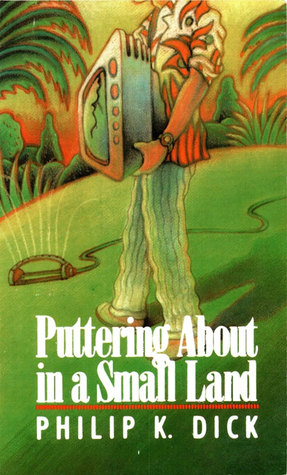 The other day an old friend texted me and asked how I was doing. I texted back I was fine, enjoying puttering around in a small land. She immediately called me worrying that something bad had happened. I had to explain I wasn’t in a hospital room but enjoying my hobbies at home. I was riffing off the name of a Philip K. Dick novel,


 Auxiliary Memory