Another Way Amazon Impacts Used Book Buying

by James Wallace Harris, 5/28/24

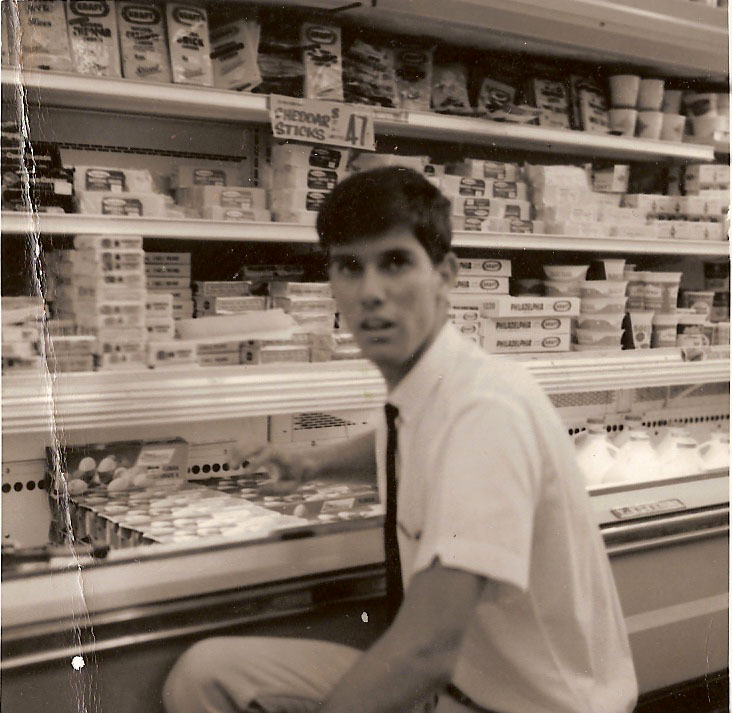
I was just at my library’s Friends of the Library bookstore, called Second Editions. They sell used books people have donated to the library. It’s probably the second-best used bookstore in Memphis. Today, the place was in a mess. It had just been picked over by an Amazon used bookseller. They had spent over a day scanning every volume in the store that had a barcode and bought nineteen boxes of books.

This is great for Second Editions. The Friends of the Library have two giant, four-day sales every year, and keep a bookstore open in the main library five days a week. Evidently, this still doesn’t put a dent in the donations. The staff today was hauling up cartloads of books to fill in all the empty places on the shelves.

However, I was a little miffed. I went hoping to snag something specific. I often find recent bestsellers in hardback, usually in fine condition for $4 in a dust jacket. I was hoping to snag a copy of A Gentleman in Moscow by Amor Towles because we’ve been enjoying the limited series on TV. I’ve often seen it at Second Editions. But not today.

The cheapest used hardcover copy in very good condition at Amazon, with shipping is $10.74. Those guys who sell used books on Amazon should make a good profit if they found a $4 copy at Second Edition. The cheapest good condition hardcover at ABEbooks is $9.16. The cheapest softcover copy is $7.47. Those usually go for $3 at Second Editions.

Amazon used booksellers buy Friends of the Library memberships so they can go to the preview day sales for members. Whenever my friends and I go to those preview sales we see hordes of Amazon resellers with scanners grabbing everything they can as fast as possible. Us bargain shoppers resent that.

However, I do admire their enterprising efforts. The guys who cleaned out Second Editions were in a truck from Texas and were driving around on a mission. If I were younger, and needed money, I would consider doing the same thing. I used to dream of owning a bookstore.

Evidently, most of these resellers rely on scan codes and software to tell them if the book is worth buying. They ignore books before ISBNs. I admire old-style book dealers like Larry McMurtry who knew the books, their history, and values without a computer.

Still, today, I had a decent haul. All books without ISBNs.

  • Letters From the Earth by Mark Twain. Original hardback, but it has no publication information. Wasn’t listed as a Book Club edition. This copy had a worn dustjacket.
  • Portnoy’s Complaint by Philip Roth. Book club edition in dustjacket. Very good condition. Cloth binding.
  • The Genocides by Thomas M. Disch. Paperback, Berkley Medallion, December 1965. Near fine.
  • Sex and the High Command by John Boyd. Paperback, Bantam, September 1971.

I could have easily bought all of these online, but for a good deal more than $7.63 I paid for them at Second Editions.

It’s fun to shop at used bookstores. But I depend on serendipity for what I’ll find. When I want something specific right away, online bookstores are the best.

I guess Amazon resellers are good for local used bookstores because they buy a lot of books. And they are good for book buyers who want specific books. Shopping on ABEbooks or Amazon for used books is like instantly searching thousands of used bookstores all at once.

However, it kind of ruins the fun for us bargain hunters who like to shop locally.

JWH

Can’t Find My Way Home Dreams

by James Wallace Harris, 10/31/23

I have a recurring dream where I can’t find my way home. These dreams take various forms, and I’ve been having them all my life. We moved around a lot when I was growing up, and those old dreams were about me trying to find my way back to our house in Lake Forest subdivision, in Hollywood, Florida. There was an obvious reason for those dreams by my younger self. That was my favorite house when I was growing up and I wanted to go back there. After I became an adult and went back to that house once, I stopped having those dreams.

In recent years, I-can’t-find-my-way-home dreams usually involve turning down a street that I don’t know and trying to get back to the part of town that I’m familiar with. But I get further and further lost. Variations on this dream involve being in a shopping mall and trying to find my way out. I can’t find the exit doors, so I start looking for back doors to the outside in the individual stores, but end up in rooms with no windows, smaller attics, and dark closets. I rush from room to room trying to find an exit, any exit. Each time I keep finding smaller and smaller rooms, and the possible exits to these rooms get harder and harder to find. Sometimes, I end up in a dark room. I usually wake up feeling frustrated.

The other night I was on a bike. I was riding down a familiar street, and I turned onto another street, and I was suddenly in an unfailiar downtown with freeways and busy streets and I didn’t know where I was at all. I tried to retrace my route but that didn’t help. I looked up at the sky to see where the sun was, to discern north and west, figuring I’d head east until I saw something I knew, however, I never found anything I knew. Then I remembered I had a smartphone with Google Maps. I got it out, but I couldn’t use it to get to the maps app.

This wasn’t the first time I tried to use a smartphone in a dream. It’s always frustrating because I can’t make it do what I want. And the screens are never clear in the dream — just blurry photos and text. In one dream I kept trying to call my wife, but I couldn’t remember the number and then thought I had her phone and calling it wouldn’t do any good.

Sometimes I can fly, and try to fly home, but I get frustrated because I can’t fly high enough to see where I am. In these dreams I’m constantly moving forward, overcoming one obstacle after another, always getting more frustrated as I feel more trapped. Often, I have to transverse water — pools, canals, and rivers. I used to be afraid of water in dreams. For many years I had a dream about trying to drive across an exceptionally long and tall bridge, but whenever I got to the middle of the bridge the water would rise and wash me away. These dreams would begin when I was far away from the bridge, but I could see it in the distance, rising in the sky, crossing an expanse of water, an ocean even, where I couldn’t see the other side. I’d always have to psyche myself up to drive across these bridges, and when I was ready to go, I’d put the peddle to the metal thinking the only way was to race across as fast as I could. I haven’t had this type of dream in years. They were common in my middle years.

Since retirement, the dreams of finding my way down unfamiliar streets, or maze of rooms or offices, or flying over houses and buildings mostly felt about being lost and not getting somewhere. I assume that means I’m frustrated about something in life. But what?

I found this website, “Lost Dream Meaning: Dreams About Not Being Able to Get Home.” Not only is this a common dream type, but there are many sub-types to this dream. Most of the explanations remind me of the kind of generic explanations you see in astrology columns. These two paragraphs do resonate, or could:

On the other hand, being lost in a dream may also reflect all the distractions in your life that have caused you to lose your direction or sense of purpose. You are going off on a digression, distracting you from seeing the entire picture. 

Do you feel as if you are just wasting your time or your life is simply going in endless circles? This may be a warning dream concerning the potential bad choices you are about to make that may lead you astray.

Since retiring from work, I do feel I lack direction, or purpose. I do feel my retirement days are going nowhere, that I’m just spinning my wheels until I die.

Here’s an explanation for getting lost while driving:

Are you driving in your dream when you get lost? This may represent the decisions or plans you have that may have been fallen victim to distractions. Perhaps you lose sight of the whole picture and gave too much of your focus on every little detail.

This also resonates. I do feel my life is one of pursing lots of fun distractions. When I first retired, I thought I would pursue specific goals and spend my time at useful work.

Here’s what they save about dreaming about getting lost in a forest, something I don’t think I do.

If in your lost dream you are lost deep inside a forest, this may symbolize feelings of being overcome with confusion. You may not know where to start addressing a problem in your waking life. Likewise, you are at loss on how you can get yourself out of a difficult circumstance. It’s as if you feel like there are no possible solutions and nobody is around to help you out. It seems like you have completely lost your way in your waking life.

Yet, it still fits. Like I said, a lot of this woo-woo stuff is so generic that it could fit anyone. I often wish I could escape our reality of war, political polarity, climate change, environmental collapse, and other problems that I can’t control. But then neither can anyone else.

Which makes me ask: Are you having dreams like mine? I would think the explanations for these dreams would apply to most people, which means most people should be having these kinds of dreams.

I wonder if on the days where I get something done, and feel satisfied with that day, I won’t have dreams about not finding my way home that night? I should pay attention to what I dream after each kind of day. Who knows, maybe I could see a pattern and decipher my own unconscious.

I notice my dreams a lot more in old age because I must get up in the night frequently to pee. I’m starting to notice that I have certain kinds of dreams. Can’t find my way home dreams are just one kind. Another kind that’s showing up more often is dreaming about people that I knew a long time ago. Of course, one of my most frequent type of dream is searching for a bathroom, but that’s logical with my pee situation.

I wonder if dreams matter. If I didn’t pee so much at night, I doubt I would even know I had them. Maybe, they aren’t meant to be consciously examined. On the other hand, they do feel like some kind of communication.

JWH

Could Capitalism Work Without Advertising?

by James Wallace Harris, August 22, 2023

I hate advertisements, yet ads are essential in our economy. But are they really? I’m wondering if capitalism could succeed without ads. I don’t want to put people and corporations out of business by conducting a war against ads, but I want to arrange my life, so I never see them.

We now live in an era where most of the digital content we consume is free, but I hate the price of free when it means looking at ads. What percentage of content providers would go under if they couldn’t sell ads? From what I can tell there are a lot of desperate companies out there barely staying afloat by cramming in even more ads. At some point, everyone will become like me and decide to avoid all content that comes with ads.

I gave up listening to the radio in the early 1970s because I just couldn’t stand the ads. I just switched to buying LPs, CDs, and now Spotify and Apple Music.

I stopped watching movies on TV after TCM, HBO, Blockbusters, and Netflix offered ad free alternative.

The only way I can watch a television show is on streaming services without ads or by using YouTube TV’s DVR where I can scan over the ads.

I’m so sick of web page ads that I want to stop reading web pages or using apps like Flipboard or Feedly.

I’m so aggravated at sponsored ads on Google that I don’t trust the search engine anymore. Even the results not marked sponsored are usually aimed to sell me something. Google should have a little check box on its input line that says, “I’m buying” and if it’s not checked just give me the information I want.

I love The New York Times but reading it is getting more annoying because of the ads. It seems like if I’m paying, I shouldn’t have to view ads. I’m now looking for alternate sources for daily news.

I’m absolutely addicted to YouTube but if they didn’t offer an ad free version, I’d be going cold turkey.

I love shopping online. And when I want to buy something, I do plenty of research, so I’d be open to visiting sites that promoted their products. But unless I want to buy a hedge trimmer, I don’t want to see anything about hedge trimmers.

You’d think corporations would have thought up a more efficient way to promote their products. Do people really buy Cokes because they just saw an ad? Just how much compulsive buying goes on?

Searching engines should be for learning about things.

We should have shopping engines for when we’re ready to buy something.

JWH

p.s. – WordPress ate my last post about women milling lumber. Some people saw it, but it’s disappeared. That’s annoying, especially since I can’t figure out how it happened.

How To Play Shanghai Rummy

by James Wallace Harris, 2/11/23

[Over the past two years over 37,600 people have visited this page. Evidently, I am not the only one who fondly remembers a card game they learned decades ago and wants to play again.]

We recently decided to play Shanghai when my sister came to visit. It’s a card game I first learned back in the 1960s. However, we couldn’t remember the exact rules so I looked them up on the internet. Several sites gave slightly different rules and they called the game Shanghai Rummy. As we played the game trying out different rules I decided to consolidate on one set of rules. I made a crib sheet to help remember the requirements of each hand (see below). My goal was to blend how we used to play with the rules published on the internet to maximize the fun and challenge of the game.

Each hand or round requires a different combination of cards to make a meld, and I noticed that the complexity of each combination was related to the number of cards required to complete the meld. The game gets harder with each new hand. I settled on the sequence of 10 hands (rounds) based on the rules at Wikipedia and Bar Games 101.

But our family had one last hand that I’m adding as a bonus round. It requires 17 cards to make the meld. With 11 cards dealt, and 6 cards acquired in three buys. This requires making a perfect hand, meaning you go out on all the other players before they can meld. It’s very hard but lots of fun. Because that hand required 17 cards to meld, I thought there should be a 16-card meld, so I created another bonus round. I just liked the symmetry of 12 hands of increasing complexity going from 6 cards in the meld to 17.

Here are the sites I consulted:

Players: 3-5 with 2 decks, 6-8 with 3 decks.

The Deal: 9-11 cards depending on the round. It can always be 11, but fewer card in the early rounds speeds up the whole game.

The Draw Deck: The undealt cards face down.

The Discard Pile: Start by flipping over the top card of the draw deck.

Melds: Composed of a combination of Sets/Books and Runs. A set/book is cards of the same value. Usually, it’s 3 cards. A run is a sequence of cards of the same suit. Usually, it’s 4 cards. Aces can be low or high. Jokers are wildcards. We called sets books when I was growing up, so our family uses the word book, but the internet has settled on set.

Buys: 0 to 3 depending on the round. A buy is a way to acquire cards out-of-turn. See below. Buying is very strategic to the game. Buying cards helps and hurts because they add two cards to your hand in a game where you are trying to get rid of cards. We always played by allowing 3 buys for every hand but limiting the buys in the early rounds makes the round more challenging and speeds up that hand. Be careful buying cards you don’t need, but sometimes strategy requires making a buy to get extra cards to have a discard.

Gameplay: Turns go clockwise. A player draws one card, either from the deck or the discard pile. They must discard one card. Before the next player takes a card, the other players have an opportunity to buy the discard. They must also take one card from the deck. This adds two cards to their hand, and they don’t discard a card while buying. After the buy, the gameplay returns to normal.

The goal is to gather the required meld and lay down. Then get rid of all the other cards in your hand. Generally, the first person to lay down will have extra cards and the gameplay will continue. As other players make their meld and lay down their cards, they can play their extra cards on any sets and runs currently on the table – but only before they discard. Players who have made their meld can lay down on melds only during their turn. Players who haven’t made their meld can’t play on the melds that have been laid down. Each meld can be from Ace to Ace only. Cards cannot be swapped in melds.

Players can not make more than the required number of sets and runs. However, you can make larger sets and runs. So instead of a 3-card set of 3 queens, you could have 5 queens. Or a run of 2-3-4-5-6-7 of the same suit.

Strategy: It’s easy to order your cards and know what you need for the rounds where you only make sets or runs. Rounds, where you make up both sets and runs, are very challenging. How you organize your hand and which cards you seek requires various strategies. How often you buy and when becomes strategic. Sometimes it’s fun to hold your cards until you can lay them all down going out on the other players.

Going Out: The player that can lay down all their cards and have an unplayable discard wins the hand. This rule varies. Some Shanghai rules say going out is when you have no discard. If this method is chosen, the bonus round won’t be perfect and others can still play. Decide ahead of time on which method of going out you prefer. We like requiring a discard.

All other players must add up the values of the cards in their hand and the total is added to their running score. The player with the lowest score wins the game.

Card Values: 2s through 9s = 5 points. 10s through Kings = 10 points. Aces = 15 points. Jokers = 20 points. Other scoring variations include numbered cards = 5, face cards = 10, aces = 20, and jokers = 50. That’s how we scored growing up, but it makes for some brutally large penalties.

Standard Game. To the best of my memory, this is how we used to play the game. To make the game slightly quicker to play nowadays we leave off the two easiest hands.

Expanded Game. I decided to expand the game so each round requires one more card in the meld. To be honest, none of my friends like to play this because it takes too long and it’s too hard to remember.

Speeding Up the Game: Playing all the hands listed can take 2-3 hours. You can speed up a game by skipping certain hands, especially the first two and the bonus rounds. However, the most complex hands are the most fun.

I have many fond memories of playing Shanghai growing up. Whenever our family visited my Aunt Let in Mississippi in the 1960s, we’d play Shanghai. After we grew up, my sister and I would play Shanghai with our cousins, Sonny and Eleanor, who often played it nightly with their kids, and visitors.

Shanghai is a great card game because it’s not just the luck of waiting for a specific card. Various strategies can be used. You try to arrange your hand so that drawing several different cards will improve your odds of winning.

In all my years of playing Shangai, I have only run into one other person that said their family played this game. If you’ve played Shanghai leave a comment. And if you have any problems with the rules or understanding the rules leave a comment. I hope they are clear and precise.

JWH

Be Prepared!

by James W. Harris, 5/18/22

Back in November, I had to jump-start my truck the old fashion way with cables off my wife’s car. It was tricky getting her car into position so my cables could reach. After that, I started parking my truck facing out in case it happened again. But I had also heard about these portable chargers and I got on Amazon and ordered a DBPOWER 1000A Portable Car Jump Starter (pictured above).

When it came in I couldn’t believe how small it was. It comes in a nice case, but the actual charger is about the size of a paperback book. I charged it up on 11/6/21 and stuck it under my truck seat. Today, I went out and discovered I had done the same dumb thing again – which is to not shut my passenger door tight after getting groceries out. I know, I’m a dumbass.

I immediately remembered the DP1000 and wondered if it was still charged up. It was. So it holds a charge for at least six months. It was damn simple to use. You plug in a small set of cables, connect red to positive, black to negative, turn it on the DP1000, and start the truck. It started instantly. I was so impressed. I’m going to get one for my wife’s car now.

I’m not advocating the model of device I got is the best. It says it was good for up to a 7.0L gas engine or 5.5L diesel. There’s a huge variety of them to choose from, even some that are combined with an air compressor. I already had one of those.

I was mightily impressed with this little device. I’ve helped jump other people’s cars with my cables and it hasn’t always been convenient to align the vehicles. This is the solution.

JWH