Am I Too Old To Start A Second Brain?

by James Wallace Harris, 12/8/25

For years now, I’ve been reading about people who create a second brain to record what they want to remember. Most of these second brain systems use software, but not all. Many base their ideas on the Zettelkasten system, which was originally stored on note cards.

Over the years, I’ve tried different methods and software applications. I’m currently learning Obsidian. I’ve used note cards, notebooks, Google Docs, Evernote, OneNote, InstaPaper, Recall, and others. I love reading – taking information in – but I don’t like taking notes.

The trouble is, information goes through my brain like a sieve. When I want to tell someone about what I’ve learned, or think I’ve learned, I can’t cite my source, or, for that matter, clearly state what I think I know. And I seldom think about how I’ve come to believe what I believe.

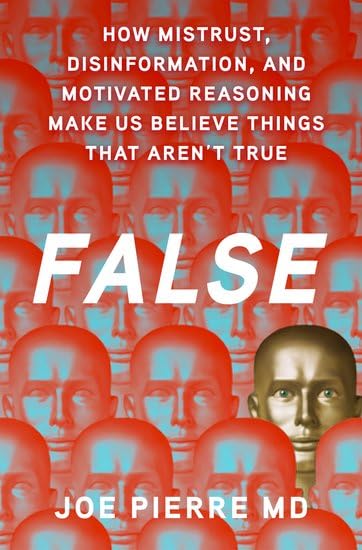
I’m currently reading False by Joe Pierre, MD, about how we all live with delusions. This book makes me want to rededicate myself to creating a second brain for two reasons. First, I want to take precise notes on this book because it offers dozens of insights about how we deceive ourselves, and about how other people are deceived and are deceiving. Second, the book inspires me to start tracking what I think I learn every day and study where that knowledge comes from.

One of the main ways we fool ourselves is with confirmation bias. Pierre says:

In real estate, it’s said that the most important guide to follow when buying a house and trying to understand home values is “location, location, location.” If I were asked about the most important guide to understand the psychology of believing strongly in things that aren’t true, I would similarly answer, “confirmation bias, confirmation bias, confirmation bias.”

Pierre explains how the Internet, Google, AIs, Social Media, and various algorithms reinforce our natural tendency toward confirmation bias.

Pierre claims there are almost 200 defined cognitive biases. Wikipedia has a nice listing of them. Wikipedia also has an equally nice, long list of fallacies. Look at those two lists; they are what Pierre is describing in his book.

Between these two lists, there are hundreds of ways we fool ourselves. They are part of our psychology. They explain how we interact with people and reality. However, everything is magnified by polarized politics, the Internet, Social Media, and now AI.

I’d like to create a second brain that would help me become aware of my own biases and fallacies. It would have been more useful if I had started this project when I was young. And I may be too old to overcome a lifetime of delusional thinking.

I do change the way I think sometimes. For example, most of my life, I’ve believed that it was important for humanity to go to Mars. Like Elon Musk, I thought it vital that we create a backup home for our species. I no longer believe either.

Why would I even think about Mars in the first place? I got those beliefs from reading dozens of nonfiction and fictional books about Mars. Why have I changed my mind? Because I have read dozens of articles that debunk those beliefs. In other words, my ideas came from other people.

I would like to create a second brain that tracks how my beliefs develop and change. Could maintaining a second brain help reveal my biases and thinking fallacies? I don’t know, but it might.

Doing the same thing and expecting different results is a common fallacy. Most of my friends are depressed and cynical about current events. Humanity seems to be in an immense Groundhog Day loop of history. Doesn’t it seem like liberals have always wanted to escape this loop, and conservatives wanted to embrace it?

If we have innate mental systems that are consistently faulty, how do we reprogram ourselves? I know my life has been one of repeatable behaviors. Like Phil Conners, I’m looking for a way out of the loop.

Stoicism seems to be the answer in old age. Is it delusional to think enlightenment might be possible?
JWH

Are Podcasts Wasting Our Time?

by James Wallace Harris, 11/16/25

While listening to the Radio Atlantic podcast, “What If AI Is a Bubble?,” a conversation between host Hanna Rosin and guest Charlie Warzel, I kept thinking I had heard this information before. I checked and found that I had read “Here’s How the AI Crash Happens” by Matteo Wong and Charlie Warzel, which Rosin had mentioned in her introduction.

Over the past year, I’ve been paying attention to how podcasts differ from long-form journalism. I’ve become disappointed with talking heads. I know podcasts are popular now, and I can understand their appeal. But I no longer have the patience for long chats, especially ones that spend too much time not covering the topic. All too often, podcasts take up excessive time for the amount of real information they cover.

What I’ve noticed is that the information density between podcasts and long-form journalism is very different. Here’s a quote, five paragraphs from the podcast:

WarzelThere’s a recent McKinsey report that’s been sort of passed around in these spheres where people are talking about this that said 80 percent of the companies they surveyed that were using AI discovered that the technology had no real—they said “significant”—impact on their bottom line, right?

So there’s this notion that these tools are not yet, at least as they exist now, as transformative as people are saying—and especially as transformative for productivity and efficiency and the stuff that leads to higher revenues. But there’s also these other reasons.

The AI boom, in a lot of ways, is a data-center boom. For this technology to grow, for it to get more powerful, for it to serve people better, it needs to have these data centers, which help the large language models process faster, which help them train better. And these data centers are these big warehouses that have to be built, right? There’s tons of square footage. They take a lot of electricity to run.

But one of the problems is with this is it’s incredibly money-intensive to build these, right? They’re spending tons of money to build out these data centers. So there’s this notion that there’s never enough, right? We’re going to need to keep building data centers. We’re going to need to increase the amount of power, right? And so what you have, basically, is this really interesting infrastructure problem, on top of what we’re thinking of as a technological problem.

And that’s a bit of the reason why people are concerned about the bubble, because it’s not just like we need a bunch of smart people in a room to push the boundaries of this technology, or we need to put a lot of money into software development. This is almost like reverse terraforming the Earth. We need to blanket the Earth in these data centers in order to make this go.

Contrast that with the opening five paragraphs of the article:

The AI boom is visible from orbit. Satellite photos of New Carlisle, Indiana, show greenish splotches of farmland transformed into unmistakable industrial parks in less than a year’s time. There are seven rectangular data centers there, with 23 more on the way.

Inside each of these buildings, endless rows of fridge-size containers of computer chips wheeze and grunt as they perform mathematical operations at an unfathomable scale. The buildings belong to Amazon and are being used by Anthropic, a leading AI firm, to train and run its models. According to one estimate, this data-center campus, far from complete, already demands more than 500 megawatts of electricity to power these calculations—as much as hundreds of thousands of American homes. When all the data centers in New Carlisle are built, they will demand more power than two Atlantas.

The amount of energy and money being poured into AI is breathtaking. Global spending on the technology is projected to hit $375 billion by the end of the year and half a trillion dollars in 2026. Three-quarters of gains in the S&P 500 since the launch of ChatGPT came from AI-related stocks; the value of every publicly traded company has, in a sense, been buoyed by an AI-driven bull market. To cement the point, Nvidia, a maker of the advanced computer chips underlying the AI boom, yesterday became the first company in history to be worth $5 trillion.

Here’s another way of thinking about the transformation under way: Multiplying Ford’s current market cap 94 times over wouldn’t quite get you to Nvidia’s. Yet 20 years ago, Ford was worth nearly triple what Nvidia was. Much like how Saudi Arabia is a petrostate, the U.S. is a burgeoning AI state—and, in particular, an Nvidia-state. The number keeps going up, which has a buoying effect on markets that is, in the short term, good. But every good earnings report further entrenches Nvidia as a precariously placed, load-bearing piece of the global economy.

America appears to be, at the moment, in a sort of benevolent hostage situation. AI-related spending now contributes more to the nation’s GDP growth than all consumer spending combined, and by another calculation, those AI expenditures accounted for 92 percent of GDP growth during the first half of 2025. Since the launch of ChatGPT, in late 2022, the tech industry has gone from making up 22 percent of the value in the S&P 500 to roughly one-third. Just yesterday, Meta, Microsoft, and Alphabet all reported substantial quarterly-revenue growth, and Reuters reported that OpenAI is planning to go public perhaps as soon as next year at a value of up to $1 trillion—which would be one of the largest IPOs in history. (An OpenAI spokesperson told Reuters, “An IPO is not our focus, so we could not possibly have set a date”; OpenAI and The Atlantic have a corporate partnership.)

Admittedly, the paragraphs in the article are somewhat longer, but judge them on the amount of facts each presents.

Some people might say podcasts are more convenient. But I listened to the article. I’ve been subscribing to Apple News+ for a while now. I really didn’t use it daily until I discovered the audio feature. And it didn’t become significant until I began hearing major articles from The New Yorker, The Atlantic, and New York Magazine.

Whenever I listened to a podcast, including podcasts from those magazines, I was generally disappointed with their impact. Conversational speech just can’t compete with the rich informational density of a well-written essay. And once I got used to long-form journalism, the information I got from the internet and television seemed so damn insubstantial.

These magazines have spoiled me. I’m even disappointed with their short-form content. Over my lifetime, I’ve watched magazines fill their pages with shorter and shorter content. Interesting tidbits came to magazines long before the internet appealed to our ever-shortening attention spans.

As an experiment, I ask you to start paying attention to the length of the content you consume. Analyze the information density of what you read, either with your eyes or ears. Pay attention to the words that have the greatest impact. Notice what percentage of a piece is opinion and what percentage is reported facts. How are the facts presented? Is a source given? And when you look back, either from a day or a week, how much do you remember?

What do you think when you read or hear:

According to one estimate, this data-center campus, far from complete, already demands more than 500 megawatts of electricity to power these calculations—as much as hundreds of thousands of American homes. When all the data centers in New Carlisle are built, they will demand more power than two Atlantas.

Don’t you want to know more? Where did those facts come from? Are they accurate? Another measure of content is whether it makes you want to know more. The article above drove my curiosity to insane levels. That’s when I found this YouTube video. Seeing is believing. But judging videos is another issue, but that’s for another time.

JWH

The Price of High-Quality Information

by James Wallace Harris, 6/30/25

We all know the internet is full of crappy information. The creators of the Internet intended it to be an information utopia. They wanted information to be free and instantly available. It turns out free information is only worth what you paid for it.

The Internet destroyed the local paper and investigative journalism. Quality magazine journalism is circling the drain. Television news is more abundant than ever, but it’s so predigested and targeted to specific audiences that it’s worthless.

Most of the high-quality sources of information are behind paywalls. Every morning, I get up and listen to Apple News+ narrators reading articles from quality magazines as I do my physical therapy exercises. Usually, that’s one thirty-minute article. Unlike podcasts, magazine journalism features a greater percentage of useful information per minute. I truly despise the kind of podcasts that spend more time on the host’s personality than the topic promised in the thumbnail.

Apple News+ gives me access to over 400 magazines and newspapers. This is the bargain of the century for $12.99 a month. However, it’s doubtful these magazines earn enough money from this service to keep them going. The real way to support them is to subscribe to each periodical. Apple News+ is like Spotify, good for the consumer, bad for the creator. The ethical way to use Spotify is to locate albums you want to buy. And the ethical way to use Apple News+ is to find the journals you should subscribe to.

I know these periodicals have become expensive. The Atlantic is $79.99 for a digital subscription. The New Yorker is $130 for a digital subscription. Why pay those prices when I already get the content in Apple News+? Especially when I will consume the content via Apple News+.

The answer is support. Think of quality journalism as an important charity. However, there is another reason. When I read a great article, I want to share it with my friends. Apple News+ is so locked down that it’s not possible. You can only share with other Apple News+ subscribers. You can’t even cut and paste from the screen.

Many periodicals that publish on the web can be copied to an email or printed as a PDF and shared. However, even those methods of getting around the paywall might disappear.

I often read articles that I know friends would also want to read. Some paywalled publications do allow for limited sharing. It should be a standard feature.

We need to move away from the shitty free content. Sharing is prevalent on the Internet, but consider the type of content people share. It’s mostly mindless entertainment or opinions. We need to learn to distinguish between well-researched articles and endless unfounded opinions.

The easiest way for me to share content is if my friends subscribe to Apple News+. And if more people subscribed, the publications would get more money.

We live in an age where authority is suspect. Everyone wants their views to dominate, and will rationalize their beliefs with any content that supports those views. We have lost the ability to evaluate what is real.

The trouble is reality can’t be understood with sound bites. Any topic worth considering requires significant study and research. TV and podcasts create content too quickly. Their information is presented too soon after events and produced too fast. Long-form journalism explores ideas in depth, and that takes time.

It also takes time to read such content. We’ve trained our minds to consume content quickly that was created quickly. Start paying attention to the information you consume and think about how it was produced. If you’re listening to a podcast that lasts an hour, note how much actual useful information you gleaned from that hour. If you get your news from television, pay attention to how long each news segment lasts. Think about how that news was gathered and why. And pay particular attention to the personalities presenting the news on TV and podcasts. Is it more about them or the content?

The highest quality content is nonfiction books written by well-educated researchers. However, it’s not possible to read enough nonfiction books to keep up with everything we need to know. I believe the best compromise for consuming high-quality information is long-form journalism.

You will be far better educated if you spend one hour a day on one subject than one hour a day on twenty different five-minute topics. This is where a service like Apple News+ succeeds. And it does have competitors, such as Zinio. My library offers a selection of free digital magazines and newspapers through Libby.

JWH

Why I Deleted Facebook and Twenty Other Apps from My iPhone

by James Wallace Harris, 4/21/24

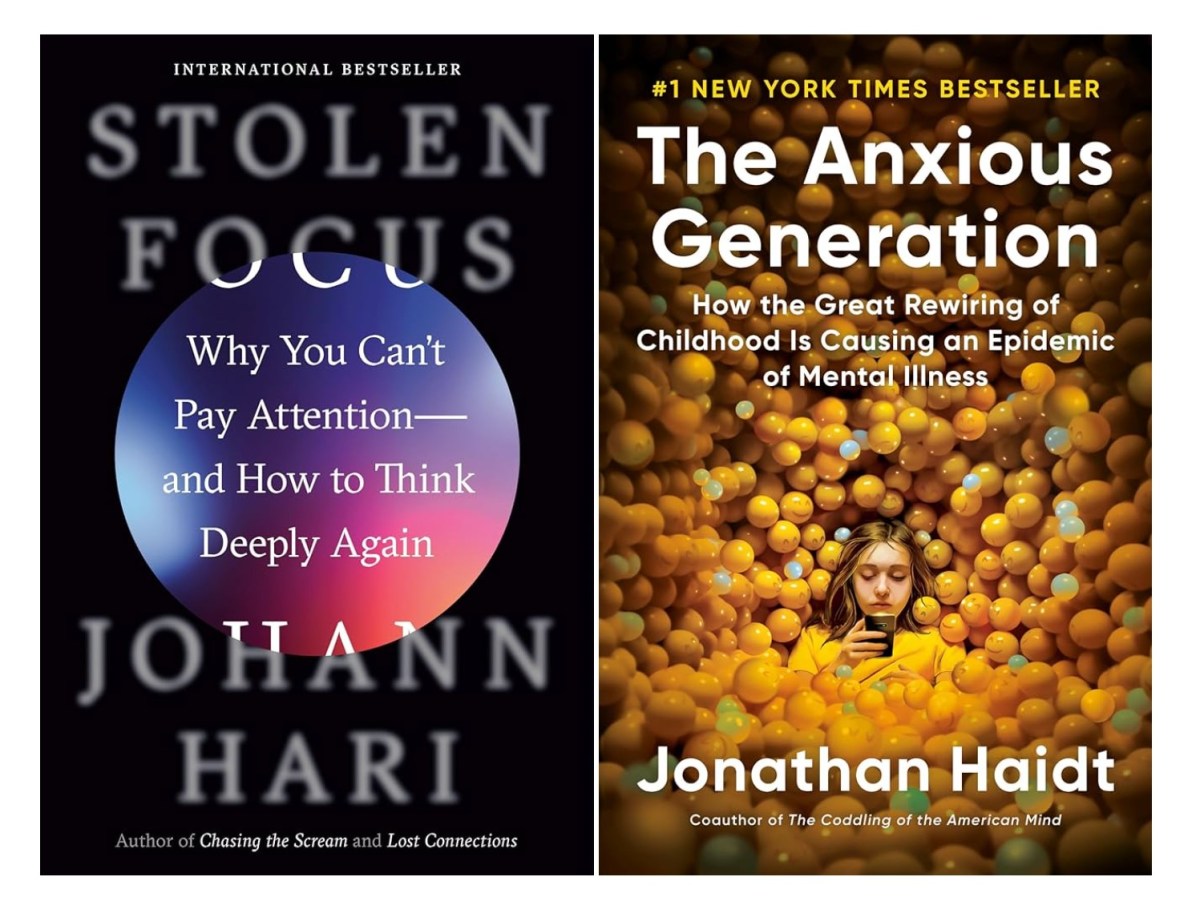
Lately, I’ve been encountering numerous warnings on the dangers of the internet and smartphones. Jonathan Haidt is promoting his new book The Anxious Generation. Even though it’s about how there’s increase mental illness in young girls using smartphones, I think it might tangentially apply to an old guy like me too.

Haidt was inspired to write his book because of reports about the sharp rise in mental illness in young people since 2010. That was just after the invention of the iPhone and the beginnings of social media apps. Recent studies show a correlation between the use of social media on smartphones and the increase reports of mental illness in young girls. I’m not part of Haidt’s anxious generation, but I do wonder if the internet, social media, and smartphones are affecting us old folks too.

Johann Hari’s book, Stolen Focus, is about losing our ability to pay attention, which does affect me. I know I have a focusing problem. I can’t apply myself like I used to. For years, I’ve been thinking it was because I was getting old. Now I wonder if it’s not the internet and smartphones. Give me an iPhone and a La-Z-Boy and I’m a happy geezer but not a productive one.

So, I’ve decided to test myself. I deleted Facebook and about twenty other apps from my iPhone. All the ones that keep me playing on my phone rather than doing something else. I didn’t quit Facebook, or other social media accounts, just deleted the apps off my phone. I figure if I need to use them, I’ll have to get my fat ass out of my La-Z-Boy and go sit upright at my desktop computer.

This little experiment has had an immediate impact — withdrawal symptoms. Without Facebook, YouTube, and all the other apps I kept playing with all day long, I sit in my La-Z-Boy thinking, “What can I do?” I rationalized that reading the news is good, but then I realized that I had way too many news apps. With some trepidation, I deleted The Washington Post, Ground News, Feedly, Reddit, Instapaper, and other apps, except for The New York Times and Apple News+.

I had already deleted Flipboard because it was one huge clickbait trap, but couldn’t that also be true of other news apps? They all demand our attention. When does keeping current turn into a news addiction? What is the minimum daily requirement of news to stay healthy and informed? What amount constitutes news obesity?

I keep picking up my iPhone wanting to do something with it, but there’s less and less to do. I kept The New York Times games app. I play Mini Crossword, Wordle, Connections, and Sudoku every morning. For now, I’m rationalizing that playing those games is exercise for my brain. They only take about 20-30 minutes total. And I can’t think of any non-computer alternatives.

I still use my iPhone for texting, phoning, music streaming, audiobooks, checking the weather, looking up facts, reading Kindle books, etc. The iPhone has become the greatest Swiss Army knife of useful tools ever invented. I don’t think I could ever give it up. Whenever the power goes out, Susan and I go through withdrawal anxiety. Sure, we miss electricity, heating, and cooling, but what we miss the most is streaming TV and the internet. We’ve experienced several three-day outages, and it bugs us more than I think it should.

One of the insights Jonathan Haidt provides is his story about asking groups of parents two questions?

  1. At what age were you allowed to go off alone unsupervised as a child?
  2. At what age did you let your children go off unsupervised?

The parents would generally say 5-7 for themselves, for 10-12 for their children. Kids today are overprotected, and smartphones let them retreat from the world even further. Which makes me ask: Am I retreating from the world when I use my smartphone or computer? Has the iPhone become like a helicopter parent that keeps me tied to its apron strings?

That’s a hard question to answer. Isn’t retiring a kind of retreat from the world? Doesn’t getting old make us pull back too? My sister offered a funny observation about life years ago, “We start off life in a bed in a room by ourselves with someone taking care of us, and we end up in bed in a room by ourselves with someone taking care of us.” Isn’t screen addiction only hurrying us towards that end? And will we die with our smartphones clutched tightly in our gnarled old fingers?

Is reading a hardback book any less real than reading the same book on my iPhone screen, or listening to it with earbuds and an iPhone? With the earbuds I can walk, work in the yard, or wash dishes while reading. Is reading The Atlantic from a printed magazine a superior experience than reading it on my iPhone with Apple News+?

Is looking at funny videos less of a life experience than playing with my cat or walking in the botanic gardens?

Haidt ends up advising parents to only allow children under sixteen to own a flip phone. He would prefer kids wait even longer to get a smartphone till they complete normal adolescent development, but he doesn’t think that will happen. I don’t think kids will ever go back to flip phones. The other day I noticed that one of the apps I had was recommended for age 4+ the App Store.

Are retired folks missing any kind of elder years of psychological development because we use smartphones? As a bookworm with a lifelong addiction to television and recorded music, how can I even know what a normal life would be like? I’m obviously not a hunter and gatherer human, or an agrarian human, or even a human adapted to industrialization. Is white collar work the new natural? Didn’t we live in nature too long ago for it to be natural anymore?

Aren’t we quickly adapting to a new hivemind way of living? Are the warnings pundits give about smartphones just identifying the side effects of evolving into a new human social structure? Is cyberization the new phase of humanity?

There were people who protested industrialization, but we didn’t reject it. Should we have? Now that there are people rejecting the hivemind, should we reject it too? Or jump in faster?

For days now I’ve been restless without my apps. I have been more active. I seeded my front lawn with mini clover and have been watering and watching it come in. I contracted to have our old bathtub replaced with a shower so it will be safer for Susan. I’ve been working with a bookseller to sell my old science fiction magazines. And I’ve been trying to walk more. However, I’ve yet to do the things I hoped to do when I decided to give up my apps.

It’s hard to tell the cause of doing less later in life. Is it aging? Is it endless distractions? Is it losing the discipline of work after retiring? Before giving up all my apps, I would recline in my La-Z-Boy and play on my iPhone regretting I wasn’t doing anything constructive. Now I sit in my La-Z-Boy doing nothing and wonder why I’m not doing anything constructive. I guess it’s taken a long time to get this lazy, so it might take just as long to overcome that laziness.

JWH

Do You Plan to Bequeath Any of Your Computer Files in Your Will?

by James Wallace Harris, 11/20/23

I currently have 71,882 files in Dropbox. Will anyone want any of those digital documents after I die?

Let’s say I go on a Döstädning rampage (Swedish death cleaning) of my digital possessions, would there be anything left that I’d want anyone to have?

Most people consider their photographs to be among their most cherished digital possessions. I have 5,368 of those — some of those photos go back to four generations in our families. Susan and I have no children. We made copies of those photos for our relatives one Christmas, although I’m not sure if any of those relatives wanted them. I imagine them groaning at their pile of digital junk growing larger.

Would a genealogical database want old photographs? I know people interested in their ancestry spend a lot of time looking for old documents online. I wonder if I have any photos, letters, or documents that would be of interest to people in the future researching their past?

I have 28,811 digital scans of old science fiction and pulp magazines that took me years to collect. Most of them are easily found online, so I doubt they will be wanted. But what if the Internet Archive servers were shut down for lack of funding? Will there be kids in the future wishing they had a complete run of Astounding Science Fiction? Or will that desire die with the generation that grew up reading the stories that were first published in that magazine?

There are certain documents relating to money that my wife will want, but she will prefer printed copies. When my mother died, and Susan’s folks died, I scanned a bunch of family documents. I haven’t looked at them in years, and Susan has never asked about them. Still, would they be of value to anyone? What will future historians want to know about ordinary people?

I wonder how long my blogs will exist after I die. I’ve known bloggers who have died, and I can still read their blog posts, but some of writers were published at online companies that went under. I know I used a couple of those sites, and I can’t even remember the names of the companies.

I have over a thousand Kindle books, and over a thousand Audible audiobooks in Amazon’s cloud. Is there any way for me to leave those libraries to other people?

And if no one in the future will want my digital files, do I need to hang onto them now? Why do I keep them? Why do I give Dropbox $119 a year? When I retired, I made copies of all the computer programs I wrote. I put them on several drives just to be sure. I put those drives in the closet. Several years later I went to check on them and every one of those hard drives was dead. I have a friend whose computer hard drive died recently. She had always backed everything up with Apple’s Time Machine. However, when she restored her files, many were corrupted. It’s hard to preserve digital files for a long time. Backup programs and online backup services aren’t 100% reliable.

When humanity stored our past on paper, some of it got saved. Not much, but some. I get the feeling that since we switched to storing stuff digitally, even less will survive. I have a handful of paper photographs that my great grandparents, grandparents, and parents took. So does Susan. I wonder who we should give them to?

Every day I spend a few minutes going around the house looking for things to throw away or give away. I need to start doing that with my computer files. I spent a lifetime gathering stuff, both physical stuff, and digital stuff. It’s funny now that I’m trying to reverse that progression of acquisitions.

I wonder when I was young if I had somehow known for sure that my older self would be getting rid of all the stuff I was buying back then, would I have bought so much stuff in the first place? How much stuff have I bought or saved because of FOMO (fear of missing out)? And how much did I really miss out?

JWH