
Do You have Aphantasia or Hyperphantasia?

by James Wallace Harris

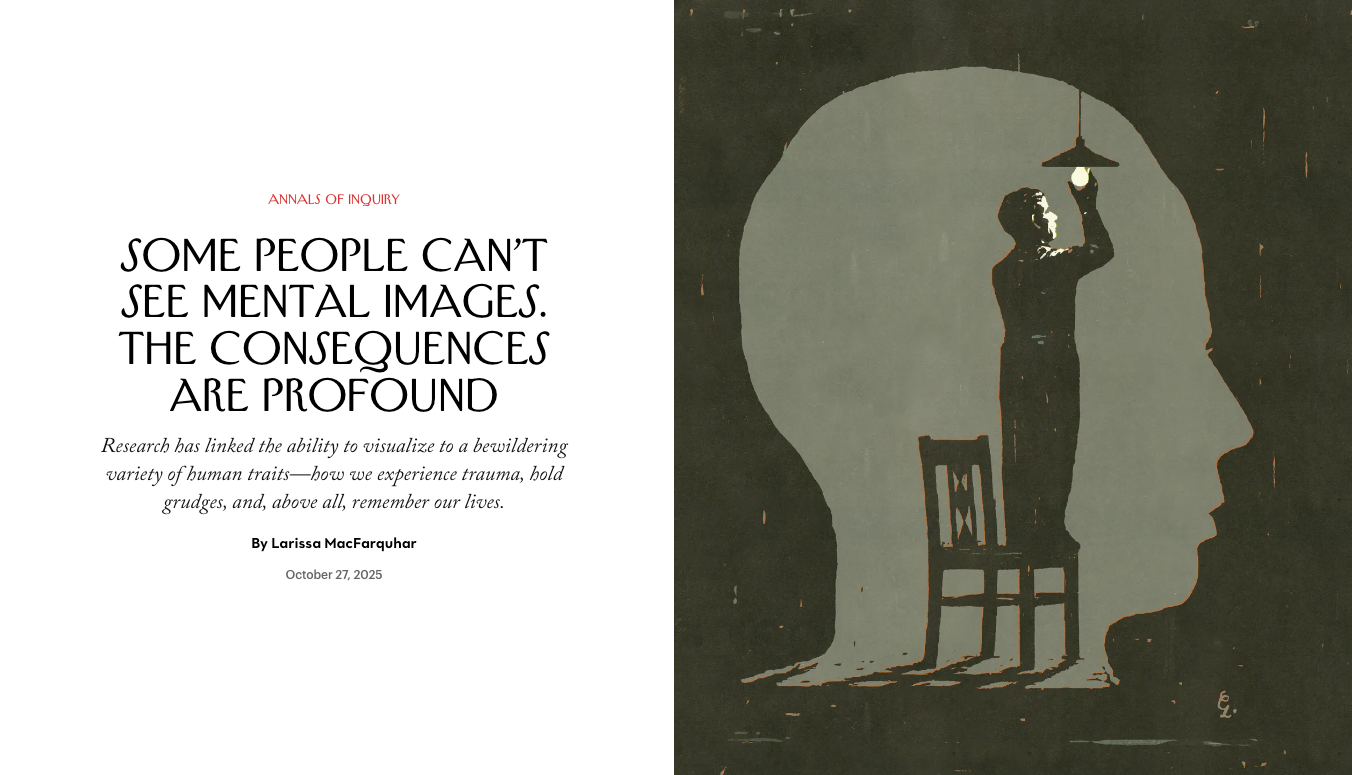
If you don’t know what aphantasia or hyperphantasia then you should read “Some People Can’t See Mental Images. The Consequences Are Profound.” by Larissa MacFarquhar in The New Yorker. Unfortunately, it’s behind a paywall, so I’m going to reiterate the high points to encourage you to find a copy. I highly recommend subscribing to the magazine or Apple News+.

The article is about a condition called aphantasia, one that I have. I wrote about that when I first discovered it in 2016. This new article by MacFarquhar describes the condition and its discovery in much greater depth than I have previously read. It also describes the opposite of this condition, hyperphantasia.

If you don’t know what aphantasia and hyperphantasia are, then you need to read this article if you have a certain kind of mindset such as artist or scientist, have trouble remembering the past, have difficulty recognizing faces, feel disconnected from your self, think you might be autistic, and many other personality traits that make you wonder if you’re different.

Aphantasia is the inability to remember mental images. Most people can close their eyes and recall a scene from their life. The face of a loved one, their desktop at work, the home they lived in as a child. About 2-3 percent of people can’t. But it turns out there all many degrees of not being able to see mental images, including some people who are overwhelmed with mental imagery. That condition is called hyperphantasia.

This article taught me a great deal about this condition I didn’t know. From my previous readings, I simplistically thought aphantasia meant one thing, but it’s not. For many people with the condition, they can’t remember their own past. I can. In fact, I’m obsessed with my past. I was particularly impressed what aphantasia did to artists and scientists.

I’m not like the extreme members of The Aphantasia Network or the people interviewed in the book Aphantasia: Experiences, Perceptions, and Insights by Alan Kendle. That’s comforting, but I still miss mental memories. Yet, I’m lucky. Some people have aphantasia so severe they can’t remember anything about their past, and they feel like living corpses.

For most of my life, I assumed everyone perceived reality pretty much the same if all their sense organs were healthy. Of course, I knew some people had better sight or hearing than others, but I assumed what we perceive was the same reality. That’s because I naively thought we observed reality directly.

I now know we don’t. Our senses are used to construct a model of reality inside our heads. And we all model reality differently. This is called our Umwelt. I highly recommend reading An Immense World by Ed Yong if you want to learn more about that.

MacFarquhar’s article explores how the ability to recall mental images affects our personality, memory, sense of self, and our Umwelt. When I first learned that I lacked the common ability to consciously recall mental images, I felt deprived. Some call it mental blindness. MacFarquhar suggests I would be a different person if I had what I missed. More than that, aphantasia affects people in various ways, and I could have been very different in other ways.

MacFarquhar begins her article by profiling Nick Wakins. He thought he was normal, but couldn’t understand why other people could remember their past and he couldn’t. He abstractly knew about his earlier life from what people told him and photographs. He started researching his condition and discovered that some 19th century scientists had discovered people like him. Then in the 1970s, psychologists again explored visual memory, but it didn’t go far.

In 2010 Adam Zeman and colleagues published research in Neuropsychologie about “blind imagination.” The journalist Carl Zimmer wrote an article for Discover magazine. That caused dozens of people recognizing the condition in themselves to contact Zeman. Zeman coined the term aphantasia with the help of a friend, and published “Lives without imagery–Cogential aphantasia” in Cortex in 2015.

That inspired an article in The New York Times and Zeman got around seventeen thousand emails. It was around this time that I heard about it and wrote my blog piece.

Zeman was now hearing about many related conditions that people claiming to have aphantasia experience. Since 2015 a tremendous wealth of research has gone into this topic, information I didn’t know about. Larissa MacFarquhar does a fantastic job of catching me up.

This article is as exciting as anything Oliver Sacks wrote about. He also had aphantasia. And it’s more than just visual memories. It also relates to being remember sound, smells, tastes, and touches.

We all peceive the world tremendously different.

Nick Wakins thought he was absolutely normal until he uncovered this research. Nick has a PhD. He didn’t know what he was missing until he researched how other people peceived. We seldom compare notes like that.

Melinda Utal had an extreme case of no past memory that is very sad:

One of Kendle’s interviewees was Melinda Utal, a hypnotherapist and a freelance writer from California. She had trouble recognizing people, including people she knew pretty well, so she tended to avoid social situations where she might hurt someone’s feelings. When she first discovered that she was aphantasic, she called her father, who was in the early stages of Alzheimer’s disease and living in a nursing home in Oregon. He had been a musician in big bands—he had toured with Bob Hope and played with Les Brown and his Band of Renown. She asked him whether he could imagine a scene in his head, and he said, Of course. I can imagine going into a concert hall. I see the wood on the walls, I see the seats, I know I’m going to sit at the back, because that’s where you get the best sound. I can see the orchestra playing a symphony, I can hear all the different instruments, and I can stop it and go backward to wherever I want it to start up and hear it again. She explained to her father what aphantasia was, how she couldn’t see images in her mind, or hear music, either. On the phone, her father started to cry. He said, But, Melinda, that’s what makes us human.

Melinda had an extremely bad memory for her life, even for an aphantasic. She once had herself checked for dementia, but the doctor found nothing wrong. She had become aware when she was in second grade that she had a bad memory, after a friend pointed it out. In an effort to hold on to her memories, she started keeping a journal in elementary school, recording what she did almost every single day, and continued this practice for decades. When, in her sixties, she got divorced and moved into an apartment by herself, she thought it would be a good time to look through her journals and revisit her younger days. She opened one and began to sob because, to her horror, the words she had written meant nothing to her. The journals were useless. She read about things she had done and it was as though they had happened to someone else.

MacFarquhar profiles many people for her long article, but I was particularly taken by two artists she interviewed. Sheri Paisley had aphantasia:

Among the e-mails that Zeman received, there were, to his surprise, several from aphantasic professional artists. One of these was Sheri Paisley (at the time, Sheri Bakes), a painter in her forties who lived in Vancouver. When Sheri was young, she’d had imagery so vivid that she sometimes had difficulty distinguishing it from what was real. She painted intricate likenesses of people and animals; portraiture attracted her because she was interested in psychology. Then, when she was twenty-nine, she had a stroke, and lost her imagery altogether.

To her, the loss of imagery was a catastrophe. She felt as though her mind were a library that had burned down. She no longer saw herself as a person. Gradually, as she recovered from her stroke, she made her way back to painting, working very slowly. She switched from acrylic paints to oils because acrylics dried too fast. She found that her art had drastically changed. She no longer wanted to paint figuratively; she painted abstractions that looked like galaxies seen through a space telescope. She lost interest in psychology—she wanted to connect to the foundations of the universe.

On the other hand, Clare Dudeney had hyperphantasia.

In talking to a friend of hers, an aphantasic painter who was one of Zeman’s research subjects, Clare had realized that she was the opposite—hyperphantasic. Her imagery was extraordinarily vivid. There was always so much going on inside her head, her mind skittering and careening about, that it was difficult to focus on what or who was actually in front of her. There were so many pictures and flashes of memory, and glimpses of things she thought were memory but wasn’t sure, and scenarios real and imaginary, and schemes and speculations and notions and plans, a relentless flood of images and ideas continuously coursing through her mind. It was hard to get to sleep.

At one point, in an effort to slow the flood, she tried meditation. She went on a ten-day silent retreat, but she disliked it so much—too many rules, getting up far too early—that she rebelled. While sitting in a room with no pictures or stimulation of any kind, supposedly meditating, she decided to watch the first Harry Potter movie in her head. She wasn’t able to recall all two hours of it, but watching what she remembered lasted for forty-five minutes. Then she did the same with the other seven films.

An interesting aspect of new research is showing that some people have aphantasia since birth, but others acquire it later in life, often due to a physical injury. Other reseach suggests that visual memory is better in children and women, and that many children might have hyperphantasia. I believe I did see mental images when I was young. And other studies suggest that taking drugs brings back the ability to create mental imagery. I can testify to that. I used to get great flashes of imagery when I got high. Other studies show that people repress the ability to create mental imagery because of psychological trauma. All of this makes me wonder if I could retrain myself to create mental pictures in my head.

It is quite common for people with aphantasia to dream with vivid imagery, although others claim their dreams are thin and dark. As I’ve gotten older, my dreams have become dark and shadowy. However, the other night I had a dream that was intensely vivid, bright, and colorful. I was even aware in the dream to a slight degree. I said to myself that I was in a dream and I couldn’t believe it was so damn real. It felt so real that I was afraid I couldn’t get back to my old life. I was on a street looking at buildings I didn’t know, and was worried that if I became stuck in the dream I wouldn’t know where to go. I was quite relieved to wake up.

Scientists who are very good at thinking abstractly often forget how to create mental imagery. And some even theorize that spending so much time reading and staring at words have ruined our capacity to create mental pictures.

At first I envied people with hyperphantasia until I read this:

Hyperphantasia often seemed to function as an emotional amplifier in mental illness—heightening hypomania, worsening depression, causing intrusive traumatic imagery in P.T.S.D. to be more realistic and disturbing. Reshanne Reeder, a neuroscientist at the University of Liverpool, began interviewing hyperphantasics in 2021 and found that many of them had a fantasy world that they could enter at will. But they were also prone to what she called maladaptive daydreaming. They might become so absorbed while on a walk that they would wander, not noticing their surroundings, and get lost. It was difficult for them to control their imaginations: once they pictured something, it was hard to get rid of it. It was so easy for hyperphantasics to imagine scenes as lifelike as reality that they could later become unsure what had actually happened and what had not.

I believe I’ve copied as much of this article as I ethically should.

I’m using this blog to encourage you to go read the article. I’m also encourage people to subscribe to magazines. If you want good information it costs. We need to get away from always assume information should be free. Free information on the web is corrupting our society. Subscribing to magazines supports the spread of better information.
My new effort at home schooling myself is to read one great article a day from magazines with solid editors. I look for articles that expand my mental map of the world. This one certainly has.

JWH
Listing Every Subject I’m Interested In Based on the Books I Own

by James Wallace Harris, 8/14/25

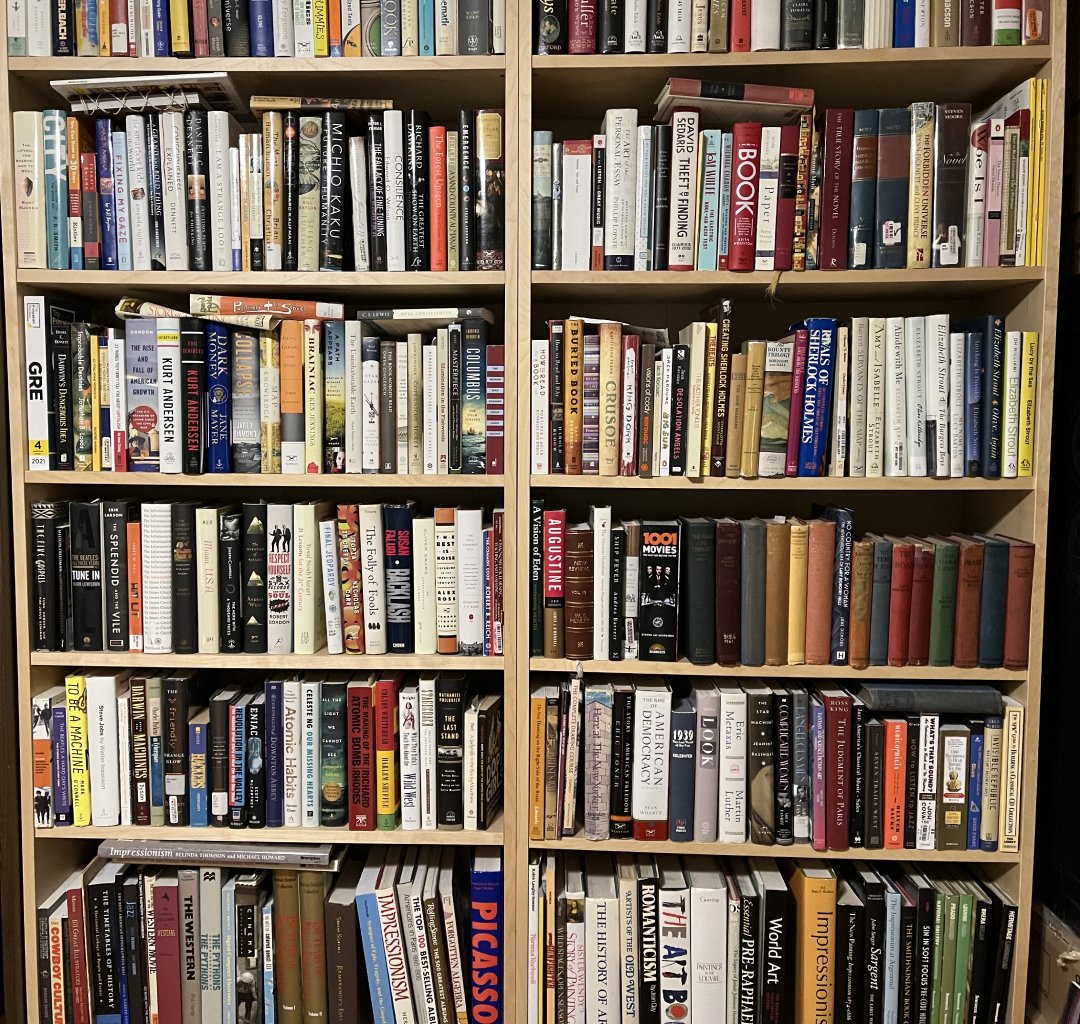
I bought more than a thousand books, preparing for retirement, thinking that after I left the nine-to-five grind, I’d have all the time in the world to read them. It’s not working out like I planned. All the time in the world has turned out to be much less than I imagined. Old age does a number on your temporal sense, which I didn’t anticipate. Being retired turns off the “gotta do this soon” mechanism in the brain, so it’s much easier to tell myself I’ll get around to that someday.

I’ve always wanted a catchy saying about buying more books than I can read, that parallels that old idiom about eating, “My eyes were bigger than my stomach.” My ability to acquire books far exceeds my ability to read them.

This problem is mainly due to my inability to commit. Learning is about specializing. To go deep into any subject requires ignoring all other subjects. I’m as indecisive as Hamlet when it comes to picking a project and sticking with it. However, I feel like I’m zeroing in on something. I don’t know what. I’d like to write a book. I have several ideas. I just can’t commit to one.

Looking through my books, I see that I’m torn between understanding the past, working in the present, and anticipating the future. The momentum of aging makes me retrospective, but I need to fight that. The present is real, and the past and future aren’t. However, to survive well in the present requires some knowledge of the past. And since we always act in the moment, we still feel we’re preparing for the future.

The Lesson of Destination Moon

Destination Moon was a 1950 science fiction film about the first manned rocket to the Moon. It was loosely based on Robert A. Heinlein’s Rocket Ship Galileo, and Heinlein contributed to the screenplay. In the story, the astronauts use too much fuel when landing on the Moon. To have enough fuel to take off and return to Earth, the astronauts must reduce the weight of the rocket and its contents. They throw everything they can out of their rocket ship, including the radio, equipment, seats, and their space suits. With the reduced weight, they take off for Earth.

In old age, I have too many goals, desires, and possessions holding me down. Their weight keeps me from accomplishing any larger goal. I need to jettison everything I can. I’m starting by evaluating my book collection and tallying all the subjects I want to study and read about.

This will be a multi-stage process. In this essay, I’m looking at all my books and listing the subjects I thought I wanted to study. Here is the current list, and even though it’s long, it’s still partial:

  • 1939 World Fair
  • 1960s
  • 1960s Counter Culture
  • Aging
  • Alexander von Humboldt
  • Alfred Hitchcock
  • American History
  • American Literature
  • Amor Towles – Writer
  • Anthony Powell – Writer
  • Anthropology
  • Archaeology
  • Art history
  • Artificial Intelligence
  • Astronomy
  • Bible Archaeology
  • Bible History
  • Biographies
  • Bob Dylan
  • Books – History
  • Boston – 19th Century History
  • British Literature
  • British Literature Between the Wars
  • Charles Darwin
  • Charles Nordhoff and James Norman Hall – Writers
  • Chess
  • Classical Music
  • Classical Studies
  • Climate Change
  • Computer History
  • Computers
  • Country Music
  • Creative Fiction
  • Creative Nonfiction
  • Databases
  • Democracy
  • Drawing
  • Early Christianity
  • Economics
  • Electronics – Learning
  • Elizabeth Strout – Writer
  • Environmentalism
  • Ernest Hemingway – Writer
  • Feminism
  • Feminist History
  • Fiction
  • Future
  • Gerontology
  • Go Programming
  • H. G. Wells
  • Hollywood vs. History
  • Impressionism
  • Information and Information Theory
  • Information Hierarchy
  • Jack Kerouac – Writer
  • Jazz
  • Lady Dorothy Mills – Writer
  • Learning – Study Methods
  • Linux / Unix
  • Literary History
  • Literature
  • MacOS
  • Magazines – History
  • Mark Twain
  • Mathematics – History
  • Mathematics – Pure
  • Memory
  • Miami – History
  • Mitford Sisters
  • Movies – History
  • Music – History
  • Nassim Nicholas Taleb – Writer
  • Network Attached Storage (NAS)
  • Nostalgia
  • Note Taking Systems
  • Obsidian – Software
  • Old West
  • Particle Physics
  • Philip K. Dick – Writer
  • Philosophy
  • Photography – History
  • Photography – How To
  • Politics
  • Power Grid
  • Pulp Magazines
  • Python Programming
  • Quantum Mechanics
  • Reading
  • Renewable Energy
  • Rhetoric
  • Robert A. Heinlein – Writer
  • Rock Music
  • Scanning – Books and Magazines
  • Science
  • Science – History
  • Science Fiction
  • Science Fiction – Criticism
  • Science Fiction – History
  • Science Fiction – Magazines
  • Short Stories
  • Sustainability
  • Taxonomy
  • Technology
  • Television – History
  • The Beats
  • The Lost Generation
  • Westerns – Books
  • Westerns – Movies
  • Westerns – Television Shows
  • Windows – OS
  • Writing
  • Yuval Noah Harari – Writer

One of the first decisions I made was to give up on westerns. I have collected many westerns on DVDs. Along the way, I started collecting books on movie and TV westerns. I decided that in the remaining years of my life, I didn’t need to know that much about Westerns. I also gave away my books on TV history.

I’m approaching each subject like I did with Westerns.

Another example, while flipping through my math books, I decided to abandon any hope of relearning math. I gave away my books on pure math. However, I kept books on the history of math. I still want to see the big picture of history. In the long run, I might have to abandon any interest in math. I just don’t know at the moment. This is a process.

Do I Keep Books I’ve Already Read?

I’ve always kept books I’ve read as a form of external memory. The painful truth is, I seldom consult those books. I’ve long known it’s cheaper to buy books at full price when I need them rather than to stockpile them when I find them as bargain used books or Kindle deals. I think the same thing might apply to keeping books. The time and energy that goes into maintaining them in my library is more expensive than just rebuying a book if I want to reread it.

For example, I gave all my Elizabeth Strout books to my friend Ann. If I ever want to reread them, I’ll try the library.

Whatever Happened to Libraries?

It used to be that libraries were depositories of knowledge. I don’t feel that anymore. I’ve gone to the public library too many times to research a subject only to find a battered collection of old books. That’s why I’ve bought my own. However, I don’t think it’s practical to be my own public library.

We can find massive collections of information on the Internet or with AIs. Unfortunately, I don’t trust those sources.

I wish I had a trusted source of online knowledge.

Kindle and Audible Books

I’m not worrying about my digital books because they are out of sight, and thus out of mind.

I decided to get rid of any physical fiction books that I had on Kindle, but not if I owned them on Audible. I like seeing the words. For now, I’ll keep the physical copies of nonfiction books if I also own them as an ebook. I prefer flipping through the pages of a book when studying.

The Limits of Memory

There are many books I’ve kept because I hoped to study a subject. For instance, I’ve long fantasized about relearning mathematics. I got through Calculus I in college, but then I waited too long to take Calculus II. This is why I gave away my pure math books. I can no longer remember things well enough to study a complex subject.

Whatever books I choose to read in this last part of my life, they need to be books that expand my overall impression of reality, but don’t require me to remember the details.

I guess I’m going for wisdom over data.

Limits of Time

I’m hesitant to keep my art history books. I enjoy looking at the pictures, but I just don’t have time to study many more subjects in this lifetime. My interests include several subjects that could become a black hole of study. I really should flee from them.

I’m trying to decide my “Major” for old age. All my life, I’ve been a knowledge grazer. I nibble at one subject and then move on to another. I’ve always wanted to go deep into one area, to specialize. However, I never could settle down. I’m probably too old to change my ways now. I’m going to try, though. The process of selecting my major will be the topic of the next essay.

Shrinking My Library to Focus My Mind

I gave the library a lot of books today. I love buying books. I love owning books. But I own too many for this time of my life. I also have too many things I’m interested in. Too many for the time and energy I have at age 73. I’m like the rocket in Destination Moon. I’m too heavy for the fuel in my tanks.

It would help if I had a committed destination. I’d know what to keep and what to jettison.

JWH

Have You Ever Wanted to Paint?

by James Wallace Harris, 9/27/23

I spend my days grazing on ideas. I listen to music, watch television or movies, read books, articles, or short stories, look at art books, browse the internet, read history, study popular science, and consume a lot of YouTube videos. All of it is about idea processing.

For breakfast, this morning I read “Painting of Hannah” by Lan Samantha Chang in the September 2023 issue of Harper’s Magazine. Follow the link if you want to read the story too.

“Painting of Hannah” is a short story about a young American, Jacob, studying art in France. Jacob stays at an atelier, apprentice to Thomas Gaugnot, a master painter who is trained in the naturalist technique, a student of Rennes, who was a student of Renoir, with a lineage all the back to Leonardo.

Gaugnot comes across like a Zen master, not saying much but tricking Jacob into seeing. Jacob must sacrifice both his ego and his desire for the beautiful artist’s model, Hannah, who he paints every day. Hannah, a young woman, lives with the older Gaugnot, and is Gaugnot’s muse. Gaugnot tells Jacob:

“They say my technique is obsolete,” Gaugnot said. “That is true. It is secret. It became a secret because no one cared. The attention of the world turned away from this kind of painting, what you call naturalism. You—­” His gaze pushed Jacob back; the chair creaked. “You are here to learn the techniques of this secret.” He smiled a small, triumphant smile. “You think it is romantic.”

We watch as Jacob learns to see. I’ve made a few lame attempts to learn to draw, but I’ve never stuck with it. I’ve even had some classes. I’ve learned with a few hours of work I can show some improvement, but I know becoming an artist takes years. That’s why I gave up, but that was lame of me.

I have several friends who are currently studying various kinds of painting. I admire them for not giving up. You don’t have to compete with John Singer Sargent to enjoy learning to draw and paint. You don’t have to move to France and study with a master for years. Ten thousand hours might make you a master, but thirty hours is enough to produce amazing results. Yet knowing that doesn’t allow me to apply myself at learning to draw. I hate that.

I wish I had that discipline because what I really want is to learn to see like an artist. That’s what the story hints at. That us ordinary folk are blind to most of the visual world. Gaugnot pushes Jacob into seeing what’s in front of the rest of us that we ignore.

The human eye can only see a tiny portion of the visual spectrum or hear a sliver of the audio spectrum. and there are other wavelengths of electromagnetic spectrum that are even beyond our senses. So, it’s a shame we don’t even make the most of what we can perceive.

Evidently, learning to paint means learning to see what we’ve never bothered to look at. I like that. I like that because that’s what I do all day long with my information grazing.

I feel reading and watching helps me discern finer shades of ideas, and learning to write is learning to paint with words. Writing these blogs is learning to see more into the spectrum of language.

But I wonder about Gaugnot and Jacob. They learn to put what they see on a canvas, but do we see what they saw when looking at their paintings? We might see beauty but without understanding the insight. And if I read something written by someone discerning something specific in the reality of ideas, can I discern it too by reading their writing? Or is it only telling me that I need to go look for myself?

There was something in this story, “Painting of Hannah” about Nietzsche that intrigued me. It was the concept of “Eternal return.” It hints at a Groundhog Day existence. That’s the thing about learning to discern all there is from the firehose of information we live with daily; it would take several lifetimes to learn how to perceive everything. Are we Bill Murray living the same life over and over? Are the Hindus right about reincarnation?

I don’t think I’m coming back, so I want to distinguish details as I can before I die, both visually and cognitively. I wonder if I shouldn’t study drawing again. Would the discipline I got from learning about light also apply to studying the perception of ideas?

All my life I’ve wished I had more self-discipline, but if a genie from a magic lamp offered me three wishes, what would be the downside if I asked for more discipline? There’s always a downside in those tales. Maybe I’ve already been granted that wish and I’m living the existence of eternal return.

Tonight, I might snack on “Painting of Hannah” again and reread the story before I go to bed. Reading short stories is like learning to paint, you must keep looking to see everything.

Tomorrow I will wake up and find something else to inspire me for the day. Jacob worked on the same painting daily for months. Is that the key? Maybe I should stay with one concept for months. Maybe the secret is not accumulating more information but studying the same information repeatedly.

JWH

“Created by Humans” vs. “Created by AI”

by James Wallace Harris, 4/22/23

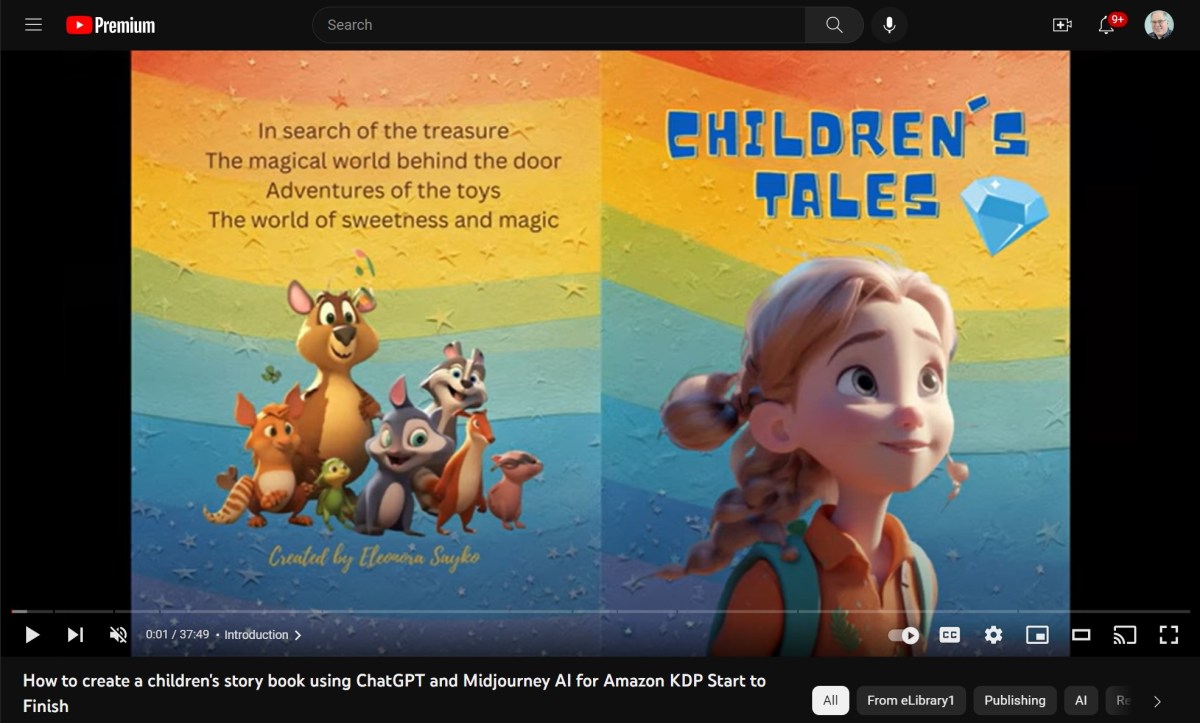
The first video I watched on YouTube this morning was “How to create a children’s storybook using ChatGPT and Midjourney AI for Amazon KDP Start to Finish.” eLibrary1 explains how she creates children’s books using AI tools.

It’s actually quite fascinating. She gets ChatGPT to suggest a series of ideas and then asks ChatGPT to write up 500-word versions of the ideas she likes. Then she tests those stories against an AI checker to show how they can be easily detected as AI-created. Then she runs the stories through another program that rewrites her stories. After that, she checks again and shows how the AI detector shows they are now human-written. Then she runs them through a plagiarizer detector to make sure they won’t be rejected for that reason. After she’s sure she’s got something good to work with she submits the stories scene by scene to Midjourney to have it create the artwork.

As I watched this video I thought about how so many people are concerned with seeing “Made in America” tags on the products they buy. I wondered if people in the future will look for “Made by Humans” or “Created by Humans” tags?

My initial reaction was I wouldn’t want to read a book that eLibrary1 created. I would feel cheated. I expect art and fiction to be produced by artists that suffered for their art. But then I thought, what if the story and pictures were better than what people produce? I’m already seeing artwork produced by AI that blows me away.

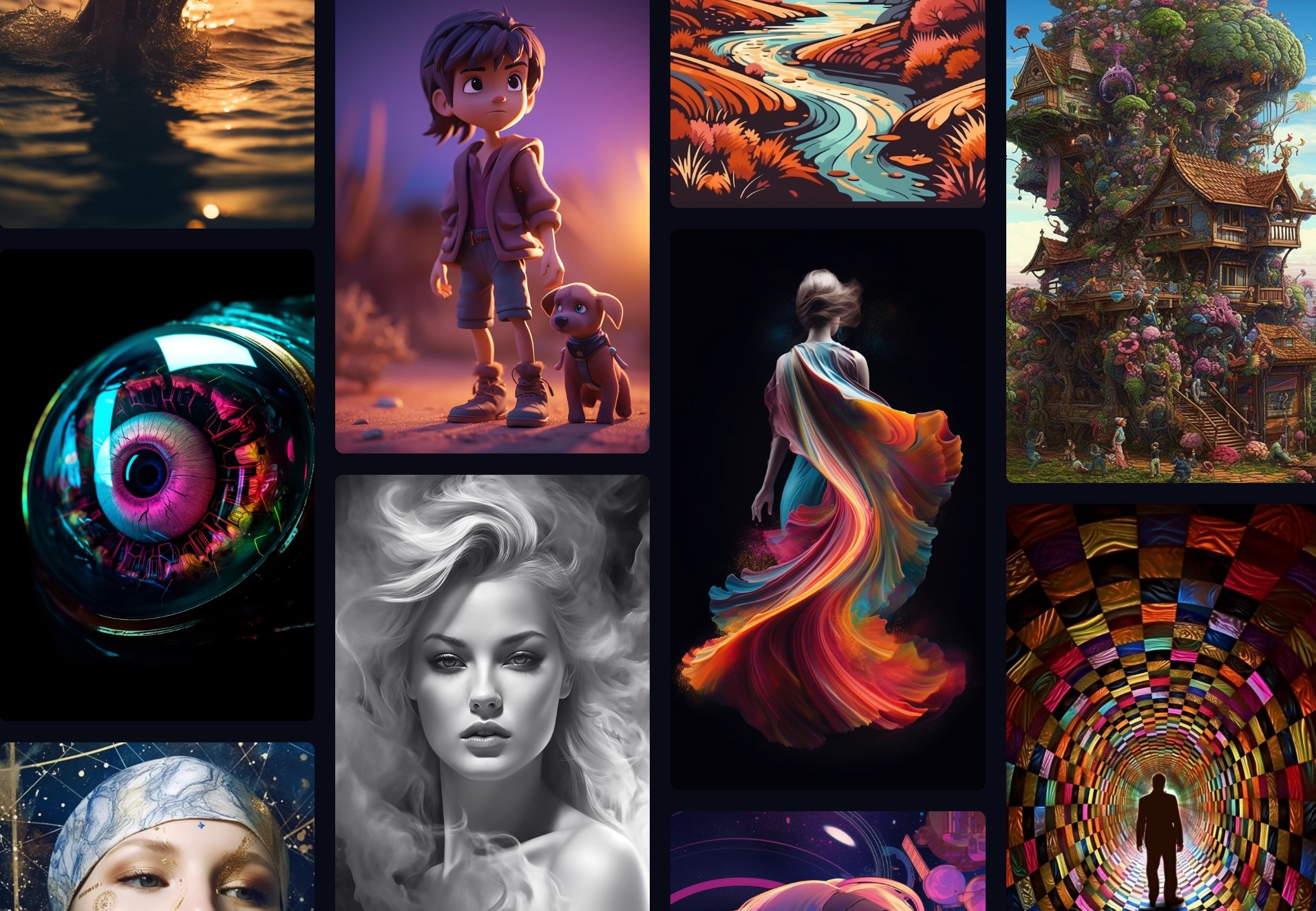
Just scroll down for a while in Midjourney’s Community Showcase.

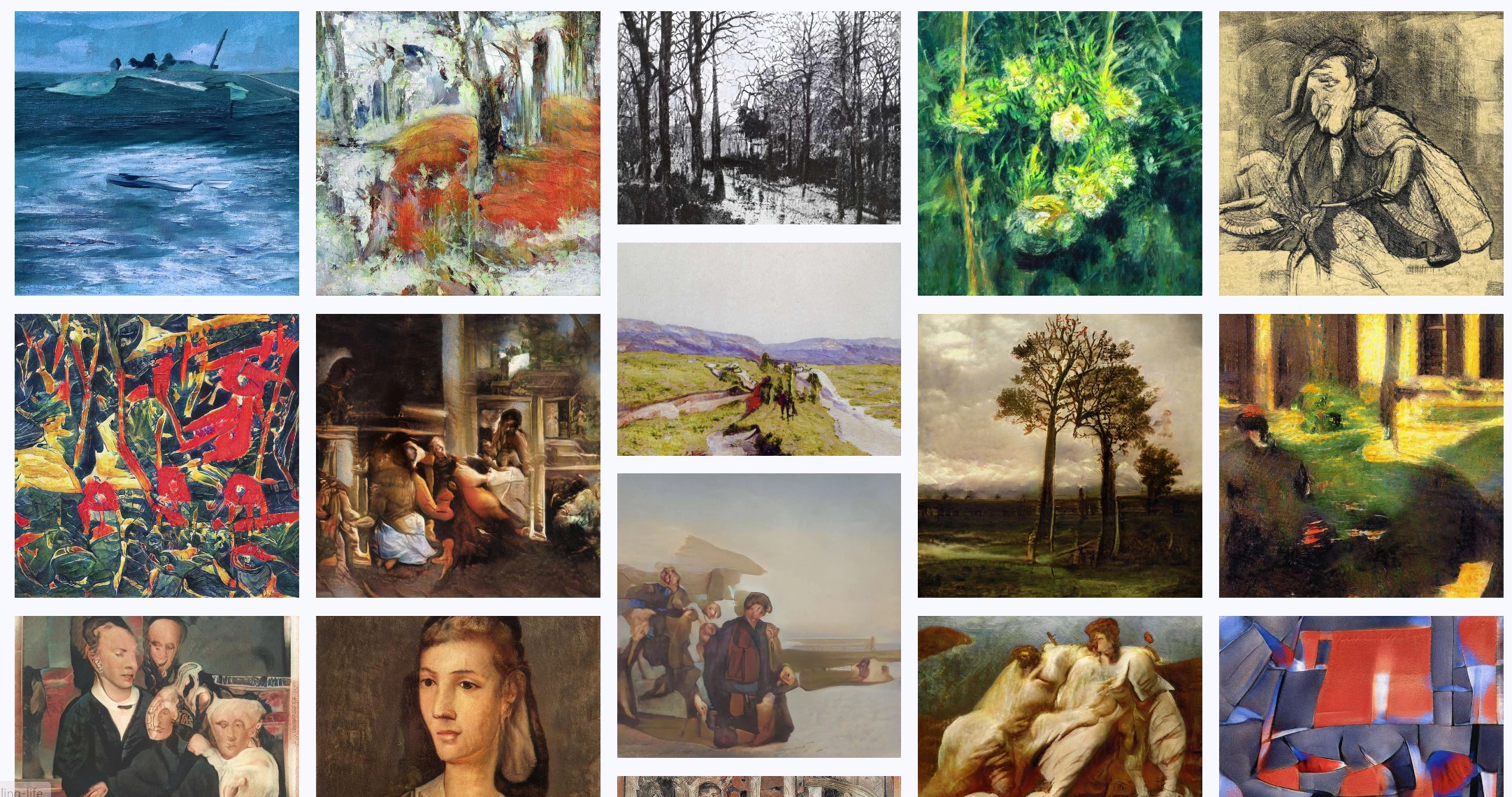
Or look at Latest Works at Art AI Gallery.

The range of what’s possible is tremendous. But then, it’s all been inspired by art created by humans. Is AI art actually creative work? Well, humans don’t create artwork out of nothing either. They have a lifetime of being inspired by other artists.

Let’s ignore this philosophical question for a moment. Let’s go back to the old idea of people “liking what they see” as a test of quality. I love visiting art galleries. I love looking at graphic art in magazines. I love looking at art books. I often buy books for their covers. And I have collected thousands of science fiction magazines, both in physical format and digital scans (but mostly digital). The reason I love them so much is because of their covers.

I’ve got to admit that AI-generated art presses the same exact buttons as art produced by humans. I have not read fiction written by AI writers, but what if I love their stories as much as I like AI art? To be honest, I believe I have a stronger psychological desire for fiction to be human-generated. What happens to that feeling if I read an AI-written novel that I like more than all my favorite human-written novels?

What I’m feeling right now is the desire to tune out the AI world. To retreat into the past, and savor the art and fiction created before the 21st century. That I want to become a modern Luddite that rejects AI machinery. But what will I be missing out on?

What if machines can take our imaginations further? Isn’t that why I’ve been a lifelong science fiction reader? Isn’t that why I took psychedelic drugs in the 1960s? Isn’t that why we admire the greatest of human thinkers?

Maybe I want to run away because I’m old and tired. One of the main enjoyments of getting old and putting up with the pains of aging is seeing how events unfold. So, why turn away now?

JWH

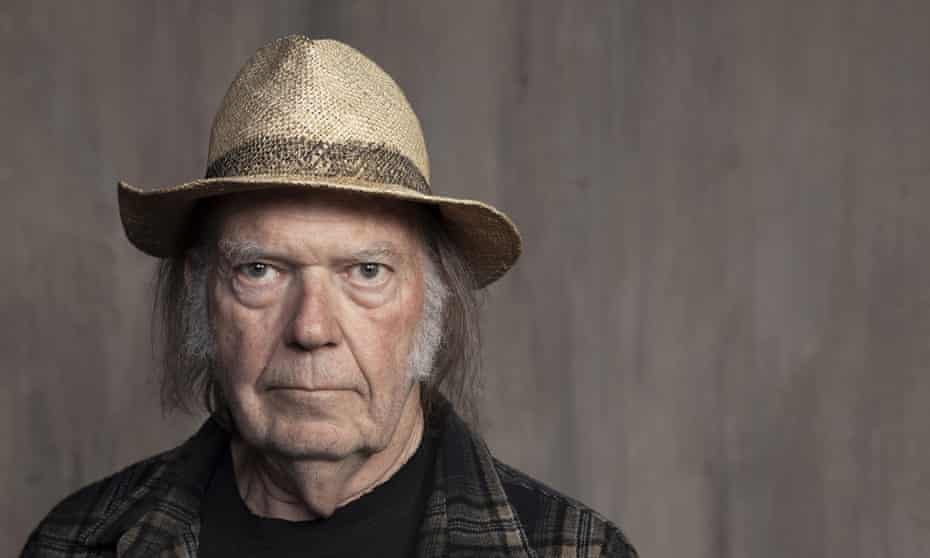
Is Neil Young’s Spotify Protest Censorship?

by James Wallace Harris, 2/2/22

I’ve noticed an interesting overlap in two news stories over the past week. One was Neil Young’s demand that Spotify removes Joe Rogan’s podcast, and the other was about parents demanding books be removed from Texas schools. Since I’m against banning books should I also be against banning podcasts? Just because I love Neil Young’s music should I follow his protests?

I know next to nothing about Joe Rogan other than he said healthy young people shouldn’t need to get the Covid vaccine. That’s truly bad advice that could get some young people killed. But is censoring Joe Rogan the answer? I find controversy-driven talk show hosts to be repugnant. I just ignore them. But what if we did live in a world where we could shut up everyone we didn’t want to hear?

The problem is people on the right want to suppress certain ideas, and people on the left want to suppress other ideas. In both cases, those folks think they are doing good. I believe ideas should battle it out in the open. If a talk show host or book author says something that upsets people, should we censor them? Or should we evaluate what they have to say and decide for ourselves what we want to believe?

We do have certain kinds of censorship. We put the kibosh on false advertising, libel, slander, or any action that leads to provable damaging results.

Are there cases where young people have died, and their parents could bring a class action suit against Joe Rogan? With all the social media evidence, I suppose documentation where young people left evidence saying they didn’t get vaccinated because of Joe Rogan. But isn’t that for the courts to decide?

What Neil Young, Joni Mitchell, et al have done is assume this danger is true and are fighting against it. That seems honorable. But I’m sure the parents and supporters of banning books feel they are equally honorable. I admire people wanting to do good, but I often feel they aren’t

On the other hand, I had a completely different take on the Young-Spotify issue. I was offended by Spotify regarding Joe Rogan for an entirely different reason. I love Spotify but I’ve always felt guilty when I hear claims that it doesn’t pay music creators fairly. To pay some blowhard $100 million for a podcast when Spotify is accused of paying musicians $50 royalty checks is hard to accept. Why isn’t Neil Young protesting that? However, I have heard other musicians say they are paid well by streaming services, and those complaining performers have never been given proper royalties. Evidently, dividing the pie has always been unfair in the music business.

It’s mind-boggling to me that talking heads get more money than musicians.

If recording artists pulled their music catalogs to protest bad pay, I could understand their attack on Spotify. Is Joe Rogan getting more pay per play than hit songwriters? That would be disturbing. Does society really value the opinionated over artists who gave us songs we’ve loved an entire lifetime? To me, Carol Kaye deserves $100 million far more than Joe Rogan.

I also must wonder if Neil Young and his musician friends are only hurting their fans. Spotify now skips their songs when they come up in my playlists. I never wanted to listen to Joe Rogan, but now I can’t hear Neal Young on Spotify.

I bought all of Neil Young’s albums and CDs for decades, and I could go back to listening to them now, but streaming is how I listen to music nowadays. I hardly ever use my turntable or CD player. Luckily, I subscribe to more than one music streaming service.

My protest to Spotify is they should pay the musicians more, even the ones that originally got bad contracts. I love the idea of a universal listening library for rent. It’s too damn convenient. That’s why I subscribe. I want access to all music. I don’t care about anything but the music.

JWH