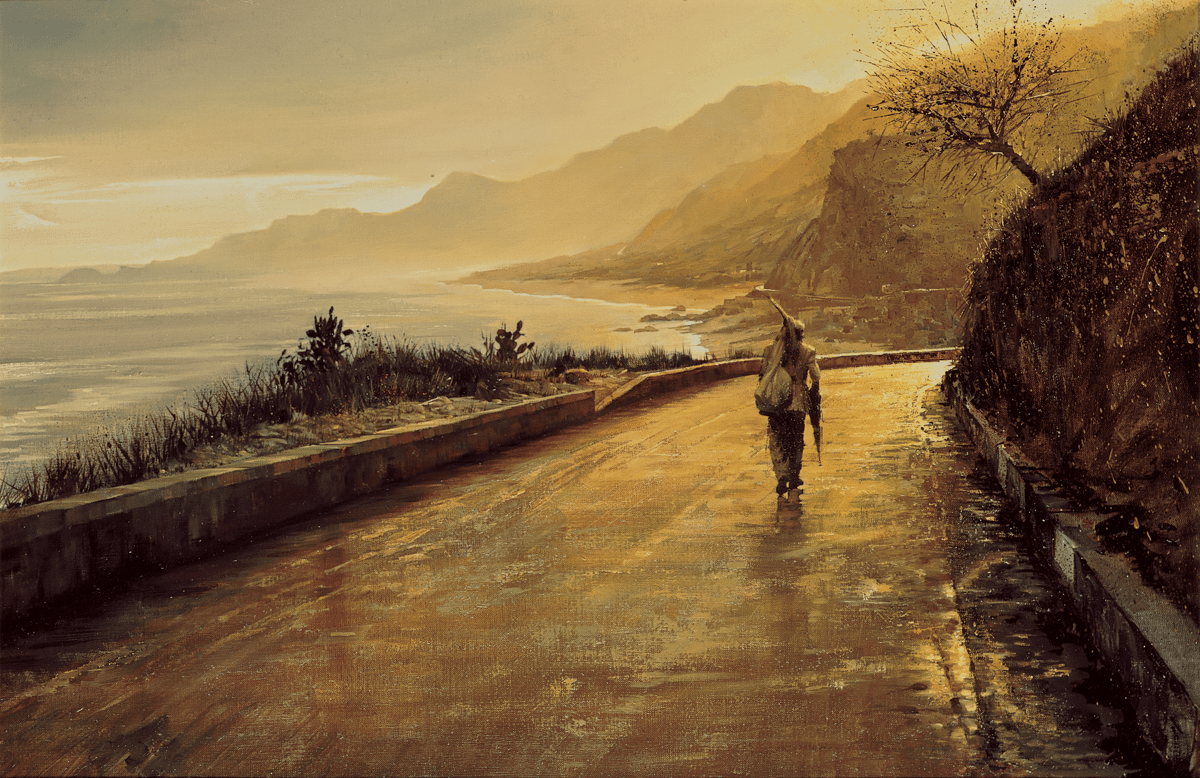
How We Lose People as We Get Older

by James Wallace Harris, 7/6/25

I never knew my grandfathers. My father died in 1969. My grandmothers died in the 1970s. My mother died in 2007. All my twelve aunts and uncles have passed on. My sister, born in 1953, is still alive, but both her husbands and one son have died. Only seven of our twenty-four cousins are still alive. My wife, Susan, and I have known each other for forty-eight years, but we have no children.

Susan and I bought her parents’ house after they died. We hosted Christmas and Thanksgiving like her parents had for many years. As our nephews and nieces got married, they wanted to create their own holiday traditions. We stopped hosting holiday dinners. Since then, I seldom see people under sixty. I told one friend, who is 59, that she’s the youngest person I know.

Of the hundreds of people I knew in school, I kept in touch with only one person. He was my oldest friend whom I first met in 1967. I lost contact with him in April. I fear he is dead.

Before I retired, I had a large circle of friends at work. There were at least forty people I kept up with regularly. Twelve years later, I speak with one person every week on the phone, see another person about once a month, and text with a third person several times a year. All my other work friends have faded away. Several have died.

Outside of work, I’ve made many friends. Quite a few have died, but I’m still in contact with several of them, although that group is slowly shrinking. Of a group of six guys I hung out with in the 1970s, only two are still alive. I was born in 1951; only 72.8% of Americans born that year are still alive.

At seventy-three, I’m still quite social, but I realize that is changing. When I was younger, I assumed friends would only disappear when they died. But I’ve learned that many people have just drifted away. They got jobs in other cities, or they moved to a retirement community, or they quit driving, or withdrew from social life due to illness, or they moved away to be near their kids, or we just didn’t stay in touch.

Maintaining friendships requires effort. I thought being retired would give me all the time in the world to do everything I wanted. It hasn’t worked out that way. I have more time, but less energy and vitality. Aging means triaging friendships.

In recent years, I’ve often dreamed about the places I worked and all the people I knew in each job. I’d wake up from these dreams and lie in the dark and try to recall the names of all the people I knew in the job I just dreamed about. In the 1980s, I worked in a library for six years and got to know around twenty people. I’ve kept in touch with just one. But I really liked most of those people. Why didn’t I keep up with them? I know some have died, but what happened to the rest?

Over my life, I’ve had a couple of dozen good friends and hundreds of rewarding acquaintances. My sister once observed that we start out life in a room by ourselves with someone coming in to change our diapers, and we end up in a room by ourselves with someone coming in to change our diapers. She didn’t point out that we get to know hundreds of people in between.

Now that I’m on the downhill side of things, I’m experiencing a dwindling population of people I see regularly. I’m still making friends, but I fear they will only be acquaintances.

I’ve stopped driving at night, which caused me to see people less often, and for some folks, I’ve stopped seeing at all. Covid put a dent in my social circle. So did politics. Several people I once liked became unlikable after politics got so nasty.

People disappear for many reasons besides dying. Some for their reasons, some for mine. I need to make a greater effort to maintain my remaining friendships.

JWH
Has Retirement Made Me Lazy, Or is the Laziness a Byproduct of Aging?

James Wallace Harris, 6/22/25

Before I retired in 2013, I assumed I’d have all the time in the world to do everything I ever wanted once my 9-to-5 burden was lifted. However, I have done less and less each year. I’m still disciplined about doing my chores and meeting my responsibilities, but the discipline needed to pursue my hobbies and pastimes is dwindling away.

I’m not depressed, I eat right and exercise regularly, and I have a positive outlook. I just don’t spend my free time on hobbies like I once did. Instead, I churn through the YouTube videos or play on my iPhone during idle moments. I hear that’s also a problem for kids, so maybe it’s not aging, but it feels age-related.

Why do I think that? Well, for one, it seems like people slow down when they get older. Here’s what happens. I’ll be working on an objective I consider fun. For example, I got a new Ugreen NAS and was setting it up to use Jellyfin as a media server. The task is tedious because it’s new and has a steep learning curve. I work at it for a bit, feel tired, and decide to put it away for the day. When I was younger, I could work on a tedious problem for hours. Now I can’t.

Do I quit quickly because my older mind can’t handle the task? Or has all that web surfing, channel hopping, and doom scrolling weakened my discipline? I became addicted to audiobooks in 2002 and have read less since, is another example.

This is a kind of chicken-and-egg problem. Has technology weakened my mind? Or was my mind slowing down, and technology is a useful adaptation? I have read more books since the advent of Audible.com.

Here’s another bit of evidence. When I worked full-time, I did far more after work than I do with unlimited free time in retirement. I didn’t have an iPhone back then. Why didn’t I put the same number of work hours into my hobbies after I retired? Did being free of work responsibilities ruin my discipline?

I shouldn’t agonize over this problem if doing less is part of aging. However, does retiring make us age faster? Is technology making us lazier? I have no answer.

I could test things by limiting my screen time. My emotional reaction to that idea is about what a thirteen-year-old feels when a parent tells them they need to cut back on their screen time.

I’m constantly thinking about aging. Philosophically, it’s an interesting concept. Comparing it to the old nature vs. nurture debate, I would consider aging a problem of decay vs. mind. We know we will all end up as worm food. The challenge is to be the most interesting and creative worm food before we’re eaten. The insidiousness of aging is accepting that it’s time to be eaten.

JWH

Paradise Lost – What if Our World is Heaven?

by James Wallace Harris, 6/15/25

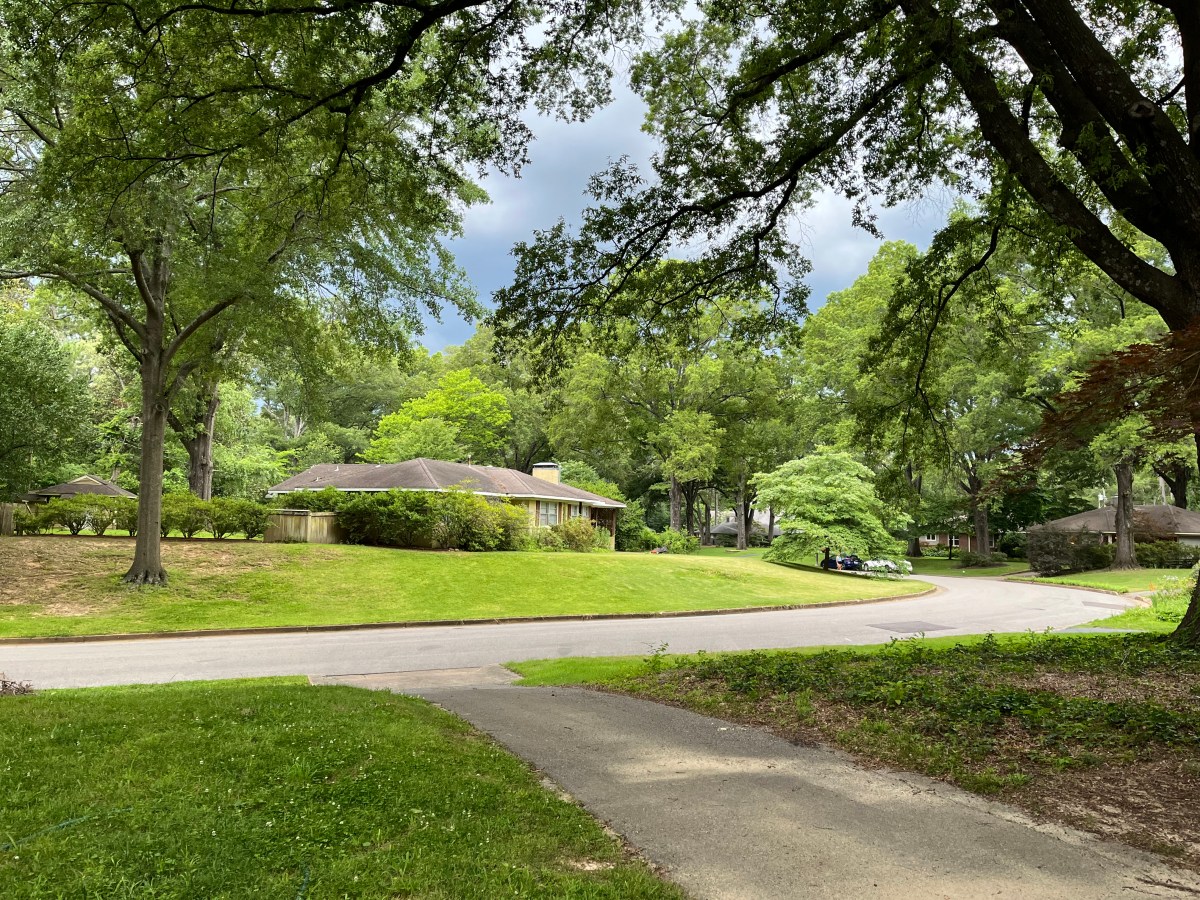
If I ignore the depressing news on my screens, I can step out of my front door and view a beautiful world. Looking at the photo above, do you see heaven or hell? We seldom consider Earth a paradise, but we all experience moments of beauty and serenity, as well as moments of pain and suffering. We spend our lives avoiding the one and seeking the other.

For most of my life, I felt like I was climbing a hill towards my dreams, but now, in my seventies, it feels like I’m sliding down that hill. I wonder if I’ve been chasing fantasies while ignoring reality. There is a book of conversations with Philip K. Dick called What If Our World Is Their Heaven? I’ve often wondered if we were living in heaven and didn’t know it, or worse, what if we were living in heaven and were turning it into hell.

Over the last several years, theories have been proposed that our universe is an artificial reality. I’ve always objected to that idea, but it asks a fascinating philosophical question: If we’re living in a synthetic reality, did we choose to be in it? Why would we want to experience so much pain and suffering?

I’ve always believed our existence is a Darwinian reality where everything happens due to randomness. If I believed in God, I would have to ask: Why do you make us suffer?

Hinduism and the concept of reincarnation also suggest something interesting. That belief system claims we are souls coming to this reality to evolve, and suffering is a teaching tool.

Whether we are here by accident or choice, it still leaves the question: Why do we suffer? If our pains are due to the luck of the draw, how do we make the best of a bad situation? If we’re in some kind of cosmic classroom, what are we supposed to learn? And if we’re a participant in a monstrous computer game, how do we win?

Is it delusion to think our place in the universe is anything other than an accident?

Because an algorithm observed me read one story on coping with life in my seventies, they have sent me many more. I’ve seen list after list of the personality traits of those who survive well and those who don’t. I can’t help but wonder if there is a correlation between belief and how we survive.

Do people who believe life has no purpose succumb quicker than those who think we do? And even if we accept that we’re living a Darwinian existence, aren’t there two approaches to that, too? Isn’t existentialism a positive choice over naturalism or fatalism?

Even people of rock-solid faith die horrible deaths. Few people escape this world without suffering. If suffering is so integral to existence, what is its purpose?

JWH

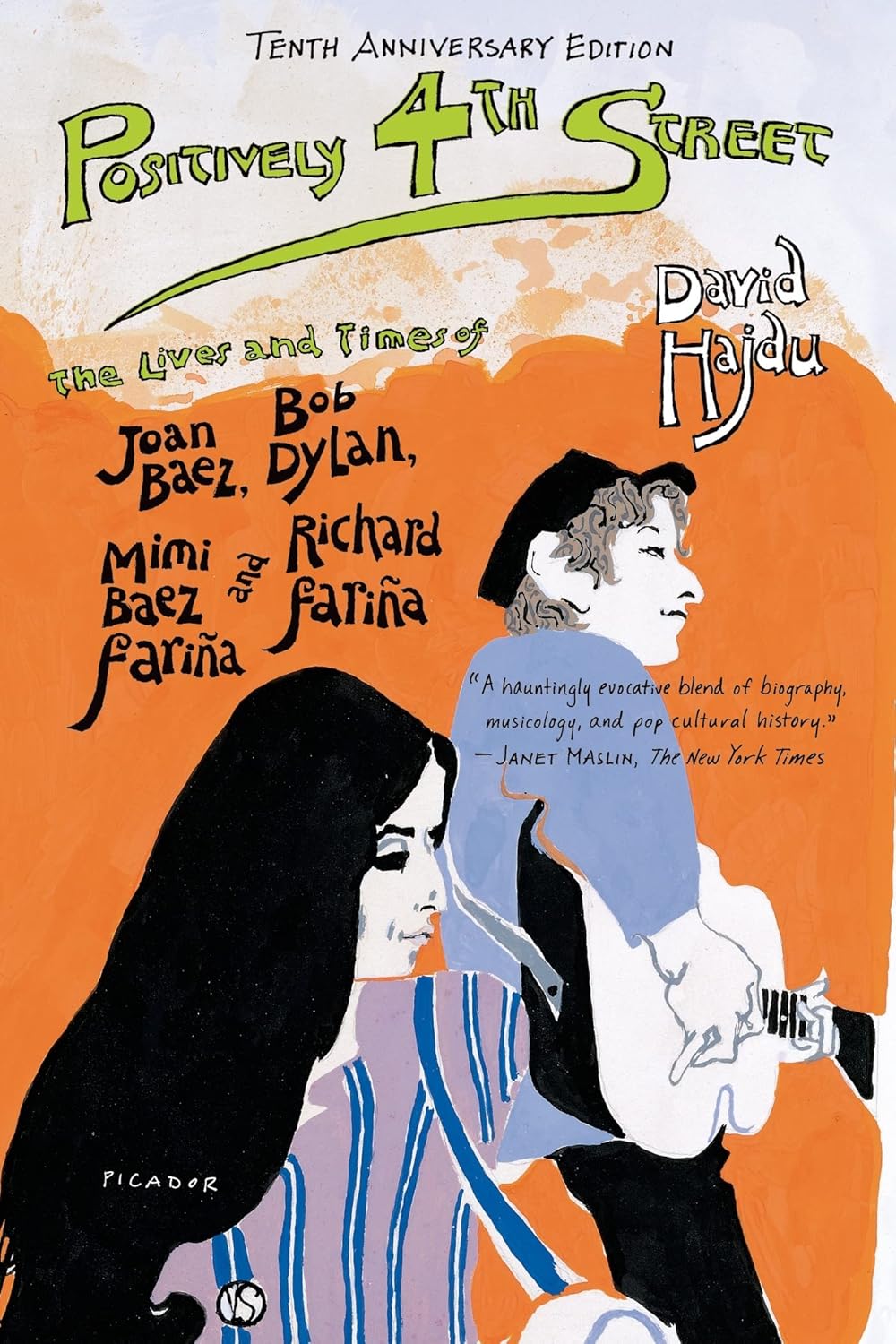
POSITIVELY 4TH STREET by David Hajdu

by James Wallace Harris, 6/10/25

2025 is the 60th anniversary of my living through 1965. I discovered Bob Dylan in 1965 when “Like a Rolling Stone” came on Top 40 AM radio. That was when rock and roll matured, becoming rock. I’ve never been able to forget the sixties. That’s mainly because I was an adolescent during that decade, and few people can forget their adolescence. To compound the biological factor, we were Baby Boomers, believing the whole world was watching us lead some kind of revolution.

I thought Bob Dylan epitomized the decade when I was a teenager growing up with his albums The Freewheelin’ Bob Dylan in 1962 through Nashville Skyline in 1969. I’ve been listening to those albums for sixty years, and I’ve read a lot about Bob Dylan. He wasn’t my hero, but someone I admired and envied. While watching the recent film A Complete Unknown, I couldn’t help but feel they got everything wrong. Although the film and acting were dazzling.

Bob Dylan is legendary for hiding behind a mask. He has always worn an enigmatic persona. I think to understand Dylan requires not looking directly at Dylan but at everything that surrounded him and how he reacted. Of course, that belief may only be a delusion on my part, and it’s impossible to know the man.

Of everything I’ve read, Positively 4th Street by David Hajdu provides the best account of Dylan, Baez, and the Folk Revival movement of the late 1950s and early 1960s. I just reread it for the third time because it was selected by my nonfiction book club. I assume the others voted for it because of the film A Complete Unknown. This 2001 book is out of print except for Kindle and audiobook on Amazon.

A Complete Unknown claims Dylan broke with the Folk Music crowd when he went electric. Positively 4th Street documents how he left Folk Music with his second album, The Freewheelin’ Bob Dylan. The Folk Music Revival was about rediscovering, recreating, and reinterpreting historical music from many subcultures and countries. As soon as Dylan and others started writing their own songs, they became singer-songwriters. That was a new music genre. Those artists left folk music behind, and changed pop music, and rock and roll.

The Sixties can be remembered in many ways. There was a great deal of turbulent political change. Many histories of the Sixties are quite ugly. But the counterculture remembers it as a transcendental revolution. I did for most of my life. On this third reading of Positively 4th Street, I’m seeing evidence that undermines that perspective.

In my book club’s discussion group, David wrote:

I almost gave up on Positively 4th Street because of the gossip and drama described in the personal lives of some of my most admired musicians who were icons of the age of the folk era in the late 50s and early 60s.


I am not one for gossip that appears in People Magazine and ET describing the drama of celebrities, but when I learn about the personal lives of some of the great artists I wonder how they ever produced things of such beauty, truth, and goodness.


So I got thinking, is “narcissistic arrogance” a necessary ingredient for a person to create great art?

My reply was successful people often come across as assholes because of their relentless self-promotion. After reading David’s comments, I paid attention to their validity while rereading the book. It became quite apparent that these icons of the Sixties were chasing fame and fortune first. To reach the top of the creative heap means brutal competition. That often meant demeaning their peers. I need to rewatch A Complete Unknown to see how it interprets this aspect.

To think Dylan broke with the Folk Music Revival crowd when he went electric in 1965 is to miss the mark by a mile. Dylan had already blown through several artistic phases by 1965. Who can imagine where the man is at sixty years later.

I was thirteen when I first heard “Like a Rolling Stone.” I thought it would be fantastic to become a singer-songwriter like Dylan, or an astronaut like Wally Schirra, or a science fiction writer like Robert A. Heinlein. I couldn’t imagine what it would take to become successful like those famous men. Years later, I learned I didn’t have what it takes, but more importantly, I didn’t really want to be successful like Dylan, Schirra, and Heinlein. Reading Positively 4th Street reveals the low-level personality details I didn’t understand at thirteen.

Positively 4th Street is a wonderful, detailed history of a tiny creative scene that occurred from 1959 to 1966. David Hajdu culled the significant facts to tell this history, making it vivid and maybe even somewhat close to the truth.

While reading, I’ve listened to the folk albums mentioned in the book, and I’ve discovered that I don’t particularly like songs from the folk music revival. They are historically interesting, but they don’t press my emotional buttons like rock and roll or classic rock. It’s understandable why Dylan quickly fled the movement. The Beatles and the British Invasion buried the Folk Music revival.

Still, Positively 4th Street is an engaging history to read.

JWH

The Reality of Reality

by James Wallace Harris, 5/2/25

I use reality to mean everything in existence. We used to use the term universe to mean everything, but scientists began speculating about multiverses and the word universe meant less than everything. Also, we tend to think of the universe in astronomical terms, and when I mean everything, I want it to encompass all the dimensions of existence everywhere, to whatever is beyond the quantum world to whatever existences lies beyond the multiverses.

The first reality of reality is that our local existence is an infinitely tiny portion of reality. We appear to exist in a three-dimensional domain defined by our sight, which gives us the illusion that we are small creatures in a large world. In reality, we are specks on a speck.

The second thing we need to remember about reality is that our lives have no meaning in relation to reality. Reality is completely indifferent to our existence. That every religion and philosophy we’ve ever created to explain reality are delusions by infinitesimally tiny beings. Think of our thoughts as a bacterium in our body speculating about its existence.

The third thing to remember about reality is that we spend our entire existence imposing order on chaos in our local bit of reality. Subatomic particles create atoms, and atoms create molecules, and molecules create inorganic chemistry, and inorganic chemistry creates biology, and biology creates humans, and humans create civilizations, and civilizations create technology, and technology is creating artificial intelligence. Reality is always evolving into something else.

Everything we do involves creating order out of chaos. We breathe and eat to stay alive. We learn to make sense of reality. We work to own things. We maintain the things we own. Doing the dishes imposes order on the kitchen. Washing clothes imposes order on our wardrobes. Gardening and landscaping impose order on our yard. Writing imposes order on our thoughts. Decluttering imposes order on our desks. Talking to people creates order in our relationships.

How much order we impose depends on how many habits, possessions, and people we want to control. The more we try to control, the more stress we feel. As we age, and our physical and mental abilities decline, we slowly lose control of everything we’ve worked to control. That is the reality of our lives.

We comprehend reality through science, but it’s extremely difficult because reality is hard to understand. At best, science notices repeatable statistical patterns that we can label with terms that we share. Like I said, religions and philosophies are mere delusions we embrace to think we understand reality. We don’t. We spend our lives acting on beliefs, believing we know more than we do.

We are creatures who live on delusions imposed on us by our biological urges and the delusions imposed on us by our culture and society. Except for Zen Buddhists, few people attempt to free themselves of their delusions. Instead, they passionately embrace their delusional beliefs by expending vast efforts to make them a reality.

I think about all of this as I encourage myself to go outside this morning to work at imposing order on the forty-thousand square feet of chaos that is my yard. The weeds are winning. They want to impose their order over my plot of land that I delusionally think I own and control. But it looks like rain, and as I glance around this room, I see three desks piled high with disorder that I need to wrestle into order. And I haven’t done my physical therapy exercises yet. If I don’t do them, my back falls into chaos, and I suffer great pain.

It would be so much easier to veg out in front of YouTube videos and let a little more disorder take over the house and yard.

JWH