Listing Every Subject I’m Interested In Based on the Books I Own

by James Wallace Harris, 8/14/25

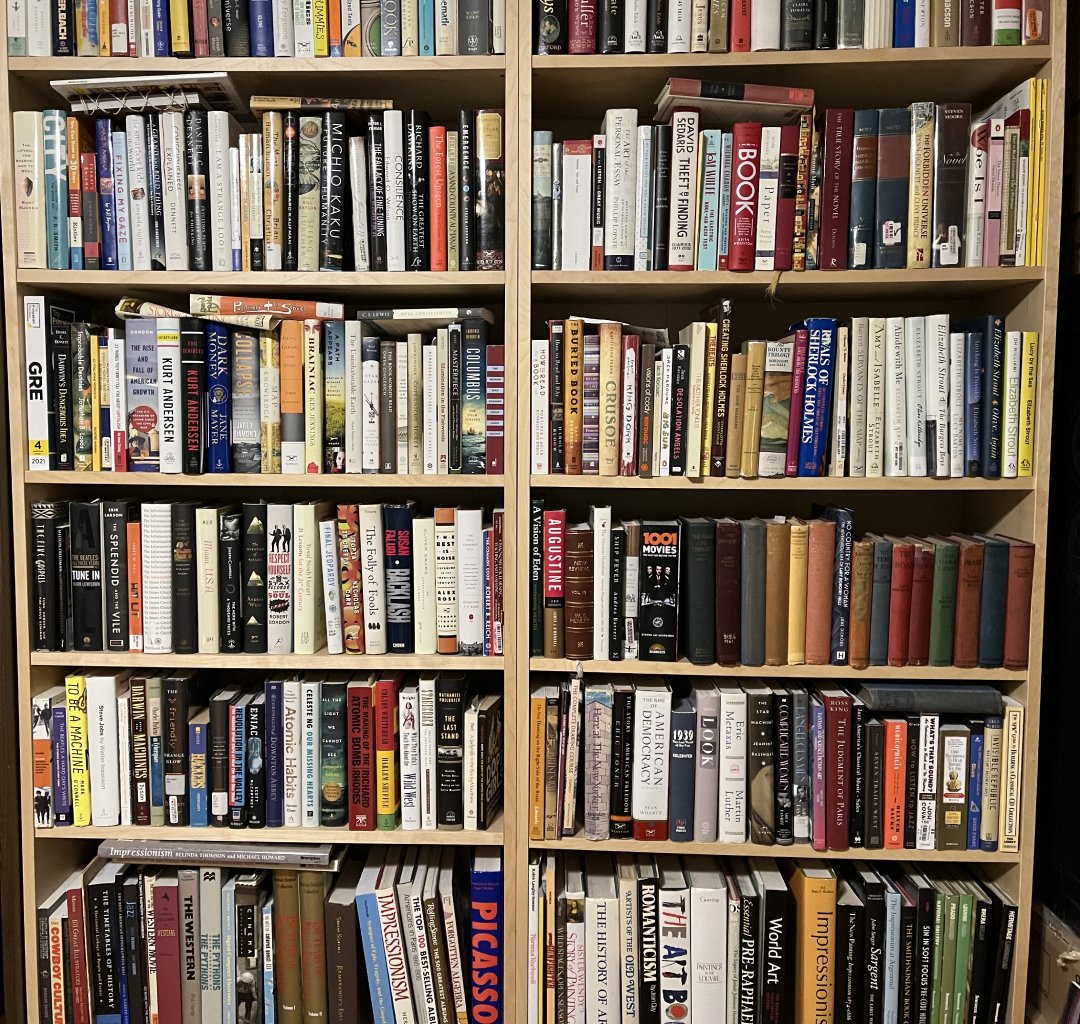
I bought more than a thousand books, preparing for retirement, thinking that after I left the nine-to-five grind, I’d have all the time in the world to read them. It’s not working out like I planned. All the time in the world has turned out to be much less than I imagined. Old age does a number on your temporal sense, which I didn’t anticipate. Being retired turns off the “gotta do this soon” mechanism in the brain, so it’s much easier to tell myself I’ll get around to that someday.

I’ve always wanted a catchy saying about buying more books than I can read, that parallels that old idiom about eating, “My eyes were bigger than my stomach.” My ability to acquire books far exceeds my ability to read them.

This problem is mainly due to my inability to commit. Learning is about specializing. To go deep into any subject requires ignoring all other subjects. I’m as indecisive as Hamlet when it comes to picking a project and sticking with it. However, I feel like I’m zeroing in on something. I don’t know what. I’d like to write a book. I have several ideas. I just can’t commit to one.

Looking through my books, I see that I’m torn between understanding the past, working in the present, and anticipating the future. The momentum of aging makes me retrospective, but I need to fight that. The present is real, and the past and future aren’t. However, to survive well in the present requires some knowledge of the past. And since we always act in the moment, we still feel we’re preparing for the future.

The Lesson of Destination Moon

Destination Moon was a 1950 science fiction film about the first manned rocket to the Moon. It was loosely based on Robert A. Heinlein’s Rocket Ship Galileo, and Heinlein contributed to the screenplay. In the story, the astronauts use too much fuel when landing on the Moon. To have enough fuel to take off and return to Earth, the astronauts must reduce the weight of the rocket and its contents. They throw everything they can out of their rocket ship, including the radio, equipment, seats, and their space suits. With the reduced weight, they take off for Earth.

In old age, I have too many goals, desires, and possessions holding me down. Their weight keeps me from accomplishing any larger goal. I need to jettison everything I can. I’m starting by evaluating my book collection and tallying all the subjects I want to study and read about.

This will be a multi-stage process. In this essay, I’m looking at all my books and listing the subjects I thought I wanted to study. Here is the current list, and even though it’s long, it’s still partial:

  • 1939 World Fair
  • 1960s
  • 1960s Counter Culture
  • Aging
  • Alexander von Humboldt
  • Alfred Hitchcock
  • American History
  • American Literature
  • Amor Towles – Writer
  • Anthony Powell – Writer
  • Anthropology
  • Archaeology
  • Art history
  • Artificial Intelligence
  • Astronomy
  • Bible Archaeology
  • Bible History
  • Biographies
  • Bob Dylan
  • Books – History
  • Boston – 19th Century History
  • British Literature
  • British Literature Between the Wars
  • Charles Darwin
  • Charles Nordhoff and James Norman Hall – Writers
  • Chess
  • Classical Music
  • Classical Studies
  • Climate Change
  • Computer History
  • Computers
  • Country Music
  • Creative Fiction
  • Creative Nonfiction
  • Databases
  • Democracy
  • Drawing
  • Early Christianity
  • Economics
  • Electronics – Learning
  • Elizabeth Strout – Writer
  • Environmentalism
  • Ernest Hemingway – Writer
  • Feminism
  • Feminist History
  • Fiction
  • Future
  • Gerontology
  • Go Programming
  • H. G. Wells
  • Hollywood vs. History
  • Impressionism
  • Information and Information Theory
  • Information Hierarchy
  • Jack Kerouac – Writer
  • Jazz
  • Lady Dorothy Mills – Writer
  • Learning – Study Methods
  • Linux / Unix
  • Literary History
  • Literature
  • MacOS
  • Magazines – History
  • Mark Twain
  • Mathematics – History
  • Mathematics – Pure
  • Memory
  • Miami – History
  • Mitford Sisters
  • Movies – History
  • Music – History
  • Nassim Nicholas Taleb – Writer
  • Network Attached Storage (NAS)
  • Nostalgia
  • Note Taking Systems
  • Obsidian – Software
  • Old West
  • Particle Physics
  • Philip K. Dick – Writer
  • Philosophy
  • Photography – History
  • Photography – How To
  • Politics
  • Power Grid
  • Pulp Magazines
  • Python Programming
  • Quantum Mechanics
  • Reading
  • Renewable Energy
  • Rhetoric
  • Robert A. Heinlein – Writer
  • Rock Music
  • Scanning – Books and Magazines
  • Science
  • Science – History
  • Science Fiction
  • Science Fiction – Criticism
  • Science Fiction – History
  • Science Fiction – Magazines
  • Short Stories
  • Sustainability
  • Taxonomy
  • Technology
  • Television – History
  • The Beats
  • The Lost Generation
  • Westerns – Books
  • Westerns – Movies
  • Westerns – Television Shows
  • Windows – OS
  • Writing
  • Yuval Noah Harari – Writer

One of the first decisions I made was to give up on westerns. I have collected many westerns on DVDs. Along the way, I started collecting books on movie and TV westerns. I decided that in the remaining years of my life, I didn’t need to know that much about Westerns. I also gave away my books on TV history.

I’m approaching each subject like I did with Westerns.

Another example, while flipping through my math books, I decided to abandon any hope of relearning math. I gave away my books on pure math. However, I kept books on the history of math. I still want to see the big picture of history. In the long run, I might have to abandon any interest in math. I just don’t know at the moment. This is a process.

Do I Keep Books I’ve Already Read?

I’ve always kept books I’ve read as a form of external memory. The painful truth is, I seldom consult those books. I’ve long known it’s cheaper to buy books at full price when I need them rather than to stockpile them when I find them as bargain used books or Kindle deals. I think the same thing might apply to keeping books. The time and energy that goes into maintaining them in my library is more expensive than just rebuying a book if I want to reread it.

For example, I gave all my Elizabeth Strout books to my friend Ann. If I ever want to reread them, I’ll try the library.

Whatever Happened to Libraries?

It used to be that libraries were depositories of knowledge. I don’t feel that anymore. I’ve gone to the public library too many times to research a subject only to find a battered collection of old books. That’s why I’ve bought my own. However, I don’t think it’s practical to be my own public library.

We can find massive collections of information on the Internet or with AIs. Unfortunately, I don’t trust those sources.

I wish I had a trusted source of online knowledge.

Kindle and Audible Books

I’m not worrying about my digital books because they are out of sight, and thus out of mind.

I decided to get rid of any physical fiction books that I had on Kindle, but not if I owned them on Audible. I like seeing the words. For now, I’ll keep the physical copies of nonfiction books if I also own them as an ebook. I prefer flipping through the pages of a book when studying.

The Limits of Memory

There are many books I’ve kept because I hoped to study a subject. For instance, I’ve long fantasized about relearning mathematics. I got through Calculus I in college, but then I waited too long to take Calculus II. This is why I gave away my pure math books. I can no longer remember things well enough to study a complex subject.

Whatever books I choose to read in this last part of my life, they need to be books that expand my overall impression of reality, but don’t require me to remember the details.

I guess I’m going for wisdom over data.

Limits of Time

I’m hesitant to keep my art history books. I enjoy looking at the pictures, but I just don’t have time to study many more subjects in this lifetime. My interests include several subjects that could become a black hole of study. I really should flee from them.

I’m trying to decide my “Major” for old age. All my life, I’ve been a knowledge grazer. I nibble at one subject and then move on to another. I’ve always wanted to go deep into one area, to specialize. However, I never could settle down. I’m probably too old to change my ways now. I’m going to try, though. The process of selecting my major will be the topic of the next essay.

Shrinking My Library to Focus My Mind

I gave the library a lot of books today. I love buying books. I love owning books. But I own too many for this time of my life. I also have too many things I’m interested in. Too many for the time and energy I have at age 73. I’m like the rocket in Destination Moon. I’m too heavy for the fuel in my tanks.

It would help if I had a committed destination. I’d know what to keep and what to jettison.

JWH
Back to Vinyl, Again

by James Wallace Harris

Decades ago, I donated hundreds of LPs to the library after realizing I hadn’t played them in years. At the time, I had almost two thousand CDs. This was around the turn of the century, before streaming but after MP3s. It was obvious that LPs were an outdated technology. They were inconvenient to use.

About a decade later, when I heard about the vinyl revival, I got intrigued when enthusiasts claimed analog sounded better than digital. At the time, I was chasing hi-rez audio with SACDs. I bought a turntable and a few LPs. I was disappointed with both formats. Although they sounded different, I didn’t feel a night-and-day difference. I quit buying SACDs and gave my turntable and LPs to a friend.

My theory was that either I didn’t have expensive enough equipment to hear the difference, or my ears were old and I couldn’t hear the difference.

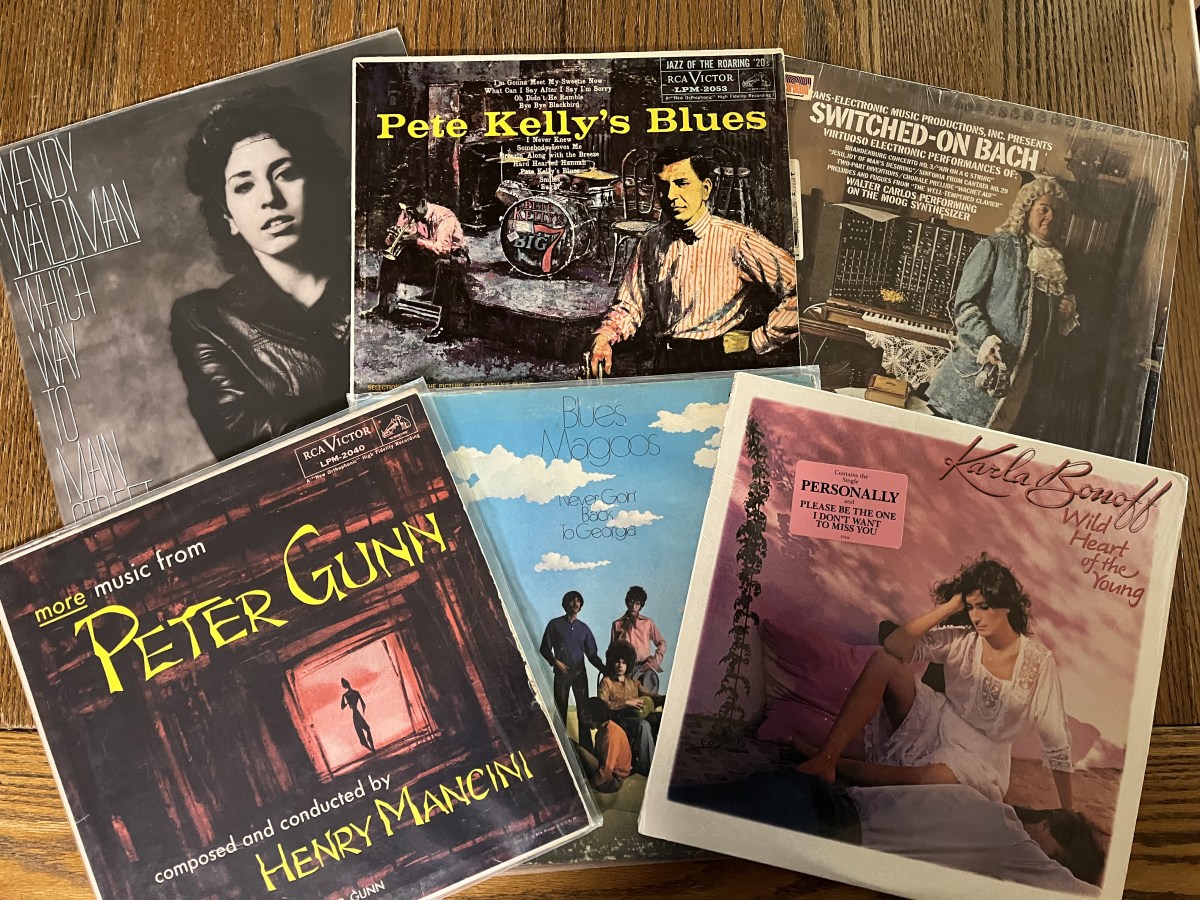
A few years later, I bought another turntable, a much cheaper one, when I discovered the library bookstore was selling old LPs for 50 cents each. I’d buy $10 worth at a time of old records from the 1950s and 1960s. Each time, I’d pick albums that I’d never heard of before, just for fun. But after buying about sixty albums and only finding a couple of gems, I stopped. By the way, one gem was the soundtrack to Pete Kelly’s Blues. I also ordered from Discogs a few favorite albums that I never found on streaming.

However, the deficiencies of the LP format kept annoying me. The pops, hiss, crackles, and skips. Also, I’d have to get up every time I want to hear something different. Streaming is just so damn convenient. So I packed up the turntable and put it in the closet and shelved the records.

Several months ago, I decided I needed to get rid of stuff because I’m getting old and need to manage fewer possessions. I gave away the turntable, but for some reason, I couldn’t part with the records.

Then, a few weeks ago, I had a realization. I missed shopping for records. Starting in 1965 and until streaming killed the record store, I would shop once a week and usually buy one or more albums. That gave me great pleasure. I suddenly wanted that again. I guess it was nostalgia, but I also missed having a reason to get out of the house.

I bought another turntable, the third, since the vinyl revival. This time, a slightly better one, which I plugged into my Audiolab 6000 phono stage. The combination sounded great. And I started shopping for records. It’s different this time. It means going around town looking at used records. Memphis has a few record stores in rundown buildings and some antique malls with a couple of vendors who sell LPs. A few places like Target sell new records, but the selection is very limited and the albums are very expensive.

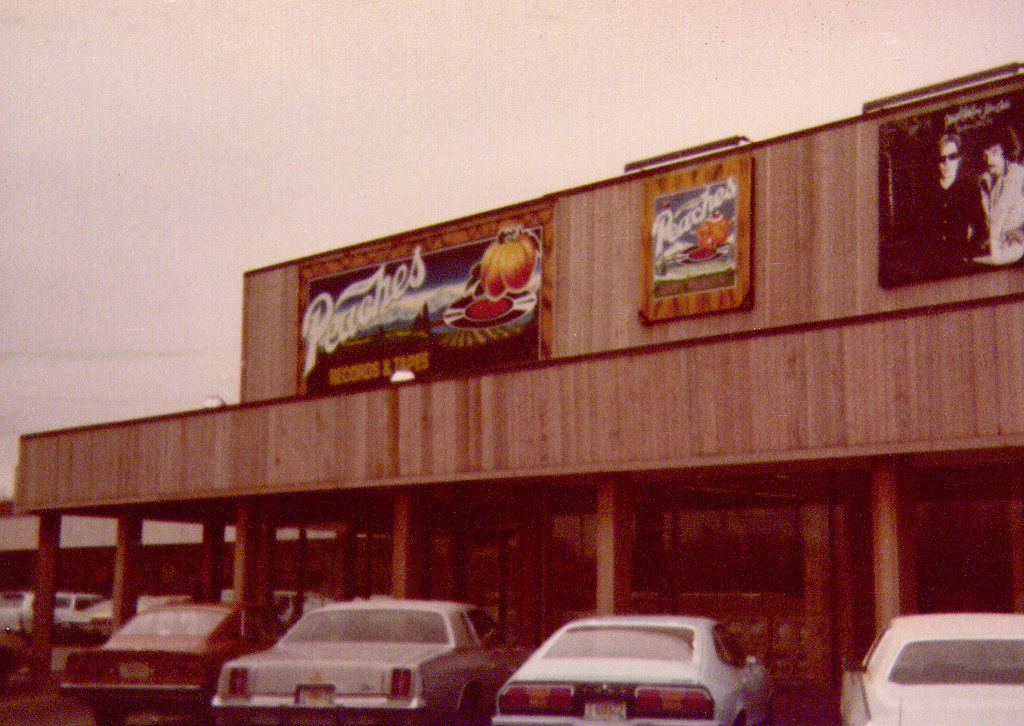
It’s not the same as the old days when I shopped at Peaches. I do feel a bit of the old thrill flipping through the bins, hoping to find an LP that will turn out to be a new favorite. I loved finding an album I would play over and over for a couple of weeks. I still do that with streaming, but so far haven’t in record stores.

The temptation is to look for used copies of old favorite albums, but I decided against that. I make myself buy unknown albums, ones I missed decades ago, hoping to discover an overlooked gem. So far, no luck.

I’ve been lucky at Shangri-la Records in getting old albums in great shape and with little surface noise. But my other sources haven’t been so good. Paying $9 for an unknown jazz trio and having it play with lots of pops and crackles is disappointing. I like the music of The Don Scaletti Trio, but I’d like them more without the extra sounds. Interestingly, this group isn’t available on Spotify to hear clearly.

I doubt I will buy many albums. I will risk buying some new albums by current artists. I’ve been watching record reviewers on YouTube, and there are zillions of albums to try. There seems to be a world of new music that I never noticed.

If I wasn’t trying to recreate an old joy, I wouldn’t mess with vinyl. CDs sound better, and streaming is just too damn convenient. I’m going to allow myself to buy an occasional album, new or used, to recreate a ritual I fondly remember from when I was younger. That ritual involves shopping for the album, and then sitting in a chair and doing nothing but listening to the two sides of the album for the first time while studying the cover.

Mostly, I listen to music via playlists on Spotify. I listen to music like most people do when watching a movie at the theater. It’s the only thing I do. All my attention is on the music. I prefer playing songs from playlists because I’m not interrupted, and every song is one I know I love. However, I think it’s important to sometimes listen to whole albums. LPs are good for that because it’s inconvenient to listen to specific songs.

When I was young, I used to listen to albums with friends. But I have no one who wants to do that anymore. Actually, most of my friends have stopped listening to music. Some still go to concerts, or to bars to hear tribute bands play their favorite music from decades ago. A few have a handful of songs they listen to on their phone as background music while they work around the house. I’m not sure streaming was the main reason why record stores died. My generation, which grew up buying LPs, stopped buying. And newer generations never developed the habit.

I feel lonely regarding my love of music. When I shop for records, I seldom see other people. When I do, it’s usually old guys like me. I know some young people do buy records because of the vinyl revival, but I don’t see them.

JWH

Do You Trust What You Read?

by James Wallace Harris, 8/4/25

Yesterday I tried to remember what I thought about as a young kid. I recall a few incidents when I was three, but I don’t start having many memories until I was around twelve or thirteen. The earliest age I can recall being philosophical is from that same period. Before twelve, I can’t remember thinking about things. I probably did. Very young kids are notorious for asking why.

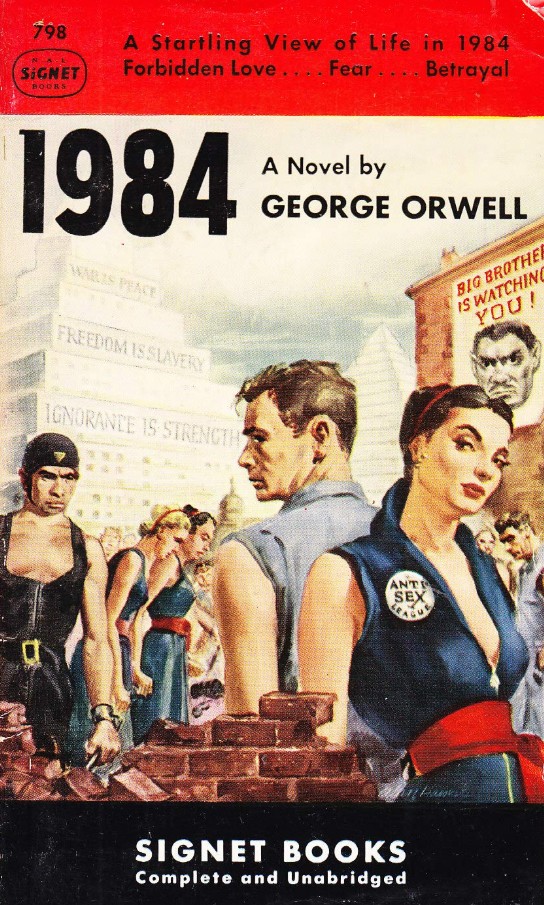
But then I thought of something. It was around age eleven or twelve that I started reading books. The first books I chose were nonfiction about airplanes, space travel, dinosaurs, submarines, cars, and other things that boys like in the fourth and fifth grades. Fourth grade was 1960-1961. I turned ten in late 1961. In the fifth grade (1961-1962), I discovered fiction. Especially, the Oz books by L. Frank Baum and the Tom Swift, Jr. series. In the sixth grade (1962-1963), I got hooked on biographies and a few science fiction books.

It seems obvious that reading inspires thinking.

It was around the sixth grade, or the beginning of the seventh grade, that I can remember thinking about the world. During the seventh grade, and into the eighth, I became an atheist. I remember agonizing over that issue. What I heard in church and from my mother didn’t match what I was experiencing. Nor did it match what I was learning in school or what I was reading. I didn’t read any books on religion or against religion. All the ideas I consumed, especially from books, made me think.

Here’s the kicker. I read a lot of crappy books with crappy ideas, and they infected me. Ideas about flying saucers, reincarnation, ESP, and remembering past lives, like in Bridie Murphy. Most of this came from my uncles, my father’s two brothers.

After rejecting religion, I eventually rejected the occult, spiritualism, and psychic abilities. I rejected them because I read more science books and science fiction. I was skeptical of what was in the science fiction books, but I wanted to believe many of SF’s stupid speculations about the future. The genre promised a more exciting reality that competed with religion.

I didn’t become truly skeptical until many years later. Maybe when I encountered the magazine, The Skeptical Inquirer.

The point I’m trying to make, with this long introduction, is to explain how I was overwhelmingly influenced by what I read. Even after a lifetime of skepticism, I’m easily swayed by concepts I got through books and magazines.

Of course, I’m also susceptible to ideas from my peers, television, and the Internet. Whenever I hear about a neat concept, one that sounds like it helps explain reality, I want to embrace it. I’m easily persuaded by intellectuals and studies that claim to be scientific.

Decades ago, I decided that science was the only cognitive tool humans had developed to explain reality in any consistent fashion. Science is statistical. It doesn’t offer conclusive answers. To truly understand science requires a great deal of science and mathematics. I don’t have those skills. I depend on popular science, and that isn’t the same thing. Accepting an idea based on popular science is similar to being religious and taking a theological concept on faith.

The only way to be scientifically minded without being a scientist is to look for the most consensus among scientific authorities. And this is true for understanding everything that doesn’t fit under the scientific microscope, such as politics, law, ethics, and creating a sustainable society.

Since 2016, I’ve decided that humans are all delusional, including myself. There are dozens, if not hundreds, of ways to be deluded. I decided I couldn’t trust the Internet or television. That I would only trust quality periodicals that had solid editorial policies. Unfortunately, such magazines and newspapers are going out of business.

People no longer want to pay for information. Television and the Internet have conditioned Americans to consume free information. And if you can’t see how that is destroying us, then that’s another delusion you are suffering from.

Humans eagerly embrace untrue concepts that support their desires. We even have labels for that delusion: confirmation bias, wishful thinking, motivated reasoning, and cognitive dissonance reduction.

I’m reminded of what the Jeff Goldblum character said in the movie, The Big Chill. “I don’t know anyone who could get through the day without two or three juicy rationalizations. They’re more important than sex.”

I want to separate myself from my rationalizations. The only way I can think to do that is by reading significant research. What I think depends on what I read. That means being extra careful with selecting my reading.

It also means I need to support the periodicals doing the best job of explaining reality.

JWH

12 Reasons Why I’ve Stopped Watching the NBC Nightly News

by James Wallace Harris, 7/29/25

I developed the habit of watching the CBS Evening News with Walter Cronkite when JFK was assassinated in 1963. I had just turned thirteen. Cronkite had been the first to switch to a half-hour evening news format that September. I only had a vague sense of what the news was before that. I stuck with CBS until the 1980s, into the Dan Rather years. For some reason, my wife and I then switched to ABC for a couple of decades before finally switching to NBC. When Lester Holt retired, I decided to stop getting my news from television.

Since then, I’ve been thinking about what it means to follow the news. Does it require a daily habit of studying current affairs? Should we consider the news to be any reporting of significant events that have recently happened? How much information can be crammed into twenty-two minutes of television? Who decides what is worth knowing? Recently, NBC chose to make the deaths of two celebrities the lead story two nights running. Were the careers of Ozzy Osbourne and Hulk Hogan the most important information I needed to know on those two days? Think about it. Of all these events happening around the world on those two days, were their deaths the most essential for me to learn about?

Reason 1

I’m not picking on NBC. All the broadcast networks and the cable news networks decided what their audiences want to watch based on ratings. It’s not that Ozzy and Hulk’s deaths are more newsworthy than famine in Gaza, but NBC knows its audience is tired of hearing about starving Palestinians, and more people would watch their show if it opened with Osbourne and Hogan.

Decision 1: I need to decide what’s newsworthy.

Reason 2

Is twenty-two minutes enough time to learn about the critical world events that happened in the last twenty-four hours? Just how much time should I devote to being well-informed? If it is as little as twenty-two minutes, then television is the wrong medium. Reading just the headings of all the news stories from a quality newspaper app on my phone serves me far better.

Television news spends most of its time on visual news. Often, NBC repeats exciting film clips several times. That’s not an efficient use of time. Airplane crashes and flooding rivers grab our attention, but is it really news we need?

Decision 2: I need to decide how much time I want to spend on the news. Additionally, I need to decide on the best medium that maximizes that time.

Reason 3

Too much of television news is taken up by reporters and anchors. Often, reporters take more time asking a question than the time given to the eyewitness’s reply. I’m not interested in reporters or anchors.

Decision 3: I need to look for news sources where the journalist is in the background. That excludes television and most podcasts. Generally, good print reporting only includes the reporter’s byline.

Reason 4

Television news offers low-quality information. A major article in The Atlantic might have taken months to research and write. Such articles are information-dense. TV news is written and edited quickly. There’s not much time for fact gathering or checking. It’s often based on eye-witnesses who mainly add emotional impact rather than inform. Television news relies on soundbites, which are mostly opinions. Experts interviewed on TV news are often selected by convenience rather than their authority.

There have been over 22,500 days since I started watching nightly news programs on TV. There is an incredible sameness to the kind of content TV news presents. I should have abandoned it long ago, but it gave the illusion I was being informed, and it was convenient.

Decision 4: Pick another medium for consuming news.

Reason 5

Television news is narrow in scope. It focuses on catastrophes, tragedies, and political conflict. Over a lifetime of seeing thousands of news reports on wildfires, they all look and feel the same. That’s also true for wars, airplane crashes, riots, elections, famines, hurricanes, floods, and tornadoes. Television news mainly focuses on the types of stories we’ve seen repeated throughout our lives.

Television makes it seem like there is nothing new under the sun. I’ve learned from reading quality magazine articles and newspaper journalism that that old bit of wisdom is completely untrue. Magazine and newspaper articles constantly amaze me with news that surprises me because it’s about people, places, concepts, ideas, and events I’ve never heard of before.

Decision 5: Find more news sources that teach me about reality, inspire my curiosity, and better inform.

Reason 6

TV news is seldom memorable. If John F. Kennedy’s assassination was only reported once on the CBS Evening News on November 22, 1963, I doubt I would even remember the event. I remember it because of constant coverage over several days, including all the documentaries, movies, and books that have been produced since that day. I remember Project Mercury, Gemini, and Apollo missions because of the around-the-clock television coverage, as well as the documentaries, movies, and books that have been produced since those events. That’s why I don’t remember all the space missions since. They didn’t get such coverage.

A thirty-second spot on the nightly news, or even a big event stretched to four minutes of reporting, just isn’t remembered. I don’t need to waste time on ephemeral news stories. I’ve discovered it’s far better to spend thirty minutes on one topic than two minutes on fifteen topics.

Decision 6: Focus on one news topic for most of my daily time spent on the news. Then quickly go over the headlines.

Reason 7

Television news isn’t educational because it focuses on the same topics. Shouldn’t news enlighten us about reality? Shouldn’t we always expand our awareness of what’s going on in the world?

How can short videos and soundbites be truly informative? I want news that adds to my personal growth. News that adds wisdom, not ephemeral data.

Decision 7: Make lists of what I want to learn about and then find news reports that bring me up to date on those topics.

Reason 8

Television news is biased. Knowing the truth is impossible. Content produced for money-making ratings or to promote a political agenda will always be questionable. I even suspect the kind of long-form journalism that goes out of its way to appear unbiased. I expect all writing to have some bias. It’s my job to spot it.

Decision 8: Start analyzing prose for bias. Think about word choices in each sentence. Always wonder if information is left out.

Reason 9

Real knowledge is statistical. Science is our only cognitive tool that consistently explains reality. News is too close to word-of-mouth. We need news to be closer to peer-reviewed science journals. That’s probably impossible, but we need to think about it. Ground News attempts to apply statistics to the news by comparing political bias and the amount of coverage a story receives. Can’t we find other statistical methods to measure the news?

Decision: Don’t trust any news unless it comes from multiple sources.

Reason 10

Replying on a single network for news is dangerous.

Decision 10: Seek out different gatekeepers. Every group or organization has an agenda. Learn what that agenda is before interpreting what they are saying.

I’ve discovered that reading/listening to one well-reported article a day is much more informative and educational than a package of video clips and soundbites. I’ve been achieving this with Apple News+, which offers content from over 400 magazines and newspapers. Each morning, I listen to a single long-form article from magazines such as The Atlantic, New York Magazine, The New Yorker, and New Scientist, while I do my physical therapy and morning walk.

Reason 11

Television news can be misleading. It’s not as dangerous as AI-generated fake news on YouTube, but television news is easily corrupted by money, marketing, and politics.

Decision 11: Always consider the source of the news. I need to decide which news sources I will trust.

Reason 12

Most television news gives the United States’ perspective of world events.

Decision 12: Find news sources from around the world.

Conclusion

This is just the beginning of changing a lifelong habit of watching the nightly news on television. I should have made these changes long ago. We all get into ruts that are hard to escape. I believe getting old is making me regret not trying other approaches to understanding reality. However, all the political turmoil since 2016 is making me question everything I know. Human-created and computer-created fake news is disturbing. In recent years, I’ve decided that all of us suffer from multiple delusions.

You shouldn’t ask yourself if you’re delusional, but how delusional. Anyone who feels they know the truth is crazy. We can only guess what might be true by using statistics. Television has always depended on the false assumption that seeing is believing. I have doubts about believing anything.

Television, politics, artificial intelligence, and the Internet have corrupted our perception of reality. I want to rethink everything. I’m starting with my old habit of watching the nightly news.

JWH

Searching for My Lost Mojo

by James Wallace Harris, 7/17/25

I organize my thoughts by writing these essays. For this essay, I define mojo as the ability to accomplish a hard task. Mojo is often associated with magic or a magical ability, and I consider the knowledge to achieve a flow state and work with razor focus as an almost mystical ability. After being retired for twelve years, I feel I’ve lost that mojo.

A prime example of this kind of mojo is when I landed the Records Systems Analyst job in 1987. I had taken computer programming courses as far back as 1971. In 1977, I got a job working with computers, using and teaching others to use microcomputers. However, programming wasn’t part of my job description.

In 1987, I was hired by a college of education to set up a database system to track student teachers. I was given an office. On my desk was an unopened box of Novell 2.11 with a 5-user license, five Ethernet cards with coax connectors, and an unopened box of dBase III. I had no experience with any of those products. Within weeks, I had a multi-user system collecting data, and I was augmenting this local information from the data downloaded from the university’s mainframe student database system.

This was my first salaried job. I knew it was an opportunity I couldn’t blow. My mind stuck to the task. I can recall other times when school, or work, or personal desire made me jump in and focus on a project until it was finished. I will admit that unless I had some kind of pressure to succeed, I seldom finished a task. I usually succumb to laziness.

Being retired has removed all pressure to accomplish anything. Before I retired, I planned to return to school and get an M.S. in computer science. I didn’t do that. I also planned to write science fiction. I didn’t do that either. I planned to do a lot of things, and I didn’t do any of them.

I’ve lost my mojo to focus on a task. That doesn’t mean I’ve given up. I’m just trying to find my lost mojo, and this essay is my way of thinking about how I could do that.

The obvious solution would be to go back to work or school. Those always gave me a purpose. However, even before I retired, when my university decided to standardize on one language and framework, I couldn’t make myself learn it. I don’t know if it was because I was an old dog incapable of learning a new trick, or because I knew I’d be off my leash soon and retired.

Recently, I purchased a 2-bay Ugreen NAS and two 12TB drives to set up a Jellyfin server. I planned to rip all my TV shows, movies, and albums and create a digital library. I figured spending $800 would put pressure on me to learn the system. It didn’t. Using Hulu or Spotify is just too easy and much cheaper.

I realize now I need a different kind of pressure to get my mojo working. I have too many fun things I can do that take no effort. Fear of losing my job or failing a class used to get my mojo working. Knowing this makes me wonder what creative efforts I’ve done just for fun.

I suppose the most productive creative work I’ve done without the push of a boss or teacher is blogging. I’ve had several blogs over the last twenty years, and I’ve written more than 2,000 essays.

I’ve always wanted to write science fiction, but I’ve only written science fiction when taking a class, either in high school, undergraduate and graduate courses, and at Clarion West in 2002. Evidently, fiction takes focus I don’t have, but I can write short essays.

I’ve also dreamed of writing computer programs as a hobby, but I’ve never written any programs, other than for work or school, except for developing a few simple websites. I did teach myself PHP and MySQL for one site. Most of my sites were created from simple HTML and CSS. The most successful site I’ve worked on for fun is CSFquery. My friend Mike did all of the programming for that site. All I did was data entry. Mike is my poster boy for being able to focus.

A long time ago, I published fanzines with my friend Greg. And for several years in the 1970s, I published APAzines. However, those really were precursors to blogging. I can easily write short essays. But do not write complex, well-researched essays. I have a knack for nattering, but not journalism or nonfiction.

For the moment, those are the creative efforts I made without outside incentives. This inadvertently tells me something else. I’ve had rather limited creative ambitions in the first place. I vaguely want to write computer programs, and I’ve always desired to write science fiction. Maybe it’s not the mojo that’s missing, but a specific goal?

There is no task in my life that I want to automate with programming. And even though I daydream about science fiction stories I want to write, earning a few thousand bucks just isn’t enough of an incentive. And I know I could never write anything better than the best stories from a Mack Reynolds or Robert F. Young.

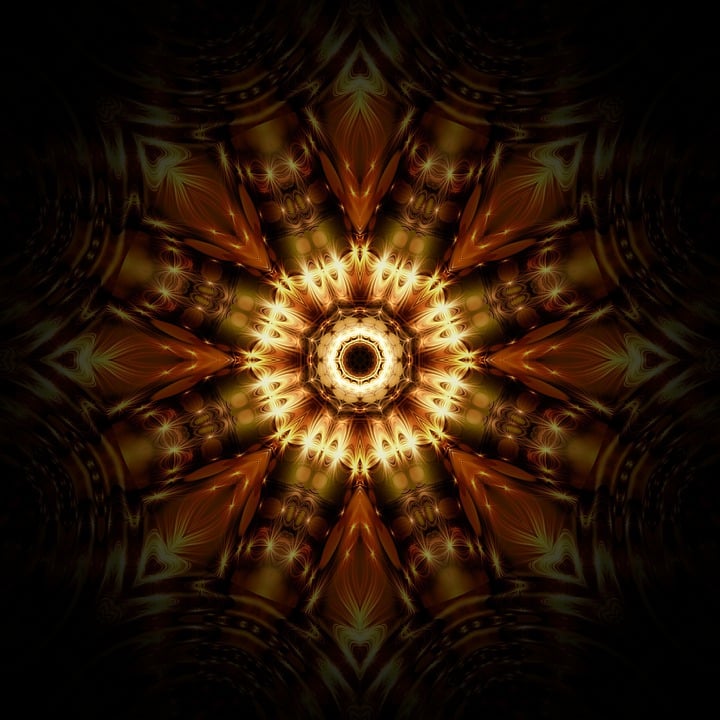
I have no reason to write computer programs, but I have dreamed of writing a program that could create art like this:

And that might be another reason why I don’t have the mojo. I have no idea how something like this is created, and it might take me years of highly focused research and learning to acquire that knowledge. Do I unconsciously know I’ll never succeed even if I could focus on the task?

It’s like the Serenity Prayer: “God grant me the serenity to accept the things I cannot change; courage to change the things I can; and wisdom to know the difference.” That deep in my subconscious, I know the difference between what I can and cannot do. Or is that my laziness rationalizing?

You might think this essay is crying in my beer, but it’s not. I’ve never been to a psychotherapist, but writing this essay has given me psychological insight. I started out thinking I was missing something, my mojo. But what I’m really missing is a purpose to solve.

The other day, I watched a YouTube video that stated various pitfalls to retirement. The first one given was a lack of purpose. I was well-prepared for retirement in terms of planning for my basic needs. But I never considered that having a purpose is a basic need.

JWH