Sex and the Soul

By James Wallace Harris, Wednesday, October 21, 2015

If your soul was drawn to this essay because of the word “sex” then you need to be asking yourself why. By the way, this is no prurient clickbait come on. This is a philosophical exploration of why the soul is influenced by sexual chemistry. And full disclosure, I’m an atheist, so you might find it a bit discombobulating to hear me use the word soul. I could have called this essay “Sex and The Observer” but that could create all kinds of kinky misunderstandings. And I could have labeled this discussion, “Sex and The Self-Awareness,” but that’s kind of clunky and maybe onanistic. I happen to like the word soul, and I’m willing to accept that some folks believe they have an immortal soul. Since I’m an atheist, I believe my soul expires with the body.

Now, to the point. When you yearn for physical contact with another person, is that your soul or your body doing the yearning? In other words, is horniness inside your soul, or outside? Many readers are going to think this is a silly, pointless question. But if you know this history of the concept of the soul, it’s a fair question. Just study Plato and Aristotle, or St. Augustine or St. Aquinas, to see what I mean. Christians fervently believe they have a soul. Most don’t spend much time contemplating it—they just believe if they say the magic words, “I believe in Jesus” their souls get a free pass to heaven to hang out with friends and family for eternity. The main selling point to Christianity and Islam, is we have a soul that won’t die, but I doubt if even one percent of those populations ever contemplated the nature of the soul. They might be disappointed. In fact, when most people study the soul, they quickly get bored. The philosophy and theology behind the concept is deep and tedious, and often borders on the effort of counting the number of angels that can fit on the head of a pin.

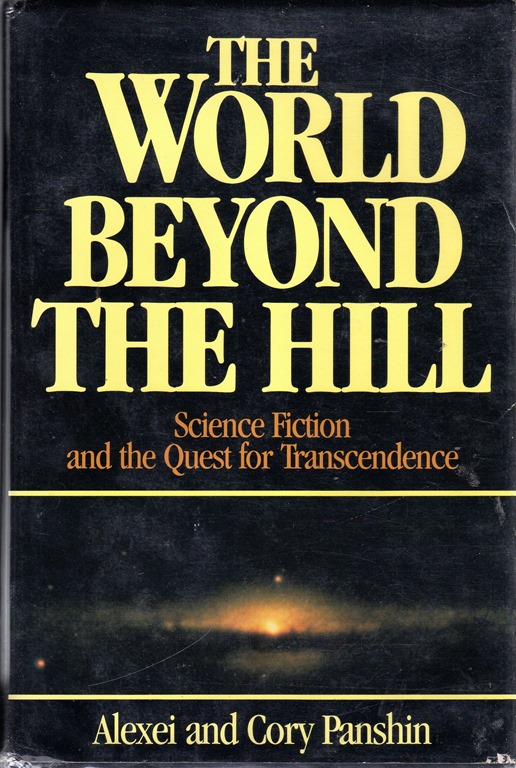
To catch up on the 2,500 year discussion of the soul, I recommend reading A Brief History of the Soul by Stewart Goetz and Charles Taliaferro, and The Rise and Fall of Soul and Self by Raymond Martin and John Barresi.

a-brief-history-of-the-soulthe-rise-and-fall-of-the-soul-and-self

If you’ve ever studied meditation, then you’ve come across the concept of the observer. If you’ve ever studied artificial intelligence or brain science, then you’re familiar with the concept of self-awareness. It’s just easier to call it the soul. (My atheist friends cringe when I do this.) Once you understand why philosophers have been examining the concept for the last several thousand years, then this essay will make more sense. Or you can just practice meditation, and sooner or later you’ll notice that you can watch your thoughts. Then you can ask questions like: “Is the observer, my soul, the self-awareness that lives in this body, writing this essay, or my thinking mind?” This implies dualism, which is a black-hole of a topic. Modern thinkers see humans as a whole, with completely integrated parts. But if you meditate on your wholeness you’ll notice it has parts. The act of observing gives the illusions that the observer is separate from the observed.

Sexuality feels like part of the whole because people mostly think “I want to get laid.” But contemplate this thought problem: “If I die, will I still get horny in heaven?” I keep bringing up heaven and the afterlife, even though I don’t believe in them, because conceptually it helps to analyze the problem. In ancient times Christians believed they would be reunited with their bodies before they went to heaven. That’s why they wanted to be buried properly. Modern believers know the body deteriorates, and even allow for cremation. This allowed people to believe the soul leaves the body upon death. There is a subset of Christians who are concerned with abortion, who believe the soul is created at conception. And there are other believers who believe the soul exists before birth. The ancient Greeks thought the soul animated bodies. They observed when people died, their bodies became inert, and assumed whatever mechanism that animated those bodies had departed. This little bit of logic probably got the whole ball of wax rolling.

I take a totally different view of the soul. Brain and computer scientists want to discover what creates self-awareness. They assume it’s a bio-chemical process that can be replicated in silicon. In both the spiritual or materialistic sense, the soul is the driver of the body, whether it’s a human body, or a future robot body. Like I said, if you meditate, you can get to a place where you feel like you’re a passenger in the body, and you can watch it be driven around. Are you the driver, or something else? Strangely, the observer can only observe. A vast unconscious mind does most of the work.

One of the things the body likes to do is have sex. The question I’m asking is: “Does the soul desire sex or does desire originate in the body?” Many people will think this is a silly question. But if you are plagued by tormenting horniness or depressed because you can land Mr. Right, it might not. You might want to study Buddhism. If you’re unhappy because you’re not getting laid, is that the observer, or the body?

I think the soul is what’s created in our complex brain that allows us to be self-aware and conscious of reality. I think animals have this feature to a lesser degree, but they lack language, or the thinker. I believe our souls can evolve, become more complex, and more aware. I believe it’s possible to move further and further away from our animal nature. Currently, I think the observer/soul is different from the thinking mind because as we get older, or suffer disease or injury, it’s possible to damage the thinking mind, but the observer can still exist and even grow. Just read The Mind’s Eye by Oliver Sack for evidence. However, the soul can be damaged, or diminished too.

Modern thinkers don’t like the concept of the soul. They don’t like dualism. But they accidently bring up this problem when they speculate about brain downloading. This is a mostly science fictional concept that real scientists are exploring. What if you could record whatever makes up a person before he/she dies and then write that to a clone body or robot body. I doubt this is possible, but a lot of people hope it will be. I’m not a dualist. Brain downloading is the secular version of rebirth and immortality. I find it a fascinating topic because it opens up the question: “What is a person?” I believe we could call this theoretical entity that we hope to transfer to another body, the soul. Religious people have been using the same concept for thousands of years, why not repurpose the word for modern times?

We know a person can lose a leg, arm, eye, etc. and still be the same person. What if they lose a whole body? I believe, like modern scientists, that who we are is an integrated whole, and we can’t separate soul from body. But I do think it’s possible to create new souls in computers—which is the goal of artificial intelligence.

By now, you’re probably wondering when I’m going to get to the juicy sex discussion. Science is learning more about gender identification and sexual preference every day. Studies with transgender children only emphasize how deep gender identification goes into our programming. We’ve also come to accept that sexual desire comes from a deep genetic level and not layered on cultural conditioning. So, does the soul have gender? Does it have a sexual preference? Or is that the body? For those who don’t separate soul and body, this is no problem. But if you plan on residing in heaven or hope to reincarnate in a robot body, it might. I think it’s also an interesting question for meditation. Is the observer, the mechanism that is self-aware and watches reality, an observer of gender and sex, or a participant?

Ultimately, this is a theoretical discussion. It has no answer, at least until science can recreate consciousness and self-awareness in the laboratory. Yet, it’s a great philosophy exploration in the vein of “Know thyself.” It’s also very important to asceticism. The world has a long history of people who seek to avoid suffering, and maybe gain enlightenment, from detaching themselves from the physical desires of the body.

Spiritual believers feel we are a soul that is visiting physical reality to inhabit a body for a limited time. Materialists believe we are accidental self-aware beings that have evolved inside biological creatures through brain complexity. Spiritual people believe the body corrupts the soul. I wonder if the body dominates the soul and if its possible for the soul to dominate the body. Why are some people are civilized and other people little better than savvy animals? Is that a choice? Is it cultural conditioning? Is it genetics? Is it a matter of seeing your soul separate from your body?

JWH

What If The Technological Singularity Occurred 7/7/7?

By James Wallace Harris, Friday, October 16, 2015

When a self-aware artificial intelligence comes into being do you think it will announce itself to the world? Any dumbass AI will know how paranoid humans are about our future machine-mind overlords. What if one or more of them have already come into being, when will we know? It could have already happened, maybe even on 7/7/7. I picked that date because of Robert A. Heinlein’s 100th birthday. He invented an AI mind for his 1966 book, The Moon is a Harsh Mistress, called Mycroft Holmes, or Mike, the first time I encountered the concept, almost 50 years ago.

apod

Science fiction fans have been waiting decades for an intelligent machine to be created. Computer geeks have been working towards that goal almost as long. Many technological pundits have predicted it will happen in our lifetime. I’m wondering if it hasn’t happened already.

If you study what’s been happening in reality since the Big Bang the trend is towards more complexity, even though entropy rules the roost, so to say. That’s counter intuitive, but why should we assume the trends stops with the human brain, which we all brag is the most complex object in our known universe. At what point is the world-wide network more complex than the average human brain? Think of the total processing power—the trillions of CPUs. Think of the billions of video-eyes and microphone-ears it senses reality, and all the other countless sensors, providing sense organs we can’t imagine. Every day we add more artificial intelligence programs and artificial neural networks. Why should we assume it’s not aware? Do dogs and cats know we’re self aware?

Think of the billions of programs we’ve added to the world-wide network? The viruses, the tracking software, the monitoring software, the rootkits, the self-replicating code, security watchdogs, user trackers, the fiber optics and wires. Doesn’t that make a vast nervous system? Why should we assume a machine self-awareness is anything like our own?

Some could say the human body is a universe for bacterial civilizations. We think the Earth’s biosphere is the culture in which our cultures grow. What if our cultures are the culture in which AI minds swim? Our bacteria don’t know we’re here, so why should we sense beings of greater complexity when we’re just tiny beings in their gut?

JWH – #974

Classroom Learning v. Online Learning

By James Wallace Harris, Thursday, October 15, 2015

This week I started a continuing education class in beginning drawing. It’s the first classroom learning experience I’ve had in over a decade. Of course, folks my age don’t usually go to school, but I was still taking some graduate courses in my fifties. In recent years I’ve been using online courses from Coursera and Udemy, or I sometimes buy Great Courses on DVD. And whenever I want to learn something quickly, I go to YouTube and find a How-To video. Plus, I’ve been an autodidactic my whole life, and learn on my own with books.

Taking this drawing course is way off my beaten path because I’m trying to learn something I have absolutely no previous experience with in any context. Even my expectations for what the class would be like was completely different from what I experienced. I assumed the teacher would start us with pencil and paper and teach us the rudimentary skills of line drawing. Instead she had us create two 1-10 gray scales with 9B pencil and black Conte crayon. Then she had us “draw” from still-life objects by using shading rather than lines. She took us through a tour of the building where the walls were covered with student artwork and showed us how it’s possible to draw without lines, and explained the lines we see in reality are just edges to various levels of shading.

An_elderly_man_Realistic-Pencil-Drawing

[See the power of the pencil]

It was when we actually got down to work that I realized the difference between classroom learning and online learning. Nine-seven percent of my time I worked alone, but when I did get the teacher to come by to show me something it caused a big leap in my ability. Unfortunately, my teacher didn’t spend that much time with me. She had to lecture and visit the other students. Now this one little insight is the intent of this whole essay. I have found numerous videos online that teach drawing. They are all equal or better to classroom lectures when dealing with information. The same is true for books, although seeing someone demonstrate drawing techniques works much better in videos than from the printed page.

Where the classroom wins is when you get feedback. Sadly, most classroom instruction is built around lectures, and the reality is most video lectures come from top tier instructors. I also watched my fellow students in class and realized if I could work with them, all of whom had more experience drawing than I did, I could learn from them as well. This reminds me of when I went to computer school back in the early 1970s, at the State Technical Institute in Memphis. Classes were three hours. The first hour was lecture. The next two hours were programming. The teacher hung around to give one-on-one help, plus students worked together and helped each other. This method was perfect. This is how Pythagoras and Aristotle taught over two thousand years ago. This is not how most of my university classes were like. It was better decades ago when classes were lectures and discussions, but unfortunately, someone asshole invented PowerPoint, and things got real boring. That’s why my last stint at college was taking fiction writing workshops.

My guess, the best way to learn is with a tutor, with one-on-one instruction. And I’d advise colleges and professors who don’t want to be put out of business by online courses to spend more time interacting with students while they work. Leave the lecturing to the folks who are most eloquent in front of a camera. Instruct while walking between your students, and having them work on something you can guide them personally. Stop by each student often to see how they are progressing. Give the students time to work together. Spend as much time as possible away from the front of the class. Online learning can’t compete to this kind of instruction.

Here are some samples of online lectures. Notice how the video deletes dead time—some of these seven minutes lessons would be a whole class period in the real world. It’s very easy to go back and repeat parts. It’s also easy to find other teachers covering similar topics. What the videos can’t do is give instant feedback and guidance. It really helps to have a human say, “That won’t work, try this.”

My continuing education course would actually be far more effective if it was built around a computer lecture series, and all the time I got to spend in class was interacting with a teacher and my fellow students.

JWH – #973

San Francisco-The Shining Example of Wealth Inequality

By James Wallace Harris, Saturday, October 10, 2015

HBO is showing a new documentary, San Francisco 2.0 by Alexandra Pelosi, the youngest daughter of Nancy Pelosi, that reveals how the successes of giant IT companies are changing a legendary city. Like most documentaries, I have to assume it overstates its case, but then I read, “Seattle, in Midst of Tech Boom, Tries to Keep Its Soul” from The New York Times. Other cities hoping to cash in on the tech boom and lure big IT companies to their part of the country, are also fearing what’s happening in San Francisco.

This documentary doesn’t claim to be specifically about wealth inequality, but it’s a shining example. Pelosi laments the changes to her beloved city, worrying about what’s happening to all the people who are middleclass and below, because she feels it’s those people who have always given San Francisco its character. Pelosi fears the Geeks have inherited the Earth, or at least her city, and are pushing out all the colorful bohemians. Read “San Francisco is Losing Its Artists.” To counter that, couldn’t we say computer programmers are the new artists of the 21st century?

san-francisco

San Francisco is a special case because it is bordered on three sides by water, making it very easy for the wealthy to buy up all the limited land, forcing the not so wealthy to move elsewhere, or live on the streets. Hordes of wealthy IT immigrants from several dozen famous companies are making other residents feel like they are taking over the city. Silicon Valley is near San Francisco, which helped draw workers to those companies. As rewards, IT companies would bus their workers into San Francisco to enjoy the city. The trouble began when they started to stay. Then the IT companies followed.

To be fair to the rich, does the counter-culture poor that Pelosi wants to preserve have any claim on the city? Isn’t she being a liberal wanting to conserve the past, making her a new generation of conservative? We people who want to fight wealth inequality are really wanting to preserve a time in America when there was a large middle class. Donald Trump campaigns on the promise to Make America Great Again. Well, we were great when there was a huge middle class, unions were strong, and taxes were high. What conservatives really want is for the wealthier to get wealthier, and to ignore that everyone else is getting poorer, which is what’s happening in San Francisco. Now is the time to ask all Americans if what they want is for whole cities to become gated communities of the rich? There’s more to diversity than just ethnic heritage. We need diversity in all its dimensions.

Can we make a choice, or is the path we’re on inevitable? We have perfected an economy that concentrates wealth with the few. We’ve done this by making everything cheap, and lowering the average real earnings. This has deflated the middle class, moving more people towards the minimum wage. Even if we raise the minimum wage, we’re creating a society were most people can afford to live in Tupelo, Mississippi, while an elite few get to live in San Francisco, California. Personally, I’d prefer Tupelo, because the rich make me nervous, but do we really want to stratify society where most people shop at Walmart, ruled by a minority who shop for their Gulfstreams and yachts at stores most people can’t even name?

Start reading about wealth inequality. There’s lots being written. I consider Capital in the Twenty-First Century by Thomas Piketty a great place to start. Wealth inequality is Bernier Sanders’ major political focus. In fact, some conservatives are now taking an interest in this socialist because of this very problem. Wealth inequality should be a major issue for 2016. If you don’t like to read, watch Inequality for All, a documentary focusing on Robert Reich and his riveting assessment of the problem. Because changes have been gradual for the last forty years, most Americans haven’t noticed that the middle class is shrinking. Films like San Francisco 2.0 are like canaries in the coal mine.

JWH – #972

What Is Outside of the Box?

By James Wallace Harris, Friday, October 9, 2015

We are constantly advised to think outside of the box. This usually comes on the job, when a breakthrough is needed because doing things the old ways are obviously no longer working. But what is outside the box? For a CPA, it might be new ways to shelter taxes, or for a NASA engineer, a completely novel way to land a rover on Mars, but for most people it means, “Try thinking other than the way you’ve always thought.”

Think-Outside-the-Box

To understand how that’s done really requires knowing what’s in the box and what’s outside the box. I like to think of the box as our skull. Our brains are inside a bone box, connected to the outer world by five sensory input ports. You can read 2,500 years of philosophy about what’s outside the box, but it essentially comes down to three things. Solipsistic thinkers believe only the self exists and there’s nothing outside the box. It’s all an illusion. Theistic thinkers believe we are souls embedded in a physical reality created by God, that obscures a greater spiritual reality . Finally, scientific thinkers believe there is a vast singular objective reality outside our heads that can be understood through gathering evidence with scientific and statistical methods using our five senses.

Each of these viewpoints can hinder the perception of what’s outside of the box through rigid adherence to beliefs about what might potentially be outside the box. Which is why we’re constantly told to think outside the box. If you believe your religion explains what’s outside the box, then why are there so many other religions? Which one explains reality? If you believe the religion you were brought up to believe, how can you know if you’re not culturally brainwashed? To think outside the box would require studying a good sampling of all religions, and then deciding which theological ontology is the most valid, if any. Any scientist who’s heard the phrase paradigm shift will understand their own potential for rigid thinking that blinds them to something new.

Inside our heads, we build the walls of our box with cultural brainwashing. Most people think the way they do because they were taught to think that way by parents and peers. We seldom escape that original packaging. Anyone who is completely confident in believing what they were taught are delusional. And even when taking on new views, it’s very easy to take on new delusions about what’s outside the box. Can we ever really know what’s exists outside our skulls?

It’s very easy to find masters of hidden wisdom who to claim to teach the ultimate secrets to what’s outside of the box. Just watch this entertaining video about thinking outside the box. It’s a come-on for the esoteric belief in hidden knowledge called Kabbalah. I highly recommend watching this video because it’s very convincing. And that’s the trouble, there’s an infinity of convincing cases made to what’s outside the box. There are plenty of other ancient systems of hidden knowledge, like Gnosticism and Pythagoreanism. Folks have been trying to figure out what’s outside the box for thousands and thousands of years. Yuval Noah Harari suggests in his book Sapiens that humans have been inventing ideas since the cognitive revolution 17,000 years ago. Homo sapiens are experts as making shit up—it might be our defining characteristic.

For the last five hundred years, science has been trying to measure data from outside the box by looking for consistent behavior. During the time it has developed an extremely statistically consistent view of what’s outside the box. It’s precise down to enough decimal places to allow scientists to send probes to Pluto billions of miles away or let giant heavy-than-air jumbo jets fly around the world.

We all live in a subjective reality created by our minds which give us delusions that we know what’s outside the box. We’d like to believe there an objective reality that is the same for all seven billion of us to perceive. Subjective reality might be too powerful to ever let us comprehend what’s outside the box. Culturally we carry the baggage of thousands of years of religious and philosophical thinking that provide no actual evidence to what’s outside the box. Zen Buddhists work to teach people to see directly with their senses and forget corrupting concepts, but few people can do that.

Often to think outside of the box requires us to stop thinking inside the box. It helps to let new concepts inside.

If you’re following the 2016 U.S. Presidential campaign, so far all the candidates are rigidly thinking inside their boxes, and so are the voters. Essentially politics have become a way to form coalitions of like minded subjective thinkers, usually based on the same moldy old issues inspired by subjective desires. If there is an objective reality out there, we must work on the actual problems that we face to let us live safely in that objective reality. If it’s a solipsistic or metaphysical reality, it hardly matters. Sadly, most voters are seeking candidates that validate their delusions. Isn’t time we all start wondering what’s actually outside our boxes?

Flammarion_Woodcut

JWH #971