What A Difference 23 Years Make

by James Wallace Harris, Thursday, October 31, 2019

Society is constantly changing and evolving, and so does the popular culture it produces. Starting in 1959, and into the early 1960s, there were a number of court cases that profoundly changed pop-culture by removing various censorship laws. It allowed movies to portray graphic sex and violence, and include nudity and profanity. This was especially noticeable in movie westerns. Westerns in the 1950s seem very different from those in the 1970s, and we can see the transitioning in the 1960s. Millennials and later generations probably have no idea what pop-culture was like before their time, and just accept today’s movies as a norm. If you live long enough, you can see that movies change.

My favorite westerns generally come from the 1940s and 1950s. The other night I watched The Missouri Breaks (1976) with Jack Nicholson and Marlon Brando which had a much different view of the old west. In many ways it was more realistic – we see people going to outhouses, using profanity, having sex, showing a bit of nudity, wearing dirty raggedy clothes, and so on. The characters seem more like real people and have complex problems and psychologies. Too often in older westerns, characters wore not only clean clothes which they changed often, but ones that look like they came from fashion designers. Most folks in the historical west wore the same clothes for many days, seldom bathed, and usually owned a tiny wardrobe. Just compare the two versions of True Grit.

Living conditions in The Missouri Breaks seemed repulsive to me, and it lacked heroes and heroines. It’s not a feel-good western, like Shane (1953).  Who wouldn’t want to be Shane (Alan Ladd), who would want to be Robert E. Lee Clayton (Marlon Brando)? Of course, Brando’s over-the-top performance does weird-out the overall vibe of The Missouri Breaks, but then such characterizations have become more common as we approach the present day. The recent Joker movie is one example.

If we compare the west of Shane with The Missouri Breaks does it even feel like the same historical era? Is it really the same genre? There are violent people in both films because the essence of westerns is violence. You’d think I should be comparing the two characters the audience wants to see die in the end, Jack Wilson (Jack Palance) and Robert E. Lee Clayton. Both films feature ranchers who hire gunmen (Palance and Brando) but the issue of who the good guys are is confused. In Shane, the good guys are hardworking homesteaders, and in The Missouri Breaks, they are horse thieves, train robbers, and maybe murderers. If we are for law and order, then David Braxton (John McLiam) the rancher and Robert E. Lee Clayton should be our heroes. They’re not.

Remember in Shane, Shane is a gunman just like Jack Wilson, but he’s trying to change, and live under law and order. Shane is the homesteaders’ gunman, but he’s the hero of the picture because he fights the rancher who bullies the homesteaders. Shane sides with law and order. Robert E. Lee Clayton is hired by the rancher to kill rustlers and murderers and appears to be for law and order. The trouble is Clayton takes psychotic pleasure in his job.

What happened in those 23 years from 1953 to 1976 that remade westerns? Shane is a killer, but one we side with. In The Missouri Breaks, we side with Tom Logan (Jack Nicholson) who is a horse thief, train robber, and probably killer too. (We never know who kills the rancher’s foreman.) Of course, in westerns, the audience always sides with a killer, because westerns nearly always resolve conflicts with a killing. Before the 1960s we sided with the white hats against the black hats, but it seems sometimes in the 1960s, everyone started wearing gray hats.

Shane, the Alan Ladd character, knows killing is bad. He wants to avoid killing, but in the end, he is pushed into it to save the people he loves. The audience admires him. But Robert E. Lee Clayton, the Marlon Brando character, delights in killing and justifies his behavior by killing horse thieves, train robbers, and murderers, people we should be against, but we despise Robert E. Lee Clayton and rejoice when he is killed. And in the last fifty years, we’ve seen both the hero/anti-hero and bad guys kill more and more people in westerns. Brando’s bizarre performance was only a bellwether.

Tom Logan, the Jack Nicholson character, is an anti-hero. Yet, even when anti-heroes are as charming as Robert Redford and Paul Newman in Butch Cassidy and the Sundance Kid (1969), should we really like and admire them? It is true that the old west criminals were more colorful than dull hardworking people who actually built the west.

Something happened to the westerns in the 1960s. Before that the good people were nicer, but so were the bad people. Sure, the bad guys of the old west were mean, and psycho killers too, but they weren’t as disturbing as modern bad guys. Between the westerns of the 1950s and the 1970s, we see the bodies counts rise in each film, and we see more depraved violence. The profanity, nudity, and sex are the upfront obvious differences, but I also think there is a shift in how westerns present killing. Intentionally modern westerns of the 1970s like McCabe and Mrs. Miller, Pat Garrett and Billy the Kid, Little Big Man, A Man Called Horse, Judge Roy Bean, etc. worked hard to redefine the western in terms of artistic storytelling but also in presenting old west history with a different psychological perspective. In some ways, this shift became most visible with Once Upon a Time in the West (1968).

When did good guys v. bad guys become neurotics v. psychos? When did westerns go from gunfights to serials killers and mass shooters? In the Old West, the most famous gunfight (O.K. Corral) three men died. In modern westerns, the body counts are so high that most viewers stop counting.

Sure, TV cowboys of the 1950s did a lot more killing than their movie counterparts. By one estimate, Marshall Dillon in Gunsmoke killed between 138 men and 7 women to 303 people over a 20-year period. However, if we consider each episode a separate story, the violence is far less.

Maybe I like the westerns of the 1940s and 1950s because I find the death of the bad guy at the end of the film a satisfying resolution to the story. Watching modern westerns feel more like we’re Romans at the Colosseum, desiring non-stop killing. We’re not there for the story, but for the slaughter. Films like the Hateful 8 are designed to feed our need for gunplay porn. If people watch sex porn because they’re not getting laid and want to vicarious pretend having sex, then why do we enjoy so many killings in movies today? Is it because we’re not getting to kill all the people we want and vicariously find release in the pretend killings?

I believe body counts began to escalate in the westerns of the 1960s, starting with The Magnificent Seven (1960) and ending with The Wild Bunch (1969). I still loved these westerns, especially as a kid, and even when I felt they were becoming silly in their efforts to top themselves with gimmicky plots, explosions, and ways of killing people. However, as I’m getting older, I question my fondness for such killathon westerns. I admit I love TV shows like Breaking Bad, Game of Thrones, and Westworld, but I’m also wondering about myself too.
Westerns 1

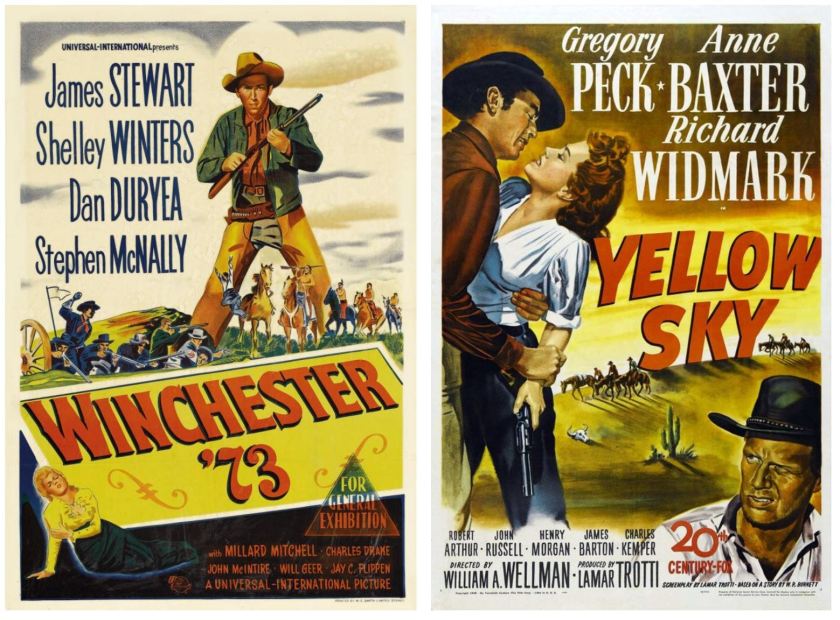
These days I’d much rather rewatch Winchester ’73, Yellow Sky, Colorado Territory, Rawhide, Angel and the Badman, Shane, Three Godfathers, Tall in the Saddle, and movies like them. I don’t know if it’s nostalgia, or turning back the clock to enjoy movies when there were fewer killings per film. I was taught in school that the ancient Greeks didn’t allow violence on stage in their plays. All violence had to happen off-stage. I’m not ready to go that far. I do like the realism of modern westerns. The sex, nudity, and profanity are fine. I’ve just got to wonder about the kill-porn addiction we’ve acquired.
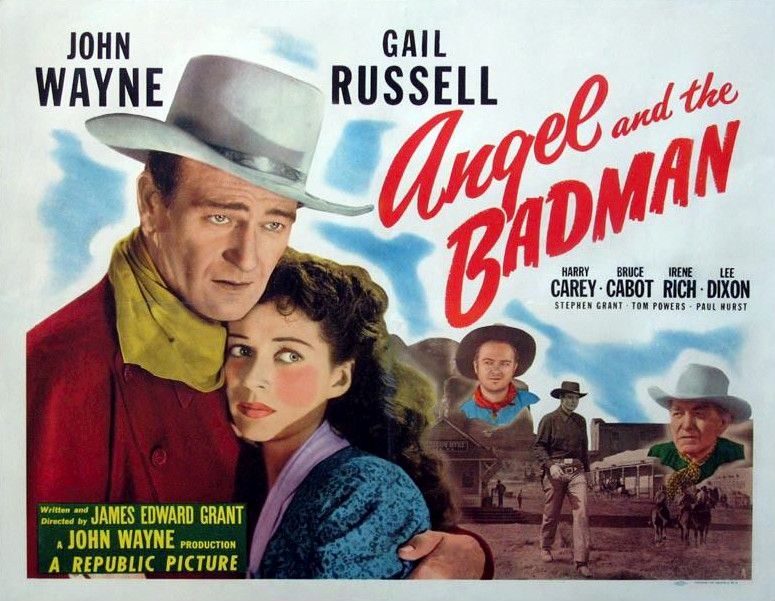
Angel_badman

We have become a nation that worships guns. Notice how often we see people posing with guns, and how often we see them in pop culture. The interesting thing about westerns is we see a historical era where people lived by the gun but were moving toward a gun-free civilization. Westerns represent a time just before all the cowboys would hang up their guns. (Watch the wonderful Angel and the Badman.) We’re now living in a time where everyone wants to strap on a gun. Is this the undoing of civilization?

Isn’t it rather ironic that in the old west, Republicans were the advocates for gun control? They were for laws, regulations, order, progress, cities, and civilization back in the 19th century. Doesn’t it seem they want to bring back the wild west now? Aren’t old westerns really propaganda for gun control? In some ways, new westerns seem to counter the philosophy of old westerns.

But then we have one last problem. Were any westerns ever like the historical west? Or, are westerns really the pop culture snapshots of the people and times in which they were made? If that’s so, we live in some pretty strange times if we judge ourselves by the movies we see in the theaters today.

JWH
Predicting the Future: 2065

by James Wallace Harris, Friday, October 25, 2019

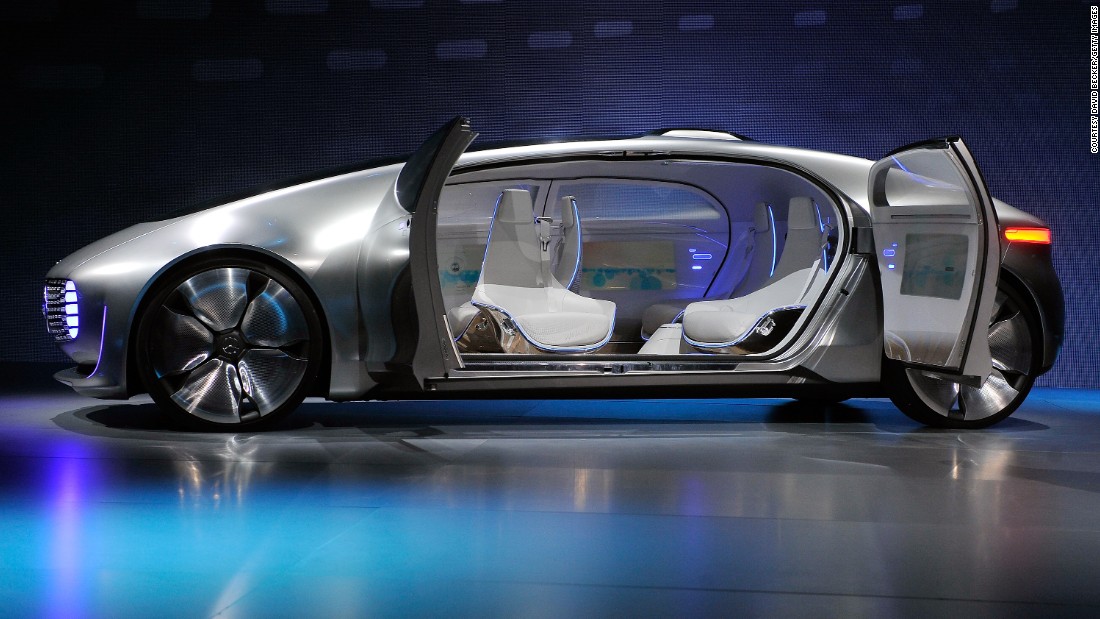
This week’s NOVA “Look Who’s Driving” is about self-driving cars. Most people are scared of the idea of getting into a car and letting it drive. I know I am, and I’m a science fiction fan. Just think about it for a moment. Doesn’t it feel super eerie? On the other hand, what if they could actually make driverless cars 100% safe? I’m getting old and realize at a certain point it will be dangerous for me and others if I keep driving. A driverless car would be perfect for older folks, and by 2065 there will be a lot of old folks. And in the documentary, they mentioned that driverless cars should mean fewer cars and they showed aerial views of how cars cover our city landscapes now. Imagine a world with far fewer cars and parking lots. That would be nice too.

I’m sure folks in the late 19th century felt scared of the idea of giving up horses and switching to motor vehicles. And can you imagine how people felt about flying when aviation was first predicted for the future? Perfect driverless car safety has almost been achieved in ten years, so imagine how reliable it will be in another ten years.

I’m working on a science fiction short story that’s set in 2065 and trying to imagine what life might be like then. I assume war and poverty will still be with us, but there will be as much change between now and 2065 as there was from 1965 and now. I have to assume driverless cars will transform our society.

We feel dazzled by progress. And we feel it’s accelerating.  But can inventors keep giving us gadgets that transform our society every five years? Smartphones and social media aren’t new anymore. Self-driving cars should become common by the late 2020s and they should shake up the way we live. But will people accept robotic chauffeurs? This year we’re freaking out over the Boeing 737 Max 8 having flaky computers. However, what if the safety of AI cars, trucks, planes, ships, and trains becomes so overwhelmingly evident that we turn over all the driving over to robots? Can we say no to such a future?

What about other uses of robots? If we keep automating at the same pace we’re on now, by 2065 will anyone have a job? Should my story imagine a work-free society, or will we pass laws to preserve some jobs for humans? What kinds of jobs should we protect and which should be given to robots? We usually assume boring and dangerous jobs should go to machines, and the creative work should be kept for us. But what if robotic doctors were cheaper, safer, and gave us longer lives? What if it reduced city budgets and provided greater public safety to have robotic cops and firemen? And would you rather send your children off to war or robots? What if the choice is between paying a $1000 robot lawyer or a $1,000,000 to human lawyers in a big case?

What if by 2035 we have general-purpose robots that are smarter than humans but not sentient? Would you rather buy a robot for your business than hire a human? And if robots become sentient, can we own them? Wouldn’t that be slavery? I’m reading The Complete Robot by Isaac Asimov, and he spent his entire writing career imagining all the possibilities robots could create. Sadly, I think Asimov mainly guessed wrong. I believe science fiction has lots of room to reimagine what robots will do to our society.

Generally, when we think of science fictional futures, we think of space travel. Will we have colonies on the Moon and Mars by 2065? I’ve been waiting for 50 years for us to go to Mars. I’m not optimistic that more years will get us there. I predict there will be another Moon rush, with several nations separately, or cooperatively setting up Lunar bases like the scientific stations that exist in Antarctica. Beyond that, I bet robots will become the main astronauts that explore the solar system.

I can imagine robots with high-definition eyes tramping all over the various planets, planetoids, moons, asteroids, and comets sending us back fantastic VR experiences. But how many humans will actually want to spend years in space, living in tin cans that are incredibly complicated machines designed to keep them alive, but with one teeny-tiny failure, vacuum, radiation, cold, or heat will horribly kill them? We’ve been without a dryer for three weeks because my new dryer died after three months and so far no one can fix it. Isn’t space travel safer and cheaper for robots? Space is a perfect environment for machines.

If robots become the preferred solution for all jobs, what will humans do? I have to believe capitalism as we know it won’t exist. What if robots are so productive they can generate wealth for everyone?

Then there’s climate change. Will we solve that problem? I bet we won’t. It would require human psychology to change too much. I must assume people will not change, so I have to predict a future where we’re consuming the Earth resources at the same accelerating rate we are now and polluting at the same rates too. We’ll probably get more efficient at using those resources and find better solutions for hiding our garbage — probably due to robots. We’ll have a lot more people, far fewer wild animals and cars, and a growing overpopulation of robots. Although, I think there might be room to predict a back-to-nature movement where some people choose to live close to the land, while others become even more hive-mind urban cyborgs. A significant portion of the population might even reject robots and automation.

That means by 2065 we might have a two-tier society. Liberals living in high-tech robotic cities, while conservatives live in rural areas and small towns with far less technology. That might make an interesting story. What if the future becomes those who ride in driverless cars and those who reject cars altogether? (If robots become 100% safe drivers, would it be practically to allow human drivers?) Could new kinds of rural economies develop that shun technology? I wonder this because I wonder if a robotic society will make some people back-to-nature Luddites. And I don’t mean that term that critically. Back-to-nature might be more ethical, more rewarding, and more human.

If you think this is all wild crazy ideas, try to comprehend how much we’ve changed in the last half-century. In the 1960s people looking for work found two categories: Men Wanted and Women Wanted. Women weren’t allowed to do most jobs, and many of them stayed at home. Think about how much we changed in just this one way. Then multiply it by all the ways we’ve changed. Is it so wild to imagine driverless cars and robotic doctors?

JWH


Alleviating My 8-Bit Nostalgia

by James Wallace Harris, Tuesday, October 15, 2019

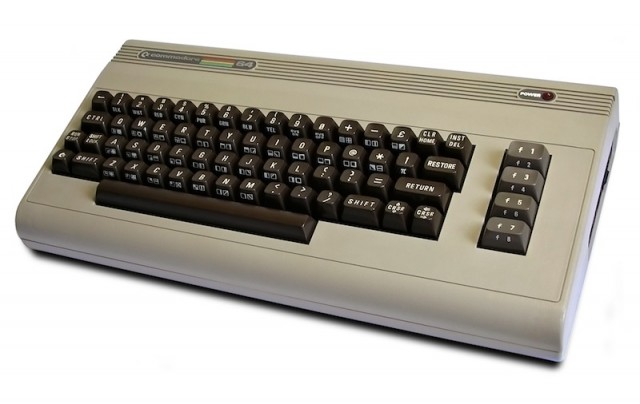
For the past couple of weeks, I’ve become obsessed with watching YouTube videos about old 8-bit computers. I’ve even been shopping on eBay looking for old machines in good condition to buy. But I think I’ve cured my 8-bit nostalgia.

October 13th was the 6th anniversary of my retirement. My dream before retiring was to use my work-free years to become a science fiction writer. That hasn’t happened. Instead, I’ve chased the siren call of nostalgia. The other day I read an article about why people stop listening to new music and it gave me a clue about the nature of nostalgia. We keep listening to the music we imprinted on as a teenager because we gave that music a lot of our time. Once we got older we didn’t have that kind of time to devote to new music.

I’m wondering if nostalgia isn’t an attraction for anything we’ve already spent the time learning to love?  Now that I have a lot of free time it’s much easier to pursue old hobbies than learn new ones. This has given me an insight into my affliction. I both delight, relish and resent nostalgia. Nostalgia feels good to indulge in but it makes me also feel guilty that I’m not learning to love new stuff.

I’m nostalgic for two kinds of things. Stuff I once loved that I bought, and stuff I once wanted to do. Writing science fiction is something I’ve wanted to do my whole life. But it is much easier to love stuff that we can buy than it is to learn to love to do new things. That article didn’t realize it was saying two things. It was much easier to buy LPs than learn to play the guitar.

That article rings true because I stopped spending time with new music after the 1980s. I believe the new songs I do love are because they sound like old songs. Nostalgia is spending time enjoying things we’ve already spent the time learning to love. And the reason nostalgia was originally considered a psychological defect is because we stop learning to love something new. Over the centuries we’ve stopped considering it a flaw and turned nostalgia into a positive trait. Especially if we’re old.

However, that fits right in with our belief that you can’t teach old dogs new tricks. If you indulge in nostalgia you aren’t learning new tricks. Maybe we can learn new stuff when we’re young because we don’t already have a backlog of things we already love to distract us with nostalgia. Of course, kids today seem to put thousands of hours into fun pursuits even before they start school. I now see nostalgia in people in their twenties.

I realize that in the past six years I’ve been cycling through the various periods of my life escaping into my past. Each period has something different I learned to love. I imprinted on TV watching in the 1950s and early 1960s before I became a bookworm. That’s how I got hooked on TV shows and old movies that I now collect. Starting around 1962 I got hooked on science fiction and rock and roll. I write about both. At the beginning of the 1970s, I got into SF fandom and fanzines, which eventually morphed into blogging. I started computer school in 1971 and got my first microcomputer in 1978. The 1980s were the time when I owned several 8-bit and 16-bit computers, and ran a BBS. I also got a job with computers and worked at it for 35 years.

From 1968 to 2013 I tried writing science fiction several times but I never put the needed hours into it. I wrote about thirty short stories, a couple novel first drafts, and attended a bunch of classes, including Clarion West. But it was just a few hundred hours, and for most of that time, I was in my fifties. Was I too old to learn a new trick, or was it because I didn’t put in my 10,000 hours?

So, why haven’t I bought an old 8-bit machine? It’s because I’ve watched dozens of videos by The 8-Bit Guy. Watching him demo all these old machines vicariously gave me all I needed. It reminded me why I owned so many 8-bit and 16-bit machines in the first place. I was always looking for a machine that could do more. My current machine, an Intel NUC with an i7 processor, 16GB of memory, 1TB SSD, and 4K monitor is completely satisfying. It does everything I want. The 8-Bit Guy inflames my nostalgia for old machines but also reminds me why I gave them all to Goodwill.

However, The 8-Bit Guy has also taught me something else, something about nostalgia that I have written here. There is nothing wrong with returning to retro tech, but I do have a choice. I could put those hours into doing something new. Or put them into an old ambition I never achieved. (Is that another kind of nostalgia? Pursuing old dreams.)

For the past six years, I’ve been mass consuming old hobbies. The question is, will I continue to consume nostalgia or learn a new trick? It’s so easy to stick with what we know, and it’s so hard to learn something new. There’s a reason why we have that saying about failing to train old dogs. And there’s something else I’ve learned in my six years of retirement. My energy is draining away. I’m guessing old dogs can learn new tricks but it’s ten times harder than when they were young. Maybe even a hundred.

I could say I’m expending all my dwindling energy on enjoying my old loves. That’s kind of nice (and normal). And maybe that’s what we’re supposed to do when we’re old. But theoretically, I wonder if we can break the nostalgic habit. Instead of watching The 8-Bit Guy before I go to bed I could be watching YouTube videos on the techniques of writing fiction and get up in the morning and apply them.

JWH

The Absolute Best Reason to Subscribe to Spotify (Besides the Obvious One!)

by James Wallace Harris, Friday, October 11, 2019

For the price of buying one album on CD each month, my wife and I rent millions of albums. That’s the obvious reason to subscribe to Spotify. But as an old guy afflicted with crippling nostalgia, listening to playlists assembled from Billboard’s Top 40 and Billboard’s Hot 100 charts for specific years is almost as good as owning a time machine. Lucky for me, there are other year nostalgic fans who diligently track down all the hundreds of songs that chart during a year and organize them into Spotify playlists. For example, here’s a playlist for 1965, with 626 songs.

1965 happens to be the pinnacle of pop music for me. For Spotify subscribers, just search on Billboard Top 40 or Billboard Hot 100 and the year you want. It might come up first in the search, or you might need to see all on the playlist listings. There are many members who make these by-the-year playlists. Some are more extensive than others. I pick the ones with several hundred songs.

If you have Spotify you should be able to click on the above playlist and listen to it now. If you don’t subscribe, I have found a couple of places where you can listen to limited subsets of a year in music.

I discovered Tropical Glen years and years ago. Go to its home page and click on your favorite music year. Here’s the direct link to 1965. Once you pick a year, you can also look at the Cash Box charts for each week. Here they are for 1965.

Recently I discovered a way to look at Billboard’s Top 100 charts by year. Go to Singles Chronology. The same people also have a Top 40 site. I learned this from Slice the Life. Blogger Hans Postcard writes a series of essays reviewing all the singles that charted on a particular year. He’s currently working through 1969, and here’s the beginning of that series. Hans writes a little bit about each song and often has a copy of the song to play.

There’s a psychological reason for listening to songs by year. Read: “What makes us stop listening to new music when as get older?” The article says our musical tastes crystalize around age 13/14, which was 1965 for me. The article says we stop liking new music as we grow older and have less time to listen to current music. Evidently, as we go to work and start families, and life gets busy, we don’t give new music the time it takes to bond with it.

The reason why I recommend occasionally playing by-the-year playlists is that most of us grow up only listening to a portion of the hits for that year. The Billboard Hot 100 charts cover rock, R&B, country, jazz, easy listening, and any single that made it to the chart. That can be around 600-700 songs each year. Quite often I discover songs I love but don’t remember. I probably love them because they are of the same style as the other songs I loved. Or they are lesser hits of artists I love.

I also thrill when a song plays that I haven’t heard for 54 years and it triggers memories I haven’t thought about since I made them. I often play these playlists very loud. That brings out details in the songs so they feel fresh and vibrant. In 1965 I listened to my music on a Sears clock radio which had a 3″ mono speaker. It was low-fi. I’m often shocked by how High-Fi the music was back then.

Listening by the year also reveals how much I was listening to the radio back then. I got my radio for Christmas of 1962 and played it from the time I got home from school till I went to school the next day. I often woke in the middle of the night to hear songs, and sometimes I would dream about the songs that were playing. That radio died in 1968, but by then I was mostly listening to albums. I stopped listening to AM or FM radio in the early 1970s because I couldn’t stand the disc jockeys or ads. But I can tell that I listened to more songs in 1963-1966 than I did in 1967-1972. That’s because in 1967 I got an after school job. I graduated high school in 1969, and when I play the 1969 playlist I’m amazed by how many great songs I just don’t remember hearing back then.

Finally, a really mind-blowing thing is to play the years before you were born. The Billboard charts seem to have begun in the 1950s, but there are users on Spotify that collect the music for earlier years. When I started listening to my radio in 1962, they played Golden Oldies on the weekends, so I am familiar with rock from 1955-1962. But if I play pop songs from 1947 or 1951 its a trip.

Not only do we stop learning to like new music after a while, but we seldom like old music before we grew up. However, if you listen enough it will grow on you. For decades I’ve been learning to like pop music all the way back to the 1920s. I don’t resonate with it like I do with music from the 1960s, but it is growing on me. Sometimes I feel getting older allows me to enjoy older music. I know I now enjoy TV programs my parents loved back when but that I hated.

I sometimes like to play music on headphones when I’m going to sleep. It’s great to wake up and be in a semi-conscious state of mind while hearing music. Often I dream that I’m floating in space with music all around me. It’s pretty damn cool when that happens. Evidently, my neurons like it too, because I can feel them dancing.

JWH


Maybe Common Assumptions Are Wrong

by James Wallace Harris, Thursday, October 10, 2019

We make a lot of assumptions that we believe are true. That life will get better. That our children will have more than we did. That every kid should go to college and achieve all their dreams. That technology will solve our ecological problems. That humanity is destined to spread across space and colonize the galaxy. Overall, we think positive and assume we have unlimited potential. But what if these are false assumptions?

Today on Mike Brotherton’s Facebook page he linked to “Humans will not ‘migrate’ to other planets, Nobel winner says.” Brotherton is a professor of science and a science fiction author and he didn’t like what Michel Mayor said about our chances of interstellar travel. Whenever scientists, including some science fiction fans, question our final frontier destiny, many science fiction fans will quote Arthur C. Clarke’s famous Three Laws:

  1. When a distinguished but elderly scientist states that something is possible, he is almost certainly right. When he states that something is impossible, he is very probably wrong.
  2. The only way of discovering the limits of the possible is to venture a little way past them into the impossible.
  3. Any sufficiently advanced technology is indistinguishable from magic.

It’s their trump card to play against any skepticism about an unlimited future. The common assumption among science fiction fans is we’re destined to colonize the galaxy and we’ll overcome all the obstacles of physics to do so. There are no limits to our hubris. I had faith in that space travel destiny when I was young but I’m losing it in my old age.

What if belief in a Star Trek destiny is delusional? What if our species is destined to always live on Earth, or maybe colonize Mars, a few moons, and build some space habitats? Why is it so important to believe we’ll eventually create a galactic civilization? Why is it so important to believe humans have unlimited potential when everything in this reality has limitations? Are science fiction fans behaving like the faithful believing in miracles?

The more we study the problems of space travel the more it seems an unlikely enterprise for biological creatures. However, space seems perfect for robots with artificial intelligence. Maybe our children won’t colonize space, but our digital descendants will.

If you study history it’s obvious that things constantly change. Even in my life much has changed. It’s hard to predict anything. I replied to Brotherton that I thought the odds are 99.99999% we won’t colonize exoplanets. He said, show my work. I wish I could. I’m not like Mayor, I’m not saying it won’t happen, but my hunch is it’s very unlikely. I’m not good at math, but I think my reply suggests 1 chance in 100,000,000. One in a hundred million events happen. It’s like winning a big lottery. So maybe, I was being overly optimistic. I probably should have added two or three more nines. All I can say is after a lifetime of reading about how hard interstellar travel will be, and how hard it is for the human body to adapt to an environment that it wasn’t designed for, my gut hunch is our species is destined to live out its entire existence on Earth. That means most space opera is no more scientific than Tolkien.

I feel that’s a crushing thought to science fiction fans. I assume it’s like Christians hearing from atheists that God and heaven don’t exist. I didn’t take to Christianity when growing up but embraced science fiction as my religion. I’m now becoming an atheist to my religion. However, I am getting old, and skepticism clouds my thoughts. I no longer believe free-market capitalism is sustainable. I no longer believe every kid should go to college. I no longer believe our children should be bigger consumers than we were. Our species is very adaptable. I think whatever changes increased CO2 brings we’ll adapt. I also believe our human nature doesn’t change, so I also expect we’ll keep consuming everything in sight even though it will lead to our self-destruction.

We’re about to reach the limits of growth by our current methods of growing. That doesn’t mean we won’t adapt to a new way of growing. If the world doesn’t need seven billion people with college degrees we’ll find out what it does need. If Earth can’t handle seven billion people all living the American standard of living, we’ll adapt to something new too. Humans might even adapt to living in microgravity or in lower and higher 1G gravity. We might even create life extension or cold sleep allowing for slow travel to the stars. It’s technically possible to get humans to another star system, but the odds are going to be tremendous. It’s not a given. I don’t think Mike Brotherton realized a 99.99999% chance is like a person winning a billion-dollar Lotto jackpot. It has happened.

Quoting Clarke’s Third law is no more valid than saying “Believing in Jesus will get you to heaven.” Faith does not change reality. Clarke’s laws aren’t science, but hunches, like my figure of doubt. From everything we know now, migrating to other planets is an extreme long shot. We can’t calculate the odds, but any figure we give should be daunting. Anyone assuming it’s 100% to happen is in just as much scientific statistical trouble as saying it’s a 100% chance it won’t happen.

I’m just a doubter. In my old age, I realize now that if science fiction wanted to be more positive, more enlightened, and more encouraging, it should imagine how our species could live on Earth without going anywhere. Even if a few of us go to the stars, most of us will stay here. Dreaming of greener pastures on the far side of Orion might not be our ultimate destiny. Maybe our final frontier is figuring out how to live on Earth.

JWH