Jim and Susan’s TV Watching 2025

by James Wallace Harris, 1/5/26

Writing this essay is a challenge for my memory.

We criticize young people for their addiction to screens, but Baby Boomers were the first generation to embrace screens, the television screen. (Although I suppose the first generation to embrace a screen, the silver screen, could be those who grew up in the late 19th century, who went to silent movies.)

Baby Boomers, in the early part of our lives, watched TV according to the broadcast schedule. Later on, we experienced the immense variety of TV shows on cable channels, still tied to a schedule. The next technological marvel was the DVR, which freed us from needing to be in our La-Z-Boys at specific times. Then came Netflix discs. And then Netflix streaming. We could now binge on whole seasons of TV shows. Between DVDs, Blu-rays, streaming, YouTube, and the internet, we can practically watch anything that’s ever been on.

Susan and I have gone through several phases of TV watching in our 48 years of marriage. When we first got married, we both watched what each of us wanted to see because we did everything together. Slowly, our tastes verge. I watched what I wanted by myself, and she watched what she wanted by herself. A few years ago, we agreed to reunite our viewing. From 8pm to 10pm, we’re back to watching TV together.

I would like to watch movies, but Susan prefers TV shows. We both love watching a TV show from pilot to finale. Generally, we watch hour-long shows. One episode from one series, then one episode from another. When we’re really addicted, such as when we were going through the 15 seasons of ER, we’d watch two episodes a night.

At the end of 2025, and the beginning of 2026, we’re finishing up The Pallisers and just beginning The Fugitive.)

Getting old is getting strange. I would have sworn I wrote about our television watching twice in 2025. But it appears my last update was eighteen months ago. And, some of the shows I reviewed in that post are ones I thought we watched in 2025. Time is just blasting by.

For some reason, people like reading what we’re watching. I meant to post a regular report, but I’ve failed. So here’s what I can remember for 2025.

My friend Mike carefully logs everything that he and his wife, Betsy, watch. I’ve tried to do that many times, but I forget to upkeep the log after a few days. I wish I had Mike’s discipline.

It probably doesn’t matter that I remember when we watched a TV show, but I have a hangup regarding memory and time. TV shouldn’t even be that important in our lives; it’s just a diversion, isn’t it? I feel television, movies, books, and music as a connection with other people. A way to find common ground.

Watching two episodes a night means I should remember 730 episodes total. We had company on some nights, and for a couple of weeks, watched movies, so that number will be less. Still, if my memory works well, I should come close to 700 episodes.

ER

(1994-2009, 15 seasons, 331 episodes, Hulu)
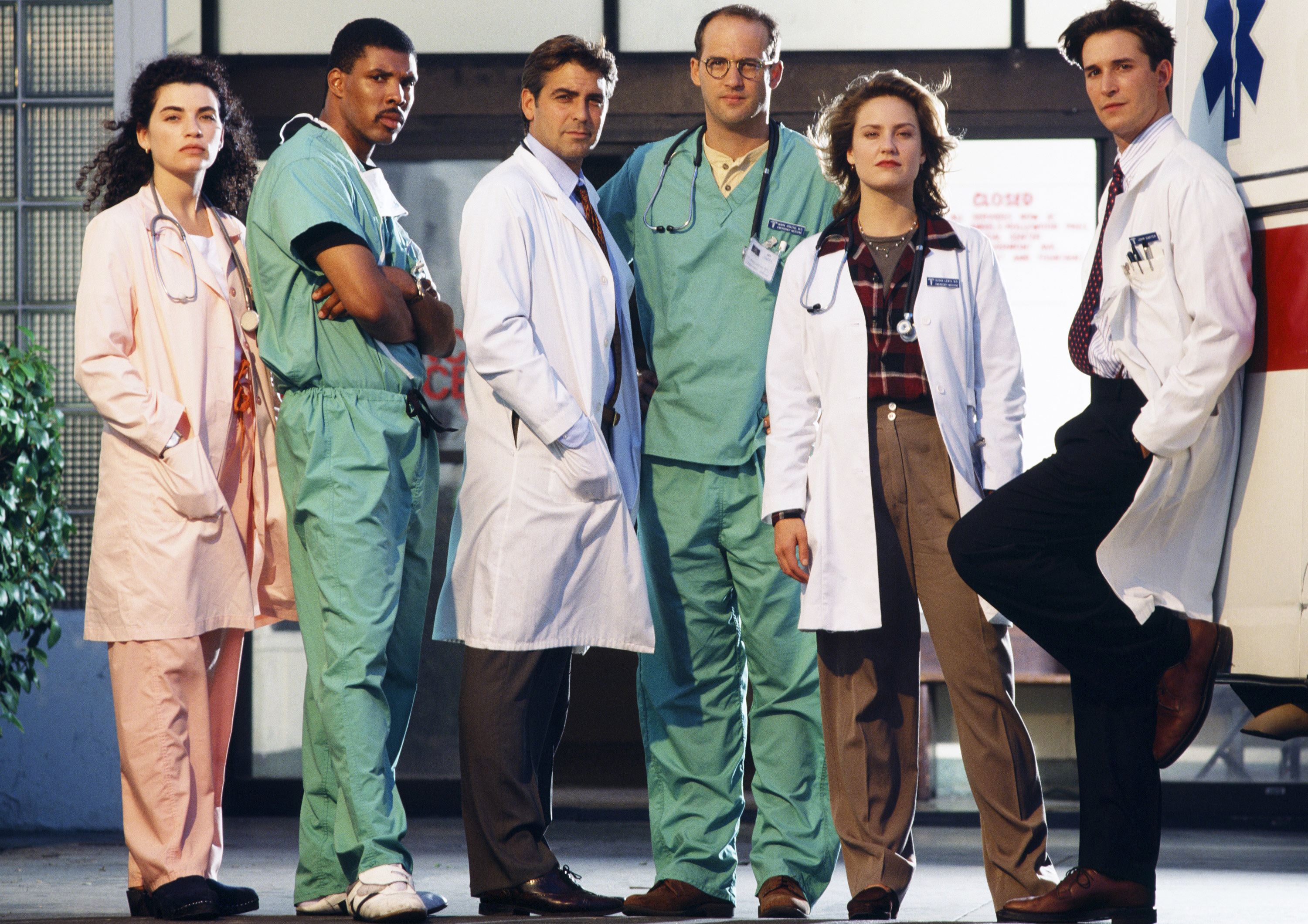
ER is still quite compelling, and sometimes we’d watch two episodes in the evening and sneak in an extra one in the afternoon. Susan and I faithfully followed the show when it first aired. It’s good enough, I can imagine watching it again someday.

The Forsyte Saga

(2002, 2 series, 10 episodes, PBS)
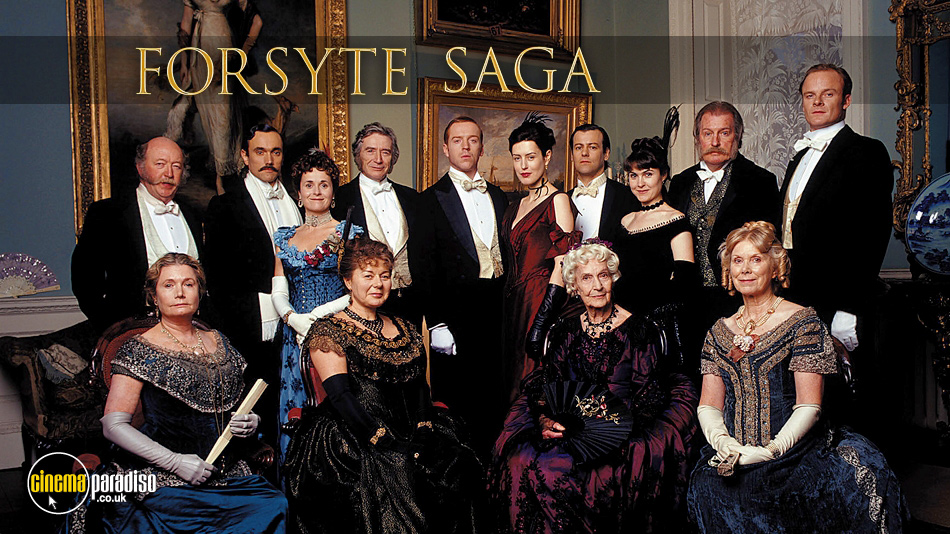
I had heard that a new version of The Forsyte Saga was being produced in England, but I wasn’t sure when it would be shown in America. We’re still waiting. I talked Susan into watching an old version. I had seen it years ago. It’s still good.

The Pitt

(2025, 1st season, 15 episodes, HBO)
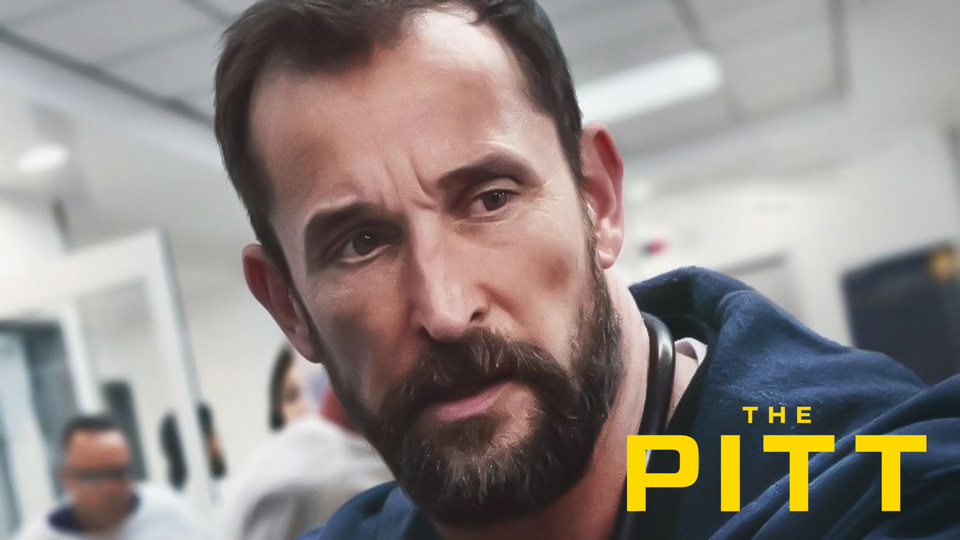
Because we loved ER so much, we signed up to HBO long enough to watch The Pitt. It was tremendous! We highly recommend it. We’re both looking forward to when season 2 starts, which is soon. I would watch season one again. That’s our highest recommendation.

All Creatures Great and Small

(2025, 5th series, 6 episodes, PBS)
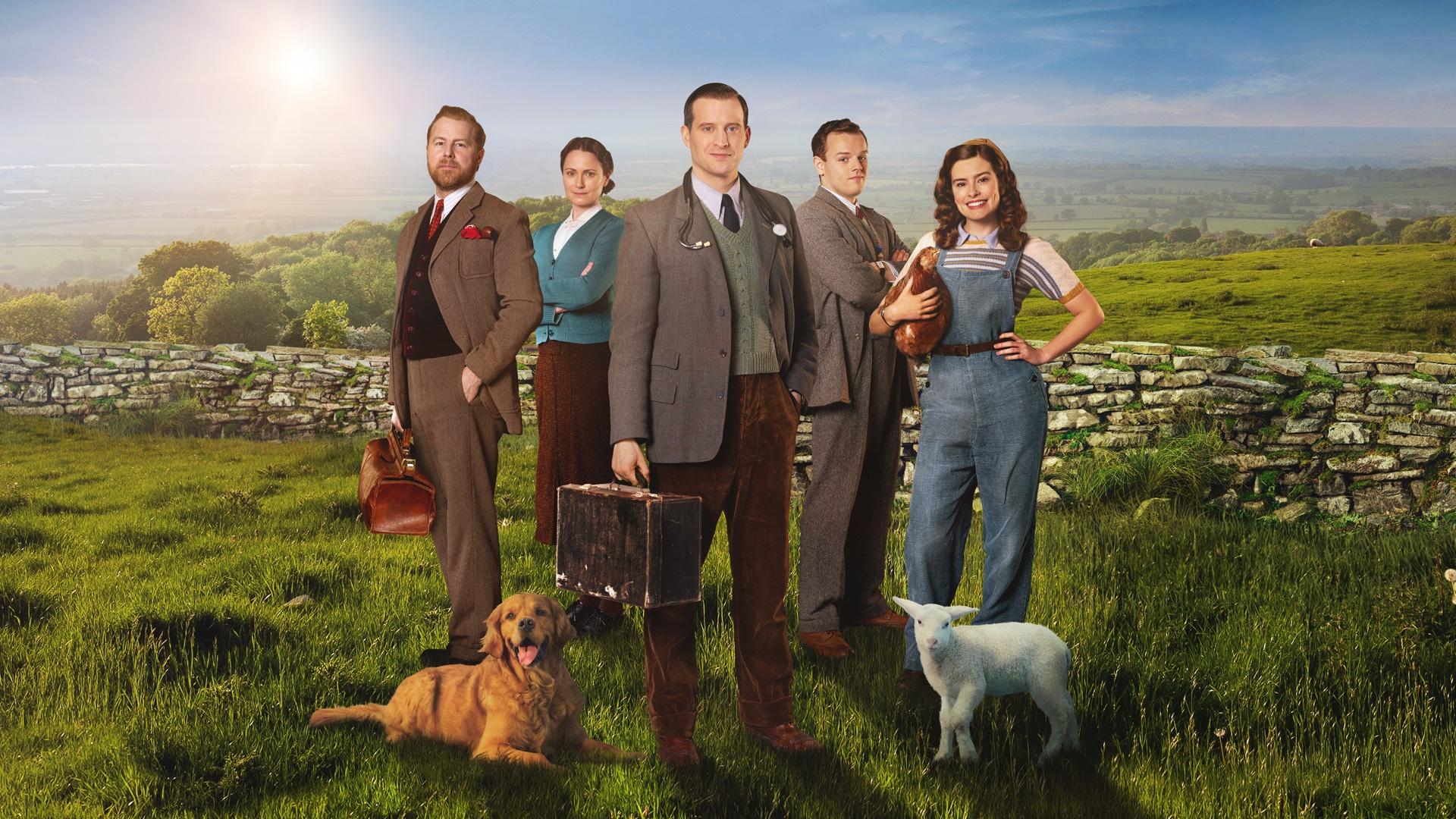
If memory serves me well, and it seldom does, we started 2025 with All Creatures Great and Small season 5. We love that series. In a previous year, or the year before that, we watched the complete run of the original production of All Creatures Great and Small that came out in the 1970s, and then caught up on the new series. Season 6 should start soon. We’re also looking forward to it, too. I would watch both series again.

Wolf Hall: The Mirror and the Light

(2024, one series, 6 episodes, PBS)
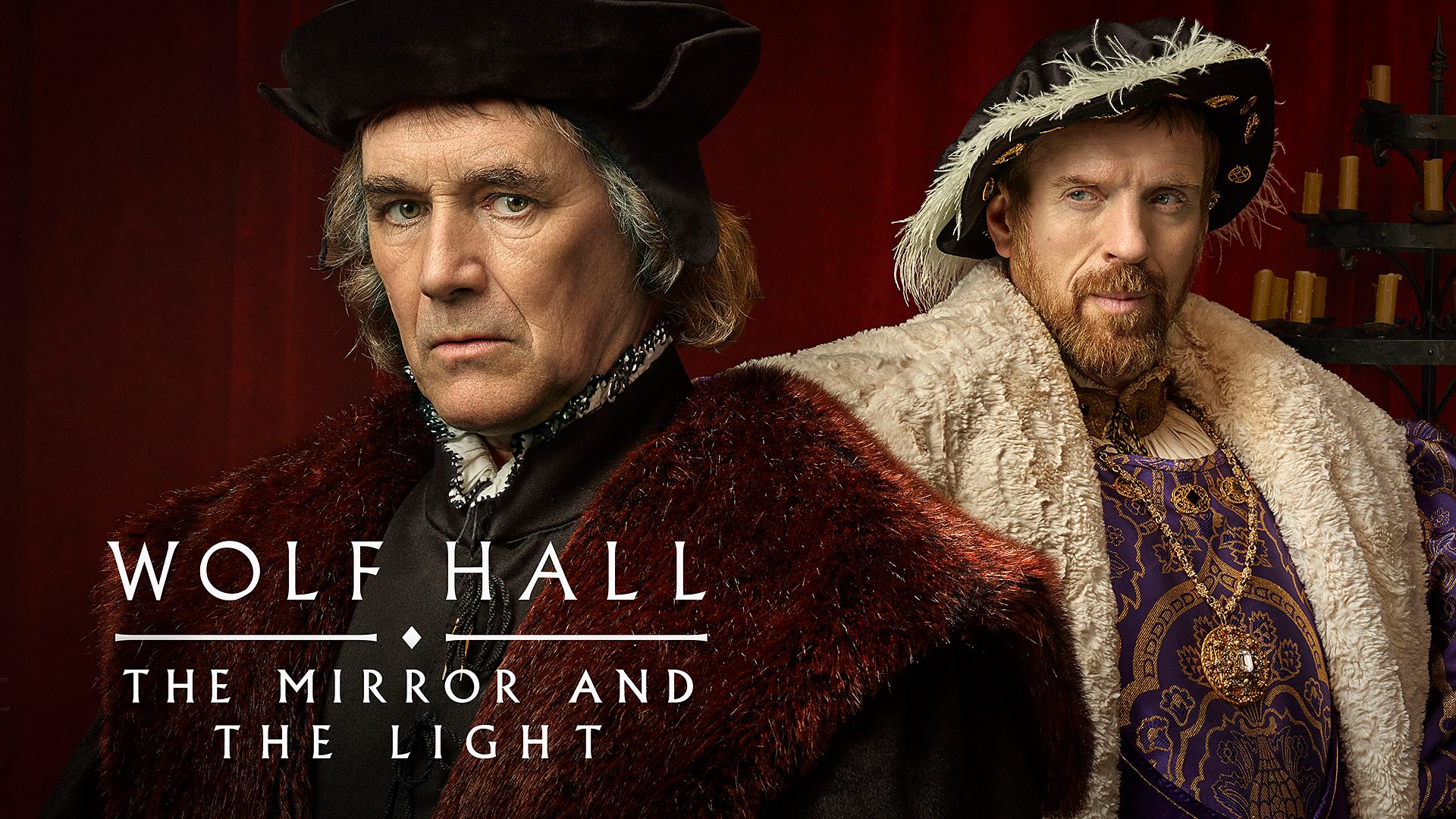
I was surprised last year when Susan agreed to watch Wolf Hall, the first season of this series. Wolf Hall: The Mirror and the Light is an excellent historical drama, and watching the two seasons of this show makes me want to read the book. It seems we’ve found another common ground, history.

The Mary Tyler Moore Show

(1970-1977, 7 seasons, 168 episodes, no longer streaming)

I was disappointed with The Mary Tyler Moore Show, and I confess to bailing out at the end of the 6th season. Susan faithfully stuck with it until the end, but admitted that it wasn’t that good. The show has a great reputation and is often mentioned in TV histories. I even read Mary and Lou and Rhoda and Ted: And all the Brilliant Minds Who Made The Mary Tyler Moore Show a Classic by Jennifer Keishin Armstrong. The book was fascinating and made me admire the creators, writers, actors, and characters, but I never actually enjoyed the show.

Well, I loved looking at Mary Tyler Moore. That got me through six seasons. However, I talked Susan into trying The Dick Van Dyke Show, because I wanted to see more of Mary Tyler Moore. Susan couldn’t handle it. Some of the Dick Van Dyke shows were brilliant, but Susan and I were disappointed whenever the show involved a flashback to Rob’s military days or whenever the characters put on a show within a show.

Landman

(2024, 1st season, 10 episodes, Paramount+)

Susan refused to watch Landman, so I got my friend Anne to watch it with me. No matter how much Anne and I tried to convince Susan that this show was one of the best shows in years, Susan refused to watch it. The show is violent. Landman is blatant propaganda for the fossil fuel industry. But it’s hilarious!

Outrageous

(2025, 1 series, 6 episodes, Britbox)
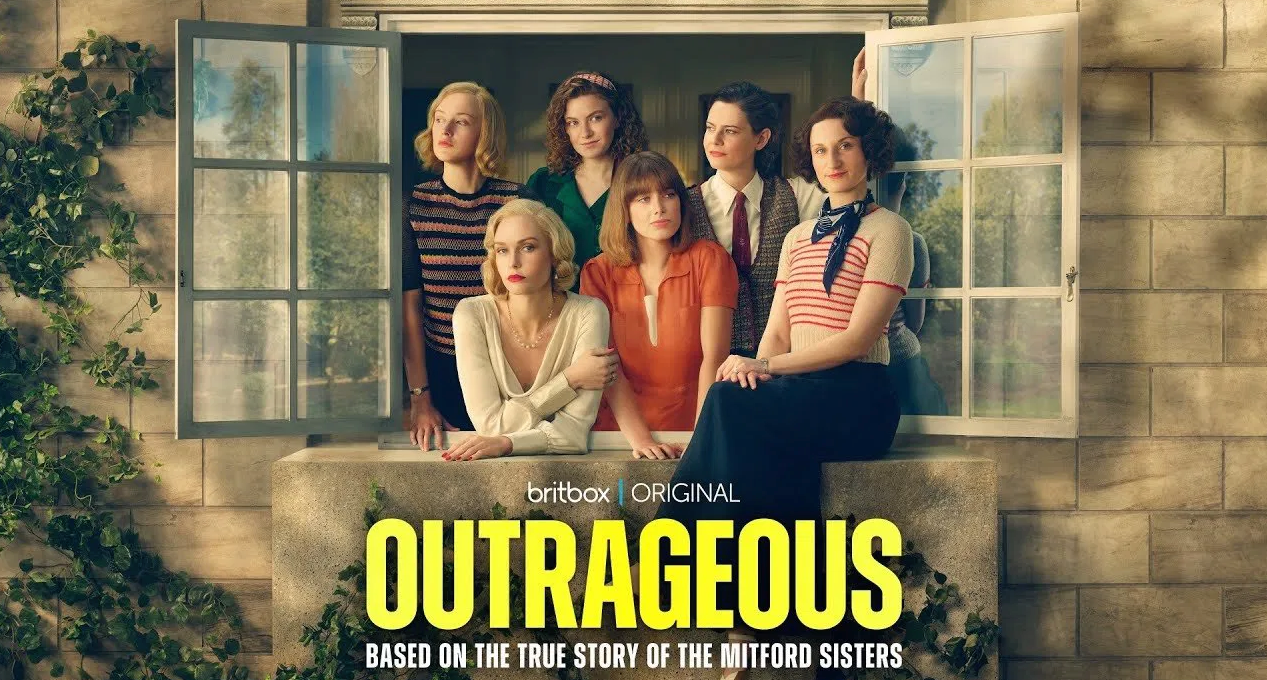
I’ve read about the Mitford sisters before, so I knew what to expect with the miniseries Outrageous. We invited our friends Anne and Tony to watch this one with us. We had a lot of fun. If you want to know what they called this show, Outrageous, read my review of the books and shows I’ve watched about the Mitford sisters.

The House of Eliot

(1991-1994, 3 series, 34 episodes, Britbox)

We picked The House of Eliot because we both enjoy watching BBC period pieces. This one was only okay. I wouldn’t rewatch it. But it was fun enough. It made Susan and me discuss why we like watching certain shows again, especially shows like Downton Abbey, which we’ve watched several times. We agreed it’s the characters. The Eliot girls were only appealing enough for one viewing.

Unforgotten

(2015, 6 series, 36 episodes, Prime Video)
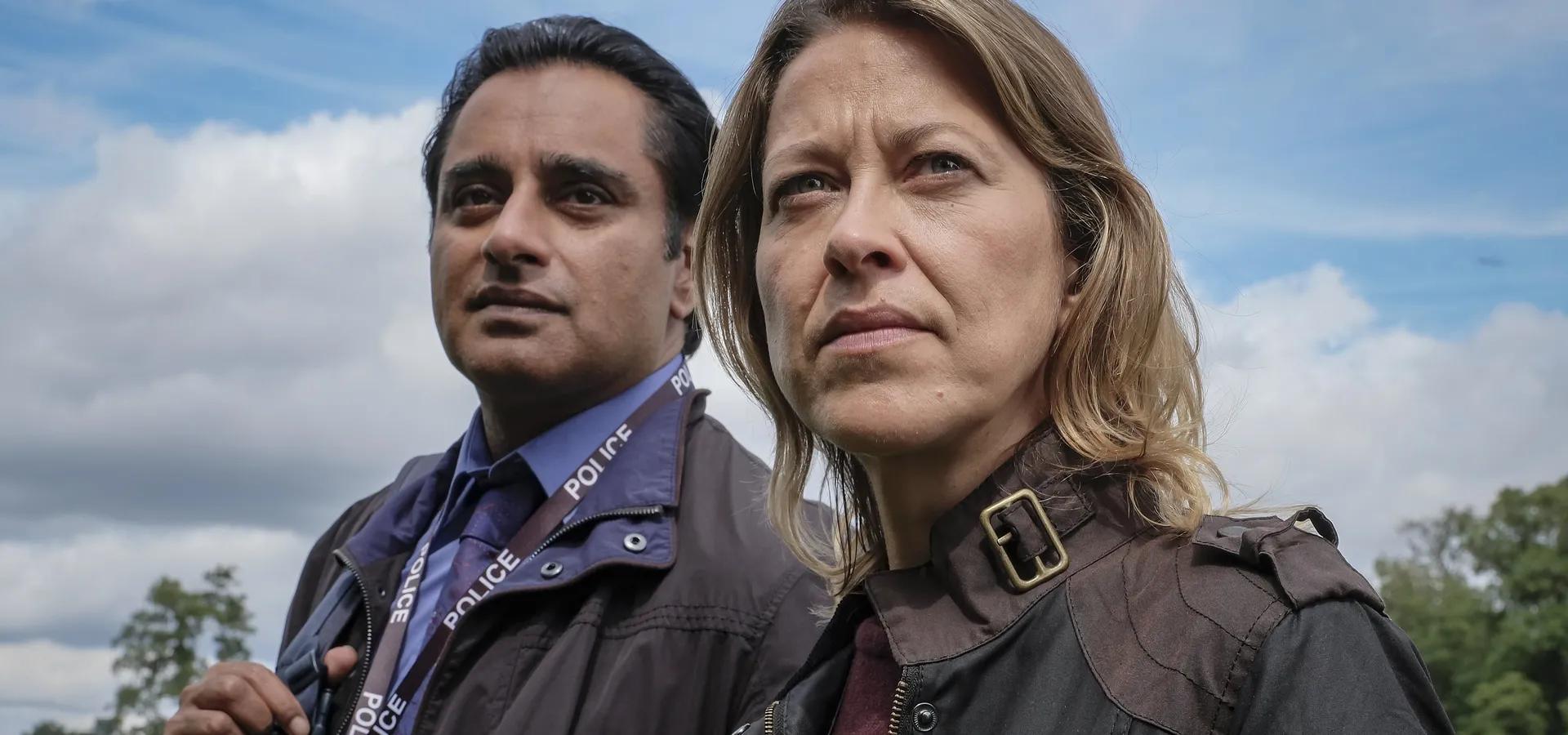
Normally, Susan and I don’t like police procedurals. However, Unforgotten and Broadchurch had settings and stories that didn’t feel like the traditional murder mystery.

Broadchurch

(2013-2016, 3 series, 24 episodes, Netflix)
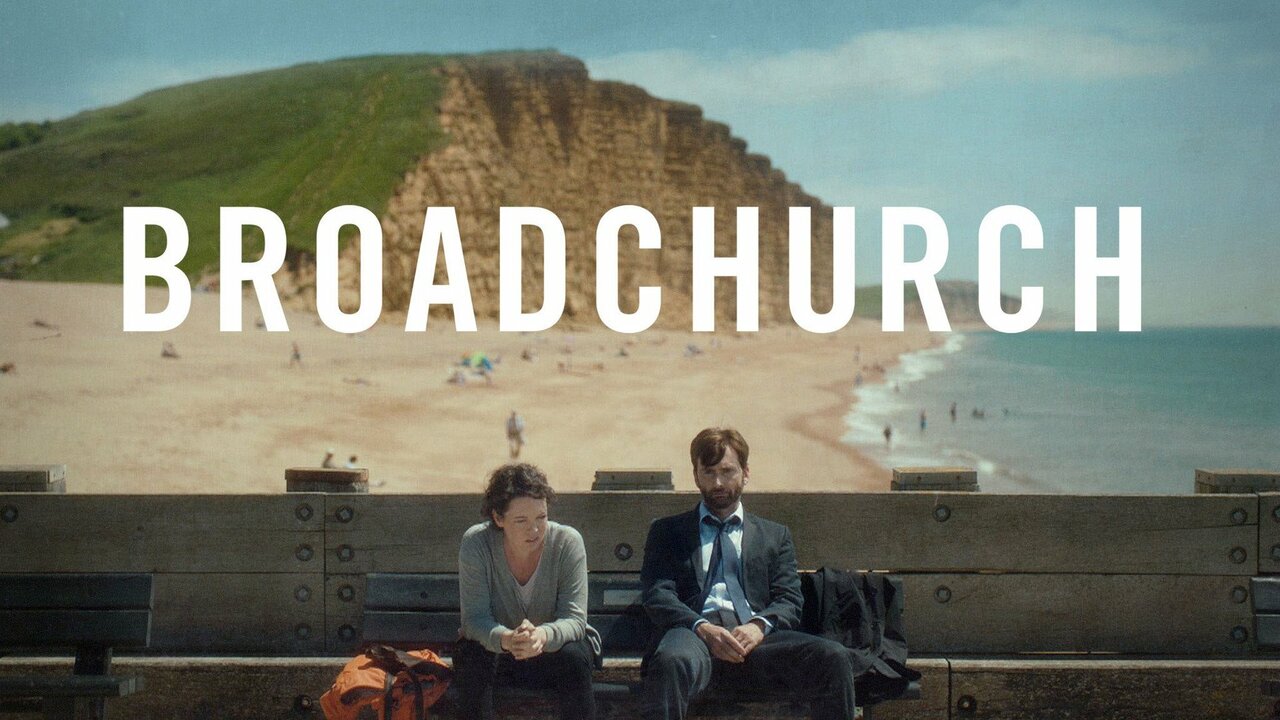
Broadchurch was a gripping series we both looked forward to watching each night. I especially love Olivia Colman. The first season weirded me out because I felt like I knew the plot, but the characters and places felt wrong. I got on Google and discovered Gracepoint, an American adaptation of Broadchurch that I had watched without Susan years ago. It also starred David Tennant.

The Way We Live Now

(2001, 4-part miniseries, The Roku Channel)

The Way We Live Now is based on the 1875 Anthony Trollope novel of the same name. I enjoyed the book so much that I was excited to find the miniseries years ago. So watching it with Susan was a repeat for me. It held up to repeated watching. The story is about a Bernie Madoff-type swindler who runs a con in Victorian London. However, I was disappointed with how the miniseries portrayed Mrs Winifred Hurtle, an American woman who had a reputation for killing husbands. In the book, I was convinced she did kill husbands, but in the miniseries, the way the character was presented, I felt it was only a rumor. I liked how Mrs. Hurtle was more sinister in the book. It’s amusing how Trollope portrays Americans.

Bad Sisters

(2022-2024, two seasons, 18 episodes, Apple TV)
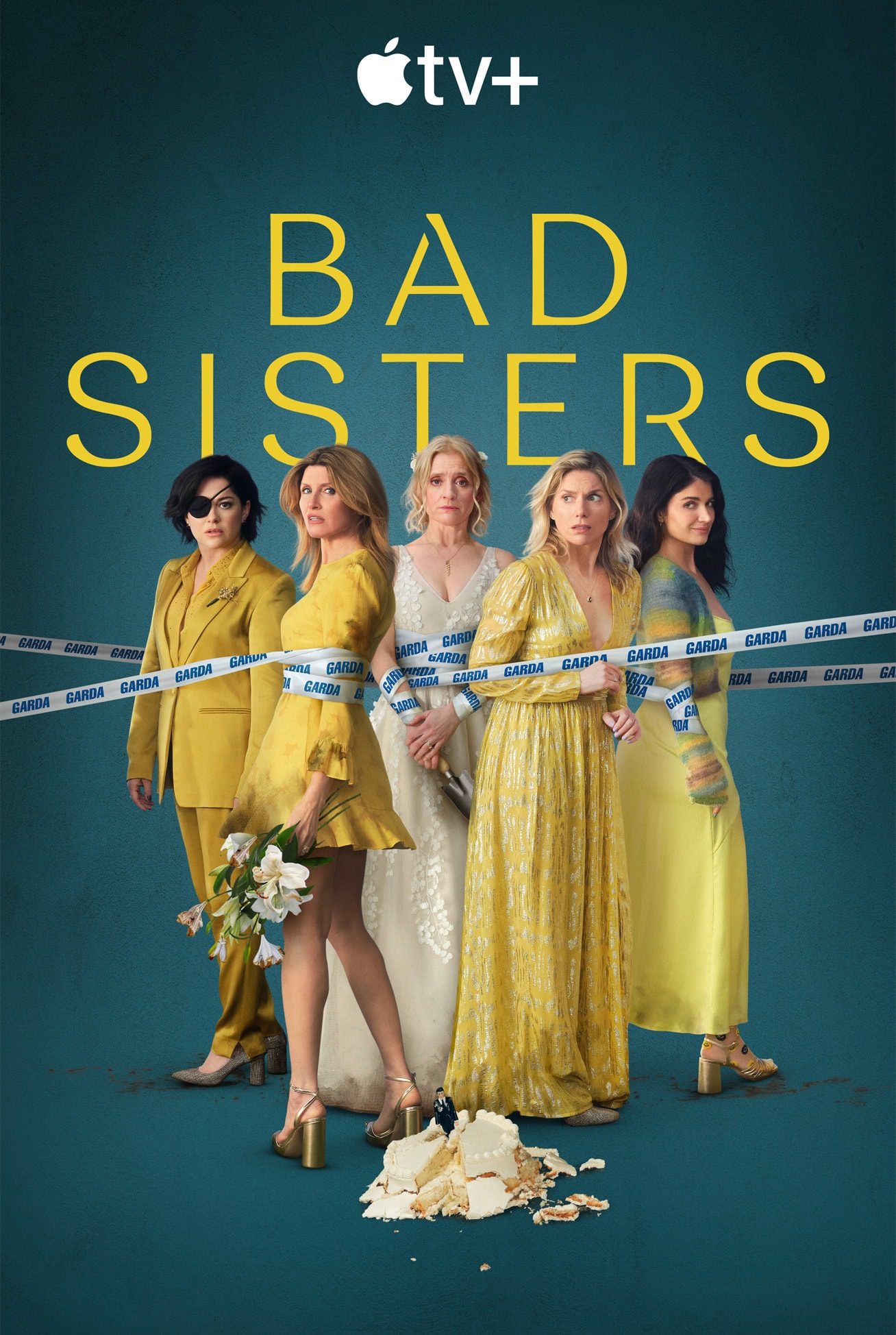
Evidently, Susan and I have a thing for comedy shows about women who kill. Last year, we loved watching the two seasons of Why Women Kill. Bad Sisters is another supposedly dark comedy, but I guess we’re both okay with murdering men who are big-time dicks, so it really didn’t seem that dark.

Death by Lightning

(2025, 1 season, 4 episodes, Netflix)
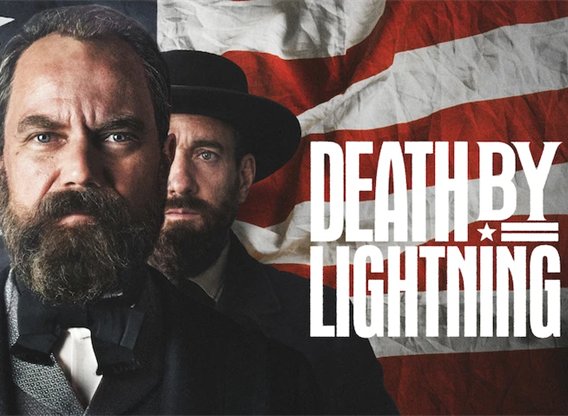
I really don’t know much about the presidents from the 19th century. Watching Death by Lightning made me want to read history books about all of them. This miniseries is about the assassination of James A. Garfield. It’s based on the book Destiny of the Republic by Candace Millard, which my friend Mike tells me is an excellent book. Last year, we watched Manhunt, a miniseries about the assassination of Lincoln. I wonder if next year, we’ll watch another historical film about the assassination of a president.

Pluribus

(2025, 1st season, 9 episodes, Apple+)
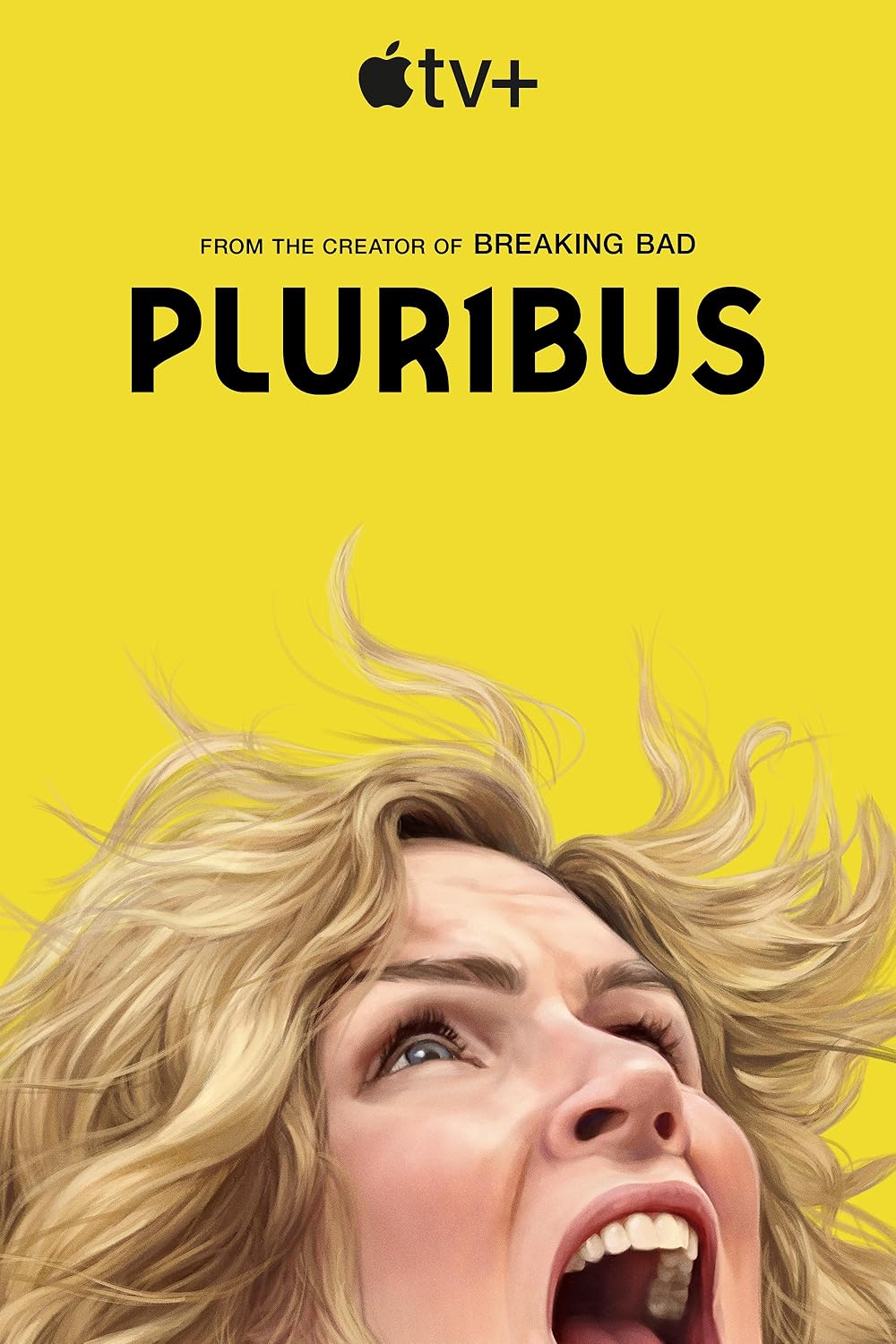
I’m shocked that Susan agreed to watch Pluribus. She absolutely refused to watch Breaking Bad, no matter how many friends swore that it was great. And Susan doesn’t like science fiction. We both like this show and were disappointed when the season ended. We are worried that it has the kind of mysterious plot that might lead to a Lost black hole of a plot.

Adolescence

(2025, 4-part miniseries on Netflix)
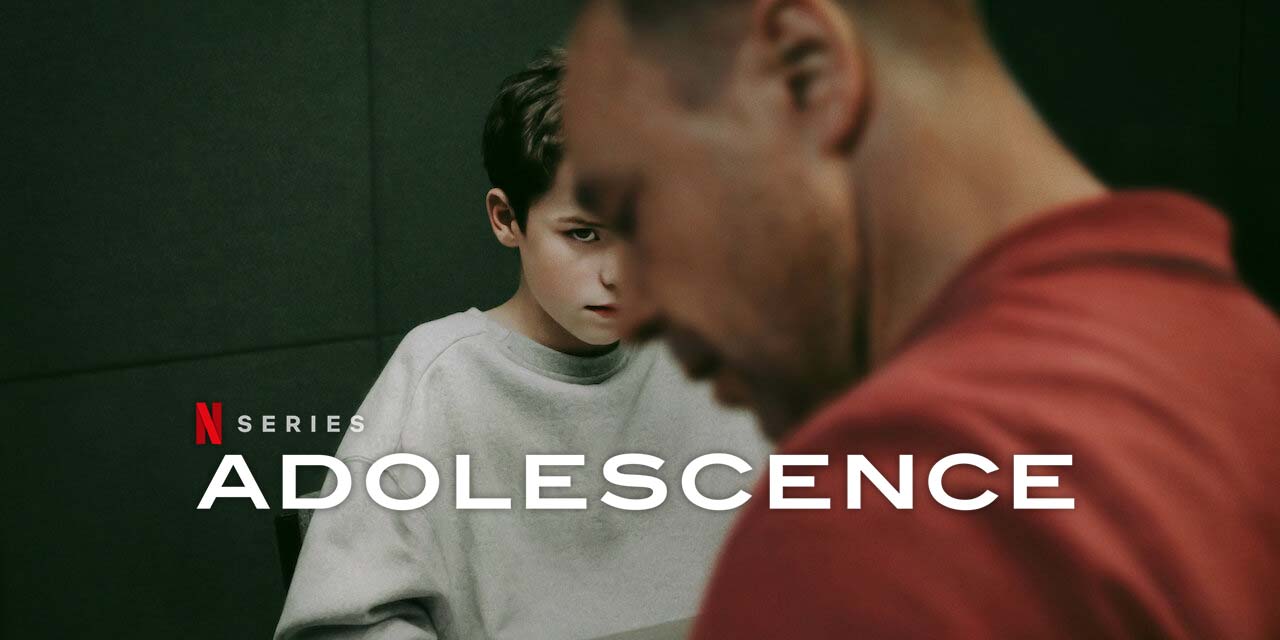
Now, Adolescence is dark. It’s also brilliant. It’s about a schoolboy who is accused of killing a female classmate, and the impact it had on his parents. If you’re prone to depression, don’t watch this one. However, each episode was filmed in one take, and the whole presentation was tremendously creative. The show was revealing about growing up in the 2020s. At one point, the cop investigating the murder is pulled aside by his son, who tells him to stop embarrassing himself. The dad asks why. The son tells him he interpreted all the evidence from social media messages completely wrong. That let us old folks watching the show know that words and language have completely changed. I highly recommend this one if you can handle the realism. (There is no graphic violence.)

The Pallisers

(1974, miniseries, 26 episodes, YouTube)
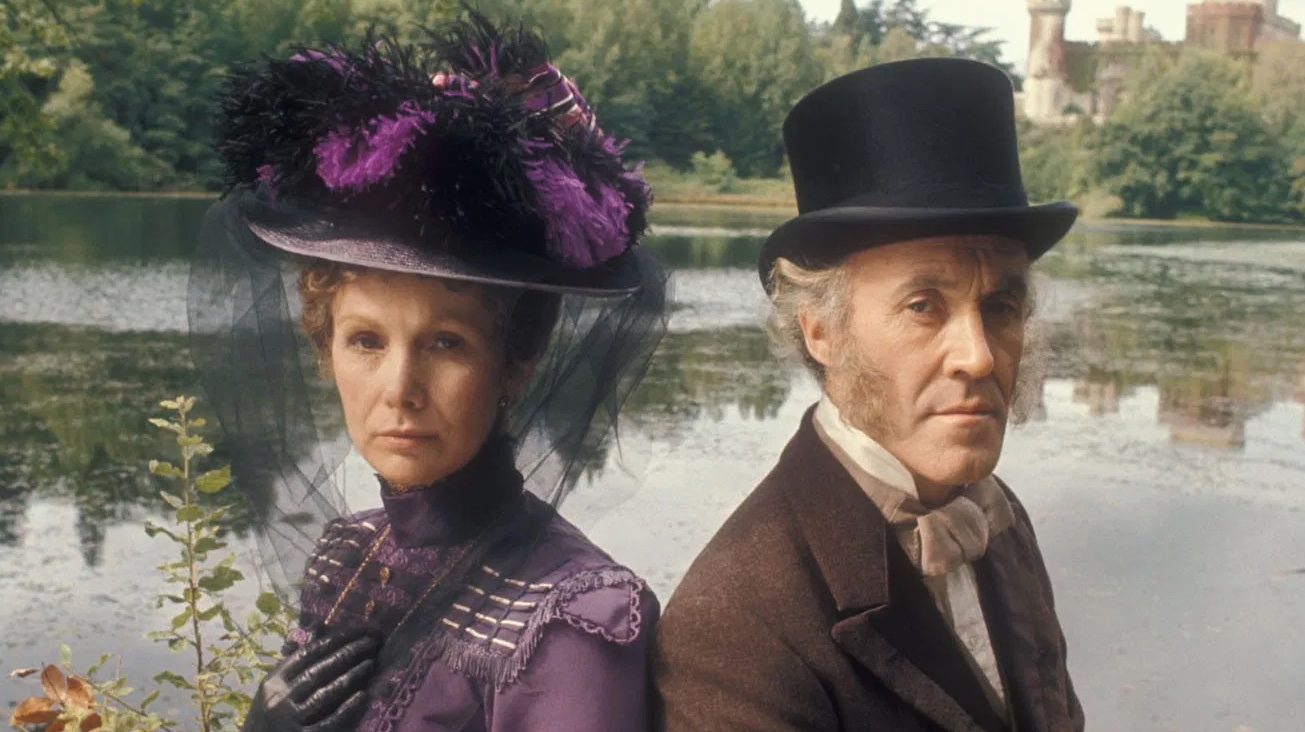
This miniseries is based on four main novels from Anthony Trollope’s Palliser novels. This 1974 production included material from two other Trollope novels that covered the same characters. This was the last series Susan and I watched in 2025; however, ten of the episodes ran into 2026.

We both liked this series. I had seen it before. Susan and I agree best on historical dramas, especially those based on classic books produced for Masterpiece Theater.

Memory Results

711 episodes total. I think this must be close to everything we watched in 2025.

JWH
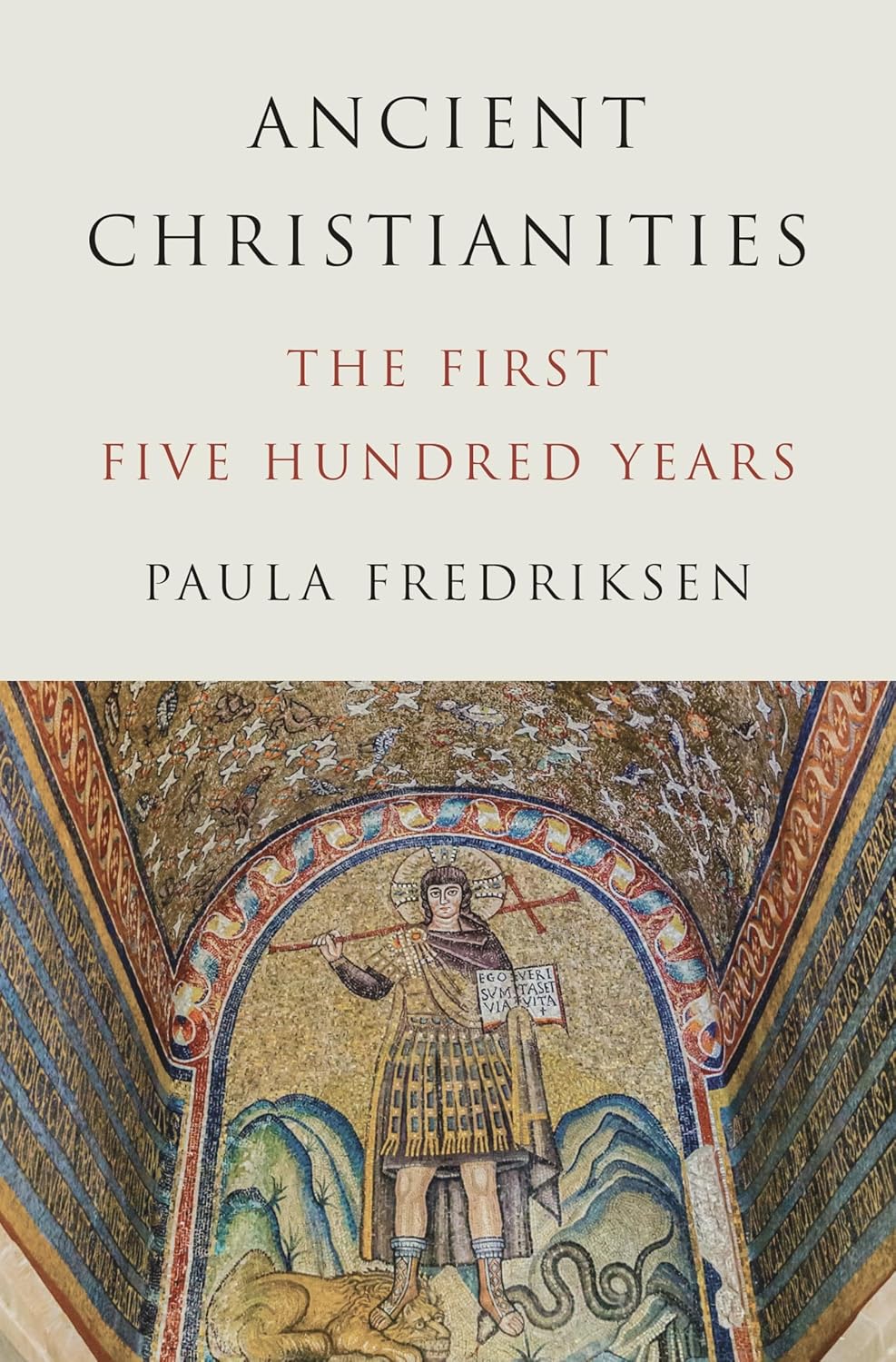
Ancient Christianities: The First Five Hundred Years by Paula Fredriksen

by James Wallace Harris, 12/39/25

Ancient Christianities by Paula Fredriksen is a scholarly work that chronicles the evolution of Christian theology over its first half millennium. I would say this book is not for the faithful, but for readers who enjoy studying history. Paula Fredriksen is an American historian and scholar of early Christianity. She held the position of William Goodwin Aurelio Professor of Scripture at Boston University from 1990 to 2010. If you are considering reading Ancient Christianities, I highly recommend following the link to her name. Fredriksen has published several books on Jesus, Paul, early Christianity, and St. Augustine that I want to read.

I will not review Ancient Christianities; for that, I recommend reading Joseph Foltz’s review in Ancient Jew Review (May 14, 2025). Instead, I’m going to describe why I read this book.

I believe we are all brainwashed as children by our parents, family, teachers, peers, and churches. We can’t recall how we acquired our foundational beliefs because they were imprinted at a time when we understood little about reality. These beliefs are recorded so deeply in our minds that we seldom examine them. The amount of work it takes to explore this area of our personality is too great for most people.

There is a fascinating parallel between dredging up personal memories from our early minds and studying the history of the early formation of Christian theology. It’s impossible to know anything for sure about either. However, working with memory and history can be enlightening.

I gave up religion back in the mid-1960s, but I’ve never been able to erase everything that going to church as a child put in my head. However, I’ve always felt kindly towards the person we call Jesus. I assumed he discovered a new way of seeing the world that was more compassionate than was common over two thousand years ago.

Over the years, I’ve read many books by historians trying to discover who Jesus was and what he taught. I’ve concluded it is impossible to know what Jesus believed or preached, and Ancient Christianities only confirms this conclusion.

If you study all the various sects of Christianity and all its theologians, you will not find one common denominator. Whatever Jesus believed, it’s been obscured by thousands of new opinions. Some scholars claim that Jesus might not have existed at all, but was created to promote specific concepts. But we can’t even identify the first creator of Jesus, because the idea of Jesus has been recreated countless times over the last two thousand years.

Because Jesus didn’t write down his philosophy, we can’t say for sure what it was. The earliest writings about Jesus come from Paul, but we can’t trust them because Paul didn’t know Jesus. Paul wrote letters about Jesus twenty years after Jesus died. He says very little about Jesus the man. But that’s like you writing about someone you heard about who died in 2005.

The authors of Matthew, Mark, and Luke wrote decades later and told different stories about Jesus that don’t always match up. That’s like writing about someone you heard about who died in 1980.

The author of the Gospel of John wrote even later and went full gonzo on the story of Jesus.

Paul Fredriksen recounts how many other men wrote stories about Jesus in the following four hundred years. Everyone made something new up. And some of their ideas involve concepts as far out as those imagined by science fiction writers.

Ancient Christianities is about endlessly reinventing Jesus over five hundred years. Those ideas are so ancient, so deep in our collective unconsciousness, that they are like ideas that we acquired when we were four, and dwell in the darkness of our unconscious minds.

Every theologian and every historian has their own theory about Jesus’ identity. All we can do is pick the one we like the best, but we can never know.

I’ve always wanted to believe Jesus was the guy who came up with the ideas in the Sermon on the Mount. I’m not so sure anymore. I’m currently leaning towards the idea that Jesus was a radical who wanted to overthrow the system. It’s not hard to picture him talking like the hotheads on the internet with big ideas. And that the Sermon on the Mount came from a later storyteller.

There’s a wonderful book, The Five Gospels: The Search for the Authentic Words of Jesus. It’s based on the Jesus Seminar, where, over a decade, theologians and historians debated which passages in red in the New Testament were said by the historical Jesus. The Five Gospels is based on voting, and the results are color-coded. Even among experts, there is no complete agreement. We tend to advocate for what we want to believe. Confirmation bias is powerful.

Books like Ancient Christianities help us understand how commonly believed concepts evolved from specific people. (By the way, it’s all men.)

If you read enough history books about religion, you realize there is no divinity anywhere to be found. It’s all concepts created by men. Like the famous story by Carl Sagan, it’s turtles all the way down.

JWH

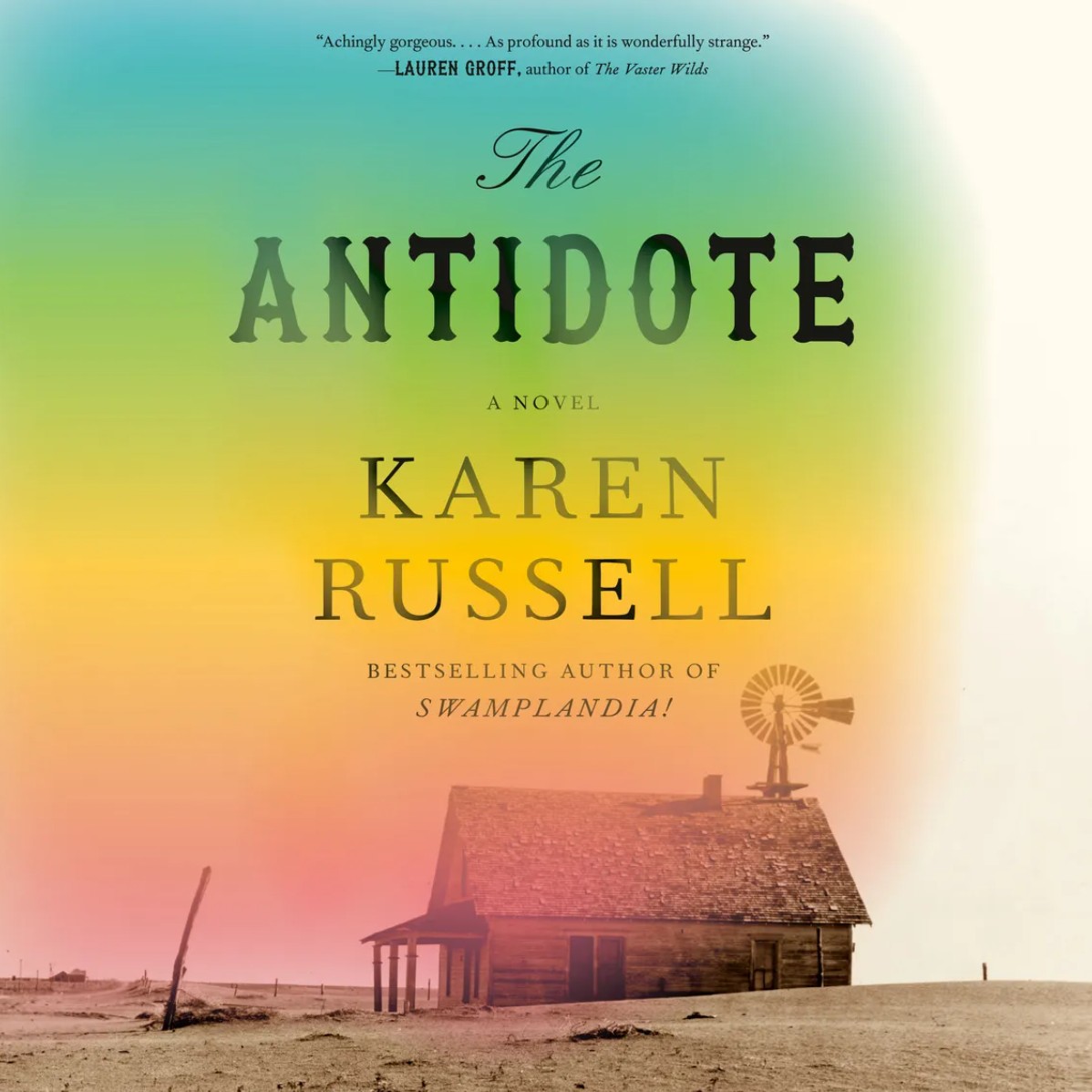
THE ANTIDOTE by Karen Russell

by James Wallace Harris, 12/27/25

There are some conservative Republicans who wish to censor history by forgetting events in America’s past. They worry that such history could make their children feel bad about themselves. They want to remember a past that makes America look great again. Please read Donald Trump’s executive order regarding this issue.

Karen Russell’s latest novel, The Antidote, philosophises why we need to remember everything, even things our ancestors did that make America look bad. Russell uses fantasy to educate us about reality. When my friend Annie first recommended that we read this novel together, the fantasy elements turned me off. As a life-long science fiction reader, I was in the mood to read realistic fiction for a change. The older I get, the more I want nonfiction, but I can’t give up fiction completely.

Throughout the first half of The Antidote, I was annoyed with all its fantastic elements. However, I eventually realized that Russell was using them as a plot device to get her readers to contemplate real history. Eventually, I felt Russell had read a great deal of American history that disturbed her, and she was using her novel to come to grips with why we shouldn’t forget that which many want to erase from American history books.

Memory is the main theme of this novel. Both personal memories and historical memory.

The Antidote makes a case against five crimes our ancestors committed. These tragic deeds explore the dimensions of greed. Each of these historical atrocities has been well-documented in nonfiction books I’ve read over the years. Reading the novel made me ask: Which has more impact, fiction or nonfiction? Listening to The Antidote made me feel closer to the suffering.

How many books have you read that deal with these historical events? Did you learn more from reading fiction or nonfiction?

  • How did we take land from the Native Americans?
  • How did we force Native Americans onto reservations and attempt to reeducate them with our culture and values?
  • How did poor farming practices cause the environmental catastrophe of the Dust Bowl?
  • How did we institutionalize unwed mothers and steal their babies?
  • How do we allow the murders of women to go uninvestigated and underreported?

The Antidote is primarily set in the fictional town of Uz, Nebraska, in 1935, between two significant real events, the Black Sunday dust storm (April 14, 1935) and the Republican River flood (May 31-June 1, 1935). The story is told sequentially, but with flashbacks. We hear the story told from many voices. Four primary characters: The Antidote (Antonina Rossi, AKA, the Prairie Witch), Asphodel Oletsky (Del), Harp Oletsky (Del’s uncle), and Cleo Allfrey (photographer), along with two significant secondary characters, a cat and a scarecrow.

Antonina, a middle-aged woman, had been institutionalized at age 15 for being an unwed mother. Her son had been forcefully taken away from her. She makes her living as a vault, or prairie witch. Antonina can enter a trance while another person relates a memory they wish to forget. That process will erase the memory from the teller’s mind and store it in hers. Antonina gives them a written receipt that will trigger that memory, and she can reinstate it at a future time. Antonina does not remember what she vaults. She is paid for this service, but her clients consider her no better than a prostitute.

Asphodel “Del” Oletsky, a fifteen-year-old girl, just five feet tall, is the captain of Uz’s high school girls’ basketball team. Her mother was murdered when she was young, and she lives with her uncle Harp Oletsky. Cleo is a young black woman who travels the country documenting the depression for FDR’s government. The plot of the novel eventually brings them all together.

The novel begins with a roundup of jack rabbits and clubbing them to death. My father was born in Nebraska and was Del’s age in 1935. He told me stories about how the farmers would exterminate the jack rabbits. My mother also went to high school around this time and played basketball. My grandmother was on a basketball team in Indiana at the turn of the century.

My memories immediately made me connect with the story. We remember the good ones, but forget the bad ones.

The story then goes into catching a serial killer of young women. The sheriff even connects the killer to Del’s mother’s cold case. This murder mystery is the apparent backbone of the plot, but it’s not the real story.

The Antidote immediately triggered a memory of an article I recently read, “The Nurse Who Names the Dead” by Christa Hillstrom. The article was about Dawn Wilcox, who created a database to track the number of men killing women. She discovered that femicide goes vastly underreported. One of the truths of Russell’s novel is that she’s writing about evils that have always existed. Can we ever break the cycle?

Dust and evil color this novel with darkness. I listened to the audiobook edition, and it felt like I was watching an old black-and-white movie. I’d call it noir magical realism.

I admit, I had to push myself to keep listening for the first half of this book. I was just put off by the fantasy elements. But the characters grew on me. And by the middle of the story, I was hooked. The last half of the book often made me teary-eyed. For most of the novel, I felt Russell was too writerly, but when Harp gives his big speech near the end, I must say I was quite impressed with the writing and the description of the riot and storm.

Throughout this story, I kept thinking about the Oz books by L. Frank Baum. Uz almost sounds like Oz. Plus, the story has a tornado and a talking scarecrow.

I wanted to connect the elements of this story with all the nonfiction books I’ve read that back up its fictional history. Especially, The Worst Hard Time: The Untold Story of Those Who Survived the Great American Dust Bowl by Timothy Egan, plus the Ken Burns’ documentary, The Dust Bowl. However, I can’t remember where I read about the other issues in this book. My mind is getting old and tired.

My friend Linda and I often talk about how humans repeat the same crimes throughout history. In recent months, we’ve focused on how greed is the primary driver of evil. As you read The Antidote (if you do), think about how greed motivates people to do what they do. We’re all greedy to a degree, and that might be a survival mechanism, but there seems to be a point when more greed makes us evil. I see that everywhere.

I’m also watching The American Revolution by Ken Burns. It brings up many things that some Republicans would like the world to forget. Like I said, we don’t change. But we should ask, what are we doing now that people in the future will wish to forget that we did?

The Antidote by Karen Russell was on 11 best-books-of-the-year lists for 2025.

JWH

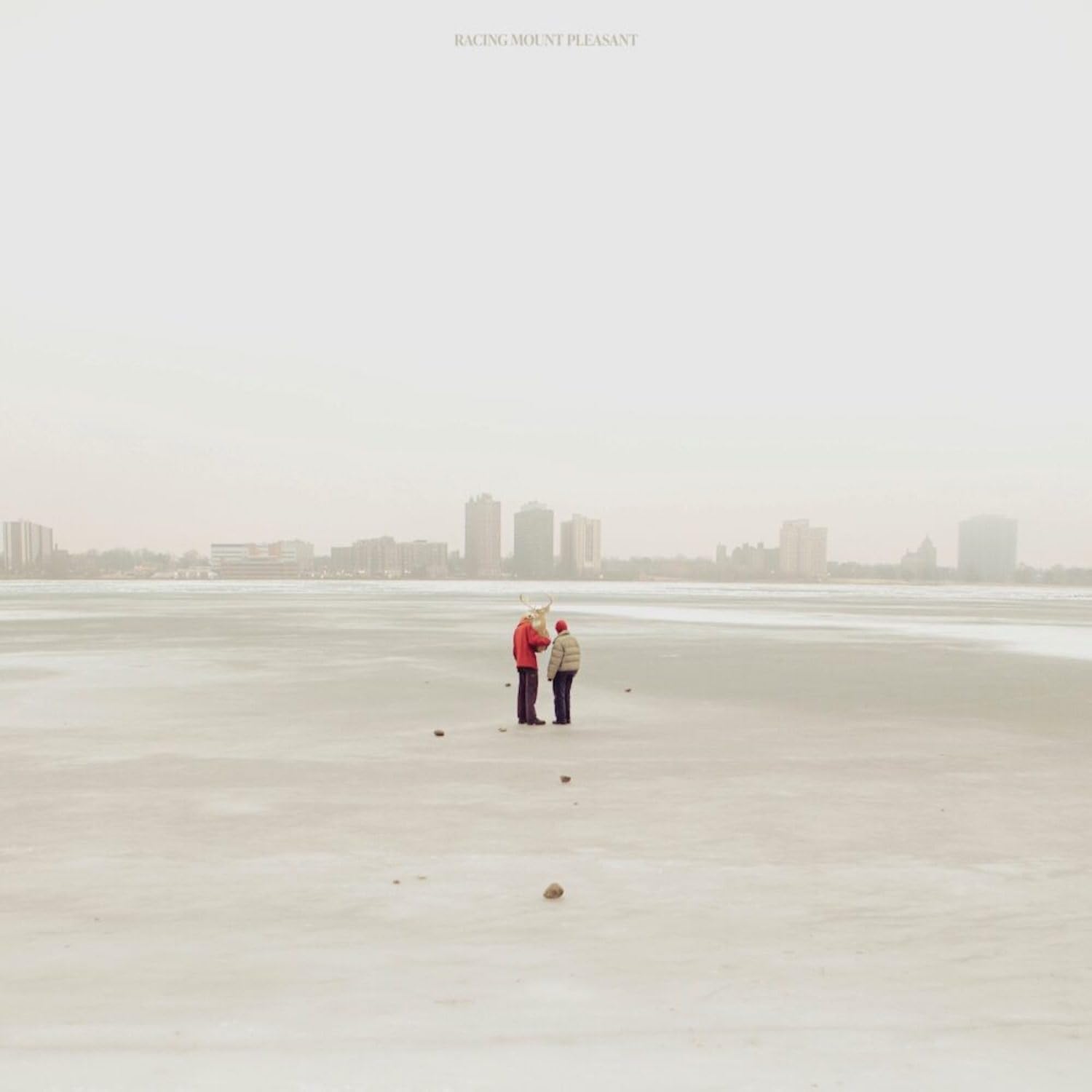
“Racing Mount Pleasant” by Racing Mount Pleasant

by James Wallace Harris

I discovered Racing Mount Pleasant while watching Best New Albums of 2025 – Ranked by Katie from Cordes Records in Australia. She inspired me to watch other YouTubers report on their favorite new albums of 2025. I’ve collected all their recommendations into a Spotify playlist “2025 Albums to Try.”

Of all the albums I’ve tried, Racing Mount Pleasant is my favorite. It’s by a group, Racing Mount Pleasant. To make it even more confusing, my favorite song on this album is “Racing Mount Pleasant.”

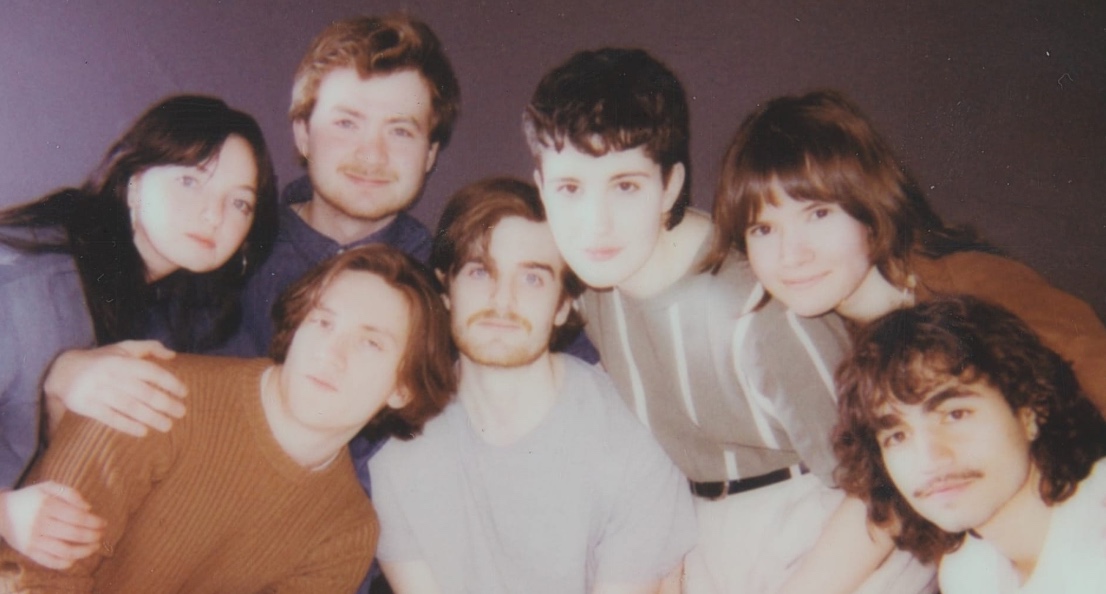
Racing Mount Pleasant currently has seven members and was formerly known as Kingfisher. According to Wikipedia, the lineup consists:

  • Sam DuBose – vocals, guitar
  • Callum Roberts – trumpet
  • Connor Hoyt – alto saxophone
  • Samuel Uribe Botero – tenor saxophone
  • Kaysen Chown – strings
  • Tyler Thenstedt – bass, vocals
  • Casey Cheatham – drums, vocals

I’m currently obsessed with their song “Racing Mount Pleasant.” Phil Spector was famous for producing a Wall of Sound back in the 1960s. Spector got this sound by using a rotating lineup of over two dozen studio musicians, now known as the Wrecking Crew.

I mention this because Racing Mount Pleasant feels like a rock orchestra. I love their sound, especially the song “Racing Mount Pleasant.” You can hear the album version on YouTube:

I love this song. I’ve been playing it over and over for weeks. I used it as a test song for my review of the Fiio K13 R2R DAC. However, as I listened to the music played through five different DACs using three different sound systems, I was amazed by the diverse textures the instruments made. I wanted to know which instruments produced which sounds. That’s when I began researching the song and found out the band had seven members. But what really helped was finding this video of the band playing “Racing Mount Pleasant.”

I loved this album so much that I bought it on vinyl. That’s rare for me. I might even get it on CD. The music is so dense that it feels like it’s coming from a giant orchestra. The band plays at a relentless pace, projecting a sense of joy.

Most of my fellow baby boomers are stuck in the past musically. Most of the time, so am I. But for some reason, a few of us have stayed on the trail, hoping to find new artists. Discovering Racing Mount Pleasant is one of those discoveries that makes trying all those thousands of albums over the past seven decades pay off.

JWH

DAC Compare: Fiio K13 R2R vs. Geshelli J2 vs. AudioLab 6000A

by James Wallace Harris, 12/20/25

On the surface, this essay might appear to be about audio equipment, but it’s really about wants and desires, perception and marketing, the limits of our senses.

A DAC is a Digital-to-Analog converter. Most people own several, even though they might be unfamiliar with the acronym. They are critical to audiophiles because they determine how well digital files are recreated as analog sound in your amplifier and speakers.

For most music listeners, the DAC is built into their computers, smartphones, amplifiers, or CD players. Some audiophiles will spend hundreds or thousands of dollars on an external DAC, hoping to hear details in their music that are not produced by integrated DACs.

I’m not really an audiophile. Maybe I’m a half-ass audiophile. I do want to hear music in all its richness, but I just don’t want to spend the kind of bucks that audiophiles are willing to part with.

Some audiophiles are purists and shun digital recordings. They want vinyl records that were produced with analog equipment and to play their LPs on analog amplifiers. This route requires no DAC. I’ve spent a modest amount of money pursuing the analog sound, and it’s always been elusive. Watching YouTube videos from analog purists makes me think I’d find sonic greatness if I’d only shell out a few thousand dollars more.

On the other hand, other audiophiles who embrace digital technology claim that if you spend enough money, you will hear more details from every note and instrument, from a larger three-dimensional soundstage, and experience greater sonic textures and thrills.

For over a decade, I’ve been chasing three mirages. The first is analog sound, the second is high-resolution music, and the third is better DACs. I gave up on vinyl because it was never apparent that analog sounded superior to digital, even after much testing. I gave up on high-resolution music because it only sounded slightly better than CD quality, and only if I concentrated mightily hard. However, I’m still a sucker for DAC hucksters.

Since Covid, I’ve been hearing reviews of R2R DACs, and I’ve been hankering to own one. Unfortunately, R2R DACs were more expensive than the more common Delta-sigma DACs. Then Fiio came out with the K11 R2R headphone amp/DAC for $159. I thought I’d buy one and see if there really was a difference. Before I could pull the trigger, Fiio came out with the K13 R2R headphone amp/DAC for $320 that claimed to be even better. So I bought one for my birthday.

A couple of years ago, I purchased the Geshelli Labs J2 DAC with upgraded Sparkos SS3602  op-amps and AK4499 DAC because the Cheap Audioman had convinced me it was the best Delta-sigma DAC for under a $1000. (It was just over $500 with the upgrades, so I thought, what a bargain.)

I already owned an AudioLab 6000A because of Darko Audio. It has an ES9018K2M DAC. It sounded great to me, but watching audio equipment reviews online leaves a never-ending desire to explore those greater musical dimensions they claim they can hear.

When I got the Geshelli Labs J2, I thought I heard more detail. After a year, I became tired of having to get up to turn on the J2 before turning on my AudioLab 6000A with a remote. I removed the J2 and used the DAC in the AudioLab 6000A. I wasn’t really sure I could hear a difference anymore. I never could decide if the external J2 sounded better than the internal DAC of the 6000A.

But I kept listening to reviews. Many of my favorite reviewers went through countless DACs, apparently searching for audiophile nirvana. Some claimed that DACs costing $5000 or $10,000 would get me there.

Reviewers consistently claimed R2R DACs had the smooth sound of analog music, projecting larger soundstages. I felt the soundstage for the AudioLab 6000A was as large as my den, but then what did I know? Maybe it wasn’t.

I wasn’t willing to risk my retirement savings on a $5,000 DAC. Some reviewers were honest enough to admit that those expensive DACs didn’t reveal their riches unless your amplifier and speakers also cost at least $5,000.

I decided I just had to hear an R2R DAC to see if I could actually hear a difference, so I bought the Fiio K13 R2R.

To be honest, I was disappointed with what I heard using it as a K13 R2R headphone amp. The music sounded far more exciting through my Sennheiser 560S headphones and Fiio K5 Pro headphone amplifier. The music presented by the K13 was very nice, but it was missing all those exciting details I heard from the ESS Sabre DAC of the K5 Pro.

I’m not unhappy with the K13. Its smooth sound, especially on female vocals, is quite pleasant. However, for headphone listening, I especially enjoy the details.

I then hooked up the K13 and J2 to the AudioLab 6000A’s analog inputs. I also compared the sound from the AudioLab 6000 CD transport using its internal DAC. The R2R DAC did sound smooth and pleasant. And I’ve been enjoying it for days. It’s just fine, but I don’t think I’m an R2R person after all.

Here’s the thing: there are differences between the three DACs, but do they really matter? My bedroom stereo, using a Bluesound Powernode 2i and Klipsch RP-5000F speakers, sounds the richest, most detailed, and dimensional of all my systems. However, I think that’s due to the room. My main stereo is in the den. It doesn’t have a back wall, because it opens into a dining area and kitchen. One wall is floor-to-ceiling glass, and the other two walls have wrap-around windows near the ceiling.

I’m sure the rooms make a bigger difference than the DACs. And I imagine the Polk Reference Series R-500 speakers sound different from the Klipsch.

For years, my only source of music was a clock radio. It had only one speaker. It was no larger than three inches in diameter. I loved that radio, and the music I first heard on it from 1962 to 1968 has stuck with me my whole life.

The most excitement I got from listening to music this year wasn’t from the equipment, but from consciously trying new music I hadn’t heard before that was created in the last ten years. Spotify estimated my age from the music I played to be 28.

I do know the DAC in my $89 Wiim Mini sounds bad. But it seems any DAC costing over $200, despite its technology, sounds pretty damn good. Maybe if I spent more than $2000, I would hear a difference, but would it be a night-and-day difference? I don’t know. Unless I win a mega lottery, I ain’t going to find out.

In my testing, playing a CD through the AudioLab 6000A sounded the best by far. But I’m not ready to go back to CDs.

I think watching audiophile reviewers on YouTube is making me dissatisfied with my equipment. I have to wonder if the differences they hear are really psychological or physiological?

I’ve found that what makes the biggest difference is volume. Listening at 85 decibels makes my stereo systems sound great. At 85 decibels, I hear more details with a larger soundstage by using any of my DACs.

After that, convenience matters. Audiophiles claim that separate components sound better than all-in-one units. Calling up albums on my phone via Spotify is just too damn convenient. Powering on with a remote is too damn convenient. I wish I could power up my integrated amplifiers with my iPhone and ditch the remote.

My advice. Spend a middling amount on an integrated system and play it loud.

JWH