The Price of High-Quality Information

by James Wallace Harris, 6/30/25

We all know the internet is full of crappy information. The creators of the Internet intended it to be an information utopia. They wanted information to be free and instantly available. It turns out free information is only worth what you paid for it.

The Internet destroyed the local paper and investigative journalism. Quality magazine journalism is circling the drain. Television news is more abundant than ever, but it’s so predigested and targeted to specific audiences that it’s worthless.

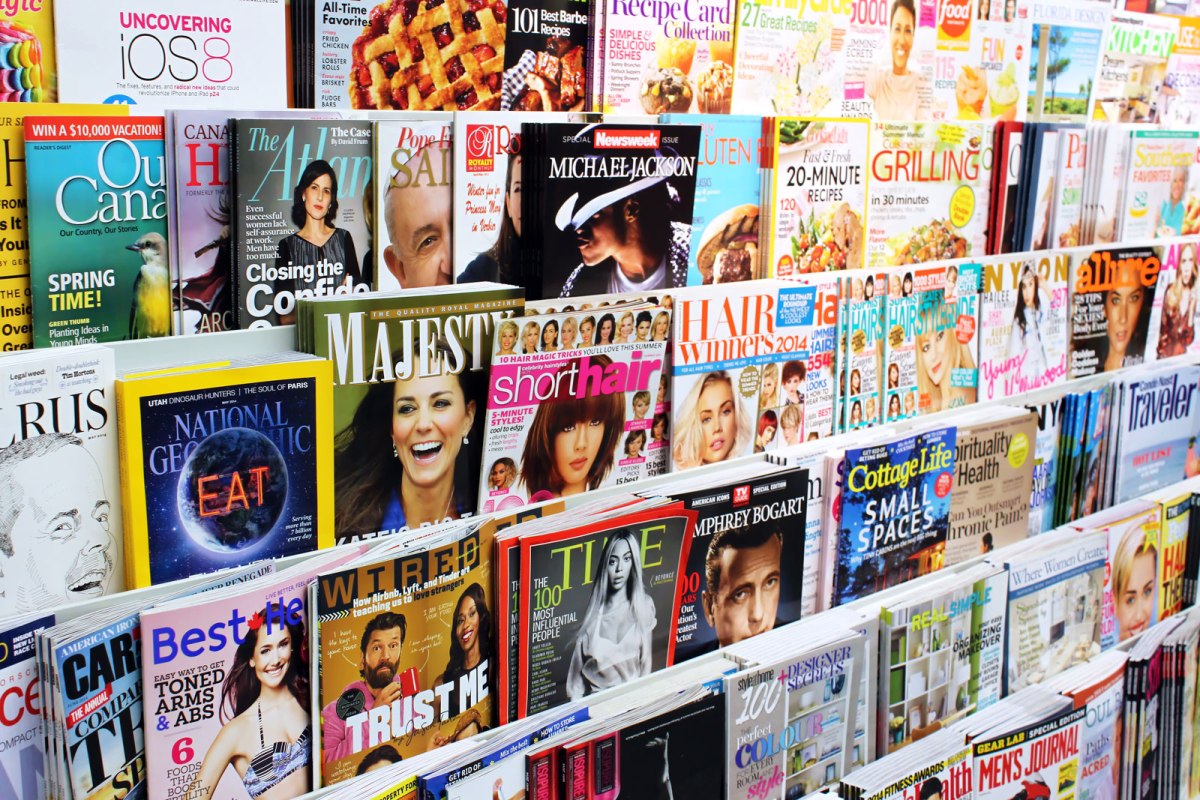
Most of the high-quality sources of information are behind paywalls. Every morning, I get up and listen to Apple News+ narrators reading articles from quality magazines as I do my physical therapy exercises. Usually, that’s one thirty-minute article. Unlike podcasts, magazine journalism features a greater percentage of useful information per minute. I truly despise the kind of podcasts that spend more time on the host’s personality than the topic promised in the thumbnail.

Apple News+ gives me access to over 400 magazines and newspapers. This is the bargain of the century for $12.99 a month. However, it’s doubtful these magazines earn enough money from this service to keep them going. The real way to support them is to subscribe to each periodical. Apple News+ is like Spotify, good for the consumer, bad for the creator. The ethical way to use Spotify is to locate albums you want to buy. And the ethical way to use Apple News+ is to find the journals you should subscribe to.

I know these periodicals have become expensive. The Atlantic is $79.99 for a digital subscription. The New Yorker is $130 for a digital subscription. Why pay those prices when I already get the content in Apple News+? Especially when I will consume the content via Apple News+.

The answer is support. Think of quality journalism as an important charity. However, there is another reason. When I read a great article, I want to share it with my friends. Apple News+ is so locked down that it’s not possible. You can only share with other Apple News+ subscribers. You can’t even cut and paste from the screen.

Many periodicals that publish on the web can be copied to an email or printed as a PDF and shared. However, even those methods of getting around the paywall might disappear.

I often read articles that I know friends would also want to read. Some paywalled publications do allow for limited sharing. It should be a standard feature.

We need to move away from the shitty free content. Sharing is prevalent on the Internet, but consider the type of content people share. It’s mostly mindless entertainment or opinions. We need to learn to distinguish between well-researched articles and endless unfounded opinions.

The easiest way for me to share content is if my friends subscribe to Apple News+. And if more people subscribed, the publications would get more money.

We live in an age where authority is suspect. Everyone wants their views to dominate, and will rationalize their beliefs with any content that supports those views. We have lost the ability to evaluate what is real.

The trouble is reality can’t be understood with sound bites. Any topic worth considering requires significant study and research. TV and podcasts create content too quickly. Their information is presented too soon after events and produced too fast. Long-form journalism explores ideas in depth, and that takes time.

It also takes time to read such content. We’ve trained our minds to consume content quickly that was created quickly. Start paying attention to the information you consume and think about how it was produced. If you’re listening to a podcast that lasts an hour, note how much actual useful information you gleaned from that hour. If you get your news from television, pay attention to how long each news segment lasts. Think about how that news was gathered and why. And pay particular attention to the personalities presenting the news on TV and podcasts. Is it more about them or the content?

The highest quality content is nonfiction books written by well-educated researchers. However, it’s not possible to read enough nonfiction books to keep up with everything we need to know. I believe the best compromise for consuming high-quality information is long-form journalism.

You will be far better educated if you spend one hour a day on one subject than one hour a day on twenty different five-minute topics. This is where a service like Apple News+ succeeds. And it does have competitors, such as Zinio. My library offers a selection of free digital magazines and newspapers through Libby.

JWH

Has Retirement Made Me Lazy, Or is the Laziness a Byproduct of Aging?

James Wallace Harris, 6/22/25

Before I retired in 2013, I assumed I’d have all the time in the world to do everything I ever wanted once my 9-to-5 burden was lifted. However, I have done less and less each year. I’m still disciplined about doing my chores and meeting my responsibilities, but the discipline needed to pursue my hobbies and pastimes is dwindling away.

I’m not depressed, I eat right and exercise regularly, and I have a positive outlook. I just don’t spend my free time on hobbies like I once did. Instead, I churn through the YouTube videos or play on my iPhone during idle moments. I hear that’s also a problem for kids, so maybe it’s not aging, but it feels age-related.

Why do I think that? Well, for one, it seems like people slow down when they get older. Here’s what happens. I’ll be working on an objective I consider fun. For example, I got a new Ugreen NAS and was setting it up to use Jellyfin as a media server. The task is tedious because it’s new and has a steep learning curve. I work at it for a bit, feel tired, and decide to put it away for the day. When I was younger, I could work on a tedious problem for hours. Now I can’t.

Do I quit quickly because my older mind can’t handle the task? Or has all that web surfing, channel hopping, and doom scrolling weakened my discipline? I became addicted to audiobooks in 2002 and have read less since, is another example.

This is a kind of chicken-and-egg problem. Has technology weakened my mind? Or was my mind slowing down, and technology is a useful adaptation? I have read more books since the advent of Audible.com.

Here’s another bit of evidence. When I worked full-time, I did far more after work than I do with unlimited free time in retirement. I didn’t have an iPhone back then. Why didn’t I put the same number of work hours into my hobbies after I retired? Did being free of work responsibilities ruin my discipline?

I shouldn’t agonize over this problem if doing less is part of aging. However, does retiring make us age faster? Is technology making us lazier? I have no answer.

I could test things by limiting my screen time. My emotional reaction to that idea is about what a thirteen-year-old feels when a parent tells them they need to cut back on their screen time.

I’m constantly thinking about aging. Philosophically, it’s an interesting concept. Comparing it to the old nature vs. nurture debate, I would consider aging a problem of decay vs. mind. We know we will all end up as worm food. The challenge is to be the most interesting and creative worm food before we’re eaten. The insidiousness of aging is accepting that it’s time to be eaten.

JWH

I’ve Been Craving the Kind of Great Science Fiction I Discovered When I Was Twelve and Thirteen

by James Wallace Harris, 3/17/25

When I get sick, or I’m bummed out over politics or economics, I get the urge to read a type of science fiction I discovered when I was twelve and thirteen (1964-1965). This isn’t nostalgia, but a proven method of stress reduction. We all have our own forms of escapism, mine is a kind of science fiction originally published in the 1950s. Old science fiction is my comfort reading.

When I was twelve, my main sources of science fiction were the twelve Heinlein juveniles and the Winston Science Fiction series of SF for juveniles. The term juvenile was the old way of saying Young Adult novel. At thirteen I discovered a treasure trove of old science fiction at the Homestead AFB Library. Those books were mainly published by Gnome, Fantasy Press, and Doubleday.

I loved stories about teens colonizing other worlds, which is what Heinlein did best. One of the first science fiction books I read was Red Planet by Robert A. Heinlein, about two boys living in rural Mars going off to college. When I was young I was convinced I wanted to go to Mars too, but after I got older, I realized Mars is no place for humans.

Reading science fiction at twelve made me feel important. I thought science fiction was preparing humanity for the future. At thirteen, I thought colonizing Mars was a way to back up our species. It was humanity’s manifest destiny to colonize the galaxy. When Elon Musk said he would colonize Mars I was all for it. But when the world’s richest man takes away the food and medicine from millions of the poorest, it only reminded me that Homo sapiens are a cancer that shouldn’t be allowed to spread across the universe.

Science fiction has always been about our hopes and fears of the future, but in the sixty years since 1965, I feel science fiction has lost touch with any possible realistic future that we would desire.

The urge to reread old science fiction from the 1950s comes from a deeper need to reconnect with my old hopes for the future. What’s strange, is when I do reread old science fiction, I often find pessimism where I once found hope.

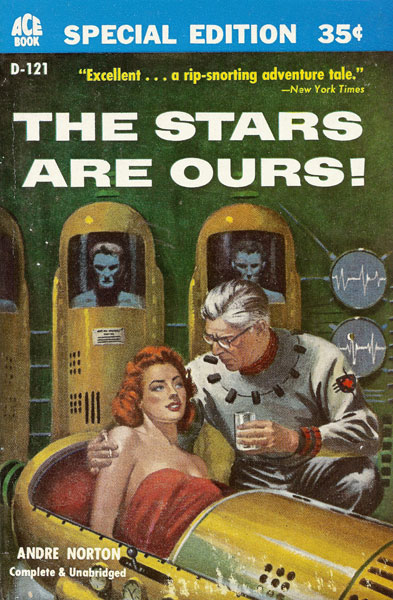
For example, The Stars Are Ours by Andre Norton. When I was young, I focused on the teen hero traveling on a spaceship to colonize a planet in another solar system. I didn’t focus on the reason why they left Earth. On rereading, I see they fled because the U.S. had been taken over by a totalitarian society that was repressing science.

On rereading my beloved Heinlein juveniles, I see Heinlein often portrayed Earth as being overpopulated, over-regulated, or having some kind of society that inspired the characters to leave.

When I was twelve and thirteen, I went to three different seventh grade schools, and two different eighth grade schools. Those were the years when I realized my parents were alcoholics. Those were the years they began to fight. And those were the years when my dad had his first heart attack. Is it any wonder that I identified with characters who left a bad world hoping to find a better one?

I loved stories like Ray Bradbury’s “The Million-Year Picnic.” I always remember the ending, where the father shows the three boys the Martians, and I always forget that the father had taken his family to Mars because Earth had destroyed itself in a nuclear war. But rereading Bradbury’s classic short story reveals that its power is a love of family and an appreciation basic human goodness.

Was science fiction back then really about escaping 1950s reality? And today, do I crave reading 1950s to escape from 2025? Is science fiction just another fantasy portal to leave here and now?

Science fiction grew up in the 1960s and 1970s. Stand on Zanzibar by John Brunner and Camp Concentration by Thomas Disch, both from 1968, were explicitly about how reality sucked. Reading them made me feel grown up. By then, even though I was still in high school, I was nostalgic for 1950s science fiction. But it wasn’t the 1950s themselves that I craved. It was the escapist fantasies of that decade.

I need to think deeper about that.

Could I be in a time loop?

JWH

Could You Give a One Hour Lecture On One of Your Favorite Subjects?

by James Wallace Harris, 2/19/25

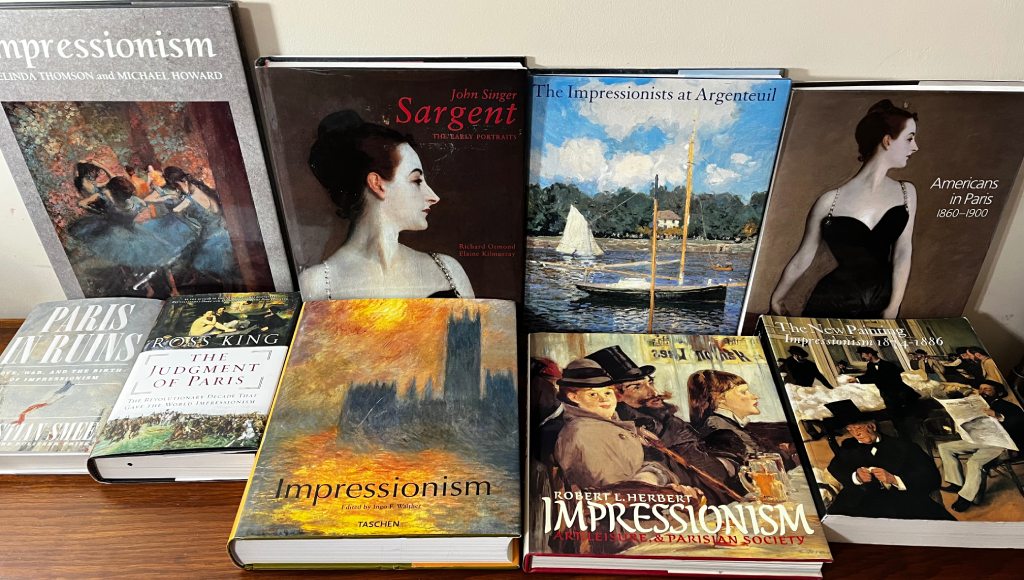
I’ve read several books on Impressionism. I’ve completed a 24-lecture series on The Great Courses on the topic. I’ve seen several exhibits of paintings by Impressionists. Yet, if someone asked me about Impressionism at a party, all I could say was “Oh, I love their paintings.” I vaguely remember their struggles to be accepted into the annual Salon in Paris in the 1860s and 1870s. I can’t tell Manet from Monat, or Gauguin from Van Gogh. If I saw pictures of water lilies I’d guess Monat, and if I saw ballet dancers I’d guess Degas. I have a stack of books on Impressionism that I want to read, but I doubt if I’ll retain much from reading them.

I’m a lifelong bookworm who loves reading nonfiction, but the information in those books seldom sticks. That’s always been disappointing to me.

I could give a pretty good lecture on the history of science fiction. I could give a decent talk on Robert A. Heinlein, the man and his work. I could get up and give a half-ass talk on Philip K. Dick. But that’s about all.

But there are so many other subjects that fascinate me. Ones I regularly read about. I worked with computers for decades and had a serious computer book/magazine addiction, but I couldn’t teach anyone anything reliable about programming anymore.

Most of us believe we know far more than we do, but isn’t that a delusion? News and information are usually how we divert ourselves. We don’t learn, we consume.

I’ve been thinking about how I could remember more. One method would be to research a subject, condense the facts, and then write and memorize a lecture. Certain people can talk at length at parties on their favorite subjects. My guess is they’ve memorized their routines like memorizing jokes. I’m not sure you could extensively grill them on the depths of their subject. I might be wrong though.

Other people are trivia buffs. They’ve memorized a lot of details. I’ve wondered if I could store enough facts about the Impressionists to have a good conversation with another fan of that art movement?

Have you ever thought about all the information they stuffed into you while attending K-12 and college? And then consider how much you’ve forgotten? A good education has always been based on exposure to a wide range of knowledge. And then we specialized in learning what’s needed to make a living.

I’ve been thinking about another kind of education. Call it the know-it-all approach to learning. Most know-it-alls are usually full of bullshit. Often they are mansplainers who annoy women. However, there is nothing wrong with loving to know a lot about little. We need an accreditation body for every subject and a way to test and rank people who want to be know-it-alls in their favorite subjects. Something like chess rankings.

I’ve wondered if I would retain more knowledge of Impressionism if I took regular tests and quizzes on the subject. Let’s imagine that scholars at universities teaching about Impressionism designed a database system that covered everything they’ve ever learned about the topic. They could create an international body that ranked knowledge of Impressionism by giving standardized tests.

I picture them putting the exams online allowing anyone to take them as often as they liked for practice. But to get an official ranking score, you’d have to take a paid supervised test. People who wanted to be ranked in this subject would attend lectures, join study groups, read books, subscribe to online study programs, etc. Learning would be any way you like to learn. That’s the problem with schools, it’s one size fits all.

I believe that the act of competing for a ranking would inspire people to remember their subject. Right now, I have no incentive to remember what I read. Of course, this is just a theory. I do know when I realized I’d forgotten all my math knowledge, studying at the Khan Academy encouraged me to keep going. Even though I had Calculus in college, I had to start over with second-grade math. I worked my way back to the 5th grade. That felt good. I’ve been meaning to keep going.

JWH

Who, What, When, Where, Why, and How of Being

by James Wallace Harris, 2/15/25

At 73 I’m starting to feel I’m running out of time. I keep having this nagging thought I should have done something, or should be doing something before time runs out. But what? I am immensely grateful for existing but was I supposed to do something while I am or was here? Would knowing who I was explain what I was? Would knowing when and where I was explain how and why I got here? And would knowing all those answers reveal my existential duties?

I just finished reading Orbital by Samatha Harvey which recently won the 2024 Booker Prize. Orbital is the kind of novel that inspires the questions above.

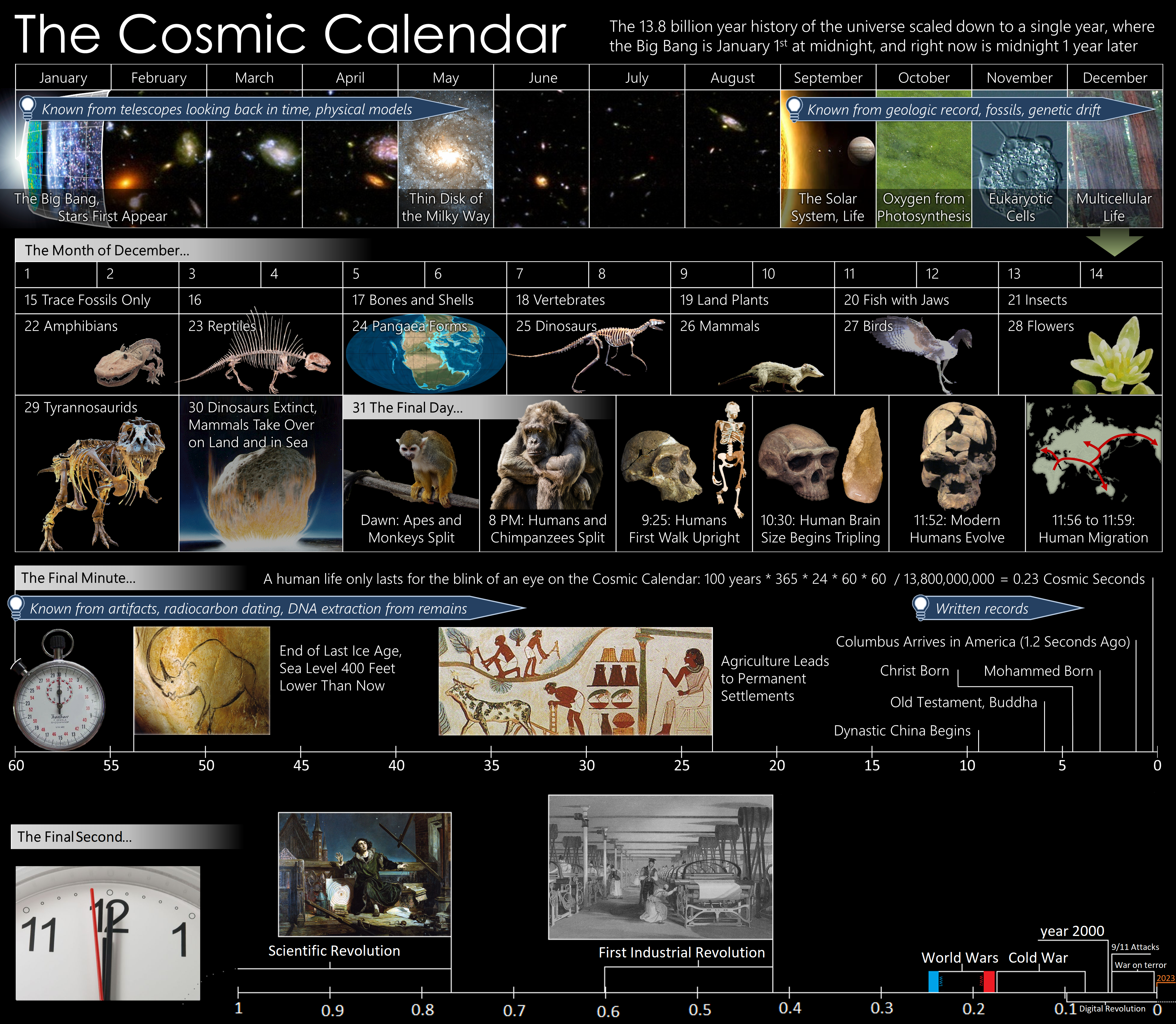
The story is set a few years hence on the International Space Station just as we’re sending astronauts to the Moon again. The book doesn’t have a plot but is a beautiful description of working in space. Harvey’s novel concludes by conveying a tremendous sense of wonder inspired by Carl Sagan’s Cosmic Calendar (large version). The Cosmic Calendar compares the timeline of the universe to one year. Everything since the Scientific Revolution would have happened in the last second of the Cosmic Calendar.

The Cosmic Calendar is a beautiful metaphor to contemplate ontology. How did we get here? There are two main theories. God implies a top-down creation. Evolution suggests a bottom-up development. Each has its paradox. Who created God? Or, how did something come from nothing? Studying cosmology makes it hard to believe in God. How could a single being create all that vastness? What if the universe is God? That’s pantheism. It makes God equal to Evolution but leaves us still with the problem of how things started.

The Cosmic Calendar answers for When.

But do we really need to know how things got started? Shouldn’t we just ask: What is our place in the universe? Scientists are now theorizing that we might exist in a multiverse. In other words, no matter how large we look into the cosmos, there’s always more. On the other hand, no matter how small we look into the subatomic, there’s always something smaller. This is beautifully illustrated by the famous Charles and Ray Eames video of The Powers of Ten from 1977.

The Powers of Ten answers for Where. More importantly, it reveals there are many domains. We might observe the cosmos or even the domain of the atom or quantum, but do they matter to who we are and what we should be doing? Shouldn’t our domain be a hundred meters?

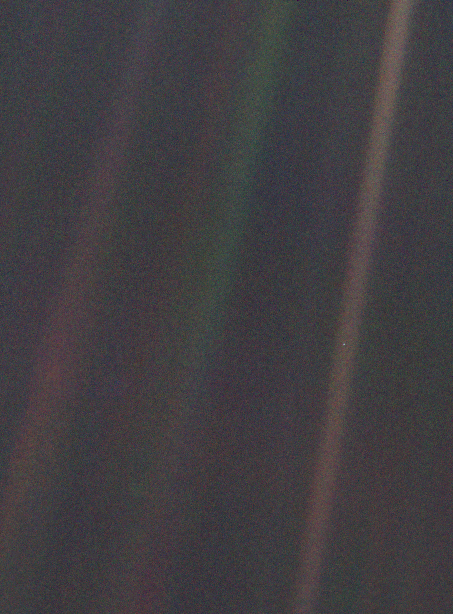
Carl Sagan wrote a book The Pale Blue Dot based on a photograph of Earth taken by Voyager 1 while it passed Saturn. If you look closely, you will see a blue dot. That’s Earth. It’s hard to think we’re significant to the universe. Then think about the Milky Way as seen from the edge of the universe. It wouldn’t be visible at all. It’s beyond conceivable to imagine how small we are compared to all of existence. How can we be significant? How can we have a purpose?

It’s important to think of ourselves relative to the domain in which we live. Many people are depressed by watching the news but isn’t the domain of the Earth too big for one person? Isn’t it ego and delusion to think our purpose could be to organize a nation, city, or even something as small as a neighborhood? I have trouble keeping my house and yard in order.

Lately, I’ve been working in the yard. After fifteen years of neglect, the backyard is overrun with tangled wild growth. Every day I spend a little time trying to conquer my tiny plot of wilderness. At 73, that effort pushes the limits of my physical abilities. I use most of the energy I have left keeping the house somewhat neat. It’s not really clean. I also must spend precious vitality on personal finances, shopping, and general living and maintenance.

Yet, I keep thinking I should be doing something more. I’m not sure what. Maybe it’s having a purpose or making my mark in a small way. This would answer the question of who. And maybe why.

I’ve been using Ancestry.com and learning about genealogy. What did my parents expect of me? What did my grandparents expect of their grandchildren? I have thirty-two ancestors if I go back five generations. Did they expect anything? At most, they expected me to keep the gene line going. Well, that’s where I’ve failed.

I recently read Parable of the Sower by Octavia E. Butler. The story is about the United States suffering an economic apocalypse. The main character felt the need to have a purpose in life, even when everything bad was happening. She decided God was change and our purpose was to affect God/change. That’s a kind of pantheism. What if existence is just trying to become everything that could possibly exist?

Under Butler’s theory, my purpose is to shape myself. To constantly change. Well, I’ve certainly been doing that my whole life.

Right now I’m working on changing myself, my relationships, my house, and my yard. Mother nature was changing the way it wanted the yard. It might seem pointless, but wrestling control from Mother Nature and changing the yard into what I want does give me existential purpose. It’s essentially meaningless in the long run. But maybe our purposes should be limited to a time and place. To a domain. Think small.

I can change myself somewhat. I can change my house and yard. Somewhat. But I can’t change other people. Or anything larger in life.

Maybe that explains how and why.

JWH