Is Ethical Capitalism Even Possible?

by James Wallace Harris, 10/20/23

This month, several of my friends have separately expressed doubt about the future. I don’t hold much hope either. Our current world civilization seems to be falling apart. Capitalism is consuming the planet, but capitalism is the only economic system that creates enough jobs to end poverty. The only alternative to free market capitalism I can imagine is if we adapt capitalism to an ethical system. So, I’ve been keeping my eye open for signs of emerging ethical capitalism.

Here’s one: “The Workers Behind AI Rarely See Its Rewards. This Indian Startup Wants to Fix That” from Time Magazine (8/14/23). The article describes how AI startups need vast amounts of sample data from other languages for their large language models. In India, many data companies are exploiting poor people for their unique language data and keeping the profit, but one company, Karya, is giving the poor people they employ a larger share of the profits. This helps lift them out of poverty.

Capitalism has two dangerous side effects. It destroys the environment and creates inequality. For capitalism to become ethical it will need to be environmentally friendly, or at least neutral, and it will need to be more equitable. If we want to have hope for the future, we need to see more signs of that happening.

Right now, profits drive capitalism. Profits are used to expand a corporation’s ability to grow profits, and to make management and investors rich. Labor and environmental controls are seen as expenses that reduce profits. For a corporation to be ethical it will have to have a neutral or positive impact on the environment, and it will need to share more of its profits with labor.

Since the pandemic hourly wages have been going up, and so has inflation. If capitalism becomes more ethical, costs for environmentalism and labor will go up, thus ethical capitalism will be inflationary. Some people have gotten extraordinarily rich by making things cheap, but it’s also shifted labor and environmental costs away from corporations onto the government and the public. The price at the store does not reflect the actual cost of making what you buy. You pay the difference in taxes.

For ethical capitalism to come about things will need to be sold for what they cost to make. That will involve getting rid of governmental and corporate corruption. It will involve political change. And it will be inflationary until the new system stabilizes.

My guess is ethical capitalism will never come about. If I were writing a science fiction novel that envisioned life in the 2060s it would be very bleak. Life in America will be like what we see in failed states today. Back in the 1960s we often heard of the domino theory regarding communism. Failed states are falling like dominoes now. Environmental catastrophes, political unrest, dwindling natural resources, and viral inequality will homogenize our current world civilization. Either we work together to make it something good, or we’ll all just tear everything apart.

Civilization is something we should all shape by conscious design and not a byproduct of capitalistic greed.

We have all the knowledge we need to fix our problems, but we lack the self-control to apply it. I have some friends who think I’m a dope for even holding out a smidgen of hope. Maybe my belief that we could theoretically solve our problems is Pollyannish.

I have two theories that support that sliver of hope. One theory says humans have always been the same psychological for two hundred thousand years. In other words, our habits and passions don’t change. The other theory says we create cultures, languages, technologies, systems that can organize us into diverse kinds of social systems that control our behavior.

We could choose better systems to manage ourselves. However, we always vote by greed and self-interest. We need to vote for preserving all.

In other words, we don’t change on the inside, but we do change how we live on the outside. My sliver of hope is we’ll make laws and invent technology that will create a society based on ethical capitalism and we’ll adapt our personalities to it.

I know that’s a long shot, but it’s the only one I have.

I’m working to develop a new habit of reading one substantial article a day and breaking my bad habit of consuming dozens of useless tidbits of data that catch my eye as clickbait. In other words, one healthy meal of wisdom versus snacking all day on junk ideas. Wisdom doesn’t come packaged like cookies or chips.

JWH

Living With an Aging Infrastructure

by James Wallace Harris, 8/6/23

I’m writing this on my iPhone by typing with just my right index finger because our internet is still out. It’s been over a week now. We feel like we’re living in the 1980s. We know this is a first-world problem and nothing compared to all the natural catastrophes happening around the world. Still, it’s quite educational.

When AT&T came out to fix our internet, we discovered the wire from the pole to the house was on the ground hidden in some bushes. It had been pulled off the pole and the connection at the house by a falling tree limb. The repair guy said it would be no problem stringing a new wire, but I, unfortunately, knew better.

“You can’t climb that pole,” I said to the repairman as he started walking to the back of my lot.

“What,” he said.

“That pole is so rotten and broken that MLG&W guys won’t climb it. The linemen won’t work on it without a bucket truck.”

The AT&T guy tried to use a distant pole but there were no free circuits. So now we’re waiting for AT&T to return with a bucket truck.

We’ve been waiting years for that telephone pole to be replaced. Our block is bisected by power lines on incredibly old poles. They are hollow, with big cracks, and holes. The power company tagged them years ago to be replaced but they spend all their time fixing lines and circuits that are broken. This summer Memphis has had several storms causing several big outages, including over 100,000 customers.

It’s a matter of aging infrastructure. Memphis is built under a sea of trees, and those trees are always falling. It’s an endless battle between the arboreal world and power lines. In the winter, ice storms make a siege on the trees and water pipes and sewers. During the rest of the year, frequent storms rattle millions of limbs. And the extremes of hot and cold wear on everything all the time.

That line of old telephone poles that divides the block is shrouded by trees in backyards segregated by fences of all types. Those poles won’t be easy to replace. And they won’t be replaced until they fall. Which means days of power outages for about seventy homes in this area. I live with the fear of one old dead tree in particular, falling across the powerlines and bringing the whole line of telephone poles down in my backyard.

Last year we had a freeze that damaged many water lines, and the city was under a boil water alert. Many people in Germantown can’t drink their water right now because gasoline got into a leaky old pipe.

I expect from now on as the weather gets more violent and as our infrastructure ages, we’ll all live with increased outages. If you are paying attention to the news, cities all over the world are living with scheduled blackouts and water shortages. The recent floods in China are a terrifying portent of things to come.

Living without the internet is a lesson about the future. Things are going to break down more. We all need to become preppers. As we build new infrastructure and repair the old, we need to design new structures that can withstand far greater abuse from Mother Nature.

I wish 5G internet was available in our neighborhood. Then we wouldn’t need wires. Unfortunately, we only get one bar of broadband in this neighborhood. And I wonder if they could route the power lines under the streets. I know they bring fiber optic cables to old neighborhoods that way.

I believe there will be plenty of solutions to these aging infrastructure problems, but we might have to go through decades of bumpy readjustments.

JWH

2022 Book #4 – The Horse The Wheel and Language by David W. Anthony

by James Wallace Harris, 1/26/22

Reading about the past is calming my anxieties about the future. The Horse The Wheel and Language: How Bronze-Age Riders from the Eurasian Steppes Shaped the Modern World by David W. Anthony is not a book I recommend to the casual reader. I expected it to be a popular science book about archaeology, but it turned out to be something much heavier. It’s a scientific work, probably used as a supplemental textbook. I found listening and reading the book to be rewarding and inspiring but it’s not fun. However, it has caused me to do a lot of philosophical pondering.

I won’t try to describe the book, Wikipedia has done an extremely detailed job with hyperlinks. If you want to know what the book is like, here is Anthony giving a lecture. This is exactly like listening to the audiobook.

I bought this book years ago and never read it and gave it to the library book sale. Then I read a popular article about linguistic anthology and decided I wanted to try it again and found a used copy. Still, I didn’t read it. Finally, I found an audiobook version that made it more accessible. I’m glad I had the physical book to refer to, because of its many complex charts and illustrations. This was a rewarding read, but I just want people to know it’s real science, not even popular science, and the going is tough. It took me weeks to listen to it all. Mainly, I want to talk about how I reacted to the book.

For years I’ve been troubled, even disturbed that our species lack real effort to combat climate change. For almost thirty years I’ve been waiting for governments and citizens to change their ways. I now realize that was naive of me. People don’t change. Not that I’ve given up complete hope, but all the evidence tells me our global civilization will never do anything significant about climate change.

That has inspired some existential insights. I expected humanity to grab control of reality and do everything it could to freeze the environment to its 1850-1950 weather patterns and maintain that as a steady-state forever. Once I started studying archaeology I realized that weather has always been changing over our species lifetime, and even for the whole lifetime of the Earth. Humans have always adapted to new weather patterns. It’s probably too fantastic to think we’ll control the weather.

Reading The Horse The Wheel and Language showed that humans have never stayed the same either. We’re constantly changing. Civilizations come and go all the time. Reading and watching documentaries about history and archaeology is teaching me that change is constant. That old saying, “the only thing constant is death and taxes” is true.

On its own specific subject The Horse The Wheel and Language is fascinating, but like I said, I not going to recommend you run out and buy it. Most of it is one giant infodump describing several societies around the Russian Steppes from about 4000-1200 BCE. The most interesting chapters were the early ones about the Indo-European languages and how linguists infer what the Proto-Indo-European language was like, and more specifically to this book, where in the world did the speakers of the Proto-Indo-European language lived.

Anthony claims by looking at the array of words in an ancient language and comparing it to the array of objects that archeologists have unearthed, we might pinpoint where those people could have lived. For example, if a language has the word for a wagon, but no wagons are ever found, it’s a not likely match. Or if a language has a lot of words for raising sheep, and lots of sheep bones were found, we might be getting warm. Of course, it’s much more complicated than that. For example, linguists can show how words from adjacent civilizations have passed into a language. I found all this fascinating, but overwhelming.

This is why the words Horse and Wheel are in the title. Only certain early civilizations had horses and wheels. For a long time, horses were only hunted for food. Then they were domesticated for food. Then came riding horses, and finally using horses to pull carts, then wagons. This made me think about how we’ll adapt to climate change. We’ll invent housing, clothing, lifestyles, jobs, political parties, etc. to adapt.

One thing I was amazed to learn was just how many different groups of people existed in a small area in prehistory that we know about. Most people when they think of ancient civilizations think of Egyptians, Babylonians, Greeks, Persians, and a few others. To me, the Russian Steppes and nearby lands sounded like North America before Columbus with countless tribes of nomadic and agrarian peoples.

For a while when reading the book I thought of making a timeline/list of civilizations to memorize but I soon realized that could become a lifetime project. I’ve ordered an archaeology textbook to help me get a bigger picture, but I’m not sure how big of a picture I can manage. Reading this book also made me crave maps, so I ordered a couple of atlases.

Many of these early civilizations lasted hundreds or even thousands of years. That made me think about how often world maps have changed in my lifetime. If the United States of America doesn’t make it to its 300th birthday it won’t be alone. All the descriptions of past changes of civilizations due to climate change, war, technology, disease, etc., make me wonder about what America might be like in the 22nd century. I now understand we can’t keep the weather of the 1950s forever, or the politics of the 1790s, or the technology of the 2020s.

About 85 million people died in the decade before I was born due to WWII, or about 3% of the world’s population. We’ve already put enough CO2 in the atmosphere to kill that many or more by the end of this century. Since we’re not going to stop adding CO2 anytime soon, billions will probably die in the 22nd century. Percentage-wise, civilizations have seen that kind of population reduction before.

I believe conservatives wanted to preserve the social climate of the 1950s, while liberals wanted to keep the weather environment of the 1950s. Neither will get what they want. All the demographics on Americans and America will be so much different in the 22nd century that we wouldn’t recognize either.

I need to stop speculating or worrying so about the future. Studying the past is philosophical liberating for me, but I’m not sure how much I should pursue it either, but I will. Living in the now is what’s important. And that’s why most people don’t worry about the future. I doubt for most of humanity’s existence the future was even a concept. I also assume the reason why so many people embrace various forms of denial is they don’t want to know the future because deep down they fear change. But change is coming. We can’t stop it.

JWH

The Post-Doom Reading List

by James Wallace Harris, 12/23/21

I’m listening to a wonderful book right now, The Reading List by Sara Nisha Adams which came out in August. It’s set in London. Someone is going around leaving little notes that say:

Just in case you need it:

- To Kill a Mockingbird
- Rebecca
- The Kite Runner
- The Life of Pi
- Pride and Prejudice
- Little Women
- Beloved
- A Suitable Boy

The novel is about the people who find those lists, read the books, and how reading changed their lives. Any bookworm should love this book, and most Goodreads reviewers do. I highly recommend the audiobook version because the narrators do the ethnic accents which make the book extra charming.

This inspires me to create my own list of favorite feel-good novels. If I went around leaving a list of books for people to read in these trying times, my eight would be:

We’re living through some hard times and I appreciate books with characters who overcome big difficulties. I’m moving into what I call my Post-Doom Philosophy. I’ve concluded that humanity will not solve its existential problems. Just not in our nature. And it will be better to concentrate on uplifting outselves.

I’m reminded of The Myth of Sisyphus by Albert Camus. Our present situation is beyond absurd, one I can’t change. I accept that we’re already in a collapsing civilization, we just don’t know how long it will take before a new paradigm shift emerges. Some civilizations collapse in decades, Rome took centuries. Everyone eventually dies, and all civilizations eventually collapse. We can’t wish either away. We’ve always had the problem of what to do in our last years of life, and just by coincidence this century, we’ll also have to consider what to do in the last decades of our civilization. It’s an interesting philosophical and spiritual challenge.

Just because the future looks bleak we shouldn’t feel all gloom and doom.

My friend Linda and I have a two-person book club where we read mostly nonfiction books together and discuss them on the phone each Sunday afternoon. We’ve read many books about the problems of the world. Linda just texted me asking if we could avoid such books in 2022 and pick books like The Soul of the Octopus by Sy Montgomery. She wants more delightful books. I couldn’t agree more.

If you were making a list of eight nonfiction books to leave around to inspire people, what would they be? What would your list of favorite inspiring novels be?

JWH

Can We Build Tornado-Proof Houses?

by James Wallace Harris, 12/15/21

The recent tornado in Mayfield, Kentucky has me worried. I’m old, retired, and have health issues, so having my home destroyed would be immensely stressful. I feel so sorry for people in disasters like this, but especially when I see old people having to be helped because they are so helpless. I fear being helpless.

One thing I noticed in the pictures from Mayfield is some buildings survived the devastation. My friend Connell told me after Hurricane Andrew hit Miami they realized how houses were poorly constructed and made changes to the building codes. The newer homes are much more hurricane-resistant. I’m wondering if the same kind of codes can be applied to protect homes from tornadoes.

However, I don’t want to wait for new building codes or move to a new house. I doubt there are practical retrofit possibilities. One of the things that trouble me about tornadoes and other forms of weather damage is having to leave my home. If the house is a complete loss, there’s no choice, but what if there’s only some damage? Say a tree crushes one side of the house. I’d want to rebuild, and I wouldn’t want to leave my partially good house either.

So I’ve been thinking of something else. People use to have storm cellars. What if I could have a tiny home or a mother-in-law wing addition to my house that was built to strict specifications, could it survive a tornado? Something that Susan, the cats, and I could live in while our house was being rebuilt, or when storms are about to happen. Would this be practical? And how much would such a building cost?

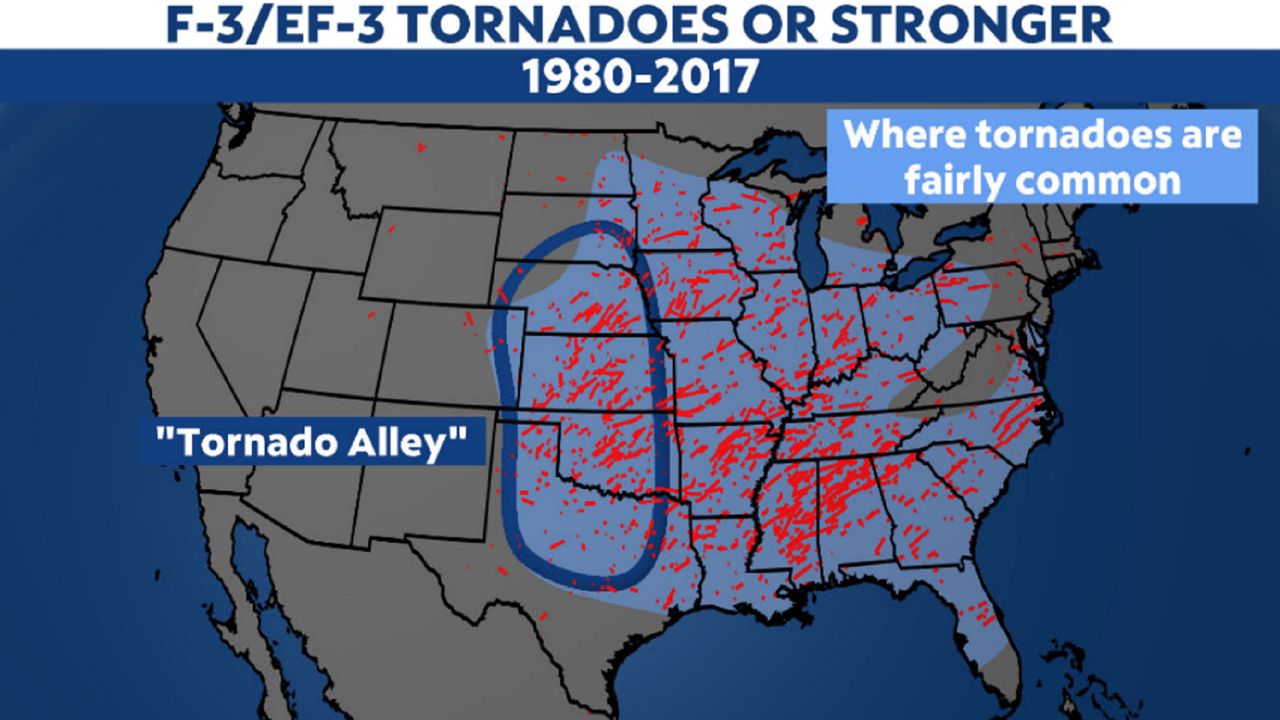
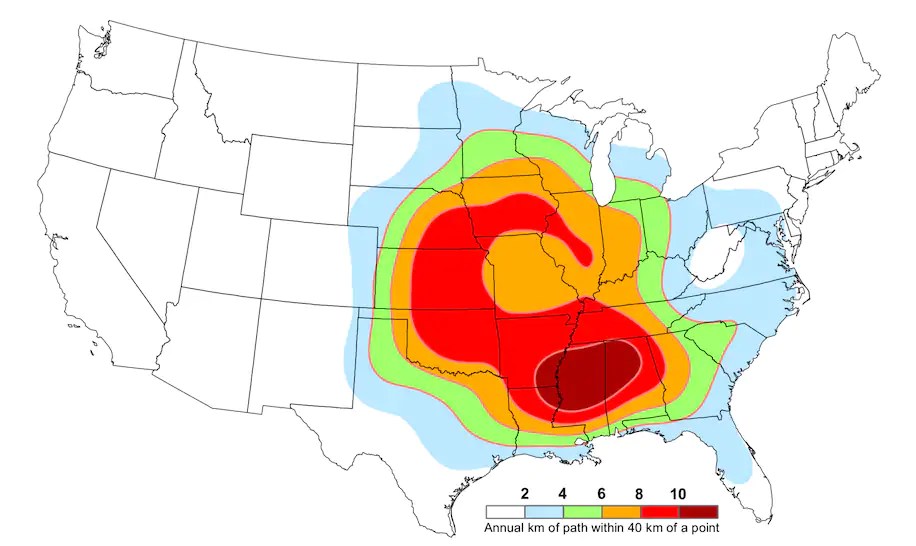
Is Tornado Alley Shifting to the Southeast?

I’m starting to see reports that Tornado Alley is shifting to the east, with some maps putting it where I live in Memphis, Tennessee. Other people are saying it’s not shifting with widening.

This article says tornado alley is an outdated concept and suggests a new shape.

Then I saw this article about high winds. Now that’s pretty scary.

How big would a lifeboat house or addition have to be? Should it be partially underground? Or could it be built with concrete blocks and a steel frame to withstand most weather-related disasters? It would need to have a bathroom and shower, but otherwise, everything could be in one room, including a kitchenette. Should we assume water and sewer systems survive most disasters? What about gas lines? Or should it be totally self-sufficient?

This is something to think about. Maybe it’s a business opportunity for a new industry. Could a prebuilt pod be designed and mass-produced to reduce the cost of such a need? Basically, a tank-like RV or small house trailer that could be partially buried might be a good design.

Remember the bomb shelter craze of the 1950s and 1960s? Maybe we’ll have a new climate change shelter craze?

JWH