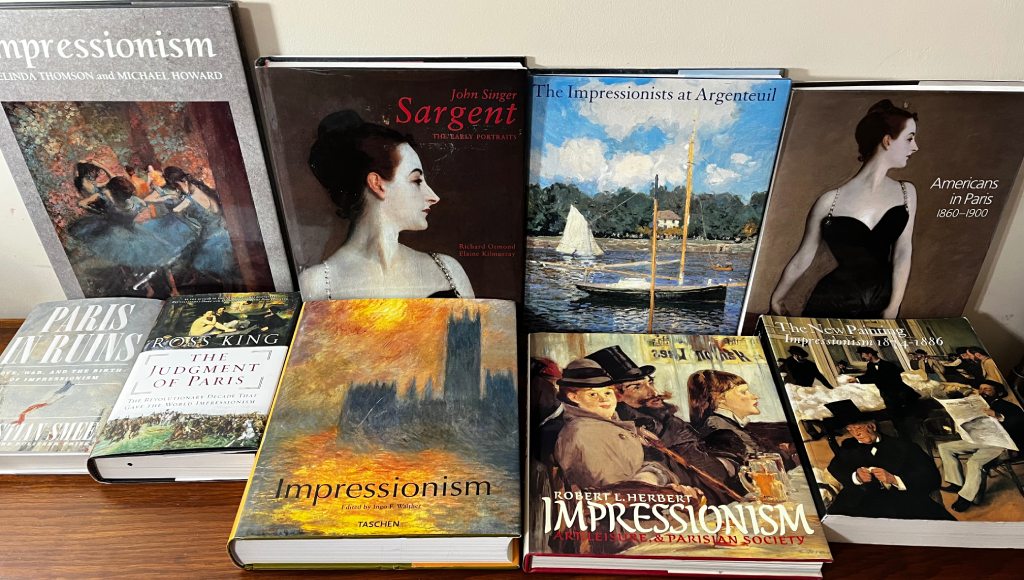
I’ve read several books on Impressionism. I’ve completed a 24-lecture series on The Great Courses on the topic. I’ve seen several exhibits of paintings by Impressionists. Yet, if someone asked me about Impressionism at a party, all I could say was “Oh, I love their paintings.” I vaguely remember their struggles to be accepted into the annual Salon in Paris in the 1860s and 1870s. I can’t tell Manet from Monat, or Gauguin from Van Gogh. If I saw pictures of water lilies I’d guess Monat, and if I saw ballet dancers I’d guess Degas. I have a stack of books on Impressionism that I want to read, but I doubt if I’ll retain much from reading them.
I’m a lifelong bookworm who loves reading nonfiction, but the information in those books seldom sticks. That’s always been disappointing to me.
I could give a pretty good lecture on the history of science fiction. I could give a decent talk on Robert A. Heinlein, the man and his work. I could get up and give a half-ass talk on Philip K. Dick. But that’s about all.
But there are so many other subjects that fascinate me. Ones I regularly read about. I worked with computers for decades and had a serious computer book/magazine addiction, but I couldn’t teach anyone anything reliable about programming anymore.
Most of us believe we know far more than we do, but isn’t that a delusion? News and information are usually how we divert ourselves. We don’t learn, we consume.
I’ve been thinking about how I could remember more. One method would be to research a subject, condense the facts, and then write and memorize a lecture. Certain people can talk at length at parties on their favorite subjects. My guess is they’ve memorized their routines like memorizing jokes. I’m not sure you could extensively grill them on the depths of their subject. I might be wrong though.
Other people are trivia buffs. They’ve memorized a lot of details. I’ve wondered if I could store enough facts about the Impressionists to have a good conversation with another fan of that art movement?
Have you ever thought about all the information they stuffed into you while attending K-12 and college? And then consider how much you’ve forgotten? A good education has always been based on exposure to a wide range of knowledge. And then we specialized in learning what’s needed to make a living.
I’ve been thinking about another kind of education. Call it the know-it-all approach to learning. Most know-it-alls are usually full of bullshit. Often they are mansplainers who annoy women. However, there is nothing wrong with loving to know a lot about little. We need an accreditation body for every subject and a way to test and rank people who want to be know-it-alls in their favorite subjects. Something like chess rankings.
I’ve wondered if I would retain more knowledge of Impressionism if I took regular tests and quizzes on the subject. Let’s imagine that scholars at universities teaching about Impressionism designed a database system that covered everything they’ve ever learned about the topic. They could create an international body that ranked knowledge of Impressionism by giving standardized tests.
I picture them putting the exams online allowing anyone to take them as often as they liked for practice. But to get an official ranking score, you’d have to take a paid supervised test. People who wanted to be ranked in this subject would attend lectures, join study groups, read books, subscribe to online study programs, etc. Learning would be any way you like to learn. That’s the problem with schools, it’s one size fits all.
I believe that the act of competing for a ranking would inspire people to remember their subject. Right now, I have no incentive to remember what I read. Of course, this is just a theory. I do know when I realized I’d forgotten all my math knowledge, studying at the Khan Academy encouraged me to keep going. Even though I had Calculus in college, I had to start over with second-grade math. I worked my way back to the 5th grade. That felt good. I’ve been meaning to keep going.
At 73 I’m starting to feel I’m running out of time. I keep having this nagging thought I should have done something, or should be doing something before time runs out. But what? I am immensely grateful for existing but was I supposed to do something while I am or was here? Would knowing who I was explain what I was? Would knowing when and where I was explain how and why I got here? And would knowing all those answers reveal my existential duties?
I just finished reading Orbital by Samatha Harvey which recently won the 2024 Booker Prize. Orbital is the kind of novel that inspires the questions above.
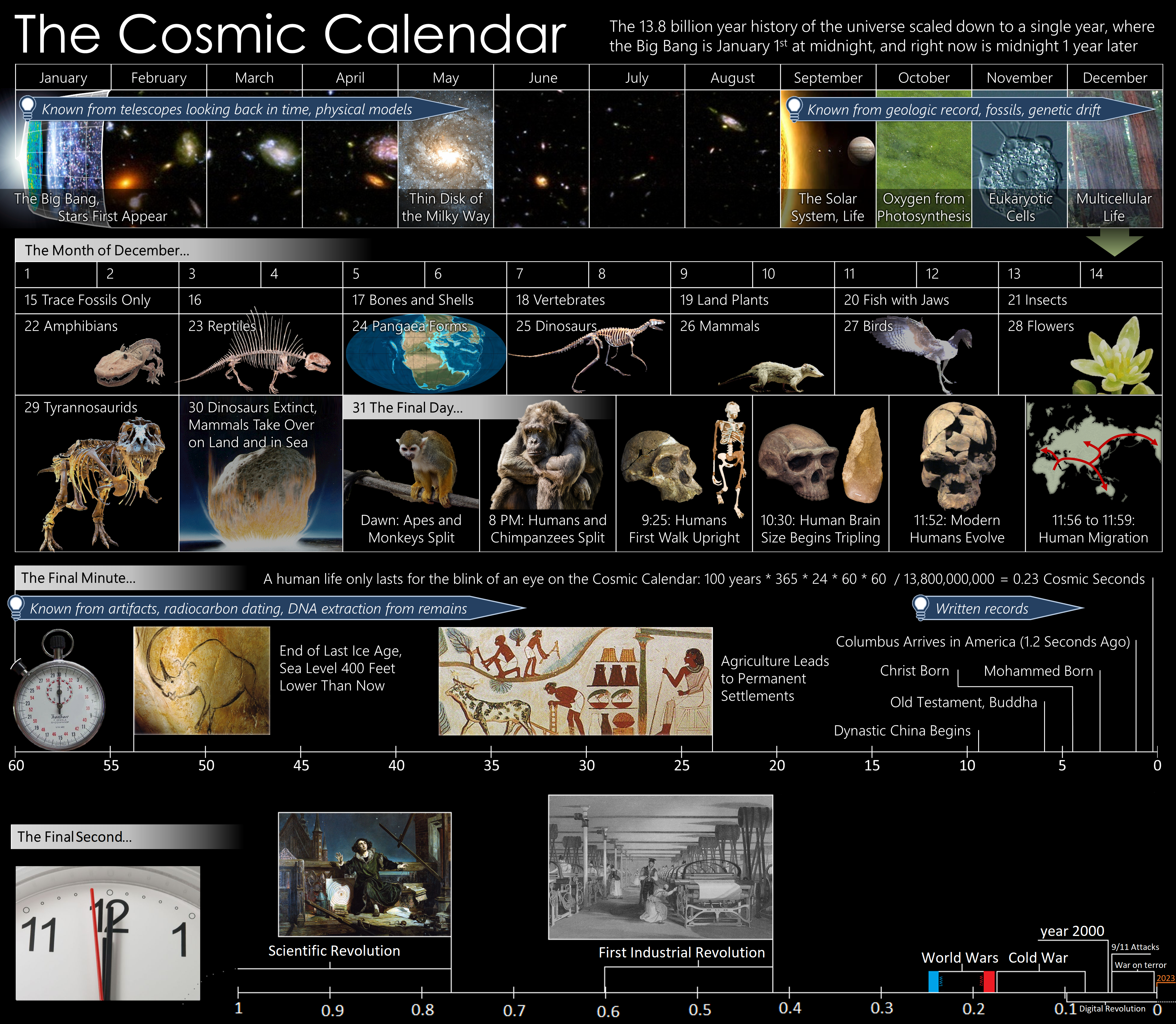
The story is set a few years hence on the International Space Station just as we’re sending astronauts to the Moon again. The book doesn’t have a plot but is a beautiful description of working in space. Harvey’s novel concludes by conveying a tremendous sense of wonder inspired by Carl Sagan’s Cosmic Calendar (large version). The Cosmic Calendar compares the timeline of the universe to one year. Everything since the Scientific Revolution would have happened in the last second of the Cosmic Calendar.
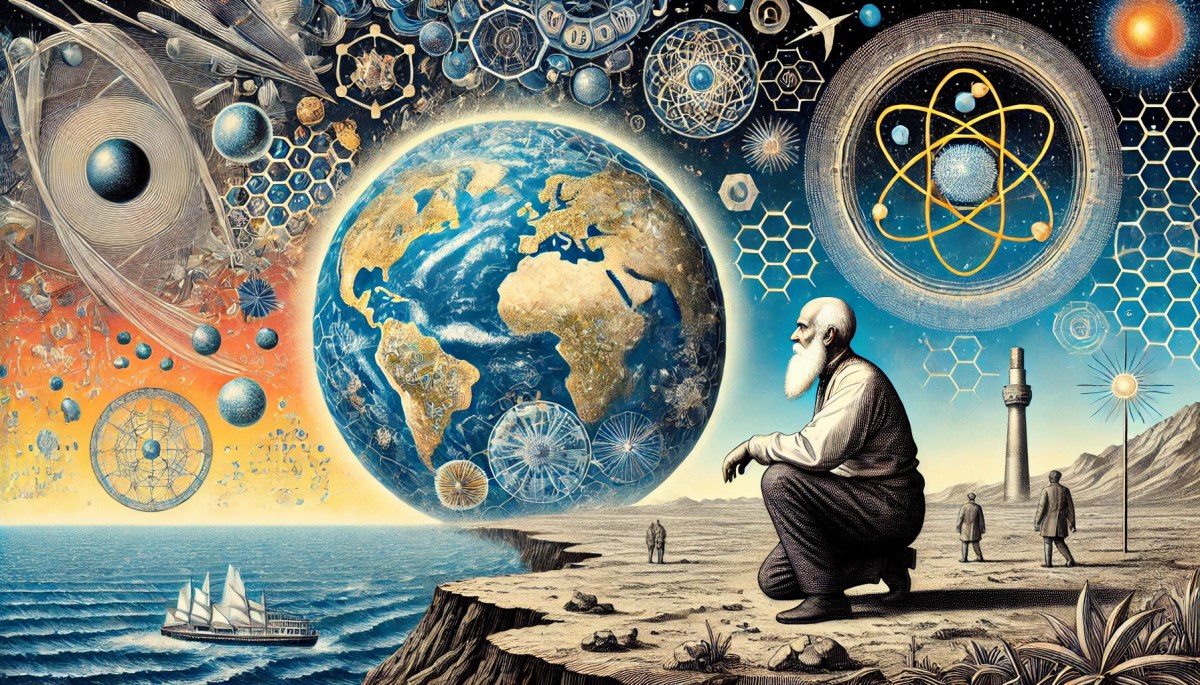
The Cosmic Calendar is a beautiful metaphor to contemplate ontology. How did we get here? There are two main theories. God implies a top-down creation. Evolution suggests a bottom-up development. Each has its paradox. Who created God? Or, how did something come from nothing? Studying cosmology makes it hard to believe in God. How could a single being create all that vastness? What if the universe is God? That’s pantheism. It makes God equal to Evolution but leaves us still with the problem of how things started.
The Cosmic Calendar answers for When.
But do we really need to know how things got started? Shouldn’t we just ask: What is our place in the universe? Scientists are now theorizing that we might exist in a multiverse. In other words, no matter how large we look into the cosmos, there’s always more. On the other hand, no matter how small we look into the subatomic, there’s always something smaller. This is beautifully illustrated by the famous Charles and Ray Eames video of The Powers of Ten from 1977.
The Powers of Ten answers for Where. More importantly, it reveals there are many domains. We might observe the cosmos or even the domain of the atom or quantum, but do they matter to who we are and what we should be doing? Shouldn’t our domain be a hundred meters?
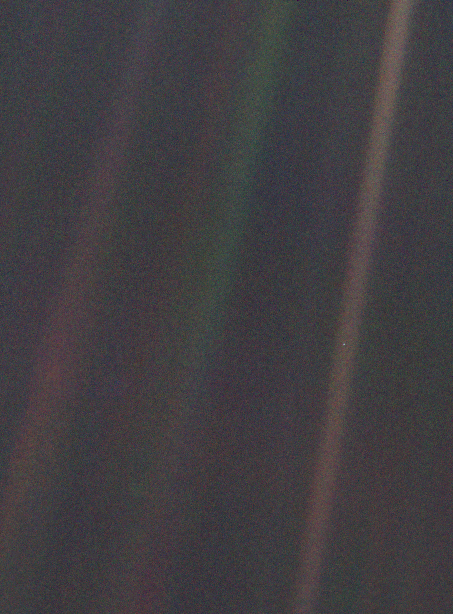
Carl Sagan wrote a book The Pale Blue Dot based on a photograph of Earth taken by Voyager 1 while it passed Saturn. If you look closely, you will see a blue dot. That’s Earth. It’s hard to think we’re significant to the universe. Then think about the Milky Way as seen from the edge of the universe. It wouldn’t be visible at all. It’s beyond conceivable to imagine how small we are compared to all of existence. How can we be significant? How can we have a purpose?
It’s important to think of ourselves relative to the domain in which we live. Many people are depressed by watching the news but isn’t the domain of the Earth too big for one person? Isn’t it ego and delusion to think our purpose could be to organize a nation, city, or even something as small as a neighborhood? I have trouble keeping my house and yard in order.
Lately, I’ve been working in the yard. After fifteen years of neglect, the backyard is overrun with tangled wild growth. Every day I spend a little time trying to conquer my tiny plot of wilderness. At 73, that effort pushes the limits of my physical abilities. I use most of the energy I have left keeping the house somewhat neat. It’s not really clean. I also must spend precious vitality on personal finances, shopping, and general living and maintenance.
Yet, I keep thinking I should be doing something more. I’m not sure what. Maybe it’s having a purpose or making my mark in a small way. This would answer the question of who. And maybe why.
I’ve been using Ancestry.com and learning about genealogy. What did my parents expect of me? What did my grandparents expect of their grandchildren? I have thirty-two ancestors if I go back five generations. Did they expect anything? At most, they expected me to keep the gene line going. Well, that’s where I’ve failed.
I recently read Parable of the Sower by Octavia E. Butler. The story is about the United States suffering an economic apocalypse. The main character felt the need to have a purpose in life, even when everything bad was happening. She decided God was change and our purpose was to affect God/change. That’s a kind of pantheism. What if existence is just trying to become everything that could possibly exist?
Under Butler’s theory, my purpose is to shape myself. To constantly change. Well, I’ve certainly been doing that my whole life.
Right now I’m working on changing myself, my relationships, my house, and my yard. Mother nature was changing the way it wanted the yard. It might seem pointless, but wrestling control from Mother Nature and changing the yard into what I want does give me existential purpose. It’s essentially meaningless in the long run. But maybe our purposes should be limited to a time and place. To a domain. Think small.
I can change myself somewhat. I can change my house and yard. Somewhat. But I can’t change other people. Or anything larger in life.
I love computers and digital devices but I have too many of them. For some reason getting old is making me anxious about owning stuff. Like the instinct that makes birds fly south for the winter, aging has triggered an instinct to simplify my life. I’m still young enough to want all the junk I have, but I’m going through an in-between aging stage, where I want to keep stuff and get rid of it at the same time. That anxiety is gnawing at me more and more.
I will give an analogy that young people might not understand. On the Ed Sullivan Show in the 1960s, Ed would have these guys who could spin plates on the top of sticks. They could keep a row of plates spinning on sticks by running between them and jiggling each stick. Being young means you have the energy and dexterity to quickly run between lots of spinning plates, but when you get older, you slow down and can only keep a few spinning.
Being 73 isn’t that old, but it’s old enough to start feeling I need to spin fewer plates. Deciding what activities I love that I need to quit is stressful. At 73, I’m already old enough to let a bunch of spinning plates fall. That’s depressing, but I don’t have the energy to keep up. I’m starting to lose the energy to even care, which is scarier. I need to decide which activities I love the most that I can manage, and psychically let go of the other ones.
I realize I’ve already been doing this for years, but I’ve been letting activities go that didn’t matter much. What hurts is realizing which activities and ambitions I still hope to pursue that I need to stop thinking about.
When I retired in 2013, I thought I’d do many things with programming and computers. I thought about getting an M.S. in Computer Science even though I would never work as a programmer again. But none of that happened. I thought I would at least learn to program Python for fun. That didn’t happen. I had many ideas for programs I wanted to write but never did. I see that I only programmed when people were paying me.
For years, I’ve kept buying computers and piddling around with them. My most productive activity was scanning old pulp magazines and science fiction fanzines to put on the Internet Archive, but I’ve stopped because of diminishing energy. However, I’ve kept all these computers, scanners, and other devices for all my dream projects that need to be thinned out.
I don’t know if my Hamlet nature keeps me from committing to one computer operating system, or if I’m a child in a toyshop who screams he wants everything. However, mining three computer systems with three different operating systems has become a pain in my psyche.
Reality tells me to give up several dreams and the equipment that went with them. Why keep a Midi keyboard after I discovered I have no musical talent? Well, I kept it thinking someday I’d see how much I could do with Garage Band on the Mac with minimal talent. I’m sure that’s a delusion.
I need to jettison everything I plan to use that is obvious that I will never use. I’ve had this insight many times before but never could pull the trigger. The present reality is my energy reserves are getting so low that too much of them are being wasted on keeping impractical hopes alive. I must commit to the operating systems and computer equipment that will do the most for my aging future self.
If Microsoft wasn’t so heavy-handed in constantly adding features and monitoring my computer, I would make everything Windows. But there isn’t a Windows phone. If I didn’t dislike MacOS so much, I could settle on buying everything from Apple, because I love my iPhone and iPad. I do love Mac hardware, I just don’t like MacOS. And if I had my druthers, I’d go Linux and use all FOSS programs because I admire the concept of open source.
The idealistic computer geek in me wants to choose Linux. And I could realistically pick Linux if I knew I’d never wanted to scan magazines again. Picking Linux also means giving up Microsoft Office. Picking Linux also means living as a computer user minority.
I love my Mac Mini M4 machine because it’s quiet. I love my Mac Air M1 laptop because the hardware is deluxe. And I can use MacOS just fine. I just prefer how Windows, or even Linux works better. However, Linux and Macs aren’t compatible with all my hardware and software.
The most universally useful computer I have is my Windows machine. My favorite phone is my iPhone. My favorite tablet is my iPad Mini. I like Android because it allows for microSD cards and is more open, but it’s nowhere near as easy to use as iOS. I wish iOS devices allowed microSD cards. Buying extra storage for iPhones and iPads is so damn expensive.
I wish I had 2TB of storage on every device I owned to fully replicate my Dropbox filesystem to every device. Dropbox is fantastic as long as I have the space to replicate everything. Selective sync could work, but it seems to have disappeared as a feature on my Mac and Linux machines. I could get an iPad Pro with 2TB of memory, but it’s $2000, and even then I’m unsure if it would sync my Dropbox drive. Maybe I should give up needing 2 terabytes of old files.
I would simplify my life by keeping my Windows computer, Mac Air M1, iPhone, and iPad Mini. But wouldn’t it be more logical to keep my Mac Mini M4 and be compatible with my other Apple devices I don’t want to give up? As Mr. Spock would say, “That is the logical solution.” But damn, I don’t know if I could walk away from Windows.
I could test the logical solution by packing away my Windows and Linux machines for several months to see how I feel.
And maybe that’s an approach I could try with other things I own. Just pack them away, and see how long I can live without them. If I can, then get rid of them.
I wrote this essay to think things through. I realize now, that I’ve written myself into a decision. I’ll let you know if I can overcome my Hamlet complex and commit.
I have decided to pack two computer systems away. I just don’t know which two.
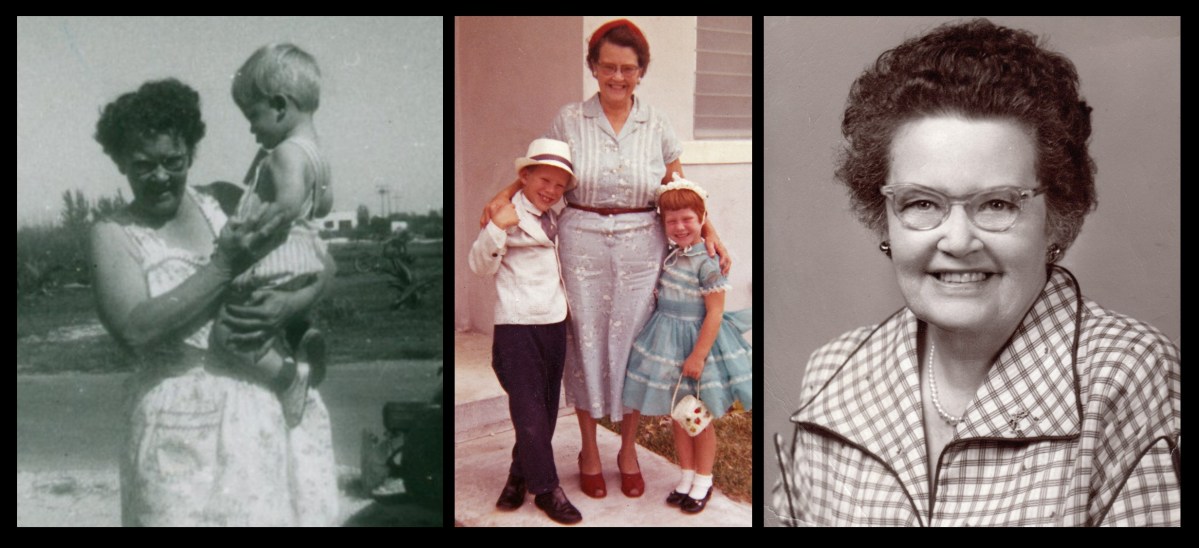
This essay is about memory and history. What can I remember? What can I document with photographs or research with Ancestry.com? What can I find on the internet? I want to know as much as possible about Helen Harris. I plan to update this page as I find more information. The photo on the left at the top of the page is me with my grandmother around 1953. I was her first grandchild. The next photograph is of my grandmother with me and my sister in 1959. The last picture is just the best portrait I have of her. I believe it was taken in the 1960s.
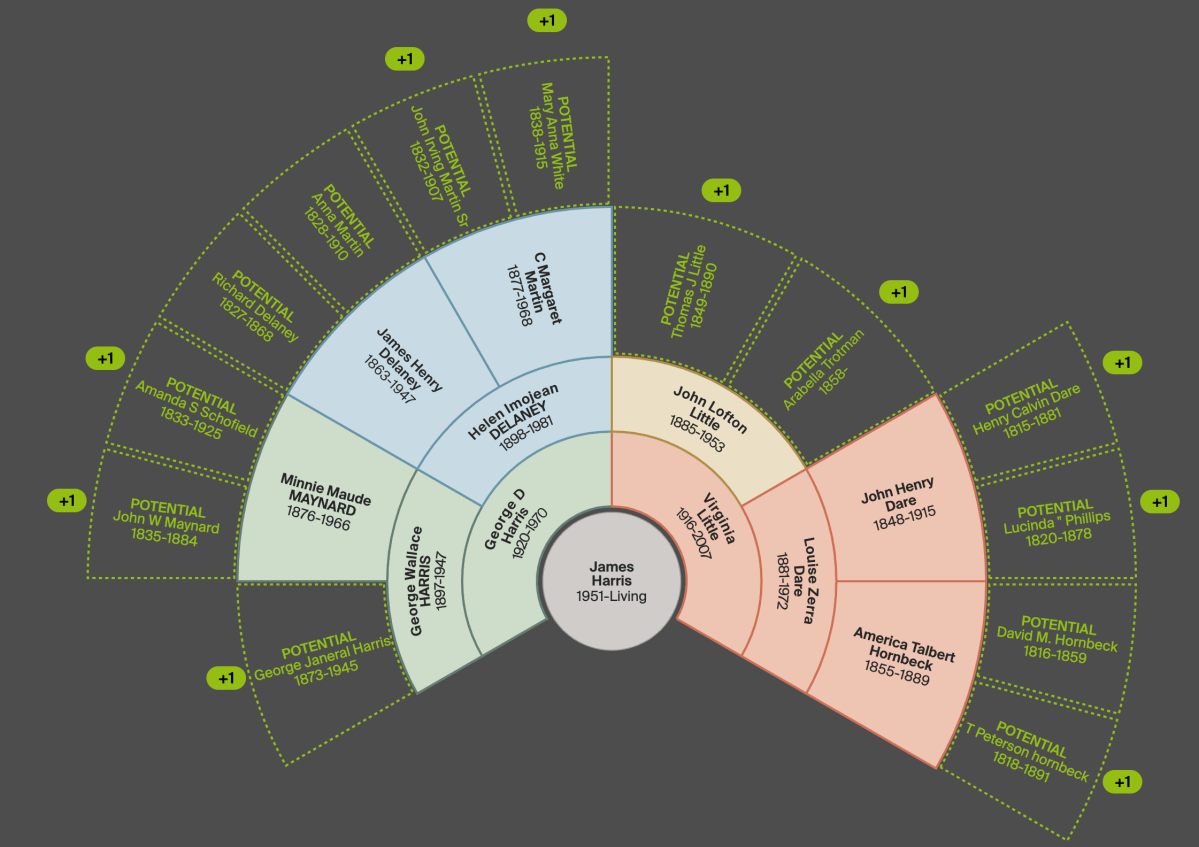
Helen Harris was my grandmother, my father’s mother. I’m learning to use Ancestry.com by researching her records. This essay aims to show how genealogy research works and to push my memory to remember everything I can about my paternal grandmother. I’m also using clues I found on Ancestry.com to research on Google. Here is the current state of my family tree.
I’m going to start with my grandmother’s birth and work forward in time.
1900 United States Federal Census (June 20, 1900)
I cannot find a birth certificate for my grandmother. I discovered on Google that Indiana didn’t require birth certificates until 1907 (but some counties had them as early as 1882). I’m not exactly sure where my grandmother was born. The first official document that lists my grandmother is the 1900 United States Federal Census.
Helen is listed as a granddaughter living with John I. Martin and Mary A. Martin, her maternal grandparents. My grandmother’s mother is listed as Margarete Delany and her father James Delany lived with them. Delaney was spelled without the e. Spellings, especially first and last names were often inconsistent in historical documents.
They lived on 484 Third Street, Hoopeston, Grant Township, Vermilion County, Illinois. The census was taken on June 20, 1900. My grandmother’s grandfather was born in Ireland in 1848. His wife came from Ireland in 1857. I don’t know if they were married in Ireland or America. That puts me five generations from being an immigrant on that side of the family?
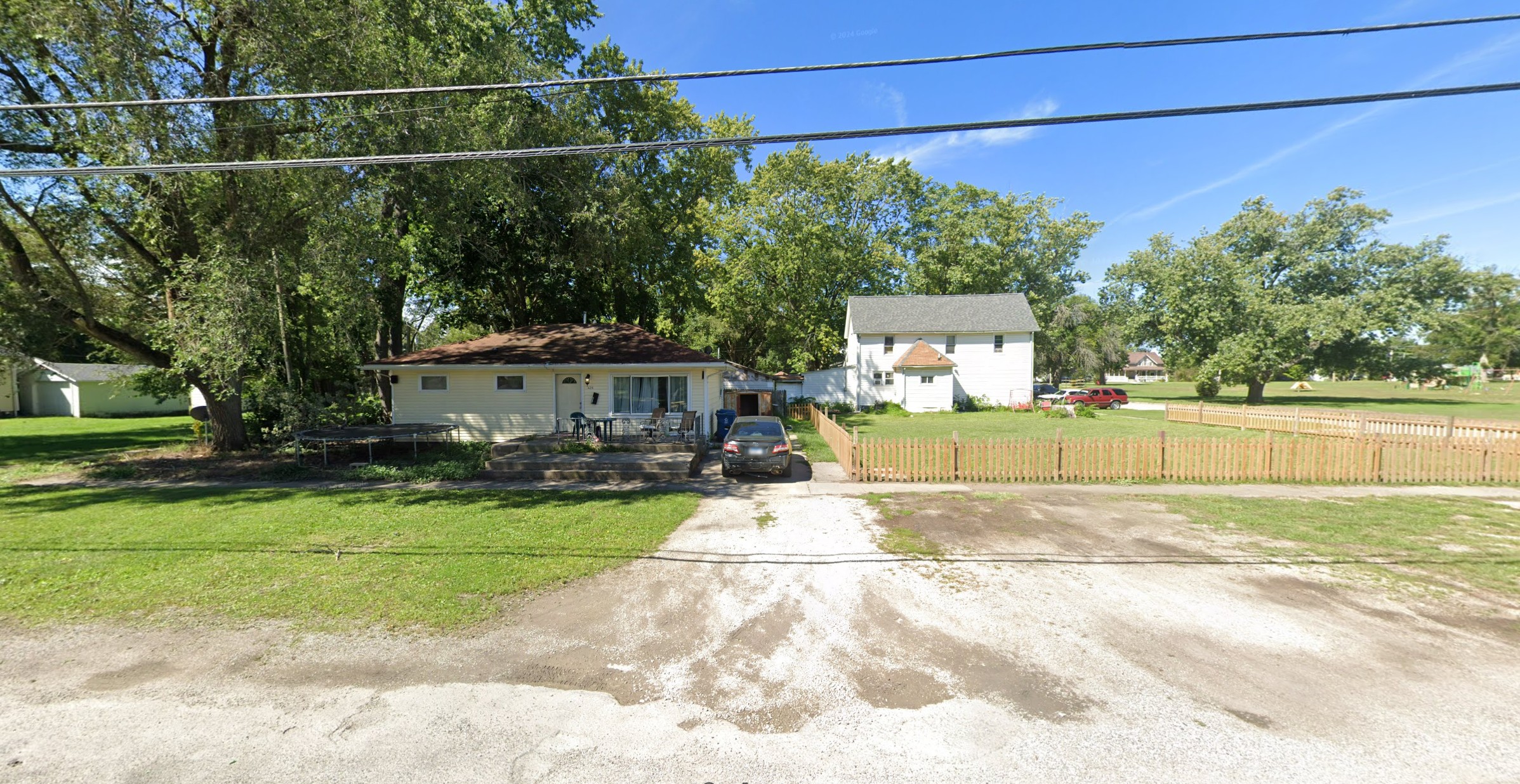
Third St. Hoopeston is now divided between north and south. There’s no telling where 484 would have been. This photo shows a 2024 view of 452 and 498 of N. Third. The house in the back looks old. Maybe 498 could have once been 484?
This is about where 484 S. Third Street should be.
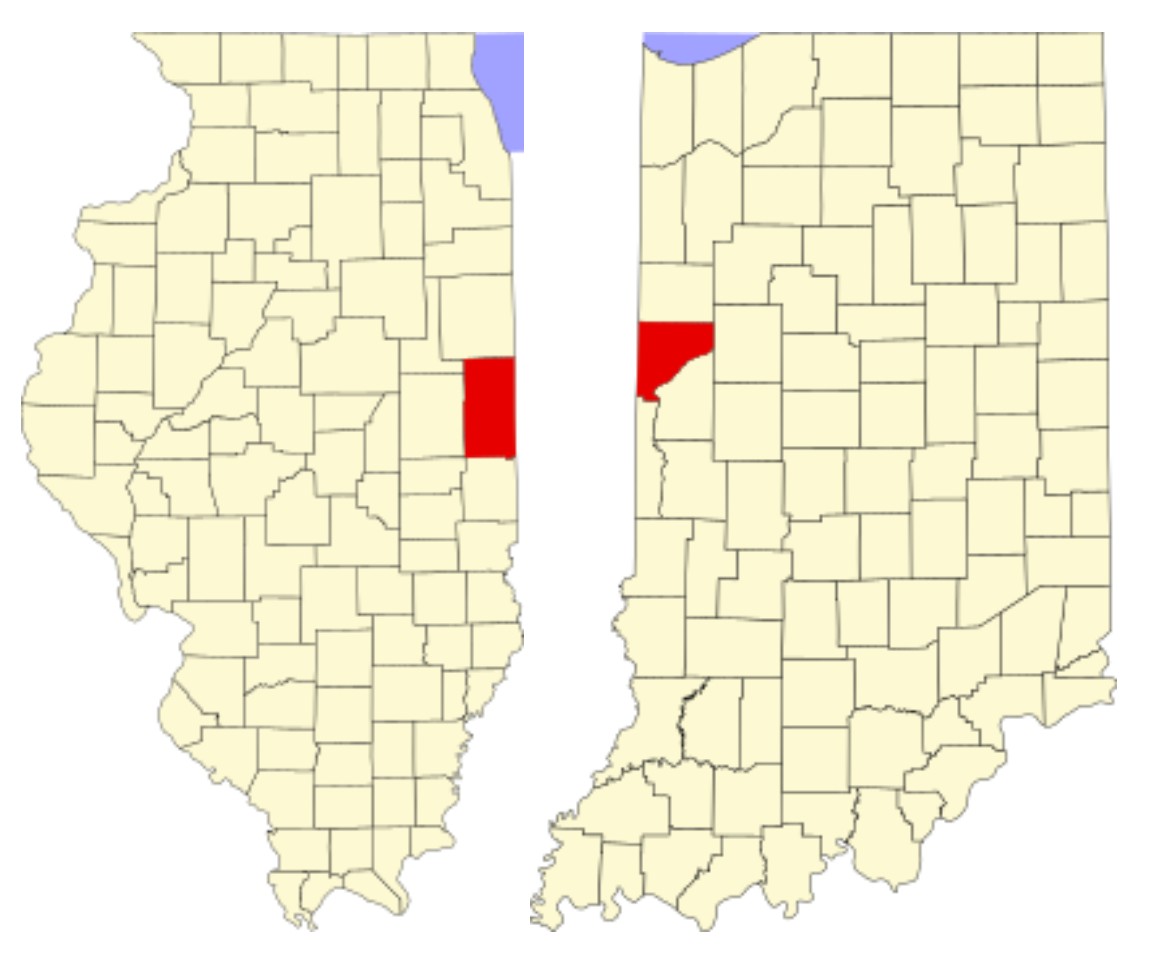
This brings up the question: Why was my grandmother living in Illinois at one year and seven months when she was born in Indiana? Vermilion County is right on the border with Warren County, Indiana. Evidently, it’s close enough for dating. I wish I knew where my grandmother was born.
1910 United States Census (April 10, 1910)
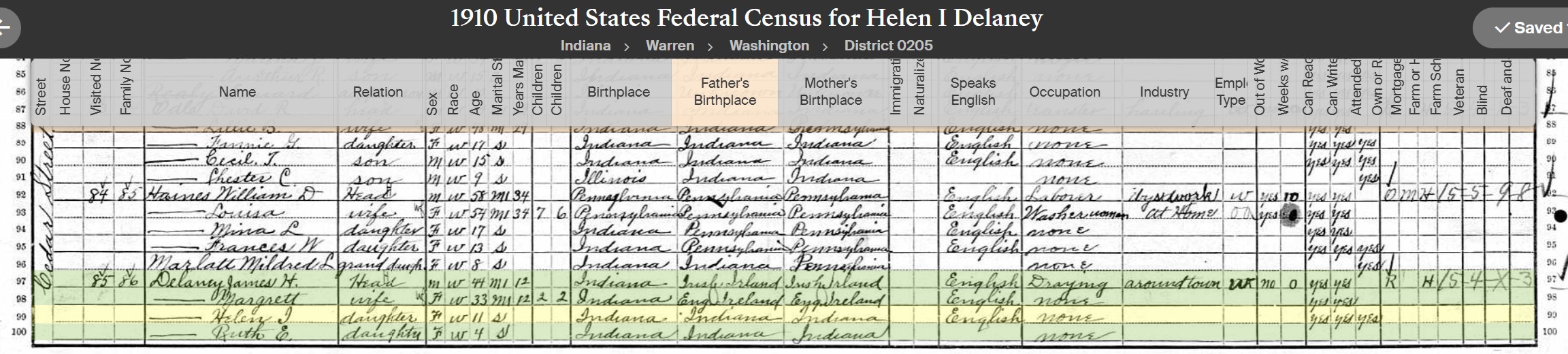
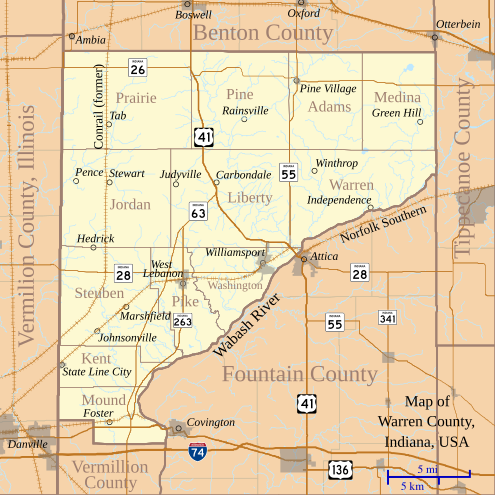
Helen Harris was 11 and living on Cedar Street, Williamsport, Washington Township, Warren County, Indiana. Her father was listed as James H. Delaney (44) and her mother Margrett Delaney (33). My grandmother now had a 4-year-old sister Ruth. That validates real life because my grandmother had a sister Ruth. The names have different spellings. This map shows how close they were to Vermilion County, Illinois, and the location of Williamsport. In 1910, the town’s population was only around 1,200.
I was always told she was born in Indiana, but I can’t validate that in any way. Was Williamsport her birthplace and family home? Later records claim she was born Helen Imojean Delaney on November 28, 1898, to James Henry Delaney (1863-1947) and C. Margaret Martin (1877-1968). I might find out more when I research Margeret Martin.
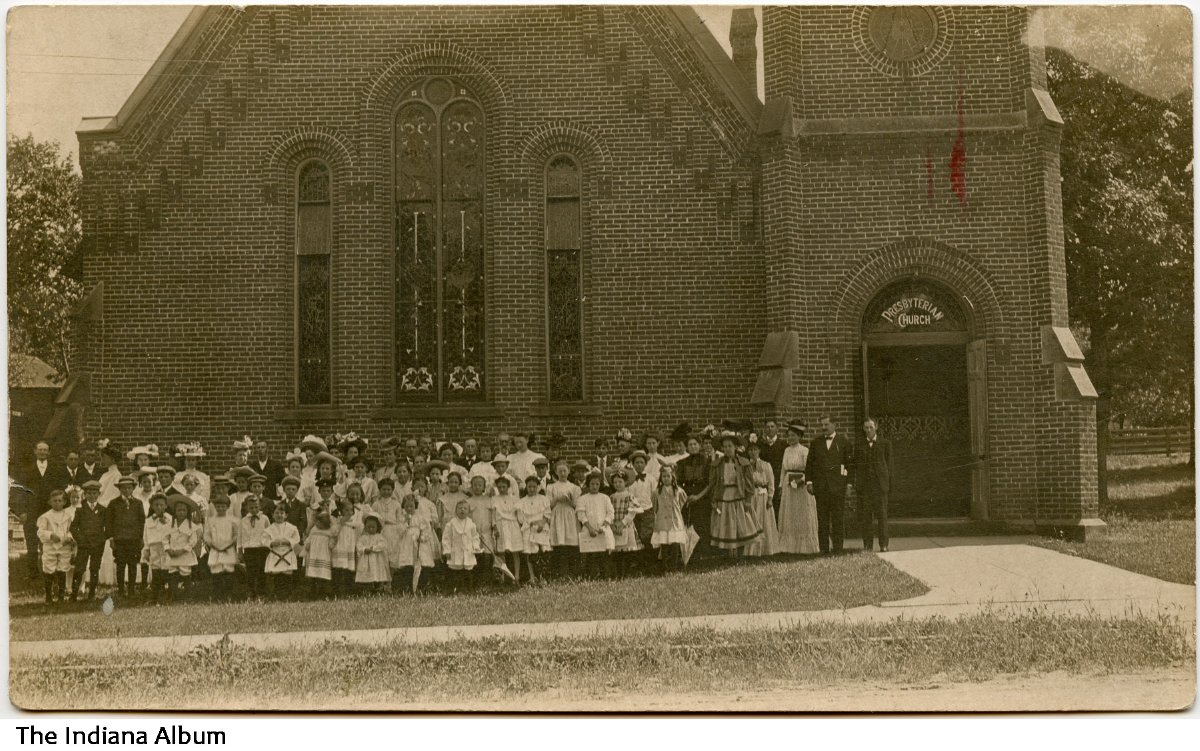
Here is a photograph from Williamsport in 1910. My grandmother would have been eleven. I wonder if she is in this group of people? How far can I go with this research? Just how many pieces of evidence of our lives do we leave behind? I wonder if I drove to Williamsport if I could find more clues?
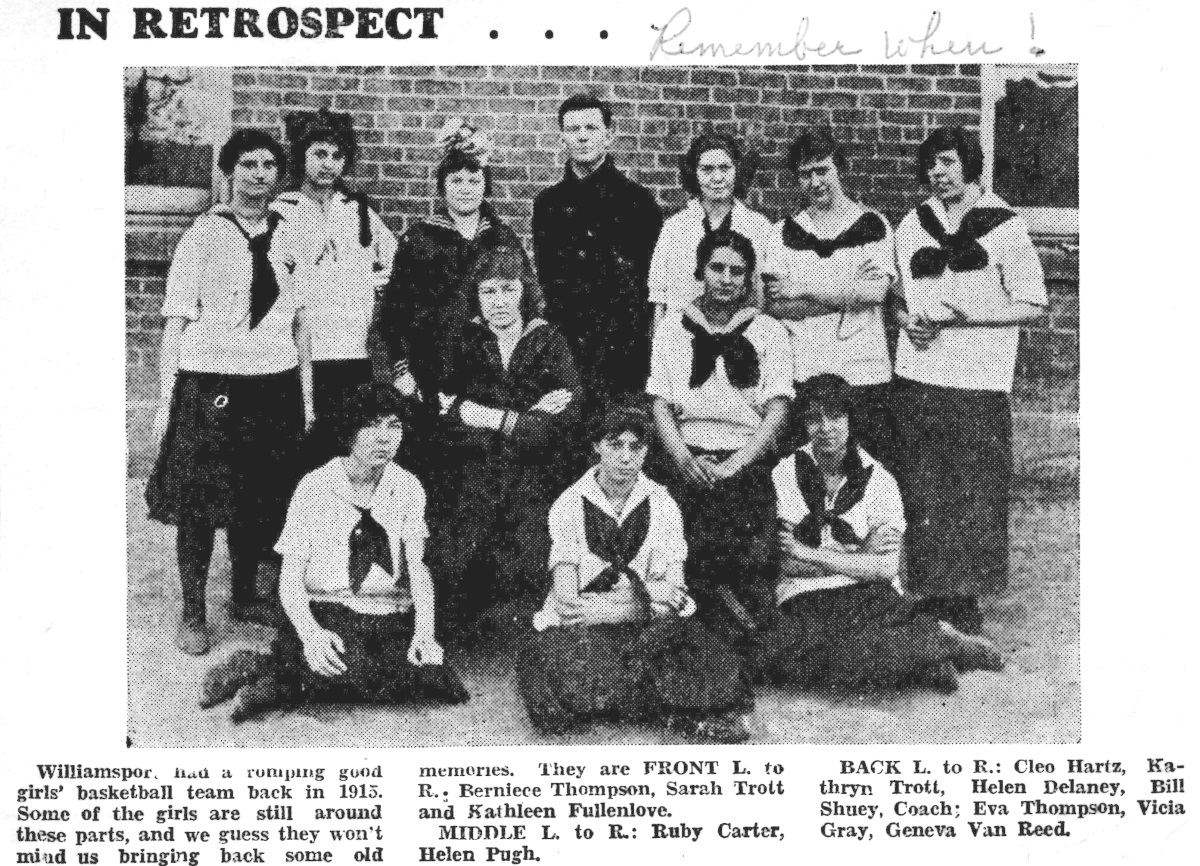
My next bit of evidence comes from 1915. I don’t know where this clipping came from. It appears to be a look at the past. My grandmother is about 16. She’s third from left in the back, wearing the weird hat. It’s the earliest photograph I have of her. (Strangely, I also have an old newspaper photograph of my mother on a basketball team.)
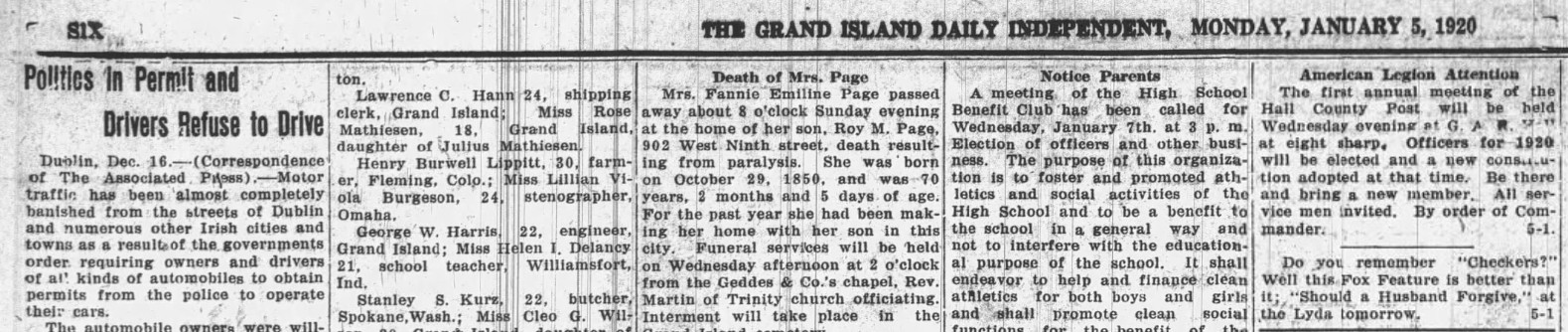
The next record I can find about my grandmother is a marriage notice in The Grand Island Daily Independent for Monday, January 5, 1920. Helen Delaney married George W. Harris, 22, an engineer. She is listed as 21 and a school teacher.
I wonder what they mean by an engineer? Was he a college graduate? After he moved to Florida, my grandfather worked as a border agent. Supposedly, his picture was once in Life Magazine arresting illegal aliens coming in by boat. My grandmother once told me she had been a schoolteacher in a one-room schoolhouse. So that fits. My father, George Delaney Harris, their first child was born on October 12, 1920.
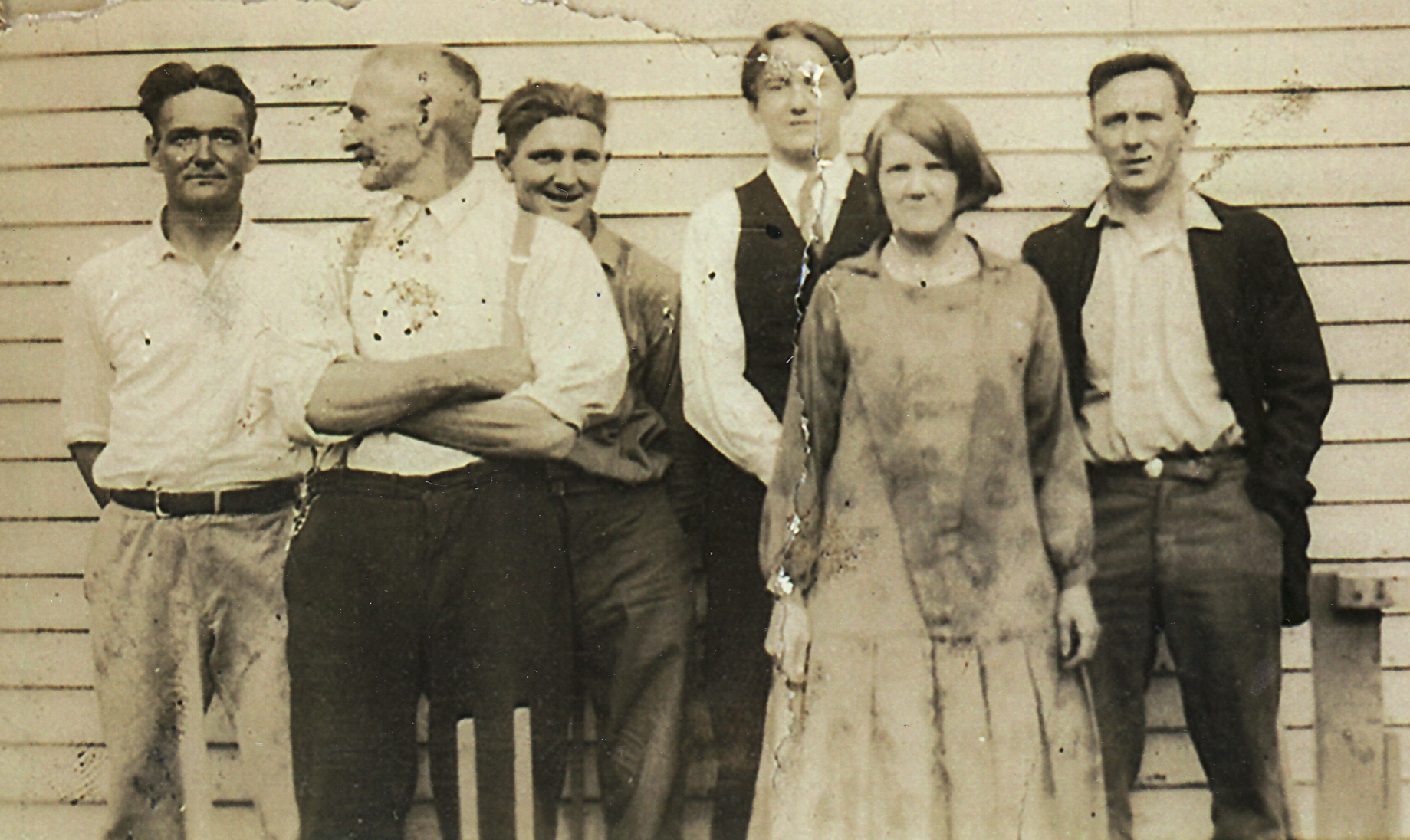
How did she meet a man from Nebraska? This is the earliest photo I have of my paternal grandfather, George W. Harris. He is on the far right. Those are his parents and brothers, my great-great-grandparents. He looks older than 22 there, so I’m guessing it was after 1920.
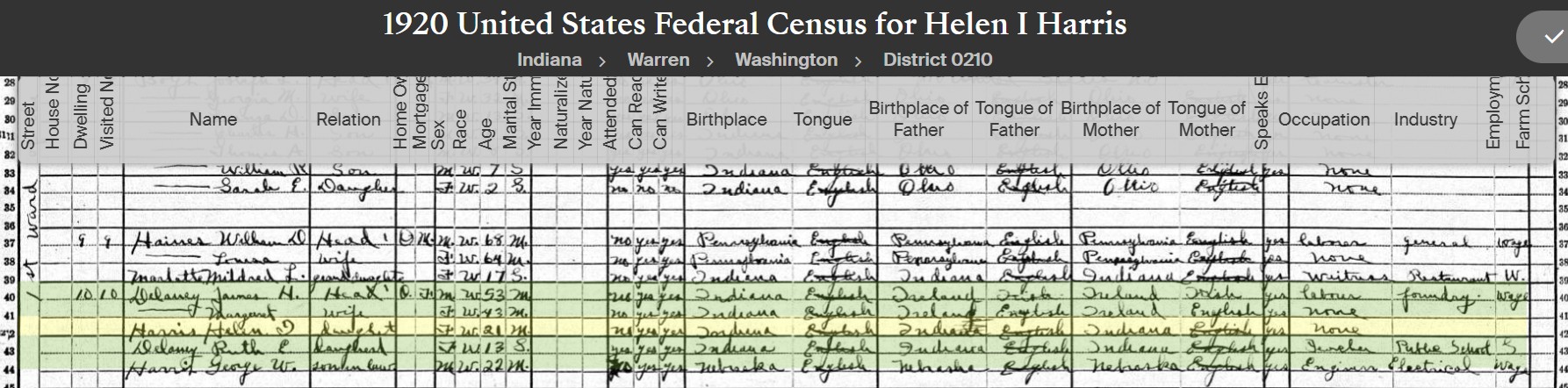
1920 United States Federal Census (June 2, 1920)
My grandmother and grandfather are living with her parents in Williamsport, Indiana. Was the Nebraska newspaper notice of their marriage just a notice, and they weren’t living in Nebraska? Or had they gone there to marry, and then returned to Indiana to live? My grandmother is unemployed, but my grandfather is now an electrical engineer.
Sometime during the 1920s, they move to Florida. I have no proof of when or where. The next record to validate their existence does put them in Florida. I’d love to know the story behind the move.
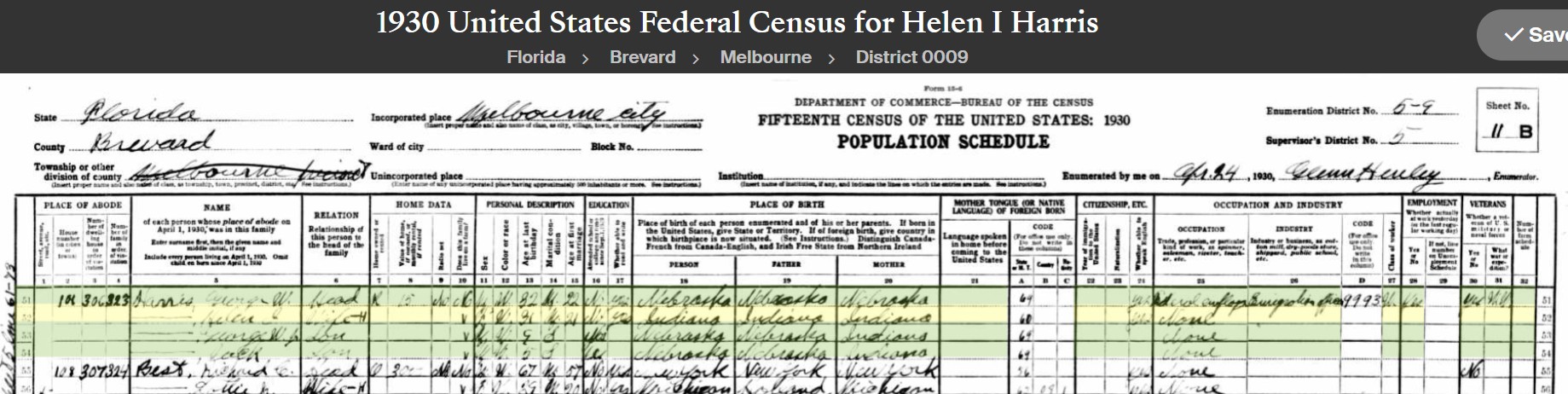
1930 United States Federal Census (April 4, 1930)
I never heard anyone in the family saying they lived in Melbourne, Florida in Brevard County. The census document says they live at 101 “Wolfe” Street. But I’m not sure of the handwriting. Can’t find a Wolfe street. My grandfather’s occupation is now listed as a federal employee and an emigration officer. That fits with family stories. My grandmother is still unemployed, but now has a second son, my uncle Jack.
1935 Florida Dade County Census
They rented a house at 193 NW 54th St. My grandfather was a federal inspector. All three sons are now here, including my Uncle Bob. My dad was 14.
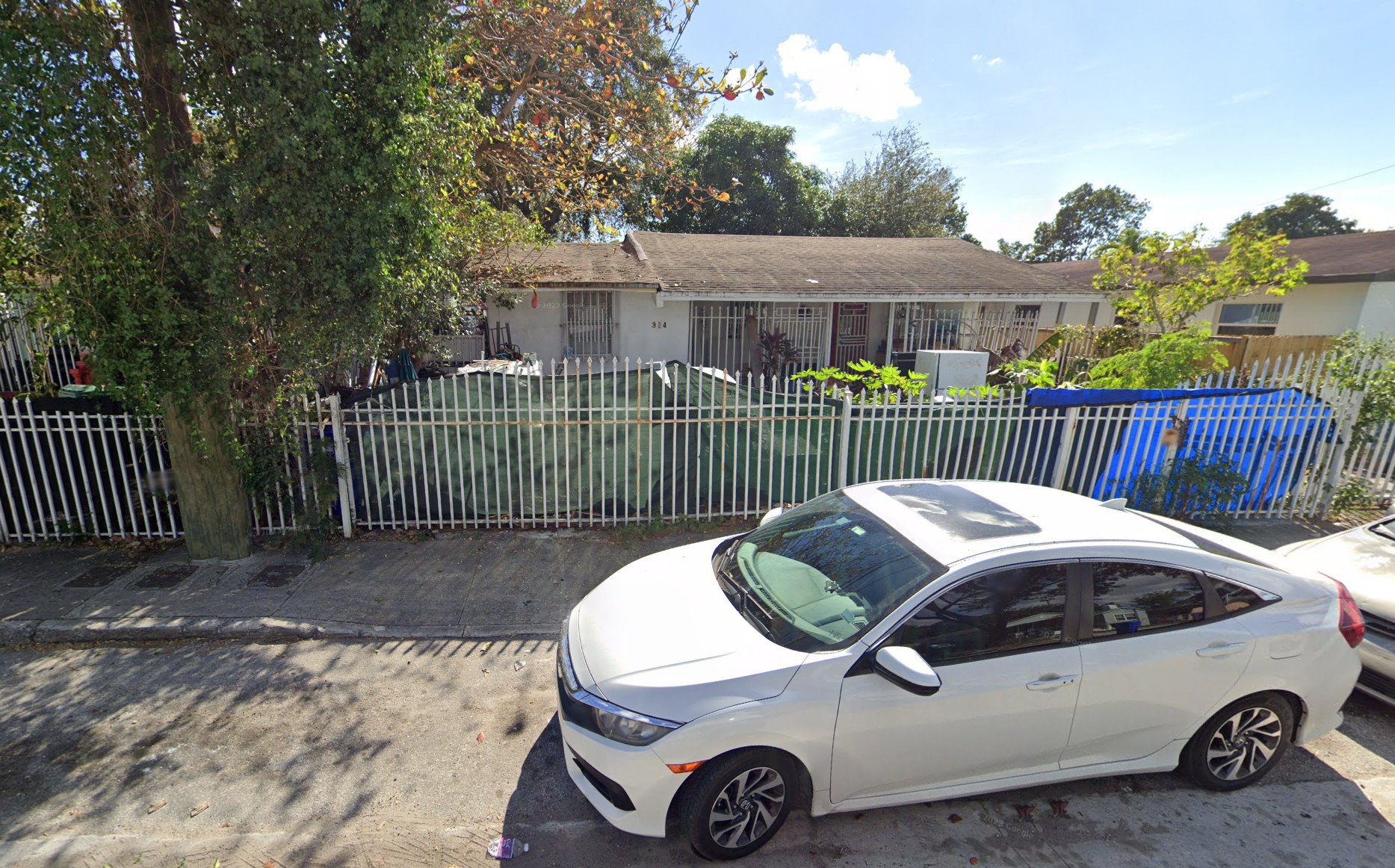
1936 City Directory
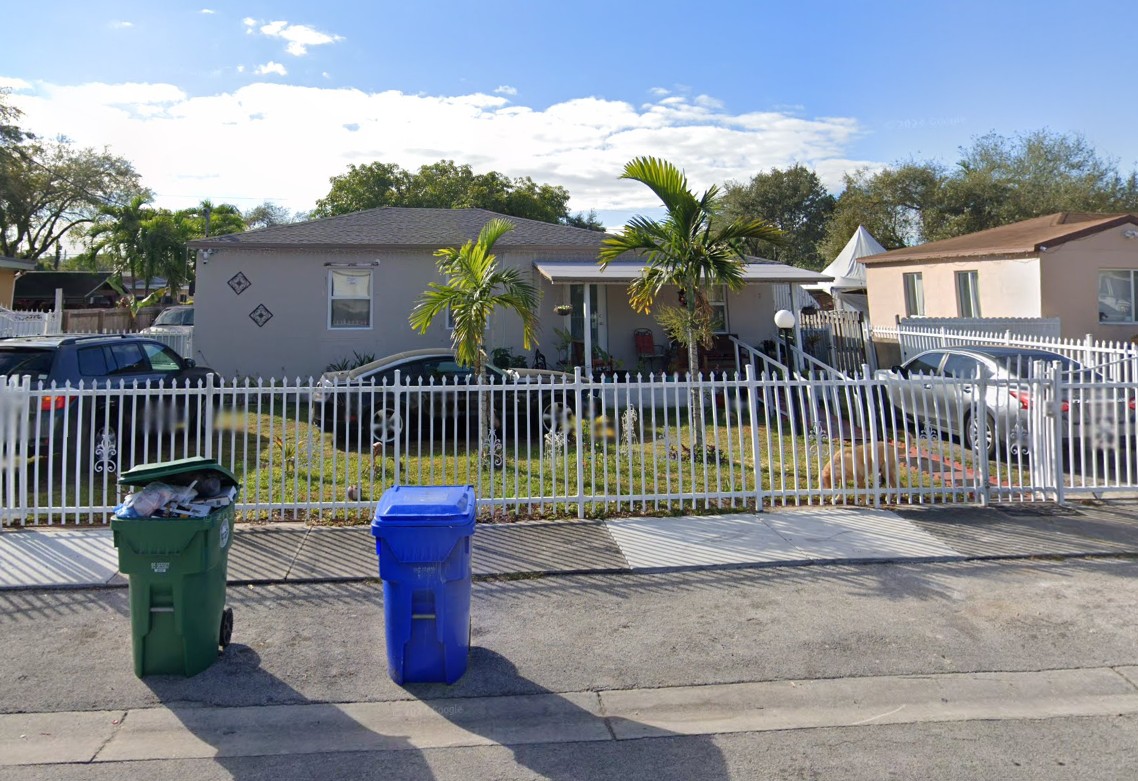
My grandmother is listed as living at 324 NW 53rd Street in Miami. Here is a current Google Maps Streetview photo. This
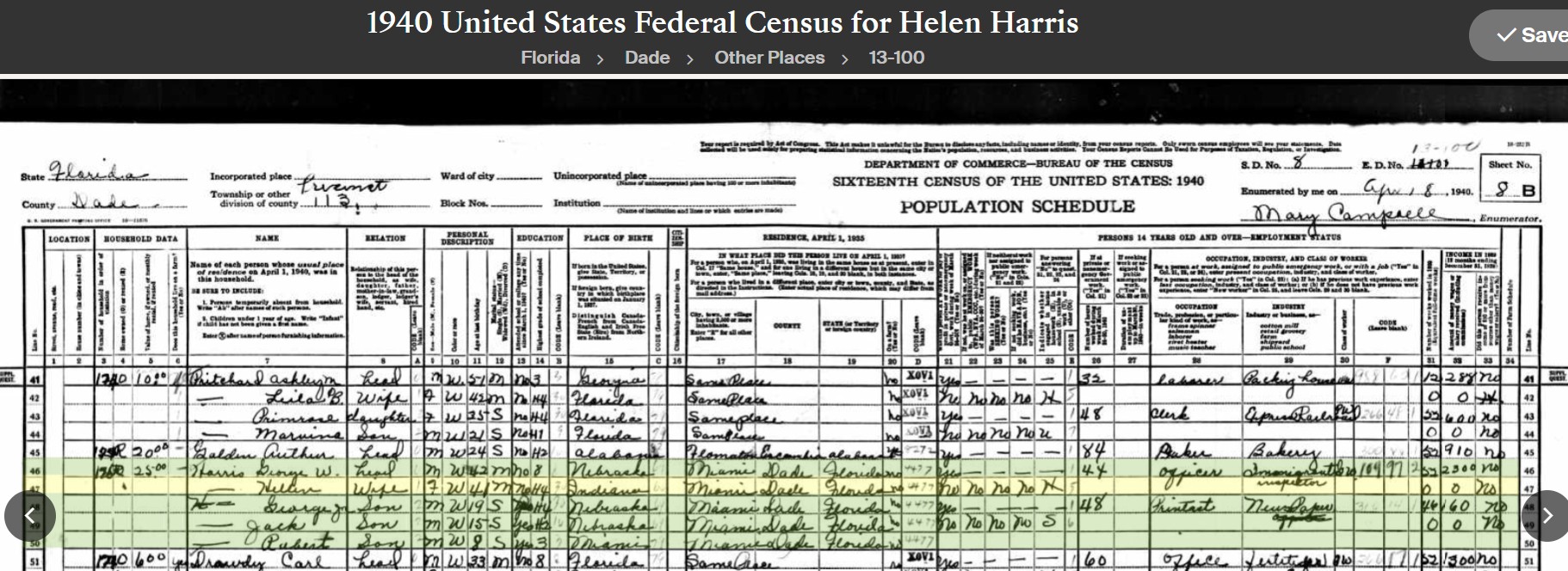
1940 United States Federal Census (April 8, 1940)
They are now living in Dade County, where Miami is located. However, I can not make out the township. I would love to know their address. I remember visiting my grandmother in a little house in the early 1950s. My grandfather had died in 1947.
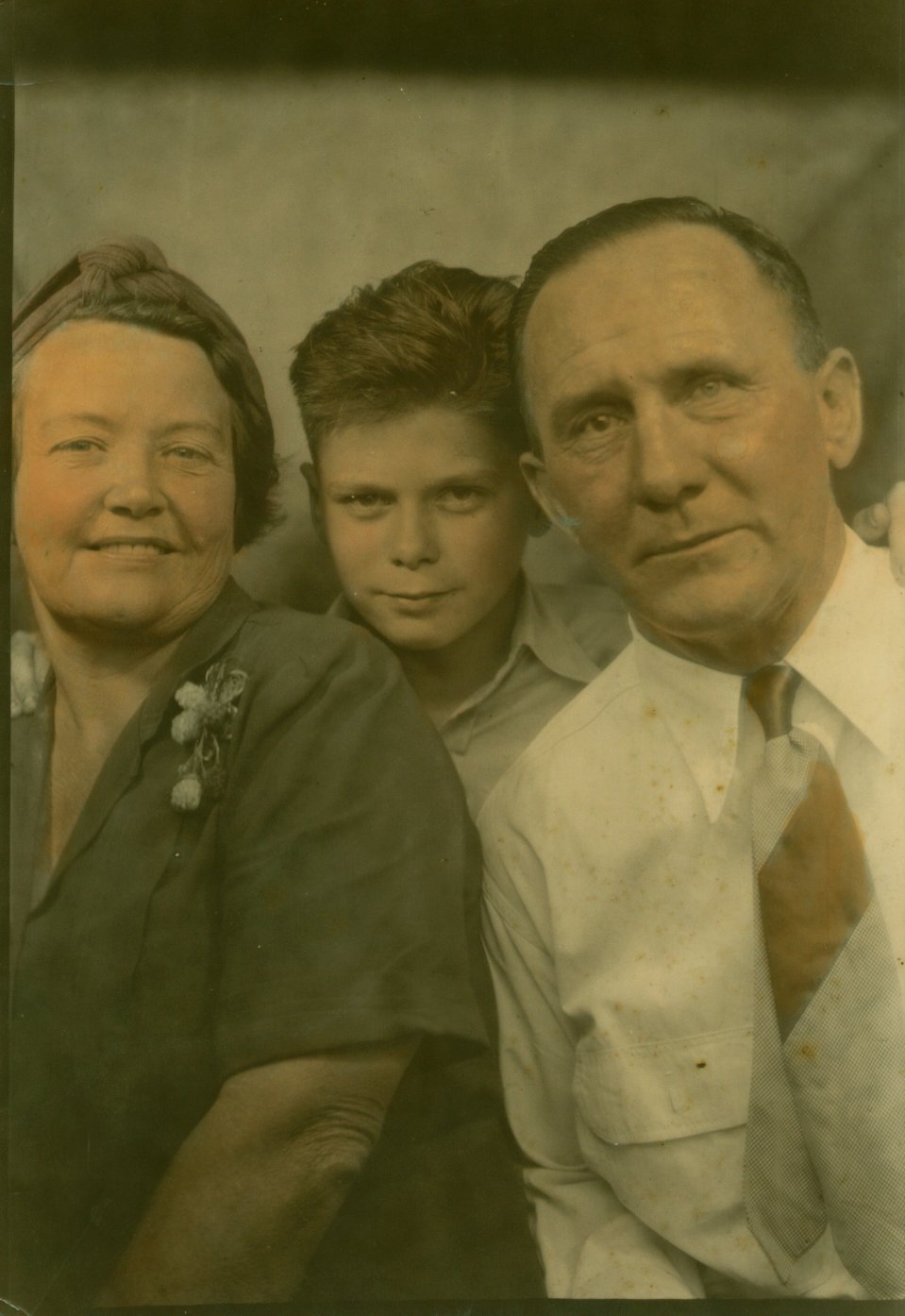
My grandfather is now an Immigration Inspector, and my father, 19, works for a newspaper. I have a clipping from a Miami newspaper, describing my father studying advertising layout in high school. I won’t include it here, just evidence for my grandmother. Uncle Jack is 15 and Uncle Bob is 8. I have one photo from around this time. My Uncle Bob is in the middle, and he looks like a teen, so I’m guessing it’s around 1945?
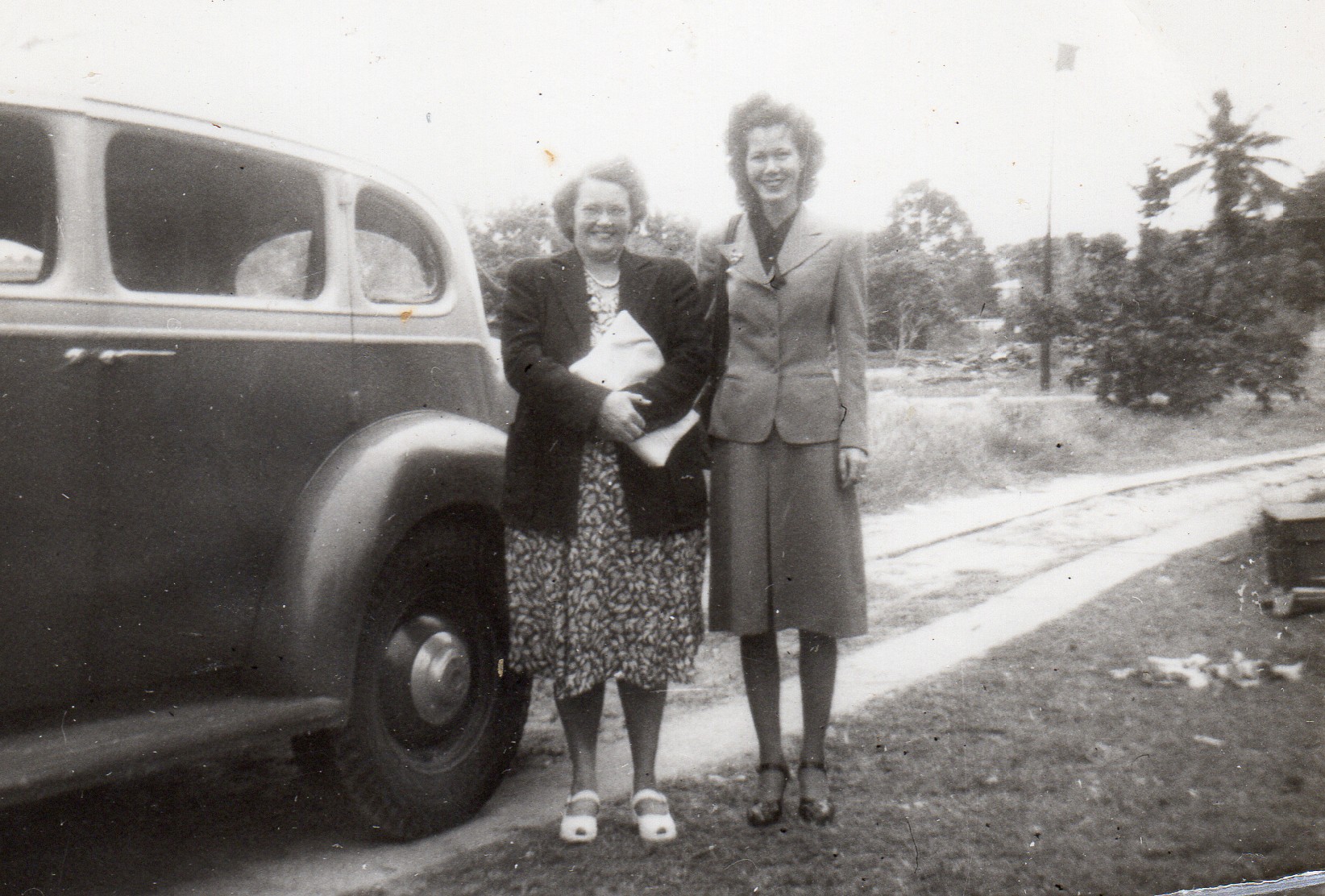
Here’s a picture of my grandmother with my mother. My mother and father got married in 1945. I assume this photo was taken before I was born in 1951.
1953 City Directory
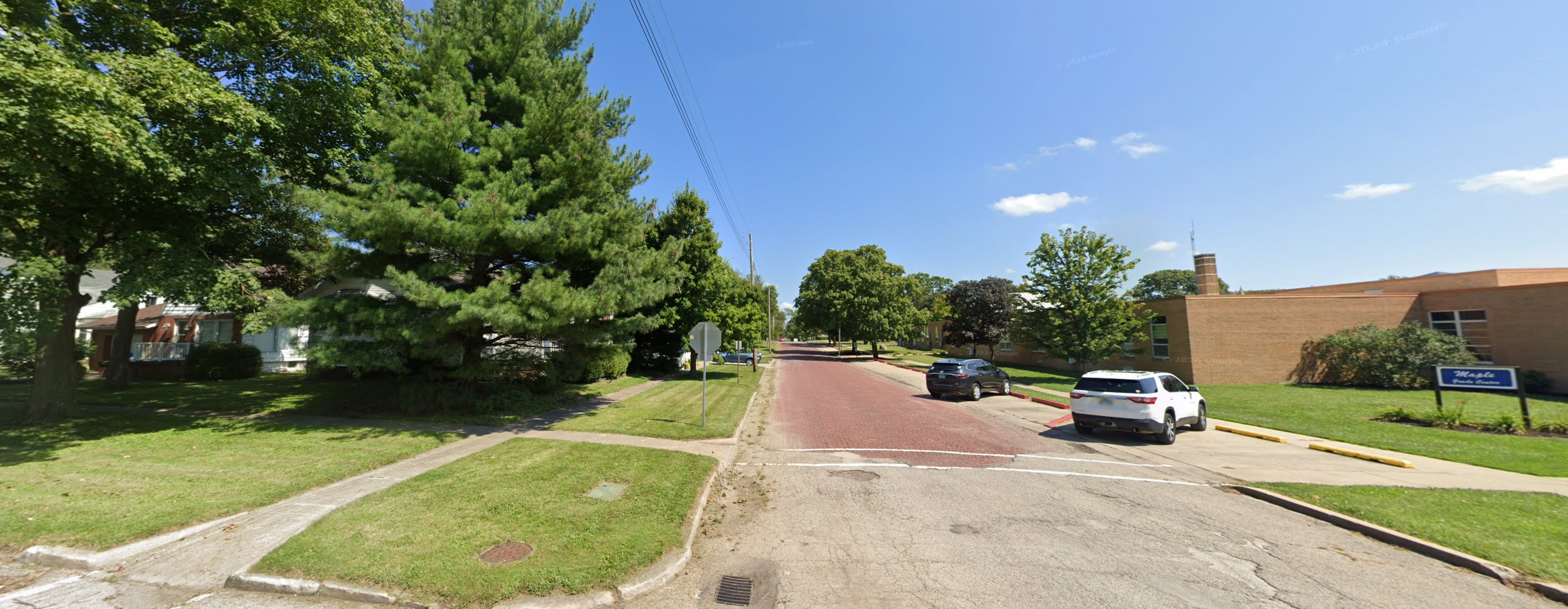
My grandmother is listed as living at 1131 NW 55th Terrace in Miami. I would have turned two that year. I remember visiting her in the mid-1950s, in a small house. This could have been it. Evidently, she was living alone by then. Here’s what it looks like from Google Maps Streetview. My memory is of a house on a corner surrounded by lots of trees looking like the two below.
I can’t find any more resources on Ancestry.com for my grandmother. She’s not in the 1950 United States Federal Census, and Ancestry.com doesn’t seem to have access to censuses from 1960 forward. Nor can I find any more city directories. I wonder if my grandmother didn’t fill out a 1950 census. She was a widow by then, and I assume her three boys had moved out.
My Memories
I mainly grew up around Miami Florida. That’s where my father’s side of the family had been living since the 1920s, or so I thought. However, my father and his father were from Nebraska, and his mother and family were from Indiana. I never knew how my father’s parents met. That’s the kind of mystery you wish pursuing genealogy would answer but doesn’t. My grandfather died before I was born, so I have no memory of him, and very few stories.
My earliest memory of my grandmother, Helen Harris, is visiting her in a tiny house in an old section of Miami. Back in the 1950s, Miami seemed mostly new housing divisions, but sometimes we’d visit older sections that were probably built in the 1920s or 1930s. I’d love to know where that house was located. This was probably mid 1950s.
My next memory of my grandmother was visiting her at an old apartment on 8th Avenue, which I believe is Flagler, and is now considered part of Little Havana. She was the manager, and this was in the late 1950s or early 1960s. The place was old. I loved roaming the old interior halls, with the ancient musky-smelling rugs, and talking to the old people living there.
Around 1959 my mother was diagnosed with TB and was sent to stay at a sanatorium in Valley Forge, Pennsylvania. My father was in the Air Force and stationed in Canada. So my grandmother moved into our house in Hollywood, Florida to care for Becky and me for about six months. I have several memories from this time. (The center picture at the top of the page is from this time.)
After that, she moved to an apartment complex on Bayshore Avenue, right on Biscayne Bay. She stayed there, I believe until she died in 1981. But I’m not positive. My father died in 1970 and my mother, sister, and I moved to Memphis, Tennessee. I only saw my grandmother a couple more times after that when I would visit Miami to see a friend. The last time was in 1978 when I got married and took my wife Susan to meet her.
Most of the other memories I have of Helen Harris were when she came to family Thanksgiving and Christmas dinners. I did stay with her several times at the apartments on Flagler and Bayshore Drive.
I do have some specific memories. When my grandmother kept Becky and me in 1959, I was seven, and sometimes still wet the bed. She knew I admired her large leather-bound zip-up 3-ring notebook which she used to organize all her bills and paperwork. She told me when she came that if I didn’t wet the bed while she was there she’d give me her notebook when she left. I got that notebook. My parents should have tried bribing me earlier.
One of the most exciting memories I have of my grandmother is when I stayed with her at the apartments she was managing. I had seen the 1958 movie, A Night to Remember about the Titanic, and told her about it. She introduced me to an old lady living at the apartments who had been on the Titanic as a child. Years later, I wondered if I could track down who that lady was. I don’t remember her name.
I can’t remember too many details about my grandmother’s personality. She was jolly and I loved her. She collected glass figurines of dogs, so my sister and I always gave her a little dog figurine for her birthday or Christmas. I remember seeing her several times reading a book about the medicinal value of honey. She also talked about Edgar Cayce, the psychic. I can’t remember anything else she liked. I don’t recall her watching TV, playing music, or reading novels.
In 1965, I stayed with her at the Bayshore Drive apartments. I remember helping her clean out an apartment. I found an old tackle box which she let me keep. She didn’t see that it had a switchblade knife in it. I loved that knife and took it to school with me. I never told any grownups about it. I use the tackle to fish off the sea wall. While I was staying with her I would gather coconuts and unhusk them. I sold a dozen coconuts to a vegetable stand in Homestead for 50 cents each.
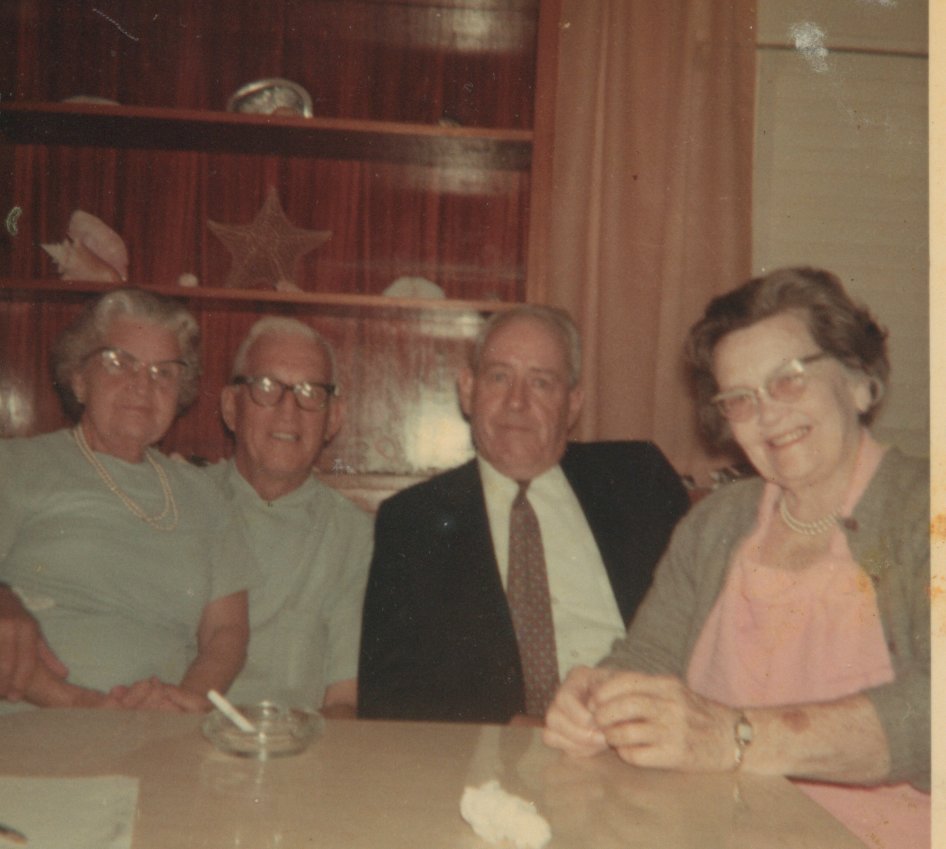
I remember she had friends named John and Alice. I believe we rented their house for a couple months in 1958 before we moved into our house in Hollywood, Florida. I think this might be Alice and John on the left, but I’m not sure. The other man was named Ollie. But that’s all I know.
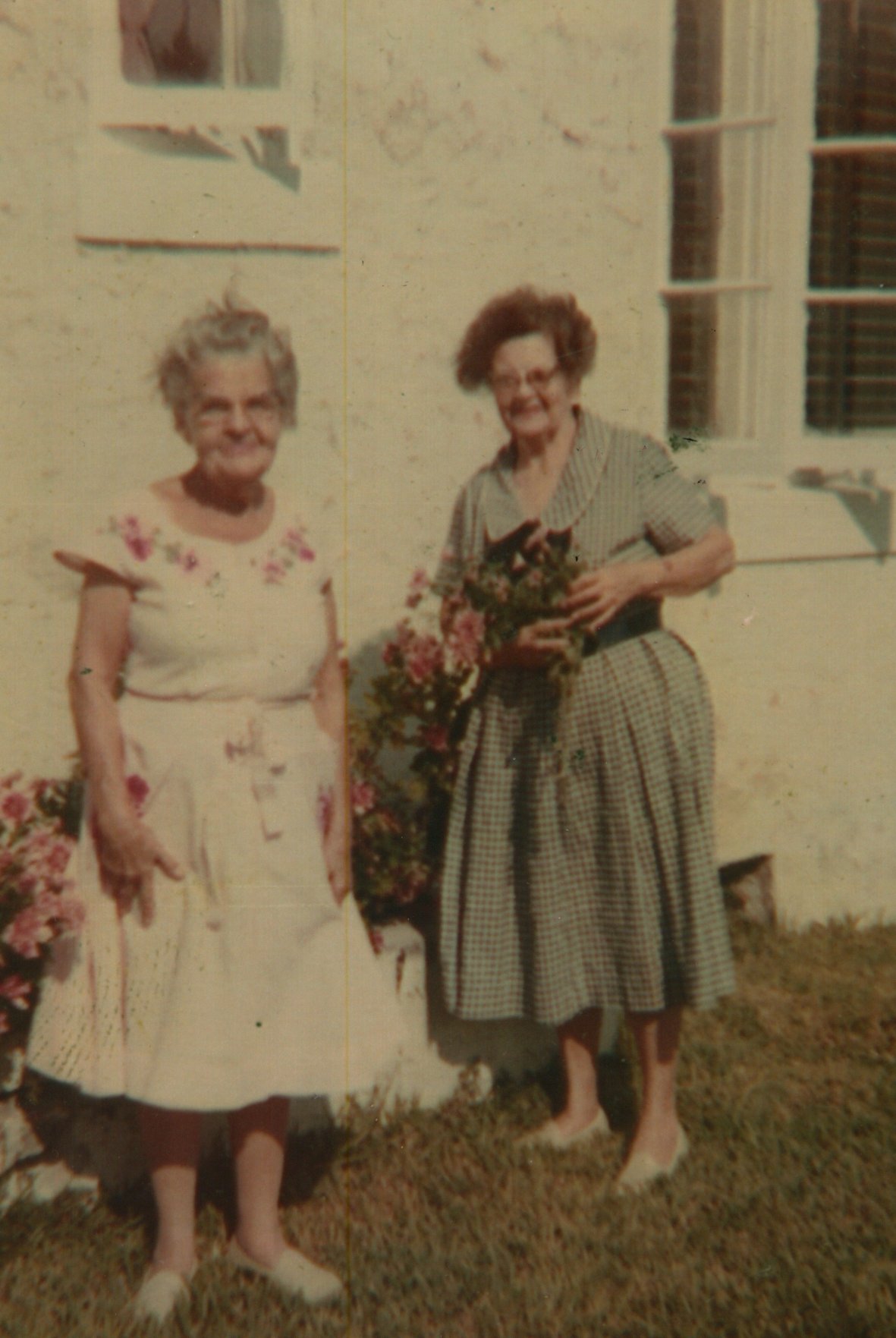
The next photo might be the last photo I have of my grandmother. I believe it’s with her sister Ruth but it might be Alice. It was taken at the Bayshore Drive apartments, I believe in the 1970s. The last time I visited my grandmother was in 1978. I had just married Susan and we had gone down to Miami so I could introduce her to my grandmother.
Helen Harris died in 1981. I regret not calling or writing her more. If I had known I would one day be writing this essay I would have asked her a lot more questions. And I would have saved more documentation.
The faithful believe they will be reunited in heaven with their loved ones. That would be nice, but I’m not a believer. We’re often told that those who pass will live as long as someone remembers them. Helen Harris might be down to three people who remember her, maybe four. If by chance you do, leave a comment. I might have hordes of unknown relatives that remember her.
One last memory. Once my grandmother told me about her high school class. It was small. I want to say thirty people. She said they had agreed to a tontine, and the last person living would get some object I’ve now forgotten. Over the years, I wonder who won the tontine. I wonder if genealogy research could lead me to her graduation class.
We leave behind very little which proves that we were once here. Eventually, it all fades away.
I joined Ancestry.com so I could upload old family photos. I thought they should be saved somewhere because all my family photos will be thrown away after I die. Many of my photographs have already been converted into digital files, so I figured it would only require looking up the person and uploading the files for that person.
Because the government knows so much about us, I assumed that kinship relationships for the last three or four generations would already be in the Ancestry.com system. That was a big false assumption.
Ancestry.com claims to have over 60 billion records. I don’t know if that’s 60 billion different pieces of paper or 60 billion references to individuals. The trick using Ancestry.com is to start with a name and then use all its records to verify the identity of each person. It’s not easy. You can’t trust any one record. You need to find several records with connecting information that’s already been previously validated.
My assumption was recent family members would be known and family from the past would be harder to identify. It turned out that parents, siblings, cousins, and grandparents are hard to verify but once I did, Ancestry.com offered a lot of hints about my great-grandparents, and their ancestors. However, the hints need to be verified. Those hints are probably based on distant relatives in the past, working up family trees, and those trees might not be accurate.
I was shocked by how many people have similar names, with similar dates of birth and death, coming from the same part of the country. I could very easily add photos of people who were not the people photographed.
Before I joined Ancestry.com and used it, I thought family trees were already well established, and I could quickly upload all my family photos. That won’t be the case.
Just to cover my parents, grandparents, great-grandparents, and great-great-grandparents, I’ll need to research and identify 30 people. I only knew four of them. If I go back to another generation, that would add 32 more people. This completely ignores aunts, uncles, and cousins from each generation. Adding them to my family three would mean researching another hundred people, maybe two hundred.
Another assumption I had before working with Ancestry.com was the belief that building a family tree would help me get to know my ancestors. It hasn’t worked out that way. Finding names and dates to add to my tree reveals nothing about those people.
Genealogy is interesting and even educational. It’s revealing in unexpected ways. It shows that blood is not thicker than water. Kinship is meaningless. Actual interactions with each other are everything.
I’m not sure if saving my photographs will be of any real value. I’ll save them anyway, but I’m uncertain if anyone will care. Now I understand why so many people I’ve talked to about this project said they had zero interest in genealogy. They instinctively knew that people they never met were just meaningless names and dates on a chart
However, learning genealogy offers other rewards. It teaches research skills. It reveals how society knows and remembers people. Pursuing genealogy shows the limits of identity and identification. Unless a person is worthy of a biography, history only knows us by our names, marriages, addresses, birthdates, and death dates. And don’t those details say absolutely nothing about true selves?
Maybe I’m wrong. As I dig into the past, maybe I’ll find revelations I never expected.
By the way, genealogy should benefit greatly from AI.



 Auxiliary Memory
.png)