
What’s the Modern Equivalent of Byte Magazine?

by James Wallace Harris, Wednesday, November 8, 2017

Byte 1977 - DecBack in the 1970s, I developed an addiction for computer magazines. My favorites were Byte Magazine, Creative Computing, and InfoWorld. But there were countless others popping in and out of existence. During that period I’d go out driving two or three times a week to bookstores, newsstands, and computer shops looking for new issues to buy. I loved Byte Magazine the best because it was so well rounded, covering all kinds of computers, computer history, computer theory, computer science, featuring code and wiring schematics – great reading for hackers and wireheads.  Plus in the early years before small computers became an industry, they had fantastic covers.

There was an excitement about computers back then when we called small computers micros before they became PCs or Macs, with lots of do-it-yourself projects for a small subculture of geeks and nerds. Today I seldom buy computer magazines. My addiction waned when they all split into specific platform titles and computers became pervasive. My addiction disappeared after the world wide web became a new addiction. A few times a year I’ll buy a Linux magazine. Linux and open source fans still have a subculture vibe with a do-it-yourself spirit.

Now that I’m thinking about the Byte Magazine, I realize the late 1970s and early 1980s as an era before the internet, and my nostalgia has a lot of implications. A monthly magazine like Byte was self-contained. It was a reasonable amount of information to consume. Today, reading off the cloud, I feel like I’m trying to consume whole libraries in a gulp. When I research a blog post I find way too much to digest. It overwhelms me. Reading Byte in the early days of microcomputers was like reading science books in the 17th century. It was possible to be a generalist.

I loved studying the history of science fiction because its territory felt small — or did. In the past year, I’ve discovered enough new scholarly books on SF history to crush me. I can’t write anything without referencing all I know and think I should know. That’s mentally paralyzing.

I loved Byte Magazine because it didn’t cause information overload. I wish computers were still just for fun, a hobby. Magazines are dying, but I wish there was a computer magazine published today that looked at the world of computers in a small way. That’s probably why Raspberry Pi computers are so popular. They are small, and their world is small.
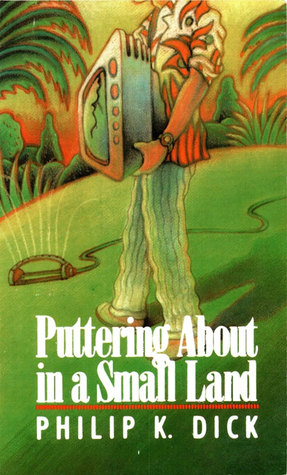
Puttering About in a Small Land by Philip K. DickThe other day an old friend texted me and asked how I was doing. I texted back I was fine, enjoying puttering around in a small land. She immediately called me worrying that something bad had happened. I had to explain I wasn’t in a hospital room but enjoying my hobbies at home. I was riffing off the name of a Philip K. Dick novel, Puttering About in a Small Land. I just love that title. I think that’s why I loved Byte back then, we could still putter around in a small land.

I’m reading Thomas Friedman’s new book, Thank You For Being Late. In it, he decides to invent a new name for “the cloud.” Friedman believes cloud computing is changing humanity and deserve a name that reflects its impact. He chooses “supernova,” which I think is a colossal bonehead choice. The obvious name to replace the phrase “the cloud” is the “hive mind.”

I’m starting to believe living in the hive mind is wrong. Sure, having access to all the information in the global mind is wonderful, but overwhelming. I’m wondering if the good old days weren’t those days when knowledge came in magazines.

JWH


Why Do I Love Old Black and White TV Shows and Movies?

by James Wallace Harris, Tuesday, October 10, 2017

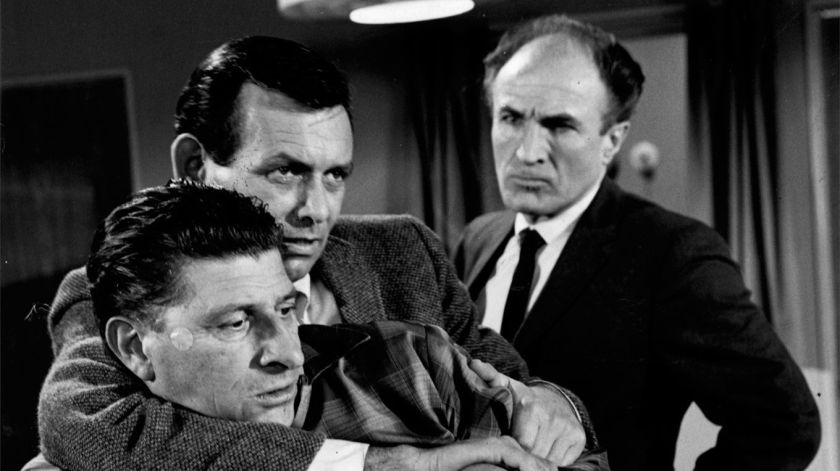
Normally I watch the latest hit TV shows, usually on Netflix, HBO, or Amazon Prime. Generally, I watch these shows with friends. I’ve gotten so I don’t like watching TV alone. However, when I do, it’s because I’m too tired to do anything else and it’s too early to go to bed. When I’m alone I’m drawn to old black and white television shows, movie westerns from the 1950s and old Hollywood movies from the 1930s. Why do I prefer black and white shows? Why do I save shows in color for when I’m with friends?

MeTV got me hooked on two old TV series this month, The Fugitive and The Outer Limits. Both shows premiered in 1963. As a kid, I discovered The Outer Limits when the first episode aired. It ran on Monday nights at 7 on ABC. My father loved The Fugitive which came out on Tuesdays on ABC at 10 pm. I watched it some back then but didn’t really care for it. I generally hated the TV my folks loved. I don’t know if that was rebellion or I was just too young for the content.

I have a hard time remembering my dad being home, but he loved TV, and he liked it best when us kids weren’t around. There was nothing on Tuesdays at 10 my sister Becky and I wanted to see, so we left him alone to watch The Fugitive in peace. A half-century later, I’m staying up late watching The Fugitive alone like he did. I wonder if that gives me any kind of psychic connection to how my father felt?

Fugitive

Becky and I were horrible TV hogs. We’d have huge shouting matches with our dad on Sunday nights during the 1966/67 season when we pleaded to watch The Smothers Brothers Comedy Hour and he fought to see Bonanza, his favorite western. I loved westerns too, but not Bonanza or The Virginian, my mother’s favorite cowboy show. Gunsmoke was my TV shoot-em-up. I don’t think Becky ever liked westerns, but I should ask her the next time she calls.

This year I’ve also bought the first seasons of Gunsmoke, Have Gun Will Travel, Route 66, and Cheyenne. I bought the complete series of The Twilight Zone on Blu-ray and The Fugitive on DVD. I’m thinking about buying Perry Mason and Maverick.

Route 66

I used to hate Perry Mason, which was my mother’s all-time favorite TV show. She also loved to read the Perry Mason mysteries. But for some reason this year, I started watching them on MeTV. I liked that it was in black and white and sometimes featured street scenes of the early 1960s. That’s why I bought Route 66 because it was filmed on location, viewing 1963 America in contrasty black and white.


At the start of the 1963 TV season, we were living on Homestead Air Force Base. I started the seventh grade at Redlands Junior High in South Florida, when I was eleven. After a few weeks, we moved back to Hollywood, Florida, and I attended my second 7th-grade school, but I forgot its name. I thought it was Broward Junior High, but I can’t verify that on the internet. I was in class at that school when they announced over the PA that JFK had been shot. Three days later I turned twelve. After that, we moved to South Carolina, where I went to my third 7th-grade school, John F. Kennedy Junior High.

The Outer Limits

Memories of 1963 represent living in two states and three schools, and for some reason the 1963/64 television season also vividly sticks in my mind. I started regularly listening to rock music at the end of 1962 when I got an AM clock radio for Christmas. I became much more aware of the world around this time. It was during that time period I became a bookworm, rock & roll fan, addicted to the boob tube, and started going to the movie theater on my own.

High Barbaree

I remember watching TV since I was four or five, probably with the 1956/57 television season. My family didn’t get a color television set until 1965, so my first decade of TV was in glorious black and white. All my life I’ve loved old black and white movies from the 1930s and 1940s. I wonder if that’s because I spent my formative years viewing a B&W TV screen? My earliest memory of my father is waking up in the middle of the night when I was four, and walking out to the living room to find my dad watching an old movie on television. He let me stay up and watch it with him. This is my first memory of television and the first movie I ever remember seeing. I didn’t discover until years later it was High Barbaree (1947) with June Allyson and Van Johnson.

Why now? Why has my mind started craving old black and white TV shows again, ones from long ago? Is it just nostalgia? Is it a way of communing with my dead parents. And isn’t it odd that I’m not watching the shows I loved as a kid but prefer seeing the ones my parents watched when I wasn’t around?  I still can’t stand Bonanza or The Virginia. Both of those shows insult my sense of what a western should be.

The other night my friends and I watched The Solid Gold Cadilac and I found it immensely pleasurable it was in wide-screen black and white. I can only remember a couple wide-screen black and white films at the moment, The Apartment and The Big Trail, both of which I have on Blu-ray. It’s a shame B&W wide-screen didn’t catch on back in 1930.

Am I drawn to the black and white, or to the period content? I don’t know. I’m not sure I would like The Fugitive as much if it had been in color for its first three seasons. For some reason, I’ve never liked the remakes of The Twilight Zone or The Outer Limits which were made in color. And the only horror movies I enjoy are the classics from the 1930s which were in black and white.

I wonder if nostalgia comes in black and white and modernity in technicolor? The 1950s were definitely a black and white decade to me, even though I have some personal photographs to prove it was indeed in color. I wonder if kids who have always lived with color TV ever think of the past in black and white? Were my formative years corrupted by black and white TV sets? Will children today remember the world in LCD/OLED imagery? How would my consciousness of the past be today if I had never seen a TV, movie or computer screen, or photograph of any kind? Would I even conceive of black and white?

The world does turn black and white in low light, or when you’ve had way too much to drink. But now that we preserve the past digitally in color, will that eventually eliminate an appreciation of viewing reality in grayscale?

JWH


How to Save Thousands of $$$

by James Wallace Harris, Wednesday, October 4, 2017

An American Sickness by Elisabeth RosenthalThere are some books everybody should read. Often those books are on topics few people want to think about and the book I want everyone to read is about health care — a subject that will bore the will-to-live out of most readers. An American Sickness: How Healthcare Became Big Business and How You Can Take It Back by Elisabeth Rosenthal is a book I read for my Two-Person Book Club, and we both found it riveting.

As long as you can stay out of a hospital, emergency room, or a doctor’s office that’s aligned with a hospital, you’re probably okay to skip reading this book. But don’t think having good health insurance will protect you from bankruptcy. Rosenthal’s book is about all the ways the American Medical Industrial Complex is finding to bill you beyond what your insurance will pay. If you have any kind of savings at all, they are at risk of being wiped out by playing Russian roulette with our current healthcare system.

What Rosenthal thoroughly proves is our plutocratic government will always take political donations from the greedy, which explains the escalating medical costs in America. Republicans are hell-bent to kill Obamacare because they want to cut taxes for themselves and their donors don’t want any laws that impede them from profiting on the misery of sick folks.

This is the second time I’ve written about this book. I’ve told all my friends about it, and none of them are interested. An American Sickness scares the bejeezus out of me. The only way we can avoid being ripped off is by collectively working together. Expecting Congress to solve this problem is insane unless there’s an overwhelming demand from voters.

Everyone wants to have a health insurance policy that covers all their medical bills and never worry what hospitals and doctors bill their insurance. That’s not going happen. One day you will receive a bill that your insurance won’t pay, whether it’s $600, $6,000, $60,000 or $600,000, and you’ll not be able to wish it away. Rosenthal had many stories of people going to an emergency room and ending up owing the price of a Mercedes or even a median-priced house because parts of their bill weren’t cover by their insurance.

I was just on the phone with a friend who got a $29,000 ER bill after he fell off his bike while on vacation and needed 13 stitches. He’s now wrangling with his Medicare Advantage plan over how much he has to pay for this out-of-network event. He also says he’s in the Medicare donut hole and paying $500 a month for insulin and $600 a month for his digestive enzymes. [Rosenthal relates a story of a mom taking her toddler to a pediatrician who referred her to a plastic surgeon that put in 3 stitches and was billed $50,000. So my friend got a bargain for 13.]

Rosenthal offers hope, but it depends on political change. And for political change to occur more people need to read this book. That means you.

Recommended Reading

JWH


Comforting Words of Science Fiction

by James Wallace Harris, Monday, October 2, 2017

I’m restless. I became depressed after hearing about the mass killing in Las Vegas. I needed uplifting and realized I hungered for a comforting science fiction story, the kind I found inspiring in my youth. I pulled out my iPhone and brought up my ebook copy of The Big Book of Science Fiction, edited by Ann and Jeff Vandermeer. “Desertion” by Clifford D. Simak called me to read it. It’s a huge book, as big as The Bible. I believe I turned to this story today like the faithful turn to a favorite passage in their good book. My unconscious mind picked it for me, and as usual, it was right.

The Big Book of Science Fiction edited by Ann and Jeff Vandermeer

After reading the story I hankered to hear it. I prefer listening to fiction, and once again I prayed my atheist prayers for an audiobook edition of The Big Book of Science Fiction. (Audible, are you listening?) If you are a believer try listening to an audiobook version The Bible, and you’ll know why.

I was able to find “Desertion” in the audiobook version of City, a fix-up novel Simak created from several unrelated short stories that he tied together about myths of extinct humans told by surviving robots and dogs. I’ve saved the video to where the story starts.

For those you who prefer to read with your eyes, here’s a .pdf of the story.

Whether you listen or read, the story is not very long. Take some time to enjoy it. Any true believer of science fiction will find it moving, even heartwarming. “Desertion” provides the kind of sense of wonder that many of us true fans feel define science fiction. Warning, I hope this story will make you cry, it should if you’re not a misanthrope.

I’ve often written there are many similarities between the appeal of religion and the attraction of science fiction. Maybe that’s why I find the sense of wonder in this story so comforting on this bleak day.

“Desertion” is a tale of pantropy and transhumanism – think born again. I’m an atheist to both religion and science fiction. Even though their stories are unbelievable, they are comforting. I lost my faith in God when I was twelve. I’ve been a humanist ever since. However, in my last third of life, I’m even losing my faith in humanity. Does that make me a post-humanist?

JWH

To Be A Machine by Mark O’Connell [Annotated]

by James Wallace Harris, Saturday, September 22, 2017

Are you a transhumanist? I am not. I reject transhumanism for the same reason I reject religion – both unrealistically crave immortality. The faithful feel their soul will leave their body upon death and move into another dimension. Transhumanists believe technology will someday copy their soul to a machine or clone body. Science has never found any evidence for souls. I’m confident our conscious self-awareness can’t be separated from our bodies. In fact, I believe our body is essential in creating our consciousness.

That said, I find transhumanism to be a fascinating philosophical topic. Transhumanism is a very popular theme in 21st-century science fiction, and a goal embraced by many in our high-tech culture. Religion is the old way people hope to escape death. Transhumanism is the new way of fulfilling that old hope. I think both reject the reality of our finite lives. Transhumanism is just another belief system that lets its believers avoid who we really are.

To Be A Machine by Mark O'ConnellTo Be A Machine: Adventures Among Cyborgs, Utopians, Hackers, and the Futurists Solving the Modest Problem of Death by Mark O’Connell is a book about the future of humans I just finished. O’Connell, a journalist from Dublin traveled the world exploring transhumanistic endeavors by men and women whose goals feel more like science fiction than science. O’Connell is a skeptic of transhumanism, and so am I. However, wherever O’Connell went, he found brilliant, often eccentric people working hard on exciting projects. I thought it would be fun to find links to each of those endeavors and people he describes in the book.

I envy journalists who get to see in person the exciting events and people they write about. That’s why I love a good documentary. Seeing is believing, and O’Connell got to meet many far-out prophets of transhumanism. O’Connell’s book is well worth reading because he applies contextual history and philosophy to a growing belief system emerging our of technological culture. The men and women O’Connell interviews are the John the Baptists of Transhumanism.

Anyone who is interested in the future should enjoy this book, but especially science fiction readers and writers. I’m going to go chapter-by-chapter providing links to what O’Connell writes about. I envy him for being about to wander the globe to check out cutting-edge research.

System Crash

This first chapter deals with death and transhumanism. Transhumanists are people who seek everlasting life with the help of technology and not waiting on any promises from theoretical entities.

An Encounter

A Visitation

This was my least favorite chapter, about people who freeze themselves in hopes future medicine might give them life again, or transfer the contents of their brain to a new body or machine. We might eventually invent some kind of suspended animation, but I flat out disbelieve we can copy our conscious minds to another body.

Once Out of Nature

A Short Note on the Singularity

Talkin’ AI Existential Risk Blues

A Short Note on the First Robots

Mere Machines

Science and Invention 1924 May interior art

Biology and Its Discontents

Faith

Please Solve Death

The Wanderlodge of Eternal Life

JWH