I’ve Lost My Addiction for TV and I Want it Back

by James Wallace Harris, Sunday, March 8, 2020

As a life-long TV addict, I’m going through a bizarre phase where I can’t get into watching TV. I’ve started asking myself: “Why do I watch TV?” I theorize if I can figure out the specific aspects that currently make me love a rare TV story now it might help me find new shows that will hook me in the future. I don’t know if other people have this problem or not. Leave a comment if you do.

Right now the number one factor in me finishing a TV show is whether or not I’m watching it with someone else. Currently, I’m watching Star Trek: Picard on Thursdays with my friend Annie. I watch Jeopardy M-F with my wife Susan. We also watch Survivor together on Wednesday night. For ten years I watched a lot of TV with my friend Janis, but she moved to Mexico. In the year since I’ve only rarely gotten hooked on a series that I’ll watch by myself. My fallback on these restless nights is to put on a Perry Mason episode or graze on YouTube videos. But this week, I’m even having trouble finishing even ten minute YouTube video.

Every night I try three or four new shows hoping to find something I’ll want to binge-watch. And I do find things that just a couple of years ago would have glued me to the set. But for some unknown reason, I lose interest after about 5-10 minutes. That’s even when I’m thinking, “Hey, this is a good story” to myself. It’s an odd sensation to consider a show interesting but then feel “I’m tired of watching” after a few minutes.

I could do other things, but this is my TV time and I don’t want to give it up. If I have enough energy in the late evenings I do switch to reading.

The last two nights I’ve tried Taboo and Ripper Street — shows set in 19th-century England, a favorite time period of mine. Even though I marveled at the historical sets and staging, I couldn’t get into them. A few weeks back I did binge-watch 8 episodes of Sanditon. That makes me wonder if I now prefer polite society to the scum-of-the-Earth strata. I loved watching Breaking Bad and Better Call Saul with Janis, but on my own, I can’t stick with the newer seasons of Better Call Saul.

Thinking about that I do remember I was able to watch The Marvelous Mrs. Maisel and The Crown by myself. They were nonviolent. However, I loved Black Sails and quickly binged through four seasons, and it was very brutal. Maybe I don’t mind certain bloodthirsty characters. Maybe violence isn’t a factor at all.

What are the elements of a story that draw us in? What makes us watch a screen for hours and hours? Don’t you think it’s rather strange that we spend so much time mesmerized by our television sets? I’ve watched a lot of television in my life — more than most, but less than some. Remember that old meme about your life flashing in front of your eyes when you die? Well, if that happened to me, a third of that vision will be me lying down asleep, and another huge chunk will be me sitting in front of a TV screen. Television must be very appealing since we willingly devote so much of our free time to it. But why?

I recently wrote “What Happened To Science Fiction?” trying to understand how science fiction had changed from Star Trek in 1966, to Star Trek: Picard in 2020. I realized back in 1966 what I loved about science fiction was the ideas in the story. But in 2020, what I loved about Picard was the characters. And in between most SF fans have switched from loving ideas to loving the storytelling. In other words, I felt there were at least three types of appealing qualities to science fiction (which can apply to any kind of fiction:)

  • Ideas/Information
  • Storytelling/Plot
  • Character/People

I still mostly admire fiction for ideas. I love storytelling and characters, but not as much as I love information and details. Picard is interesting because of the character Picard, but also because of Patrick Stewart. Back in 1966, I believe Star Trek acquired a lot of fans for Kirk, Spock, McCoy, Scotty, Sulu, etc., but I liked it for individual episodes with cool science fictional themes. Television used to be very episodic. Now a TV show often has an arc covering a whole season or even multiple seasons. Its appeal is the storytelling and plot. But pure storytelling doesn’t addict me.

We used to be mesmerized by 30 or 60-minute tales. That appeal of television was like enjoying short stories. In fact, 1950s television killed off the pulps and short story magazines. Modern TV, with binge-watching whole seasons, is like reading a novel. We now commit to ten to thirteen hours. Part of my problem might be commitment issues. It used to be committing to a 90-minute movie or 10-hour season was no big deal. Mentally, it is now.

We tend to use television to kill time, to fill up our lives. That suggests we don’t have anything better to do, but I also feel that TV is an art form we admire. That we devote so much time to TV because it is something of quality, and is worthy of our attention. It could be 10-15 minutes is all I’ve got for admiring TV at age 68. And the reason why I can watch for longer periods with other people is I consider it socializing.

I used to watch several hours of TV a day, even by myself, but in my old age, that seems to be a declining skill. Is anyone else having this problem? Since retiring I want to watch a couple hours of TV at the end of the day before going to sleep, but I’m having trouble filling those hours. Last night I tried a half-dozen YouTube videos, fifteen minutes of Ripper Street, and about five minutes of five movies from the TCM on-demand collection. I’ve always had a powerful addiction for old movies, and I went ten years without access to TCM and hungered for it terribly. I recently got TCM again when we subscribed to YouTube TV, but old movies don’t thrill me like before.

Is something wrong with me mentally? Have I just become jaded because of decades of TV consumption. Has a decade of binge-watching multi-season shows worn me out? I feel like a heroin addict who has lost the high but still wants to shoot up. I miss having a TV show I’m dying to get back to watching.

I always thought one of the benefits of old age was getting to watch TV guilt-free. I figured I’d be too decrepit to do much else and assumed my declining health years would be filled with the quiet life of books and TV. Man, I’m going to be up Schitt’s Creek if I can’t watch TV. I need to figure out exactly what turns me on about TV shows so I can find something to watch. Hundreds of scripted series are created each year. There’s bound to be more for me to watch.

I absolutely loved Black Sails because it was a prequel to Treasure Island, and the entire four seasons led up to that story I’ve loved since childhood. I wonder if there are other TV shows based on books I loved. Looking at Ranker’s “The Best TV Shows Based On Books” it’s going to be tricker than I thought. Most of them are based on books I haven’t read, and many of the ones based on books I have read aren’t shows I’ve liked. There must be another psychological element I haven’t considered.

I also loved watching The Marvelous Mrs. Maisel, and I think it’s because it’s about a time period I remember. I recall the 1970s too, but The Deuce isn’t that appealing. I’ve been meaning to try some of the shows set in the recent past. I’m looking forward to watching Mrs. America on Hulu, about the second wave feminists. Maybe biographical historical shows set during my lifetime is a noteworthy factor. That might be why I like The Crown so much. And it might explain why I also enjoyed documentaries on Miles Davis and John Coltrane recently.

And thinking about it though, the setting has to be more than just contemporary history. There are lots of shows set in the recent past that don’t work. Evidently, history needs a connection.

Genre shows have also petered out for me. Shows built on mystery or romance no longer work, and even though I still love reading science fiction, TV science fiction has no appeal anymore. Without Annie, I wouldn’t be watching Star Trek. She also got me to stick with The Game of Thrones.

All I know, is every once in a while I do find a show that absolutely addicts me. I just wish I knew what drug it contained that’s addictive.

JWH


The Stories I Want To Remember

by James Wallace Harris, February 20, 2020

I have no idea how many stories I’ve consumed in my lifetime. I’m sure the ones I encountered watching television runs into the tens of thousands. Movies, books, and short stories add unknown thousands more. Then there are the countless stories people have told me — some made up and others reported accurately as best they could. And finally, the combined number of all those sources is dwarfed by my own ability to make shit up inside my head.

We all build a model of reality by matching the data we gather with our senses to fictionalized versions of reality. I don’t know why fiction is so important in our lives, but most of us process hours of make-believe every day. However, like the meals we eat, the craps we take, we forget those stories. Evidently, we need a healthy amount of storytelling in our psychic diet every day to remain sane. Like the atoms our body extracts from food for its nourishment are invisible to our conscious minds, so are the essential elements of fiction that our brain craves for its RDA.

Some people are very good at remembering stories. They can regale others by repeating tales at parties or to spice up their political speeches or sales talks. Some people are good at understanding stories, able to interpret a story for all its intended and hidden meanings. I’m bad at both. When I was young I could see a movie and then bore family and friends with long monologues describing all the details of the show. I haven’t been able to do that for decades. Maybe my hard drive became filled and I lost my ability to transfer my mental notes into my working memory.

For some reason in my late sixties, I’ve been craving the ability to remember stories again. The year before last I started a project to read all the annual anthologies that collected the best science fiction short stories of the year. I started with 1939 and I’m currently reading through three anthologies of stories from 1952.  I’m getting a big-bang kick out of this — but it depresses me that I forget the stories I read so quickly. And it really irks my existentialism that I forget the best stories.

Up to now, I’ve been very faithful to read every story in every volume, even if I didn’t like them. But I’m now having doubts about that dedication. I wonder if wading through two or three so-so stories after experiencing a wonderful story isn’t just erasing the memory of that great story.

What is my real goal for this project? Is it just a mega-marathon of reading? I sat out to study the evolution of the science fiction short story. I wanted to see how concepts emerged and were spread and reused. I wanted to see how certain ideas were repeated in each new generation. However, along the way, I started noticing more and more about how infrequent great stories are produced every year.

Stories worth remembering are rare. But I have this trouble remembering them, and that’s starting to bug my sense of being an old man who is running out of time. I know at my age I’m fighting an uphill battle to remember anything and I wonder if I need to pick the ground to make my last stand.

Some of the stories I’ve read I want to remember in detail. And that urge is getting stronger. I’m even at the point where I’m willing to consume less fiction just to hang onto a tiny amount of it in my mind. I need to binge-watch less, and binge-read less.

I’ve been thinking about changing my reading strategy. Instead of racing through all the annual best-of-the-year volumes to have the satisfaction of completing another year, I think I need to focus on finding the stories I love best and then reread them. Instead of finishing every story, quit any story that doesn’t resonate after giving it a fair try. Then go back and reread all the stories I did finish. And finally, decide which stories are worth remembering before going on to the next year.

However, I’m going to have to go well beyond that effort if I’m really going to put those stories into my long-term memory. I need to start a list of stories I want to work at keeping at my mind’s fingertips. I’m not sure how long that list can be, but I need to start tracking the best stories and periodically reread them. I’m sure I’ll thin out that list too as competition to get on the list grows. I won’t know the manageable size of the list until I’ve worked at the project for a while. And like a tontine, I expect the list to shrink at I close in on dying. Who knows, as I pass from this world into nonexistence I’ll be thinking about that last story. (That’s an odd thing to say, isn’t it. Why wouldn’t my last thoughts be of a real experience? I need to psychoanalyze that.)

When I started this project, my goal was to identify the stories that were most important to the genre of science fiction. Now I realize I need to identify the stories that are most important to me. And I need to branch out beyond science fiction.

In the long run, I want to create an anthology of stories that I want to remember, but also the ones that best explain my view of reality.

JWH


All The Things We Forget

by James Wallace Harris, Wednesday, February 5, 2020

The last time I went to a barber was in the 1970s. I got married in 1978 and my wife cut my hair after that until I went mostly bald, at which point I’d just mow my own head. But in the 1950s and 1960s, I probably went to the barber every 2-3 weeks. I’m sure, several hundred times. I have a few vague impressions being at a barbershop, but for the most part, all those memories are gone. I can remember having butch cuts, crew cuts, flattops and haircuts I had to comb. Those were in the years before the Beatles. After that, I tried very hard to avoid the barber. Maybe that suppressed the memories of haircuts.

There are 3,650 days in a decade if we don’t worry about leap years. And at age 68 I’ve lived around 25,000 days. Other than what I ate today, and maybe yesterday, I’ve forgotten roughly 75,000 meals. I know I had a lot of dinners with my family growing up, but except for a few fleeting images of Thanksgivings, I can’t remember them.

I have more memories of sitting with my parents and sister watching TV. I’m better at remembering people, but it’s an accumulation of countless vague encounters. The more vivid memories generally involved great joy or great pain. Average got forgotten, and I imagine 99.999% of my life was quite mundane.

I know I hated going to Sunday School and church when I was growing up. We even went on Wednesday night sometimes. But I can only remember a handful of specific events at church. So, did we go all the time, or did I only think we went all the time?

If I work hard I believe I can remember all the pets we had, but I’m not sure of all their names. I spend a lot of time with my cats now. They are always nearby or sleeping on me. I can’t remember how much time I spent with my pets growing up. I remember fleeting moments of playing with them, but not the day-to-day living. Now that I think about it, I believe my mother expected dogs and cats to live outdoors. I can remember our dogs walking us to school and meeting us afterward, but I don’t remember them sleeping with me or hanging out in my room.

One area of memory I really regret losing is memories of my classmates and teachers. I’d spend about 200 days a year with them, and at the time knew all their names and could tell you stories about each of them. I did pay attention — then. But it’s all gone now.

Because my family moved around so much I attended many different schools. There were schools I’d ride my bike miles rather than take the school bus. I tried to always walk or ride my bike, although when we lived in South Carolina the second time, out in the country, the school bus ride was 35 miles. The thing is, I can’t remember how I got from home to school in all those schools. Oh, there were a few places where we lived just a couple blocks from school and I can remember, but I’ve looked at Google’s Streetview trying to find my way around old neighborhoods and I can’t.

Am I alone in forgetting all these kinds of things? Am I alone in wish I had a photograph of all my bikes?

I had a very happy childhood. I’m very nostalgic for those years, but they were chaotic and stressful because of my parents’ alcoholism and our constant moving. I watched a lot of television and read a lot of science fiction to keep sane. And that’s what I remember most. In the last couple of decades, I’ve been rewatching those old shows and rereading those old books. That has only reinforced their memories. I now have better memories of TV and books than of my parents.

If I only focused on the present would I even think about the past at all? However, getting old seems to inspire looking backward. I noticed that many young people photograph everything they do and put it on Facebook, including their meals. I wonder what that will mean to them when they get old, having so much documentation?

There are so many things I wish I had photographs of now. And videos would be better yet. I wish I had pictures of every friend I made, of every teacher, classmate, and every classroom, every pet, house, car. I wish I had multiple photographs of every room of every house I ever lived in. I wish I had photographs of all the TV sets, record players, and radios I used. I even wish I had a few photographs of going to the barber and Sunday School.

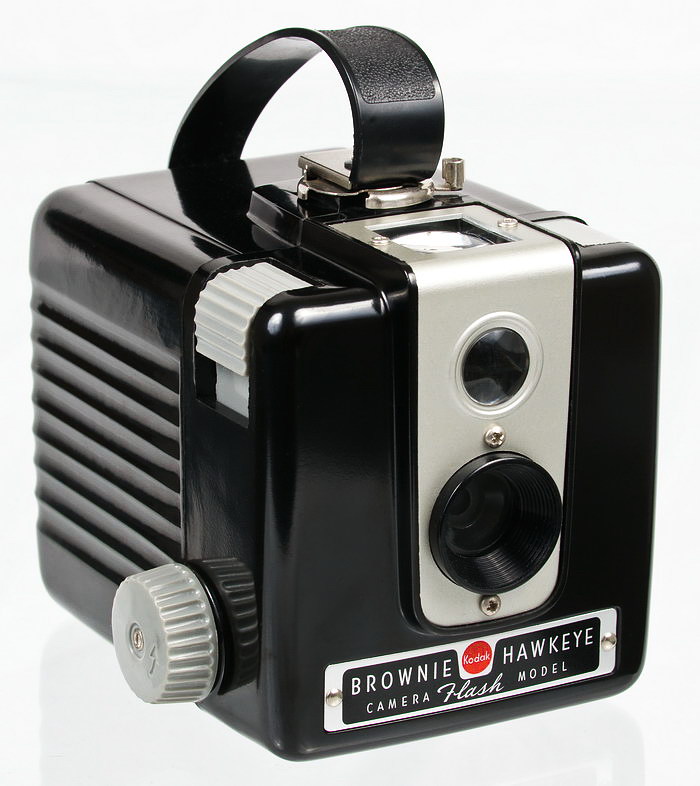
I’d love the documentation of my past because it might trigger memories. I don’t think I’d need snaps of 75,000 meals, but a few hundred would solidify my sense of who I was. My parents had an old Brownie Hawkie camera, but I think they only shot two rolls of film of me and my sister. I figured they also shot two rolls of themselves before we were born.

That’s just 48 photos to document my youth. I really envy kids growing up with smartphones today. (But why aren’t I snapping pictures with mine now?)

JWH


Trying To Control My Insane Impulse to Buy the Past

by James Wallace Harris, Friday, January 24, 2020

Lately, I want to buy the past. For example, I’ve been craving old computers I couldn’t afford back in the 1980s. Or I’ve been compulsively buying old books and magazines on eBay I once own when I was a teen in the 1960s. And now I dream of buying a mid-century house and fixing it up to look like the 1950s Florida of my childhood. Maybe even get a 1957 Pontiac to match.

What explains those impulses? I used to have in-the-moment impulses like eating junk food or getting laid, but my decrepit stomach gets upset at one and my elderly dick has become erratically indifferent to the other. That makes me wonder if buying the past is a kind of compensation for two of nature’s most basic impulses. If it is, it doesn’t work because I’m still hungry and horny.

Life used to be more satisfying when I could get satisfied.

Buying old stuff does provide a fleeting moment of pleasure but as soon as the UPS delivery person delivers my goodies I pack them away and think about the next relic of the past to purchase. A carton of Ben & Jerry’s would keep me happy for two evenings, and getting lucky would alleviate horniness for a few moments to a few days depending on my age in life.

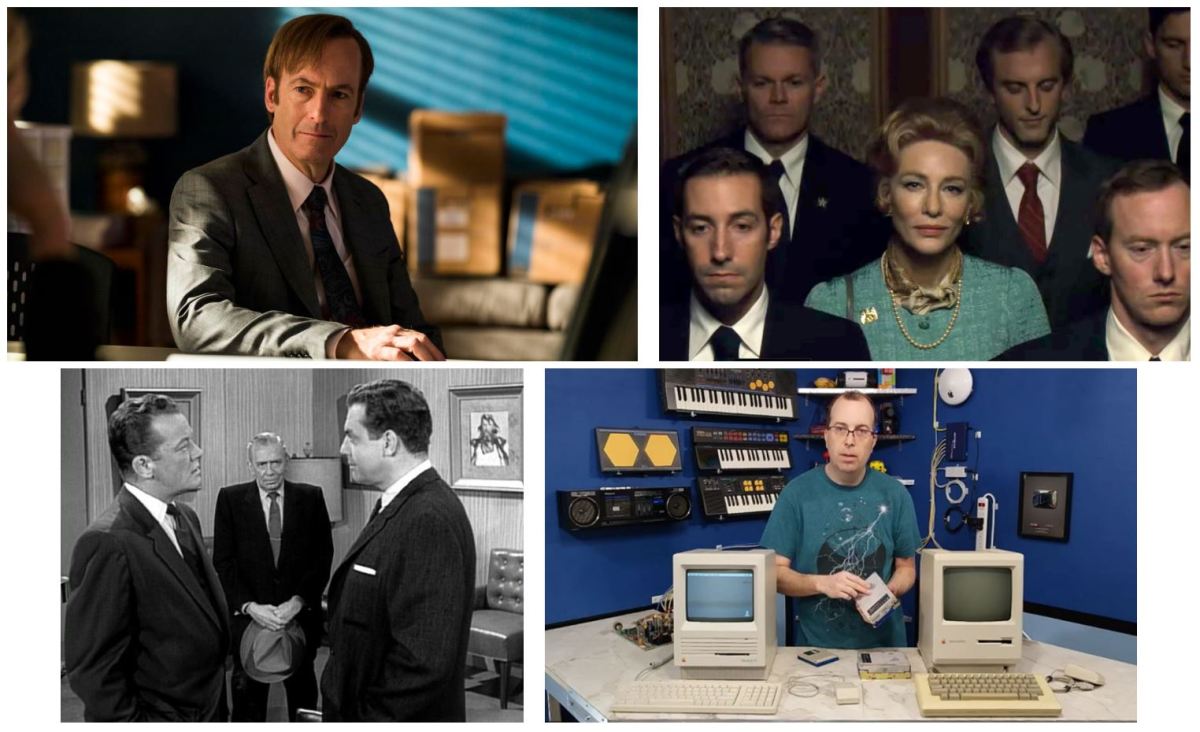
Television used to be a great balm for itchy urges, but nowadays watching Perry Mason shows remind me of 1962 or viewing YouTube inspires collecting and renovating antiques of my twenties. If I had never watched The 8-Bit Guy I don’t think I’d be craving an Apple IIGS right now. I can understand where the genetic programming for pizzas and pussy come from, but what explains the biology driving me to buy decaying runs of Galaxy Science Fiction?

Getting old is nothing like I expected. I thought I’d go bald and become wrinkled, yet essentially be my same old self. I never imagined a time when I couldn’t drink Dr. Pepper and eat German chocolate cake. I was warned that my dick would wear out, but I assumed so would the horniness. That really wasn’t fair. I feel like Henry Bemis when his glasses broke.

Henry Bemis

My retirement years are everything I never planned. Why didn’t they warn us? I have all this time to indulge my whims and have all the whims of my youth, but being young when you’re old isn’t very practical. I still have a future. Maybe even a future as long as my working years. Everyone asks you when you are a kid, “What are you going to be when you grow up?” But who asks, “What are you going to be when you get old?”

I think I need new cravings. I need new urges and ambitions that suit a decaying body. Something more fulfilling than the urge to guzzle Metamucil. When we are young we study to understand the world and prepare for our working decades. I think I need to study for becoming a successful old person. I don’t need a retro 8-bit computer, what I should crave is a 128-bit computer and an engaging task that will maximize its use.

I need to be buying the future.

JWH


Writing Lessons from Envy

by James Wallace Harris

Basically, my blog is where I write what I think. I polish my essays to be more readable, but I’m too lazy to be more ambitious. Blogging is piano practice for writing but seldom produces professional-level writing. Blogging improves writing skills, exercises the brain to think clearer, but is too casual to produce art. Lately, whenever I read an exceptional essay I feel both envy and regret. Envy for craft, and regret for laziness. It’s time to up my ante.

I recently wrote about rereading Brave New World fifty years after first reading it in high school. Then I read “BRAVE NEW WORLD Revisited Once Again” by the science fiction writer Thomas M. Disch in On SF. I was amazed by how much better Disch had done with the exact topic. He opens with:

Just fifty years ago, at the dawn of the new era that dates from the death of Henry Ford, a young, half-blind, upper-class Englishman published a novel destined to become—along with Orwell’s 1984—one of the two most enduring prophetic visions of the future ever to clatter from the typewriter of man. The novel was Brave New World, its author Aldous Huxley, and the vision was of the Jazz Age gone to heaven. Anything goes in A.F. (After Ford) 632, but what goes particularly well are those two pillars of the affluent society, sex and drugs. What has been eliminated from that society as being subversive and destabilizing is: family life, passionate love, social nobility, and any art but the “feelies, ” fashion design, and dance music. Here’s a sample of the song lyrics and the lifestyle of A.F. 632:

Orgy—porgy, Ford and fun,
Kiss the girls and make them One.
Boys at one with girls at peace;
Orgy—porgy gives release.

I realized this was a complete lesson in writing. Here’s my opening paragraph:

I first read Brave New World in high school back in the sixties. Rereading it again in 2020 reveals that it was entirely over my teenage head. I doubt I got even 5-10% of Aldous Huxley’s satire. Although I expect high school and college students of today have both the education and pop-culture savvy to understand it better than I did, it’s really a novel to read after acquiring a lifetime of experience. When I first read Brave New World I was already mass consuming science fiction so it was competing with shiny gosh-wow sense-of-wonder science fiction. I remember liking Brave New World in places, especially the free sex and Soma, but I thought the story somewhat boring and clunky.

My paragraph was more about me than Brave New World. I feel Disch and I are both trying to get people to reread Brave New World but his lead-in is a better salesman. His paragraph is dense with details about the book, while mine has too many details about myself. Should I even be the subject? My intent was to convince people the book deserves a second reading by my experience, but I could have done that without talking about myself.

Do visitors to this blog want to know about me or the topic of my discussion? Blogging is intended to be personal, and I have a number of followers for this blog, but the essays with the most hits are from people searching Google on a specific subject. Those readers aren’t interested in me. I could have written my first paragraph without any mention of myself and still provided the same data.

I consider this blog, Auxiliary Memory, to be my personal blog and Classics of Science Fiction to be a reference site. Maybe I should use a different style of writing for each.

Information is the key. When people read, people either want specific information or entertaining information. And web readers want quick information. I’m a wordy bastard. This essay is already longer than what the 99% want to read. But I haven’t covered my topic. I could describe a dozen insights I’ve learned from Disch’s essay and make this post 3,000 words long. Or I could put each insight into a different post.

If information is the key, then information density is the essence of great writing. I’m still impressed by how much Disch conveys about Brave New World in his first paragraph. I believe his summary says even more in fewer words.

My final quarrel with the book is one of emphasis from my first reading. I’ve always had a sneaking fondness for the world Huxley invented. I know I’m supposed to disapprove. But I would like to try soma just once, and I wouldn’t say no to a night at the Westminster Abbey Cabaret dancing to the music of Calvin Stopes and his Sixteen Sexophonists. The lyrics of the songs may be sappy, but I’ll bet they’ve got a good beat. As for the feelies, I suppose the plots are pretty simpleminded, but any more so than Raiders of the Lost Ark?

This is not to endorse all the sinister theories of Mustapha Mond, only to suggest that fun’s fun, and that some of the targets of Huxley’s satire are mean-spirited, insofar as he is making a case against pop culture, sexual candor, and the consumption of alcoholic beverages.

Relax, Huxley. You worry too much. Have a gram of Tylenol. Things could be worse. This might be 1984.

Disch’s reading reaction that Huxley’s dystopia is alluring is close to mine. Disch combines story description with story reaction into the same sentence where I separated them into different paragraphs.

My envy of Disch’s writing inspires me to work harder, but it also makes me ask myself a lot of psychological questions about why I want to write. Blogging and other social media appeal to our urge to express ourselves. On many levels, I worry that’s appealing to our ego and vanity. Of course, we also call our activities on social media sharing. But what exactly are we sharing? Ourselves, information, promotion of cool things, memories, passions — the list goes on and on. When a writer produces a work to be read, they are also asking readers to use up some of their time.

The best thing I learned from my six weeks at the Clarion West writers’ workshop was “Great writing is the accumulation of significant detail.” I believe what I learned from my recursive reflection between these two pieces is: “Great writing is the accumulation of significant detail that wastes the least time for the reader.”

That’s a single lesson at one recursive turn. With another cycle, Disch’s prose sparkles for me because I just reread Brave New World and all his allusions resonated. That wouldn’t be true for people who haven’t read the book. That insight reflects back again, and I see I admire Disch’s essay because we both reread Brave New World late in life after first reading it when young. Seeing that lets me know great writing isn’t always in the prose but in the sharing. But that reveals the limits of finding the right reader.

I could keep going, but after the 1,178th word, I believe I spent enough of your time.

JWH