Susan and I Need a New TV Show – Give Us Your Recommendations

by James Wallace Harris, 12/30/22

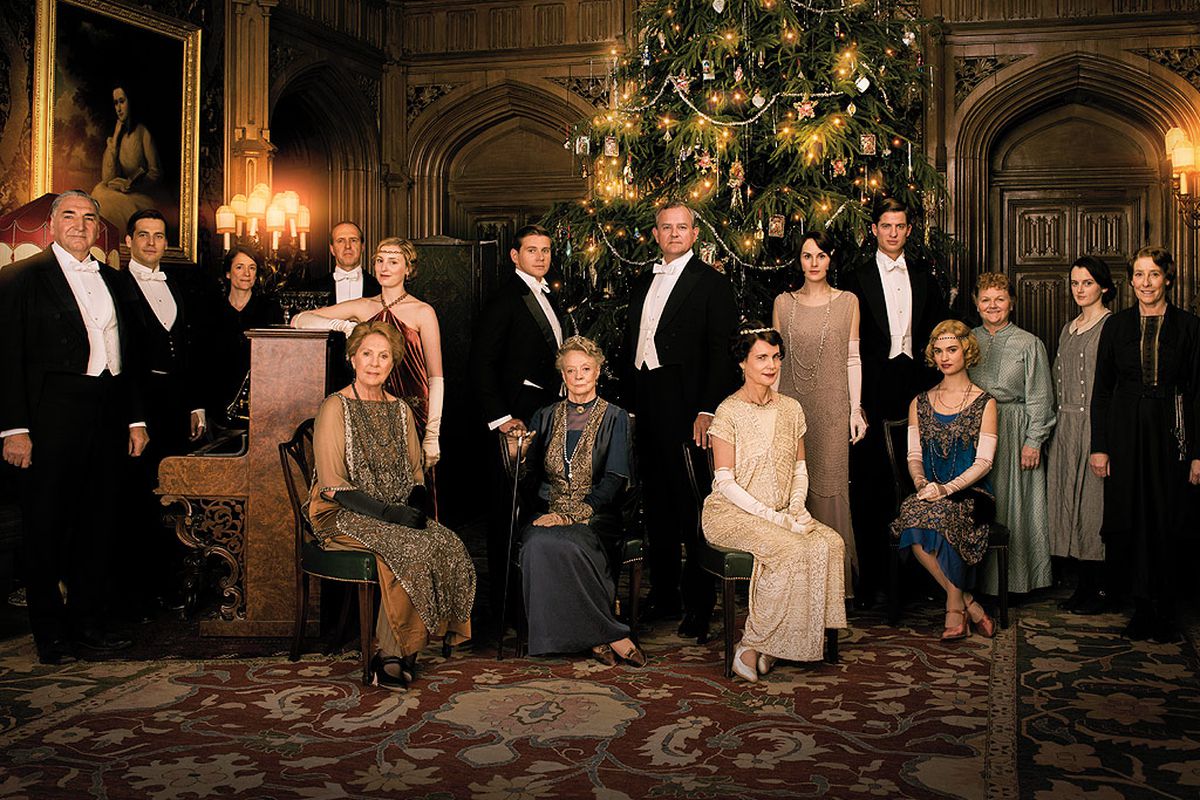
About six weeks ago Susan and I developed a new nightly routine. At ten o’clock she would feed the cats, and then we’d sit down to watch an episode of Downton Abbey with a piece of cake. This has turned out to be an extremely delightful routine and we want to keep it up. However, we’re about to run out of Downton Abbey and need a new show.

When we first got married we always watched TV together, but in recent years, our tastes have diverged greatly and we have a hard time finding shows we like watching together. I’m no longer interested in half-hour comedies which Susan loves. And Susan hates shows like Breaking Bad and Stranger Things. However, we both liked The Sopranos. And that might be a possibility, although Susan might not like it anymore.

It’s strange how our tastes have changed over the last four and a half decades. She used to sit and watch Star Trek with me, and I’d watch The Gilmore Girls with her, but those days of watching something we didn’t like just to be sociable are over. We need something we’ll both love.

So, if there is a series you liked as much as Downton Abbey please let us know. We both liked Downton Abbey in the past, so it was an easy pick. If you’re a couple, recommendations you both like might be more valid.

We are currently considering The Marvelous Mrs. Maisel, which we’ve both watched and liked, and Call of the Midwife which Susan has seen some. We want an hour show that has continuity. Downton Abbey was really a soap opera, and that might be a key to why we looked forward to ten o’clock every night (and well, the cake.)

It helps if the show is streaming somewhere, but I’m not against buying a DVD set.

I just remembered a show we both loved – Northern Exposure. So that’s three possibilities. But if we’re to keep this routine up we’ll need a whole lot of shows.

JWH

Dang, I Broke My TV Watcher

by James Wallace Harris, 11/5/22

I seem to be losing my ability to watch television. In the past year or two, when I try to watch TV by myself, I have the hardest time getting into a TV show or movie. If I’m watching television with Susan or a friend I have no trouble settling into the show, but if I’m alone, I often abandon a show after five or ten minutes. Because I’m a lifelong TV addict used to filling my evenings with the boob tube, this is disturbing.

I’ve got sixty-seven years of solid practice watching TV, so why am I losing this skill now? Some of my earliest memories are of watching TV when I was four. I started watching television with the 1955-1956 season, but sometime in 2021, I began noticing I had a problem, maybe even earlier, but it’s painfully obvious in 2022.

The TV watcher part of my brain has broken. And it’s not for trying. Every evening I try getting into several movies and TV shows. Every once in a while, I find one that my mind will latch onto, but it’s getting rarer. So I’m developing some theories about why my brain is broken.

The Gilligan Island Effect

I loved Gilligan’s Island back in 1964 when it first aired. But as I got older I could no longer watch it. My friend Connell and I use Gilligan Island as our example of being young and stupid. Whenever I catch it on TV now I cringe and wonder how could I ever been so easily amused. That feeling is also true for The Monkees. It embarrasses me to recall those were once among my favorite shows. Now I understand why my dad used to pitch a fit when they were on, telling me and my sister we were morons.

As we age we become more sophisticated in our pop culture consumption. I assumed that development stopped when I got into my twenties because I pretty much watched the same kind of shows for the next several decades. However, with The Sopranos, TV jumped a level in sophistication, and for most of the 21st century, I’ve been consuming ever more sophisticated TV content.

What if my TV-watching mind has gotten jaded with all TV? So everything now feels stupid like Gilligan’s Island did when I got a couple years past twelve?

The TV Buddy Effect

As I said, I can watch all kinds of TV shows and movies if I’m watching them with other people. And looking back over my life I realized I watched a lot of TV with other people. With my family growing up. With friends when I was single. With Susan for most of my married life. With my friend Janis when Susan was working out of town Mondays through Fridays.

When Susan retired and Janis moved to Mexico, things changed. Susan now wants to watch her favorite TV shows from the 20th century and I don’t. So she sits in the living room with her TV and cross-stitches while watching endless reruns of her favorite shows. She likes old shows because she doesn’t have to look at them while she sews. I sit in the den and try to find something to watch on my own. Over the last few years, I’ve had less and less luck until I’m starting to wonder if I can’t watch TV alone at all anymore.

Susan and I do watch some TV together. Around 5:30 we watch Jeopardy and the NBC Nightly News that we record. It’s a family habit and the cats sleep in our laps. On Wednesdays we watch Survivor.

This year I was able to binge-watch Game of Thrones. I had watched it as it came out, and when two of my friends living in other cities each expressed a desire to rewatch the entire series I joined them. I discussed each episode with Linda and Connell in separate phone calls.

The YouTube Effect

Let me clarify something. I can watch about an hour of YouTube a day, and I can channel surf trying to find something to watch for another hour. (By the way, that drives Susan crazy. Another reason she likes watching TV by herself.)

My dwindling ability to watch TV has coincided with my growing love of watching YouTube TV. I have to wonder if watching endless short videos and constantly clicking from one subject to another has broken the TV watcher in my brain, so I can’t stick with longer shows.

The Relevance Effect

Last week I binge-watched A Dance to the Music of Time, a four-part miniseries based on the twelve-novel series by Anthony Powell. I had seen it before, but because I was now reading the books I wanted to watch it again. That seems to suggest if I have a good reason to watch television that I have no problem sticking to a show. My mind isn’t completely defective. I’m now on the fourth book in the series, and I’ve bought a biography of Powell and a character concordance to supplement my reading. The series has over 300 characters.

Knowing the Magician’s Tricks Effect

Another theory I’ve developed deals with my studies in fiction. As I read and think about how fiction works, I’ve paid more attention to how movies and television shows are constructed too. I’ve noticed that I often quit a movie or TV show when I spot the puppeteer. I can hardly stand to watch a mystery or thriller nowadays because they seem so obviously manipulated.

Male Aging Effect

I remember now how my uncles as they got older stopped watching TV except for sports, and even then, still not often. My male friends stopped going to the movies years ago, and I’ve finally stopped myself. I’m now doing what Susan and I used to laugh about her father – going to sleep in his den chair after dinner. Since we bought Susan’s parent’s house when they died, I’m going to sleep in the very same den, around the very same time – 7:30.

Conclusion

Because I sometimes find shows that hook me, I figure my TV watcher isn’t completely broken. I do worry that it will conk out completely. Right now I spend my evenings listening to books or music, and I worry that those abilities might break if I overuse them. I’m thinking my TV watcher needs new kinds of TV content to watch, but I have no idea what that would be.

With so many premium channels cranking out so many kinds of quality shows for the last two decades, I worry that they’ve done everything to death. One reason my mind responded so well to YouTube is the content is very different from regular streaming TV content. But I feel like I’m about to reach the end of YouTube too. I’m starting to think TV shows and movies are like clickbait, that once you’re used to all the variety of bait, you become jaded and stop clicking.

JWH

p.s. I’m using DALL-E 2 to generate the art for my blog.

Fiction v. History

by James Wallace Harris, 9/25/22

Ken Burns’s new documentary, The U.S. and the Holocaust, punched me in the soul. No documentary has ever moved me as much, and I’ve seen a lot of them. And it’s not because it’s about the Holocaust. I’ve even read about most of the painful facts it presents before. No, the gestalt of this film, which is well over six hours, is to set off an epiphany about our relationship with history.

At the highest level, the documentary asks: What did Americans know about the treatment of the Jews under the Nazis from 1932 to 1945 and when and how did they learn it? But to answer that question Ken Burns and company have to describe what Americans were like during those years. The U.S. and the Holocaust give a different history of America for those years from any I’ve ever encountered from people, in school, reading, at the movies, or on television.

Maybe the best way I can describe it is to say: Everything that has horrified me about living through the years 2016 to 2022 existed in the 1920s, 1930s, and 1940s. The documentary cements a theory that I’ve been developing in recent decades – that people don’t change and even the percentages of the population that hold specific opinions don’t really change either.

The documentary set off this existential conundrum: Why didn’t I already know what the documentary revealed? Or did I just filter it out? Republicans are in an uproar over Critical Race Theory and other curricula that they’re afraid will upset their children. I imagine they will be just as upset at The U.S. and the Holocaust. I knew about the wide popularity of the KKK and eugenics in the 1920s. I knew Americans were mostly isolationists and anti-immigration in the late 1930s. But the documentary gives us a different take on history than what I was taught.

I have to wonder since FDR was president from 1932-1935, have we always gotten the Democratic party’s view of that history? I wonder if Ken Burns has rounded out the historical period by adding the Republican party’s take on those years? I do know the documentary feels very synergistic with today’s politics.

I love old movies from the 1930s and 1940s, and none of the hundreds of movies I’ve seen from that era convey what I learned from The U.S. and the Holocaust. My grandparents, parents, aunts, and uncles, all lived through those years, and none of them ever described the mood of the country revealed in the documentary. I’m a bookworm that has read countless works of both fiction and nonfiction about America in those decades, giving me some of the details from in the documentary, but not in the same gestalt. Two books that come to mind are One Summer: America, 1927 by Bill Bryson and In the Garden of Beasts by Erik Larson.

After I watched the Ken Burns documentary I read The Plot Against America by Philip Roth. It’s a kind of science fiction novel, an alternative history where Charles Lindbergh wins the 1938 presidential election and for many of the reasons described in the documentary. Roth was born in 1933, and he makes himself the point-of-view character in his novel. Young Phil is only 8 when it begins and 10 when it ends, but his viewpoint is mature. It’s about the anti-Semitism of those years.

I thought The Plot Against America was a well-told story about Jewish life in Newark, New Jersey 1938-1942. I thought Roth’s alternate history speculation was well done, deriving from the kind of knowledge I got watching The U.S. and the Holocaust. But the story is mainly a personal one, and its gestalt is different from the documentary.

Last night Susan and I watched Radio Days for the umpteenth time. It’s Woody Allen’s nostalgic look back at those same years. It completely ignores all the political history of The U.S. and the Holocaust. Radio Days is like both movies from that period and later films that worked to recall that era. They all filter out the nastiness of racism and xenophobia that existed in America back then. Although some of it came through in the film The Way We Were, and the book version of Breakfast at Tiffany’s.

And just before I watched the three episodes of The U.S. and the Holocaust I read Revolt in 2100 which contains a 1940 short novel by Robert A. Heinlein called “If This Goes On….” Heinlein imagined America would go through decades of The Crazy Years, before undergoing a second American revolution that created an American theocracy. I was disappointed that Heinlein didn’t do more world-building for his novel, but after seeing the Ken Burns documentary I understand his inspiration for writing it. It’s obvious that many Americans back then wanted a Protestant theocracy. Consisting of only white people from England, Germany, and some Scandanavian countries.

I think it’s important to distinguish fascism as a political philosophy from the Nazis, who were also fascists. What many Americans wanted then and now is basic fascism, and the Philip Roth novel shows how America could have turned fascist.

The other day I saw a quote on Facebook that went something like this: If you get warm and fuzzy feelings reading history then you’re not studying history. I’m on the third volume of world history by Susan Wise Bauer, and it’s brutal. Most people want to romanticize history, which is what we get from novels and movies. The Republicans don’t want CRT taught because they want their kids to feel all warm and fuzzy studying American History. The new Ken Burns documentary will not leave you feeling warm and fuzzy.

My current theory is humans can’t handle reality. That we develop all kinds of psychological delusions to filter reality out. We prefer our fantasies. And popular history along with pop culture gives us nice takes on the past that allows us to cope. It’s also why most people’s theory of how reality works is no more complex than a comic book. It’s why we’ve always clung to religion. It’s why I have a life-long love of science fiction.

We just can’t handle complexity. There are plenty of real history books that document the reality of the times they cover, but they aren’t widely read. Maybe the Republicans are right, and history is too brutal for children. But maybe we keep repeating history because we’re all too wimpy to handle history.

I’m getting so I can’t stomach the historical lies of Hollywood, but I don’t know if I can handle all that much real history either. I used to think that maybe four percent of the population was mentally ill. In recent years, I’ve upped that to forty percent. But lately, I’m thinking there’s an entry for all of us in the DSM-5.

JWH

It’s Hard To Tell What’s A Bargain Is Anymore

by James Wallace Harris, 7/2/22

One value of writing an essay is thinking through an idea. I’ve rewritten this essay several times as I rethink my assumptions and feelings. When is a bargain a great deal or just something cheap I really don’t need? When does something feel expensive when it’s not? When is something cheap but overpriced or a wonderful value? How does inflation warp our sense of value as we age?

In 1962 when I was in the 6th grade I could ride my bike down to the base theater on Homestead Air Force Base and see a movie for 15 cents. That was a kid’s price back then. I could get a candy bar for 5 cents, and a coke in a cup for another nickel. It was a small cup, but also the only size cup. Total expenditure was a quarter. The last time I bought a movie ticket, before the pandemic, it was $12. Candy was around $5 and a drink was around $5, but the comparison isn’t perfect. In 1962 I probably got a 200-calorie sugar high, and today it would probably be a 2,000-calorie sugar overdose.

Magazines in 1962 were 15-25 cents. Today it’s $7.99 – $11.99. Back then I’d read in a magazine all week. Today, I’m lucky if one will divert me for 30-minutes because I have so many others to read. Back then I was happy with Popular Science, Popular Mechanics, and Mad Magazine. Today I try to keep up with a couple dozen mags. But is having a quantity a bargain?

A paperback was 35-60 cents. I’m not sure they have mass-market paperbacks anymore. It’s $11.99 for a Kindle book. A science fiction magazine like F&SF was 40 cents in 1962, but $9.99 an issue in 2022. What’s hilarious is I often pay $10-15 for old issues of F&SF today. Last year I paid $35 for Fall 1949 issue (v.1 n.1) of F&SF. It originally cost 35 cents. I believe that tells me its real worth. How many things do I enjoy today that I would I pay 100x their original costs sixty years from now?

In 1962 all TV was free. There were three channels. I can still get ABC, CBS, and NBC for free if I wanted to use an antenna, but I watch them through a $65 package from YouTube TV today and get several dozen channels thrown in. It ruffles my feathers to pay that $65 but my wife Susan considers it a cheap essential and her favorite form of entertainment.

Susan worked out of town from 2008-2018. She loves TV way more than I do, so I encouraged her to have cable TV at her Mon-Fri apartment. I got to cut the cord at our house, which delighted me. I bought a TiVo to record off-the-air shows like Jeopardy and the nightly news but I mostly watched Netflix for fun shows. About $25 a month total. I was thrilled except that I missed Turner Classic Movies (TCM). Cord-cutting felt like a real bargain!

When Susan stopped working out of town I convinced her to try streaming TV. We tried AT&T TV before settling on YouTube TV. YouTube started out at $45 a month and is now $65. Not a bad deal, but with all of our other subscription TV services, we’re now spending $128 a month. That seems like a lot, as painful as having a cable bill. But times have changed. There are so many options for watching TV.

Cord-cutting was never about saving money. I just hated paying the cable bill because out of the hundreds of channels we got, Susan liked about a dozen and I watched two. That just bugged the crap out of me. However, I now subscribe to Apple News+ for $9.99 a month and it gets me over 300 digital magazines to read. I probably look at less than a dozen of them, yet I don’t agonize over the fact I’m paying for almost 300 I’m not reading. I’m not being consistent, am I?

Before Apple News+ it wasn’t uncommon for me to buy a handful of magazines at the bookstore and spend $75. So, I’m thinking: What should a handful of TV channels cost?

I also spend $9.99 a month with Scribd.com for ebooks and audiobooks. I read or listen to one or two a month and consider it a bargain without worrying about the ones I’m not reading. Again, $9.99 versus $40-50 for two books. I only use YouTube TV for TCM, so $65 for one channel seems extreme. Although, if pressed, TCM is worth $65.

Netflix used to be about $9.99 a month, and I considered it a great bargain too. However, now that there are so many subscription services, it’s hard to tell what a bargain is anymore. When we only had Netflix and watched it all the time it was a bargain. Netflix seems much less of a bargain when we have Netflix, AppleTV+, HBO Max, Hulu, Amazon Prime, PBS Passport, Peacock, Paramount Plus, Wondrium, etc.

We should go through a new kind of cord-cutting, sub-cutting. With so many premium streaming TV services, we often ignore one or two for months while we binge-watch shows on the others.

I don’t mind paying for something we use. We spend very little money on going out, vacations, clothes, etc. I drive a 22-year-old truck. We’re retired, and spend most of our time home, so we can afford a few TV subscriptions. However, I don’t want to waste money either. And I like a bargain — and I’m a cheap ass. But is Netflix a bargain when I ignore its large buffet of movies and TV shows for several months of the year?

We recently canceled Netflix because neither one of us watched it for months. We even discovered we were paying for two subscriptions because Susan had never canceled her out-of-town sub. We mainly canceled Netflix to protest the newest price hike. Psychologically, a TV subscription should be $4.99 – $9.99. Anything more, and I worry about getting my value.

HBO Max is $14.99. That seems like a Mercedes price when I’m used to driving a Toyota. HBO Max has a cheaper subscription but it’s with commercials. I’m adamantly against paying to watch anything with commercials. If I had to watch commercials I’d go back to over-the-air TV and cancel all my subscriptions.

When we had cable I always wanted to have a la carte channel buying. I thought the perfect payment method would be to subscribe to just the channels we wanted. And I’d be willing to pay extra to not have commercials.

For some reason, Netflix seemed like a wonderful bargain at $9.99 a month, but a terrible deal at $17.99 a month. Oddly, HBO Max at $14.99 a month seems like a better deal than Netflix or Hulu. But now that I’ve canceled Netflix, Hulu, and HBO Max hardly seems worth $30+ a month either.

My friend Linda is very disciplined. She subscribes to only one TV service a month. Currently, it’s HBO Max, but she plans to cancel it and go to AppleTV+ again when some of her favorite shows return with new seasons. So she spends from $5 to $15 a month on TV. Now that’s a bargain.

When YouTube TV was $45 a month it was a real bargain. Now that it’s $65 it doesn’t seem like one. And if they raise their price again, it will seem like a rip-off.

But am I being penny wise and pound foolish? Going to a movie is $12. Buying a DVD runs $8-25 and I used to buy a lot of them. Renting a movie on Amazon Prime runs $2-20 and I still do that. Watching just one or two movies I used to go out to see, or once bought on disc turns any premium TV subscription into a bargain.

The other day I bought 8 seasons of The Andy Griffiths Show for $15 each on Amazon Prime for Susan’s birthday. She watches that series over and over while she sews. But I thought it was painful to see her watch Andy on commercial TV that cuts several extra minutes out of each episode that originally ran 28 minutes. Most premium streaming TV channels offer dozens, if not hundreds of complete TV series. Andy isn’t on any of them at the moment.

I really can’t complain about their monthly prices. They are a bargain. But only if we watch something during the month. I’d say one movie or one season of a TV show is breaking even, and anything more makes them a bargain.

Susan doesn’t mind commercials. She sews while watching television, and just ignores those never-ending painful minutes of ads. I sometimes wonder if she could handle over-the-air broadcast TV. I bet she’d be just as happy watching MeTV all day long as she is watching all the old TV shows on TBS every day. But she loves many other channels. She considers YouTube TV a cable TV service. When a tennis tournament is on she has to have ESPN. So YouTube TV is a bargain to her, but a waste of money to me.

Bargains are relative. And it’s harder to budget when two people are involved. Susan said if YouTube TV raised its prices again, we’d cancel something else.

Even though I don’t watch them much, I consider AppleTV+ and PBS Passports to be real bargains because they are only $5 a month. If all the services charged just $5 a month I’d be willing to subscribe to all and not worry if I used them each month. But at $10-15, I figure we have to decide which is worthwhile, and which is a bargain.

Maybe we should cancel any streaming TV service that’s more than $10 a month. But I pay $13 a month for YouTube Premium so I don’t have to watch commercials. All the content is free, I’m just paying to get rid of stuff I don’t want to see. Now, is that a bargain?

Life was simpler when everyone watched the same three broadcast channels. We had a lot more shared culture. But those days are over. Now we have endless choices in endless varieties. Is that a bargain? Again it’s relative. But in 1966 I could go to school and nearly everyone I knew had watched some of the same shows I had watched the night before. That was priceless.

JWH
The Pursuit of Love Leads Me Down a Rabbit Hole

by James Wallace Harris, 9/27/21

My friends Mike and Betsy recommended a new TV series on Amazon Prime, The Pursuit of Love, so I gave it a try. This essay chronicles where their casual recommendation has led me.

As I watched the show on Amazon Prime I was reasonably entertained but disturbed by certain details. For a period piece set the 1920s – 1940s it felt over the top. I doubted people really looked and acted like they did in the show. The sense of a revisionist history was further enhanced by the soundtrack that used contemporary music. I called Mike to chat about my impressions, and he agreed. I knew nothing about the novel the show was based on. We both thought the past couldn’t have been much like that, but didn’t know for sure. Of course, we knew it was a rom-com drama and wasn’t meant to be a history lesson, but it kept sideswiping bits of real history, and that was intriguing.

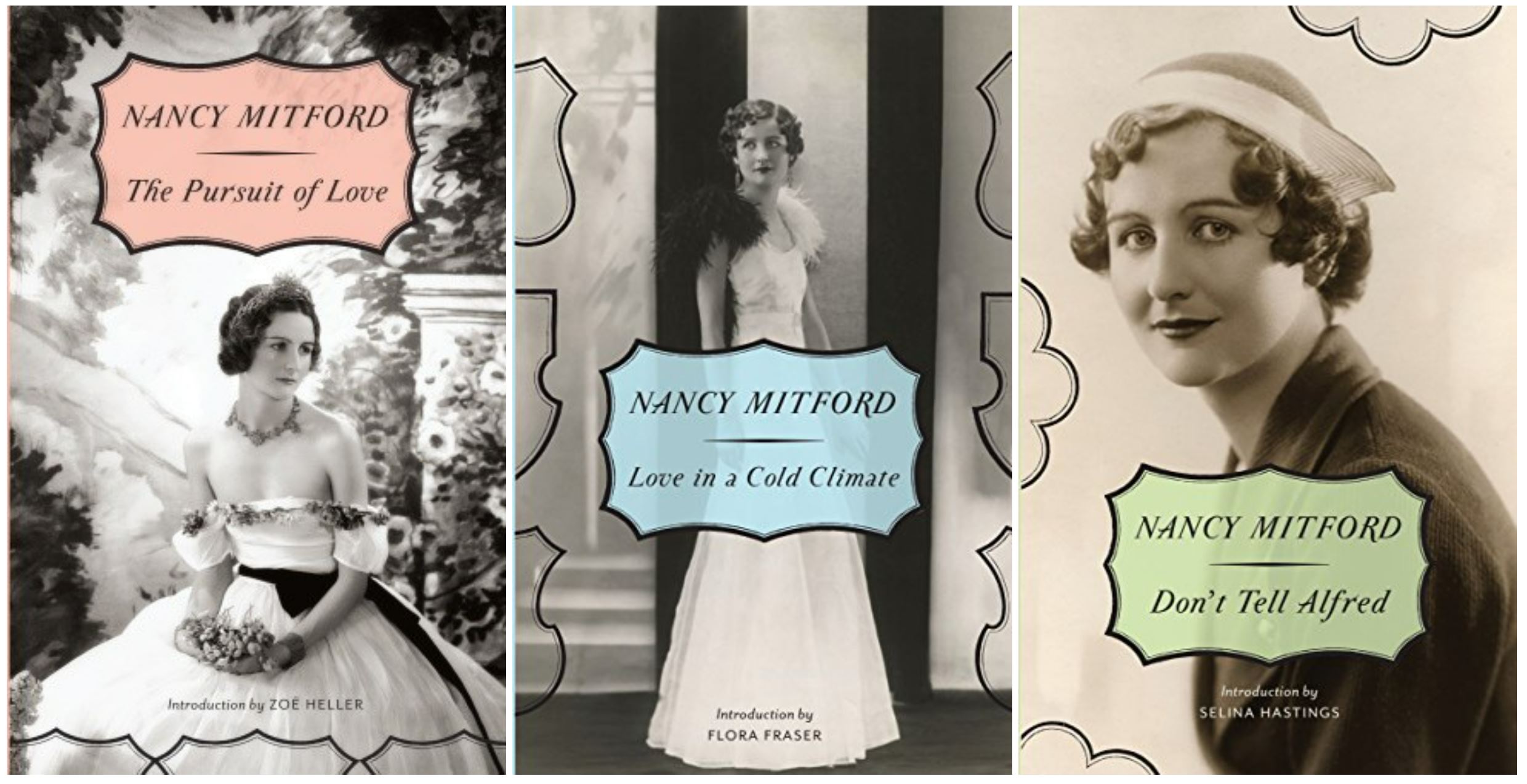
I decided to research its historical accuracy and discovered that the TV show was based on a trilogy of novels written by Nancy Mitford. They were based on her family, and it was then I discovered she was part of a famous group of six sisters. I remembered reading a review of a book called The Sisters by Mary S. Lovell years ago. I read the review because I liked the book’s cover but details within the review put me off. Two of the sisters had been friends with Adolph Hitler, and several family members had supported Hitler, and one daughter married the hated Oswald Mosley, leader of the English fascists. They just didn’t seem to be nice people to read about. The sisters had become notorious, an embarrassment to their parents, hounded by press, which made them sound like depression era Kardashians. Not something for me.

Still, the television show intrigued me. Was it an accurate portrayal of people in England at the time? Or was it a modern interpretation of how 21st-century screenwriters wanted to glamourize that history. I ordered a copy of The Sisters to find out. I figured the biography would tell me. I also discovered there had been two previous television productions of the story, based on: The Pursuit of Love (1945), Love in a Cold Climate (1949). There was a third book in the series, Don’t Tell Alfred (1960). By the way, I think all three TV productions focus on the first book despite two of them using the title from the second book, but the 1980 series goes into the second book.

My assumption that I’d hate The Sisters from reading the review was completely wrong. The family’s biography turned out to be immensely readable and fascinating. All I can say if if you love Downton Abby, there’s a good chance you’ll love this book. I’ve always been partial to biographies, and this one is a good one. A good biography makes you feel like you’re getting to know someone, and in this book, you get close to nine people (mother, father, son, and six daughters).

I learned that Nancy Mitford had lived a real life version of the 1920s, 1930s, and 1940s she fictionalized in The Pursuit of Love. I then wondered if the 1980 miniseries, Love in the Cold Climate, that had been on Masterpiece Theater was a more realistic portrayal to the times? I went looking for it but found it’s not available to stream or buy. I did find a used DVD copy to order, but when it arrived it was a Region 2 disc. Luckily, I remembered had an extra DVD player that was region free. (This version is available on YouTube.)

About this time my friend Anne dropped by and saw the biography. She got excited and said she remembered seeing a show on Masterpiece Theater a long time ago based on the Mitford sisters. I pulled out the DVD, “This one?” “Yes, that’s it!” She got even more excited and we decided to watch it together. This version gives Judi Dench star billing as the mother but she doesn’t get much air time. The only other actor I knew was Anthony Head, and his wasn’t a major part either. I did like this version, and I think I’ll rewatch the 2021 version. The main thing about the 1980 version, was the actors, costumes, and sets looked more realistic to how I picture the 1920s – 1940s. The performances were much more subtle, and being eight parts rather than three, included a lot more of the details and dialog from the novels.

By then I was reading the novel, and had encountered some of the family anecdotes four different ways. This was rather revealing about basing fiction on real life events. For example, Nancy tells in her novel how her father liked to hunt his children on horseback with fox hounds. The novel version is a gussy-up memory, but the two television versions sensationalizes the story. When I read the biography Lovell suggests it was probably one old hound one time with a couple of the daughters. And Jessica Mitford also wrote a book about the same family stories of growing up with her sisters, Hons and Rebels, and gives a different view, but I haven’t read it yet. Nancy later on felt Jessica’s memory had been distorted by her book, and that led to squabbles between them. However, all six girls were always squabbling, and all six became very successful in their own ways.

There is another adaptation of Love in the Cold Climate from 2001 what I want to watch, but I’ll have to subscribe to BritBox to watch it. It’s another 3-part version. I’m curious how they present the time period too.

The Sisters was full of history. The Mitford girls were related to Churchill and connected by marriage to the Kennedys, two of them were pals with Hitler, one connected to de Gaulle, and one had connections with the Roosevelts. They all knew many famous writers and became bestselling authors themselves. They were part of the Bright Young Things set. And if you’re into that kind of thing, they hobnobbed with fellow aristocrats, royalty, while growing up in manor houses, hunting foxes, attending coming out balls, following the season, and doing all those things we saw in Downton Abby. Various sisters lived in London during the Blitz and V-2 bombings, Spain during the revolution, Germany during the rise of the Nazis, and France before and after the war. One sister had to go before the House of Un-American Activities, while another was jailed during the WWII for being married to Oswald Mosley.

Here is a nice animated video that quickly covers the history of the Mitford sisters:

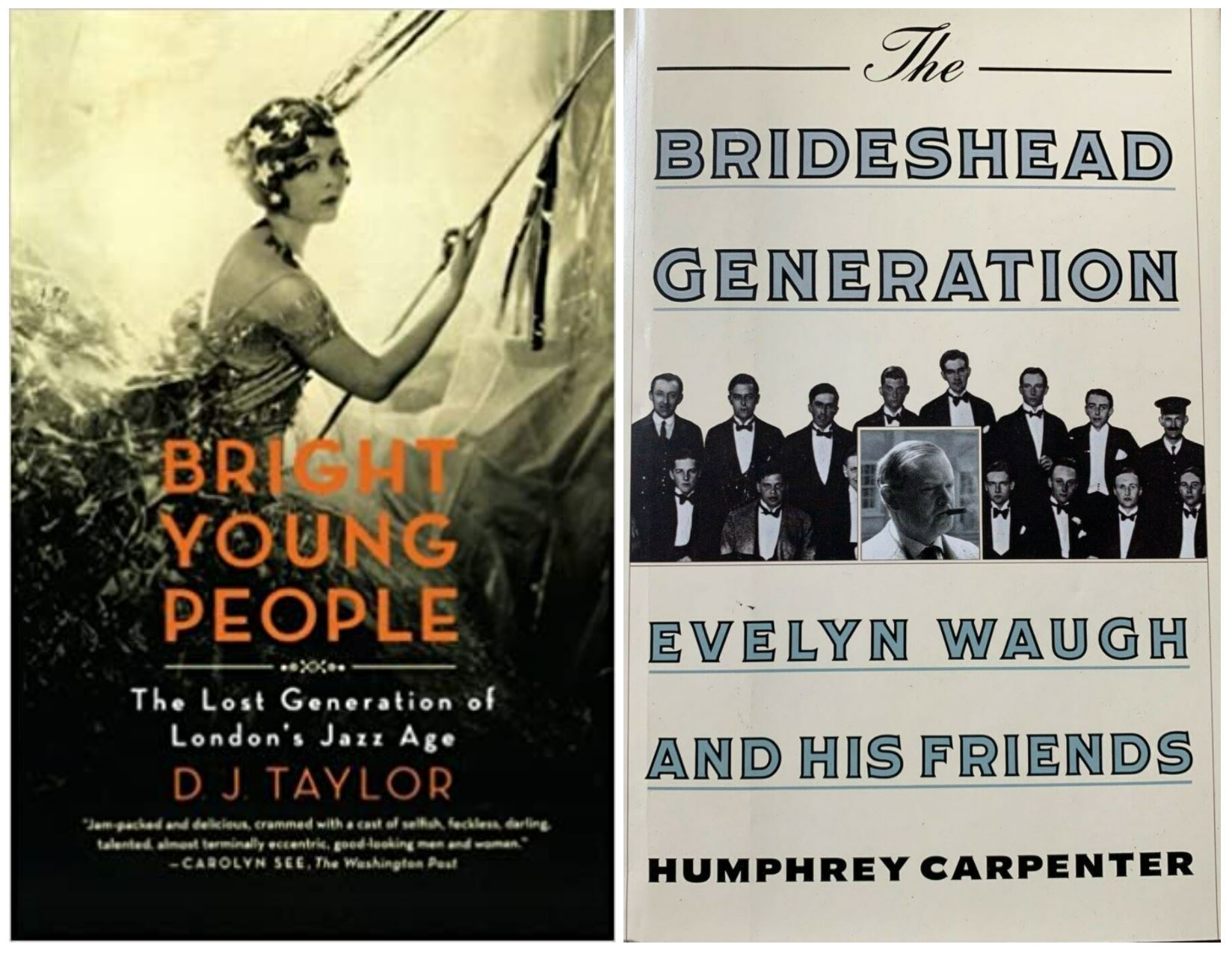
Because of all this history, and wanting to know more about the writers they knew, I ordered two more books to read.

This history fills in a time period after the Bloomsbury group that I learned about as an English major and before The Beatles who made England interesting back in the 1960s when I was growing up.

I fell into this black hole of literary history in the same way I fell into reading a zillion books about The Beats and Jack Kerouac, or all the books I’ve read about the Transcendentalists, or the Lost Generation, or the Impressionists, or certain crowds of science fiction writers. I love how an art movement brings people together.

JWH