The Young Adult Novels That Shaped My Childhood

by James Wallace Harris, 7/22/25

I’ve been amazed by how fanatical young people have become over their favorite pop cultural icons. My wife and I watch Jeopardy every day, and the clues are often based on successful pop culture franchises. Comics and young adult novels dominate, especially at the movie theater. Billions of dollars are spent by their fans, and children and young people often identify with certain characters.

At first, I thought all of this was new. The Beatles had worldwide fame, but I can’t think of any fictional characters that were as popular in the 1960s as those that have emerged in the 21st century. Star Trek and Star Wars fandoms began to evolve in the 1970s, but it wasn’t until the advent of the World Wide Web that they achieved pop culture universality.

Many consider science fiction fandom the first. It began in the late 1920s and by 1939 had its first World Convention. However, we’re only talking hundreds. I considered myself a science fiction fan in junior high, but it wasn’t until the 10th grade that I met another fan in person. That was 1967.

Looking back, I realize it was YA novels that made me a fan, too. At seventy-three, I wonder if I would have had a different life if I had discovered the works of another author first.

I realize now that reading books was my way of coping with the stress of growing up. Just after JFK’s assassination in November 1963, my family began to fall apart. In 1963-1964, I attended three different 7th-grade schools, and two 8th-grade schools, in two states, and lived in four different houses. My parents became obvious alcoholics, their marriage began to unravel, and my dad had his first heart attack. Somehow, I remained a happy kid.

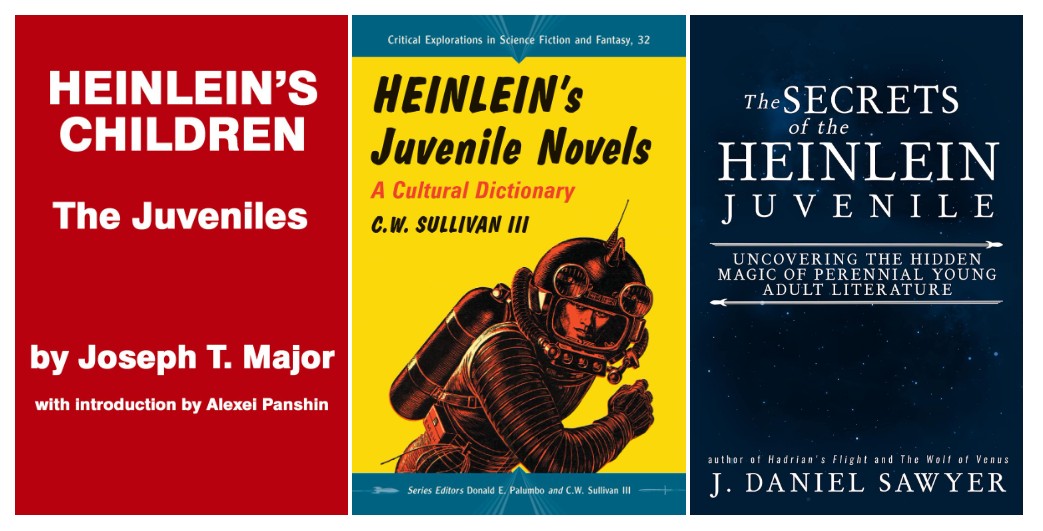
Just before I turned thirteen, when I began the 8th grade in September 1964, I discovered the young adult novels of Robert A. Heinlein. They didn’t use the term young adult back then, but called them books for juveniles. Juvenile delinquency was also a common phrase back then. Before that, they were called books for boys. There were also books for girls. Gender roles were specific back then. This was when newspapers divided job listings into “Men Wanted” and “Women Wanted.”

Discovering Robert A. Heinlein and science fiction gave me a positive outlook on life and my future. I especially identify with the Heinlein juveniles. I remember at the time believing Heinlein would have a literary reputation similar to Mark Twain by the time the 21st century rolled around. That hasn’t happened. Heinlein is often shunned by modern readers of science fiction. I accept much of the criticism regarding his adult novels published after 1960, but I still embrace his young adult novels and other work published before 1960.

Charles Scribner’s Sons, famous for publishing Hemingway, F. Scott Fitzgerald, and Thomas Wolfe, first published the twelve Heinlein juveniles between 1947 and 1958. The Heinlein juveniles were highly regarded by librarians and schools. I discovered them because my 8th-grade teacher put them on her approved reading list. She required our class to read three novels, three magazine articles, and three newspaper articles every six weeks. If we didn’t, she lowered our grade one letter. If we read five of each, she raised our letter grade by one letter. I always read the five of each because I’m terrible at diagramming sentences and understanding grammar. That upped my C to a B each report card.

For over sixty years now, I have been grateful to this teacher. Sadly, I can’t remember her name.

I keep hoping YouTube book reviewers will read Heinlein’s juveniles and reevaluate their judgment on Heinlein. Over the decades, I’ve read memoirs by scientists, writers, and astronauts about how they loved the Heinlein juveniles when they were young, and the impressions the books made on them.

I’ve been meaning to reread all the Heinlein juveniles again and judge them without the influence of nostalgia. Has sentiment clouded my perspective? I fear my love of these books is similar to how people embrace religion when young. Ideas often brainwash us in youth, and it’s almost impossible to deprogram ourselves. Our species suffers from delusions. No one is free of being fooled by beliefs. For every individual, it’s a matter of how delusional.

At seventy-three, I’m taking a hard look at what science fiction did to my mind and personality. I’m starting with the Heinlein juveniles because I believe they were at the Big Bang of my becoming self-aware.

Before I got into science fiction, I consumed the Oz books by L. Frank Baum. I read an article in my thirties about how some libraries pulled the Oz books off their shelves because the librarians worried they gave children unrealistic expectations about life. At the time, I thought that was silly. However, I realized I had grown up with many unrealistic beliefs about life. At the time, I believed the Heinlein juveniles had made me more realistic. Four decades later, I know that was wrong too.

When I took computer programming classes, they taught us the term GIGO – garbage in, garbage out. Have all the pop cultural fantasies we’ve consumed caused our delusional adult beliefs? Humans have always been susceptible to religious fantasies. Haven’t we just replaced those with pop cultural fantasies?

I love the Heinlein juveniles. Why? If I understood why, would I still love them?

JWH

Fiction v. History

by James Wallace Harris, 9/25/22

Ken Burns’s new documentary, The U.S. and the Holocaust, punched me in the soul. No documentary has ever moved me as much, and I’ve seen a lot of them. And it’s not because it’s about the Holocaust. I’ve even read about most of the painful facts it presents before. No, the gestalt of this film, which is well over six hours, is to set off an epiphany about our relationship with history.

At the highest level, the documentary asks: What did Americans know about the treatment of the Jews under the Nazis from 1932 to 1945 and when and how did they learn it? But to answer that question Ken Burns and company have to describe what Americans were like during those years. The U.S. and the Holocaust give a different history of America for those years from any I’ve ever encountered from people, in school, reading, at the movies, or on television.

Maybe the best way I can describe it is to say: Everything that has horrified me about living through the years 2016 to 2022 existed in the 1920s, 1930s, and 1940s. The documentary cements a theory that I’ve been developing in recent decades – that people don’t change and even the percentages of the population that hold specific opinions don’t really change either.

The documentary set off this existential conundrum: Why didn’t I already know what the documentary revealed? Or did I just filter it out? Republicans are in an uproar over Critical Race Theory and other curricula that they’re afraid will upset their children. I imagine they will be just as upset at The U.S. and the Holocaust. I knew about the wide popularity of the KKK and eugenics in the 1920s. I knew Americans were mostly isolationists and anti-immigration in the late 1930s. But the documentary gives us a different take on history than what I was taught.

I have to wonder since FDR was president from 1932-1935, have we always gotten the Democratic party’s view of that history? I wonder if Ken Burns has rounded out the historical period by adding the Republican party’s take on those years? I do know the documentary feels very synergistic with today’s politics.

I love old movies from the 1930s and 1940s, and none of the hundreds of movies I’ve seen from that era convey what I learned from The U.S. and the Holocaust. My grandparents, parents, aunts, and uncles, all lived through those years, and none of them ever described the mood of the country revealed in the documentary. I’m a bookworm that has read countless works of both fiction and nonfiction about America in those decades, giving me some of the details from in the documentary, but not in the same gestalt. Two books that come to mind are One Summer: America, 1927 by Bill Bryson and In the Garden of Beasts by Erik Larson.

After I watched the Ken Burns documentary I read The Plot Against America by Philip Roth. It’s a kind of science fiction novel, an alternative history where Charles Lindbergh wins the 1938 presidential election and for many of the reasons described in the documentary. Roth was born in 1933, and he makes himself the point-of-view character in his novel. Young Phil is only 8 when it begins and 10 when it ends, but his viewpoint is mature. It’s about the anti-Semitism of those years.

I thought The Plot Against America was a well-told story about Jewish life in Newark, New Jersey 1938-1942. I thought Roth’s alternate history speculation was well done, deriving from the kind of knowledge I got watching The U.S. and the Holocaust. But the story is mainly a personal one, and its gestalt is different from the documentary.

Last night Susan and I watched Radio Days for the umpteenth time. It’s Woody Allen’s nostalgic look back at those same years. It completely ignores all the political history of The U.S. and the Holocaust. Radio Days is like both movies from that period and later films that worked to recall that era. They all filter out the nastiness of racism and xenophobia that existed in America back then. Although some of it came through in the film The Way We Were, and the book version of Breakfast at Tiffany’s.

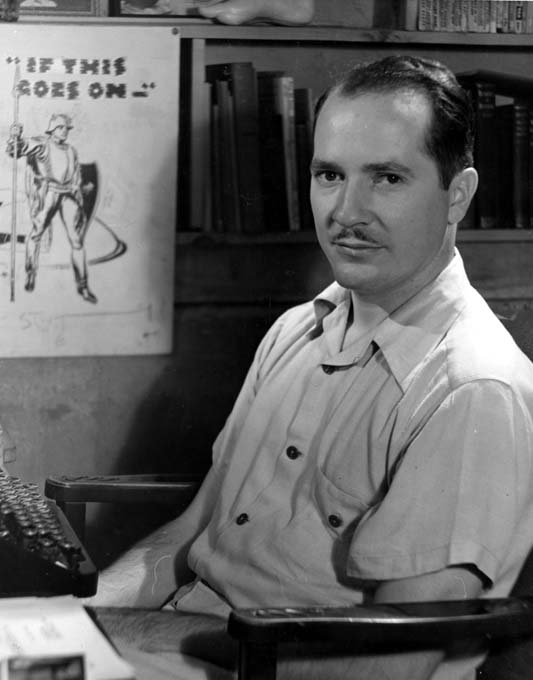
And just before I watched the three episodes of The U.S. and the Holocaust I read Revolt in 2100 which contains a 1940 short novel by Robert A. Heinlein called “If This Goes On….” Heinlein imagined America would go through decades of The Crazy Years, before undergoing a second American revolution that created an American theocracy. I was disappointed that Heinlein didn’t do more world-building for his novel, but after seeing the Ken Burns documentary I understand his inspiration for writing it. It’s obvious that many Americans back then wanted a Protestant theocracy. Consisting of only white people from England, Germany, and some Scandanavian countries.

I think it’s important to distinguish fascism as a political philosophy from the Nazis, who were also fascists. What many Americans wanted then and now is basic fascism, and the Philip Roth novel shows how America could have turned fascist.

The other day I saw a quote on Facebook that went something like this: If you get warm and fuzzy feelings reading history then you’re not studying history. I’m on the third volume of world history by Susan Wise Bauer, and it’s brutal. Most people want to romanticize history, which is what we get from novels and movies. The Republicans don’t want CRT taught because they want their kids to feel all warm and fuzzy studying American History. The new Ken Burns documentary will not leave you feeling warm and fuzzy.

My current theory is humans can’t handle reality. That we develop all kinds of psychological delusions to filter reality out. We prefer our fantasies. And popular history along with pop culture gives us nice takes on the past that allows us to cope. It’s also why most people’s theory of how reality works is no more complex than a comic book. It’s why we’ve always clung to religion. It’s why I have a life-long love of science fiction.

We just can’t handle complexity. There are plenty of real history books that document the reality of the times they cover, but they aren’t widely read. Maybe the Republicans are right, and history is too brutal for children. But maybe we keep repeating history because we’re all too wimpy to handle history.

I’m getting so I can’t stomach the historical lies of Hollywood, but I don’t know if I can handle all that much real history either. I used to think that maybe four percent of the population was mentally ill. In recent years, I’ve upped that to forty percent. But lately, I’m thinking there’s an entry for all of us in the DSM-5.

JWH

Astounding by Alec Nevala-Lee On Sale for $2.99 for the Kindle

James Wallace Harris, Thursday, December 13, 2018

AstoundingI don’t know why or for how long, but the new book Astounding: John W. Campbell, Isaac Asimov, Robert A. Heinlein, L. Ron Hubbard, and the Golden Age of Science Fiction by Alec Nevala-Lee is on sale for $2.99 for the Kindle edition.

I’ve already read it and can recommend it to anyone who loves reading about the history of science fiction. I bet it wins a Hugo award next year.

See my earlier review, “The Rise and Fall of Astounding Science-Fiction.”

JWH

What To Do When Your Favorite Writer Goes Bad?

by James Wallace Harris, Monday, December 3, 2018

This month, I’m forcing myself to read a book I hate for a book club I moderate. The book is Friday by Robert A. Heinlein. I first discovered Robert A. Heinlein in 1964 when I was still twelve and in the 8th grade. By 1966, I believe I had read all his then published novels and most of his published short stories. He was my favorite writer by far, and I was a voracious bookworm. By the end of the 1960s, I was regularly rereading his books.

Then in 1970, Heinlein came out with I Will Fear No Evil. It was the first hardback I bought as a new release. I remembered how excited I was to delve into that book and just how disappointed I was when I read it. I was surprised and disturbed that I could dislike a Heinlein book. Heinlein never wrote another book I liked. His last seven novels, published from 1970-1987 were horrible reading experiences for me. My reactions ranged from bored to being revolted. I’ve never been able to even finish Friday or The Number of the Beast, and never even tried To Sail Beyond the Sunset.

What is strange, is I often encounter Heinlein fans who prefer his later books. When I was younger I assumed the Heinlein I hated was bad Heinlein, but can that be possible when there are plenty of readers who love the works I consider bad? When I was younger I also assumed Heinlein changed. In more recent years I wondered if I had changed. I pretty much loved Heinlein in the 1960s when I was a teenager. Heinlein was a substitute father figure for me because my own father wasn’t around much. Ultimately, in the late 1960s when the generation gap was at its widest, I think I rejected both of my fathers because of political differences. Heinlein and my dad both supported the Vietnam War, and I didn’t.

In the last few years, I’ve thought about giving Heinlein a second chance. Maybe there are good qualities to his “bad” books that I missed. Maybe I am wrong in thinking books can be judged good or bad. Maybe I should also reread the “good” books to see if what I disliked about Heinlein was there all along and I just skimmed over those aspects.

I’ve also thought that Heinlein devolved as a writer as he aged. He did have medical problems that affected his thinking in later years, but supposedly surgery fixed that. Heinlein claimed until to the end of his life that Starship Troopers (1959), Stranger in a Strange Land (1961), and The Moon is a Harsh Mistress (1966) were his best books, the ones that defined his personal philosophy, and the ones he wanted to be remembered and judged by. As I’ve aged, I’ve turned against all his 1960s novels. I now consider his novels published from 1952-1959 as his best, from The Rolling Stones to Starship Troopers. I tend to like many, but not all, of his shorter work published from 1939-1959.

I’m not alone. Many science fiction fans my age prefer the earlier Heinlein. Heinlein was proud of the young-adult novels he wrote in the 1950s, but I don’t think he felt they represented his insight and art. When he went to G. P. Putnam’s Sons in 1959, Heinlein felt he had been freed to write what he wanted. I think that’s when he saw himself as a mature artist and wanted to be respected as a philosophical novelist. I believe he wanted to be another Ayn Rand. I’ve only read The Fountainhead, and I’m not an admirer of Rand, so I can’t really compare them. But I know they both wanted to be influential. From Alec Nevala-Lee new book, Astounding, it seems obvious Heinlein was anxious to make an impact and disappointed that his success didn’t go beyond writing science fiction.

This month I’m making a concerted effort to understand Heinlein from one of his later works, Friday. It was first published in 1982, just six years before Heinlein died. Friday was nominated for a Hugo, Nebula, Prometheus, and Locus award, but did not win any of them. Jo Walton at Tor.com calls FridayThe Worst Book I Love.” She fell in love with the story at 17, but always knew it lacked a plot. Walton says in the end, “Even as it is, I love it for its moments of clarity and beauty. I wouldn’t be without it. I taught myself almost all I know about how to plot by lying awake trying to fix the end of Friday in my head.” That’s far more generous than I could ever be, but then she’s much younger than I am.

I can’t forgive Heinlein for creating a woman character who could rationalize being gang-raped as part of her secret agent job but wanted to slowly kill one of her rapists because he didn’t brush his teeth and use mouthwash first. The story itself is high-minded about accepting different people but spends an inordinate amount of time on when to kill folks for their bad manners. Friday Jones is an artificial person (clone) and rejected because of it, so you’d think she’d be a little more forgiving about all the capital killing snubs she feels.

The conflict in the novel is as contrived as religion. The good guys feel like bad guys to me, willing to kill people for what I think are trivial reasons, but ones they judge as highly offensive. Heinlein never defines his bad guys. They don’t have a philosophy. They don’t have an agenda. They are just a supposedly evil existential threat, ruthlessly killing and committing bad manners. But I wonder if Heinlein’s nebulous bad guys are really us, good guys from a rational world.

The “Boss” character who seems reprocessed from Heinlein’s 1949 story “Gulf” and a secret agent version of Jubal Harshaw from Stranger in a Strange Land is one self-righteous sanctimonious know-it-all. I worry that Heinlein’s great philosophical message is this character’s beliefs? If that is true, then Heinlein’s art is only the conceited gospel of his opinions.

But I have my own faults as a reader to confess. I should have set higher standards for my favorite author long ago. I can’t separate my boyish love of science fiction from any discernment of great writing. It’s taken too long to realize that great writing should be those stories that enlighten me about reality and not the fiction I most want to escape into.

The reason I loved Heinlein in adolescence is that Heinlein shared my fantasy for colonizing the solar system. That was my psychological substitute for religion when I became an atheist at age 13. Heinlein after 1959 gave up on space exploration. His fiction became all about rationalizing his personal philosophies. He gave up his ability to tell a story and create characters. Tragically, he took many of his old characters I cherished and turned them into puppet mouthpieces for this Heinlein philosophy. I never could forgive what he did with the Stone family from The Rolling Stones when turned them into sleazy swingers in The Cat Who Walk Through Walls. Even worse, they all lost their unique voice and became zombies speaking in Jubal-tongue.

But am I being too harsh on my literary hero? That’s why I’m rereading his later books. Maybe I just don’t get it. I’m giving Heinlein one last try. One of my other favorite genres is literary biographies. Most writers are tragic figures. Maybe I need to be more forgiving of Heinlein the man, and not judge him by his bad books. The literary heroes I replaced Heinlein with in the 1970s were Mark Twain, Jack Kerouac, and Philip K. Dick, none were angels, and certainly wrote their share of sinkers. Maybe I need to approach Robert A. Heinlein like I do Jack Kerouac, as a deeply flawed human who tried to justify his existence with his writing. In some ways, Heinlein is my Bronson Alcott father figure, and if Louisa May could come to terms with her crazy father, maybe I should with mine.

JWH


The Rise and Fall of Astounding Science-Fiction

by James Wallace Harris, Friday, October 26, 2018
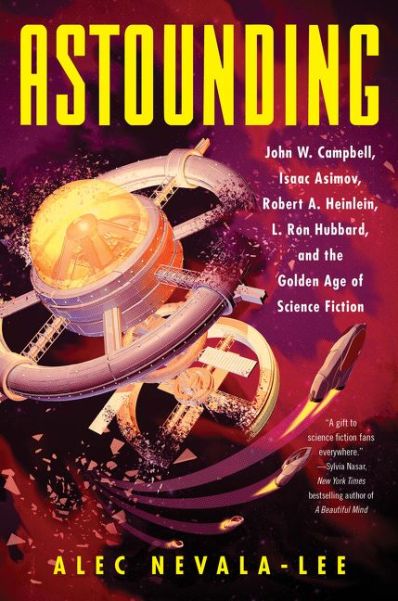
AstoundingOn October 23, 2018, the magazine Astounding Science-Fiction was remembered in two ways. First, Isaac Asimov’s Foundation series came in at #49 on the PBS Great American Read, and second, Astounding: John W. Campbell, Isaac Asimov, Robert A. Heinlein, L. Ron Hubbard, and the Golden Age of Science Fiction by Alec Nevala-Lee was published.

For a subgroup of the G.I., Silent and Baby Boomer generations, the Golden Age of Science Fiction was from 1939 to 1950, and mostly due to one magazine, Astounding Science-Fiction under the editorship of John W. Campbell, Jr. There was one other book in the PBS Great American Read where Campbell was the first editor to buy – that was Dune by Frank Herbert, which came in at #35. So, Campbell had two books in the top 50, not a bad legacy. Dune appeared in his magazine just after the name changed to Analog Science Fact & Fiction.

Alec Nevala-Lee’s new book, Astounding, isn’t the first history of the magazine, and I doubt it will be the last. As I listened to the audiobook edition I thought about all the ways writers have tried to tell the story of Astounding and the golden age of science fiction. Alva Rogers in Requiem for Astounding did an issue by issue overview. Arthur C. Clarke wrote a memoir about how the magazine shaped his youth in Astounding Days. And Alexei and Cory Panshin focused heavily on Astounding, Campbell, Heinlein, Asimov, and van Vogt in their Hugo winning book, The World Beyond the Hill: Science Fiction and the Quest for Transcendence. All those books focused on the stories. Nevala-Lee focuses on Campbell, Asimov, Heinlein, and Hubbard, giving us the biographical background to the editor and his three most famous writers.

There’s been plenty written about Asimov, Heinlein, and Hubbard, but other than tributes and collections of letters, I’m not sure how much has been written about John W. Campbell, and he is the real focus of Nevala-Lee’s book. However, his story is so intertwined with the magazine and his famous writers that Astounding is a history of the magazine and a biography of four men.

Reading Astounding was both rewarding and depressing. It’s depressing because we endure the painful deaths of all four subjects, but even worse than that, they all fall from grace. I’m not sure if I should reveal what they become. If I did, some would call it spoilers, but others might call them trigger-warnings. Let’s just say this is a tell-all biography where Nevala-Lee gives us the best and worst on each man. All four men were autodidactic know-it-alls. All four men were egomaniacs. Three, maybe four, had severe delusions of grandeur. All four were hard on wives and women, and at least two of them would have thrown out of pop culture if they lived during #MeToo times. One turns out to be white-supremacist and another started a religion and has been defied by his followers, even though Nevala-Lee makes it abundantly clear he was a pathological liar, and his church is often vilified and has a reputation of being a paranoid cult.

Despite all of this, Astounding is a valuable history book on an important era of science fiction. By combining the four biographies, Nevala-Lee shows us the wizards behind the curtain. Yes, in many ways, they were all humbugs, but in many other ways, they were genuine magicians. Campbell and all the writers of Astounding Science-Fiction created art that inspired a generation. Astounding Science-Fiction was essential to the evolution of the art form we know today as science fiction.

There has always been a problem calling 1939-1950 the golden age of science fiction because for many people it wasn’t. I’ve been systematically reading The Great SF Stories volumes 1-25 (1939-1964) edited by Isaac Asimov and Martin H. Greenberg. I’ve finished the first seven volumes, and I’ve got to say, many of the stories are forgettable. Nearly all the stories come from Campbell’s two magazines, Astounding Science-Fiction and Unknown. I’m sure these stories were mind-blowing back in the 1940’s, but there’s been much better science fiction written since using the same ideas and themes. In 1957 Peter Graham said in a fanzine called Void, that “The Golden Age of Science Fiction is twelve.” That deeply perceptive observation has been accepted as truth ever since. I turned 12 in late 1963, and the science fiction I discovered was published in the 1950’s. Some of it was reprints from Astounding in the 1940’s, and others were stories that appeared in F&SF, Galaxy, and IF, the Young Turks that usurped Astounding’s reign in the 1950’s, as well as original science fiction books that began being published that decade. Today, I generally think of the 1950’s as the golden age of science fiction, and I’m sure people younger than I feel the same way about the decade they first read when discovering science fiction.

This alternate view of the golden age of science fiction will probably limit the audience to Astounding by Alec Nevala-Lee, but it’s already the #1 book in Amazon’s Science Fiction and Fantasy section. Today it is quite common for young people, especially women and minorities, to dismiss older science fiction as being too white-male dominated from an unenlightened era. Nevala-Lee’s book will only reinforce those beliefs. However, I think it’s important to read this book. It does capture the ambitiousness of science fiction’s most ambitious proponents.

Science fiction changed dramatically in the 1980’s and 1990’s, and again this century. I routinely read science fiction stories from the 19th, 20th, and 21st centuries. Surprisingly, the ideas and themes remain consistent, but not the storytelling and characters. Science fiction authors have become much more sophisticated writers creating deeper and diverse characters. I see Nevala-Lee’s book as one piece in a very large puzzle. If you look for them, you’ll find plenty of books being written today on the history of science fiction. Most remain obscure and little read. I’m surprised that Astounding is getting all the attention it’s getting. Does it represent a tip of an iceberg of science fiction fans hungering to know more about the evolution of their favorite genre? Or, has all the science fiction fans from my generation suddenly become nostalgic for Astounding again?

I worry if younger science fiction fans read Astounding they may be turned off to 1940’s and 1950’s science fiction. All four men in Nevala-Lee’s book eventually come across as emotionally flawed, delusional, egomaniacal, and if not diagnosable with several DSM disorders, at least very nutty. Until the genre label “science fiction” emerged in the 1950’s, people would call it “that crazy Buck Rogers stuff.” I’m afraid the history in Astounding will only reinforce the crackpot reputation of science fiction.

This isn’t a criticism of the book, Nevala-Lee is just telling it like it was. But I believe readers need more context. I’m not sure people today have any idea what the psychological fallout the first atomic bombs, ICBMs, and Sputnik did to the citizens of the 1940’s and 1950’s. They all were looking desperately for answers to monumental existential threats. The stress was tremendous. Many thought the world was coming to an end. Psychiatry almost became a fad in the 1950’s, including experimental use of LSD under psychiatric supervision.

I’m not depressed that Nevala-Lee reveals how science fiction went nuts, but I wished he would have put its breakdown in the context of how everyone was going nutty back then. We look back with embarrassment to Campbell’s embrace of psychic powers, but a large segment of the country was doing the same thing.

I was born in 1951, so I grew up with the 1950’s. I remember my uncles raving about the psychic powers of Edgar Cayce and Jean Dixon, believing in the past lives of Bridie Murphy, excited by the multiple personalities of Eve, and dedicated followers the UFO nut, George Adamski. Nevala-Lee doesn’t mention how crazy America was in the 1950’s, so it seems Campbell is a standout nutter. He wasn’t. He was the mansplainer to mansplainers. He would pontificate to experts in their fields on their own subjects, telling them where they were ignoramuses.

I’ve also read other biographies of Heinlein as well as several biographies of Philip K. Dick, along with many interviews with SF writers of this era. It’s very hard to capture the crazy times from Hiroshima to Woodstock. And if you compare those times to our times, you’ll see that most people believed a lot of crazy crap by then. Of, sure, we still believe a lot of crazy crapola today, but those true believers in weirdness are far fewer now. And it is a fact that back then almost everyone had horrible prejudices and were unenlightened to equality. I’d like to believe society has evolved, and the percentage of crazy and prejudice people are down from those times. Of course, recent events suggest they were only hiding.

My one criticism of Astounding is by focusing on the biographies of Campbell, Asimov, Heinlein, and Hubbard Nevala-Lee didn’t convey the tremendous excitement and variety of the science fiction stories that Campbell published. And that probably wasn’t his goal. To most fans, Astounding Science-Fiction magazine was by far the best science fiction magazine of the times because of the stories. They didn’t care about the lives of the editors and writers. I hope future historians of this era include the other magazines like Amazing Stories, Thrilling Wonder, Startling Stories, Planet Stories, and Astonishing Science Fiction. I’m not sure Astounding deserves all of the attention and credit.

Alec Nevala-Lee’s book is one of a coalescing history. It is valuable because of its biographical slant. I wished he could have included more biographies of Campbell’s writers in his book, especially A. E. van Vogt, C. L. Moore, Clifford Simak, Hal Clement, Lester del Rey, Theodore Sturgeon, Ross Rocklynne, L. Sprague de Camp, and many more. Here is a list of all the stories that appeared in Astounding from July 1939 to September 1960.

Nevala-Lee’s book reminds me of the Beats. They were a literary subculture from the 1950’s that biographers can’t let go of. The Beat library keeps growing. I think the subculture of science fiction is attracting interest in the same way, and Alec Nevala-Lee is helping it by promoting the cult of the character. Heinlein, Asimov, Hubbard, and Campbell remind me of Kerouac, Cassidy, Ginsberg, and Burroughs. Over time, I believe the science fiction generation of the 1940’s and 1950’s will be remembered in biographies like The Transcendentalists, The Lost Generation, and The Beats.

Finally, I would like to also recommend The World Beyond the Hill by Alexei and Cory Panshin. It is coming to the Kindle next month and is currently just $3.99 for pre-ordering. And if you’d like to actually read copies of old Astoundings, click here.

JWH