Using Blogging to Accelerate Learning

by James Wallace Harris, Sunday, December 31, 2017

Last week I wrote “Blogging in the Classroom” but I don’t think I got my intended idea across. I’m going to try again. It’s been almost 60 years since I first learned to read and write. I imagine those skills are taught very differently today. And to be honest, I’m quite ignorant about what happens in 21st-century classrooms. That means my suggestions below could be completely impractical. However, I read several articles a day in The New York Times and Flipboard and often they are about the problems of education. Everyone wants to solve this problem, including me.
blogging in the classroom 2

I am very fond of thought experiments. I love exploring “If I knew then what I know now.” I also love applying technology to problems, including social problems. What inspired my previous essay was “What if I had started blogging when I first learned to read and write back in the late 1950s?” I further refined that thought experiment to include: “What if all kids had to blog their homework, book reports, tests, papers, essays, etc. whenever they wrote something for their teacher that work was open to everyone in the class to read?” My theory was peer pressure would have made me try much harder. And I would have loved having a history of my educational progress. But I’m not sure if that essay got at the heart of what I was thinking. I thought I’d rewrite it and make my intent clearer. (Notice that I’m using blogging to improve my writing, self-expression, and how I organize and present my thoughts.)

A subset of educational goals includes:

  • Getting students to become expert readers
  • Getting students to become expert writers
  • Getting students to master grammar, rhetoric, and logic
  • Getting students to think for themselves
  • Getting students to communicate abstract concepts clearly
  • Getting students to learn on their own
  • Getting students to learn how to teach others

Generally, this is done by a top-down teacher-student relationship. In modern times we work to get students to work cooperatively but the real focus is grades and test scores. Basically, we shovel knowledge at kids and then test them from time to time to see how much they retain. The reason I never liked school, nor was a good student, is because I never felt involved in the process. I never saw why I should cooperate with the educational system. Years later I learned why, but not while I was in school. And pleasing teachers or my parents was never an issue with me. I never had a mentor nor did my parents try to mentor me. I don’t know what percentage of students are like me, but what I’m going to suggest could motivate such kids.

Education has a lot of problems, mostly stemming from declining budgets and political attacks on the system. Plus, we expect children to learn too much. And we’re constantly trying to find one pedagogy that succeeds with all students. Then there’s the problem that we’re constantly experimenting without real evidence. And we throw way too much technology at the problem. Thus, I know what I’m suggesting is probably unwise. However, I would like to see more experiments with basic reading, writing, math, and science. I’m suggesting we use technology to do this. My whole experiment could be refashioned to use only paper and pencils but it would be slower. Humans have developed a symbiosis with computers and I think we need to accept that.

I believe the wild success of social media tells us a lot about educational psychology. We want to communicate. We want to be understood. We want acceptance. We want to be involved with other people with similar interests. For a planet with an overpopulation problem, too many people are lonely. We have a governmental system based on democracy, but we can’t reach any significant levels of agreement. And too much of our social interaction is based on anger, resentment, hatred, and that’s leading to more and more violence. We’re confrontational rather than cooperative. We’re narrow-minded rather than broadminded. We can only see our self-centered needs rather than empathetically understanding the needs of others. And most people have a poor grasp of reality, prone to embracing delusions.

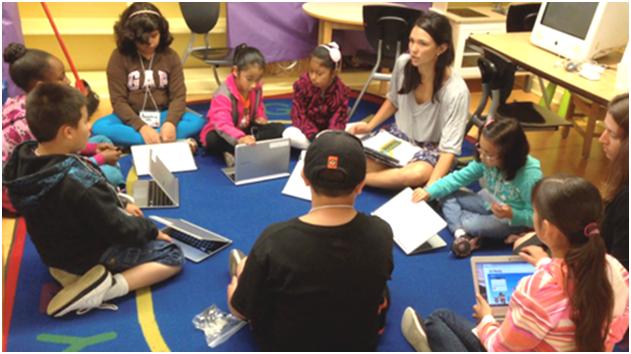
What I propose is we switch students from handing in schoolwork to the teacher via paper and email, and instead post to their blog so that it’s public. I believe learning to read and write based on our fellow students’ efforts will improve our own and make us better human beings. Students should own their own blogs and not use school supplied blogging software. If students used their own blogs they’d be documenting their educational development for life. Students should sign up with WordPress, Blogger, or other international services and give their URLs to their teachers. Teachers should publish these links to all their students and require their students to read and comment on each other’s work.

All too often using blogging in the classroom is about teaching blogging. That by itself is of little educational value. Just another trendy effort to promote technology in schools. What I’m suggesting is teachers require students to take tests, do homework, write reports, all on their blogs, with the results be public. Grading can be private but I’m not sure if it’s even needed. Grades and standardized tests rank students unfairly and inaccurately, so why bother? What we really want is for each student to be the best person they can be by teaching every student that people have different talents and lack of talents. Failing at math doesn’t make you a dummy. It either means you lack a mental facility for math or you aren’t trying hard enough. Learning the limits of either is very important. Seeing how other people work will teach you about your own limitations and how to improve your best skills. We need to embrace the theory of multiple intelligences and recognize we’re not going to be great at all of them.

What we really want is for students to search for their talents and improve them. We want to teach them generalized learning skills that can be applied to any subject, talent, or endeavor. And I believe blogging can help do this. Peer pressure is very powerful. It can be cruel, but it can also be inspirational. If 25 students read what their 24 fellow students were doing it would show them far more possibilities than what one teacher can show them. We need to grow up knowing how other people think rather than constantly trying to figure out how to think for a test.

Let’s use an example. Let’s imagine the teacher posts this question on Friday afternoon: “Why did American go to the Moon in the 1960s?” When students first try this system, most will go to Wikipedia and write up a summary. On Monday the teacher can assign everyone to read everyone else’s essays and discuss the results. The teacher can show how easy efforts lead to simple thinking. The teacher can ask the students to look for unique or deeper interpretations. The teacher can guide the discussion about common ideas and dissenting opinions. The teacher can then assign the students to write another essay challenging students to find source material that no other student is likely to find. The teacher can tell the students to seek out complex and multi-plex explanations.

The goal of this assignment is to teach research and writing history. With every assignment, the goals of improving reading and writing will be involved. We will also be promoting thinking and writing clearly. Students will be encouraged to use statistics and infographics. Students will be encouraged to analyze each other’s motive for expressing a point-of-view. Students will be encouraged to debate each other’s results. Students will be encouraged to combine their research and collaborate. Students should be encouraged to find consensus they can agree upon, but with everyone playing the devil’s advocate. We need to teach about fake and false information. We also need to teach students how not to be intellectual bullies, trolls, and assholes.

Then the teacher should assign their students to write yet another version of this essay so that it competes and encompasses the results of the other students. The teacher should encourage students to write their best version — the one they want the world to read. Most writing classes I’ve taken only urge students to submit one draft. It’s very important to teach students to go through multiple drafts.

Students should be encouraged to critique each other’s writing but taught how to do it kindly. The goal is for each student is to have 25 mentors (24 fellow students and 1 teacher).

Blogging is hard and time-consuming, so I don’t know how practical it is to integrate into a standard curriculum. However, I do believe the 10,000-hour rule applies here. I would suggest one hour a day of essay writing and a couple hours a week reading/critiquing other students’ work. That should accumulate 10,000 hours from grade 3 to grade 12. If computers are available in the classroom I’d recommend typing in tests and other schoolwork and sometimes spending time on discussing other students’ work. A major educational goal is to learn how other people think through reading their work and how to think clearly yourself by writing for others.

Mastering typing and software tools lead to much faster writing and rewriting. I would allow grammar and spelling checkers because they constantly nag writers to improve on the basics. Using them are almost like playing video games because you want to beat them.

JWH

(Goodby 2017 – Hello 2018)

2017 Year in Reading

by James Wallace Harris, Saturday, December 30, 2017

This is my year of reading less. I only read 36 books in 2017, down from 55 last year. Two factors came into play causing me to read less. One is related to aging, and that was totally unexpected. I just can’t read for hours and hours like I used to when I was young. Partly, I have other things I want to do more, and partly because of a diminished ability to concentrate. I also read less because I chose to read less in 2017. I made the conscious decision to stop reading any book where I lost interest. I use to power through so I could add the title to my books read list. (See “Year in Reading” for my past summaries.)

I decided it’s silly to judge my reading by quantity. For decades I’ve loved increasing my yearly books read count like some folks love to brag about how many miles per gallon their car gets. At one point this year I got within 15 pages of finishing a 300-page book when I decided to quit reading. I realized I was pushing myself through the book just so I could add it to the year’s books read count. I returned it to the library.

Book of the Year 2017

Fantasyland by Kurt Andersen

I read some impressive books this year, both fiction and nonfiction, but Fantasyland: How America Went Haywire: A 500-Year History by Kurt Andersen stood out. Of course, 2017 was the year of Donald Trump and Fantasyland did more than anything I read to explain that insanity. Just that fact pushed Andersen’s book to the top of my list. White Trash: The 400-Year Untold History of Class in America by Nancy Isenberg also worked well to explain the nastiness of 2017.

Two other nonfiction books stood out as powerful reads, An American Sickness: How Healthcare Became Big Business and How You Can Take It Back by Elisabeth Rosenthal and In the Darkroom by Susan Faludi. I couldn’t get any of my friends interested in a book about healthcare costs, but it was fascinating. The Faludi book was a memoir about her learning her estranged father had become a woman and had moved to Budapest. On the surface, the book appears to be about transgenderism, but I found it fascinating because it was about identity in general. It also compared right-wing politics in Hungary to alt-right America, and that was very revealing for 2017.

Best Novel Read This Year

Love-in-the-Time-of-Cholera

I read Love in the Time of Cholera for a book club. I’ve owned it for years. It was one of those books I’ve always thought I should read. I’m still not sure what to make of it. It’s large and complex and I will probably need to read it a couple more times before I start to understand Gabriel García Márquez intent for his story.

My 19th-century novel this year was Looking Backward by Edward Bellamy. Even though this story was mostly philosophizing about how to turn the United States into a utopia it was a compelling read. I can understand why it was the #3 bestseller in America for the 1800s. It’s a shame that science fiction and society has given up on utopias, favoring dystopias instead. Pessimism prevails.

I only read 15 novels this year (and a few short story collections). I’m slowly switching to reading more nonfiction. My goal in recent years for fiction is to go for quality over quantity. I can’t say that most of the novels I read this year were great literary works, but they meant something to me. Anne of Green Gables was a pleasant surprise. I read it because I enjoyed Anne With An E so much on Netflix. I reread Downward to the Earth by Robert Silverberg and I’m still very impressed. I believe it’s a forgotten classic of science fiction. I read two novels by John Wyndham this year, both were entertaining. They made me realize I like cozy science fiction.

The two most well known 2017 science fiction novels I read, New York 2140 by Kim Stanley Robinson and Artemis by Andy Weir, were sharp contrasts in speculation. Both were page-turners, but I admired Robinson for his extrapolation and I was horrified by what Weir imagined for a lunar colony. I hated that Weir’s protagonist was a smuggler and saboteur. Jazz deserved to be thrown out the airlock without a spacesuit for her deeds. Basically, my reaction to Artemis was the revulsion of Republican cut-throat capitalism would be replicated on the Moon. Weir might be realistic, but I hope we can design better societies the Moon and Mars than we what have on Earth. If we’re just going to spread our cancerous ways to other planets I’d rather let robots have the final frontier.

I started the Bobiverse trilogy with great enthusiasm, but once again I learned that I just don’t like trilogies. We Are Legion (We Are Bob) by Dennis E. Taylor is a really fun science fiction story, full of recursive science fiction referencing. And even though the second and third books in the series continued to be fun, the novelty of the story wore off. I know trilogies are loved by SF fans, but I love science fiction for its ideas. Trilogies and series generally take the same idea and work it to death. (Personally, I think trilogies and series are the Big Macs and Fries of publishing.)

Best Science Fiction Read This Year

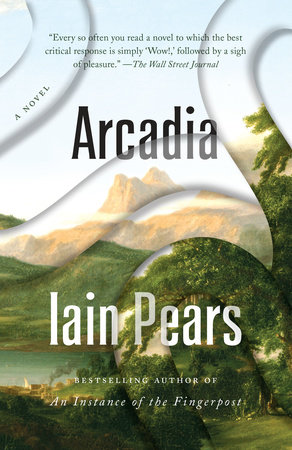
Arcadia by Iain Pears

Arcadia by Iain Pears is a 2015 novel that hasn’t gotten the attention it deserves. I don’t want to say too much about the story because I don’t want to spoil any of its cleverness. Let’s just say Pears combined fantasy, science fiction, meta-fiction, philosophy, religion, myths, and literary allusions into one complex plot. There’s even an app version which allows readers to choose their path through the plot. Arcadia would make a terrific movie. Arcadia is a very British novel about novel writing. If you loved The Golden Compass or Cloud Atlas I’d think you’ll love Arcadia. However, Arcadia is weak when it comes to psychological substance. It’s fun but not deep.

Books Read 2017

Leslie M. M. Blume Everybody Behaved Badly 2017-01-07 Audible 2016
Margot Lee Shetterly Hidden Figures 2017-01-27 Kindle ebook 2016
Nancy Isenberg White Trash 2017-01-27 Audible 2016
Mary Karr The Art of Memoir 2017-02-02 Audible 2015
Angela Duckworth Grit 2017-02-08 Library hardback 2016
Joshua Becker The More of Less 2017-02-11 Audible 2016
Bernd Heinrich One Wild Bird at a Time 2017-02-18 Audible 2016
H. Beam Piper Little Fuzzy 2017-02-19 Kindle ebook 1962
Fredrik Backman A Man Called Ove 2017-02-28 Audible 2013
Charles Wohlforth, Amanda Hendrix Beyond Earth 2017-03-07 Audible 2016
Kim Stanley Robinson New York 2140 2017-03-30 Audible 2017
Robert A. Heinlein Have Space Suit – Will Travel 2017-04-30 Audible 1958
John Wyndham The Chrysalids 2017-05-12 Audible 1955
Kathleen Tessaro The Perfume Collector 2017-05-18 Trade paper 2013
Olaf Stapledon Star Maker 2017-06-22 Audible 1937
Yuval Noah Harari Homo Deus 2017-06-30 Audible 2017
Philip K. Dick The Collected Stories of Philip K. Dick Volume 2 2017-07-17 Audible 1983
Dennis E. Taylor We Are Legion (We Are Bob) 2017-07-21 Audible 2016
Dennis E. Taylor For We Are Many 2017-07-27 Audible 2017
L. M. Montgomery Anne of Green Gables 2017-08-10 Audible 1908
Gabriel García Márquez Love in the Time of Cholera 2017-08-17 Audible 1985
Robert Silverberg Downward to the Earth 2017-08-26 Downpour 1970
Susan Faludi In the Darkroom 2017-08-30 Kindle ebook 2016
Robert Sheckley Untouched by Human Hands 2017-09-15 Downpour 1954
Mark O’Connell To Be A Machine 2017-09-22 Hardback 2017
Elisabeth Rosenthal An American Sickness 2017-10-04 Kindle ebook 2017
Allan Kaster The Year’s Top Ten Tales of Science Fiction 2017-10-04 Audible 2017
Al Franken Giant of the Senate 2017-10-11 Audible 2017
Michael Sims editor Frankenstein Dreams 2017-10-23 Audible 2017
John Wyndham Chocky 2017-10-25 Audible 1968
Robert A. Heinlein Expanded Universe 2017-10-26 Downpour 1980
Kurt Andersen Fantasyland 2017-11-08 Audible 2017
Edward Bellamy Looking Backward 2017-11-15 Audible 1888
Andy Weir Artemis 2017-11-24 Audible 2017
Dennis E. Taylor All These Worlds 2017-11-30 Audible 2017
Iain Pears Arcadia 2017-12-31 Audible 2015

Reading Goals for 2018

I really enjoy discovering relevant nonfiction books like Fantasyland or An American Sickness that explain contemporary issues, so I want to keep reading more new books as they come out during the year. I read eleven 2017 books in 2017. I think I’ll aim for one new book a month.

I also want to read more quality literary novels. I’m not sure how many I can handle though, so let’s aim for three to six next year.

Even though I feel like I read too much science fiction I still enjoy it. I like discovering both new and old SF novels. But I hope to keep my obsession in check and read only six to twelve of them in 2018. One science fiction book a month at most is enough I think.

This is what I wrote for my goal last year: “My goal for 2017 is to try and read more nonfiction, especially new books. I’m not going to worry about how many works of fiction I read, but I do want to work harder at finding the best fiction possible. I also want to stop reading mediocre books.” I think I’ve done fairly well. I probably should have quit the Taylor trilogy after the first book, and stopped reading Artemis after I realized I disliked it. I kept reading hoping Weir would redeem Jazz in some way, but he just kept making her a worse person.

My reading goals for 2018 is to read with more conscious intent and to get more out of what I read. I also hope to buy far fewer books. I have a nasty book-buying habit. I tend to buy 10-15 for every one I read. I want to stop that.

JWH


Will Fiction Work on Robots?

by James Wallace Harris, Wednesday, December 20, 2017

Have you ever thought about the nature of fiction? With books, we put ourselves into a trance and transfer our consciousness into a story. That’s pretty weird when you think about it. We’re just looking at black marks on a white background and yet we create all kinds of colorful imaginary worlds in our minds. With television and film, we have the sound and visuals to fool our minds with less work. (It’s no wonder fewer people choose books as their gateway to make-believe.) Audiobooks are somewhere in between.

Humans evidently have a mechanism in their brain for pretending that can tune out reality. It might be related to our mechanism for dreaming. But if you think about it, we embrace a lot of fiction. Religion is totally make-believe yet the faithful feel it is real. Same thing for romance, where we give the objects of our desires traits that don’t exist.

Robotreading

This morning I was so engrossed in a story that I felt like I was escaping reality. That made me wonder about how my brain works to do that. Then I wondered if robots in the future, the kind that will have artificial intelligence, will be able to read a book and find an escape from reality too.

I assume if evolution through random selection can create a biological being that is self-aware then eventually our applied efforts will produce robots that have self-awareness too. Because they won’t be biological driven by chemical and hormonal processes, they might not need sleep. One current theory about why we sleep is because we need to clean out chemical wastes in the brain so it functions properly when we’re conscious. Another theory suggests dreaming is a way to process, organize, and store memories. Robots won’t need sleep, and memory processing won’t be chemical. So they might not have that mechanism for make-believe.

Our brains have to attach meaning to everything we experience, and we usually do that with a story. However, our stories are seldom true. Our mental mechanism for storytelling is sometimes called a narrative fallacy because humans aren’t too anal about accuracy. (Example, the stories conservatives choose to believe about their new tax law.)

I believe we constantly fool ourselves because of the biology of survival. Romance and religion serve a purpose even when they are intellectually untrue. We lie to ourselves and others for a variety of survival functions, and I can’t help believe all those processes go into allowing fiction to work on us.

Robots won’t need any of that. I wonder if fiction and lying will fail on them. I can imagine an AI mind seeing us as rather delusional creatures. They certainly won’t trust us. Even our languages are full of confusing allusions when analyzed for realism. For example, if a robot hears a human saying, “I’ll be going to heaven soon” they’ll probably be smart enough to know it means “I’m going to die” but will they ever understand the will for eternal life seeded by ancient memes? In Battlestar Galactica, they had a race of robots that were monotheistic. I thought that a fun idea, but now I’m wondering if its a fiction only humans could enjoy.

I believe robots will understand our languages. It won’t take much to give them a universal language translator feature. But I’m not sure they will need language to converse with their fellow robots. AI minds will be able to record inputs from all their senses so when they need to communicate with another robot all they have to do is transmit that input. The other robot will have a perfect duplicate of the experience being conveyed.

So, in the future, will robots sit around and read books? If they read the Foundation series by Isaac Asimov will they enjoy spending hours imagining a galactic empire? I doubt it. A long string of words will probably feel like sensory deprivation to them. Even elaborate movies might feel crude compared to their hyper-view of reality.

We have 4k television cameras on our phones. What if robots had 4m or 4g eyes? We see a tiny slice of the electromagnetic spectrum. They could create to see and hear whole swaths of the spectrum. I suppose they could create equally detailed virtual worlds but would it be fiction? When we read a short story we trick our minds with a small number of suggested clues to create a fictional world in our minds. Most books today are heavy on dialog. Movies are far richer, but the actual story details in filmed fiction are still rather primitive. To robots, War and Peace would be a simple-minded Clif Notes – book or miniseries. (They could hold a whole library of Russian history in their AI mind.)

I tend to think we crave make-believe because of our limitations. We love romance or adventure stories because our lives lack romance and adventure. But I’m not sure robots will crave that. However, they might. They might even envy us. Robots will probably be 100% literal about reality. And even though the universe is extremely far out, robots will comprehend it in totality rather quickly. I don’t think they will be bored, but I don’t think they will see a lot to be done either. We can switch off reality and play in fiction. Robots might seek a similar creative outlet. Maybe it will be a super form of AI fiction we can’t even comprehend.

[Note to self: write a science fiction story about science fiction stories robots would write and read.]

JWH


What’s the Modern Equivalent of Byte Magazine?

by James Wallace Harris, Wednesday, November 8, 2017

Byte 1977 - DecBack in the 1970s, I developed an addiction for computer magazines. My favorites were Byte Magazine, Creative Computing, and InfoWorld. But there were countless others popping in and out of existence. During that period I’d go out driving two or three times a week to bookstores, newsstands, and computer shops looking for new issues to buy. I loved Byte Magazine the best because it was so well rounded, covering all kinds of computers, computer history, computer theory, computer science, featuring code and wiring schematics – great reading for hackers and wireheads.  Plus in the early years before small computers became an industry, they had fantastic covers.
There was an excitement about computers back then when we called small computers micros before they became PCs or Macs, with lots of do-it-yourself projects for a small subculture of geeks and nerds. Today I seldom buy computer magazines. My addiction waned when they all split into specific platform titles and computers became pervasive. My addiction disappeared after the world wide web became a new addiction. A few times a year I’ll buy a Linux magazine. Linux and open source fans still have a subculture vibe with a do-it-yourself spirit.

Now that I’m thinking about the Byte Magazine, I realize the late 1970s and early 1980s as an era before the internet, and my nostalgia has a lot of implications. A monthly magazine like Byte was self-contained. It was a reasonable amount of information to consume. Today, reading off the cloud, I feel like I’m trying to consume whole libraries in a gulp. When I research a blog post I find way too much to digest. It overwhelms me. Reading Byte in the early days of microcomputers was like reading science books in the 17th century. It was possible to be a generalist.

I loved studying the history of science fiction because its territory felt small — or did. In the past year, I’ve discovered enough new scholarly books on SF history to crush me. I can’t write anything without referencing all I know and think I should know. That’s mentally paralyzing.

I loved Byte Magazine because it didn’t cause information overload. I wish computers were still just for fun, a hobby. Magazines are dying, but I wish there was a computer magazine published today that looked at the world of computers in a small way. That’s probably why Raspberry Pi computers are so popular. They are small, and their world is small.

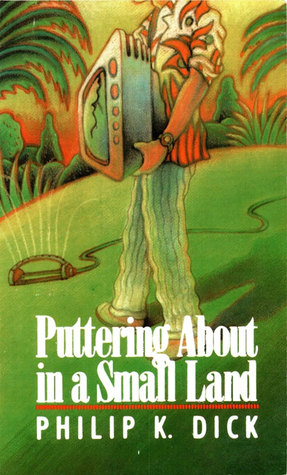
Puttering About in a Small Land by Philip K. DickThe other day an old friend texted me and asked how I was doing. I texted back I was fine, enjoying puttering around in a small land. She immediately called me worrying that something bad had happened. I had to explain I wasn’t in a hospital room but enjoying my hobbies at home. I was riffing off the name of a Philip K. Dick novel, Puttering About in a Small Land. I just love that title. I think that’s why I loved Byte back then, we could still putter around in a small land.

I’m reading Thomas Friedman’s new book, Thank You For Being Late. In it, he decides to invent a new name for “the cloud.” Friedman believes cloud computing is changing humanity and deserve a name that reflects its impact. He chooses “supernova,” which I think is a colossal bonehead choice. The obvious name to replace the phrase “the cloud” is the “hive mind.”

I’m starting to believe living in the hive mind is wrong. Sure, having access to all the information in the global mind is wonderful, but overwhelming. I’m wondering if the good old days weren’t those days when knowledge came in magazines.

JWH


22 Dumb Fantasies I’ve Tried to Believe

by James Wallace Harris, Tuesday, October 31, 2017

Fantasyland by Kurt AndersenHave you been depressed since last November? Does the institutionalization of anti-science horrify you? Do you feel irrational politicians have hijacked our country? Does your soul ache because liberal compassions are under siege from conservative prejudices? Do you wonder if our collective mind has blown a gasket? Then you need to read Fantasyland: How America Went Haywire: A 500-Year History by Kurt Andersen. This book will not solve our problems, but it does explain how our nation has been crap-believing crazy for five centuries. Fantasyland is the most entertaining, informative, and comforting nonfiction book I’ve read in years. Fantasyland soothes my America-is-collapsing anxiety by reporting on all the dumbass fantasies Americans have embraced since Jamestown.

Because I can’t cast any first stones, reading this book makes me want to list all the stupid concepts I’ve tried to embrace in the last sixty years. We’re all suckers for fantasylands. We all hope to find saviors that will rescue us from our mundane lives. The desire to better ourselves, to create, to build an ideal world is one of the admirable qualities of our species. However, to live a life of delusion is sad.

Fantasyland proves hope for a better future depends on getting clean with reality. Recognizing we have a fantasy addiction is the first step. We need to simplify the serenity prayer, “God, grant me the serenity to accept the things I cannot change, Courage to change the things I can, And wisdom to know the difference” to “I seek wisdom to know the difference between reality and fantasy.”

As I read Fantasyland I constantly used it to condemn the conservatives for ruining our society with their delusions. However, I have my own delusions, we all do. I thought it might be fun to confess the history of my personal fantasylands. This inspired many questions as I wrote this essay we should consider.

  1. Should we lie to children, especially during their formative years, even if it’s in fun?
  2. At what age, if any, is make-believe safe?
  3. Should schools teach how to discern fantasy from reality?
  4. Does the Constitution protect us from other people’s delusions and fantasies?
  5. Do people have a right to believe anything they want?
  6. How do we teach history to convey the lessons of failed fantasies?
  7. Is fantasy in books, television, and movies a cause of our personal delusions?
  8. Aren’t most fantasies promoted by people trying to make money or at least validate their own delusions or egos?

An Abbreviated History of My Fantasies

Looking backward, I realize books often sold me on a new fantasyland. We seldom originate our own fantasies. As Kurt Andersen reports in Fantasyland, America was created by people with either a fantasy for finding gold or a fantasy for establishing a religious utopia. Evidently today, we have a greater abundance of fantasies to choose from, especially with mass media and the internet inspiring us. I wonder, without all our fantasies would this country be quiet and dull – or would it?

The Age of Magic (My Early Years)

#1 – Easter Bunny

I doubt the Easter Bunny is my first fantasy belief, but I’m listing it first because it’s the most embarrassing, even for a little kid. I can’t believe I ever believed a large rabbit went around hiding chocolate bunnies and colored hens’ eggs. Damn, I must have been a gullible toddler.

#2 – The Tooth Fairy

Okay, I was old enough to lose teeth, I should have been skeptical that any creature would pay a quarter for a rotten tooth. I can barely remember when this happened. I hope I actually didn’t believe what my parents were telling me, and that all I wanted was that change under my pillow.

#3 – Santa Claus

I was a total dumbass for the guy in the red suit. I remember being red face hot when a little girl put me down for being so stupid as to believe in Santa Claus. In my defense, I started first grade a year earlier than I should, so all the other kids were a year older than me. But still, I should have thought this through logically, there were plenty of clues.

#4 – Oz and Magic

I discovered the Oz books by L. Frank Baum when I was ten. I had been watching the annual showing of The Wizard of Oz since I was four. Oz was a fantasy world with magic that I wanted to exist. I have read there was a period when American librarians banned Oz books because they felt Oz books gave children unrealistic expectations about life. In my case, they were dead on.

#4 – Jesus/God

If parents really want kids to accept Jesus and God as the literal truth, they shouldn’t tell us about #1-3 first. It only sets us up to be skeptical about all invisible beings. My road to atheism began at age 11 when I got Baptized and I didn’t see the light. It totally confused me when Christians said one thing in church but did the opposite Monday through Saturday. I became a complete atheist by the 8th grade.

This ends my period of wanting to believe in magic. Maybe it’s something all kids want. I find it strange that the most fundamentalist of Christian believers reject the concept of magic when Bible stories are full of magic. God created the Earth with words. My rejection of magic was so strong I rejected all fantasy stories in favor of science fiction. It wasn’t until my fifties that I was able to enjoy fantasy novels like Harry Potter just for fun.

The Age of Science (Junior High)

#5 – Science Fiction

Science fiction was supposed to be the opposite of fantasy. When I was young I believe all the classics themes of science fiction were theoretically possible. Over the years I’ve slowly become a disbeliever to many of them, like faster-than-light travel, time travel, galactic empires, brain downloading, scientific immortality, etc. I still cling to intelligent robots or AI machines with conscious minds will be built someday.

#6 – Becoming an Astronaut

By the 8th grade I had exchanged religion for science fiction. This led me to an array of beliefs that would take me the rest of my life to realize were irrational. The first, the belief I would grow up and work in space took a long time to get over. Back in the 1960s, I was totally in awe of NASA and faithfully followed Projects Mercury, Gemini, and Apollo. Sputnik went up just before I started Kindergarten and Apollo 11 landed on the Moon just after I graduated the 12th grade. I had even gone to watch Apollo 8 launch Christmastime 1968, during my senior year. Sometime in my high school years, I learned astronauts had to have 20-20 vision, and I was a four-eyed geek with thick lenses. I still fantasized that science could fix my eyes, or NASA would eventually hire people with glasses. After reading Tom Wolfe’s famous book, I realized I never had the right stuff, and never would. It galled me when rich people started buying their way to space, but if I’m honest with myself, even if I was a billionaire I would never leave Earth. Space travel is just too inconvenient and uncomfortable for me.

#7 Becoming a Scientist

Probably the greatest regret of my life is not becoming a scientist. This was not an impossible dream – theoretically. However, even though I took biology, chemistry, and physics in high school, I just couldn’t devote myself to those subjects and work hard. Nor could I apply myself to math. I eventually got through calculus, but only with a half-ass effort. I even went to a tech school majoring in computer science in 1971, but I never could commit to studying hard. I wanted to have fun. I hated the classroom. One of the dumbest fantasies I had about myself involved being a disciplined scholar of science. I was always more science fiction fan than a scientist. Being successful at any pursuit requires hard work, concentration, and grit. My biggest fantasy in my life has been believing I could make myself acquire those qualities.

#8 – The Final Frontier

Instead of believing in heaven like most folks growing up in the south, I believed mankind’s was destined to travel across the solar system and out into the galaxy. That was my teenage religion. For most of my life, I believed colonizing space was our species purpose in existence. I’m now an atheist to that idea. We might travel to Mars or a few other places in the solar system, and even build colonies on the Moon and Mars, but I doubt much will come of it. Going to the stars is a fantasy for humans. I currently believe robots are destined to be interstellar travelers, but that too might be a fantasy.

The Counter Culture (High School and Early College Years)

#9 – Hippies and the Counter Culture

I remember in 1967 after reading about the march on the Pentagon standing at my school bus stop arguing with my longhair buddies about how the counter-culture was going to revolutionize America. In 1968 The Electric Kool-Aid Acid Test by Tom Wolfe and The Rolling Stone magazine started defining a new fantasyland future for me. It also introduced me to Jack Kerouac, who drew me backwards into an older fantasyland.

#10 – Expanding My Mind with Drugs

The 1960s had another impact on me. Besides science fiction and NASA, I loved rock music and drugs. So did many in my age cohort. I was influenced by Aldous Huxley, Timothy Leary and Richard Alpert and believed psychedelic drugs were the doors of perception. I sought transcendence with chemicals. I wanted them to take me as far as John Lilly claimed they took him, out into the galaxy to meet other beings – see The Programming and Metaprogramming of the Human Biocomputer. Yeah, if you mix belief in science fiction with acid it produces some far out fantasies, but really no different from mixing religion and faith.

#11 – The Beats and On the Road

I was completely romanced by Jack Kerouac and his on-the-road philosophy. I started hitchhiking around Miami when I was in high school, and continued when I went to college in Memphis. I did two short trips across states, one with my friend Connell. I learned I preferred the comforts of home. However, to this day, I still enjoy reading Kerouac. I see him as a tragic figure who followed many paths I wanted to follow but didn’t because I was either too scared or too smart. Kerouac was my father-figure substitute. My dad and Jack were horrible alcoholics that died within months of each other, both still in their forties. If I had gotten only my father’s genes that would have been my fate. I have a huge psychic connection with Kerouac.

#12 – Becoming Bob Dylan

Another absurd fantasy involved buying a guitar and harmonica and teaching myself to play and write music. This is an absurd fantasy because I can’t carry a tune, or even remember the words to favorite songs I’ve heard hundreds of times. I’m sure most kids have rockstar/sportstar/moviestar/writer/artist type fantasies. Probably every kid dreams of being famous for something. Fame is possible, certainly more possible than dying and going to heaven. Sadly, fame comes to about as many people as those winning big jackpots in Lotto.

#13 – Communes

At the end of the 1960s and beginning of the 1970s the idea of intentional communities began spreading through the counter culture. I loved the idea, and had brief stints in two communal groups. I quickly learned I loved privacy, personal possessions, and having my own way. This was a very short-lived fantasy, but it still affects me. I now dream of living in a high-rise retirement community where all my friends each have an apartment.

#14 – Back to Nature

After realizing I wasn’t suited for group living I dreamed of buying my own land and escaping the rat race. I just didn’t want to join the 9-to-5 world. My bibles were Mother Earth News, Five Acres and Independence, and The Whole Earth Catalog. Several of my buddies had this dream too, but after several failures at handy crafts, gardening, and fixing machinery, reality taught me something different. I loved Henry David Thoreau, but I only read Walden and not his biography. I should have. The back to nature fantasy hadn’t worked for him either. This fantasy still returns to me occasionally, like the other night when I watched the beautiful documentary, Off the Grid.

#15 – Carlos Castaneda

I loved these books that were supposed to be anthropological. Even though I gave up Christianity, I was still gullible to other religious ideas. I figured there might be some truth in old spiritual studies. Castaneda mixed sacred drugs and the wisdom of indigenous people, and that had the appeal of promising ancient wisdom. I learned a lot, but mostly the wisdom of what to avoid.

#16 – Hinduism and Ram Das

Be Here Now really hooked me. Ram Das (aka Richard Albert) convinced me to open my mind to Hinduism. I even read The Bhagavad Gita, took up yoga, joined some New Age groups with Hindu teachers, and read a bunch of books about the sacred literature of India. I just never could believe. I tried.

#17 – Buddhism, Zen Buddhism, Alan Watts

I had been reading Alan Watts since I started reading Jack Kerouac. Ram Das further encouraged me to accept Buddhism. I liked Zen Buddhism because it seemed the least magical/metaphysical of all religions. I still admire Zen and meditation for their anti-bullshit methods of perceiving reality, but Buddhism has its fundamental side too, that can be just as dogmatic, and miracle driven as Christianity. Theoretically, I believe a reality-based religion is possible, but so far I haven’t found one.

#18 – Spiritualism, Channeling Seth

For a brief period, I read books about communicating with other beings by mediums like Jane Roberts. My science fictional fantasies were susceptible to alien beings communicating with us through other dimensions. John Lilly promoted this idea, and he was a scientist (although zonked out on drugs) and the great science fiction philosopher of the 1930s, Olaf Stapledon, also promoted these ideas. I soon rejected astral worlds because they were too inconsistent.

#19 – New Age Psychologies

Back in the 1970s there was almost a new psychology of the month coming out of California. I wanted to go and try things like EST, Rolfing, primal screaming, etc. I might have been converted if I could have gotten to Los Angles, but I didn’t. I just read the books, joined a local New Age community and subscribed to New Age Magazine. Like spiritualism, I gave up hope on these therapies because there were too many of them that offered conflicting truths.

My Work Years

By the end of the 1970s I got into microcomputers, and spent all my time thinking about computers. For the next 36 years I was preoccupied with being married, hanging out with friends, working, computers, science fiction, music, movies, television, and other down-to-earth pursuits. I read lots of nonfiction books, and slowly began developing more mature philosophies about life. However, I eventually learned of other fantasylands I had tried to find.

#20 – Romance/Sex/Love

Over the years I realized our society is gaga over romantic love. Love stories program us for romantic fantasylands. Gender stereotypes and sexual desires cause us to see each other in very unreal ways. It’s very hard not to objectify the people we want sexual. All these desires lead us to countless fantasylands.

#21 – Political Solutions

We all have fantasyland beliefs on how to solve our political problems. I used to believe we could come to a rational agreement on how to govern society. That’s a huge fantasy. I keep hoping it’s not, but all the evidence says it is.

#22 – We Can Solve Our Big Problems

We have all the knowledge and technology we need to save the planet, but the reality is human nature won’t let us use that knowledge and technology. We all fantasize that humans have always survived so we always will. I think that’s our most dangerous fantasy. It’s a shame that two-thirds of us are deluded by childlike belief in a heavenly father. It keeps us from growing up and taking responsibility. It’s a shame that two-thirds of us believe lying to preserve personal beliefs is wiser than accepting the wisdom of science and giving up those beliefs.

Finding Reality

If we study our fantasylands, we’ll see we’re all looking for place to exist that rejects reality. We’re an adaptable species that can live in a variety of environments. We’re also clever beings that can adapt to any environment for our physical needs. Our failure comes from trying to pretend reality is something that matches our mental needs. Our superpower is the ability to delude ourselves. Our brains have countless cognitive skills to paint over reality, deny evidence, and to allow us to see our beliefs as real. It’s probably a survival mechanism, a way to cope as individuals. But it means we fail to cooperate in our shared reality by agreeing on its actual details.

JWH