Too Many Ways to Become Homeless

by James Wallace Harris, 1/25/24

I never could understand why my mother was so obsessed with dying at home until I got older myself. As the years pass, the more attached I’ve become to this house, and the more I fear becoming homeless, even temporarily. I’ve never been an anxious person, but this fear is starting to gnaw at me. Is that an old person thing? I never can tell what’s real about getting old.

Consequently, I’ve started paying attention to all the ways people become homeless — especially the ways that could make Susan and I homeless. I was going to write an essay listing the numerous ways people could lose their homes, but I found “15 Ways to Become Homeless” online and felt I shouldn’t duplicate it. Instead, I shall focus more on my specific feelings.

Whenever I see news about tornadoes, hurricanes, floods, fires, ice storms, earthquakes, and other natural disasters, I think about all the homelessness they cause. This horrifies me. It depresses me to see people lose their homes, which makes me anxious about climate change and weather. I wonder how refugees from natural disasters find new homes and how long it takes. I also wonder about the odds of it happening to anyone. If I knew how many homes and apartments there were in American, and how many are destroyed by nature every year, I could calculate the odds. (ChatGPT at Bing says the odds are 1 in 200 for the general population, and 1 in 25 for people under the poverty line.)

It also upsets me to see news about Ukraine and Gaza, or any other country at war. I see all those homes and apartments blown up and worry about the millions of war refugees. War is so cruel to civilians. I never worried about becoming a war refugee until recent years and people started talking about a second U.S. civil war. How can they even think of such insanity?

I don’t know how rational this fear is, but I’ve become afraid of trees. I frequently see videos on the internet of trees falling on houses and cars. I’ve even thought of having all the trees near my house cut down. But that would be hugely expensive.

Increasingly I’m seeing stories about people being made homeless because of investors using housing as a commodity. I was particularly depressed by this story I saw on YouTube (see below). Old people, mostly old ladies who looked in their eighties and nineties who had been living in a retirement community for decades, were pushed out when their monthly fees went from around $1500 to over $6000, all because some millionaire/billionaire figured they needed to make even more money. It disturbed me that all those long-term friendships were broken up, and all those carefully crafted comfortable homes left behind. I have thought about how Susan, and I might be safer, and life would be easier, if we could live in such a community, but now I wonder about their long-term viability.

A lot of people are becoming homeless because corporate and private investors see housing as a money-making opportunity. This is increasingly pushing people out of owning homes, or even renting them. But the rich also push people out by gentrifying a neighborhood. Lots of retired Americans can no longer afford to live in the United States, so they move abroad to take advantage of lower housing costs. But that only raises prices for the locals, pushing them out of housing. Thus, using housing as an investment makes Americans and people living in other countries homeless. It has a snowball effect. Would there be less homelessness if Airbnb was never invented?

Global warming, war, economic collapse, failed states, and growing class violence are generating millions of refugees. That’s why Republicans are so freaked out about illegal border crossings. Since we already have a housing shortage, immigration causes more homelessness, and an even greater need for cheap housing, compounding the political problem. On the other hand, we have a declining population which means a shrinking economy, and immigration is the only capitalistic solution for depopulation. Building more housing grows the economy.

We need to figure out how to increase low-cost housing. Most builders are in it to make money, so they build what people with money can afford. Capitalism is one of the main contributors to homelessness, so someone needs to figure out how to make capitalism become one of the solutions. Conservatives don’t want socialism, but do they really want Darwinian capitalism?

I wonder about all the abandoned homes in decaying cities and small towns. Could they be repurposed? Could small towns attract retirees and revitalize their communities? Any person with a retirement income is like having a job added to your community. Getting a thousand retirees would be like getting a factory that hires a thousand people. Wouldn’t it?

Most people become homeless when they lose their jobs and have no family or friend support. Many people become homeless when they become drug users or alcoholics. Then there a huge population of mentally ill people who are homeless. All those factors are what people consider traditional causes of homelessness. I worry about those people, but I don’t think I’ll become one. What I worry about are all the non-traditional ways people are becoming homeless.

What a lot of people don’t know is about half of single homeless people are over 50 years old. In general, 1 in 5 homeless people are 55 or older, and that percentage and age demarcation is growing larger. It’s almost impossible to be single and live just off social security. Collapsing pension plans are also causing homelessness. No matter how careful we create our financial nest egg, there’s always ways for it to be raided.

I know nothing about the real problem of homelessness. It’s quite a complex issue. All I know is what I see on television and read on the internet. It appears that anyone could become homeless, and that scares me. And the problem is getting larger every day. It’s like climate change, a problem we mostly ignore completely, or confront by slapping on political Band-Aids.

I feel like Chicken Little yelling the sky is falling. To paraphrase Joseph Heller’s “Just because you’re paranoid doesn’t mean they aren’t after you,” and say, just because the sky doesn’t look like it’s falling doesn’t mean it’s not.

JWH

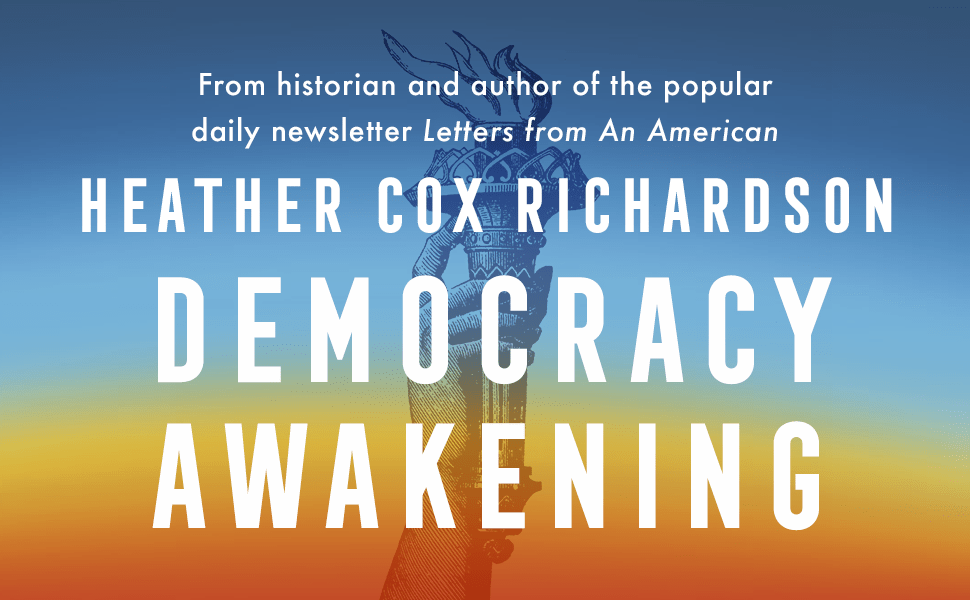
Democracy Awakening by Heather Cox Richardson – Review Part Two

by James Wallace Harris, 12/17/23

The idea of Donald Trump becoming president again has me worried. I’ve enjoyed the quiet years of the Biden administration, and I fear four years of a Trump president because it won’t be peaceful. I know I shouldn’t worry at my age because any kind of stress is hard on my health. I know I can’t control the future or even what’s happening now, but I’ve discovered that reading about the past alleviates some of my worries. America has always been at war with itself and the political strife we see now has always been the norm. Political peace never existed. Even when I think Biden’s administration has been quiet, that’s only relative to the Trump years. The volume of acrimonious political rhetoric has stayed quite high, just nowhere near as high as 2016-2020.

After I finished reading Democracy Awakening by Heather Cox Richardson, I began rereading it hoping to make sense of an overwhelming amount of information. Ultimately, I felt Democracy Awakening Richardson identified two forces seeking to define the political structure of America. Those two forces have always existed since the beginning of our nation, each fighting for dominance, with power swinging back and forth between two poles of human perception. My hopes of that conflict going away is a fantasy that I need to give up. That conflict might be as natural as kill or be killed is to animal evolution.

The political poles could be called conservative and liberal, or we could use political party names like Republican and Democrat, but one thing that Richardson shows is labels for politics have constantly changed over the history of our country. I constantly think if I could only understand why people believe what they do I could just accept them and let them be, even if I think they’re out of their minds.

I’ve started wondering if political views are connected to personality and upbringing. Richardson’s book gives an overview of the history of democracy in America that feels like a war between the two philosophies that divide us. First, are the Darwinians who believe power belongs to the fittest, and second are idealists who want complete democracy and universal suffrage. But I don’t feel these beliefs come from free will or logic. It’s something much deeper, as if we’re two different species.

Ever since growing up in the 1960s I can’t understand why we’re so polarized politically. What I believe offends half the country, while they passionately believe in what I think are delusions. In recent years I’ve concluded that each group perceives reality differently. It’s not a matter of evidence, or external truths, we just don’t perceive the world in the same way. We can’t convince each other of anything because we’re psychologically different. I’ve even wondered if there’s a physiological difference.

I read a science fiction story yesterday that might be the perfect metaphor for what I’m trying to say. It’s called “The First Men” by Howard Fast and you can read it online. Fast based his story on theoretical concepts about feral children, which is a controversial subject itself. Children raised without language seldom acquire it later in life. Children raised by animals never act human because what it means to be human is something acquired in childhood. In the story, Fast suggests that mutant superhuman children are born occasionally, but because they are raised human, they can never become superhuman. In the story, scientists track down orphans with very high IQs with a technique that can detect intelligence in babies. Those babies are raised in a controlled environment and grow up to be superhuman. I’ll let you read the ending.

What if back during the Renaissance a new kind of child began to show up and saw the world in a different way? At first, they were rare, and most of their special thinking was snuffed out by being raised by traditional believers. But slowly, some of them got a new upbringing, and raised a few more of their kind. So today, about forty percent of the population have this new kind of thinking. We might call this thinking liberalism. While the old thinkers call their perspective conservatism. The conservatives have a theocratic, autocratic, aristocratic, or oligarchic view of reality. While the new people think everyone should have equal say in politics and be given equal opportunity to achieve their full potential. This new way of thinking is anti-Darwinian, but then so is the Christianity of The Sermon on the Mount. And these two ways of perceiving reality are not based on logic, facts, or rhetoric, but a biologically programmed perception etched in early childhood upbringing.

We have a problem with words and labels. Richardson uses democracy vs. authoritarianism. The trouble is, both these terms have many definitions, used in different ways. Even saying Republican and Democrat, or conservative or liberal is very troubling. Republicans today are different from Ronald Reagan Republicans, or Nixon Republicans, or Eisenhower Republicans, or Teddy Roosevelt Republicans or Lincoln Republicans. Lincoln Republicans are more like current Democrats. The words conservative and liberal have gone through several different definitions and meanings.

Despite the problem with labeling these two forces in politics, I believe it’s important that we recognize what each force wants to achieve. There have always been people wanting to limit the running of the country to an elite group, while other people have wanted to move towards a democracy with universal suffrage.

You can see this back-and-forth battle by reading Wikipedia’s timeline of voting rights in the United States. Whatever 2024 brings, it will just be a continuation of this long process.

I believe political stress is caused by believing we need to decide issues once and for all by our personal perspectives. I think we’re stuck in a Groundhog Day loop that we can’t escape because everyone wants what they want and won’t be happy until they get what they want. It’s like being stuck in an endless programming loop without an exit condition. Because we’re polarized politically, half the country is always unhappy when the other half gets what their biological programming wants at the poll.

The failure has always been that each group thinks it can convince the other to change, and that’s just not going to happen.

The only escape I can see for this endless loop is to change a condition. One idea I’ve had, is require more than a simple majority to win elections or pass laws. I think we should raise it to 55% to start with, and eventually increase that over time, to 60% and 66%. We should force politicians to appeal to a wider audience, and we should pass laws with referendums. Of course, this won’t happen because the current power structure would never allow it.

I’ve decided to read more history books about the United States to see how changes were brought about. It’s soothing to my mind to understand how things got to be the way they are. It’s less stressful than wanting things to be different.

JWH

Democracy Awakening by Heather Cox Richardson – Review Part One

by James Wallace Harris

Americans have general thought of America as a democracy, although it’s never been a true democracy. When the United States of America was first created a limited number of white males could vote. As time progressed more white males were allowed to vote. As liberals and radicals influenced politics, they advocated for wider suffrage state by state. See this timeline for details, but the Fifteenth Amendment in 1870 gave black men the vote, and in 1920 the Nineteenth amendment was passed that gave women the vote in all states. Whites have always suppressed black voters, and even some men still resent women voting. And political parties have always tried to control who could vote and how, and even suppressing voting.

A true democracy would allow every citizen over a certain age to vote, or universal suffrage. Before the 21st century most Americans didn’t see that as a problem, but as ethnic demographics have changed it has turned some Americans against democracy.

America is supposed to have a representative democracy, but it inspired the formation of political parties supported by various special interest groups fighting for power. In America Awakening Heather Cox Richardson describes how we’ve reached the current state where liberals advocate more democracy and conservatives push for less, apparently wanting authoritarian rule instead. Authoritarians general promote some ideal in the past as the authority of how things should be govern. Most modern American authoritarians look to either the Founding Fathers and the Constitution or to God and The Bible, or a combination of both. Modern American authoritarian leaders tend to be white and paternalistic, and their followers tend to want a strong man, or strong father figure, although more women are wanting to be Republican leaders too.

Richardson says it’s important to understand that many terms like conservative, liberal, radical, Republican, and Democrat have changed over the centuries. In the 19th century Republicans were for African Americans voting, and for gun laws, and in the early 20th century, for regulations on corporations. In the 19th century and through the first half of the 20th century, Democrats tried to keep African Americans from having the vote. The Republican and Democratic parties went through a polarity change in the 1960s. Richardson says its important understand how words have changed meaning because authoritarians often abuse them and justify their abuse by claiming history supports their new definitions. In other words, history gets distorted and abused.

I’m reviewing Democracy Awakening because I think it’s an important book everyone should read for the 2024 U.S. presidential election, but also to push my ability to remember. I love reading nonfiction books, but their information often feels like it goes in one ear and out the other. I can only retain what I learn in the vaguest way. Since I’m also reading about memory and aging, I’ve decided to read Democracy Awakening differently. I’m going to distill what Richardson is saying into my own words but in some concise form that I hope I can remember. I’ll do that in a series of blog posts, outlines, tables, etc.

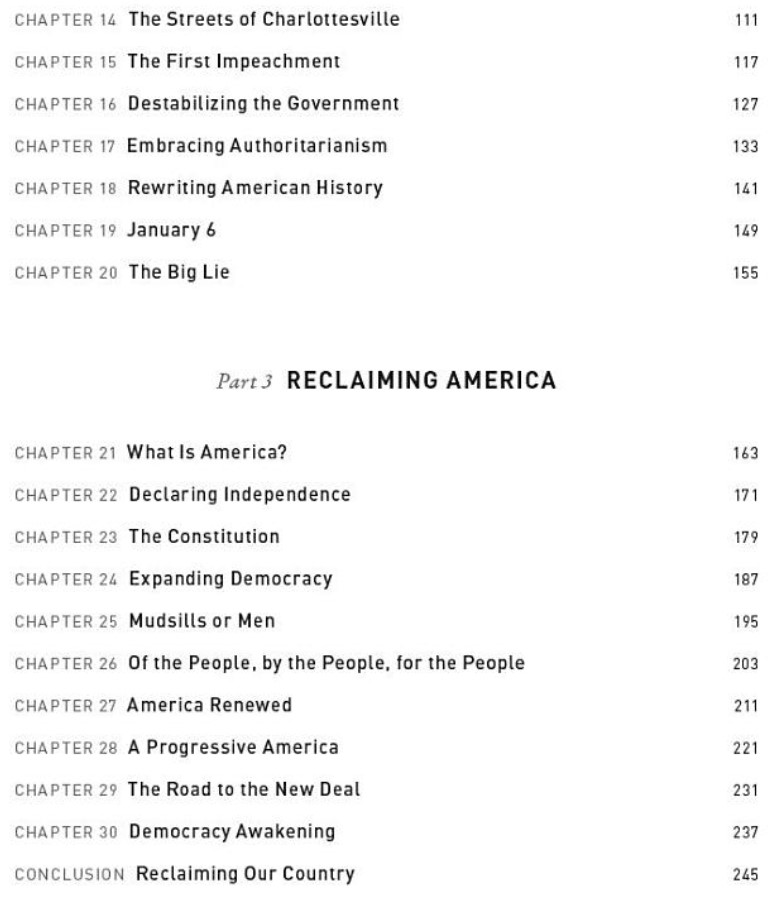
My friend Linda and I are reading Democracy Awakening together and for our first discussion we are covering Part 1, Chapters 1-10, which I hope to cover today. Here is the Table of Contents.

Because I’ve also read other books on this subject already, including watching related documentaries and YouTube videos, I’m going to reference them in this series to show how there’s a synergy in my reading.

Heather Cox Richardson is a history professor who has specialized on the history of the Republican Party through a series of books. I have not read these books, but I have read some about each and it gives me confidence that Richardson is an expert on this subject. On the internet there are zillions of people claiming to be knowledgable on specific subjects but when you check into their creditials, you find little to back their claim of authority.

Richardson makes her points by citing historical events. I wish I could remember all the cited dates and important changes in history because they show an evolution of how we got to today. The first ten chapters progress mostly in a linear fashion, so I hope to eventually create a timeline.

Richardson also quotes significant papers, speeches, books, and other sources to reveal how concepts emerged that cause people to seek political change. Just the history of African Americans seeking Civil Rights reveals many connections to how conservatives and liberals changed their parties and political goals. I’d like to make a list of the most significant quotes to remember. And I’d like to read the books Richardson references, including books by conservative writers. But this will take a lot of time.

And there’s another problem, both conservatives and liberals use the Founding Fathers as historical authority even though members of both political parties distort history for their cause. Republicans like to cite the past, both the Founding Fathers, and The Bible, as how to create or interpret laws. This is rediculous. 2023 isn’t 1776, or 800 BCE. Yet, reading Richardson’s book Democracy Awakening shows the democracy we have today is constantly changing, and how those changes comes from actions in the past.

It is well documented that Republicans feel the United States took a wrong turn in the 1930s when FDR’s administration created the New Deal. They’ve been trying to undo it ever since. And their methods and philosophy of why and how have evolved over the decades. Part of that evolution is moving away from democracy, which is what Richardson’s book is about.

Richardson believes we didn’t fall into fascism in the 1930s because the United States has a long history of various groups fighting for suffrage. That the history of United States is one of a ruling class struggling to keep power from various groups of people wanting to vote. This includes poor whites, African Americans, women, and immigrants. The current Republicans know they cannot win with universal suffrage and fair elections and so they have to do an end run around democracy.

Republicans formed coalitions with special interest groups that the leaders of the party have no interest in supporting. What has changed is the special interest groups have taken over the power from the old Republican elites. Neither the Republicans nor Democrats have a clear majority with voters, and depend on Independents who swing their votes.

The main problem revealed in the first part of Democracy Awakening is the country is dividing itself into two camps. Those who want an authoritarian government based on their version of the Founding Fathers and their version of Christianity, and those people who want universal suffrage and a true democracy.

The authoritarians cannot get what they want by existing voting laws and population demographics. That’s why they are undermining the election process. Since majority rule is 50%, these two groups are polarized. Neither Republicans or Democrats have a majority. They depend on swing votes from Independents.

What I’m hoping to see in the next two parts is whether or not Richardson thinks democracy can survive. I was recently terrified by a New York Times essay, “Trump Has a Master Plan for Destroying the ‘Deep State’” by Donald P. Moynihan. In it Moynihan says Trump has three goals which I’ll take out of context and quote here:

The first is to put Trump loyalists into appointment positions. Mr. Trump believed that “the resistance” to his presidency included his own appointees. Unlike in 2016, he now has a deep bench of loyalists. The Heritage Foundation and dozens of other Trump-aligned organizations are screening candidates to create 20,000 potential MAGA appointees. They will be placed in every agency across government, including the agencies responsible for protecting the environment, regulating workplace safety, collecting taxes, determining immigration policy, maintaining safety net programs, representing American interests overseas and ensuring the impartial rule of law.

...

The second part of the Trump plan is to terrify career civil servants into submission. To do so, he would reimpose an executive order that he signed but never implemented at the end of his first administration. The Schedule F order would allow him to convert many of these officials into political appointees.

Schedule F would be the most profound change to the civil service system since its creation in 1883. Presidents can currently fill about 4,000 political appointment positions at the federal level. This already makes the United States an outlier among similar democracies, in terms of the degree of politicization of the government. The authors of Schedule F have suggested it would be used to turn another 50,000 officials — with deep experience of how to run every major federal program we rely on — into appointees. Other Republican presidential candidates have also pledged to use Schedule F aggressively. Ron DeSantis, for example, promised that as president he would “start slitting throats on Day 1.”

...

The third part of Mr. Trump’s authoritarian blueprint is to create a legal framework that would allow him to use government resources to protect himself, attack his political enemies and force through his policy goals without congressional approval. Internal government lawyers can block illegal or unconstitutional actions. Reporters for The New York Times have uncovered a plan to place Trump loyalists in those key positions.

This is not about conservatism. Mr. Trump grew disillusioned with conservative Federalist Society lawyers, despite drawing on them to stock his judicial nominations. It is about finding lawyers willing to create a legal rationale for his authoritarian impulses. Examples from Mr. Trump’s time in office include Mark Paoletta, the former general counsel of the Office of Management and Budget, who approved Mr. Trump’s illegal withholding of aid to Ukraine. Or Jeffrey Clark, who almost became Mr. Trump’s acting attorney general when his superiors refused to advance Mr. Trump’s false claims of election fraud.

This is why I believe everyone should be reading Democracy Awakening. I believe Richardson’s book is defining what the 2024 election will truly mean at the deepest level.

JWH

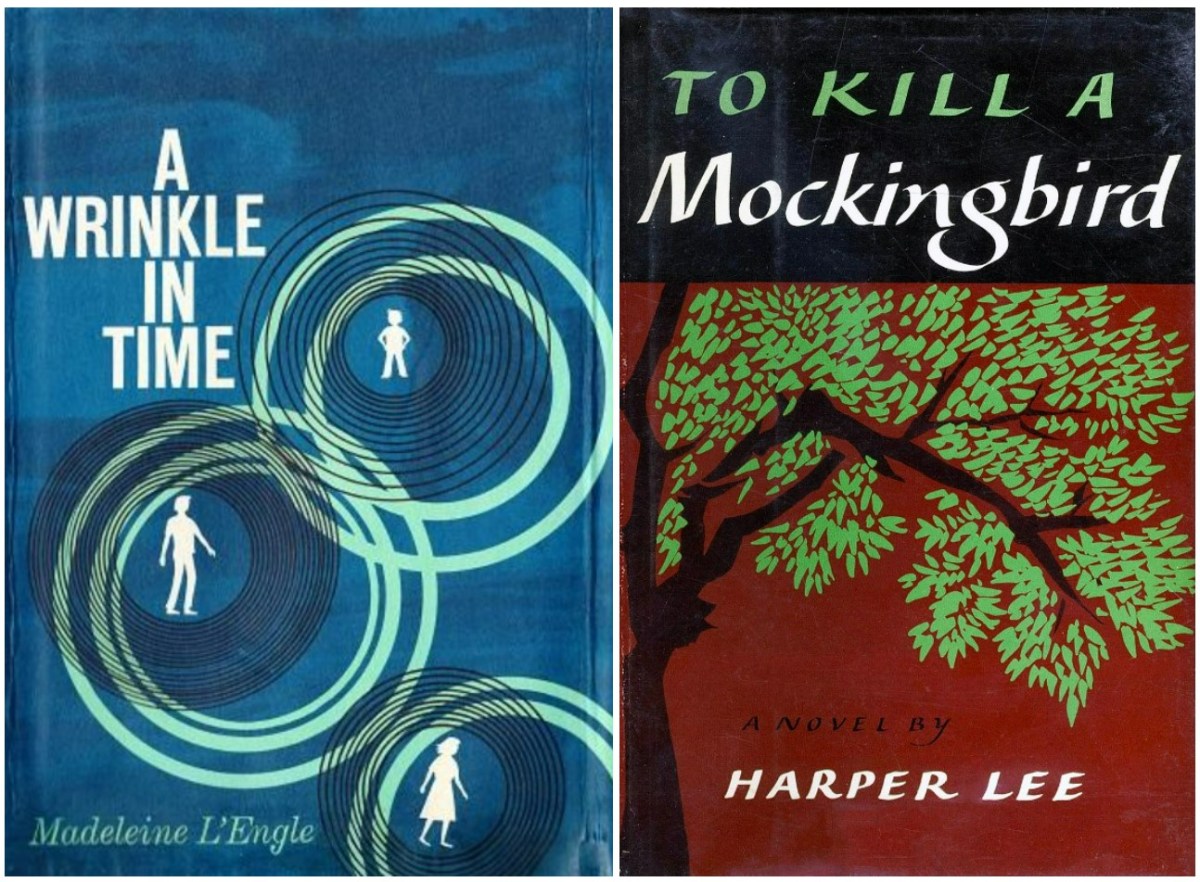
What If Mrs. Saunders Had Read Us To Kill a Mockingbird Instead of A Wrinkle in Time?

by James Wallace Harris, 10/10/22

In 1962, when I was in the 6th grade, my teacher Mrs. Saunders would read to the class after lunch. The book I remember from that year is A Wrinkle in Time by Madeleine L’Engle. I found it so exciting that I went to the school library and checked out a copy so I could read it faster than 30 minutes a day. At the time, I didn’t know the novel was science fiction, or that the story belong in a category of fiction. But looking back, I see Mrs. Saunders had put me on the road to becoming a science fiction fan.

Yesterday, I wondered if Mrs. Saunders’s influence on my life would have been different if she had read To Kill a Mockingbird by Harper Lee instead? Would I have become a different kind of bookworm? Instead of being fascinated with space and time travel, would I have become interested in social justice and equality? I did come to care about those issues later on in the 1960s as the decade progressed, but could I have been made aware of them sooner by reading the right book?

Even though I mostly read science fiction, I do read some serious literature. I was an English major in college. I know when they come out, The Best American Short Stories 2022 will have far deeper, more mature, better-written stories than The Year’s Best Science Fiction Vol. 3: The Saga Anthology of Science Fiction 2022. Yet, the odds are I’ll probably buy and read the science fiction anthology.

In eighth grade, my English teacher required us to read three books each six-week grading period and raised our earned grade by one letter if we read five. She had an approved reading list. That’s how I discovered Heinlein. She gave me the chance to read science fiction and non-fiction, and I took it. What if I had read A Tree Grows in Brooklyn or The Diary of a Young Girl by Anne Frank instead? Would I have matured sooner? Would I have been more conscious of the real world?

What if in 1965 I read The Painted Bird by Jerzy Kosiński instead of Stranger in a Strange Land? Would I have become a different person? Or, did I read what I read because I was an immature kid that could only handle the immaturity of science fiction? I tend to think it’s the latter because I know serious literature is far superior to science fiction now and I still seldom choose to read it.

I believe I read science fiction then and now to escape from the real world. I read nonfiction as a kid and as an adult to learn about the world. However, I do wonder how I would have been different if I had gotten addicted to serious literature as a kid.

If I had a time machine and could go back to talk to my younger self I would tell him to read To Kill a Mockingbird. I’d say, “Kid, stop daydreaming about going to the Moon and Mars. Other people will do it, but not you. And if you could, you wouldn’t like it. Our personality isn’t suited for space travel. Spend more time with people and less time with books, and when you read a book, make sure it helps to know more about people.”

I’m pretty sure my younger self wouldn’t listen. People don’t take advice. Not even from our future selves.

For all I know, Mrs. Saunders may have read To Kill a Mockingbird to us and I just ignored it. She read us several books that year, and A Wrinkle in Time is the only one I remember.

JWH

How Could We Maximize Democracy?

by James Wallace Harris, 9/15/22

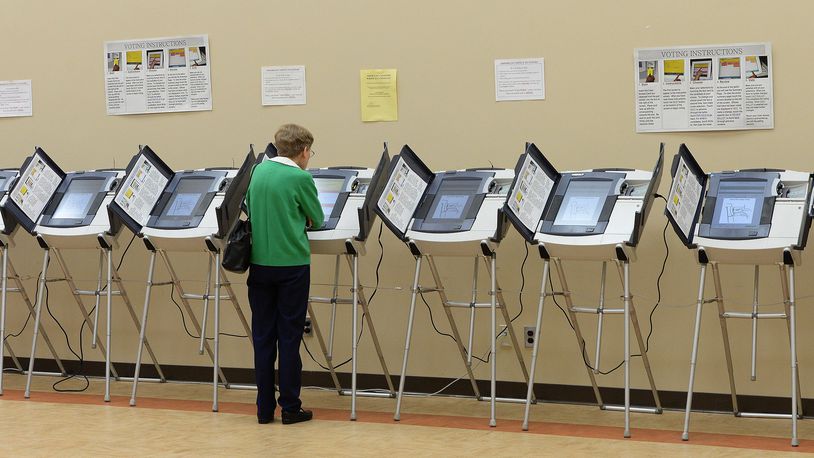
What if we had the perfect voting machine – how would it change politics?

What would make the perfect voting machine?

  • It would only allow one vote by each registered voter
  • It would block any illegal votes
  • It would block tampering
  • It would be trusted by all
  • It would make vote tallying easy
  • It would allow for easy recounts
  • It would be easy to use
  • It would be easy to access

Let’s imagine a perfect machine. Let’s imagine its impact like we were plotting a science fiction story about the future.

What if the government issued every registered voter a tablet that had limited internet access and could only be used for one function: voting. The tablet would be configured:

  • Fingerprint recognition
  • Faceprint recognition
  • Voiceprint recognition
  • Eyeprint recognition
  • Had a unique physical ID number in a chip
  • It will only work with the .gov domain

To register to vote and get one of these machines you’d have to prove your identity to the government. It would link your machine ID and identity to the voter registration system. It would register your encrypted biometric data. You will be given a voter registration card with your name and machine ID.

When you vote it would only accept one vote from your machine’s ID and only if your machine has validated your biometrics in four ways. This is far more secure than any online banking system or financial investment system. No one but yourself should be able to use this tablet. If it was stolen it would be useless.

Whenever a vote is taken the results should be tabulated nearly instantly and the results put online. Anyone could validate their vote by looking up their machine ID in the voting results. It’s not likely anyone will know this number unless you tell them. If you think your vote was changed you can register a protest.

This method would allow any individual to conduct a vote recount. The data file from a national election would be large, but probably smaller than a downloaded song. Voters could be given software that would allow them to drill into the data and analyze the results. Everyone should get the same totals. If needed, a vote could be retaken to validate the process. And countless checks can be added to the system to automatically look for fraud.

Right now we have a representative democracy. We vote for people we want to vote for us. With this system, we could vote directly. Our elective representative would prepare possible laws but everyone would vote on them. Of course, not everyone would vote on each issue, but the numbers would be huge. Far greater than any valid statistical sample. This would eliminate more forms of current corruption.

To make this system even more effective, we should set the winning majority higher than 50%. This could solve our current political polarization. We should aim to make more people happy with our government and laws. We should aim for a two-thirds majority or 66%.

That would push out the extremes of the political spectrum and create a purple party in the middle. Our representatives would have to work up laws based on compromises that would appeal to a wider majority.

Right now we’re getting minority rule and citizens are becoming unhappy. There’s talk of civil war. Extremists on the left and right want things that the majority of Americans don’t. Our political system is corrupted by political parties and their shenanigans. If we maximized democracy it would eliminate the need for political parties. Everyone would vote for their own unique platform. But to achieve a two-thirds majority would require voting with the aim of making the most people happy rather than just ourselves.

I doubt this will ever happen, but it’s a kind of science fictional speculation of how we could change things if we tried. Human nature pushes us to keep doing the same thing until everything breaks and we’re forced to start over. Some people are advocating starting over now, but that will only make even a smaller percentage of people happy.

If we had such a maximized voting system it would be important to elect politicians that tried to make the majority happy rather than just special interest groups.

JWH