31 Lessons to Save the World

James Wallace Harris, 3/4/21

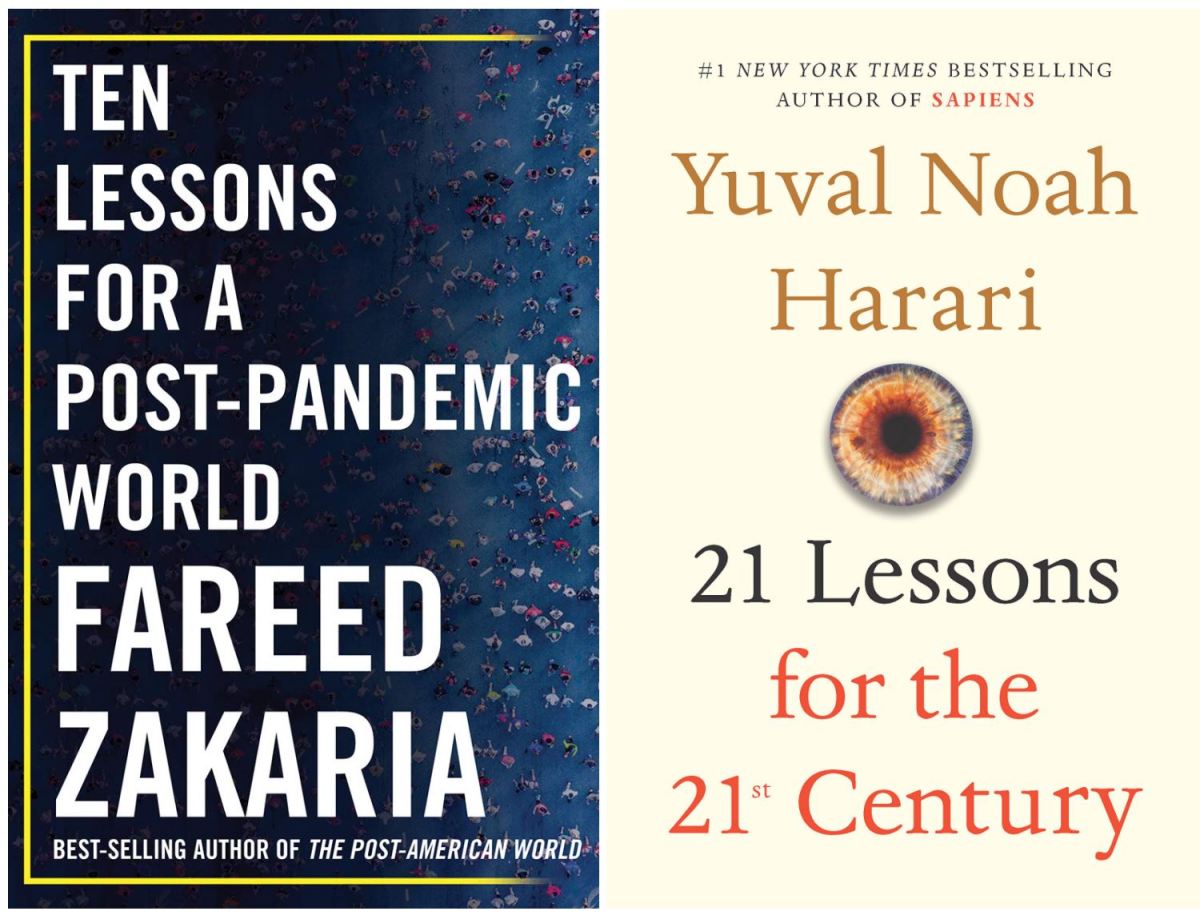
Reading 21 Lessons for the 21st Century (2018) by Yuval Noah Harari and Ten Lessons for a Post-Pandemic World (2020) by Fareed Zakaria made it all too obvious that everyone needs to get to work together to save the world. But will we? Harari and Zakaria are two tiptop brains who have been thinking mighty hard on what needs to be done and have come up with a total of 31 useful insights. However, while reading these books I kept wondering if humanity will do what it takes to save itself.

Of course, both books carefully assess the major governments around the world and generalize on the psychological abilities of their citizens. Harari focuses more on people, while Zakaria deals more with governments. Harari is an international philosopher from Israel, while Zakaria is a savvy political commentator on CNN. Harari’s lessons focus on how people think and his main advice advocates freeing oneself from all the bullshit that confuse our thinking. Because our modern world lays a lot of crap on us, Harari offers a great number of lessons to free ourselves. Zakaria asks us to focus on what is good government and how can we build them. Since the United States has been sinking deeper and deeper into bad governmental practices for decades Zakaria suggests a lot of changes too.

Can individuals and humanity as a whole make all the needed transformations before our problems reach a perfect storm of self-destruction? One of the lessons Harari covers is how people live by the stories they tell themselves. He makes a case that people generally don’t think for themselves, but buy into group thinking. Psychologically, it’s beneficial and easier to accept a story from a group than invent your own. That’s why people embrace religion, nationalism, and political parties – they give meaning to their lives, a satisfying sense of purpose and understanding, and a story to embrace and share.

At first, you’d think Yuval Noah Harari is a liberal, but as he recounts the history of various philosophies, dismissing each, he comes to liberalism and says its dead too, and keeps on going. That made me question my own stories I got from hanging with the liberals. It made me ask: What story do I live by? Well, here’s my story abbreviated as much as possible:

I don't use the word universe to mean everything anymore after science started speculating about multiverses. I use the word reality. From all my studying of science there appears to be no limits to be discovered from exploring larger and larger realms, or by delving into smaller and smaller pieces. Evidently reality is infinite in all directions in both time, space, and any other possible dimension or existence. Earth is an insignificant portion of reality. But in the domain of human life, this planet is all that matters because it sustains our existence. I am an accidental byproduct of reality churning through all the infinities of infinite possibilities. I am a bubble of consciousness that has a beginning and end. I coexist on a planet with other similar consciousnesses, as well as a spectrum of other living beings with their own versions consciousness. Life on planet Earth has the potential to exist here for billions of years, but it appears our species is about to destroy its current level of civilization, if not commit species suicide, or even wipe out all life. We can all continue to live pursuing our own stories ignoring their cumulative effect on the planet, or we can collectively decide to protect the planet.

You can see why these books appeal to me.

To cooperate means everyone working from the same pages. I’m not sure that’s possible, but these two books describe what some of those pages should look like. As long as we selfishly pursue the individual stories we currently live by, cooperation can not happen.

I cannot bet we’ll cooperate because the odds are so impossible. But I am quite confident that we’re quickly approaching an endpoint to our current civilization. All the odds are just too high for that. If you haven’t read Collapsed by Jared Diamond, you might consider doing so. It’s about all the civilizations before our current ones, they all failed. But just pay attention to all the trends you encounter. They all seem to be aiming at a near future omega endpoint bullseye.

To solve our problems requires everyone becoming a global citizen. We must all put the security of the Earth before our own goals. That involves learning a new story. But as Harari points out, most people don’t switch stories once they’ve found one that gives their life meaning, even if it has no connection to reality whatsoever.

We live in a era where people are embracing nationalism over globalism. This is Zakaria’s territory. Not only must individuals must change, but nations need to change too. Zakaria covers how some nations are succeeding and others are not.

In the story I live by as described above, I know my place and limitations. I’m a single consciousness that will endure for a few more years. Basically, I putter about in my tiny portion of this planet, pursuing things that interest me. I enjoy what I can, and try to limit my suffering as much as possible. I am quite thankful for having this experience of existing in reality. Maybe it is too much to hope that we could collectively control our environment and the fate of our species. Reality is all about creation and destruction, roiling through all the Yin-Yang possibilities. Maybe in some locations in reality the inhabitants do work together to shape their existence, and theoretically this could be such a location, but I doubt it.

I told my friend Linda the other day, to save the world will require everyone reading a certain number of books to understand what needs to be done. I’m not sure how many books would be required, but I’m pretty sure they won’t get the readers needed. That’s why my most popular essay is “50 Reasons Why The Human Race Is Too Stupid To Survive,” getting tens of thousands of hits. And most of the people who leave comments are quite cynical about our odds too. I really need to update that essay with current examples, but I could call this essay reason #51.

JWH

To The Bearers of False Witness Against Our Democracy

by James Wallace Harris, 2/23/21

When I was in school back in the 1950s and 1960s we were taught that America was the best example of democracy, and it was our most valuable export. The history I was taught, also claimed we inspired a slow worldwide conversion to democracy since the founding of America. Those lessons were something we took very seriously, and for most Americans it was politically sacred. We looked down on those corrupt government and leaders in other countries that undermined democracy as barbarians. And most of all, we believed America was impervious to any such corruption.

Well, we were wrong. Conservatives have taken up the weapon of denialism, first wielding it against science, then journalism, and now democracy. Denialism is a weapon of mass destruction. Donald Trump spent months carpet bombing America with denialism against democracy, claiming our system of voting is corrupt and full of fraud. It was Trump’s backup plan in case he lost the election, and his followers embraced that plan wholeheartedly. Even now the Republican party is doing everything it can to undermine democracy so they can win back power in 2022.

There was no significant voter fraud in 2020, even the conservative judges Donald Trump appointed affirmed that. Anyone who knows anything about our voting systems knows it’s well monitored. But even more important armies of Americans volunteer to support our voting system each election, and to claim it is corrupt and fraudulent is to insult their dedication. That’s goes beyond anything I can imagine to undermine our national unity.

Donald Trump shat all over American democracy and his followers have embraced his acts as the way to get what they want. The only systemic fraud in American democracy are the efforts by Republicans to disenfranchise people of color and immigrants, and to undermine our voting systems. This is down to Earth evil. If you follow the news, it is quite obvious that the Republicans have decided their #1 tool for winning elections in the future is by controlling them.

I just read this quote in 21 Lessons for the 21st Century by Yuval Noah Harari:

Joseph Goebbels, the Nazi propaganda maestro and perhaps the most accomplished media-wizard of the modern age, allegedly explained his method succinctly: “A lie told once remains a lie, but a lie told a thousand times becomes the truth.”

Donald Trump told his lie about election fraud so many times that it has become true to millions of people. Those lies are bearing false witness against democracy. By Republicans playing this one trump card over and over is causing their party members to believe it too. Harari went on to say:

In Mein Kampf Hitler wrote, “The most brilliant propagandist technique will yield no success unless one fundamental principle is borne in mind constantly — it must confine itself to a few points and repeat them over and over.” Can any present-day fake-news peddler improve on that?

I definitely do not mean to imply any connection between Trump and the Nazis. It’s just that the Nazis wrote the manual on public manipulation. Anybody who manipulates other people use a fraction of the techniques the Nazis perfected. We all need to study those techniques to become aware of how we’re being manipulated, either by politicians, corporations, or even by our coworkers, family, and friends.

Harari in an earlier chapter worked to understand why people believe what they do. He said as a species we’re not rational, but depend on myths and group thinking to understand reality. Most Americans don’t understand our democracy and voting systems so it’s easier to sway their opinion with disinformation. Trump treats his followers not as individuals but as a group mind. This comes from from the same book:

Not only rationality, but individuality too is a myth. Humans rarely think for themselves. Rather, we think in groups. Just as it takes a tribe to raise a child, it also takes a tribe to invent a tool, solve a conflict, or cure a disease. No individual knows everything it takes to build a cathedral, an atom bomb, or an aircraft. What gave Homo sapiens an edge over all other animals and turned us into the masters of the planet was not our individual rationality but our unparalleled ability to think together in large groups.

The Republican Party has learned the power of group thinking. That’s why they are so passionate about party loyalty. Unity consistently achieves success and they know it. The trouble is people who do think for themselves can break up groups, and the group is all important to Republicans. What’s amusing is individual Republicans who do think for themselves are always jockeying for control of the party, but it seems that it was Trump who rolled out the attack on democracy and the others had to fall in line. It’s another reason why so many Republicans want to retain Trump as a leader, his successes worked, so why rock the boat.

Harari went on to say:

Yet like many other human traits that made sense in past ages but cause trouble in the modern age, the knowledge illusion has its downside. The world is becoming ever more complex, and people fail to realize just how ignorant they are of what’s going on. Consequently, some people who know next to nothing about meteorology or biology nevertheless propose policies regarding climate change and genetically modified crops, while others hold extremely strong views about what should be done in Iraq or Ukraine without being able to locate these countries on a map. People rarely appreciate their ignorance, because they lock themselves inside an echo chamber of like-minded friends and self-confirming news feeds, where their beliefs are constantly reinforced and seldom challenged.

Conservatives, like any group seeking power, have used techniques and insights into how people form opinions to shape party member’s opinions. It’s how they get their coalition to do their bidding. Harari also noted that once people form opinions they seldom change them. Once the denialism of democracy bomb was dropped there was no going back. The rank and file had to follow. This is destroying our democracy with lies and even false witnessing in courts of law and the courts of public opinion.

Even some Republicans realized this is going too far. It’s like dismantling a passenger jet in flight. We all depend on our democracy for security and happiness, even the people who no longer believe in it. I plead with all rational Republicans to stop denying democracy. Stop undermining our way of life.

I have never believed in hell because I could never imagine any compassionate God would condemn any human soul to it for eternity. Christianity teaches forgiveness, and I can forgive the people who can’t think for themselves and spread lies about democracy. They don’t know any better. But I don’t have enough forgiveness to forgive those who are capable of thinking, who know what they are doing, and who bear false witness against democracy. They can go to hell – forever.

JWH

The Future Is About Jobs

by James Wallace Harris, Saturday, 1/16/21

Most people assume the best possible society will be one where everyone has a good job and can be self reliant along with the freedom to make what they want out of their life. That was the direction America was taking until a revolution in the 1970s, when a few people had a new vision of the future. Since then the best possible society was decided in favor of the wellbeing of corporations over a the last five decades. Unfortunately, corporate success depends on having fewer employees. They have chosen profits and automation over people. The citizens of America want jobs, but the citizens of corporations want profits. Whose future will win out?

If you put your faith in politicians and think they will bring happiness to Americans with more jobs then you are deluded. The past four years were Trump feeding his massive ego which distracted us from the real issues. But electing Biden is not going to save us either. Arguing over partisan politics is like brawling in the ballroom of the Titanic an hour before hitting the iceberg.

If we stay on our present course America will collapse economically before climate change can do us in. If we want to avoid both hells then we must decide on a better final destination. It will require cooperation. It will also require knowledge, but not the kind of knowledge you can get off the internet or cable news. The amount of knowledge needed will require studying books, lots of books, and not books written by egomaniacs trying to become rich.

The problems we’re facing and will face are so enormous that it will take a significant percentage of the population working together to solve them. If we want that future where everyone has a good job it will require a new kind of education. We used to believe higher education guaranteed a successful future. But the kind of education I’m talking about is not technical job training or academic enrichment. What we need is to educate ourselves about a holistic understanding of our present reality. However, most citizens of this society have chosen to deny reality, or accept it and just enjoy themselves as much as possible before the apocalypse.

Remember in The Matrix when Neo was told he’d need a lot of guns to overthrow the machines, and rows and rows or armaments sped past him? Yeah, well we need to read lots of books, rows and rows of bookcases. At a guess, a good portion of the voting population needs to start reading one important nonfiction book a month to alter our path and avoid the twin icebergs of climate change and wealth inequality. Will that happen? I doubt it.

We’re now more polarized politically than anytime in my lifetime. The country is almost perfectly divided into two opposing philosophies. The conservatives want free market capitalism with winners take all. The liberals want capitalism supplemented with socialism to protect the losers. Strangely, I see it as the Darwinians v. Christians, even though the conservatives see themselves as Christian, I see them as advocates of survival of the fittest, while liberals want to follow the teachings from the Sermon on the Mount, yet expect the Darwinians to pay for the sick, lame, and homeless.

If we continue on the current path blazed by libertarian free-market true believers, all the wealth will be sucked out of the middle and lower classes, and probably even from the lower upper classes. The future promises a small wealthy class with their robots and corporations, and a vast lower class, struggling to survive off a small basic income. If you believe in trickle down economics then why are the richest cities in America being overrun by homeless encampments and decay? If you don’t believe me watch these videos about L.A., San Francisco, and Miami.

These are just a few images that show the result of our present economic policies. They are like the early signs of climate change that everyone wants to ignore. I’m old enough to look back over 50-60 years of history and change. Most people believe things stay the same. They don’t. The societal erosion you see in these films will spread like kudzu unless we change course. But how?

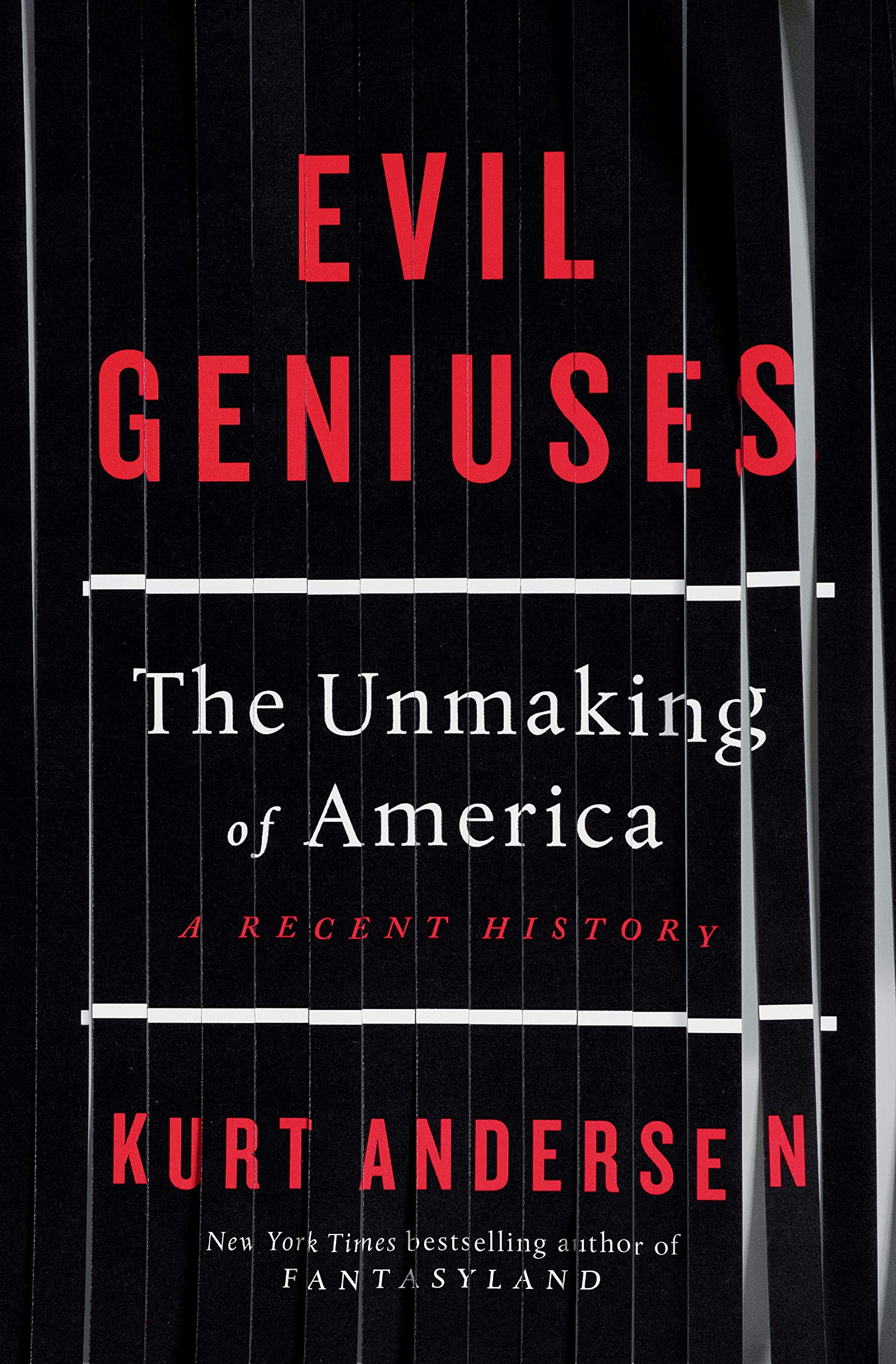
In physics we’ve learned that space and time are really one thing and we should refer to it as spacetime. And we’ve also learned that the mind and body are not separate and should refer to it as the mindbody. Well, the same is true for politics and economy, it’s really the politicaleconomy. When new concepts emerge they go through a phase first as two words, then as two-words, and finally as oneword. We’re still thinking in the political economy phase, but after reading Evil Geniuses by Kurt Andersen I’m going to think of it as the politicaleconomy, and even bypass the hyphen phase.

If you only see politics in terms of liberal and conservative, or Democrats and Republicans then you’re only seeing the tip of the iceberg. If you only look at the economy in terms of gains and losses then you’re not even seeing the tip. Evil Geniuses will not give you a complete holistic view of current politicaleconomic reality, but it will hint at it. Andersen is a synthesizer who has written a history of the politicaleconomy beginning in the late 1950s to show how our present state of the politicaleconomy evolved. It’s very complicated, and like Einstein working to develop a Grand Unified Theory Andersen does not succeed.

It comes down to simplex, complex, and multiplex. Most humans want simplex answers to explain reality. The more we study reality, the more complex reality appears. Focusing on single systems causing complexity in our minds. It’s only until we try to see how multiple systems work together that we develop multiplexity of thinking.

Personally, I’m smart enough to see complexity and intuit a bit of multiplexity. I believe Andersen is able to mentally juggle several complexities and visualize a certain level of multiplexity to be able to write about it. I envy him that ability. I envy that because simplex thinking is very satisfying. Complex thinking is stressful, even painful and discordant. It’s only until we get into the multiplexity stage do things become calm again, and we hear the harmony of relationships between system interactions.

Reading Evil Geniuses and exploring the individual observations Andersen makes has reduced some of the political anxiety I acquired from 2016-2020. Donald Trump wasn’t the real issue even though we’ve agonized over his impact for years. He was just a rash and not the underlying disease. Most Americans are riled up politically but are looking for answers in all the wrong places. We keep trying to cure symptoms and not the disease. Until we think of the politicaleconomy as one holistic system that includes all life on Earth we’re going to stay the course towards extinction. We need to be working towards a new word, the politicaleconomybiosphere.

I cannot properly review this book without restating almost everything that’s in it, and Kurt Andersen has already done that, so just read it. Don’t expect to accept everything he says. I haven’t yet. But if you’re like me, do expect to want to read his sources, or at least other books about the issues covered. For example, I bought a Milton Friedman book to understand the other side of things. One book ain’t going to cut it. If you’ve ever gotten fascinated by a subject and had to read everything you can about it, that’s how I feel now about the politicaleconomy.

Reading Evil Geniuses made me realize I wasn’t paying proper attention to the history of the last fifty years. Andersen chronicles no secret cabal of conspirators, all those evil geniuses were working completely out in the open. Another realization I take away from the book is don’t assume the nightly news will tell us what we need to know. Following the sensational stories on TV and the internet is watching the delusional argue over how many angels fit on the head of a pin.

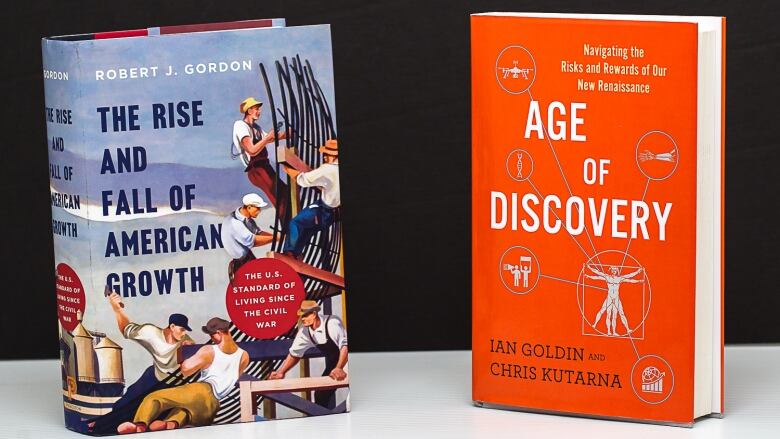
Understanding comes from longer essays, like those in The Atlantic or The Economist, or from good solidly researched books. And that reading never ends, because there’s always need for deeper insights. For example, I think I need to read The Rise and Fall of American Growth by Robert J. Gordon to understand the history before the history outlined in Evil Geniuses and Dark Money by Jane Mayer. But it’s also important to read opposing views, like Age of Discovery by Ian Goldin and Chris Kutarna.

That’s a lot of relentless reading. Is it practical to imagine that a significant portion of the voting public will do this kind of reading? No, not really. That’s why the movers and shakers of the economic right were able to achieve their goals. They used their knowledge to change just a few institutions and people to alter the course of history. Can liberals make such surgical decisions to reflate the wealth of the middle and lower classes? I won’t know until I read a lot more. If you know of any books that offer such insights, let me know.

JWH

Finally Finished War and Peace – But Do I Recommend It?

by James Wallace Harris, Monday, December 28, 2020

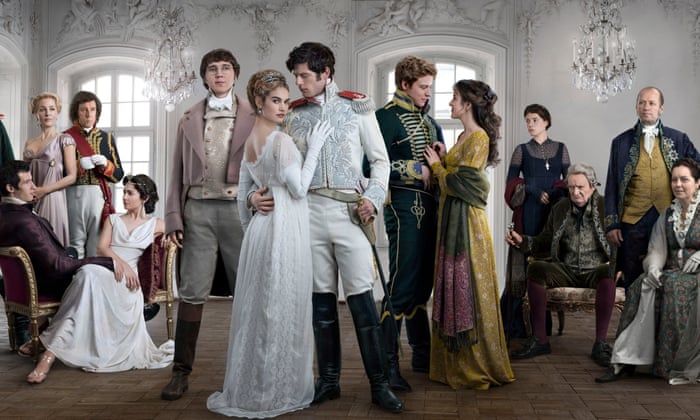
I began reading War and Peace (1869) by Leo Tolstoy back in April after watching and reviewing a recent 6-part BBC miniseries (2016) based on the book. I finished about forty percent of the novel and then stopped reading it in early summer. Then a couple weeks ago I decided I needed to finish it before the year was out. Every year I read one literary classic, and I had promised myself that War and Peace was going to be my 2020 read. War and Peace is currently #7 on The Greatest Books list. It did make an excellent companion to 2020, and illuminated the present with the past.

As I mentioned in my earlier review, War and Peace reminds me of Jane Austen because it’s set from 1805-1812 (plus epilogue 1813-1820), which was around the time Jane Austen was writing her famous novels. War and Peace has always been intimidating for his size – 55 hours and 30 minutes on audio, and 1,300+ pages in teeny tiny print. That’s almost like listening/reading all six of Jane Austen’s novels together. The plot and characterizations of War and Peace is about as complicated as reading all the Austen novels by round robin her novels chapter by chater.

That wouldn’t bother some readers, however, War and Peace mixes in countless pages of Tolstoy pontificating about war, power, military command, freedom, history, free will, leadership, etc., and I’m afraid that could turn them off. Thus it makes for a hard novel to recommend emphatically.

War and Peace wasn’t hard to read. Many people have asked me about that. Yes, the Russian names are problematic, but I think it helped that I watched the BBC series first, and watched the Russian language Mosfilm version that was released as four films over two years (1966-1967) while I was reading the book. Those four films of War and Peace are currently available on HBO Max.

My friends also ask me if War and Peace is worth all the trouble to read. When I’ve mentioned to folks that I was reading it, many reacted like I was doing something yucky. It’s actually a wonderful novel, quite philosophical, but mainly about romances within large aristocratic families during the Napoleonic Wars. If you’re a fan of Downton Abbey or Jane Austen, just imagine that kind of story on a much bigger scale with two epic battles, and the downfall of an emperor thrown in. I enjoyed the war parts, but I’m not sure if most readers will.

Again, I’m reminded of Jane Austen. Much of the book is about life and love among the aristocratic which is very similar to Austen. However, in Austen, the men go off to the Napoleonic wars but we’re never told of their experiences. In Tolstoy we are, and it’s important. The men are shaped by their experiences in battle, and two of them have intense spiritual conversions. War and Peace gives us the men’s view of the age, whereas Austen gave us the women’s.

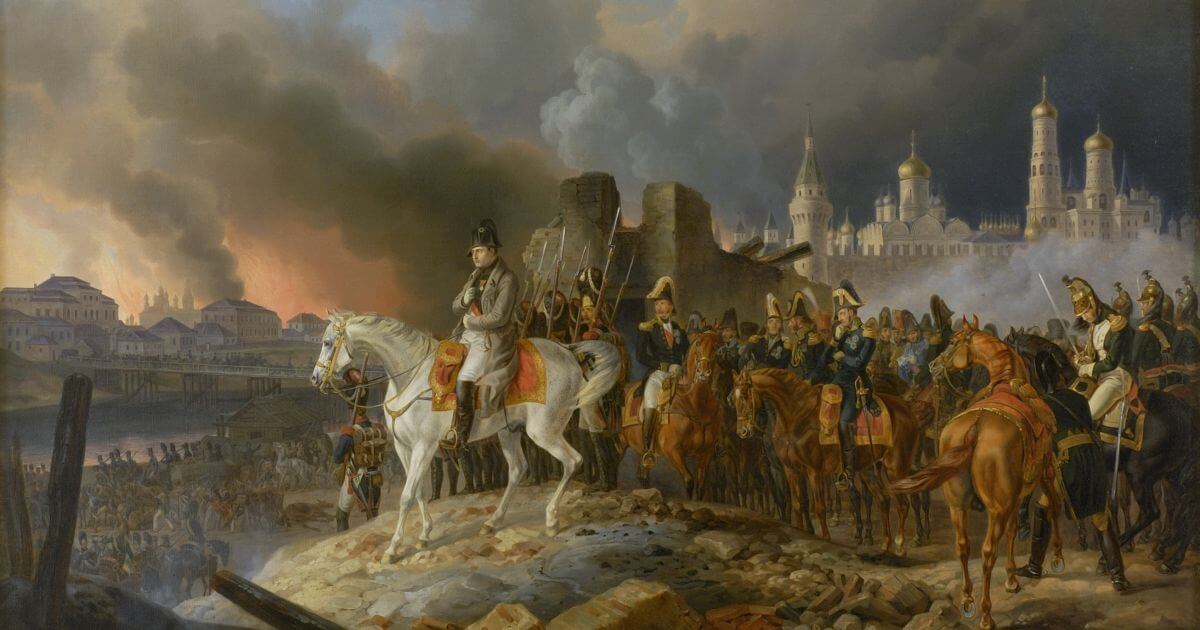
I’ve never really understood Napoleon before. While reading this novel I went and read the entry at Wikipedia about Napoleon, which was very informative. But I actually believe Tolstoy gives a much better picture of this historical figure, even though Tolstoy obviously wanted to write his novel to give a revisionist assessment of Napoleon. I still don’t know enough history to know if Tolstoy is accurate or not, or even if he’s doing hatchet job on the man.

I have to admit that I wished that Tolstoy had published his soapboxing as a separate nonfiction supplement to his novel. It’s quite fascinating to hear Tolstoy’s 1860s knowledge of the sciences, including the new ideas about evolution, applied to events and people. Tolstoy is impressive in his insights, even by 21st century standards. I even used some of them to see Donald Trump in a new light. By the way, I was completely surprised by how important the French language was to Russian aristocrats at the time. I’ve always imagined Russia being very isolated from the rest of Europe.

On the other hand, I was always anxious to get back to the story, and I always wanted to know more about the characters, of which there were too many to chronicle here. Pierre was my favorite, but then he is much like Levin from Anna Karenina, my favorite character in that novel. In both cases, I wondered if those characters were stand ins for Tolstoy himself?

Still, do I recommend this monster of a novel? I am very glad I read War and Peace, and I found it very compelling, but it requires a tremendous commitment. I’m not sure I will ever try to reread it, but I think I will dip into every now and then. Some scenes and chapters are exquisite.

I can recommend reading War and Peace to anyone who loves 19th literature, to anyone who dreams of becoming a writer, or to anyone to enjoys finding philosophy entwined with fiction.

By the way, it’s quite cheap to try War and Peace since it’s in the public domain. Get a free Kindle copy. If you get hooked keep reading. I enjoyed reading it and listening to it on audio. My Kindle edition let me switch back and forth instantly.

JWH

Spielberg Should Make a Movie About Them

by James Wallace Harris, Sunday, September 20, 2020

Most of our fiction when it’s not about romance or comedy is about heroes. Whether in books, television shows, movies, or video games we usually identify with a hero. Quite often the hero must confront conflict with violence, but generally the violence is over-the-top and the heroes’ abilities are unbelievable. Far too often fiction promotes the cult of the gun. But what about real heroes? Heroes are individuals who will sacrifice themselves for others. Why don’t we see more real life heroes in our fiction?

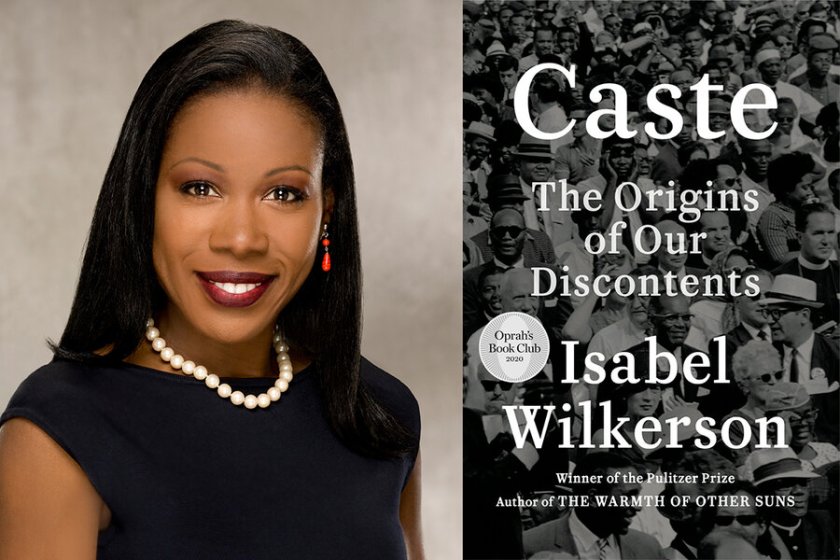
I just finished reading chapter 17 of Caste: The Origins of Our Discontents by Isabel Wilkerson about Allison and Elizabeth Stubbs Davis, two black anthropologists who were training in Germany when the Nazis came into power. This was 1933, and they decided to flee the fascists and go to Natchez, Mississippi to study class, caste, and race. Talk about jumping out of the frying pan into the fire. This was the heart of the Jim Crow south well become the civil rights era and Freedom Riders. According to Wilkerson a black person was being lynched every four days. She also reported that Nazis had studied Jim Crow laws for inspiration on how to fashion their laws to oppress the Jews, and in some instances the Nazis thought the Americans went too far. By the way, I highly recommend Caste.

Allison and Elizabeth were part of a team, with white anthropologists Burleigh and Mary Gardner, but interestingly for the time, Allison was the team leader. Wilkerson’s book up till chapter 17 showed her readers just how dangerous it was for the two couples, especially for Allison and Elizabeth to work in the 1930s deep south. Their scientific undercover work meant taking potentially lethal risks day after day for years.

These scientists were real life heroes putting their lives on the line to make a better world for us. We need to see more movies about this kind of heroism. Are you brave enough to attempt anything like their quest? I certainly am not. In modern fiction the hero usually get to load up on weapons before confronting the enemy. Would you volunteer to spy on a hostile society with only Gandhi’s armament?

Their story would make a great movie. After reading this chapter I really wanted to know more about these four scientists, especially Allison and Elizabeth. However, I can’t find out much about them and their time in Mississippi. Allison went on to become the first black professor to get tenured at a predominantly white university (The University of Chicago, 1947). but with complications. David A. Varel wrote a whole book devoted to Allison Davis, The Lost Black Scholar: Resurrecting Allison Davis in American Social Thought (2018).

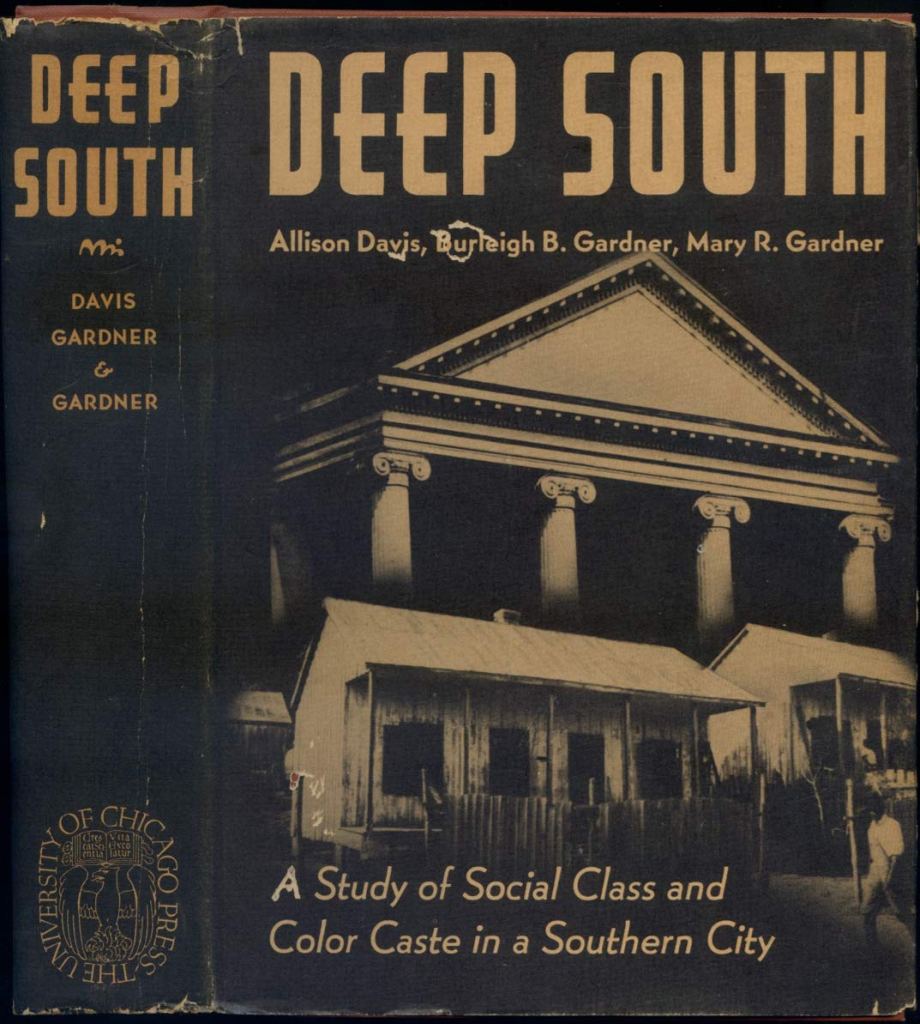
According to Wilkerson the Davis and Gardner couples started their research earlier and stayed longer, but other anthropologists came after them, spent less time embedded in the culture, and published sooner. Davis and the Gardners published Deep South: A Study of Social Class and Color Caste in a Southern City (1941), but it was upstaged by Caste and Class in a Southern Town (1937) by John Dollard and After Freedom: A Cultural Study in the Deep South (1939) by Hortense Powdermaker. Dollard and Powdermaker gained the academic fame, and it’s why Wilkerson said in a New York Times interview that Deep South was the book she admired most that no one reads.

I’d love to read Deep South but finding a copy is turning out to be hard. It’s not in print at Amazon, and used copies run hundreds of dollars. I hope Wilkerson’s book inspires a reprinting, at least a Kindle edition. According to WorldCat it is available in some of my local university libraries, so I will try them. Still, I’d like to see their story on the big screen.

I know Hollywood distorts history badly, but while reading Wilkerson I could vaguely imagine the intense drama of their story, I’d like it visualized for me with all the vivid details movie makers can muster. I’m burned out on modern movies. I’m no longer hooked on their fantasy violence. I crave quiet realism. I understand our world and its history is full of violence, but surely it can’t be as much as our fiction implies. I’m tired of heroes with big guns. I’m tired of cartoon combat. I read the other day that the Wild West was never as violent as westerns, not even close. We need more movies about people who save the world without shooting it up because obviously too many people are thinking that’s what the world needs now the most.

JWH