Will People Change vs. Can People Change?

by James Wallace Harris, 2/28/24

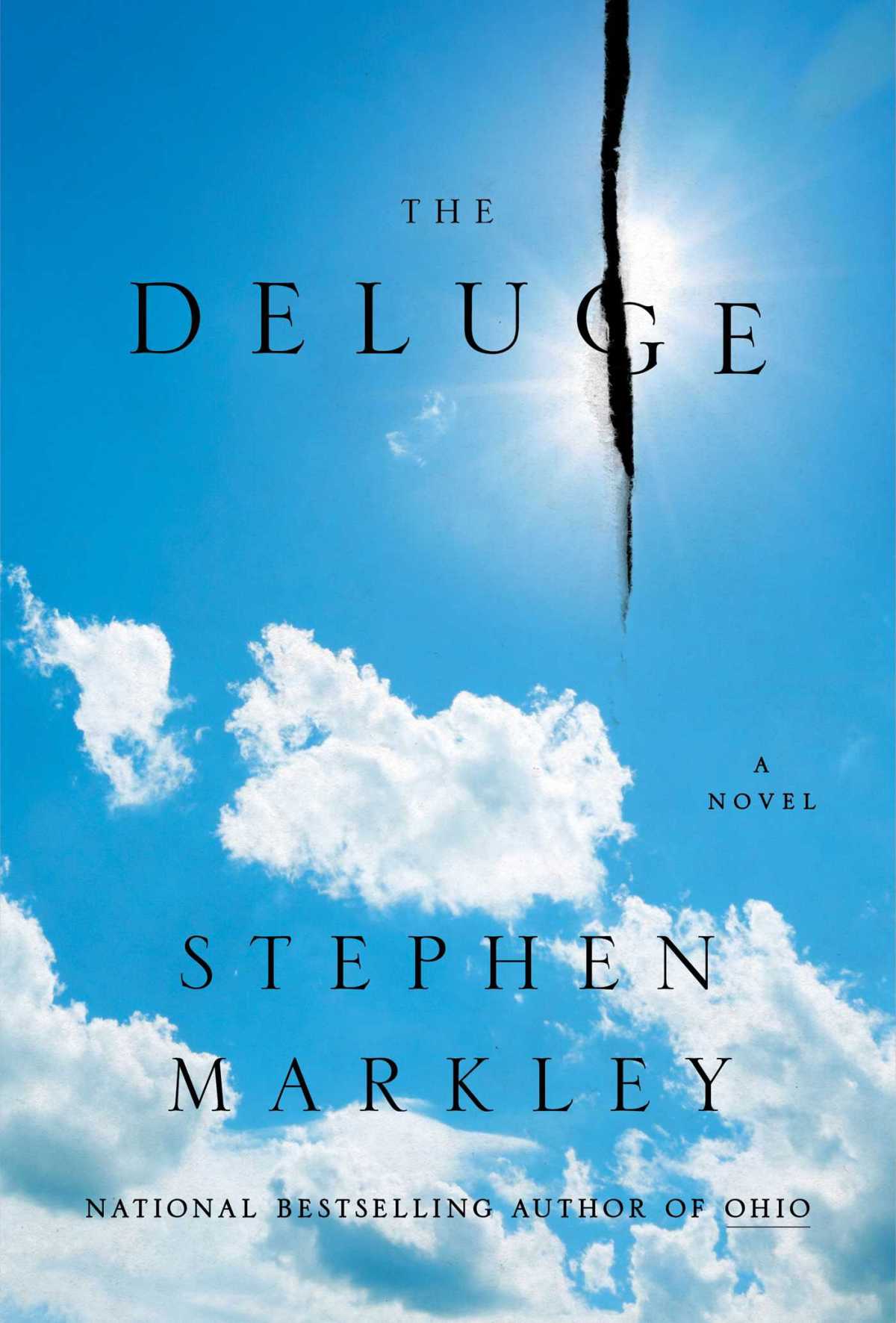
I just finished listening to The Deluge by Stephen Markley, a book that speculates on what the next sixteen years could be like. The book is almost nine hundred pages in print, and over forty hours on audio. Reading this book feels like it’s compressed the last twenty years of polarized political conflict into a forty-hour long disaster film. It’s intense.

Markley uses a large cast of characters to dramatize how people on the left and right will battle for control over the next five U.S. presidential election cycles. Most of the story involves two groups of characters, those working within the political system, and those who decidedly don’t. Markley portrays an ultrasecret ecoterrorist group that works to force change by violent acts versus a dedicated group of political wonks that labor in Washington to influence both parties. Dynamic women characters lead both groups. (By the way, I disliked both women. The only character I cared about was a drug addict in Ohio, who Markley uses as a kind of everyman.)

To further spice up the story, Markley explores the growing power of computer surveillance, artificial intelligence, privacy, and how everyone can be tracked.

I’m not going to review the details of The Deluge because I want to use my reading experience to talk about a specific response to reading the book. I’ll link major book reviews at the end in case you’re considering reading the book. I can say liberals will be terrified by the conservatives in this story, and conservatives will by horrified by these fictional liberals.

The Deluge is about climate change. We could have solved that problem by now if we had acted promptly twenty years ago. The government could have added a tax on all fossil fuels and then raised it slowly month by month. For example, by adding ten cents to the federal tax on gasoline each month. If we had started this in the year 2000, gasoline would be approaching $30 a gallon today. That would have forced people and corporations to make the changes needed.

That tax revenue could have been used to overhaul the power grid and for developing renewable energy technologies. If we had taxed carbon properly, we wouldn’t be fighting over climate change today. That didn’t happen. It didn’t happen because the people who owned trillions of dollars in fossil fuel reserves made sure it didn’t happen. They built a political and religious coalition to fight with them to protect that wealth.

All that’s beside the point now. What Markley envisions is the breakdown of the United States over the next sixteen years so it’s obvious to all we need to do something. The Deluge includes dramatic scenes of a massive fire that destroys Los Angeles, a massive flood that overwhelms the Midwest, and a massive hurricane that devastates east coast states. These events caused the insurance industry to collapse, leading to economic chaos. Markley doesn’t overplay all this. His fictional disasters are realistic, only somewhat larger than what we’ve already experienced, killing just hundreds or a few thousand people in each event, but having an enormous impact on politics and the economy.

Reading The Deluge makes readers ask themselves: Will American change soon? But I ask: Can people change at all?

Before reading this novel, I had seen two insightful videos about climate change that ask the same questions. The first video makes a careful case saying people don’t change and if there is a solution for avoiding climate change it must work with the psychology of how people act. The second video summarizes the first video with impressive summations of it and this tweet. (I wish I could summarize what I watch and read this well.)

Over the two hundred thousand years that our species have existed on this planet, we haven’t changed. Our societies and technologies change, but not us. Over those two hundred thousand years we have developed four major cognitive tools to understand reality: religion, philosophy, mathematics, and science. Only science using mathematics has consistently proven it can consistently describe reality. If you don’t believe that I wouldn’t fly in an airplane.

Science is not black and white. It’s statistical and hard to understand. But science has overwhelmingly shown that adding more CO2 to the atmosphere is turning up the temperature. The parts per million of CO2 in the air acts like a thermostat. Add more CO2 turns up the temperature. The only way to return to the weather we liked in the past is to return to the CO2 levels of the 1960s, but we keep adding more. The only way to stop adding CO2 is to completely stop using fossil fuels. And if we want to turn down the thermostat, we need to remove CO2, which isn’t easy. That’s why taxing carbon is the only way to force us to change, but we won’t do that, because it’s not in our psychology.

However, The Deluge suggests when things get bad enough, we’ll change. It ends hopefully. People even have hope for their children and grandchildren.

Personally, I don’t think we will change. If you want to know what the next sixteen years could be like, read The Deluge. If you believe people can change, and we’ll do the right thing eventually, read The Deluge. If you don’t believe we’ll change, I wouldn’t bother with the book unless you like looking at train wrecks. And if you suffer from depression, I suggest avoiding reading this novel at all costs. I seldom get even the slightest depressed, but this book bummed me out.

Reviews:

JWH

Is Ethical Capitalism Even Possible?

by James Wallace Harris, 10/20/23

This month, several of my friends have separately expressed doubt about the future. I don’t hold much hope either. Our current world civilization seems to be falling apart. Capitalism is consuming the planet, but capitalism is the only economic system that creates enough jobs to end poverty. The only alternative to free market capitalism I can imagine is if we adapt capitalism to an ethical system. So, I’ve been keeping my eye open for signs of emerging ethical capitalism.

Here’s one: “The Workers Behind AI Rarely See Its Rewards. This Indian Startup Wants to Fix That” from Time Magazine (8/14/23). The article describes how AI startups need vast amounts of sample data from other languages for their large language models. In India, many data companies are exploiting poor people for their unique language data and keeping the profit, but one company, Karya, is giving the poor people they employ a larger share of the profits. This helps lift them out of poverty.

Capitalism has two dangerous side effects. It destroys the environment and creates inequality. For capitalism to become ethical it will need to be environmentally friendly, or at least neutral, and it will need to be more equitable. If we want to have hope for the future, we need to see more signs of that happening.

Right now, profits drive capitalism. Profits are used to expand a corporation’s ability to grow profits, and to make management and investors rich. Labor and environmental controls are seen as expenses that reduce profits. For a corporation to be ethical it will have to have a neutral or positive impact on the environment, and it will need to share more of its profits with labor.

Since the pandemic hourly wages have been going up, and so has inflation. If capitalism becomes more ethical, costs for environmentalism and labor will go up, thus ethical capitalism will be inflationary. Some people have gotten extraordinarily rich by making things cheap, but it’s also shifted labor and environmental costs away from corporations onto the government and the public. The price at the store does not reflect the actual cost of making what you buy. You pay the difference in taxes.

For ethical capitalism to come about things will need to be sold for what they cost to make. That will involve getting rid of governmental and corporate corruption. It will involve political change. And it will be inflationary until the new system stabilizes.

My guess is ethical capitalism will never come about. If I were writing a science fiction novel that envisioned life in the 2060s it would be very bleak. Life in America will be like what we see in failed states today. Back in the 1960s we often heard of the domino theory regarding communism. Failed states are falling like dominoes now. Environmental catastrophes, political unrest, dwindling natural resources, and viral inequality will homogenize our current world civilization. Either we work together to make it something good, or we’ll all just tear everything apart.

Civilization is something we should all shape by conscious design and not a byproduct of capitalistic greed.

We have all the knowledge we need to fix our problems, but we lack the self-control to apply it. I have some friends who think I’m a dope for even holding out a smidgen of hope. Maybe my belief that we could theoretically solve our problems is Pollyannish.

I have two theories that support that sliver of hope. One theory says humans have always been the same psychological for two hundred thousand years. In other words, our habits and passions don’t change. The other theory says we create cultures, languages, technologies, systems that can organize us into diverse kinds of social systems that control our behavior.

We could choose better systems to manage ourselves. However, we always vote by greed and self-interest. We need to vote for preserving all.

In other words, we don’t change on the inside, but we do change how we live on the outside. My sliver of hope is we’ll make laws and invent technology that will create a society based on ethical capitalism and we’ll adapt our personalities to it.

I know that’s a long shot, but it’s the only one I have.

I’m working to develop a new habit of reading one substantial article a day and breaking my bad habit of consuming dozens of useless tidbits of data that catch my eye as clickbait. In other words, one healthy meal of wisdom versus snacking all day on junk ideas. Wisdom doesn’t come packaged like cookies or chips.

JWH

Fiction v. History

by James Wallace Harris, 9/25/22

Ken Burns’s new documentary, The U.S. and the Holocaust, punched me in the soul. No documentary has ever moved me as much, and I’ve seen a lot of them. And it’s not because it’s about the Holocaust. I’ve even read about most of the painful facts it presents before. No, the gestalt of this film, which is well over six hours, is to set off an epiphany about our relationship with history.

At the highest level, the documentary asks: What did Americans know about the treatment of the Jews under the Nazis from 1932 to 1945 and when and how did they learn it? But to answer that question Ken Burns and company have to describe what Americans were like during those years. The U.S. and the Holocaust give a different history of America for those years from any I’ve ever encountered from people, in school, reading, at the movies, or on television.

Maybe the best way I can describe it is to say: Everything that has horrified me about living through the years 2016 to 2022 existed in the 1920s, 1930s, and 1940s. The documentary cements a theory that I’ve been developing in recent decades – that people don’t change and even the percentages of the population that hold specific opinions don’t really change either.

The documentary set off this existential conundrum: Why didn’t I already know what the documentary revealed? Or did I just filter it out? Republicans are in an uproar over Critical Race Theory and other curricula that they’re afraid will upset their children. I imagine they will be just as upset at The U.S. and the Holocaust. I knew about the wide popularity of the KKK and eugenics in the 1920s. I knew Americans were mostly isolationists and anti-immigration in the late 1930s. But the documentary gives us a different take on history than what I was taught.

I have to wonder since FDR was president from 1932-1935, have we always gotten the Democratic party’s view of that history? I wonder if Ken Burns has rounded out the historical period by adding the Republican party’s take on those years? I do know the documentary feels very synergistic with today’s politics.

I love old movies from the 1930s and 1940s, and none of the hundreds of movies I’ve seen from that era convey what I learned from The U.S. and the Holocaust. My grandparents, parents, aunts, and uncles, all lived through those years, and none of them ever described the mood of the country revealed in the documentary. I’m a bookworm that has read countless works of both fiction and nonfiction about America in those decades, giving me some of the details from in the documentary, but not in the same gestalt. Two books that come to mind are One Summer: America, 1927 by Bill Bryson and In the Garden of Beasts by Erik Larson.

After I watched the Ken Burns documentary I read The Plot Against America by Philip Roth. It’s a kind of science fiction novel, an alternative history where Charles Lindbergh wins the 1938 presidential election and for many of the reasons described in the documentary. Roth was born in 1933, and he makes himself the point-of-view character in his novel. Young Phil is only 8 when it begins and 10 when it ends, but his viewpoint is mature. It’s about the anti-Semitism of those years.

I thought The Plot Against America was a well-told story about Jewish life in Newark, New Jersey 1938-1942. I thought Roth’s alternate history speculation was well done, deriving from the kind of knowledge I got watching The U.S. and the Holocaust. But the story is mainly a personal one, and its gestalt is different from the documentary.

Last night Susan and I watched Radio Days for the umpteenth time. It’s Woody Allen’s nostalgic look back at those same years. It completely ignores all the political history of The U.S. and the Holocaust. Radio Days is like both movies from that period and later films that worked to recall that era. They all filter out the nastiness of racism and xenophobia that existed in America back then. Although some of it came through in the film The Way We Were, and the book version of Breakfast at Tiffany’s.

And just before I watched the three episodes of The U.S. and the Holocaust I read Revolt in 2100 which contains a 1940 short novel by Robert A. Heinlein called “If This Goes On….” Heinlein imagined America would go through decades of The Crazy Years, before undergoing a second American revolution that created an American theocracy. I was disappointed that Heinlein didn’t do more world-building for his novel, but after seeing the Ken Burns documentary I understand his inspiration for writing it. It’s obvious that many Americans back then wanted a Protestant theocracy. Consisting of only white people from England, Germany, and some Scandanavian countries.

I think it’s important to distinguish fascism as a political philosophy from the Nazis, who were also fascists. What many Americans wanted then and now is basic fascism, and the Philip Roth novel shows how America could have turned fascist.

The other day I saw a quote on Facebook that went something like this: If you get warm and fuzzy feelings reading history then you’re not studying history. I’m on the third volume of world history by Susan Wise Bauer, and it’s brutal. Most people want to romanticize history, which is what we get from novels and movies. The Republicans don’t want CRT taught because they want their kids to feel all warm and fuzzy studying American History. The new Ken Burns documentary will not leave you feeling warm and fuzzy.

My current theory is humans can’t handle reality. That we develop all kinds of psychological delusions to filter reality out. We prefer our fantasies. And popular history along with pop culture gives us nice takes on the past that allows us to cope. It’s also why most people’s theory of how reality works is no more complex than a comic book. It’s why we’ve always clung to religion. It’s why I have a life-long love of science fiction.

We just can’t handle complexity. There are plenty of real history books that document the reality of the times they cover, but they aren’t widely read. Maybe the Republicans are right, and history is too brutal for children. But maybe we keep repeating history because we’re all too wimpy to handle history.

I’m getting so I can’t stomach the historical lies of Hollywood, but I don’t know if I can handle all that much real history either. I used to think that maybe four percent of the population was mentally ill. In recent years, I’ve upped that to forty percent. But lately, I’m thinking there’s an entry for all of us in the DSM-5.

JWH

What If I Didn’t Come Back From The Dead?

by James Wallace Harris, 9/3/22

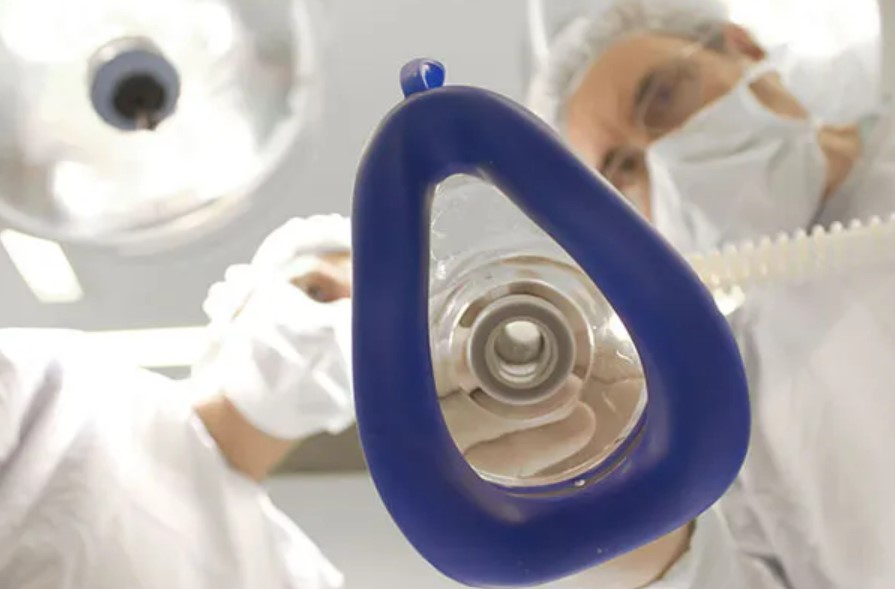
Last Monday I had hernia surgery and was under general anesthesia for over two hours. Being anesthetized is maybe the closest thing to being dead. Our conscious self is turned off so completely that it feels like we’re gone for good.

Interestingly, my book club book this month is Being You by Anil Seth and he introduces the study of consciousness with the discussion of general anesthesia. This was the fifth time I was put under so beforehand I was contemplating being gone. And I kept asking myself: “What if I don’t come back?” I thought it was philosophical fun to imagine nonexistence.

Mostly I thought about people I would miss but if I didn’t exist I wouldn’t feel anything. I think of death being like how things felt before I was born. I feel the only existence we know is this one. But my atheist beliefs could be wrong. I wondered how it would feel if I came to, but in another existence. I’ve always hoped if that happened I would be given all the answers to my questions about this existence.

My hunch is this existence is our only one. That reality is filled with many infinities but infinite existence isn’t one of them. Mostly I thought if I wasn’t coming back I should do a lot of paperwork before I might die to help Susan out. But I didn’t do that for two reasons. First, I assumed I was coming back. Second, because I’m lazy.

Still, it felt very weird and fascinating trying to imagine not existing.

Before my surgery, I had a long talk with my surgeon and he agreed to do everything I wanted. I was worried about two things. I was afraid lying on the surgical table for hours would inflame my spinal stenosis. I worried that I couldn’t hold my pee for that length of time because of my overactive bladder. I told him of these fears weeks before the surgery. He said he would try to arrange my back on the table like I needed and would give me a catheter but I would have to wear it for a few days at home. So I practiced lying flat each day before the surgery. Then on the day of the surgery, I told him to not worry about positioning me for my back but do whatever was best for his work. I also asked for the catheter to be removed before I came to and if I couldn’t pee on my own in recovery they could put it back in.

He seemed glad I practiced lying flat and agreed to my method with the catheter. This made me very happy and cleared all my worries. My surgeon then said he wanted to pray for me. I said sure. I’m not the kind of atheist that’s against religion or religious rituals. I am actually grateful for any prayers I receive.

I was impressed by the length of his prayer. He carefully went over all my problems and concerns and then covered all his goals in great detail while asking God for help. It was reassuring on several levels. First, it let me know how closely he listened to me, and second, it carefully laid out his working plans. But it fits in with my contemplations on nonexistence. And his prayer set the right mood for the occasion.

I felt that we each used a different language for understanding our shared existence. I use the word Reality for what he calls God. He believes in a personal relationship with God whereas I think I’m interacting with infinity and randomness. What he calls God’s will I call the unfolding of evolving randomness. Prayer assumes we can ask for blessings. I assume I will get what will be but I’m on one long lucky anti-entropic run of fabulous luck. The big difference is my surgeon believes there’s an existence after this one and I think death is oblivion. I’ve always been exceedingly grateful for this existence.

Well, I did come back. I’m writing this on my iPhone with one finger. The surgery went very well but it was more involved than my surgeon expected. I had no back pain after the surgery. And for 24 hours my back felt limber and young. Even after the drugs wore off it hasn’t been bad at all. And I peed right away when they rolled me back to my room after recovery. And in the days since I haven’t had much pain. I did without drugs except for a couple Tylenol and later, a couple of ibuprofen. However, I am suffering from a swollen scrotum which is typical of this operation and why I’m not sitting at the computer.

I’m quite glad to be back but I’ve learned that God’s will or reality wasn’t finished with me regarding this surgery. We never get what we picture, and my surgeon’s prayer didn’t cover post surgical complications. I thought going under inspired a lot of philosophical musings, but it turns out dealing with an expanding scrotum, generates even more existential thoughts.

One side effect of this experience is to feel sorry for women and their boobs. I imagine my affliction feels somewhat like getting a breast implant. My package is so much bigger it’s freaking me out. Having a sensitive globular appendage is not convenient. It gets in the way, making sitting and walking weird. So I imagine having two would be more than twice as inconvenient. And the size of my burden is still smaller that what most women have to deal with. I now regret every time I ever wished a woman had bigger breasts.

Yes, I came back, but to something I never imagined. But then, the future has always been what I never imagined.

If there is a God and he/she/they willed these big balls on me then I hope it’s God’s sense of humor and not punishment. So I will close with a prayer: “Dear God, please make my scrotum normal again. And if you intended a philosophical lesson help me learn it quickly. Amen.”

JWH

Just Who Slept With the Pods?

by James Wallace Harris, 5/14/22

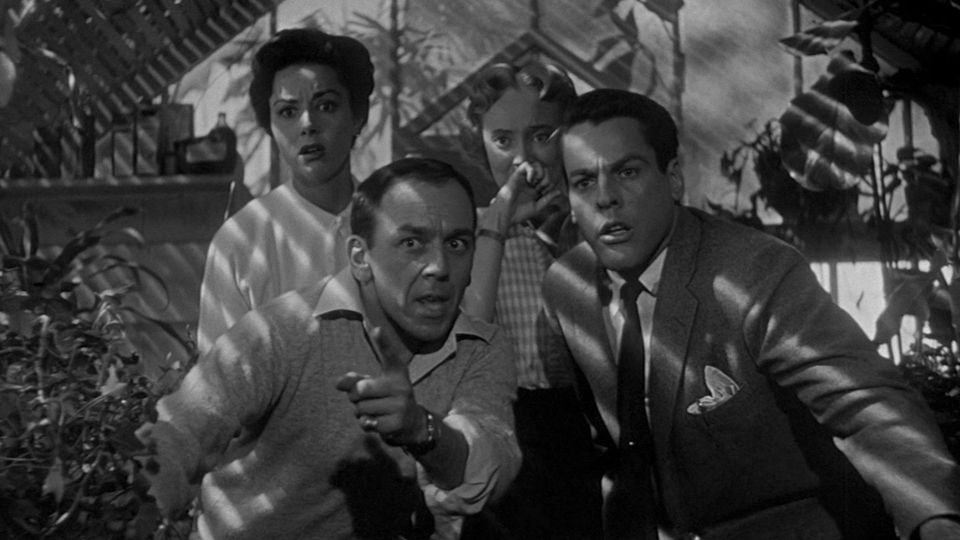
In the 1956 film, The Invasion of the Body Snatchers, Dr. Miles Bennel (Kevin McCarthy) realizes his friends and neighbors are changing. One by one they all start thinking alike and that worries him. If you haven’t seen this famous film about the pod people you should. It’s based on a 1954 Collier’s serial by Jack Finney called The Body Snatchers, which was then published as a book in 1955.

The story is about an invasion of pods from outer space that transform people if they sleep in the same room with one. Back in the 1950s, the story was seen as an allegory about communism. Finney has said he didn’t target communism specifically when he wrote the book, but most readers and moviegoers did back then.

In 1951, Robert Heinlein had published a similarly themed novel called The Puppet Masters. In that story, flying saucers land with creatures that attach to our backs, and take over our bodies and minds. Heinlein was an arch anti-communist, and his story was intended to imply the evils of a commie takeover.

In 1953 Robert Sheckley’s story, “Keep Your Shape” reflected a liberal’s paranoia. It appeared in the November issue of Galaxy Science Fiction. Sheckley rewrote the story for his collection Untouched by Human Hands and gave the story a much more elegant ending and a different title, “Shape.” It’s a humorous story told from the aliens’ point of view, about how they invaded the Earth twenty-something times and always failed. The aliens come from a rigid society of shape-shifting creatures whose God dictates that everyone has to maintain a certain shape. On Earth, the aliens are corrupted by our freedom when they see that we take so many different shapes. Sheckley’s story was anti-establishment and anti-conforming.

My point in mentioning all these stories is I feel like the conservatives have been sleeping with pods or have an alien riding on their backs. I feel this because they all seem to speak the same way. It’s kind of creepy to see political ads for Republicans because they all claim to toe the party line better than any other Republican. They all claim to hold the same beliefs. And their followers all repeat the same soundbites. I’m sure conservatives feel the same way about us liberals.

A couple days ago The New York Times ran a book review called “Where Have All the Liberals Gone?” The conservatives have made the term liberal such a dirty word that liberals are now calling themselves progressives. Conservatives have aligned themselves so tightly with Donald Trump that it reminds me of the fanatics who follow Putin and everything he says.

It makes me feel like the Kevin McCarthy character wondering when I will fall asleep and wake up a pod person. I no longer think of communism when I watch Invasion of the Body Snatchers, I think of everyone following one leader, one strong man’s view. If you look at history, the dangerous horrors of the past didn’t come from ideologies, but from single men pushing their view of reality onto everyone else.

I no longer understand what conservative or liberal philosophies means, even if they ever had a consistent description of their goals. I’m now thinking it’s always been individual men pushing their own philosophy onto other people. (I use the word men because I can’t think of any women dictators in history. I hope women won’t mind me being sexist in this instance.) That’s why Trump is so popular – people resonate and relate to him. He is their political philosophy, no matter how you label it.

I want a true democracy. But I don’t think it will ever work when winning is defined as a 50% majority. I think it needs to be at least 60%, and better yet, a winning majority should be defined at 75%. I want to live in a society where we work to compromise and create laws that attempt to make 100% of the population happy. It will always fail to reach 100% agreement, but if we could work out compromises where 60-75% of the population come to some kind of agreement, then I think we could escape our never-ending political polarization.

Right now we vote for our self-interests. And we vote for candidates that come closest to those self-interests. I have to accept that Trump is a beacon shining on what a lot of people want. But as long as half the country wants something different we’re going to have a miserable society.

When 50% is the finish line for any political agenda, we’re going to be ruled by pod people. I think real democracy begins when 75% of the population hammers out good compromises. I don’t think one politician with one point of view could ever find that many followers. Maybe we should move away from politicians and have referendums on everything. If we can’t find ways to get three-fourths of us to agree, then we should do anything.

It doesn’t matter which side of the political spectrum you live on, if we have minority rule, or even 50% majority rule, half the country will always feel they are living with pod people.

JWH