When Tsundoku Meets Döstädning

by James Wallace Harris, 7/9/24

Tsundoku is a Japanese term for buying books and magazines far faster than you can read them. Döstädning is a concept from Sweden that translates into death cleaning, advice for how to get rid of your stuff before making other people do it after you die.

At 72, I figure it’s my time to turn the tide of tsundoku into a wave of döstädning. Last year I took many shopping bags of books to give to the Friends of the Library so I could shelve every book in my house. I had finally reached the equilibrium of perfectly filled bookshelves with no books lying on desks, tables, nightstands, or floors. It felt so good.

Today I gathered all the books lying on desks, tables, nightstands, and floors and had to stack them on top of my bookshelves again. I’m losing the battle with tsundoku again.

I don’t get out much anymore. I take my turn going to the grocery store every other week, and I go to the Friends of the Library Bookstore once a week. I buy books I think I want to read before I die, but I’ve already own enough books to last me until the middle of the twenty-second century.

Instead of coming home with two or three books every week from the Friends of the Library Bookstore I need to take two or three books to donate. That would still give me an outing every week. I guess I could continue to buy books so long as I always donated more books than I purchase.

If I knew some Japanese and Swedish people, I’d ask them to produce a phrase that means “döstädning my tsundoku.”

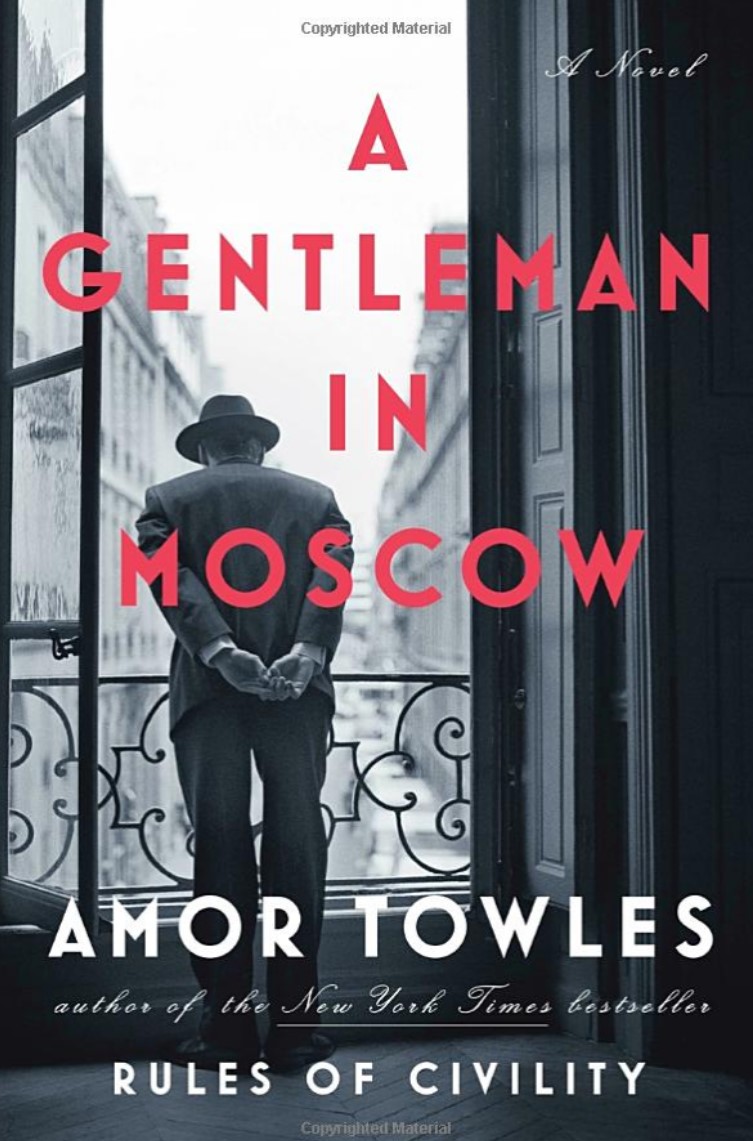
I need to develop a system for death cleansing my bookshelves. One idea came to me while reading A Gentleman in Moscow by Amor Towles. The story is about a Russian aristocrat, Count Alexander Rostov, who is sentenced to life imprisonment in the Metropol hotel after the Russian revolution. But instead of remaining in his luxury suite, Count Rostov is forced to live in a tiny garret once used by the servants of the aristocracy. He keeps one book with him to read, Michel de Montaigne’s Essays. What a wonderful book to read in that situation.

That reminded me I needed to finish my copy of Montaigne’s complete essays.

And it gave me another idea too. I need to read books that are most suited for an aging guy waiting for the guy with the scythe to show up. Books that make me feel philosophical positive about my life and help me understand the decline of civilization. I feel A Gentleman in Moscow is most suited. I would call it a fairytale for old folks, something Charles Dicken, Robert Louis Stevenson, and Tolstoy might have collaborated on if they were living in our century. It is a delightful yarn about a man growing old imprisoned in a hotel while the twentieth century changed outside his window.

I need to start thinning my book collection of books aimed at young people, unless they are books I read when I was young and want to remember them from an aged vantage point.

I need to read books that make me feel good about getting older. I need to jettison books that don’t deserve to be among the last books I read. Even if I live another couple of decades, I doubt I can squeeze in more than a thousand books, and that leaves me a couple thousand to abandon. If I live only another five years, I might finish 250 reading at my peak pace when I was younger, but more than likely, less than two hundred, since I’m now reading less every year.

Some days I don’t feel like I’ll make it to eighty, and on other days feel, gee, I might make it to ninety. I need to save those books suitable for someone in their 70s or 80s, and thin out the others.

It would be fun to see my library shrink over time, each year further distilled into a smaller collection of greater books, so in my last year I read only classics that fully reveal their depths to readers about to depart this planet.

Now, I think I have a system I can work with. It sounds logical and doable. I’ll have to report back in the future if it works. When I get in there pulling out books one by one, and asking myself if they are worthy of reading in my elder years, I might think every volume I already own is perfectly suited.
JWH

Are You Bothered by Fiction Based on History Changing the Facts of History?

by James Wallace Harris, 4/22/24

I divide historical fiction into two types: fiction set in the past, and real history that’s been fictionalized. Susan and I just finished Manhunt, a seven-part limited TV series running on Apple TV+. Manhunt is about the hunt for John Wilkes Booth after he shot Abe Lincoln.

We both loved the show and I felt like I was learning a lot about history that I didn’t know. It made me want to know more.

Then I read “Manhunt Episode 7 Fact-Check: 9 Biggest True Story Changes & Inaccuracies” on Screen Rant. That site has posted over thirty articles about the series and real history, including articles on each episode and how they differed from the facts. Here’s some of the points they bring up:

  • Edwin Stanton did not do all the things portrayed in the show. He was not the detective hot on the trail that we saw in the show. Nor did his son help him. This was very disappointing to learn because the show makes a historical hero out of Stanton. I finished the show thinking Stanton was next to Lincoln in historical importance. Now I don’t know if that’s at all true. This bothered me a lot. Stanton did not track Booth south. Nor was Stanton’s asthma a major health issue during the time. And there is no evidence that Stanton ever suspected Johnson had any connection to the conspiracy.
  • Many of the details of the assassination differ from history, but historians don’t agree on what happened either. For example, it’s undecided if Booth broke his leg jumping onto the stage or during his getaway. Those kinds of nitpicky details don’t bother me in fiction; however, I wish shows would put a disclaimer at the end.
  • John Wilkes Booth didn’t escape Washington due to a fan on sentry duty. This happens in the show when Booth tries to cross a bridge after curfew and a sentry lets him pass because he’s famous. These kind of fictional changes to history I don’t care about, I can easily see them as dramatic speculation.
  • John Surratt never met up with David Herold or Samuel Mudd. This is deceiving. The show makes a case that Booth was part of a large conspiracy controlled by the highest levels of the Confederacy. Since the show itself is making a case, like a court case, this kind of false evidence is stacking the deck. I consider this as bad as intentional misinformation used on the internet for political gains.
  • The show thoroughly convicts Dr. Samuel Mudd as an active conspirator. I remember as a kid seeing a show that defended Mudd, claiming he was just a doctor following his professional oath. History is undecided about Mudd’s real role, but the show wasn’t.
  • The hidden room in The Surratt Boardinghouse didn’t exist. This bit of misinformation made me feel that Stanton was inventing the role of detective and pursuing evidence in a modern way.
  • The details of Oswell Swann were quite different. He didn’t know who Booth was, and when he found out later, told the Union soldiers.
  • Lincoln’s funeral train was not Eddie Stanton’s idea. I wondered about that when it happened in the show.
  • Mary Todd Lincoln never boarded her husband’s funeral train.
  • The show completely backs the idea that there was a big conspiracy behind Booth, but there’s no historical evidence to support it.
  • Lincoln never spoke to Stanton and Frederick Douglass together.
  • Evidently all the stuff about George Sanders, and his role in a conspiracy was made up by the show.
  • There is no evidence that Edwin Stanton ever traveled to Montreal.
  • Ciphers and codes were so popular during that time period that finding one with Booth was no proof he belonged to a conspiracy.
  • There’s no proof that Stanton ordered an assassination of Jefferson Davis.
  • Mary Simms left Samuel Mudd a year before Booth came through. She never met Booth. She never had a land grant. Nor did she have a significant role in the trial. Nor was the part with Louis Weichmann true either. And Mary Simms did not attend Howard University. Manhunt the TV shows makes her into a major character of history, and my second favorite character of the show.
  • Much of George Sanders’ role was made up, especially to promote the conspiracy theory.
  • Agent Lafayette Baker never led a raid on Wall Street, although Confederate sympathizers and supporters dominated Wall Street.
  • Edwin Booth was not at Lincoln’s wake.
  • Sanford Conover’s role was exaggerated and deceptive.
  • Stanton never met Sanders in his office.
  • John Wilkes Booth didn’t meet with Confederate soldiers.
  • The real Andrew Johnson was much worse than he was portrayed.
  • There is no evidence that Stanton questioned Jefferson Davis in his cell.
  • Conover’s “pet letter” never existed. This rang false in the show too, but it’s presented as a major piece of evidence that Jefferson was involved in the plot to kill Lincoln. This makes the show come across like Oliver Stone’s JFK.
  • The eighteen missing pages of Booth’s diary is a historical mystery. How they are portrayed in the show is fictional. The show led me to believe that Stanton saw something in the eighteen pages that proved there was no conspiracy, and he didn’t want that to come out. That’s damning both Stanton and the show. But that then, that might be the artistic way the show revealed its picture of history could be wrong.

All this information makes me wonder if I should have even watched Manhunt. It was very entertaining, and Susan and I looked forward to every episode. However, the show left me with the impression that Edwin Stanton was Lincoln’s closest confidant, who influenced Lincoln in a major way, and was the architect of Reconstruction. Now I’m left wondering if any of that was true.

I thought about reading Manhunt: The 12-Day Chase for Lincoln’s Killer by James L. Swanson, but now I wonder if it speculates in the same way that the television show does? I’m going to have to do some research before I buy it.

Ultimately, I feel the TV series gave me a false view of history, one that I would have assumed was true if I hadn’t read up on the show. On the other hand, Susan and I really enjoyed the show, and it’s extremely hard to find shows that we both like. We tend to like shows based on history. That’s an intersection of our interests, so I’d hate to give up on such shows.

Yet, it still bothers me. If television shows and movies that are based on history and real people aren’t essentially true to history, then they serve the same purpose as conspiracy theories, spreading misinformation. That troubles me.

I talked with my friend Mike about this, and he says it doesn’t bother him. He says he never expects fiction to be accurate or to teach him about history. I can’t help but feel historical fiction does leave me with the impression that I learned a bit of history. I can’t easily imagine that people who don’t read and study history feel that the history they get from fiction was the way it happened.

JWH

Why I Deleted Facebook and Twenty Other Apps from My iPhone

by James Wallace Harris, 4/21/24

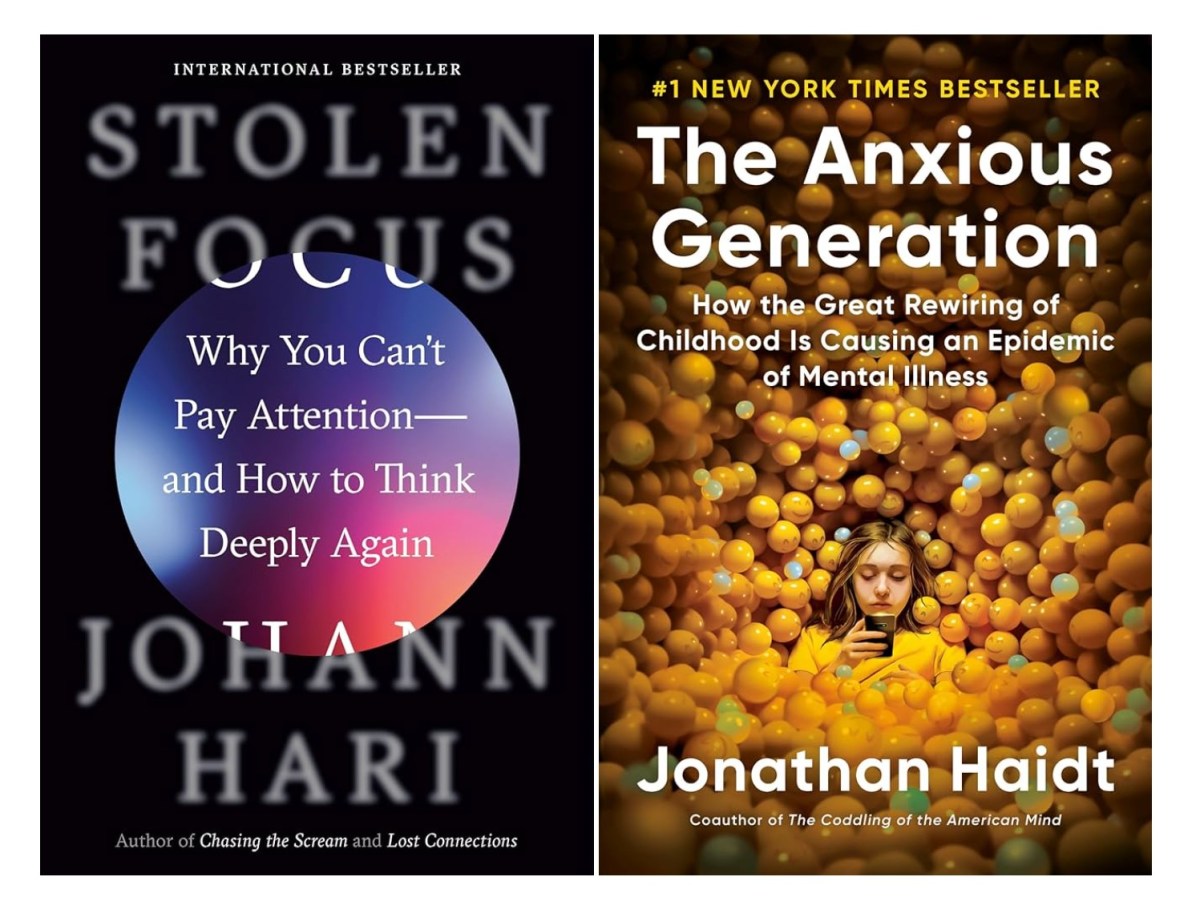
Lately, I’ve been encountering numerous warnings on the dangers of the internet and smartphones. Jonathan Haidt is promoting his new book The Anxious Generation. Even though it’s about how there’s increase mental illness in young girls using smartphones, I think it might tangentially apply to an old guy like me too.

Haidt was inspired to write his book because of reports about the sharp rise in mental illness in young people since 2010. That was just after the invention of the iPhone and the beginnings of social media apps. Recent studies show a correlation between the use of social media on smartphones and the increase reports of mental illness in young girls. I’m not part of Haidt’s anxious generation, but I do wonder if the internet, social media, and smartphones are affecting us old folks too.

Johann Hari’s book, Stolen Focus, is about losing our ability to pay attention, which does affect me. I know I have a focusing problem. I can’t apply myself like I used to. For years, I’ve been thinking it was because I was getting old. Now I wonder if it’s not the internet and smartphones. Give me an iPhone and a La-Z-Boy and I’m a happy geezer but not a productive one.

So, I’ve decided to test myself. I deleted Facebook and about twenty other apps from my iPhone. All the ones that keep me playing on my phone rather than doing something else. I didn’t quit Facebook, or other social media accounts, just deleted the apps off my phone. I figure if I need to use them, I’ll have to get my fat ass out of my La-Z-Boy and go sit upright at my desktop computer.

This little experiment has had an immediate impact — withdrawal symptoms. Without Facebook, YouTube, and all the other apps I kept playing with all day long, I sit in my La-Z-Boy thinking, “What can I do?” I rationalized that reading the news is good, but then I realized that I had way too many news apps. With some trepidation, I deleted The Washington Post, Ground News, Feedly, Reddit, Instapaper, and other apps, except for The New York Times and Apple News+.

I had already deleted Flipboard because it was one huge clickbait trap, but couldn’t that also be true of other news apps? They all demand our attention. When does keeping current turn into a news addiction? What is the minimum daily requirement of news to stay healthy and informed? What amount constitutes news obesity?

I keep picking up my iPhone wanting to do something with it, but there’s less and less to do. I kept The New York Times games app. I play Mini Crossword, Wordle, Connections, and Sudoku every morning. For now, I’m rationalizing that playing those games is exercise for my brain. They only take about 20-30 minutes total. And I can’t think of any non-computer alternatives.

I still use my iPhone for texting, phoning, music streaming, audiobooks, checking the weather, looking up facts, reading Kindle books, etc. The iPhone has become the greatest Swiss Army knife of useful tools ever invented. I don’t think I could ever give it up. Whenever the power goes out, Susan and I go through withdrawal anxiety. Sure, we miss electricity, heating, and cooling, but what we miss the most is streaming TV and the internet. We’ve experienced several three-day outages, and it bugs us more than I think it should.

One of the insights Jonathan Haidt provides is his story about asking groups of parents two questions?

  1. At what age were you allowed to go off alone unsupervised as a child?
  2. At what age did you let your children go off unsupervised?

The parents would generally say 5-7 for themselves, for 10-12 for their children. Kids today are overprotected, and smartphones let them retreat from the world even further. Which makes me ask: Am I retreating from the world when I use my smartphone or computer? Has the iPhone become like a helicopter parent that keeps me tied to its apron strings?

That’s a hard question to answer. Isn’t retiring a kind of retreat from the world? Doesn’t getting old make us pull back too? My sister offered a funny observation about life years ago, “We start off life in a bed in a room by ourselves with someone taking care of us, and we end up in bed in a room by ourselves with someone taking care of us.” Isn’t screen addiction only hurrying us towards that end? And will we die with our smartphones clutched tightly in our gnarled old fingers?

Is reading a hardback book any less real than reading the same book on my iPhone screen, or listening to it with earbuds and an iPhone? With the earbuds I can walk, work in the yard, or wash dishes while reading. Is reading The Atlantic from a printed magazine a superior experience than reading it on my iPhone with Apple News+?

Is looking at funny videos less of a life experience than playing with my cat or walking in the botanic gardens?

Haidt ends up advising parents to only allow children under sixteen to own a flip phone. He would prefer kids wait even longer to get a smartphone till they complete normal adolescent development, but he doesn’t think that will happen. I don’t think kids will ever go back to flip phones. The other day I noticed that one of the apps I had was recommended for age 4+ the App Store.

Are retired folks missing any kind of elder years of psychological development because we use smartphones? As a bookworm with a lifelong addiction to television and recorded music, how can I even know what a normal life would be like? I’m obviously not a hunter and gatherer human, or an agrarian human, or even a human adapted to industrialization. Is white collar work the new natural? Didn’t we live in nature too long ago for it to be natural anymore?

Aren’t we quickly adapting to a new hivemind way of living? Are the warnings pundits give about smartphones just identifying the side effects of evolving into a new human social structure? Is cyberization the new phase of humanity?

There were people who protested industrialization, but we didn’t reject it. Should we have? Now that there are people rejecting the hivemind, should we reject it too? Or jump in faster?

For days now I’ve been restless without my apps. I have been more active. I seeded my front lawn with mini clover and have been watering and watching it come in. I contracted to have our old bathtub replaced with a shower so it will be safer for Susan. I’ve been working with a bookseller to sell my old science fiction magazines. And I’ve been trying to walk more. However, I’ve yet to do the things I hoped to do when I decided to give up my apps.

It’s hard to tell the cause of doing less later in life. Is it aging? Is it endless distractions? Is it losing the discipline of work after retiring? Before giving up all my apps, I would recline in my La-Z-Boy and play on my iPhone regretting I wasn’t doing anything constructive. Now I sit in my La-Z-Boy doing nothing and wonder why I’m not doing anything constructive. I guess it’s taken a long time to get this lazy, so it might take just as long to overcome that laziness.

JWH

We’re Never Going to Change

by James Wallace Harris, 4/15/24

Years ago, I read This Changes Everything by Naomi Klein. It was a passionate plea to act on climate change because if we didn’t everything would change. Her new book, Doppelganger, is a metaphor about our polarized society and what keeps us from changing even though Klein still makes a case that we need to change.

Between reading these two books I gave up all hope that humanity would change. I read Doppelganger as further proof that we won’t change even though Klein again passionately expresses the rational reasons why we should. I also believe we all need to change, but sadly, I don’t believe we will.

Doppelganger begins with Naomi Klein explaining how people on the internet often confused her with Naomi Wolf, a once respected feminist who is now considered a conspiracy crank. Klein uses the idea of the doppelganger as a metaphor for how to relate to our opposites, whether male/female, black/white, liberal/conservative, religious/atheist, Christian/Jew, Israeli/Palestinian, etc.

Klein goes to great lengths to make the metaphor work in several situations, but I found that distracting. What the book does exceptionally well is to ask: How do we decide what to do when half of us disagree with the other half? We all assume there is one truth, but everyone sees a different side of it.

In many chapters Klein makes Wolf seem ridiculous, but there are quite a few places where Klein recognizes Wolf’s point of view, or even gives her credit for being right.

I believe that extremists on the left act like naive young children, while extremists on the right act like selfish young children. In other words, I believe Klein is unrealistically hopeful, while Wolf is self-centeredly overly positive.

I must assume Klein writes her books believing we can still change. With Doppelganger she’s hoping that if we can get together and endeavor to understand each other we can make rational compromises. That would be lovely if she were successful and right. I believe Klein is right but won’t be successful.

We are doing essentially nothing towards controlling climate change. Wars, collapsing economies, and weather catastrophes are on the increase. Our responses are becoming more irrational, rather than wiser. We must face the fact that evolution works on all levels, and Darwinian conflict will always prevail.

The strong are going to take what they want at the expense of the weak. To solve all the problems Klein covers in her books would require overcoming our Darwinian natures and everyone acting for everyone else’s good. I no longer believe we’re capable of such altruism.

In the early days of Christianity, its philosophy was anti-Darwinian. But modern Christians have lost all their compassion. Christianity has been dissolving for centuries. The compassionate Christians gave up on God and became liberals, and the ones left became conservatives who rewrote Christian ideals with serving rationality that backs evolution.

In other words, I believe early Christianity, and 20th-century secular humanism were two times in history where we tried to fight our Darwinian natures, and in both instances, the movements failed.

We’re not going to change.

Not to end on a completely depressing note, I’ll try to offer a somewhat positive idea. Since we won’t change, the environment will. How can we use our Darwinian nature to build hardened societies that can survive climate catastrophes? Don’t read too much hope into that. What I’m saying is how can the strong survive the coming changes we chose not to avoid?

JWH

Will People Change vs. Can People Change?

by James Wallace Harris, 2/28/24

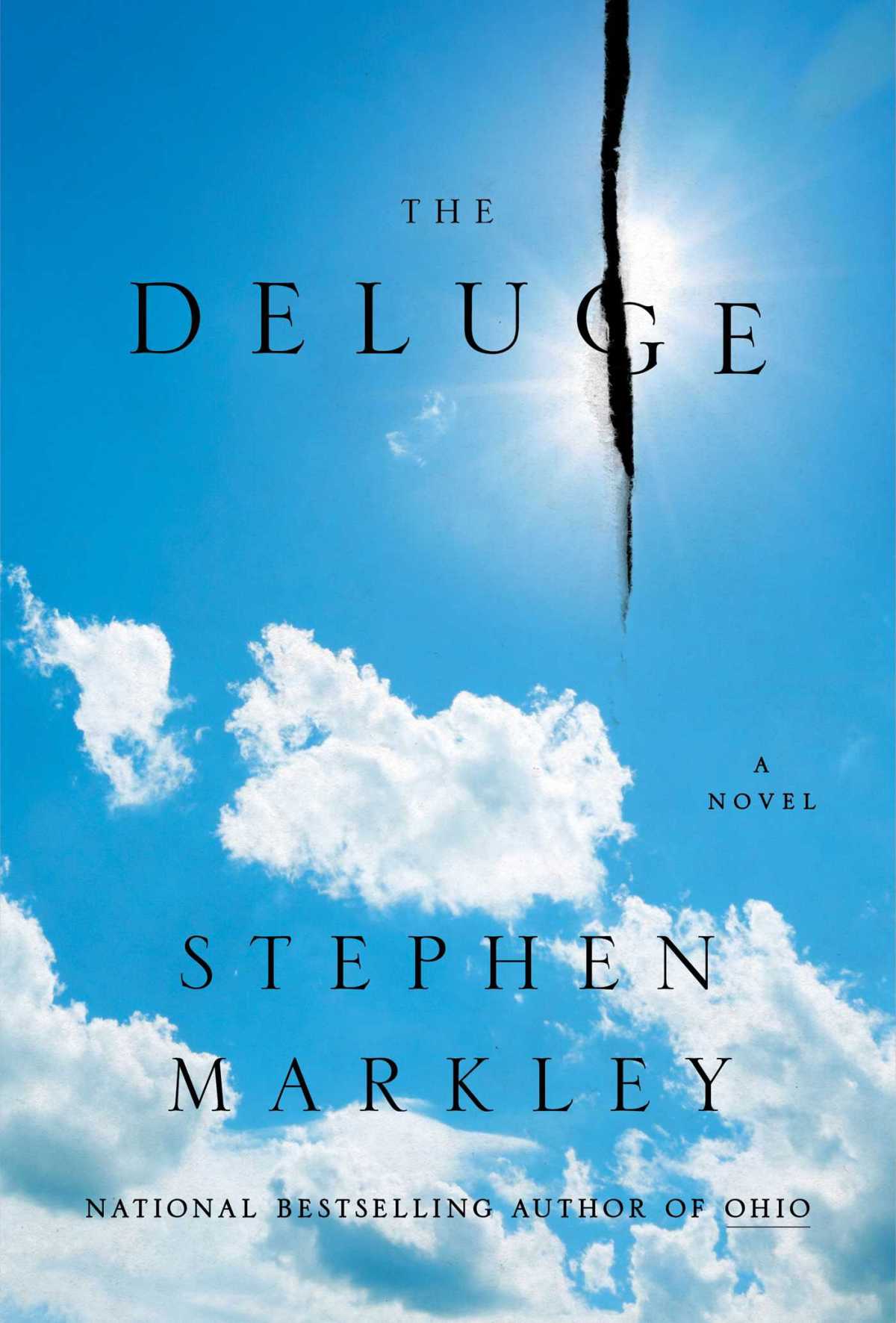
I just finished listening to The Deluge by Stephen Markley, a book that speculates on what the next sixteen years could be like. The book is almost nine hundred pages in print, and over forty hours on audio. Reading this book feels like it’s compressed the last twenty years of polarized political conflict into a forty-hour long disaster film. It’s intense.

Markley uses a large cast of characters to dramatize how people on the left and right will battle for control over the next five U.S. presidential election cycles. Most of the story involves two groups of characters, those working within the political system, and those who decidedly don’t. Markley portrays an ultrasecret ecoterrorist group that works to force change by violent acts versus a dedicated group of political wonks that labor in Washington to influence both parties. Dynamic women characters lead both groups. (By the way, I disliked both women. The only character I cared about was a drug addict in Ohio, who Markley uses as a kind of everyman.)

To further spice up the story, Markley explores the growing power of computer surveillance, artificial intelligence, privacy, and how everyone can be tracked.

I’m not going to review the details of The Deluge because I want to use my reading experience to talk about a specific response to reading the book. I’ll link major book reviews at the end in case you’re considering reading the book. I can say liberals will be terrified by the conservatives in this story, and conservatives will by horrified by these fictional liberals.

The Deluge is about climate change. We could have solved that problem by now if we had acted promptly twenty years ago. The government could have added a tax on all fossil fuels and then raised it slowly month by month. For example, by adding ten cents to the federal tax on gasoline each month. If we had started this in the year 2000, gasoline would be approaching $30 a gallon today. That would have forced people and corporations to make the changes needed.

That tax revenue could have been used to overhaul the power grid and for developing renewable energy technologies. If we had taxed carbon properly, we wouldn’t be fighting over climate change today. That didn’t happen. It didn’t happen because the people who owned trillions of dollars in fossil fuel reserves made sure it didn’t happen. They built a political and religious coalition to fight with them to protect that wealth.

All that’s beside the point now. What Markley envisions is the breakdown of the United States over the next sixteen years so it’s obvious to all we need to do something. The Deluge includes dramatic scenes of a massive fire that destroys Los Angeles, a massive flood that overwhelms the Midwest, and a massive hurricane that devastates east coast states. These events caused the insurance industry to collapse, leading to economic chaos. Markley doesn’t overplay all this. His fictional disasters are realistic, only somewhat larger than what we’ve already experienced, killing just hundreds or a few thousand people in each event, but having an enormous impact on politics and the economy.

Reading The Deluge makes readers ask themselves: Will American change soon? But I ask: Can people change at all?

Before reading this novel, I had seen two insightful videos about climate change that ask the same questions. The first video makes a careful case saying people don’t change and if there is a solution for avoiding climate change it must work with the psychology of how people act. The second video summarizes the first video with impressive summations of it and this tweet. (I wish I could summarize what I watch and read this well.)

Over the two hundred thousand years that our species have existed on this planet, we haven’t changed. Our societies and technologies change, but not us. Over those two hundred thousand years we have developed four major cognitive tools to understand reality: religion, philosophy, mathematics, and science. Only science using mathematics has consistently proven it can consistently describe reality. If you don’t believe that I wouldn’t fly in an airplane.

Science is not black and white. It’s statistical and hard to understand. But science has overwhelmingly shown that adding more CO2 to the atmosphere is turning up the temperature. The parts per million of CO2 in the air acts like a thermostat. Add more CO2 turns up the temperature. The only way to return to the weather we liked in the past is to return to the CO2 levels of the 1960s, but we keep adding more. The only way to stop adding CO2 is to completely stop using fossil fuels. And if we want to turn down the thermostat, we need to remove CO2, which isn’t easy. That’s why taxing carbon is the only way to force us to change, but we won’t do that, because it’s not in our psychology.

However, The Deluge suggests when things get bad enough, we’ll change. It ends hopefully. People even have hope for their children and grandchildren.

Personally, I don’t think we will change. If you want to know what the next sixteen years could be like, read The Deluge. If you believe people can change, and we’ll do the right thing eventually, read The Deluge. If you don’t believe we’ll change, I wouldn’t bother with the book unless you like looking at train wrecks. And if you suffer from depression, I suggest avoiding reading this novel at all costs. I seldom get even the slightest depressed, but this book bummed me out.

Reviews:

JWH