The Future of Books

By James Wallace Harris, Tuesday, May 19, 2015

Here’s my conundrum, do I keep The Byrds: Timeless Flight Revisited The Sequel by Johnny Rogan, or give it away. This 1988 book revised in 2008 has 735 pages about the The Byrds, my favorite music group from the 1960s. Rogan has since updated this book in 2011 to a 1216 page monster, that’s just the first volume of a trilogy. I read the 2008 edition with much delight, spending several evenings in an orgy of nostalgia, playing my old Byrds albums as I read about how each was created. I kept the book thinking I’d reread it. Was that a mistake? Is the knowledge in books changing so fast that there’s little reason to save them?

The-Byrds---Johnny-Rogan

The edition I have is quite exhaustive in its scope. But if I wanted to read about The Byrds again, shouldn’t I read the latest definitive work? Why have I saved this book for seven years? It’s still a great read, and maybe it’s all I need to know about The Byrds.

Books have become a physical burden. I had a friend who claimed to own every book he ever read. Can you imagine the Sisyphean task of dragging a library behind you everywhere you went? That would be a snap if they were ebooks. Or if I lived in one house my whole life. Or if knowledge wasn’t changing so fast.

This book represents another kind of burden, a psychological burden. We experience life one moment at a time, yet most of us cling to all those past moments. Not only do I want to save my memories of The Bryds, but retain a book that collects all the group member memories. That’s kind of weird when you think about it.

We exist in a transitional time. We’re very close to having all our external memories online. What if The Byrds: Timeless Flight Revisited The Sequel  was a website that grew as Rogan wrote and researched? The multimedia aspects of the web could greatly expand its potential. Personal and public libraries wouldn’t be burdened with lending and storing the book. And it would be available to all instantly.

I can also see the content this book incorporated into Wikipedia. What if all knowledge was hyperlinked into one book? What if the history of The Byrds was written by anyone who cared about their history? What if all memoirs, interviews, photos, bootlegs, videos, etc. were at one location, and hyperlinked by a carefully crafted narrative of dedicated editors?

We now serialize history with the latest definitive book. What if history lived on the web as an ongoing collective project? Is moving towards such a hive mind existence scary? How much time do you spend reading the web versus reading books? How often do we get facts from iPhones?

Can you imagine books in the future? Are they changing so fast that it’s not worth collecting them?

I’ve always been a lover of books. I hoard and collect them. But I’m starting to wonder if I only need to own one book, the one I’m reading.

JWH

How Much Can We Learn About the World Traveling by Books?

By James Wallace Harris, Saturday, February 21, 2015

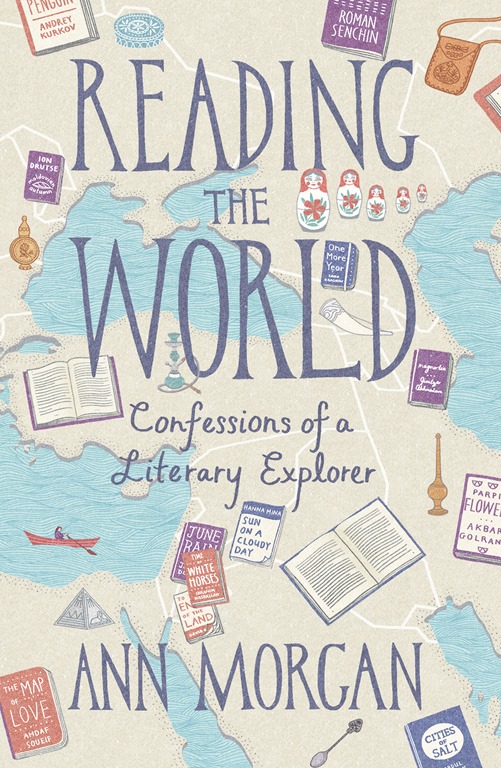
Ann Morgan has a new book out in England, Reading the World: Confessions of a Literary Explorer, due out in America May 4th, as The World Between Two Covers: Reading The Globe. Her book is based on her blog, A Year of Reading the World, where she created a reading challenge to read one book from each of the 196 countries. Here are the books she read. Now, don’t expect her book to be a retelling of the web posts, as she points out in her blog. It’s about the experience of the project.

worldbetweentwocoversreading-the-world

I’ve often thought of doing something like this. Like Ann Morgan, 99.9% of my reading comes from The United States, Canada, Australia or Great Britain. I’ve encountered this project before, over at A Striped Armchair, where super-bookworm Eva routinely reads books from around the world. It’s an inherently fascinating reading challenge, but as the review at the Telegraph points out, it’s full of flaws. How much would non-English speaking people learn about America from reading Jonathan Franzen or Philip Roth? Of course, Morgan wasn’t seeking a course in geography, but getting a sampling of the global literary landscape.

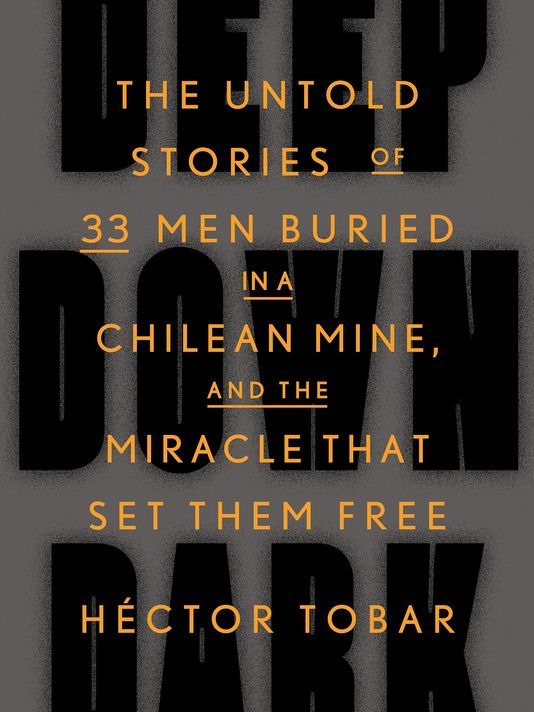
But what if we were trying to get a big picture of what life on planet Earth was like? What if you read 196 nonfiction books about all the countries of the world, wouldn’t that be a fascinating education? I just read Deep Down Dark by Héctor Tobar, about the Chilean mining disaster, but I really didn’t learn much about Chile. Some, but not much. I know lots of travelers who believe you have to visit a country to know it, but I’m not sure if that’s true either, not in the complete sense I’m talking about. Seeing the airport, a few tourist destinations, hotels and restaurants, doesn’t really tell you about the history, politics, social structures, economics, and on on. What about the news? I’ve been seeing a lot about Egypt in the news for the last couple of years, but hasn’t taught me much about the country either.

Ann Morgan set aside a year to learn about the world by reading novels. That’s very impressive, but more work than I want to commit to. I don’t even want to read 196 nonfiction books about the countries of the world. However, I wonder if I could tour the world in a year by watching documentaries? I’d have to watch four a week for a year, and that’s fairly reasonable. I wonder if Netflix has one on every country? Or would I even need to do that? What if I just read the Wikipedia entry for a country each night? Look at this one for Afghanistan. It’s incredibly informative. It’s so interesting, it makes me want to read a book about the country and watch documentaries, especially about its Paleolithic and Neolithic times. Of course, this makes me think I should just become a regular reader of National Geographic.

This concept of getting to know the world through books, either fiction or nonfiction, is a wonderful idea to think about. Here’s a list of countries at Wikipedia, it will give you the scope of the project. Even if you don’t start reading books, reading a Wikipedia article about a country now and then off your smartphone could be an excellent way to virtually travel the world.

JWH

Three Useful Internet Sites for a Dynamic Reading of Ulysses by James Joyce

By James Wallace Harris, Wednesday, February 18, 2015

Reading Ulysses by James Joyce can be very difficult, even daunting. Many well read readers consider Ulysses the number one novel of all time, because of it’s rich complexity and advanced writing techniques. Joyce intentionally made Ulysses a reading challenge, full of Easter eggs for readers to find and decipher, making it a novel worthy of multiple readings.

I have tried reading Ulysses before, but even after reading Portrait of an Artist as a Young Man three times, I wasn’t ready. One major barrier for me is my poor reading skills. I’ve been conditioned to read fast, always wanting to know what’s going to happen, by the plot driven novels of my youth. Ulysses is more like a great painting that you must study slowly and carefully, and for most of my life I never had the patience.

The range of what I could read took a quantum leap forward in 2002 when I started listening to audio books. Listening makes me read slow, and that changes everything. Also, professional readers showcase writing far better than my own inner voice. It’s like the difference between reading poetry and hearing it read aloud. Quality fiction should be heard. It should sound dramatic and dynamic, even poetical. Bad writing sticks out when read aloud. Once I started listening to Ulysses I could get into it. But still there was much I was missing.

Ulysses is famous for its stream of conscious writing techniques. If you just read it with your eyes, it’s easy to confuse the narrator with inner monologues. And even good audio book narrators don’t always distinguish between the two.

Ulysses is also full of allusions to real world and literary history, using colloquial and idiomatic words and phrases that are long out of fashion. Plus Joyce frequently cites lines of Latin, songs and poems that well educated people knew back then, but most people don’t know about today.

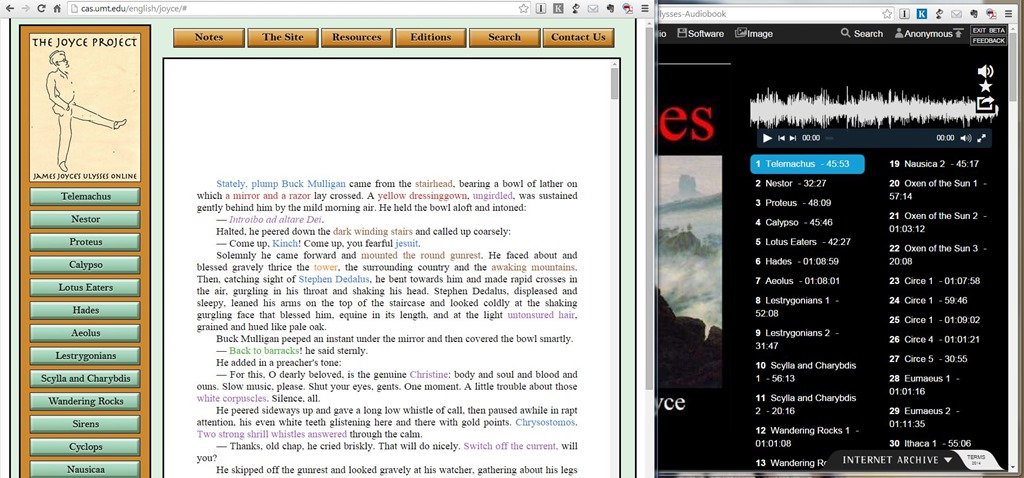
Luckily, I’ve stumbled upon two sites on the internet that are wonderful tools for helping me to read Ulysses in a very efficient manner. The first is  The Joyce Project that features an online version of Ulysses. Now most people hate reading online, but I have a major reason to get over that prejudice. The second site that I use is an audio performance of Ulysses at Archive.org. I read online as I listen to this online recording. This recording is very special because they use different actors for different characters, and they use a special effect for when Joyce is having his character speak in their internal voice. This is a tremendous advantage for understanding Ulysses. And I can’t emphasize enough how important it is to hear Joyce read by someone that can pronounce everything correctly, and even offer good accents.

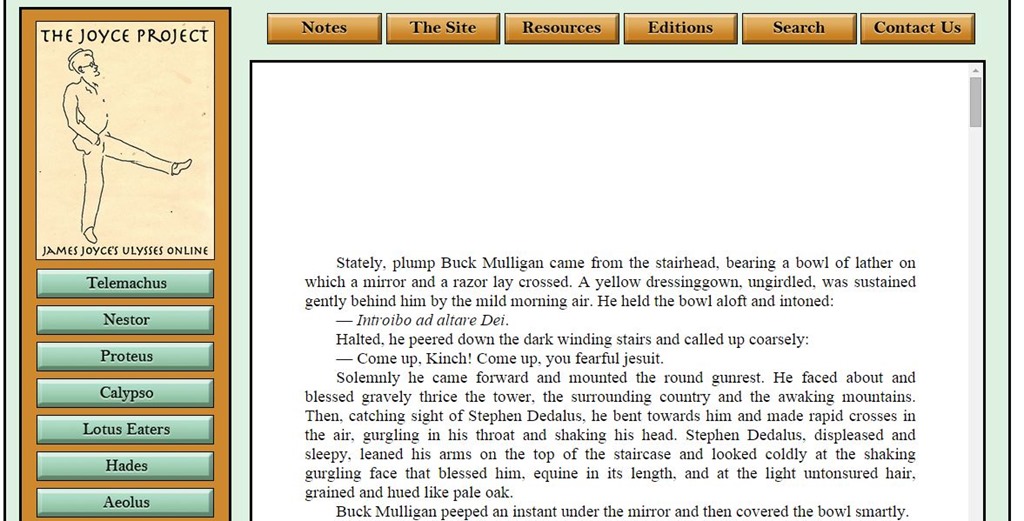
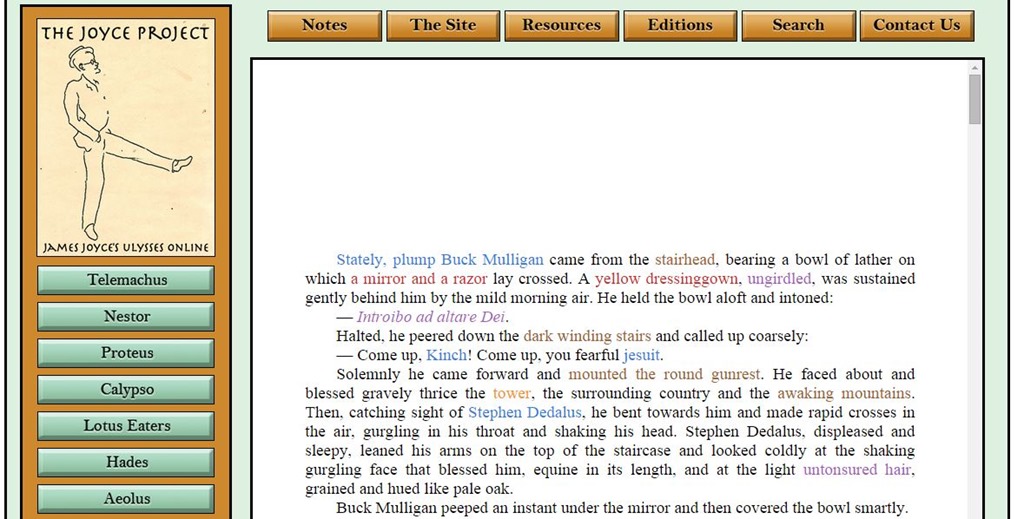
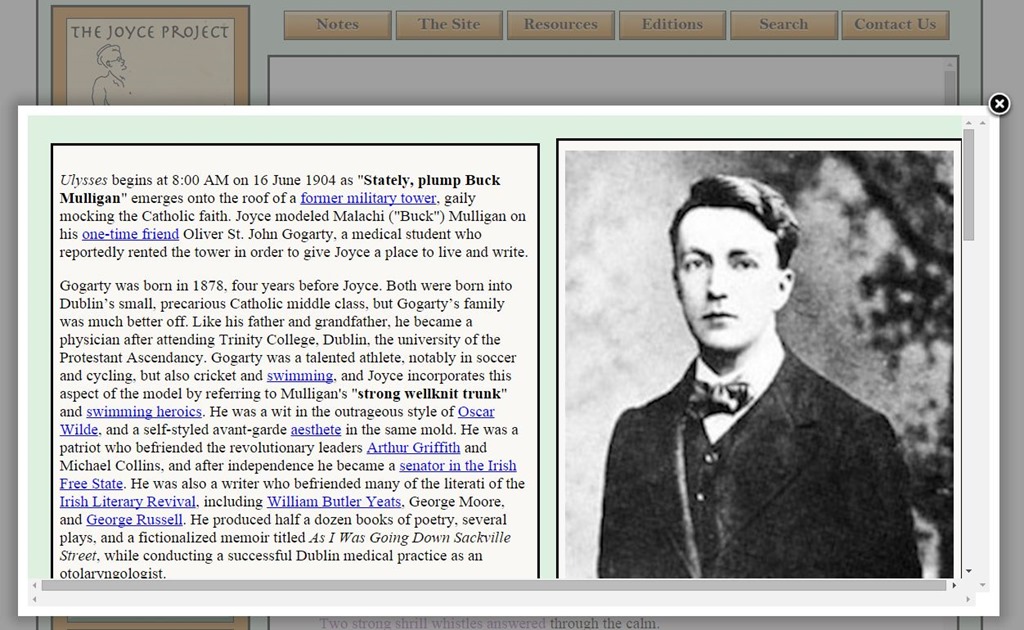
As an extra bonus, The Joyce Project has an annotation mode you can turn on, and certain words and phrases will appear in color that you can click on to read for elaboration. What I do is read and listen to each episode, and then go back and click on all the highlights. Here’s what the plain text looks like, then with the annotations highlighted, and then with the pop-up for the first annotation.  Clicking on the image will enlarge it.

The Joyce Project 1

The Joyce Project 2

The Joyce Project 3

But what works really well is to open the The Joyce Project and the Archive.org audio player windows so they overlap, like this:

Read and Listen

This allows me start and stop the audio easily as I read, in case I do want to stop my reading to study an annotation.

Finally, there’s a third dimension to using the web for reading and studying Joyce – there’s a goldmine of supplemental material. I’m not pursing the study guides on my first reading except in a very limited way. Ulysses is a black hole for scholarship.

One site that is frequently recommended to me is Frank Delaney’s podcast re:Joyce. Delaney does one podcast a week and is up to #245, but only to episode five in the novel. He estimates it will take him 25 years to finish the project. Delaney is a famous author and broadcaster, and knows Joyce’s Ireland, so his rich voice and literary experience makes him a great guide for traversing the land of Joyce. His enthusiasm enhances the enjoyment of reading Joyce.

I figure the first two tools, the annotated text and the performance narration, are the two best tools I’ve discovered for reading Ulysses for the first time. And the Frank Delaney podcast is a wonderful supplement for those people who want to take their first step into Joyce scholarship.

JWH

The Best Nonfiction of 2014–Collected Lists

By James Wallace Harris, Tuesday, February 10, 2015

I’m in two nonfiction book clubs. One is online, and one is face-to-face. Between the two, I’m introduced to twenty-four books I would not normally read, and my reading life has become much more exciting over the last few years. Both book clubs have a nomination process where recommended titles must jockey for votes. Both clubs have about a dozen or so members, and it’s rather hard to find books that will appeal to so many people, and even more, get that many people to actually read. Every once in a while, we’ll pick a book everyone absolutely loves, like The Warmth of Other Suns by Isabel Wilkerson. On average, if we’re lucky, we’ll pick books that at least half the people like.

It’s easy to find books to nominate, but hard to find willing agreement. I generally try to nominate books that have least a 100 reviews at Amazon. The Warmth of Other Suns has 1,297 reviews, with an average rating of 4.7. It turned out to be the highest rated book at my online book club.

One technique I use to scout for possible nominations is to read all the best-of-the-year booklists. If I see a book that’s on many of the lists, I figure it’s a book that’s both good and appealing to wide range of readers. Here are the lists for 2014:

I wished these sites would make a nice printable version of their yearly recommendations so it would be easy to take to the book club and pass around. Even better, I wish some enterprising web site would collate all the lists and make a meta-list of the most recommended books. I could do that, but it’s just too much work. What I end up doing is eyeballing the lists and going from memory which books I see over and over again. These nineteen books were the ones I saw the most, and were on at least 5-10 lists.

Age of AmbitionsBook Review-Bad FeministBeing Mortal

Capital_in_the_Twenty-First_Century_(front_cover)Deep Down Dark - Hector TobarFactory Man - Beth Macy

How_We_Got_to_Nowin the kingdom of iceinnovators

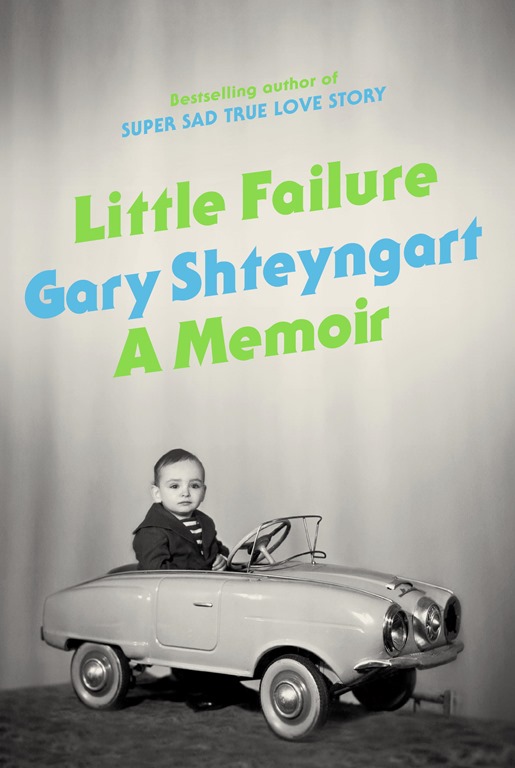
Little FailureMan Alive McBeeOn Immunity.JPG

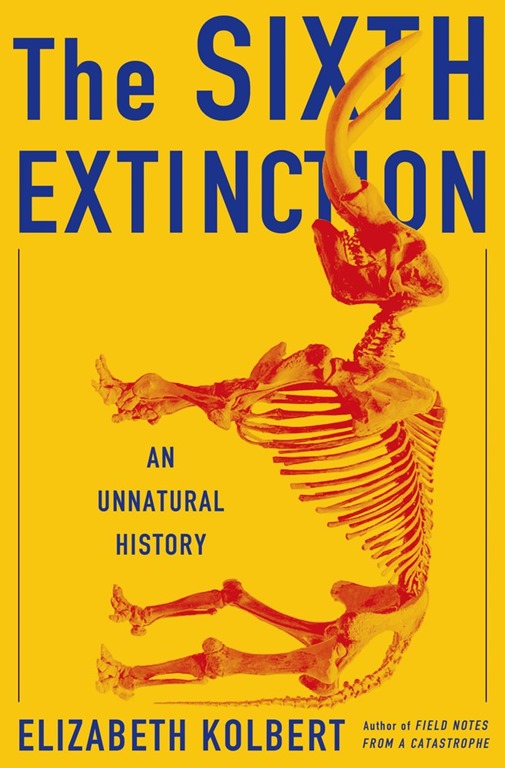
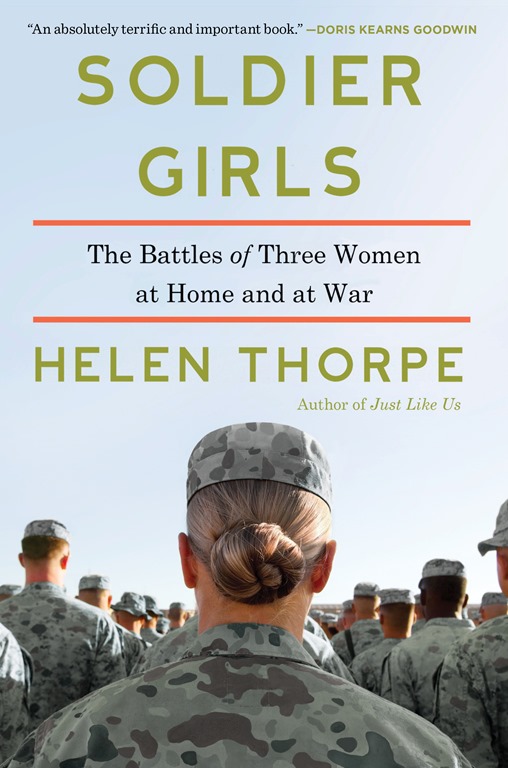
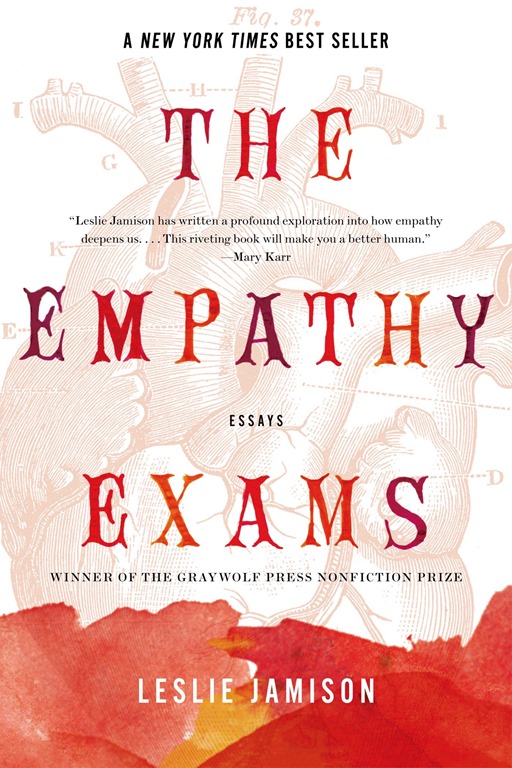
Sixth-extinction-nonfiction-book-kobertSoldier GirlsThe Empathy Exams

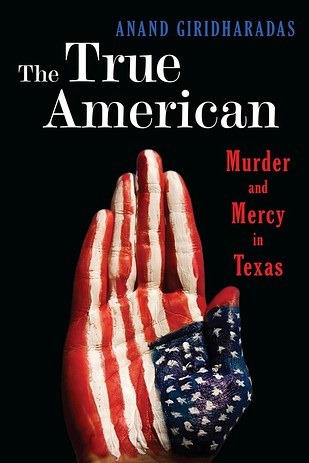
The Short and Tragic Life of Robert Peace - Jeff HobbsThe True AmericanThirteen Days in September

This-Changes-Everything-Capitalism-vs.-The-Climate

JWH

A Different Flavor of Science Fiction–The Signature of All Things by Elizabeth Gilbert

By James Wallace Harris, Tuesday, February 3, 2015

The Signature of All Things by Elizabeth Gilbert is fiction about the heart of science. Alma Whittaker, the protagonist represents the empirical ideal, while Ambrose Pike stands in for the mystical and metaphysical. The Signature of All Things is another kind of science fiction, a story about scientific thinking, set in the 19th century, the century where the scientist came into being, the century where we turned from reading the word of God to reading all things natural, the century where evolution was revealed as the driving force of creation.

I love The Signature of All Things by Elizabeth Gilbert so much that I hunger to know how it was written. This book is such a perfect mixture of historical detail, psychological realism and imagined characterization that it becomes deeply philosophical, going well beyond just a great story. I can’t help but believe it’s Gilbert’s personal statement about the nature of reality. I don’t know if Alma Whittaker is Elizabeth Gilbert, but she’s probably the woman Gilbert would want to be if she lived in the 19th century. Don’t let any prejudice about Gilbert’s earlier books keep you from reading this one.

If you love stories of the 19th century, especially ones about natural philosophers becoming scientists, then you should read The Signature of All Things. Gilbert’s sprawling tale covers two lifetimes beginning in the 18th century and ending in the 19th, and includes sea voyages, botany, biology, lithography, Tahiti, Captain Cook, Joseph Banks, Charles Darwin and Alfred Russell Wallace. This time around, we get to live an alternate history where there is a woman scientist, Alma Whittaker, who made some very great discoveries on her own. Alma Whittaker is the person you’d want to be if you could reincarnate backwards in time.

If you’ve ever fantasized about living in the 19th century and becoming an amateur scientist yourself, The Signature of All Things is among the more detailed of such fantasies. Science fiction has always looked to the future, but the future hasn’t turned out to be everything it was cracked up to be, so many science fiction fans have turned to fantasy, and many of them love steampunk, a retro look at the Victorian era. This book isn’t steampunk, but it wears the same appealing fashions. I think there are many deep rooted psychological reasons why us futurists have turned to look backwards to Darwin and Dickens. This book is historical, but not quite historical fiction. It has intense sense of wonder, but it’s not science fiction, not in the traditional sense, but it should appeal to the science minded person.

Science fiction itself evolved out of Victorian era sense of wonders, and we grew up believing in lone inventors who could master the magical incantations of science. We love all those butterfly collections, scientific sea voyages and dinosaur hunters.

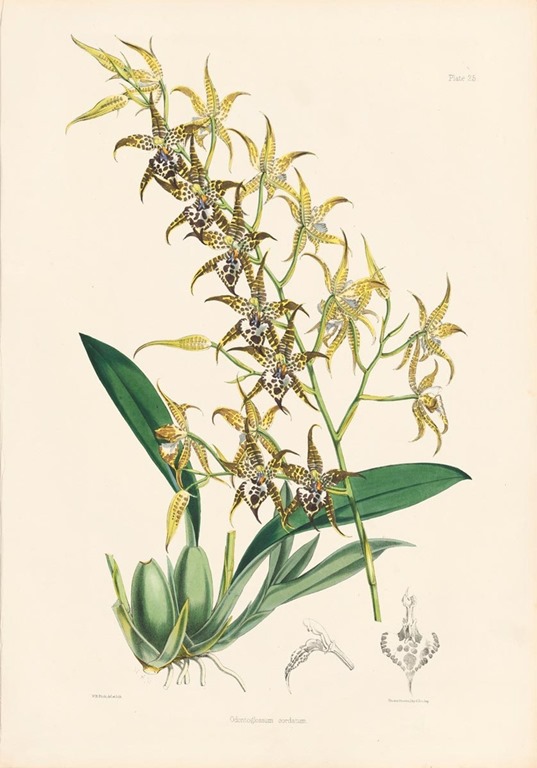
Orchid lithograph

The Signature of All Things is a love letter to those who embrace the natural world over the metaphysical.

The entire time I read The Signature of All Things I kept wondering how Gilbert imagined her novel. I’d gladly buy The Making of The Signature of All Things if Gilbert would write it. The book is an amazing feat of imagination, research, inspiration and psychology. In one sense it’s a feminist fantasy, and on the other hand, it’s a fantasy for anyone who reveres the 19th century. I got on the Internet hoping to find clues as to how and why Gilbert wrote this novel, and I luckily discovered that Gilbert had a Pinterest page devoted to The Signature of All Things. The financial success of Eat, Pray, Love let Gilbert spend three years researching The Signature of All Things. Few writers get such an opportunity, and her hard work paid off in a big way.

The first fifty pages of the book is about Henry Whittaker, a fascinating character that could have easily overshadowed the main character, his daughter Alma. Alma Whittaker is the ultimate free-range child educated by her stern Dutch mother, Beatrix. Alma was born January 5, 1800, so she ages with the century. Alma grows up on a huge estate outside of Philadelphia, and her father invited the most interesting men in the world to visit. Even as a child, Alma was expected to carry on an adult conversation at the dinner table. She mastered many living and dead languages, read everything in her father’s large library, and taught herself to become a botanist, specializing in mosses.

I can’t begin to chronicle all the ideas in this novel. Gilbert distilled her three years research into five hundred pages of fiction, and on almost every page, I wondered about her choice of detail to reveal. The book is tightly plotted, with an abundance of vivid characters, and the reader travels around the world three times. And it’s not until the end, that everything finally comes together. It’s a very satisfying ending, yet I wanted to know more. I wanted to know how and why Gilbert made her writing decisions.  I found some of the answers I sought in this interview:

Victorian scientists were big on developing classification systems, mapping every scrap of land and sea, inventing coordinate grids and measurement systems, taxonomies, and most of all, collecting. Science in the time of Dickens was small enough in scope, that most intelligent individuals could be well-versed generalists. There is a special kind of appeal to science before relativity and quantum mechanics. A gentleman or gentlewoman with a microscope and telescope could confirm most of what they read, and it was still possible to keep up with the reading in most fields.

Alma Whittaker, is a woman that wants to understand, and through almost endless hardships, becomes enlightened.

JWH