I Wish All My Family and Friends Blogged, I Wish Everyone Blogged

by James Wallace Harris, 7/16/23

What if everyone who ever lived kept an indestructible diary. Imagine reading what all our ancestors thought throughout their lifetimes. I don’t believe in an afterlife, but this could be the form of one. I’ve often wondered what my parents thought as they were growing up and got older. I’ve also wondered about my grandparents and what they thought about their lives. If they had written down their thoughts and were saved in some way, I could read them now. I wish I had a magic lamp and three wishes. This is how I’d use one of them.

I’ve always been somewhat interested in genealogy. However, just seeing names with dates of birth and death isn’t good enough. Whenever I see a genealogy chart I ask: Who were they, what did they think, what did they do?

The past is gone, so we can’t worry about that now. Although I have read accounts of people wanting to program an AI based on everything they could find out about someone they loved who died. The theory is if we programmed everything we know about a person, say Mark Twain or Ernest Hemingway into an AI, it might act like those men. That sounds creepy. On the other hand, one of my favorite science fiction stories, “Appearance of Life” by Brian W. Aldiss involved the protagonist finding memory cubes by two people who had been married and died years apart and putting them on a shelf so they talked to each other. It was both moving, tragic, and pathetic all at once.

Reading books by famous writers and biographies about them does convey a sense of who they were and how they reacted to their times. And biographies about famous people who left no writings of their own lack something. Look at the four Gospels — if only Jesus had written something himself.

Blogging offers the potential to do what I’m talking about. What if the Library of Congress archived all blogs. Would people in the 22nd century find our blogs interesting? What about the 43rd century?

If you pay attention to serious fiction and films, much of the trouble conveyed about the characters and interactions with other characters is due to a lack of communication. A good example is Celeste Ng’s first novel, Everything I Never Told You. Think about every person you ever loved, hated, or worked with, and what it would mean if you read their inner thoughts? Or at least the thoughts they wanted to share?

Also, it’s important to know that our thoughts are not coherent. Writing is the way we learn this. You’ll never know yourself only by thinking. Writing is a way to sculpt thoughts into something recognizable. Writing is the way to learn about yourself, and reading is the way to learn about other people.

Remember being back in school and all the emotional turmoil and conflicts caused by relationships, perceived relationships, and lack of relationships? Would we have been better people, kinder people, more self-aware people, if we had all blogged back then and read each others’ thoughts? Weren’t a lot of our problems as kids because we hid inside of ourselves and only speculated about our classmates? Would there be more or less school shootings if all the kids knew each other better?

Not only would growing up blogging help with self-expression, and communication, but it would have made us better learners and scholars. I’ve already written about “Blogging in the Classroom.”

I also wrote, “77 Things I Learned From Writing 1000 Blog Essays” which was mostly about how blogging is a great self-improvement tool. One of the main reasons I blog is it helps keep my mind together.

But I mostly wish everyone I knew blogged so I could learn more about them. Lately, I’ve been noticing how little we really communicate with one another. We have our public persona, and we hide the rest. I’ve noticed how many people as they grow older withdraw into themselves. We tend to just chat. Is that because we have given up on relationships? Or because we have more worries about ourselves and don’t want to worry about other people?

For some reason, we consume fiction hours a day. And it’s not the kind of fiction where we learn about people. It’s the kind that helps us forget and hide. Wouldn’t our lives be better if we learned more about real people and not imaginary people?

On the other hand, we are bombarded with personal problems and information overload every day. Maybe we watch television because we had enough of reality and real people? Even extroverts who crave constant social activity often stay at a shallow level of communication. Could the fact that we don’t all blog, or communicate deeply imply that’s what we prefer?

JWH


What I Learned Cataloging My Books, Ebooks, and Audiobooks on Goodreads

by James Wallace Harris, 3/21/23

I learned several things this week while entering over fifteen hundred books into my Goodreads database. The books I added were mainly acquired since I retired in 2013. One insight that impressed me the most was I was specializing in a limited number of topics. On one hand, I was disappointed by my narrow range of interests, but on the other hand, I was annoyed at myself for being scattered in my intellectual pursuits. You can’t get good at something if you try to get good at too many things.

If I judged my reading as a leisure activity it wouldn’t matter what I read. However, if I judged my reading as an education, then I was majoring in too many subjects. But here’s the kicker to this revelation. Before I started cataloging my books I assumed I was reading for fun and randomly exploring any subject that caught my fancy. It was only as I entered all the titles into the database did I realize that I have been specializing in several areas. And my immediate impulse was to read deeper into those topics and to go out and buy more books on those subjects.

Why was I chasing so many subjects when I’ve always wanted to be a master of one? Why would I want to do that? Yet, focusing on one would mean ignoring many things I want to know more about. That thought has started me to do a lot of naval gazing this week.

My original goal was to put all my books into my Goodreads database so I’ll know what I own to keep from buying duplicates when I’m at the used bookstore. So far I’ve found a shopping bag of duplicates which I gave to my buddy Mike. I entered all my books into Goodreads many years ago but didn’t update the database when I bought books or gave them away, so my Goodreads database was badly out of date. I had been putting this task off for years because I couldn’t figure out which books to add or delete from the system to catch up again.

My solution was to create a “shelf” called “2023 inventory” and reenter all my books linking them to that shelf. Then delete all the books in the system that wasn’t in the 2023 inventory.

After entering 1,506 books, which were all the physical books in the house, I had 3,159 total books in the database. That implied I could have given away 1,653 books, but then I realized that some of those might be Kindle or Audible books I own. Now I must go down the list of 3,159 books, and if they aren’t in the 2023 inventory, see if they are in my Kindle or Audible libraries. If they aren’t, I can delete them.

Doing all this librarian work has been rewarding in several ways. The work is revealing how my reading has shifted away from physical books to ebooks and audiobooks. This process has also revealed other insights about myself. For certain titles, and subjects I tend to buy both the audiobook and the ebook edition because that’s how I like to study them. And for some titles, I have the ebook, audiobook, and physical book. If I really like the book and subject, or if it’s fiction, and I really enjoy the story, I like getting into the book through all three formats.

I can spot my favorite authors because with some writers I’ve collected their books in all three formats. That also reflects a consolidation of interests, focus, and specialization.

When I used to go to parties I noticed that people tend to talk about things they loved most. The most interesting people were the ones who could expound deeply on a subject. Like most people, I just chatted about what little I knew about a zillion subjects.

I eventually observed that some people like to specialize and that some people even feel they are experts on their favorite subjects. It’s even fun to see two fans of the same subject argue over who knows more. I see from my data entry the subjects I’ve unintentionally tried to master. What’s funny is I seldom meet people interested in the subjects I’m interested in. Which is why I seldom talked much at parties. (This blog is my way of nattering about what I like.)

Thinking about people who know a lot about a little has led me to ask why I’d want to specialize in certain topics anyway? It’s not like I’m at a university trying to pass courses and get a major. I never go to parties anymore. I think it’s like my urge to catalog my books, which is a kind of anal pursuit, I also want to organize what I know.

There is a certain satisfaction in getting the biggest picture on the tiniest of topics. There is also satisfaction in collecting everything of a certain type. For example, I like westerns, so I collected my favorite western movies on DVDs. Then I started buying books about movie westerns. But after that, I started buying books about the history of the American West. I’ve done the same thing for classic rock and jazz music. While cataloging my books I realize I was gathering novels written in England between the wars, and books about their authors. That interest is also reflected in the TV shows I’m watching. Susan and I have recently watched all of Downton Abbey, Upstairs, Downstairs, and we’re currently going through the seven seasons of the first television version of All Creatures Great and Small.

The upshot of all these cataloging revelations is I want to focus more on my best subjects. And abandon some lesser interests to put more time into my majors. After I finish this project I could write my tombstone epitaph – “Here lies Jim Harris, this is what he liked to read:” I mean, isn’t what we focus on one of the best descriptions of our personality?

I only have nine bookcases. And they are all full. I don’t want to buy more bookcases. Nine’s my limit. I feel that’s also an analogy for my brain. It can only hold so much, so if I want to get better at one subject I have to forget about another.

If I want to buy more books I have to get rid of existing books to make room for the new ones on the shelves. This tends to distill my collection even further into specialized subjects. It also means I cull crappy books for better books.

But there is something else to consider. I’m getting older. I’m running out of time. My mental abilities are declining, which limits how much information I can process. And my physical abilities are declining, which also influences my book collecting. I can imagine a future where I can only handle six bookcases, or even three, and maybe down to just one.

I put every book I own onto a Rubbermaid rolling cart one shelf at a time to take them to my computer to enter their data. That physically wore me out. I’m thinking of getting rid of the heavy coffee table books in my collection just because in the near future I won’t be able to handle their weight. And there’s another reason I need to start shrinking my collection. If I should die I don’t want to burden my wife with having to get rid of a couple of tons of books. And if I ever need to move to a retirement apartment or assisted living I wouldn’t want to deal with all of them either.

This week of cataloging my books has reminded me of which subjects I’ve studied over the last forty years, which subjects are my favorite topics, and that I want to thin out my collection.

Currently, Goodreads says I have a total of 3,150 books but I haven’t finished entering all my Kindle and Audible books. Amazon says I have 1,608 Kindle books and 1,544 Audible titles, however, many are already in Goodreads. I’ve just got to figure out which ones aren’t. Luckily, Kindle and Audible books don’t weigh much, or take up much space.

I’ve always wanted to make a list of everything I own because I assume it would tell me a lot about myself. This Goodreads list is a good start toward that.

JWH

Quantifying My Cognitive Decline

by James Wallace Harris, Thursday, September 5, 2019

I subscribe to a service called Grammarly which checks my spelling and grammar as I write. Grammarly sends me a weekly report on how I’m doing. Two years ago it would tell me I was more accurate than 65-70% of their users, referring to grammar and spelling. I doubt even when I was young it would have been much higher. In recent months that number has fallen to 35-40%. And I can feel it. I have to proof my posts countless times and I still find errors after I’ve published. I’m appalled by how bad my writing has become. If I published my first drafts readers would think they were following Charlie Gordon into his descent phase from the book Flowers for Algernon.

I consider this good quantitative data on my cognitive decline. Grammarly does give me some good news. I’m generally more productive than 98-99% of their users, and my vocabulary is larger than 98-99% of their users. The first is explained by being retired and writing for two blogs. The second reflects long term memory. I can tell it’s my short term memory that’s failing.

I still don’t see this as an early sign of dementia, but I might be deluding myself. I think it’s just an aspect of normal aging. We’re used to seeing our bodies getting old because of all the visible physical changes. We’re not used to mental changes because they are less observable to ourselves and the people around us. Unless we talk or act differently, other people don’t see the changes. And we don’t feel the changes unless we try to do something and fail.

I have been noticing the number of times people ask me why I’m not talking. I tell them I’m just listening to them. Or say I’m thinking. But I believe it’s because it takes more effort to put thoughts into words, and when I do talk I can’t remember words, or I verbally trip when saying sentences. My cognitive problems are the most obvious when writing. If I’m just playing with the cats, watching television, or listening to music I feel fine. I believe we ignore our mental aging by doing less and saying less. Of course, many people also ignore signs of physical aging — that’s why so many foolish oldsters fall off ladders.

The real question is: Can we exercise the mind like we exercise the body? It appears we can slow physical decline by being more active. Is that also true for mental activity? My first reaction when I realized I was making more spelling and grammar errors was to quit writing. But I quickly decided that was the wrong approach. I believe writing exercises the mind. Instead of quitting I should work harder. However, I might need crutches. I thought about pilots who use preflight checklists, or how surgeons now use checklists to avoid making surgical mistakes.

I already pay Grammarly to keep an eye on me, but it’s far from perfect. In fact, when I see errors after I published it means Grammarly and I both missed them. I usually proofread my posts four or five times before I hit the published button. Often the most glaring mistakes are last-minute rephrasing where I don’t proof the whole sentence, or whole paragraph again. But other mistakes come from reading too fast and assuming I’m seeing what I read.

I believe my essays give the illusion that my mind is working just fine. Y’all don’t see how many broke things I fix. I use the internet to cheat. It really is my auxiliary memory. And I have unlimited do-overs. Most importantly, I can take all the time I need to say what I want.

I’ve always been a good typist. It’s been the most useful skill I learned in high school. What I typed used to be what I thought. Thoughts came out of my fingers. That’s no longer true. Now my fingers give me sound-alike words, leave out words, type words twice, and even throw in extra words. Quite often I end up typing just the opposite of what I was thinking. While typing this paragraph I created 8-10 alternate words to what I was thinking. Just that could explain the halving of my accuracy score in Grammarly.

[When proofing the above paragraph I had a new insight. What if my typing is as accurate as ever, and I’m merely typing jumbled thoughts when I once transcribed clear ones?]

Writing isn’t the only way I’m seeing increased cognitive problems. The other day I wrote “Untying a Knotted Plot” about my difficulty of understanding a short story. I had to read it four times. Admittedly, it is a complicated story. The author even wrote a couple of comments to help me. That essay was extremely difficult to compose. I struggled with trying to comprehend the story and write about it clearly. Every time I typed the author’s name I looked at the magazine to verify the spelling. I still got it wrong three out of eight times. I proofed the hell out of that piece because errors seem to be popping like popcorn. I felt like I was playing a very desperate game of Whack-a-Mole.

There’s another reason to keep writing. I want to document my own decline. Like the researchers in Flowers for Algernon, they tell Charlie to keep a journal. I’m going to be my own researcher and subject. I think it’s useful to be aware of my diminishing abilities. Aging is natural, and I accept it. I’m willing to work to squeeze all I can from my dwindling resources. What’s vital is being aware of what’s happening. The real problem to fear is becoming unconscious to who we are. Like Dirty Harry said, “A man’s got to know his limitations.”

The reason why Flowers for Algernon was such a magnificent story is that we’re all Charlie Gordon. We all start out dumb, get smart, and then get dumb again. Charlie just did it very fast, and that felt tragic. We do it slowly and try to ignore it’s happening. That’s also tragic.

JWH


Why Did You Stop Writing About Science Fiction?

by James Wallace Harris, Thursday, May 16, 2019

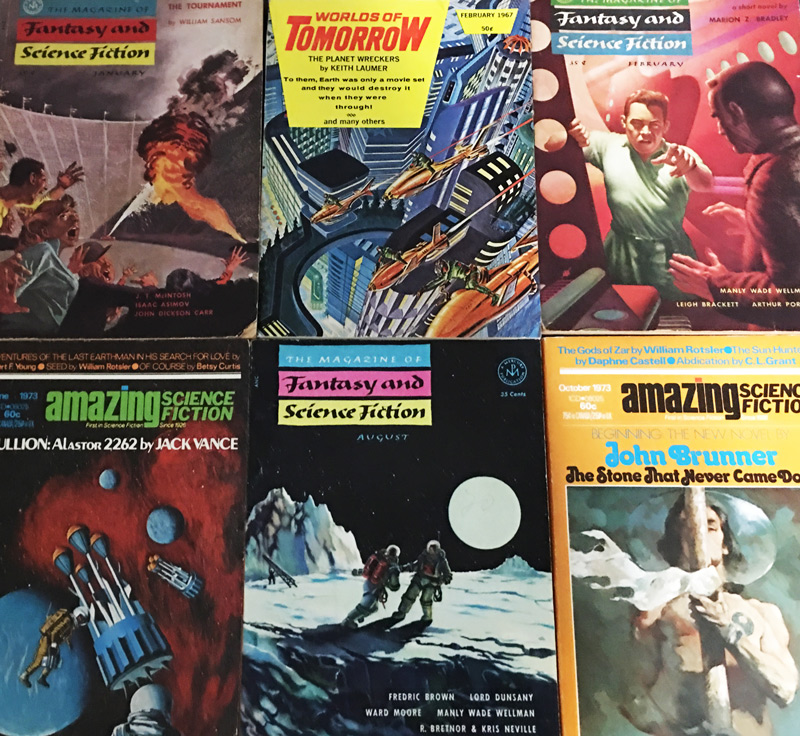
old-science-fiction-magazines

I haven’t stopped writing about science fiction. If anything, I’ve become more obsessed with science fiction history. However, I’m discovering only some of my Auxiliary Memory readers like reading about science fiction while many others have told me they tune out those posts. I don’t blame them, there are many subjects in this world I tune out too.

So for my fellow Sci-Fi fans, I’m posting my essays about science fiction to The Classics of Science Fiction website. Those of you who want to only read about science fiction can follow my blog over there. Information about subscribing and RSS feeds are at the bottom of individual blog post pages.

Auxiliary Memory will remain my blog about my personal life and opinions about everything that isn’t science fiction.

It’s been interesting to see how my friends and family relate to my blog posts. I write about a variety of topics. Every relationship is a Venn diagram of common interests. Out of all the people I know personally, only two like to talk about science fiction. However, I have many online acquaintances that I share an interest in science fiction. In many ways, I feel more connected to those people because we’ve zeroed in on a subject we love.

People use the term “blood relation” to mean a special bond. I’ve always felt that a “shared interest” is more significant than shared DNA. I have many interests, so I have many kinds of friends. The internet is especially useful because it lets us connect with people who share our most unique fascinations. I’m currently focused on old science fiction magazines and anthologies. Most of my conversations about this topic are with five people scattered across the world. I figured all told, there are probably less than a thousand people interested in old science fiction magazines and only a few dozen in old science fiction anthologies. What percentage of 7 billion would that be? Extremely tiny.

I write about a variety of subjects but I’m finding only some attract the general reader. Most people who read blogs like to read memoir-like narratives rather than essays on abstract subjects. Blogging is an extremely insightful hobby. Most people enjoy chatting with other people, but if they are going to take in 1,500-word chunks prefer reading books. Reading a blog is more like listening to a friend talk a blue streak than reading an article in The Atlantic.

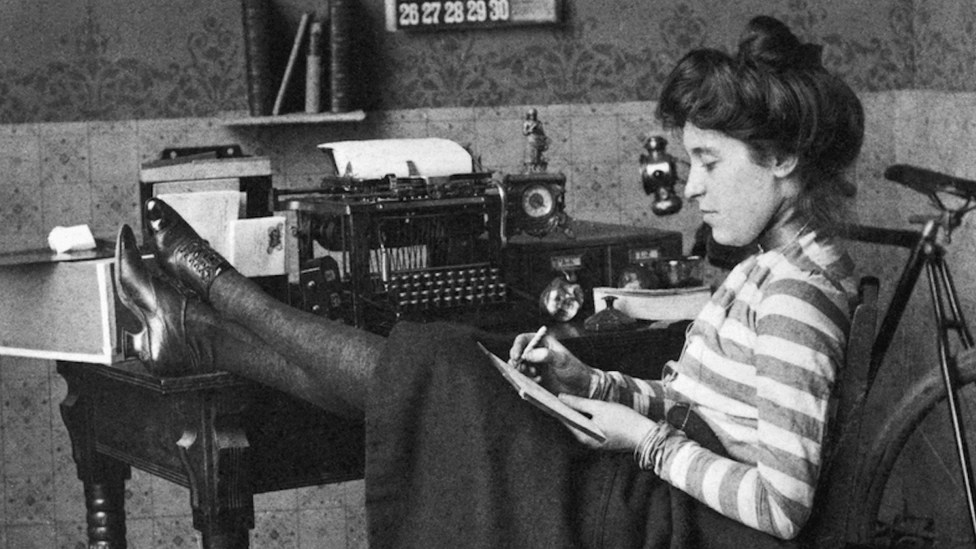
In the old days, I’d be writing what I write for a diary or journal, and I’d assume no one else would be reading it. Blogging is like keeping a diary that you leave around for anyone to read. It’s a weird art form, but it’s also my chosen retirement hobby. So I shall continue to experiment with what it can do. One experiment is to separate out all my ideas on one topic into a blog just for that topic. It’s fun to distill a subculture.

JWH


We Were Eight Years in Power by Ta-Nehisi Coates Part 1

by James Wallace Harris, Tuesday, September 25, 2018

After writing “Analog Reading in a Digital Age” last week, I decided to try harder to get deeper into what I read. I’m tired of consuming so much knowledge but retaining so little. I have a two-person book club with my friend Linda where we read a nonfiction book together and discuss it a section at a time over the phone. Currently, we’re reading We Were Eight Years in Power by Ta-Nehisi Coates, which is a collection of eight essays that first appeared in The Atlantic Monthly.

We Were Eight Years in Power by Ta-Nehisi Coates

The first essay comes from May 2008, “This is How We Lost to the White Man.” It is subtitled “The audacity of Bill Cosby’s black conservatism.” Writing about race is not something I normally do because it’s very easy to saying something wrong. I know I can’t speak for black people, but in truth, I can’t speak for white people either. I am an introverted person that has always been disturbed by emotionally charged people. Racists scare me with their inflamed ugly feelings. Discussing race in America often sets people off, so I avoid such talks. But I believe all nonwhite people are unfairly treated in our country and it’s a subject everyone needs to know.

What Ta-Nehisi Coates writes about in this essay is very hard for me to comprehend. It is easy to understand the unfairness of racism but difficult to evaluate solutions. The idea of black conservatism is new to me, at least in the way Coates used the term. Usually, I see racism discussed as a philosophical/spiritual/moral problem for white people, and a legal/ethical problem for governments. “This is How We Lost to the White Man,” asks what black people can do to solve the problem. That immediately puts me out of the discussion. However, I don’t think it should stop any white person from reading Ta-Nehisi Coates, and it makes me want to know more about how other African-American writers feel about what he has to say. Coates summarizes and rejects past efforts, and that history is very informative.

This essay does remind me of something else I’m studying. I’m watching “Great Utopian and Dystopian Works of Literature” by The Great Courses and taught by Professor Pamela Bedore, Ph.D. In the first lectures, Bedore describes how utopian visionaries struggled for hundreds of years to create the blueprint for a perfect society. As an aside, she said she believed our Founding Fathers were inspired by utopian writing, but they ignored Native Americans, African-Americans, and women in their design.

Their failure to consider everyone for the American dream is why we suffer so many forms of injustice and inequality today. Bedore didn’t mention it, but Nancy Isenberg in her book White Trash: The 400-Year History of Class in America suggests the Founding Fathers also intentionally ignored the poor white and landless, and their utopian visions were only for successful white males. Despite hundreds of years of social unrest and amendments to the Constitution, our system still favors the same elites. In fact, the rich have rigged our laws making our system into a plutocracy.

What we need is a complete rewrite of our society’s design. To me, conservatives are those people seeking to maintain the status quo because it rewards their fraction of the population. Liberals are people seeking a system of total equality. I would think all minorities would be liberal, so it’s interesting that Coates calls Bill Cosby a black conservative. It is extra hard to read a ten-year-old essay about Bill Cosby on the day he’s to be sentenced for rape. Coates fairly covers Cosby’s successes and contributions to society but faults Cosby on his outdated approach. Coates calls Cosby conservative because his solutions co-opt the white establishment.

The self-reliant solutions offered by Cosby, Marcus Garvey, Malcolm X, and Louis Farrakhan seemed like positive solutions to me, but then Coates says white people will agree with them. Coates calls them conservative approaches. Okay, I can see that. But, what is the liberal approach? This is where the essay gets tough for me to understand.

As a liberal I want our system to be equal and just for all, but I’m not against self-reliant people who want to work hard to improve themselves. I am against a system where the successful game the laws to benefit only the successful. I’ve often wondered if Republicans aren’t closeted disciples of Darwin. (I also wonder how they can reconcile Christian philosophy with Conservative philosophy when they are so diametrically opposed.)

Part of Coates attack on Cosby is because Cosby attacks modern black pop culture. Cosby has old-fashion values and thinks the young are amoral, undisciplined, and an embarrassment to older morality. But don’t a lot of older folks of all races think that about the young?

The trouble is, as Coates knows, is no matter how minorities act in America they aren’t being accepted and justly treated as equals. Nor does it look like they can do anything to correct the system. What makes it particularly worse today is the Republicans leaders in Congress are starting to act like Donald Trump by using whatever methods to take what they want. This administration has clearly proved the system is rigged. Trump followers all want to feel they could shoot someone on Fifth Avenue and get away with it because they feel completely self-righteous in their beliefs. Why should they change the system?

To most people living in America, the Founding Fathers created a Dystopia. Of course, those who benefit from its inequality revere its ideals and rationalize its faults.

My real takeaway from Coates essay is how do we redesign the system? How can we amend or rewrite the Constitution, so it creates a society that is equal and just for all? Coates is right, the black conservative solution won’t work, it’s only an appeasement to white conservatives.

I have no idea how to design a utopian society. The conventional wisdom is they are impossible, but that doesn’t mean we should stop trying. My theory is any system that benefits only a fraction of the population is doomed to fail. A successful utopia doesn’t mean everyone must succeed, but it should absolutely allow all citizens the same chances of succeeding or failing.

In my plans to write about what I read I intended to use a lot of quotes. “This is How We Lost to the White Man” doesn’t allow that because of Bill Cosby current issues. Documenting Coates eight-year-old case against Cosby would be like beating a dead horse. It’s tragic that a man who worked so hard to be publicly good turned out to be so privately bad. I should have picked an easier essay to start my new reading program. I had planned to start with the nine essays in Men Explain Things to Me by Rebecca Solnit, the last book Linda and I read together, but she was ready to begin the new book. Still another dangerous topic for a white male to discuss, but if I’m going to read great essays they will probably cover controversial topics.

The key to understanding our problems is imagining ourselves being other people.

Reading both books vividly illustrates how unjust our system is to minorities and women. Because the top news story for many days has been Brett Kavanaugh it shows Solnit’s older essays are also just as valid now. Reading Solnit and Coates together is heavy on my soul. I picked these essays because they do require deeper reading. It is a challenge to grasp the subtleties of their messages because I am neither female or black. I am not even sure I should write about solutions to their problems. Sometimes I think us old white guys should just step aside and let others have a turn designing society. Sometimes I feel I should retreat into writing fiction.

JWH